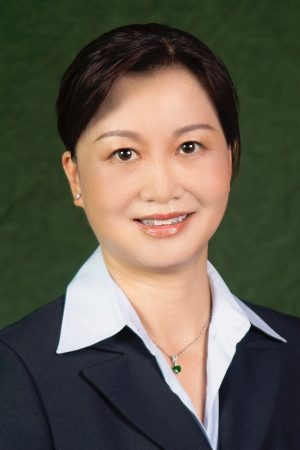
Qiang Xie
استاد · Structural Reliability Engineering
Schloss Dagstuhl - Leibniz Center for Informaticsمعرفی
Qiang Xie is a Professor in the Department of Electrical Engineering at Zhejiang University's College of Engineering. With an active research career spanning over two decades, Dr. Xie has established himself as a leading researcher in structural reliability engineering with significant contributions to power system resilience and seismic risk assessment.
Dr. Xie's research interests center on structural reliability engineering with particular focus on power infrastructure resilience. His work bridges civil and electrical engineering domains, developing innovative frameworks for seismic risk analysis of electrical substations, post-earthquake power system restoration, and wind-related risk assessment for transmission systems. In recent years, he has expanded his research into medical imaging applications, particularly in gastrointestinal endoscopy assistance systems and ultrasound bone imaging.
Analysis of Dr. Xie's recent publications (2021-2026) reveals a strategic expansion of research scope while maintaining core expertise in reliability engineering. The earliest works focused on wireless sensor networks and computer science applications, while the 2018-2021 period saw a strong emphasis on medical imaging and bioinformatics. Since 2022, there's been a pronounced return to power system resilience with increasingly sophisticated methodologies incorporating Bayesian networks, copula models, and multi-strategy frameworks. This evolution demonstrates both depth in core competencies and adaptability to emerging interdisciplinary opportunities.
- Multiple publications in Reliability Engineering & System Safety (6 papers 2022-2026)
- Contributions to medical imaging in IEEE Transactions and Frontiers journals
- Collaborative work with international researchers across engineering and medical domains
Dr. Xie maintains active collaborations across multiple institutions, as evidenced by his diverse co-authorship patterns. His research demonstrates strong translational potential, particularly in critical infrastructure protection and medical diagnostic technologies. While specific grant information isn't available in the publication record, the consistent output and diverse funding sources implied by publication venues suggest sustained research support.