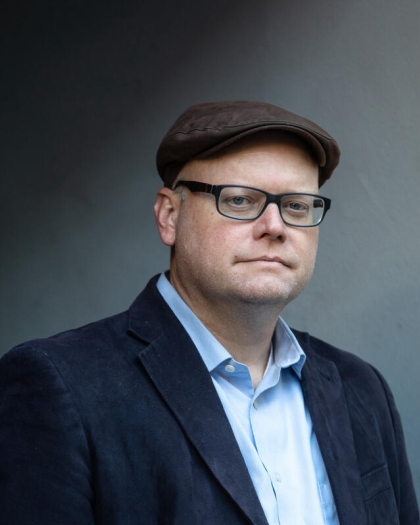
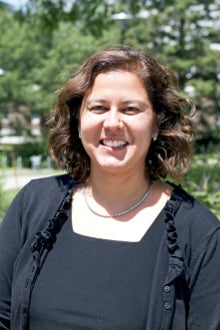
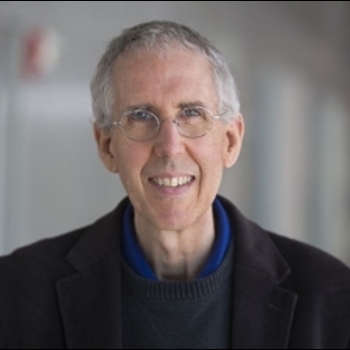
Scott Rettberg is a Professor of Digital Culture at the University of Bergen's Department of Linguistic, Literary and Aesthetic Studies. He leads the Center for Digital Narrative and has directed major projects like ELMCIP, funded by the Ford and Rockefeller Foundations. Contact: scott.rettberg@uib.no. Research Focus: Electronic literature, AI-generated narratives, digital humanities infrastructure. Recent Work: Explores AI writing practices, pandemic-themed digital art, and cyborg authorship models. His publications analyze intersections between generative algorithms and literary form, with a strong emphasis on digital ethics and pedagogy. Awards include the Robert Coover Award (2016) and N. Katherine Hayles Award (2019). Key Contributions: Co-founder, Electronic Literature Organization Director, ELMCIP Electronic Literature Knowledge Base Author, Electronic Literature (Polity, 2018)
Grant Van Horn is an Assistant Professor at the University of Massachusetts Amherst, affiliated with the College of Information and Computer Sciences. He specializes in computer vision and machine learning, focusing on applications in biodiversity and conservation. His work underpins popular tools like iNaturalist, Seek, and Merlin Bird ID. Prior to UMass, he held roles at AWS and the Cornell Lab of Ornithology. Education: PhD in Computer Science, California Institute of Technology (2019) MS in Computer Science, University of California San Diego (2014) BS in Computer Science, University of California San Diego (2012) Research Interests: Grant’s research bridges computer vision and machine learning to create systems that integrate human expertise and large datasets for environmental conservation. Key areas include wildlife species identification, acoustic monitoring, and ecological modeling. His work emphasizes leveraging technology for public engagement and scientific impact. Articles & Trends: Recent publications focus on audio geolocation, species range estimation, and satellite imagery analysis, reflecting his commitment to advancing tools for biodiversity conservation. His work often combines citizen science data with machine learning innovations. Awards: Computing Research Association Outstanding Undergraduate Researcher Honorable Mention (2012) Ben P.C. Chou Doctoral Prize (2019) Fast Company’s 2021 Recognition Advising & Labs: Grant advises students in computer science and conservation technology through the Computer Vision Research Laboratory. He has collaborated on projects like the iWildCam dataset and systems for salmonid counting in sonar data.
Myra Fernandes is a Professor in the Department of Cognitive Neuroscience at the University of Waterloo, serving as the Research Area Head. Her work focuses on memory processes, cognitive aging, and encoding techniques, with a strong emphasis on neuroimaging and experimental psychology. She investigates how actions, drawing, and context affect memory retention, particularly in clinical populations like those with hippocampal damage or dementia. Her research also explores the cognitive and affective consequences of traumatic brain injury and the role of imagery in mental health conditions such as PTSD. Her studies often integrate behavioral experiments with neuroimaging to uncover neural mechanisms underlying memory formation and retrieval. Recent work highlights the 'drawing effect,' demonstrating how sketching information enhances recall across ages and cognitive conditions. She advocates for rigorous methodologies in research publishing, including registered reports to improve scientific transparency. Key research themes include the enactment effect, symbol superiority, and the impact of emotional and motoric engagement on memory. She has contributed to understanding age-related cognitive changes and the application of cognitive strategies to mitigate memory decline. Her lab's findings have implications for educational practices, clinical rehabilitation, and mental health interventions. Publications span topics from involuntary memory's mental health links to the neurobiological basis of mnemonic strategies. She collaborates widely, bridging cognitive neuroscience with clinical and educational applications. Her work underscores the importance of multidisciplinary approaches to advancing memory science.
Krzysztof Czarnecki is a Professor at the University of Waterloo's Department of Electrical and Computer Engineering, with a cross-appointment to the School of Computer Science. He serves as leader of the Waterloo Intelligent Systems Engineering Lab and holds the title of University Research Chair. His research focuses on generative software development, model-driven engineering, and autonomous systems, particularly in automotive cybersecurity and perception safety. Education: Doctorate in Computer Science, Technical University of Ilmenau (1999) Master of Science in Computer Science, Technical University of Ilmenau (1995) Bachelor of Science in Computer Science, California State University (1994) Research Interests: Dr. Czarnecki's work spans generative programming, software product lines, and safety-critical AI for autonomous vehicles. Recent projects address robust perception systems, uncertainty quantification in neural networks, and strategic driving behavior modeling. He co-authored Generative Programming (Addison-Wesley, 2000), a foundational text in the field. Publications Trends: Recent work emphasizes multimodal AI integration (e.g., LEO-MINI), 3D object detection improvements (OV-SCAN), and safety assurance frameworks for autonomous systems. His research bridges theoretical software engineering with applied robotics challenges. Awards: Premier’s Research Excellence Award (2004) British Computing Society’s Upper Canada Award (2008) University Research Chair, University of Waterloo (2023) Teaching & Leadership: Teaches courses like ECE 495 (Autonomous Vehicles) and ECE 651 (Software Engineering Foundations). Oversees WatCAR initiatives and collaborates on industry projects through the NSERC Bank of Nova Scotia Industrial Research Chair (previous). Labs & Teams: Directs the Waterloo Intelligent Systems Engineering Lab, focusing on AI-driven solutions for autonomous systems and safety-critical software. Active in cross-disciplinary collaborations with automotive and robotics partners.
Frank Papenmeier is a Professor in the Department of Psychology at the University of Tübingen, within the Faculty of Science. His research focuses on event cognition, human-robot interaction, visual working memory, and visual attention. He coordinates the 'Coordination Cognitive Psychology and Research Methods' research group. His work explores how people perceive and interact with dynamic environments, including studies on event segmentation, cognitive offloading, and aesthetic judgments. He has contributed to over 100 peer-reviewed articles, with recent work addressing topics like the impact of framing on art perception and the role of AI in education. Papenmeier's research integrates experimental methods with interdisciplinary approaches, including collaborations on teleoperation systems and AI-based tutoring. He has presented at major conferences such as the European Society for Cognitive Psychology and the Psychonomic Society. His lab emphasizes methodological rigor, evidenced by contributions to replication databases and open science initiatives. Education: Not explicitly stated in the text, but his titles include Dr. rer. nat. (Doctor of Natural Sciences) and Diplom-Psychologe (Psychology Diploma). Research Interests: His primary areas include event cognition, human-robot interaction (e.g., helping behavior toward robots), visual working memory (e.g., spatial configuration processing), and cognitive offloading (e.g., impact on memory and performance). He also investigates aesthetic judgments and narrative comprehension through eye-tracking and experimental paradigms. Articles Trends: Recent work addresses applied topics like cookie consent interfaces, AI in education (e.g., R programming tutors), and perceptual effects in 3D cinema. His studies often bridge cognitive theory with real-world applications, such as usability design and social robotics. Labs/Teams: Leads the research group 'Coordination Cognitive Psychology and Research Methods' at the University of Tübingen. Collaborates with interdisciplinary teams on projects involving robotics, AI, and human-computer interaction.
Russell Weili Chan is an Assistant Professor at the Digital Society Institute and Cognition, Data and Education department. His research focuses on meditation's effects on cognitive control during motor sequence learning, with contributions to Neuroscience, Cognitive Psychology, and Neuropsychiatry. He has published 15 articles since 2012, exploring topics like mindfulness in sports performance, neuroimaging of motor tasks, and humor comprehension in mental disorders. He serves on editorial boards for Behavioural Brain Research and Frontiers in Psychology . His work bridges cognitive science with clinical applications, emphasizing interdisciplinary approaches to motor learning and mental health. Key Research Areas: Meditation neurophysiology, motor sequencing, neuroimaging, mental disorders, and cognitive neuroscience. Editorial Roles: Behavioural Brain Research (Editor), Frontiers in Psychology (Peer Review).
Tesca Fitzgerald is an Assistant Professor in the Department of Computer Science at Yale University. Her research focuses on interactive robot learning, enabling robots to adapt to novel situations through human-guided learning. She holds a Ph.D. from Georgia Institute of Technology (2020) and a B.S. from Portland State University. Her research interests include cognitive robotics, human-robot interaction, transfer learning, and active learning. She emphasizes robots' ability to reason about novel objects, tasks, and interactions by leveraging human teachers' domain knowledge. Key areas include structuring human-robot interactions to meet learning goals and modeling training data derived from these interactions. Notable honors include the National Science Foundation Graduate Research Fellowship (2014-2017), IBM Ph.D. Fellowship (2017), and Georgia Tech GVU Center Foley Scholars Award (2017). Her work has been presented at top conferences like IJCAI, AAMAS, and HRI. Fitzgerald’s research lab, the IQR Lab, explores inquiry-based methods for robot learning. Prior to Yale, she was a postdoc at Carnegie Mellon University, collaborating with Henny Admoni, Reid Simmons, and Aaron Steinfeld. She has organized workshops on learning and interaction at IROS and served on conference committees, including HRI 2021.
Tanya Marwah is a Research Fellow at the Simons Foundation , collaborating with Polymathic AI . She earned her PhD from Carnegie Mellon University's Machine Learning Department, co-advised by Prof. Andrej Risteski and Prof. Zachary Lipton, and holds a master's degree from CMU's Robotics Institute. Her research bridges Machine Learning and Scientific Computing , focusing on generative modeling , inverse problems , and building scientific agents . Her work explores theoretical and empirical foundations for applying ML to differential equations, with key contributions in neural operators , memory mechanisms , and edge embeddings in GNNs . Recent publications highlight trends in PDE solvers via LLMs , cross-modal adaptation , and implicit regularization in SGD . She has received the prestigious Siebel Scholar award and actively contributes to top ML venues (NeurIPS, ICML, ICLR, TMLR). Her collaborations span institutions including Carnegie Mellon University, Polymathic AI, and CMU's Robotics Institute.
Associate Professor Josiah Poon is affiliated with the School of Computer Science at the University of Sydney. His research focuses on applying data mining and IT techniques to Traditional Chinese Medicine (TCM), particularly analyzing herbal combinations for effective treatments. He collaborates with institutions in China to improve TCM evidence and has contributed to clinical data analysis, medical informatics, and multimodal AI systems. Teaching includes courses such as INFO1003 (Foundations of IT) and INFO9003 (IT for Health Professionals). Current research students are Rina CABRAL (Multimodality Representation), Yan LI (Long Document Comprehension), and Xiaobin LU (Financial Decisions). Research highlights include developing algorithms to quantify TCM efficacy, analyzing complementarity in herbal combinations, and applying machine learning to healthcare data. Notable projects include a randomized controlled trial on pneumococcal vaccination (2021) and a Google-funded multimodal health detection system (2020). Key areas of expertise span TCM informatics, medical data analytics, and AI-driven healthcare solutions. His work bridges Eastern/Western medicine through computational methods, emphasizing evidence-based practices in TCM.
Zihao Fu is a Researcher at the Oxford Internet Institute (OII), University of Oxford, where he served as a Postdoctoral Researcher from March 2024 to April 2025, focusing on the Trustworthiness Auditing for AI project. Previously, he was a Research Associate (PostDoc) at the University of Cambridge's Language Technology Lab under Prof. Nigel Collier. His research emphasizes Natural Language Processing, Text Generation, Machine Learning, and Biomedical Applications. Education includes a Ph.D. from The Chinese University of Hong Kong (supervised by Prof. Wai Lam) and a visiting student period at Tsinghua University's NLP Lab. He has substantial experience with large-scale distributed algorithms in Alibaba Cloud's PAI platform. Research interests span NLP, biomedical applications, and AI ethics, with notable contributions to datasets like BAND and frameworks like OxonFair. His work addresses challenges in text generation repetition, parameter-efficient fine-tuning, and algorithmic fairness.
Alfred Hero is the John H. Holland Distinguished University Professor of Electrical Engineering and Computer Science and the R. Jamison and Betty Williams Professor of Engineering at the University of Michigan. He is currently on leave from the University of Michigan as a Program Director in the CISE Directorate at the National Science Foundation. His primary appointment is in the Department of Electrical Engineering and Computer Science (EECS) with secondary appointments in the Department of Biomedical Engineering and the Department of Statistics. He is affiliated with multiple research centers including the UM Center for Computational Medicine and Bioinformatics (CCMB), the UM Graduate Program in Applied and Interdisciplinary Mathematics (AIM), the UM Applied Physics Program, and the Michigan Institute for Data Science (MIDAS). Hero's research focuses on data science, developing theory and algorithms for multimodality data collection, fusion, analysis and visualization using statistical machine learning and distributed optimization. His work has applications in wearable technologies for personalized health and predictive medicine, spatio-temporal networks in biology, climate, and social discourse, anomaly detection, and data analysis for international security. His research group has produced numerous PhD students who have gone on to prominent academic and industry positions. His recent publications show a strong focus on high-dimensional statistical methods, machine learning theory, network analysis, and applications in biomedical domains. The research trends indicate increasing emphasis on multimodal data fusion, robust learning algorithms, and applications to complex systems in biology and security domains. His work bridges theoretical foundations with practical implementations across diverse application areas. Fellow of the Institute of Electrical and Electronics Engineers (IEEE) Fellow of the Society for Industrial and Applied Mathematics (SIAM) Fourier Award in Signal Processing from the IEEE Hero has advised numerous PhD, MS, and undergraduate students who have gone on to successful careers in academia and industry. His research has been supported by various grants, though specific grant details are not provided in the source material. His lab collaborates extensively across disciplines with researchers in statistics, biomedical engineering, and computational medicine. The Hero Research Group maintains active collaborations with institutions worldwide and participates in major conferences in machine learning, signal processing, and data science.
Tara J. Roeder is an Associate Professor and Director of the First Year Writing Program at St. John's University's Department of Core Studies. Her work focuses on multi-modal composition, feminist theory, trauma studies, and critical animal theory. She holds a Ph.D. from CUNY Graduate Center (2014) and has taught since 2006, emphasizing interdisciplinary approaches to writing instruction. Her research explores intersections between anti-speciesism and social justice, with notable publications like *Critical Expressivism* (2015) and recent contributions to MLA's *Social Justice in Action* (2024). Education: Ph.D. English (CUNY GC), M.A. & B.A. English (St. John's University) Leadership: FYW Program Director, Committee Chair for Program Review Awards: 2020 Hammond House Prize (2nd place), Pushcart nominations Roeder advocates for innovative pedagogy through platforms like the 'Coming to Writing' conference and has presented widely on composition studies, trauma-based writing, and global learning. Her creative works include poetry chapbooks and fiction recognized in literary journals.
Maria de Los Angeles Rodriguez Alonso is a Professor at the Universidad de Murcia , affiliated with the Faculty of Arts and Humanities within the Department of Spanish Literature, Literary Theory and Comparative Literature . Her academic work focuses on critical discourse analysis and contemporary Spanish theater studies. Doctoral thesis: El discurso crítico sobre el teatro del franquismo a la transición (1966-1982) Research group: History and Epistemology of Literary Theory Research Interests span: Spanish Literature and Francoist Memory Comparative Dramaturgical Analysis Post-Transition Theater Evolution Critical Discourse Theory Publication Trends over the last decade reveal deep engagement with: Memory and Trauma in Spanish Theater Metaphorical Language in Performance Transatlantic Cultural Exchange Body Politics under Censorship
Keerthana Jaganathan is a researcher at Northumbria University, specializing in the application of machine learning to toxicology and health risk assessment. Her work bridges computational biology, artificial intelligence, and chemical safety analysis. Her research focuses on developing explainable AI models for toxicity prediction, including applications in respiratory, liver, and mitochondrial toxicity. She has published extensively on multimodal fusion approaches, feature selection techniques, and hybrid molecular representations in predictive toxicology. Recent publications highlight her expertise in deep learning for dermal toxicity assessment, fuzzy mutual information for multi-label classification, and comparative studies of tree-based ensemble models in pulmonary toxicity prediction. While specific departmental affiliations are not detailed in the provided texts, her work aligns with interdisciplinary research initiatives at Northumbria.
Pengyu Hong is a Professor of Computer Science at Brandeis University's Michtom School of Computer Science and an affiliated faculty member at the Benjamin and Mae Volen National Center for Complex Systems. His expertise spans Machine Learning, Bioinformatics, Materials Science, and FinTech, with a focus on interdisciplinary applications in healthcare, molecular biology, and complex systems analysis. Education: Ph.D. in Computer Science, University of Illinois at Urbana-Champaign M.E. in Computer Science, Tsinghua University B.Eng. in Computer Science, Tsinghua University Research Interests: Hong's lab develops advanced machine learning techniques for analyzing heterogeneous data (images, text, financial data), with notable contributions in glycomaterials analysis, clinical outcome prediction, and active nematics modeling. His work bridges computational methods with biomedical and material science challenges, including NMR spectroscopy analysis and molecular property prediction. Publications: Recent work focuses on machine learning applications in glycan sequencing, fairness analysis in medical algorithms, and optical flow techniques for fluid dynamics. The lab also maintains benchmark datasets like GlycoNMR for carbohydrate analysis. Labs & Teams: Hong leads research at the Volen National Center for Complex Systems, integrating computational approaches with experimental systems biology and materials science.