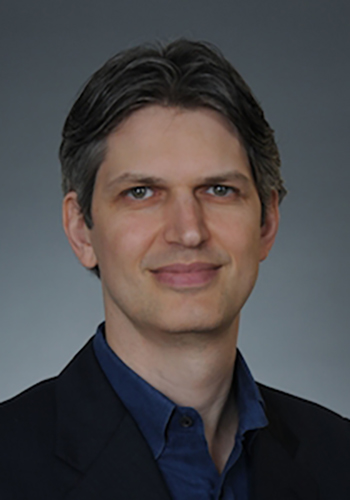
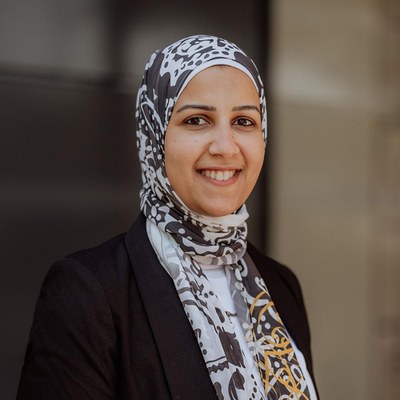
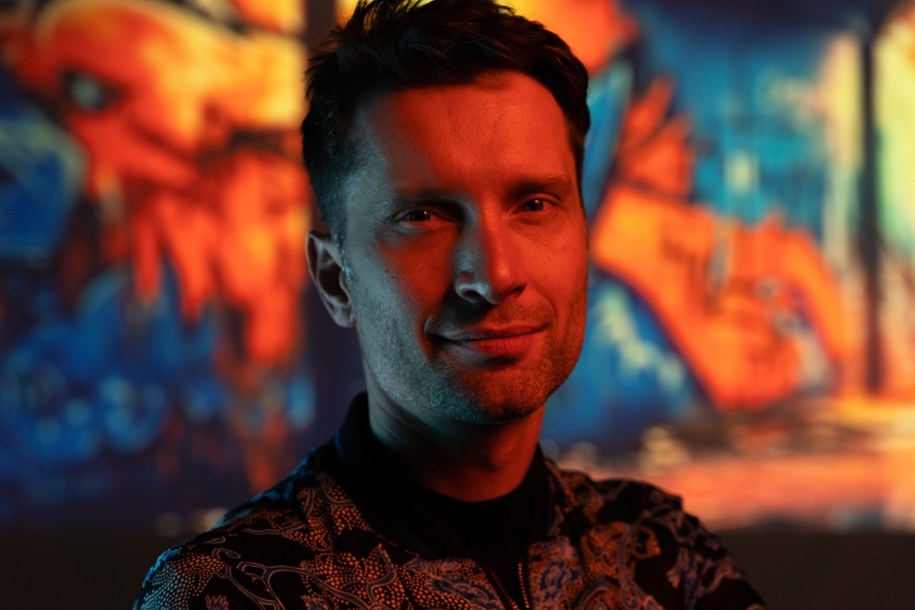
Pedro Rosa is an Associate Professor at Lusófona University of Humanities and Technologies (Lisbon, Portugal) and Instituto Superior Manuel Teixeira Gomes (Portimão, Portugal). He directs the Experimental Psychology Lab at ISMAT and serves as deputy director of the Experimental Psychology Lab at Lusófona University. His educational background includes a BSc and MSc in Psychology from Lusófona University, and a PhD in Health Psychology from ISCTE-IUL. Rosa's research focuses on quantitative methods, psychometrics, and multimodal measurement techniques including eye tracking and psychophysiological recording. His work spans health psychology, emotional processing, cognitive assessment, and sexual behavior research, with strong methodological emphasis on experimental validation and scale development. His scholarly publications demonstrate consistent focus on psychophysiological measurement innovations, particularly using eye-tracking methodologies across domains including face recognition, emotional processing, sexual behavior, and environmental awareness. Recent work shows increased attention to pandemic-related mental health impacts and ecological psychology. Rosa received the 2016 Award of Merit Researcher from the Portuguese Society of Health Psychology for his contributions to the field. He founded the International Conference on Eye Tracking, Visual Cognition and Emotion and established Portugal's Meeting of Cognitive Oculometry.
Luca Pollonini, Ph.D. , is an Associate Professor at the University of Houston within the Cullen College of Engineering , Department of Engineering Technology. He leads the Optical Bioimaging Lab , focusing on biomedical optics, cortical hemodynamics, and tissue oxygenation monitoring. His research spans wearable sensors, traumatic brain injury (TBI) studies, and early detection of pressure ulcers via diffuse optical imaging. Education: Ph.D. in Information Engineering, University of Brescia, Italy (2004) M.S. in Electrical Engineering, University of Brescia, Italy (2000) Dr. Pollonini's research integrates near-infrared spectroscopy (fNIRS) for real-time brain imaging and biomedical signal processing to detect physiological changes. His work on portable optical sensors includes applications for heart failure monitoring, astronaut fingertip injuries, and pressure ulcer prevention. Recent publications highlight his contributions to biomedical device design , TBI cortical connectivity , and cardiac rehabilitation technologies . Awards include the 2001 Best Science Thesis (Lombardy Institute), 2004 ARVO Best Poster , and 2014 Wolff Center Innovation Patent for skin-flap blood-flow monitoring. He serves as an Assistant Affiliate Member at the Houston Methodist Research Institute (since 2014) and mentors postdoctoral and graduate fellows in NSF-funded projects involving diffuse optical imaging and wearable sensor development.
Laura Gonzalez is a Professor of Research and Interdisciplinary Work at the Royal Conservatoire of Scotland and an Athenaeum Research Fellow. She serves as a summer faculty member, advisor, and supervisor for the MFA and PhD residency program at Transart Institute. Her work spans performance art, medical humanities, psychoanalysis, and embodied practices, with a particular focus on hysteria studies and breathwork. Her educational background includes: PhD in Cultural Communication and Computing Research Institute (C3RI), Art and Design Research Centre, Sheffield Hallam University (2005-2010) Postgraduate Certificate in Learning and Teaching in Art, Design and Communication (2004-2005) Master of Fine Art: Drawing, Wimbledon School of Art (2000-2001) Licenciada en Bellas Artes (BA equivalent), Universidad del Pais Vasco, Spain (1995-2000) Gonzalez's research explores the intersections of performance, psychoanalysis, and medical humanities, with particular emphasis on hysteria as a cultural and embodied phenomenon. Her work investigates how knowledge is produced through the body, especially through 'illegitimate forms of knowledge' such as intuition, magic, and oracles. She examines the relationship between breath, performance, and consciousness, developing practices that connect somatic awareness with artistic expression. Her research also engages with feminist theory, exploring how women's bodies have been historically pathologized while simultaneously serving as sites of resistance and creative transformation. Her recent publications reveal a consistent trajectory exploring embodiment, hysteria, and breath as artistic and scholarly concerns. She has increasingly focused on the medical humanities, examining historical medical texts and case histories through performance. Her work demonstrates a movement from theoretical analysis of seduction in art toward practical applications of breathwork and embodied knowledge in performance contexts. The interdisciplinary nature of her scholarship bridges art practice, psychoanalytic theory, and medical history. Her notable awards and recognitions include: Shortlisted for the Adrian Howells Award For Intimate Performance (2019) Athenaeum Award – Knowledge Exchange Route (2023) Glasgow Medical Humanities Network Foundation Award (2023) Athenaeum Award for research (2021) Multiple Research Development Funds from The Glasgow School of Art (2012-2016) AHRC Collaborative Doctoral Awards (2005, 2006, 2013) Gonzalez has supervised numerous doctoral students across institutions including the Royal Conservatoire of Scotland, Glasgow School of Art, and Transart Institute. Her supervision focuses on interdisciplinary projects at the intersection of performance, visual arts, and embodied research. She has secured significant grant funding for projects exploring the relationship between imitation and dance, breath practices, and hysteria studies. Her collaborative projects often involve partnerships with medical humanities scholars, performance practitioners, and community organizations. She is actively involved in several research collectives including The Workroom (since 2017), where she develops collaborative performance projects. She co-founded @TheGlasgowJam (2015-2018), creating space for multidisciplinary arts exploration. In 2021, she created the Scottish Breath Network, fostering interdisciplinary research on breathing practices. She also co-founded the Dialectical Materialist Book Group with Ian Macbeth, exploring Marxist theory through collective reading.
Derry Wijaya is an Associate Professor in the Data Science program at Monash University, Indonesia, specializing in natural language processing with a focus on multilingual applications, machine translation, and large language models. Her research bridges computational linguistics with social applications, examining how language technologies can address challenges in low-resource language settings. Her research interests center on natural language processing, with particular expertise in machine learning applications for multilingual contexts. Wijaya investigates how well-annotated languages can improve translation of less-documented languages, and explores the use of images, related tasks, data augmentation, and large language models to enhance representation and translation for languages with limited training data. Her work demonstrates strong interdisciplinary connections between technical NLP research and real-world social applications. Analysis of her recent publications (2023-2025) reveals a research trajectory that spans core NLP methodologies while increasingly incorporating social media analysis, policy applications, and cross-cultural communication challenges. Her work shows particular strength in addressing low-resource language challenges while maintaining relevance to Indonesian and global contexts, with notable publications examining climate change perception among Indonesian youth and comparative water quality issues between Indonesia and the United States. Wijaya maintains active research collaborations across multiple institutions, with numerous co-authored publications addressing diverse applications of NLP from public health communication to political discourse analysis. Her research demonstrates consistent productivity, with significant output in top computational linguistics venues.
Stefan Lee is an Associate Professor at Oregon State University in the School of Electrical Engineering and Computer Science. His research focuses on agents that can perceive environments, communicate with humans, and coordinate actions to achieve shared goals. This work spans computer vision, natural language processing, and deep learning, with applications in robotics and embodied AI. Current Role: Associate Professor, Oregon State (2025–) Previous Roles: Assistant Professor (2019–2025), Research Scientist II (2017–2019), Postdoctoral Associate (2016) Research Interests include: Vision-and-Language Navigation (VLN) Multimodal Learning Embodied Artificial Intelligence Robotic Perception and Control Fairness in AI Systems Selected Scientific Awards : ICLR 2023 Best Paper Award EMNLP 2017 Best Short Paper Award CVPR 2019 Oral CVPR 2018 Oral CVPR 2014 Best Paper Award Advising : Mentors 7 PhD students including Zijiao Yang, Xiangxi Shi, and Abhinav Jain. His publications demonstrate consistent leadership in top-tier conferences like ICCV, CVPR, and NeurIPS.
Prof. Dr. Katja Fiehler holds the W3 Professorship for Experimental Psychology ("Perception & Action") at Giessen University since March 2020. She previously served as W2 Professor (2016-2020) and Heisenberg-Professor (2011-2016) at the same institution. Her research focuses on sensorimotor integration, tactile perception, and spatial cognition in naturalistic environments, particularly through virtual reality applications. Current roles: Speaker of Cluster Project "The Adaptive Mind" Leadership: Speaker of DFG IRTG-1901 "The Brain in Action" Member of directorate: DFG SFB/TRR-135 "Cardinal mechanisms of perception" Directorate member: Bender Institute for Neuroimaging (BION) Katja's research spans tactile suppression during action, spatial memory coding, and multimodal perception. Her team investigates how sensorimotor predictions modulate sensory processing, how aging affects motor-sensory integration, and the neural basis of allocentric/egocentric spatial representations. Recent publications show strong focus on virtual reality experiments, sensorimotor recalibration, and inter-effector coordination. Key themes include tactile perception modulation by movement demands, spatial cognition in naturalistic environments, and cross-modal metacognition. She leads the "Team Perception and Action" at Giessen University, which includes researchers like Dr. Belkis Ezgi Arikan, Dr. Tom Nissens, and Dr. Meaghan McManus. Her lab develops tools like vexptoolbox for VR-based human behavior studies.
Dr. Elaine Schmidt serves as a Research Fellow in the Department of Theoretical and Applied Linguistics within the Faculty of Modern and Medieval Languages and Linguistics at the University of Cambridge. She concurrently holds positions as Associate Investigator at the ARC Centre of Excellence in Cognition and its Disorders and Honorary Associate at Macquarie University, Sydney, conducting research through the Cambridge Processing and Acquisition of Language Lab (CamLAB). Her doctoral training was completed at the University of Cambridge under Dr. Brechtje Post, focusing on bilingual acquisition of prosody. This foundation led to postdoctoral work at Macquarie University's Child Language Lab with Distinguished Professor Katherine Demuth. Dr. Schmidt's research spans language acquisition, processing, psycholinguistics, neurolinguistics, phonetics/phonology, prosody, and speech perception. She investigates how prosodic cues operate in monolingual and bilingual contexts using EEG, eye-tracking, and behavioral methodologies, with particular emphasis on intonation's role in syntactic disambiguation and speech rhythm development. Her publication record reveals consistent focus on prosodic processing across populations, demonstrating how linguistic experience shapes perception of intonational contours and how subvocal prosody aids syntactic parsing. Key methodological approaches include multimodal measurement techniques applied to cross-linguistic comparisons between English varieties and bilingual acquisition contexts. No major scientific awards were documented in available sources. She has led multiple research projects including EEG/eye-tracking studies on subvocal prosody in sentence processing and syntactic disambiguation in children, plus investigations into categorical/gradient intonation processing and L2 acquisition of Australian English intonation. Collaborations span Macquarie University's Cognitive Science and Psychology departments. No student advising roles were specified. Dr. Schmidt maintains active affiliations with Cambridge's CamLAB and Macquarie University's Child Language Lab, supported by ARC Centre of Excellence funding for cognition and disorders research.
Dr. Daniel A. Abrams is a Clinical Associate Professor in the Department of Psychiatry and Behavioral Sciences at Stanford University. His research focuses on the neurobiological basis of social communication impairments in children with autism spectrum disorders (ASD), particularly how atypical reward attribution to social stimuli like voices and faces impacts development. He employs techniques such as functional MRI, psychophysics, and cognitive assessments to identify neural markers of social and memory deficits in ASD. Dr. Abrams received his Ph.D. in Auditory Cognitive Neuroscience from Northwestern University (2008) and a B.F.A. from the University of Arizona (1994). His work has been funded by NIH, NARSAD, and the National Organization for Hearing Research Foundation. He leads the Speech and Social Neuroscience Lab at Stanford Cognitive and Systems Neuroscience Laboratory. Scientific awards include the K01 Research Scientist Development Award (NIH/NIMH, 2014-2017), NARSAD grant (2019-2021), and a 2017 CHRI Pilot Early Career Award. His recent publications highlight neural circuitry in voice processing, memory impairments linked to hyperconnectivity, and efficacy of clinic-home-school collaborative interventions for autistic adolescents. Key research trends: Autism neurodevelopment, reward/salience circuit dysfunction, social communication biomarkers, voice prosody decoding, and memory plasticity. Dr. Abrams’ full description below details his academic trajectory, grants, student collaborations, and clinical trial leadership.
Xingcheng Zhou is a Research Assistant at the Technical University of Munich (TUM), affiliated with the Chair of Robotics, Artificial Intelligence and Real-time Systems since 2023. He holds an M.Sc. in Electrical and Computer Engineering from TUM (2021) and previously worked as an Industrial AI Researcher at Siemens. Research Interests: Focus on Large Language Models , Vision Language Models , 3D Environment Perception , and Domain Adaptation in autonomous driving contexts. Publications: Contributions to 3D object detection refinement, sim2real domain adaptation, vision-language models, and dataset development for intelligent transportation systems. Teaching Involvement: Co-supervisor for master's theses and seminars on autonomous agents, perception models, and traffic environment understanding. Advising: Mentoring students on projects including LiDAR-guided monocular detection, world models, and multimodal benchmarks for transportation scenes. Trends in Research: Zhou's work bridges low-light image enhancement with spatial-frequency features, surface-aware frameworks for 3D detection, and weakly-supervised domain adaptation. He contributes to benchmarking spatio-temporal video understanding and evaluating autonomous driving datasets. Supervision and Collaboration: Co-authored key surveys and frameworks with Prof. Alois C. Knoll and peers, focusing on real-time roadside LiDARs, graph-based object relationships, and vision-language integration for traffic analysis.
Tom Knowles is a Lecturer in Robotics at the University of the West of England , affiliated with the School of Engineering . He teaches technical subjects such as C Programming , Matlab Programming , Python Programming , Robotics , and Neuroscience . Education: MSc BSc Mr. Knowles bridges conventional and spiking neural networks to develop artificial systems that mimic biological capabilities, particularly in navigation. His work explores how mammalian brains represent space and models robust, flexible behaviors through robotics, intersecting Robotics , Neuroscience , and Artificial Intelligence . Publications trends highlight biomimetic robotics , spiking neural networks , and computational neuroscience . His research integrates machine learning , bio-inspired models , and sensory reconstruction to solve navigation challenges, with collaborations at the University of Sussex and Technische Universität München (TUM) . Collaborations: University of Sussex TUM (Technische Universität München) Contact: Email: Tom.Knowles@uwe.ac.uk Phone: +44117 965 6261
Joanna Rutkowska is a postdoctoral researcher at the Jacobs Center for Productive Youth Development, Department of Psychology, University of Zurich (since 2023). Her academic journey includes a PhD in Brain, Behaviour and Cognition (Radboud University, 2018-2023), MSc in Evolutionary and Comparative Psychology (University of St Andrews, 2017-2018), and MA in Psychology (University of St Andrews, 2013-2017). PhD, Donders Institute for Brain, Behaviour and Cognition, Radboud University MSc, Evolutionary and Comparative Psychology, University of St Andrews MA, Psychology, University of St Andrews Her research focuses on social-cognitive development across mono-, bi-, and multilingual children, communicative behavior evolution, and action perception-motor development relationships. She employs multimodal methodologies including movement kinematics analysis, facial EMG processing, and biological motion sensitivity assessments. Recent publications examine how infants decode emotional expressions through visual/manual exploration (2025), data-driven EMG processing (2024), biological motion intention sensitivity (2022), and adult kinematic interpretation limitations (2021). These works span developmental psychology, computational affective science, and cognitive neuroscience.
Dr. Yomna Abdelrahman is a Professor of Usable Security and Privacy at the Bundeswehr University Munich . Her research focuses on thermal imaging for security and privacy , virtual reality usability, eye tracking , and biometric authentication . She collaborates with researchers like Florian Alt and Albrecht Schmidt on projects exploring how thermal sensing can enhance user identification and privacy awareness . Key Research Areas : Thermal Imaging, Human-Computer Interaction, Virtual Reality, Password Security, Biometric Authentication, Eye Tracking, Privacy Her recent publications address VR emotion detection , password usability , and privacy implications of thermal imaging . She has contributed to conferences like CHI, MUM, and INTERACT, often examining security-privacy trade-offs and non-invasive biometric systems . Notably, her work on thermal attacks reveals vulnerabilities in mobile authentication through thermal residue. She holds a PhD in Computer Science from the University of Stuttgart (2018), where her thesis, "Thermal Imaging for Amplifying Human Perception," laid the foundation for her later work on thermal-based interaction and cognitive load estimation . Her collaborations span diverse domains, from smart home notifications to industrial worker assistance , reflecting her interdisciplinary approach to usable security and interactive systems .
Michal Kosinski is an Associate Professor of Organizational Behavior at Stanford University's Graduate School of Business, specializing in computational social science, artificial intelligence, and psychometrics. He holds a Ph.D. in psychology from the University of Cambridge, where he pioneered methods for predicting psychological traits from digital footprints. His research examines how digital behaviors reveal personality, political views, and cognitive traits, with applications in AI ethics and privacy protection. Current work focuses on theory of mind emergence in large language models, facial recognition biases, and psychographic profiling. Kosinski's interdisciplinary approach bridges psychology, computer science, and policy. Publications show consistent focus on AI's societal impacts: 38% examine ethical implications of predictive algorithms, 25% analyze personality computing techniques, and 20% investigate political/ideological bias in AI systems. Recent work demonstrates growing emphasis on LLM cognition and multimodal AI evaluation. Major Scientific Awards: ARP Early Career Award (2025) SPSP Distinguished Fellowship (2024) William Stern Honorary Award (2024) EAPP Early Achievement Award (2023) APS Rising Star Award (2015) Top 1% Highly Cited Researcher Kosinski advises government agencies (FTC, DoJ, EU Parliament) and technology companies on AI ethics and policy. His research directly informed privacy regulations including the $5 billion FTC fine against Facebook. He leads Stanford's Computational Psychology Lab, focusing on human-AI interaction and digital behavior modeling.
Fumihiro Kano is a comparative psychologist at the Centre for the Advanced Study of Collective Behavior, University of Konstanz, and an Affiliated Scientist at the Max Planck Institute of Animal Behavior. His research focuses on the evolutionary origins of social intelligence, using cutting-edge technologies like eye-tracking, motion-capture, and thermal imaging to study social cognition in great apes, monkeys, and birds. Education: PhD in Biological Sciences (Primate Research Institute, Kyoto University) Key Collaborations: Max-Planck Institute for Evolutionary Anthropology, University of Oxford, Kumamoto Sanctuary (Kyoto University) Kano’s work spans comparative analysis of gaze behavior, emotional processing, and collective decision-making. He has developed wearable sensors for free-flying pigeons and non-invasive methods for studying primates in sanctuaries. His studies on the human eye’s uniformly white sclera have provided experimental support for the gaze signaling hypothesis . Recent research integrates large-scale motion-capture systems with gaze-tracking to analyze interspecies interactions in pigeons, crows, and humans. He specializes in quantifying attention dynamics during collective behavior, including vigilance in birds and social cognition in apes. Scientific Awards: Heidelberg Academy of Sciences Manfred Fuchs Preis (2023) APA Division 6 Early Carrier Investigator Award (2020) Japanese Psychological Association International Award (2018) Kano leads interdisciplinary teams combining computer vision, psychology, and behavioral ecology. His work bridges evolutionary biology and technological innovation, with applications for understanding human uniqueness and animal cognition.
Hasheem Hakeem is an Assistant Professor of Instruction and Coordinator of Elementary French at Northwestern University's Department of French and Italian, part of the Weinberg College of Arts & Sciences. He holds a dual PhD in Education and French Studies from Simon Fraser University, focusing on queer literature and theory. His research emphasizes queer pedagogical approaches, discourse analysis, and minoritized instructor identity. Education: Dual PhD in Education and French Studies from Simon Fraser University Research Interests: Hakeem's work explores queer pedagogy in French language instruction, critical approaches to gender and sexuality in education, and the intersection of identity politics with teaching practices. He actively contributes to initiatives like the Diversity, Decolonization, and the French Curriculum (DDFC) Collective and the Buffet Institute's Gender Working Group. Teaching: He teaches French language courses (beginner to advanced) and has experience redesigning curricula, such as the French placement test at the University of Calgary. His pedagogy uses multimodal texts to foster critical literacy and equity-focused language learning. Labs/Teams: Member of the DDFC Collective and Language Curricula and Gender Working Group, focusing on decolonizing French curricula and gender-inclusive language education.