Dr. Yizi Chen is a Researcher affiliated with the Professorship for Cartography at ETH Zurich's Department of Civil, Environmental and Geomatic Engineering. Their work focuses on advancing cartographic techniques through AI-driven methods, historical map analysis, and geospatial technologies. Key contributions include automated map vectorization, semantic segmentation of historical maps, and integrating multimodal data for robotic systems. They have published extensively in top-tier journals and conferences, addressing challenges in deep learning applications for geomatic engineering. Education details are not explicitly provided in the text. Research interests include semantic segmentation, generative AI for cartography, and steganography in image translation. Notable publications span topics from eye-tracking segmentation to urban land use mapping, reflecting a strong interdisciplinary approach. Dr. Chen collaborates on projects involving historical map digitization and benchmarking datasets for computer vision tasks. No awards or grants are mentioned. Their work contributes to advancing geomatic engineering through innovative solutions in digital mapping and spatial data analysis.
Shunyuan Zhang is an Assistant Professor at Harvard Business School with research focusing on AI algorithms, economic inequality, and computer vision applications in business contexts. His work examines how algorithmic systems impact economic outcomes, particularly in sharing economy platforms like Airbnb. His research interests include AI algorithms, economic inequality, pricing algorithms, machine learning, computer vision, and the sharing economy. Zhang's work often combines technical computer vision approaches with economic analysis to understand platform dynamics. Zhang's recent publications demonstrate a strong focus on the intersection of AI, fairness, and economic outcomes. His work analyzes how algorithmic pricing affects racial disparities on platforms like Airbnb, and how visual content impacts demand in the sharing economy. His research employs sophisticated methodologies including deep learning, structural modeling, and causal inference. He has published in top journals and working paper series, with notable work including 'Can an AI Algorithm Mitigate Racial Economic Inequality? An Analysis in the Context of Airbnb' and 'What Makes a Good Image? Airbnb Demand Analytics Leveraging Interpretable Image Features.' Zhang collaborates extensively with leading researchers at Carnegie Mellon University and University of Toronto, particularly on topics related to algorithmic fairness and platform economics. His work has significant implications for both academic understanding and practical policy recommendations regarding algorithmic systems in marketplace contexts.
Dr Thu Ngo is a Researcher at UNSW Sydney, affiliated with the School of Arts, Design & Architecture. She holds a Ph.D. in Education Linguistics from the University of New England, Australia, focusing on evaluative language deployment. Her expertise spans Systemic Functional Linguistics, Multimodal Digital Literacy Education, Paralanguage analysis (body language, gesture, facial expressions), and Children’s Literature. Dr Ngo has received grants including the ACU Teaching Development Grant (2019-2020) for visualizing multimodal literacy pedagogy and the Explorance Faculty Research Grant (2021) for student-feedback-based course redesign. Her research integrates linguistic theory with practical educational applications. Recent work explores emotional expression in music education through semiotics, gesture in science communication, and the role of paralanguage in fostering equity for international students. She actively contributes to interdisciplinary projects, such as analyzing characterisation in children’s literature adaptations and refining appraisal frameworks in ESL contexts. Dr Ngo’s publications include a 2021 book on paralanguage modeling and peer-reviewed articles in journals like Research Studies in Music Education and Research in Science Education . She is also active on ResearchGate and maintains an ORCID profile.
Kourosh Davoudi is an Associate Professor of Computer Science at Ontario Tech University's Faculty of Science. He holds a PhD in Computer Science from York University with a focus on Machine Learning and Data Mining. Prior to joining Ontario Tech in 2019, he was a postdoctoral research fellow at the University of Waterloo's Department of Management Sciences. His research interests span Natural Language Processing, Deep Learning, Reinforcement Learning, Graph Mining, and Machine Learning. He actively supervises graduate students in these areas and teaches courses such as Data Mining and Artificial Intelligence. His research emphasizes practical applications of AI techniques in areas like outbreak detection, sentiment analysis, and automated grading systems. Recent work includes innovations in neural document segmentation, vision-language models, and hybrid outbreak detection using social media data. His publications consistently address challenges in algorithm design, explainable AI, and domain-specific NLP applications. Dr. Davoudi has contributed to conferences such as COLING, EMNLP, and IEEE transactions, focusing on interdisciplinary applications of machine learning. His work bridges theoretical advancements with real-world problems in healthcare, education, and social media analysis.
Cristobal Pagan Canovas is a Permanent Professor (tenure-track) at the Department of English Philology, University of Murcia, where he co-directs the Daedalus Lab and the Murcia Center for Cognition, Communication, and Creativity. He is also a member of the international consortium Red Hen Lab, focusing on multimodal communication research. Education includes: PhD in Ancient and Modern Greek Literature from University of Murcia BA+MA in Classics and BA+MA in English from University of Murcia MA in Classics from University College London His research explores human cognition and communication through interdisciplinary approaches combining humanities and sciences. Primary interests include: Conceptual integration networks in emotional expression Multimodal communication patterns across language, gesture, and prosody Temporal representation in creative artifacts Cognitive foundations of poetic metaphor and verbal art Cultural evolution of integrative patterns in social interactions Recent publications demonstrate consistent focus on temporal cognition, multimodal communication, and creativity across domains including poetry, music, and gesture. Research employs corpus analysis, big data approaches, and cognitive modeling to examine how humans integrate perceptions into meaningful wholes. Scientific awards and fellowships: Ramón y Cajal Grant (elite national scheme) Alexander von Humboldt Fellowship in Quantitative Linguistics EURIAS Fellowship at Netherlands Institute for Advanced Studies FBBVA Leonardo Fellowship Marie Curie Fellowship ENSAYA'10 Award for scientific essay He leads multiple research grants including ERASMUS PLUS KA220-HED (MULTIDATA) and national grants MULTIFLOW and CREATIME. Supervised trainees include postdoctoral researchers (Marie Curie, Juan de la Cierva), MA students, undergraduates, and data scientists. The Daedalus Lab develops interdisciplinary methods to study cognition and communication, while Red Hen Lab enables large-scale multimodal dataset analysis through international collaboration.
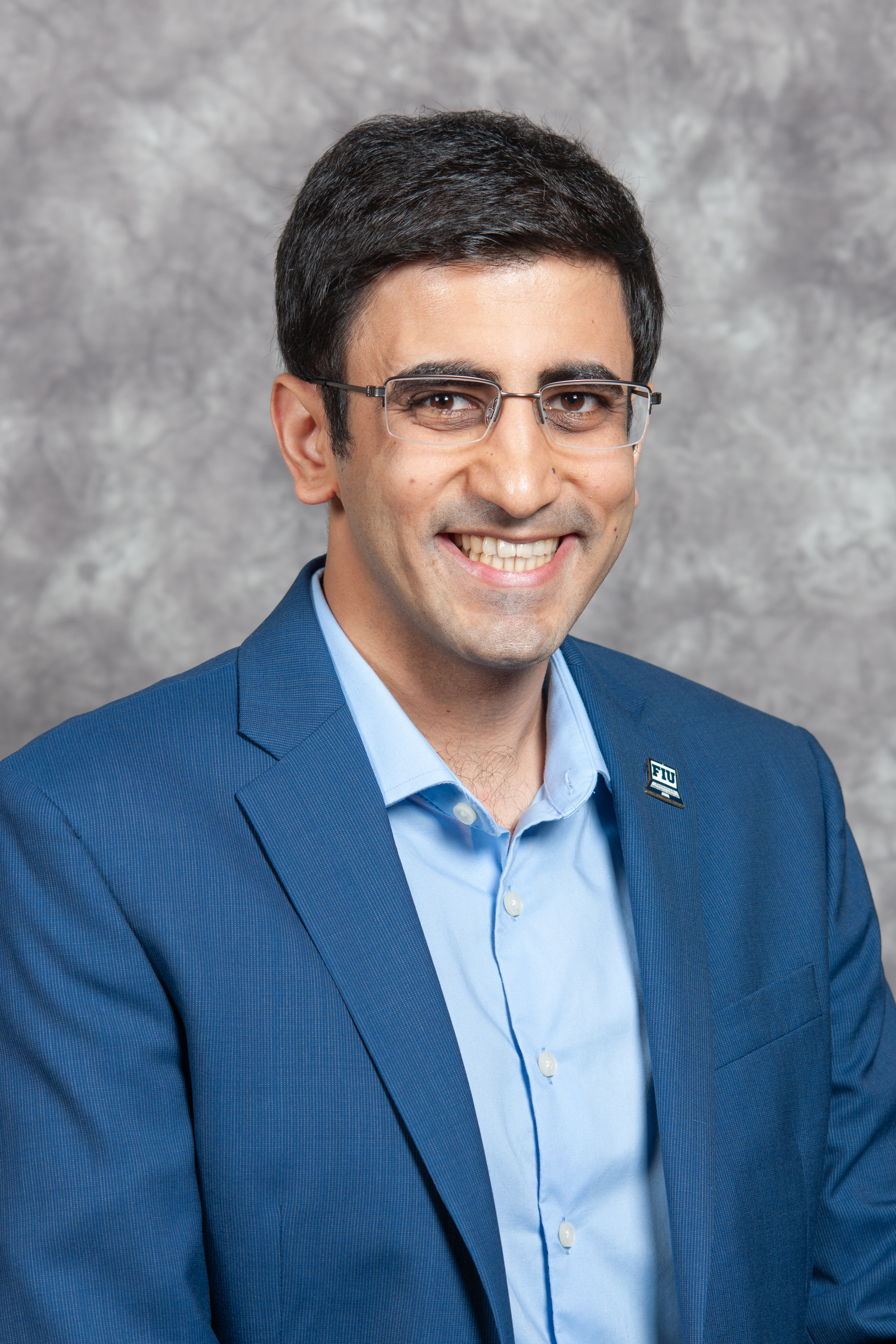
M. Hadi Amini is an Assistant Professor at Florida International University's Knight Foundation School of Computing and Information Sciences. He founded and directs the Sustainability, Optimization, and Learning for InterDependent networks (SOLID) laboratory, focusing on cyber-physical-social systems and distributed AI applications. Ph.D., Electrical and Computer Engineering (2019), Carnegie Mellon University M.Sc., Electrical and Computer Engineering (2015), Carnegie Mellon University M.Sc. (2013), Tarbiat Modares University B.Sc. (2011), Sharif University of Technology His research spans federated learning, interdependent network optimization, and AI applications in smart cities , energy systems , and healthcare . Recent work emphasizes privacy-preserving techniques, quantum encryption, and blockchain integration for secure distributed learning. The 15 most recent publications highlight trends in large language models , edge computing , medical imaging security , and infrastructure resilience , with interdisciplinary emphasis across computer science, systems engineering, and urban planning. Best Paper Award, IEEE Conference on Computational Science & Computational Intelligence (2019) Best Journal Paper Award, Springer Nature Operations Research Forum (2021) Excellence in Teaching Award, FIU (2020) Multiple Best Reviewer Awards, IEEE Transactions NSF Travel Awards (2019) As Associate Editor for Frontiers in Communications and Networks and book series editor for Sustainable Interdependent Networks , he actively shapes research discourse. His lab has secured $3.6M in federal/state funding for AI-driven infrastructure projects.
Marina L. Gavrilova is a Professor at the University of Calgary, Canada. Her research focuses on biometric systems, computer vision, and machine learning with an emphasis on multimodal recognition and security applications. She has authored numerous publications in top journals and conferences, contributing to advancements in fields like emotion-aware de-identification, generative adversarial networks, and ethical AI frameworks in healthcare. Her work spans social behavioral biometrics, gait recognition, masked face recognition, and aesthetic-based person identification. Key contributions include frameworks for ethical AI in care systems, fusion algorithms for multi-biometric systems, and innovations in visual and audio signal processing. Collaborations with experts like Osvaldo Gervasi, Jon G. Rokne, and Padma Polash Paul highlight her interdisciplinary approach. Publications emphasize practical applications such as privacy-preserved biometrics, emotion detection from social media, and adaptive systems for template aging. Despite no explicit mention of grants or labs, her extensive co-author network and frequent citations indicate significant academic influence.
Talal Shaikh is an Associate Professor at Heriot-Watt University's School of Mathematical and Computer Sciences in Dubai. He serves as Director of Undergraduate Studies and Programme Director for BSc Computer Science, BSc CS (AI), and MSc Software Engineering. With a decade of industry experience as a Chief Information Officer and Software Engineer, he bridges practical insights with academic research. Research Interests: Pervasive Computing, IoT/M2M, AI/ML, WiFi Sensing for Healthcare, Financial Machine Learning, Educational Technology Awards: Teaching Excellence Awards (2017/18), Fellow of the Higher Education Academy (FHEA), multiple Learning and Teaching Oscars (2016, 2017, 2018) His work spans Ubiquitous Computing and IoT , focusing on sensor networks and WiFi-based sensing for healthcare. In Artificial Intelligence , he applies ML to robotics, financial analytics, and educational innovation. Recent articles analyze Reinforcement Learning , Emotion Recognition , and WiFi Sensing applications. His teaching emphasizes student-centric learning, with over 100 supervised dissertations achieving distinctions. Collaborations include international conferences and interdisciplinary research in smart environments and adaptive systems.
Dr. Minglun Gong is a Professor and Director of the School of Computer Science at the University of Guelph (since 2019). Previously, he served as Professor and Head of the Department of Computer Science at Memorial University of Newfoundland. He holds a Ph.D. from the University of Alberta (2003), M.Sc. from Tsinghua University (1997), and B.Engr. from Harbin Engineering University (1994). His research focuses on visual computing, including computer graphics, computer vision, visualization, image processing, and pattern recognition. He has authored over 150 referred papers and holds patents in the field. He is an Associate Editor for Pattern Recognition and IEEE Signal Processing Letters , and has received awards such as the Izaak Walton Killam Memorial Award and multiple best paper awards. Dr. Gong has advised numerous students, including Ph.D./M.Sc. candidates and visiting scholars. His lab's recent work includes UAV path planning for urban reconstruction, image stylization techniques, and 3D human pose estimation. He actively participates in academic service, including editorial roles, conference program committees, and administrative roles at multiple institutions. His teaching spans courses in image processing, computational photography, and technical communication. He is also involved in administrative committees, such as Graduate Studies and Promotion at Memorial University. Key research contributions include advancements in transparent object modeling, underwater 3D reconstruction, and image-to-image translation. His work emphasizes practical applications in fields like medical imaging, autonomous systems, and environmental modeling.
Alexander Refsum Jensenius is a Professor of Music Technology and Director of the RITMO Centre for Interdisciplinary Studies in Rhythm, Time and Motion at the University of Oslo. He also leads the fourMs Lab and co-founded the MishMash Centre for AI and Creativity. His work bridges musicology, psychology, and technology, focusing on embodied music cognition, human motion analysis, and creative applications of AI. Notably, he pioneered research on air guitar motion and human micromotion through projects like the Oslo Standstill Database . Educated at the University of Oslo (BA in Music and Mathematics, MA in Musicology) and Chalmers University of Technology (MSc in Applied IT), Jensenius holds a PhD in Music Technology from UiO. He has held visiting researcher roles at UC Berkeley, McGill University, and KTH. Leadership roles include Department of Musicology Head (2013–2016) and Steering Committee Chair for the International Conference on New Interfaces for Musical Expression (NIME, 2011–2022). Research interests span music-related body motion, AI in creative contexts, and open research practices. Key contributions include the Music Moves and Motion Capture MOOCs, the Musical Gestures Toolbox software, and monographs like Sound Actions and Sonic Design . His work emphasizes interdisciplinary collaboration, with projects addressing ventilation systems' acoustic properties and cell culture vibrational effects. Awards include the European Open Data Champion recognition. He advocates for open science and maintains extensive digital archives of research materials, emphasizing institutional web pages as critical research infrastructure.
Triantafyllia Liana Konstantinidou serves as a Professor of German as a Foreign and Second Language at the Institute of Language Competence , Zurich University of Applied Sciences (ZHAW). Her work bridges academic research with practical applications in vocational education contexts. Current Affiliation: Director of European Literacy Network (2023-2028) Advisor to Internationaler Verband für Deutschlehrer:innen (IDV) since 2021 Her research focuses on vocational literacy , plurilingual competence development , and technology-enhanced language learning . Key projects include: Digital Literacy Skills (completed 2024) Literacy for Entrepreneurship (completed 2024) Integrated Reading-Writing Support (completed 2024) Recent publications analyze writing competence profiles in vocational contexts and explore scenario-based literacy education across diverse professional fields. Her work demonstrates strong connections between corpus linguistics , language testing , and educational policy .
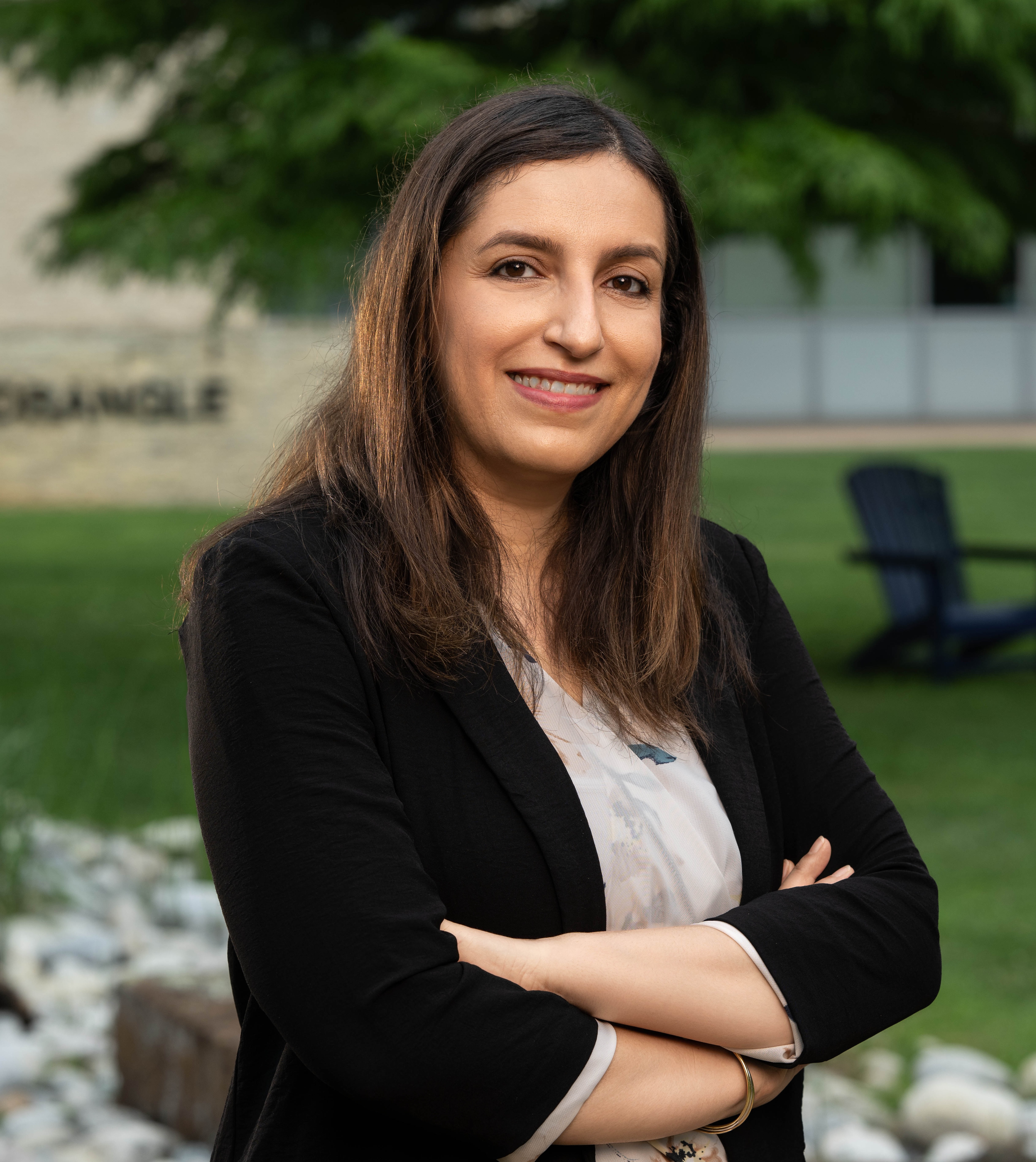
Dr. Shirin Nilizadeh is an Associate Professor in the Department of Computer Science and Engineering at The University of Texas at Arlington's College of Engineering. She leads the Security and Privacy Research Lab, conducting interdisciplinary research at the intersection of cybersecurity, privacy, machine learning, and social media analysis. Her work addresses critical societal issues related to online security, privacy, and safety through data-driven approaches. Dr. Nilizadeh received her PhD in Computer Science from Indiana University in 2014, followed by MS in Computer Science from Amirkabir University (2007) and BS in Computer Engineering from Islamic Azad University (2004). Her research focuses on security and privacy in systems and social networks, employing techniques from machine learning and big data analytics. She takes a highly interdisciplinary approach, integrating AI, NLP, social sciences, and public health to address societal issues in cybersecurity and privacy. Her research objectives include: (1) detecting and characterizing emerging threats in online social networks like social engineering attacks, misinformation, and online hate speech; (2) advancing the adversarial robustness and fairness of ML and NLG systems; and (3) studying humans' online behaviors through data-driven interdisciplinary research. Analysis of her recent publications reveals a strong focus on AI-generated security threats, particularly phishing scams using LLMs, NFT fraud detection, social media toxicity analysis, and content moderation systems. Her work bridges theoretical security research with practical applications, often addressing real-world security challenges through innovative technical solutions. Among her notable scientific achievements are the prestigious NSF CAREER award (2023), Comcast Innovation Awards (2022 and 2024), College of Engineering Outstanding Early Career Research award (2024), and IEEE SP 2024 Distinguished Paper Award. Her work has also received best paper and technical poster awards at eCrime 2021 and NDSS 2022. Dr. Nilizadeh has successfully mentored numerous doctoral and master's students while securing significant research funding, including multiple NSF grants and Comcast Innovation Fund awards. She leads a vibrant research group that has produced impactful work cited in official reports submitted to The Supreme Court and the EU Committee on Civil Liberties, Justice, and Home Affairs. Her lab has also received coverage from WIRED, MIT Technology Review, Orange's Hello Future, and Communications of the ACM. She serves on numerous program committees for top international conferences including ACM CCS, USENIX Security, and POPETS, and has organized outreach programs like OurCS@DFW to broaden participation of underrepresented students in computing.
Kurt Keutzer is a Professor in the Department of Electrical Engineering and Computer Science at the University of California, Berkeley, and a key member of the Berkeley AI Research Lab (BAIR). He holds a Ph.D. in Computer Science from Indiana University (1984) and was previously Chief Technical Officer at Synopsys, Inc. His research focuses on systems issues in deep learning, particularly for computer vision, speech recognition, NLP, and finance. He has published over 250 refereed articles and six books, and is a highly cited author in hardware and design automation. Keutzer has received multiple IEEE Fellowships, DAC awards, and best paper accolades at conferences like Embedded Vision Workshop and ICPP. Educations: 1984, PhD, Computer Science, Indiana University Kurt Keutzer's research interests span Artificial Intelligence , Computer Architecture , and Scientific Computing , with a focus on computational efficiency in AI systems. His work explores hardware-aware neural architecture search, domain adaptation, and quantization techniques to optimize models from edge to cloud. Recent publications highlight advancements in vision transformers , LLM inference efficiency , and autonomous driving . He also contributes to multimodal AI and self-supervised learning frameworks. Scientific Awards: Institute of Electrical & Electronics Engineers (IEEE) Fellow (1996) DAC's Most Influential Paper Award (2023) Top Ten Cited Author and Paper at DAC Best Paper Awards at Embedded Vision Workshop and ICPP Kurt Keutzer has advised numerous Ph.D. and Master’s students, including Forrest Iandola (co-founder of DeepScale), Sheng Shen, and Michael Murphy. His research teams have pioneered hardware-efficient deep learning solutions like SqueezeNet and FireCaffe. Current projects include optimizing large language models (LLMs) for edge deployment and advancing 3D reconstruction for autonomous vehicles. He is also involved in diffusion models , sparse attention mechanisms , and multi-agent coordination for complex tasks.
Afra Alishahi is a Full Professor at Tilburg University's Department of Cognitive Science and Artificial Intelligence within the Tilburg School of Humanities and Digital Sciences. Her research focuses on computational models of human language acquisition and grounded language learning, leveraging neural models to explore how language processing and acquisition occur. She has held roles including Assistant Professor at Tilburg University (since 2011) and Postdoctoral Fellow at Saarland University (2008-2011). Her work bridges computational linguistics, cognitive science, and artificial intelligence, with contributions to understanding language learning mechanisms through models that integrate visual, auditory, and linguistic data. Education: PhD (university unspecified), with prior academic roles in Iran and Germany. Awards: CoNLL 2017 Best Paper Award, 2023 Outstanding Paper Award, NWO Aspasia Grant (2015), and NWO Natural Artificial Intelligence Grant (2015). Her research has been supported by grants such as the Dutch National Research Agenda-funded project on interpreting deep learning models for text and sound. Research Interests: Grounded language learning, interaction effects in language acquisition, and neural model interpretability. Key areas include multi-modal learning (e.g., linking speech to visual scenes), computational modeling of child language learning, and probing neural networks for linguistic knowledge. She co-organized workshops like BlackboxNLP (2018-2020) and has authored over 60 publications, including influential works on phonology encoding in neural models and gender disambiguation in machine translation. Teaching: Courses include Cognitive Models of Language Learning , Computational Linguistics , and Language, Cognition & Computation . She advises master's theses and leads projects in data science and AI. Lab/Team: Leads research on computational modeling, collaboration with interdisciplinary teams (e.g., with Grzegorz Chrupała, Afsaneh Fazly), and involvement in initiatives like the Interpreting Deep Learning Models for Text and Sound project.
João Magalhães is a Full Professor in the Department of Computer Science at the Faculty of Science and Technology, Universidade NOVA de Lisboa, Portugal. He serves as Group Coordinator of the Multimodal Systems Group at the NOVA Laboratory for Informatics and Computer Science and leads the NOVASearch research group at FCT/UNL. His research focuses on vision and language information understanding, with particular emphasis on multimodal information understanding, multimodal conversational AI, multimedia search and summarization, temporal and memory models, and social media information quality. His work spans both theoretical foundations and practical applications across web, social media, and clinical domains. Analysis of his recent publications reveals a strong trajectory in multimodal conversational AI systems, with increasing sophistication in handling both voice and visual inputs. His research has evolved from foundational work in cross-modal embeddings to advanced large language models for dual-goal conversational settings, demonstrating consistent innovation in the field of multimodal understanding. 1st prize winner of the second Alexa TaskBot Challenge (2023) Award-winning solution in the Alexa TaskBot Challenge (2022) Best paper award at the Portuguese NLP conference (PROPOR) (2020) Best paper nominations at ACM conferences (2018) Professor Magalhães has advised numerous graduate students through the NOVASearch group and has secured substantial research funding through projects including Amazon Alexa TaskBot Challenge (2021-2023), iFetch (2020-2023), SmartyFlow (2017-2020), COGNITUS (2016-2019), GoLocal (2016-2020), QSearch (2012-2015), ImTV (2010-2013), and CS4SE (2010-2013). He actively serves the research community as ACM Multimedia 2026 Program Committee Chair and has held leadership roles in numerous conferences including ACM Multimedia 2022 General Chair and ECIR2020 General Chair. He leads the Multimodal Systems Group within the NOVA Laboratory for Informatics and Computer Science, where his team develops cutting-edge solutions for multimodal understanding with applications in conversational AI, multimedia search, and social media analysis.