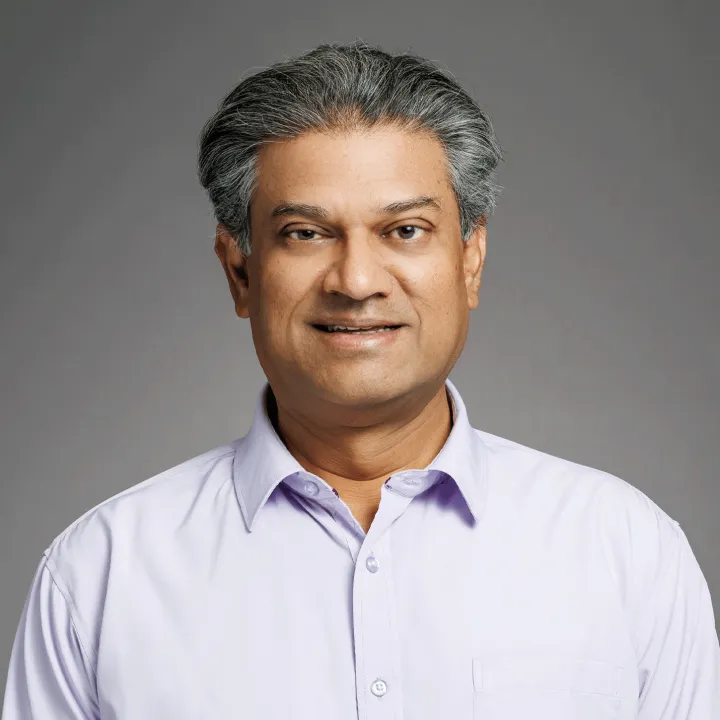
Yannis Stylianou is Professor of Speech Processing at University of Crete and Senior Research Scientist at Apple. Former positions include AT&T Labs Research, Bell-Labs, and Toshiba Cambridge Research Lab. IEEE Fellow with PhD from ENST-Paris and over 200 publications. Research spans: Adaptive speech/audio modeling Neural speech synthesis/enhancement Biomedical signal processing Awards include: IEEE Fellowship French Ministry Research Fellowship ENST Graduate Scholarship Recent work focuses on neural TTS architectures, intelligibility enhancement, and multimodal synthesis. Organizes annual International Summer School on Speech Processing.
Geoffrey Handsfield is an Assistant Professor at the University of North Carolina at Chapel Hill, holding appointments in the Department of Orthopaedics and the Lampe Joint Department of Biomedical Engineering. His work integrates advanced medical imaging, computational modeling, and mechanical experimentation to improve clinical orthopaedic medicine and understand musculoskeletal form and function. Educated at East Carolina University (B.S. Physics, Summa Cum Laude with Mathematics Minor), the University of Virginia (Ph.D., Biomedical Engineering), and as a Whitaker Postdoctoral Scholar at the University of Auckland, his research focuses on musculoskeletal MRI, computational modeling of muscle-tendon interactions, and pediatric cerebral palsy rehabilitation. Education: Ph.D., Biomedical Engineering, University of Virginia, 2014 Postdoctoral Fellowship, Auckland Bioengineering Institute, 2014–2016 (Whitaker Scholar) B.S., Physics (Summa Cum Laude), Mathematics Minor, East Carolina University, 2008 Research Interests: Dr. Handsfield’s lab pioneers techniques like ultra-high contrast MRI and 3D ultrasound to study muscle-fascia interactions, tendon mechanics, and pediatric cerebral palsy. Key areas include: Image-based computational models for personalized musculoskeletal analysis Muscle architecture and regeneration in children and athletes Biomechanical interventions for cerebral palsy rehabilitation Non-invasive muscle profiling for clinical decision-making Awards: Aotearoa Early Career Research Fellow, Robertson Foundation Early Career Research Award, Australia-New Zealand Orthopaedic Research Society Whitaker Postdoctoral Scholar Academic All-American in Swimming & Diving (2007–2008) Advising & Grants: While specific grant details are not listed, his lab’s focus on pediatric cerebral palsy and musculoskeletal modeling suggests involvement in NIH-funded or foundation-sponsored research. No formal advisees are listed in the provided data. Labs & Teams: His interdisciplinary lab collaborates with clinicians and engineers to translate imaging and modeling innovations into clinical practice, focusing on tools like the dSIR MRI sequence and high-dimensional muscle clustering for athlete and pediatric populations.
Dr. Craig Ferris is Professor of Psychology at Northeastern University's College of Science with joint appointment in Pharmaceutical Sciences. He directs the Center for Translational NeuroImaging (CTNI) investigating neuropsychiatric disorders through advanced MRI techniques. Research focuses on neuroplasticity, neurodegenerative mechanisms, and psychopharmacology using awake animal MRI. Current investigations examine glymphatic system function, cannabinoid neuropharmacology, and neuropathology of traumatic brain injury across developmental stages. Recent publications explore psychedelic neurobiology, lipidome-brain function relationships, and neurovascular changes in disease models. Studies employ multimodal imaging to track neurobiological changes in real-time during pharmacological challenges. Leadership roles include mentoring doctoral candidates and developing novel neuroimaging methodologies for drug discovery applications.
Dina Katabi is the Thuan and Nicole Pham Professor of Electrical Engineering and Computer Science at MIT, leading the Katabi Lab and directing the MIT Center for Wireless Networks and Mobile Computing. Her research bridges AI, wireless systems, and digital health, focusing on non-invasive health monitoring via wireless signals and machine learning. She is a MacArthur Fellow and holds the Andrew & Erna Viterbi Professorship. Key research areas include emotion recognition (EQ-Radio), sleep posture monitoring (BodyCompass), and through-wall human pose estimation. Her lab develops AI systems for biosensors, leveraging RF signals to detect diseases like Parkinson's and Alzheimer's. Notable awards include the ACM Prize in Computing and SIGCOMM's Lifetime Achievement Award. Publications span wireless networks, computer vision, and health tech, with impactful work in CVPR, ECCV, and Nature Medicine. She advises over 20 students/postdocs and collaborates on technologies like in-body backscatter communication and AI-driven drug development monitoring. Labs: Katabi Lab (MIT CSAIL) and the MIT Wireless Center. Ongoing work explores digital biomarkers, self-supervised learning, and scalable health monitoring systems for chronic diseases.
Professor Alistair McEwan, affiliated with the University of Sydney's School of Biomedical Engineering, specializes in biomedical devices and instrumentation for neurological and cardiovascular diagnostics. As the Cerebral Palsy Chair of Technology and Engineering and Associate Head (External Engagement), he focuses on low-cost medical solutions for resource-limited settings, including neonatal care and stroke detection. His research bridges biophysics and clinical translation, with applications in electrical impedance tomography, wearable sensors, and neuroprosthetics. PhD from University of Oxford Member of the Sydney Nano Institute, Brain and Mind Centre, and Charles Perkins Centre His work explores how tissue electrical properties can enhance understanding of neural signaling and implant design. Clinical collaborators include the Bill & Melinda Gates Foundation for newborn nutrition monitoring. Recent projects involve AI-assisted critical care modeling, bionic devices for stress measurement, and adaptive control systems for neonatal resuscitation equipment.
Iti Chaturvedi is a Lecturer in the Department of Information Technology at James Cook University (JCU). She holds a Ph.D. in Computer Engineering from Nanyang Technological University, Singapore. Her research focuses on signal processing and AI applications in social media, including emotion recognition, speech analysis, and sentiment analysis. She has been recognized as a Top 2% Most Cited Researcher globally (2022) and received the JCU CSE Early Career Researcher Award (2020). She teaches courses such as Machine Learning and Data Science, Programming III, and Design Thinking I. Current research projects include sentiment prediction from social media (since 2020). She serves as an Associate Editor for the Expert Systems journal (2023) and has been an ARC Assessor (2020). Key contributions include work on speech emotion recognition, constrained manifold learning for videos, and multimodal emotion recognition systems. Her research outputs span journals like Expert Systems , Signal Processing , and conferences including IJCNN and AAAI.
Jacob Whitehill is an Associate Professor in the Department of Computer Science at Worcester Polytechnic Institute (WPI), affiliated with the Learning Science & Technologies (LST) program. His research focuses on applying machine learning to education and human-computer interaction, including speech recognition, emotion analysis, and automated classroom observation. He leads the NSF-funded project Developing New Scientific Instruments for Classroom Observation and collaborates on the AI Institute for Student-AI Teaming (iSAT) . His research interests span Applied Machine Learning (e.g., multi-modal systems, speaker diarization), AI for Education (e.g., automated instructional evaluation, child speech recognition), and Emotion Recognition (e.g., affective computing in classrooms). Recent work emphasizes classroom observation tools and improving student-teacher interaction analysis through video and audio data. Notable projects include: NSF-funded classroom observation tools AI Institute for Student-AI Teaming (iSAT) Schmidt Futures-funded Hybrid Human-Agent Tutoring for math education His team includes PhD students Xinlu He (Data Science), Jiani Wang (Computer Science), and Yiwen Guan (Computer Science), along with visiting scholar Cecilia Tivir. He advises students on topics like speaker recognition, educational data mining, and computer vision in classroom settings. Grants and collaborations include NSF, Schmidt Futures, and industry partnerships. His lab develops tools for automated feedback on teaching practices, leveraging LLMs and multimodal data. For more details, contact jrwhitehill@wpi.edu .
Prof. Margret Keuper is a Professor in the Department of Computer Vision and Machine Learning at the Max Planck Institute for Informatics. Her research focuses on advancing machine learning and computer vision techniques, with an emphasis on model fairness, adversarial robustness, and multimodal interactions. She leads interdisciplinary projects exploring topics such as dataset analysis, generative models, and climate action through visual narrative analysis. Research Interests: Her work bridges theoretical foundations and practical applications in domains like adversarial training, image classification robustness, and robotics perception. She explores how vision-language models can be steered to align with human biases and develops methods for data-efficient learning and interpretability. Recent Contributions: Recent work includes FAIR-TAT (model fairness via adversarial training), VSTAR (video synthesis), and TikZero (zero-shot graphics program generation). Her publications in top venues like CVPR, ICCV, and ICLR highlight contributions to both methodological innovation and real-world impact. Collaborations: Works closely with researchers across Max Planck and academic partners, focusing on projects such as sensor layout optimization, climate discourse analysis via social media imagery, and domain-aware foundation model fine-tuning.
Yong Zhang is affiliated with Tsinghua University's Research Institute of Information Technology in Beijing, China. His research focuses on machine learning, optimization algorithms, edge computing, and their applications in areas like time series analysis, federated learning, and sensor networks. He has collaborated on projects involving neural networks, scheduling problems, and privacy-preserving techniques. Education: Yong Zhang earned a PhD in Computer Science and Engineering from Fudan University in 2007. His academic career includes roles at institutions like the Chinese Academy of Sciences and the University of Hong Kong, reflecting a strong interdisciplinary background. Research Contributions: His work spans theoretical computer science, algorithm design, and applied machine learning. Notable areas include developing efficient scheduling algorithms for energy systems, creating robust federated learning frameworks for industrial demand forecasting, and advancing methods for sentiment analysis using multimodal data. He has also contributed to biomedical engineering through smartphone-based health monitoring systems. Collaborations: He frequently collaborates with researchers at institutions like the University of Electronic Science and Technology of China, Nanyang Technological University, and The Hong Kong Polytechnic University. Key projects involve data caching optimization in edge computing, distributed algorithms for dynamic networks, and combinatorial optimization problems. Labs & Future Work: His team explores cutting-edge topics in AI-driven systems, including trust-aware machine learning, distributed resource allocation, and real-time data processing for IoT applications. Current research emphasizes scalable solutions for complex optimization challenges in both academic and industrial settings.
Li Wei is a distinguished academic affiliated with Tsinghua University, with a focus on interdisciplinary research spanning artificial intelligence, machine learning, and computer vision. His work often intersects with medical informatics, remote sensing, and signal processing, demonstrating a commitment to advancing technological solutions in healthcare, environmental monitoring, and engineering systems. Research interests include deep learning applications in clinical diagnostics, satellite data analysis for climate modeling, and optimization of energy storage systems. He has contributed to innovative solutions in areas such as UAV-enabled edge computing, privacy-preserving blockchain protocols, and thermal-based surveillance systems. His collaborative projects often involve multidisciplinary teams across institutions. Publications reflect a strong emphasis on practical applications, such as mobile health tools for tumor recognition, transformer-based super-resolution techniques for oceanography, and AI-driven risk classification models for respiratory diseases. While no specific awards or grants are listed, his prolific output across top-tier journals indicates sustained research impact. Professional activities include contributions to conferences like RecSys, MICCAI, and AAAI, and editorial roles are implied through his extensive publication record. Collaborations with industry partners (e.g., in energy systems and medical imaging) suggest engagement with real-world problem-solving.
Mark Sabbagh is a Professor in the Department of Psychology at Queen's University , Canada. His research focuses on theory of mind , social learning , executive functioning , and conceptual change in preschoolers, as well as theory of mind and social functioning in adults. Education : Ph.D. (1998), M.Sc. (1996) in Psychology from the University of Oregon; B.A. (1993) in Psychology from the University of California, Santa Cruz. Cross-Appointments : Centre for Neuroscience Studies, Queen's University. His work integrates developmental psychology with cognitive neuroscience , examining neural correlates (EEG, fMRI) of social cognition and mental state reasoning. Additionally, he investigates clinical implications of theory of mind, including links to depression and autism spectrum disorders. Recent publications highlight his expertise in ERP studies , word learning , executive function , and neurogenetic influences on social cognition. His lab explores how probabilistic reasoning and environmental factors shape cognitive development. Current roles : Editor-In-Chief of Cognitive Development Journal (since 2014); Board Member, Cognitive Development Society (since 2013). Contact : sabbagh@queensu.ca | Office: 348 Humphrey Hall, Queen's University.
Professor Tunde Peto is a Clinical Professor at Queen’s University Belfast, affiliated with the Centre for Public Health within the School of Medicine, Dentistry and Biomedical Sciences (MDBS). She leads the Belfast Ophthalmic Image Reading Centre and oversees the Northern Irish Diabetic Retinopathy Screening Programme. Her research focuses on blinding retinal diseases, diabetic retinopathy imaging, and global ophthalmic health initiatives. Peto has pioneered screening programs and trained clinicians worldwide, contributing to 528+ publications across 25+ years of research. She has secured £2M+ in grants, including EU-funded EYE-RISK projects. Notable awards include the Eva Kohner Award for vision research and recognition in the EVI TOP LIST of European women in ophthalmology. Education & Background: Trained in Hungary and Australia, with 15 years at Moorfields Eye Hospital in London before joining Queen’s University in Belfast. Research Interests: Diabetic retinopathy characterization, age-related macular degeneration, neurodegenerative retinal links (e.g., Alzheimer’s), and telemedicine applications in eye care. Key projects include TIGER (submacular hemorrhage treatment trials), MACUSTAR (quality-of-life metrics), and the Belfast Reading Centre’s image analysis infrastructure. Awards & Recognition: 19th Healthcare Awards NI (2018), Belfast Ambassador Recognition (2019), EVI TOP LIST (2021), and international leadership in diabetic eye disease initiatives. Grants & Funding: Led projects like EYE-RISK (€6.5M EU grant) and the ARIS Study, focusing on AMD treatment and genetic risk factors.
Chi-Chun Lee (Jeremy) is a Professor and Associate Chair in the Department of Electrical Engineering at National Tsing Hua University (NTHU), Taiwan. He also serves as Director of the NVIDIA-NTHU Joint Innovation Center and leads the Behavioral Informatics & Interaction Computation (BIIC) Lab. His academic journey includes a B.S. (magna cum laude) and Ph.D. in Electrical Engineering from the University of Southern California (USC), USA (2007 and 2012), followed by roles as a data scientist at id:a lab and technical consultant for companies like E.Sun Bank and Allianz Taiwan. Research focuses on speech processing, affective computing, health analytics, and behavior signal processing. He is an IEEE Senior Member and holds editorial roles in top journals such as IEEE Transactions on Affective Computing and Multimedia. Key contributions include leading teams to international competitions (e.g., 1st place in INTERSPEECH 2009 Emotion Challenge) and developing AI frameworks for clinical applications like respiratory sound classification and tumor image synthesis. Recipient of prestigious awards including the NTHU-Novatek Distinguished Talent Chair (2024), National Science and Technology Council Outstanding Research Award (2023), and multiple best paper awards. His work bridges academia and industry, with collaborations extending to NVIDIA and startups like AHEAD Medicine. Research has been featured in major media outlets including Scientific American and Discovery.
Jill Zafar, MD, MBA, FASA, is an Associate Professor of Anesthesiology at the Yale School of Medicine and Clinical Chair of Anesthesiology at Bridgeport Hospital, Yale New Haven Health. She serves as Director of the Pre-Surgical Evaluation Center and focuses on perioperative medicine, preoperative optimization, and telehealth integration. Her leadership roles include Medical Director of Pre-Surgical Evaluation for Yale New Haven Health and liaison for the Committee on the Status of Women in Medicine (SWIM). Education & Training: MBA, University of Massachusetts, Amherst (2022) Chief Resident, Anesthesiology, University at Buffalo (2008) MD, SUNY at Buffalo School of Medicine (2004) BS, Biochemistry, State University of New York at Geneseo (1999) Research Interests: Dr. Zafar’s work centers on perioperative care optimization, including the use of cardiopulmonary exercise testing, telehealth, and standardized protocols to reduce preoperative risks and environmental footprints. Her research also addresses challenges in managing high-risk surgical patients, such as those with idiopathic pulmonary fibrosis or hypertension. Publications Overview: Her recent work emphasizes the clinical utility of submaximal exercise testing in predicting postoperative complications and the efficiency gains of telehealth in bariatric surgery evaluations. She has contributed to narrative reviews on perioperative management of complex conditions and environmental sustainability in healthcare. Grants & Mentorship: As a leader in ambulatory anesthesia and women’s professional development in medicine, she advocates for mentorship programs and equitable representation in academic roles. Her clinical leadership drives enhanced recovery protocols and multimodal pain management strategies. Labs & Teams: Directs the Pre-Surgical Evaluation Center, fostering interdisciplinary collaboration to streamline preoperative evaluations and improve patient safety and environmental sustainability.
D.S. Fahmeed Hyder is a Professor of Biomedical Engineering at Yale University, with additional appointments in Radiology & Biomedical Imaging. He holds a Ph.D. from Yale University and leads the Hyder Lab, which focuses on advancing quantitative and translational imaging technologies using magnetic resonance methods to study brain function and dysfunction at the laminar level. His research integrates multidisciplinary approaches, including molecular imaging, neurophysiology, and material science. Research Interests: Neurovascular and neurometabolic coupling mechanisms Molecular imaging probes for disease diagnostics Functional MRI (fMRI) and metabolic imaging in health and disease Imaging applications for Alzheimer’s, stroke, and cancer Publications: Dr. Hyder’s recent work emphasizes cutting-edge imaging techniques, such as pH-sensitive biosensors, high-resolution fMRI, and multimodal optical imaging. His research highlights include studies on neurovascular dysfunction in Alzheimer’s models, therapeutic interventions for brain injury, and molecular imaging of tumor microenvironments. Awards: Niels Lassen Award (2003), for cerebral blood flow research Early Career Faculty Award (1998), NSF & NIH Pilot Awards from JDRF & Yale-UCL Collaborative (2008, 2013) Labs/Teams: The Hyder Lab collaborates with institutions like UCL and the James S. McDonnell Foundation, advancing translational imaging solutions for clinical applications.