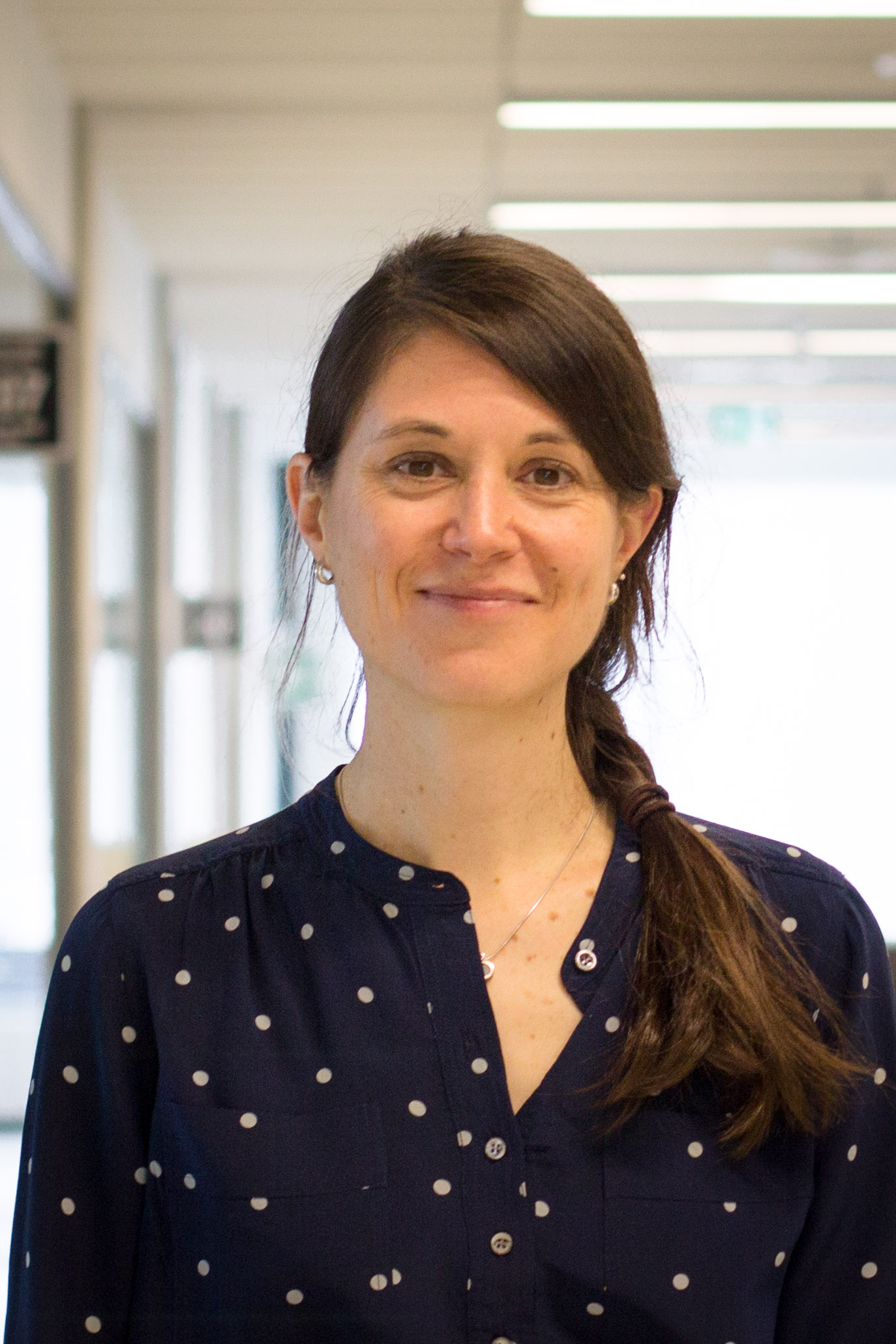
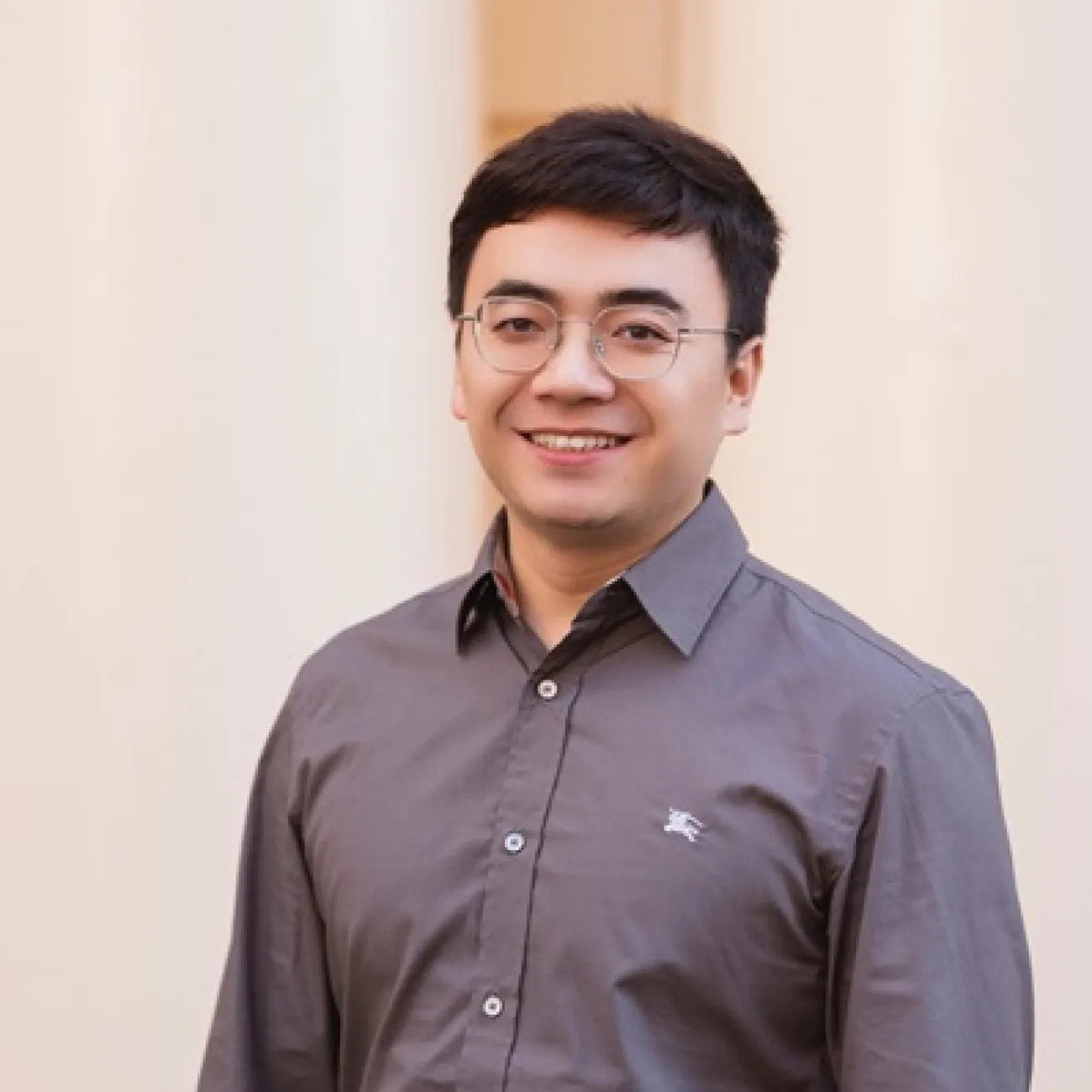
Zachari Swiecki is a Senior Lecturer in the Department of Human Centred Computing at Monash University's Faculty of Information Technology. He holds a PhD and MS in Educational Psychology from the University of Wisconsin-Madison and a BS in Mathematics & Physics (summa cum laude) from the University of Alabama. His research focuses on Learning Analytics, emphasizing collaborative settings, and he co-developed Quantitative Ethnography, a methodology integrating qualitative analysis, statistics, and data science. Key areas include modeling collaborative processes in engineering, medicine, and military contexts, real-time team monitoring systems, and educational simulations. Swiecki leads or collaborates on projects such as the 'Assessment Framework for Generative AI in Writing' (2024–2027) and 'Hierarchical Abstractions for Neuro-Symbolic Systems' (2023–2027). His work addresses UN Sustainable Development Goals related to education. He advises PhD students and has contributed to tools like the 'Epistemic Analytics Lab’ and 'Co-design Knowledge Management Systems' for educator communities. Publications span multimodal learning analytics, automated discourse analysis, and AI-driven educational tools, reflecting his interdisciplinary approach to advancing learning technologies. His research bridges theory and practice, with applications in adaptive scaffolding, stress analytics visualization ('StressViz'), and collaborative design interfaces.
Eva Hemmer is an Associate Professor in the Department of Chemistry and Biomolecular Sciences at the University of Ottawa, affiliated with the Nexus for Quantum Technologies (NEXQT) Institute. Her research focuses on developing lanthanide-based nanophosphors for near-infrared bioimaging and energy conversion. The Hemmer Lab specializes in synthesizing multifunctional nanoparticles with optimized optical properties, studying their interactions in biological systems, and designing novel optical materials. Education & Background: Dr. Hemmer holds a PhD in Materials Chemistry, with postdoctoral training in nanophotonics and quantum materials. Her career has been marked by interdisciplinary collaborations bridging chemistry, physics, and biomedical engineering. Research Interests: Lanthanide-doped nanomaterials for bioimaging and sensing Upconversion and downshifting photonics Nano-bio interface studies Theranostic platforms combining imaging and therapy Quantum materials for energy conversion Lab & Collaborations: The Hemmer Lab is part of the RISE Canada program, supporting undergraduate research exchanges. Collaborators include the National Research Council (NRC), the Mennigen Lab, and international groups from Brazil (University of São Paulo) and Germany (Uni Erlangen-Nürnberg). Advising & Training: Current advisees include graduate students Raquel and Wunnam, along with postdoctoral researchers Dr. Nayara Serge and Dr. York Serge. The lab hosts visiting scholars like Gabriel Moronari and Swantje Funk, emphasizing global knowledge exchange. Recent Projects: Recent work includes developing Gum Arabic-stabilized nanoparticles for reduced toxicity (2024), single-ion magnetic nanoparticles (2024), and core-multi-shell probes for multimodal imaging (2023).
Professor Effie Law is a full professor in the Department of Computer Science at Durham University, specializing in Human-Computer Interaction (HCI). She holds editorial board roles for journals like Interacting with Computers and International Journal of Human-Computer Studies . Prior roles include professorships at the University of Leicester and Senior Research Fellow at ETH Zurich. She earned a PhD in Psychology (with computer science minor) from LMU Munich and degrees from the University of Hong Kong. Her research focuses on UX methodologies applied to technology-enhanced learning, affective computing, and trustworthy autonomous systems. She led EU projects such as ARETE (augmented learning systems) and ESA's P-STEP (space technology education platform). She chairs/co-chairs major conferences like CHI and has published over 200 peer-reviewed works. Current research emphasizes automated emotion recognition, conversational AI, and mixed reality. Education: PhD (Psychology/Computer Science), LMU Munich; MSc/BSc (Social Sciences), University of Hong Kong Key Projects: COST Actions MAUSE/TwinTide, EU H2020 ARETE, ESA P-STEP Editorial Boards: Interacting with Computers, International Journal of Human-Computer Studies Her students include Caitlin Brown, Jinyu Liu, and others. Research outputs span AI ethics, chatbot applications in education, and pandemic impacts on child well-being in developing nations.
Professor Effie Lai-Chong Law is a full Professor in the Department of Computer Science at Durham University. She specializes in Human-Computer Interaction (HCI), focusing on Usability and User Experience (UX) methodologies applied to Technology-enhanced Learning (TEL), Affective Computing, and Trustworthy Autonomous Systems (TAS). She earned her PhD (summa cum laude) in psychology (minor: computer science) from the University of Munich with a DAAD scholarship and holds a Bachelor's and Master's in Social Science from the University of Hong Kong. Her research spans multidimensional UX measurement, automatic emotion recognition, conversational AI, and mixed reality. Recent publications reveal strong emphasis on chatbot trust dynamics, educational applications (e.g., traditional Chinese painting critique), healthcare empathy systems, sustainable travel behavior, and pandemic impacts on child well-being in Majority World contexts. Scientific awards: DAAD four-year full scholarship Professor Law supervises postgraduate students (Caitlin Brown, Jinyu Liu, Kubra Kaymakci Ustuner, Yasemin Bozdemir) and leads major projects including EU-funded ARETE (H2020 augmented learning) and UKRI TAS Verifiability. She serves on editorial boards for Interacting with Computers (OUP), International Journal of Human-Computer Studies (Elsevier), and Quality and User Experience (Springer), with extensive conference leadership at CHI and INTERACT.
Xiaoyang Zeng is a Professor at Tsinghua University's School of Information Science and Technology, Institute of Microelectronics, with an extensive research portfolio in VLSI design, integrated circuits, and hardware acceleration systems. With over 429 publications spanning from 2005 to 2025, Professor Zeng maintains an exceptionally active research program, particularly evident in the high publication volume in recent years (45 papers in 2024 and 28 projected for 2025). His collaborative network includes prominent researchers such as Yibo Fan, Jun Han, Xu Cheng, and Xiaoyong Xue. Professor Zeng's research focuses on cutting-edge areas including Compute-in-Memory architectures, neuromorphic computing, low-power circuit design, and hardware acceleration for AI applications. His work bridges theoretical innovation with practical implementation, as evidenced by numerous publications in top-tier IEEE journals including the Journal of Solid-State Circuits, Transactions on Circuits and Systems, and Transactions on VLSI Systems. Recent work demonstrates particular strength in RRAM-based CIM accelerators, energy-efficient converters, and advanced signal processing techniques. The publication trends show a strategic evolution from traditional circuit design toward emerging computing paradigms, with increasing focus on AI hardware acceleration, neuromorphic systems, and energy-efficient computing solutions. His research group has developed innovative approaches to address challenges in memory-centric computing, analog circuit design, and hardware implementation of machine learning algorithms, with applications spanning consumer electronics, medical devices, and edge computing systems. Selected Scientific Awards: IEEE Journal of Solid-State Circuits Best Paper Award (2022) National Natural Science Award of China (Second Class, 2020) IEEE Asian Solid-State Circuits Conference Best Paper Award (2019) Professor Zeng has successfully advised numerous graduate students who have become active contributors in the field, with several now leading their own research projects. His research has been supported by multiple national-level grants from the National Natural Science Foundation of China and the Ministry of Science and Technology, focusing on next-generation computing architectures and advanced circuit design methodologies. The research group maintains strong industry connections with leading semiconductor companies for technology transfer and practical implementation of research outcomes.
Roles and Affiliations: José María Alonso Moral is an Associate Professor at the Department of Electronics and Computing within the Higher Technical School of Engineering at the University of Santiago de Compostela (USC). He is affiliated with the Center for Research in Intelligent Technologies (CiTIUS-USC) and leads research in the Intelligent Systems Group (GSI). Education: PhD in Telecommunication Engineering from Universidad Politécnica de Madrid (2007) with Outstanding Cum Laude and Doctor Europeus distinctions Senior Engineer in Telecommunications (2003) from UPM Research Interests: His work focuses on Explainable and Trustworthy AI , Interpretable Fuzzy Systems , and Natural Language Generation . He explores AI applications in healthcare, environmental science, and ethical AI frameworks. His efforts emphasize human-centric AI systems that balance technical performance with transparency and accountability. Key Projects and Contributions: Principal Investigator in projects like TRUST and CONFIA addressing trustworthy AI and human trust dynamics Developed tools like ExpliClas for natural language explanations of machine learning models Authored over 190 publications in journals like IEEE Computational Intelligence Magazine and Information Sciences Awards and Roles: Recipient of the prestigious Ramón y Cajal Fellowship (2016–2022) Editorial roles at IEEE Computational Intelligence Magazine and International Journal of Approximate Reasoning Chair of Doctoral Consortium at ECAI 2020 and member of IEEE-CIS committees Labs and Teams: Leads research in the Intelligent Systems Group (GSI) and collaborates with CiTIUS-USC on interdisciplinary AI projects.
Alejandro Catalá Bolós is an Assistant Professor at the University of Santiago de Compostela (USC), affiliated with the Center for Research in Intelligent Technologies (CiTIUS) and the Intelligent Systems Group. He holds a PhD from the Universitat Politècnica de València (2012) and has held postdoctoral positions at the University of Twente (Netherlands) and the University of Castilla-La Mancha. His work focuses on Human-Computer Interaction, Trustworthy AI, and Explainable Artificial Intelligence, integrating multimodal interfaces, robotics, and tangible interaction. Education: PhD in Computer Science, Universitat Politècnica de València (2012) MSc in Software Engineering, Universitat Politècnica de València (2008) BEng in Computer Science, Universitat Politècnica de València (2006) Research Interests: Catalá explores how interaction technologies can enhance creativity, learning, healthcare, and entertainment through multimodal interfaces. He emphasizes explainable AI systems, ethical AI practices, and user-centered design principles. His work bridges tangible computing, augmented reality, and dialogue systems to build trustworthy human-AI collaborations. Publications & Impact: With over 70 publications, his research addresses lexical alignment in conversational agents, counterfactual explanations for machine learning, and AI literacy in K-12 education. Recent work focuses on regulatory frameworks for explainable AI in the EU and dementia care technologies like the Emobook app. Grants & Awards: Marie Skłodowska-Curie Individual Fellowship (EU Horizon 2020) Juan de la Cierva-Incorporación Grant (Spain) Best Student Award in Computer Science (UPV, 2006) Labs & Teams: Leads research in CiTIUS's Intelligent Systems Group, collaborating with interdisciplinary teams on projects like the coBOTnity EU initiative and sustainable AI frameworks. Active in organizing workshops such as MAI-XAI and NL4XAI.
BEN LETAIFA Leila is a Researcher at CESI, holding a dual role as researcher-lecturer in the Engineering and Numerical Tools department. Her work bridges computer science with human-centric AI applications. She earned a PhD in Telecommunications from Télécom Paris (2007) and an engineering degree from ENIT (1997). Her research focuses on speech/emotion processing, green AI, and human-machine interaction, particularly in emotion recognition systems and model compression for mobile applications. Her recent research emphasizes efficient transformer architectures for speech-to-speech translation, emotion detection in older adults interacting with virtual coaches, and multimodal datasets like CG-MER. She has contributed to over 30 peer-reviewed publications, including work on end-to-end speech recognition optimization and perceptual data balancing for emotional datasets. Education: PhD in Telecommunications, Télécom Paris (2007) Engineering Degree, ENIT (1997) Current Research Themes: Emotion Recognition in Human-Machine Interaction Efficient Neural Network Compression Multimodal Data Collection Methodologies Her publications reveal a strong focus on practical AI solutions for real-world applications, including elderly care systems and cross-context emotion analysis. Her work often integrates machine learning optimization with ethical considerations for sustainable AI deployment.
Dr. Zhaoxing Li is a Research Fellow at the University of Southampton, specializing in Citizen-Centric Artificial Intelligence Systems (CCAIS). His work focuses on integrating Large Language Models (LLMs), Deep Reinforcement Learning, and Multi-Agent Systems to bridge technological innovation with societal impact. He emphasizes human-AI interaction, explainable AI, and ethical AI development. Zhaoxing collaborates on projects like FATES of Africa and contributes to educational technology through AI-driven learning systems. His research interests include Large Language Models Deep Reinforcement Learning Multi-Agent Systems Human-AI Interaction Explainable AI . Recent work highlights include advancing consensus-building algorithms, personalized learning recommendations via LLMs, and gesture recognition for multimodal interfaces. His publications span conferences and journals like Universal Access in the Information Society and Neurocomputing. No scientific awards are listed. Current projects emphasize citizen-centric AI architectures and ethical AI deployment.
Miguel Salichs Sánchez-Caballero is a Full Professor at the University Carlos III of Madrid , where he serves as Director of the Master's Degree in Robotics and Automation. He is affiliated with the Robotics Lab research group within the Pedro Juan de Lastanosa Institute of Technology Development and Innovation . Department of Systems Engineering and Automation Specializes in Robotics, Human-Robot Interaction, and Biologically Inspired Systems Principal investigator on multiple robotic projects, including MENIR and Robots sociales para estimulación física, cognitiva y afectiva de mayores Supervised numerous theses on social robotics and human-robot interaction Holds a patent for a Robot para la inspección de palas de aerogeneradores His research focuses on social robotics , particularly for elderly assistance and cognitive stimulation. Key areas include biologically inspired decision-making systems , emotion recognition , human-robot emotional bonding , and adaptive behavior modeling . He works extensively with the MINI and Maggie social robots. Recent publications demonstrate strong trends in neuroendocrine-inspired robot behavior , biologically driven attention architectures , and advanced decision-making systems for social robots. The work often combines machine learning with biological modeling to create more natural human-robot interactions. As Director of the Master's program in Robotics and Automation, he plays a key role in shaping graduate education in these fields. His research has received funding from multiple European Commission and Spanish government agencies including the State Research Agency (AEI) and Ministry of Science and Innovation.
Wenxian Yang is a Professor of Renewable Energy Engineering at the Department of Engineering, School of Computing and Engineering, University of Huddersfield. His research focuses on renewable energy systems, including offshore wind turbines, thermoelectric materials, battery technology, and condition monitoring. He has contributed significantly to the UN Sustainable Development Goals related to affordable and clean energy. His work spans mechanical systems, hydrodynamics, and machine learning applications for fault diagnosis and energy harvesting. Key research areas include optimizing floating offshore wind turbine stability, improving lithium-ion battery performance and diagnostics, and developing advanced algorithms for structural health monitoring. Yang has published extensively, with over 130 peer-reviewed articles and an h-index of 42. He is actively involved in collaborations on tidal energy systems, biomimetic blade designs, and smart monitoring solutions for renewable energy infrastructure. His recent studies address challenges in offshore foundation scour mitigation, thermal management of batteries, and adaptive neural network models for predictive maintenance. Despite his prolific output, no specific awards or grants are explicitly listed in the provided text. Yang is currently accepting PhD students in renewable energy engineering and related interdisciplinary fields.
Valeria Seidita is a Professor in the Department of Computer Engineering at the University of Palermo, affiliated with the Polytechnic School. She specializes in robotics and artificial intelligence, with research focusing on Human-Robot Interaction, Healthcare Robotics, and Quantum Computing applications in robotic systems. Her work emphasizes ethical considerations, swarm intelligence, and smart city technologies. She teaches courses such as Software Engineering and Artificial Intelligence, contributing to both undergraduate and graduate programs. Dr. Seidita has authored numerous publications, including studies on quantum-driven robotic swarms, ethical AI frameworks, and humanoid robotics in healthcare. Her research bridges technical innovation with societal impact, particularly in medical assistance and environmental monitoring. Her recent work explores quantum computing’s role in optimizing swarm robotics and enhancing human-robot trust through explainability. She collaborates on projects like the ATeN Center and ASCENT, advancing interdisciplinary research in robotics and cognitive systems.
Marc Relieu is a Lecturer and researcher at Télécom Paris, affiliated with the Interdisciplinary Institute of Innovation (i3) lab. His work focuses on situated social interactions in both physical and digital environments, particularly regarding conversational agents, emergency communication systems, and urban infrastructure maintenance. Current projects include the Apha114 initiative to improve emergency services accessibility for individuals with aphasia, developed with Nicolas Rollet and Sophie Dalle-Nazébi. His research spans empirical studies of visually impaired navigation techniques, remote interaction modalities, and the sociotechnical analysis of tramway infrastructure. Methodologically, he develops mobile video ethnography techniques and multisensory transcription methods for analyzing situated activities. Key contributions include frameworks for understanding conversational deception by AI agents and configuring ethical AI systems through situated interaction principles. Collaborations involve organizations like the National Federation of Aphasics of France (FNAF) and emergency services providers. His work bridges ethnomethodology, conversation analysis, and design studies to create more inclusive technological solutions.
Rafael Valencia Garcia is Full Professor in the Department of Computer Science and Systems Engineering at Universidad de Murcia's Faculty of Informatics. His research develops modeling, processing and knowledge management technologies through semantic approaches. He leads the Tecnomod research group focusing on knowledge extraction and semantic technologies. His 2005 PhD thesis 'Un entorno para la extracción incremental de conocimiento desde texto en lenguaje natural' pioneered incremental knowledge extraction methods under Dr. Jesualdo Tomás Fernández Breis and Dr. Rodrigo Martínez Béjar's supervision. His recent publications demonstrate strong focus on NLP applications for social good: Advanced hate speech detection using multi-task learning Multimodal emotion recognition in Spanish Few-shot learning strategies for low-resource scenarios AI moderation systems for inclusive communication The research consistently integrates transformer architectures with linguistic features across diverse tasks including author profiling, persuasion detection, and emotion analysis. He regularly contributes to SemEval and IberLEF evaluation campaigns, developing state-of-the-art systems for detecting harmful content and analyzing emotional patterns in digital communication.
Dr. Zhidong Xiao serves as Principal Academic (Associate Professor) at Bournemouth University's National Centre for Computer Animation within the Faculty of Media and Communication. With over ten years of leadership experience including roles as Programme Leader, Head of Education, and Deputy Head of Department, he drives academic strategy and research innovation in computer animation and digital media. His work bridges technical excellence with creative industry applications through extensive collaborations across the UK and China. Dr. Xiao's educational foundation includes a PhD in Computer Graphics (2010) and postgraduate certificates in Education Practice (2010) and Research Degree Supervision (2011) from Bournemouth University, complemented by a BEng (Hons) in Thermodynamics from Taiyuan University of Technology, China (1994). PhD in Computer Graphics, Bournemouth University (2010) PGCE in Education Practice, Bournemouth University (2010) PGCE in Research Degree Supervision, Bournemouth University (2011) BEng (Hons) in Thermodynamics, Taiyuan University of Technology (1994) His research spans Computer Graphics, Motion Capture, Artificial Intelligence, and Virtual Reality with focus on physics-based simulation, sign language recognition, and motion synthesis. Recent work integrates partial differential equations with machine learning to solve animation challenges in facial realism, deformation simulation, and 3D reconstruction. His interdisciplinary approach connects computer science with creative industries, healthcare applications, and educational technology while advancing core techniques in neural rendering and motion analysis. Analysis of his 15 most recent publications reveals consistent innovation in physics-based animation techniques (40%), motion capture processing (25%), and neural approaches to 3D reconstruction (35%). Key trends include the fusion of analytical physics models with deep learning architectures, development of efficient real-time simulation methods, and expansion into accessibility applications through sign language recognition systems. Scientific recognitions include: Fellow of British Computer Society (2023) Fellow of Higher Education Academy (2011) Best Poster Award at Pacific Graphics 2014 He maintains active peer review roles for EPSRC, ESRC, IEEE Transactions on Multimedia, and ACM SIGGRAPH conferences. Dr. Xiao has supervised seven PhD students to completion while currently guiding Alexandra Sergeeva Alexdottir's research on Phantom Touch phenomena. His grant portfolio demonstrates strong industry-academia collaboration: Principal Investigator Capturing and representing sign language (British Council, 2025) VE Communication Programme (Erasmus+, 2020) Co-Investigator Rehabilitation Enhancement via Motion Capture (BU Fusion Fund, 2013) Cross-Channel Film Lab (Interreg, 2012) Digital Beijing Opera Project (2010) As a core member of Bournemouth's Computer Graphics and Visualisation Research Group and Centre for Digital Entertainment, he leads initiatives in motion capture technology through AccessMocap Studio. His international outreach includes invited lectures across China on computer animation education and visual effects techniques, strengthening global partnerships in creative technology development.