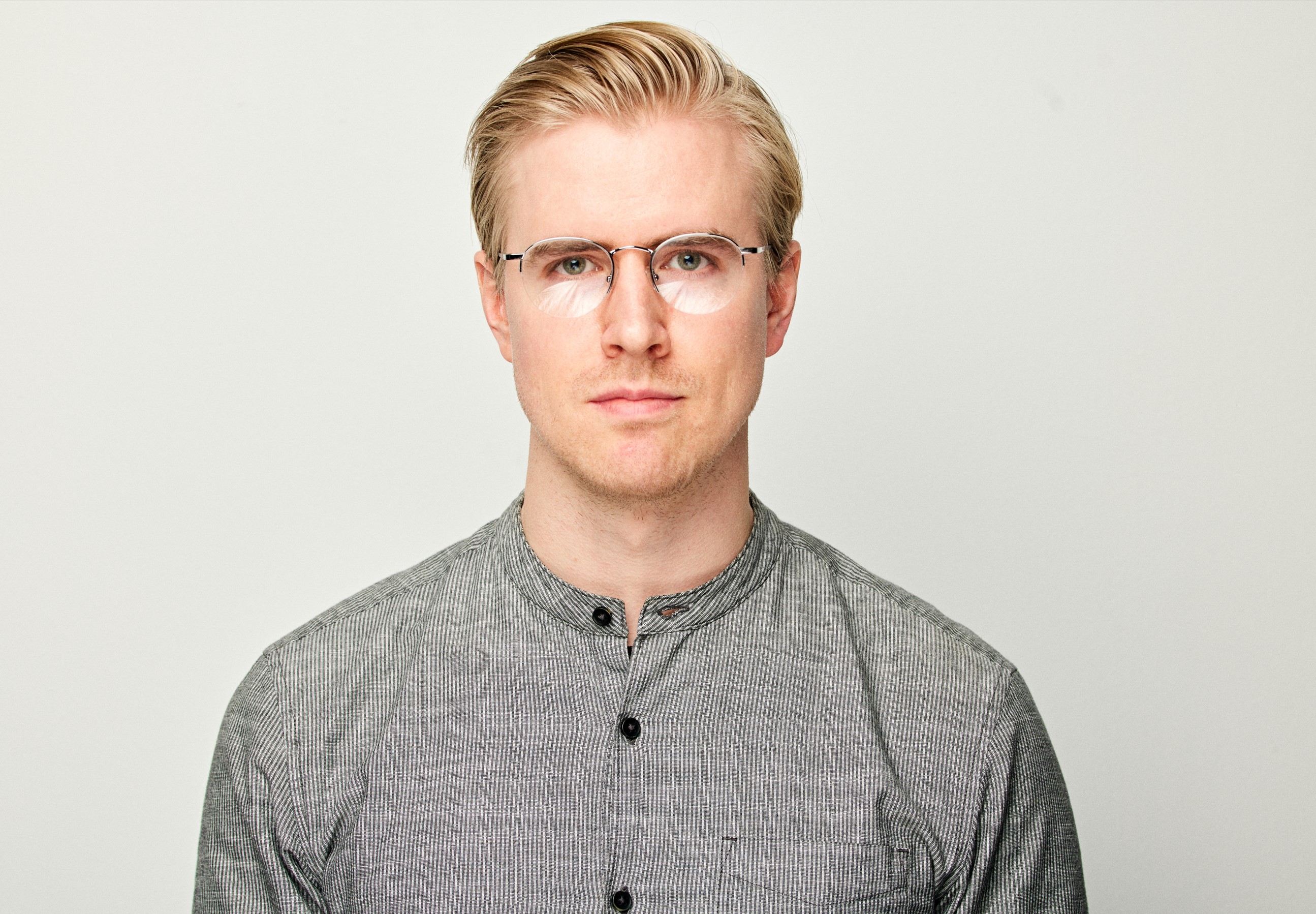
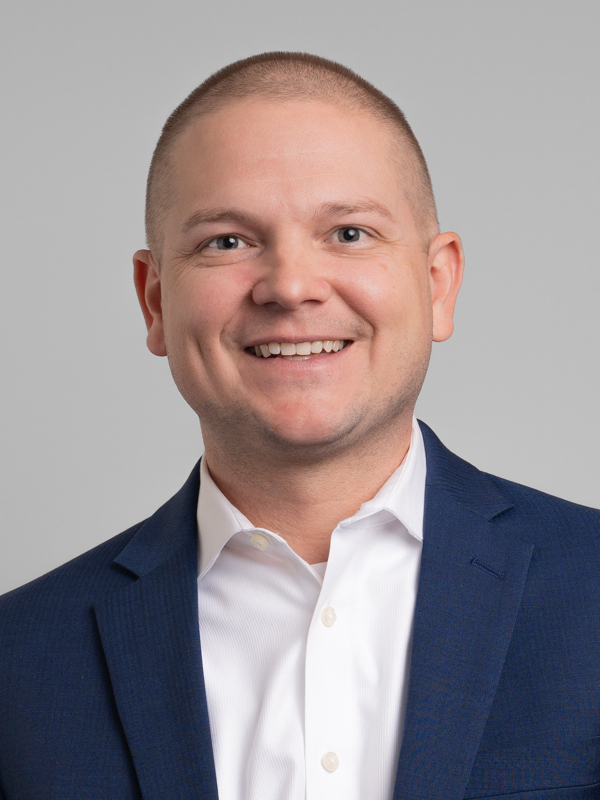
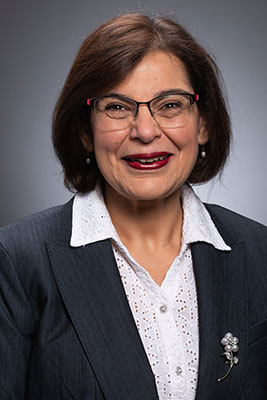
PerMagnus Lindborg is a composer, sound artist, and researcher in sound perception with over 150 scholarly publications, compositions, and media artworks. Currently serving as Associate Professor at City University of Hong Kong's School of Creative Media, he teaches sound, music, research skills, and perception while coordinating research degrees. PhD: KTH Stockholm (2015) DEA: Paris (2003) IRCAM: Paris (1999) BMus: Oslo His research focuses on sound perception , sonification , spatial audio , multi-sensory environments , and data-driven art . He pioneered low-cost spatial audio solutions through the Open Ambisonics Toolkit and explores sensory heritage documentation via soundscapes and smellscape analysis in Hong Kong. Recent publications demonstrate trends in climate data sonification , neural audio processing , and immersive sound design . His work intersects computer music , psychoacoustics , and environmental art . Scientific Awards : Best New Director (World Film Carnival, Cannes Short Film Festival, ISA Awards - 2020) First Prize (Stavanger Symphony Orchestra Prize - 2002) Fellowships: The Arctic Circle (2023), SCM Team Research (2020-25), TBA The Current (2016) As principal investigator for Multi-Modal Hong Kong (GRF 2023-25) and Data Art for Climate Action (2020-23), he supervises PhD students in areas like multi-sensory cultural heritage , deep learning audio processing , and virtual reality sound design . He co-founded the SoundLab and DACA Conference .
Michelle Comstock is an Associate Professor in the Department of English at the University of Colorado Denver's College of Liberal Arts and Sciences. Her teaching focuses on writing pedagogy, multimodal composition, and public rhetoric. Rhetoric and Composition Rhetorical Theory Multimodal Composing Digital Media Literacy Dr. Comstock's research explores sonic rhetoric, particularly how sound influences climate change discourse and the role of aurality in writing processes. She also investigates intersections of gender and technology, digital community networks, and the privatization of education. Her scholarly work spans 20+ years, covering sonic literacy, virtual communities, and public writing pedagogy. Notable publications examine climate change communication through soundscapes, DIY zine culture, and networked approaches to digital literacy. Dr. Comstock teaches undergraduate and graduate courses including: Composition I & II (ENGL 1020/2030) Argumentation & Logic (ENGL 4180) Writing New Media (ENGL 4190/5190) Rhetorical Theory (ENGL 6002) Digital Media Literacy and mentoring
Anna Zassimova is a Professor of Piano with a focus on contemporary music at the University of Music Karlsruhe, where she has also lectured since 2007. Her career spans international performances, recordings, and academic contributions. Born in Moscow, she trained at the Gnesins Russian Academy of Music under Vladimir Tropp and later studied in Karlsruhe under Michael Uhde and Markus Stange. She holds a Ph.D. in musicology and has published a seminal work on composer Georges Catoire. Zassimova is renowned for her interpretations of Chopin, Russian fin-de-siècle repertoire, and contemporary music, with nine acclaimed CDs. She leads masterclasses globally and serves as artistic director of PIANOissimo in Switzerland and German-Russian Cultural Society’s Musical Salons in Baden-Baden. Her research emphasizes interdisciplinary projects linking music and visual arts, collaborating with institutions like the Karlsruhe State Art Gallery. Awards include the Opus Klassik nomination (2019) and a second prize in Russia’s Pure Sound Award for her CD Sonata Reminiscenza . Zassimova’s discography focuses on underrepresented composers like Catoire and Taneyev, alongside Chopin and Schumann. She regularly performs with ensembles such as the Silesian String Quartet and Phorminx, advocating for lesser-known works. Teaching and pedagogy are central to her career, with a commitment to nurturing young talent through masterclasses and jury roles in competitions like Jugend Musiziert. Her playing, rooted in the Russian school of Heinrich Neuhaus, combines technical brilliance with profound musicality, bridging historical traditions and avant-garde innovation.
Dr. Paul Martin is an Associate Professor and Director of Composition and Writing in the Disciplines at Central Washington University (CWU), where he teaches undergraduate and graduate courses on rhetoric, composition, digital humanities, and writing across disciplines. He earned his PhD in Texts & Technology from the University of Central Florida (UCF), with additional degrees from UCF and the University of Florida. His research focuses on multimodal writing, feedback theory, and the intersection of digital rhetoric with misinformation. He has held various leadership roles, including Director of the Writing Across the Curriculum (WAC) Program at UCF and Editor of Kairos: A Journal of Rhetoric, Technology, and Pedagogy . Education: PhD (Texts & Technology, UCF), MA (English Literature, UCF), BA (English, University of Florida) Roles at CWU: Associate Professor (2023–present), Director of Composition/Writing in the Disciplines (2019–present), Director of Basic Writing and Stretch (2020–present) His research interests include digital humanities, feedback and assessment strategies, and the role of technology in writing pedagogy. He has authored numerous peer-reviewed articles and book chapters on topics like video feedback design, multimodal composing, and digital ethics. Notable awards include the Chuck D. Dziuban Award for Excellence in Online Teaching (UCF) and the CWU High Impact Practices Grant. Dr. Martin actively contributes to academic communities through editorial roles and service, including his current position as Co-Editor of Reviews for Kairos . His work emphasizes bridging disciplinary divides through writing programs and fostering critical thinking through multimodal assignments.
Nicholas Mauriello is a Professor of English and Coordinator of the MA in Writing Program at the University of North Alabama. He is affiliated with the Department of English within the College of Arts, Sciences, and Engineering. His academic career includes roles at Fairleigh Dickinson University and Indiana University of Pennsylvania, where he earned his Ph.D. in 2000. Education: B.A., Fairleigh Dickinson University, 1988 M.A., Fairleigh Dickinson University, 1990 Ph.D., Indiana University of Pennsylvania, 2000 Research interests focus on multimodal writing, rhetorical theory, applied linguistics, and writing center studies. He explores how writing centers negotiate institutional relationships and the impact of technology on narrative forms. Recent work emphasizes composing social activism through pedagogy and community engagement. Publications highlight interdisciplinary trends, including the 2007 award-winning Marginal Words, Marginal Work? , which critiques writing center labor dynamics. His books collectively address rhetorical theory, digital narratives, and activist writing practices. Teaching spans foundational composition courses to advanced topics in rhetoric and professional writing. He coordinates the MA in Writing program, emphasizing practical and theoretical writing applications. Award: Winner of the International Writing Centers Association’s Outstanding Book (2007) for Marginal Words, Marginal Work?
Louis K Epstein is an Associate Professor of Music and Department Chair of Music at St. Olaf College. His research focuses on historical musicology, digital humanities, and music pedagogy with a specialization in 20th-century French music and patronage systems. He holds a PhD from Harvard University (2013) and an AB from Princeton University (2006). Epstein's major work includes The Creative Labor of Music Patronage in Interwar France and co-founding the Musical Geography Project , an interactive digital mapping initiative. He has received grants from the Mellon Foundation, Fulbright Program, and others. His teaching innovations were recognized with the 2016 AMS Teaching Award, and his double book review earned the Eva Judd O’Meara Award. Epstein co-directed St. Olaf's Center for Innovation in the Liberal Arts (2021-23) and co-founded Open Access Musicology , a digital journal series. He previously taught at Harvard and University of Massachusetts, Amherst. His scholarly contributions span Music & Politics , Journal of Music History Pedagogy , and other peer-reviewed journals. Research Projects: Musical Geography Project, digital spatial history, music education pedagogy Awards: AMS Teaching Award (2016), Eva Judd O’Meara Award (2016) Professional Roles: Department Chair, Co-Director CILA, Editor Open Access Musicology
Alexander Hoholm is a Research Fellow and PhD candidate at the University of Stavanger's Faculty of Performing Arts, Department of Jazz, Dance, PPU and Music Production. His academic work centers on artistic research within jazz improvisation and ensemble performance contexts, specifically exploring relative time perception in collective musical creation through his PhD project "Trancing Frequencies". His educational foundation includes: PhD in Artistic Development (2022-present), University of Stavanger Master in Performance (Jazz and Improvisation, 2015-2017), Norwegian Academy of Music Bachelor in Jazz Performance (and PPU, 2010-2014), University of Stavanger Fhs, Jazz Line (2009-2010), Toneheim fhs Hoholm's research investigates the intricate temporal relationships within improvising ensembles, examining how musicians negotiate time perception during spontaneous composition. His work bridges theoretical artistic research with practical performance, focusing on the cognitive and social dynamics that shape collective musical time. This research contributes to broader understandings of human interaction through the lens of musical improvisation. Analysis of his 2023-2024 artistic outputs reveals a consistent focus on collaborative jazz performance across diverse settings. His work with the Orchestra for Composing Musicians (OJKOS) and Martin Nodeland Quartet demonstrates sophisticated ensemble communication, particularly in polyrhythmic and time-based improvisational frameworks. These productions span major Norwegian festivals (Vossajazz, Fjordjazz), historic venues (Fuglen Gamlebyen), and academic contexts (Artistic Research Forum), highlighting his dual commitment to performance excellence and scholarly contribution. No scientific awards are documented in available sources. Hoholm's professional activities show no evidence of formal student advising or externally funded research grants. His primary scholarly contribution occurs through practice-based research integrated with performance. He maintains active membership in multiple musical collectives including the Orchestra for Composing Musicians in Oslo (OJKOS), Martin Nodeland Quartet, and various ad-hoc ensembles. These groups function as living laboratories for his research, providing real-world contexts to test theories of ensemble time perception through regular performances, recordings, and festival appearances across Scandinavia.
Lauren Fusilier (she/her) is a Senior Lecturer at the University Writing Program of Johns Hopkins University since 2024. Her pedagogical approach uses multimodal composing to explore themes of embodied experience , media literacy , and social equity . Her research focuses on the intersections of digital literacies , multiliteracy center practices , and non-dominant student experiences . She holds a PhD in Rhetoric & Composition from the University of Louisville and an MFA from Florida State University. For internal resources, faculty can access materials via the UWP Faculty Resources portal.
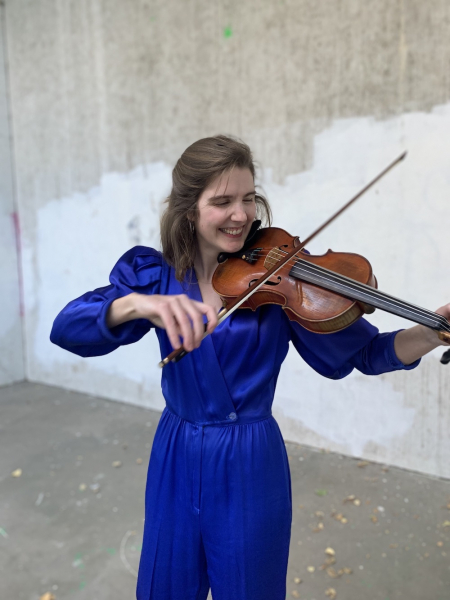
Bryce M. O'Tierney is an interdisciplinary artist and educator at Colorado State University, serving as an Instructor in the departments of English, Interdisciplinary Liberal Arts, Music, and University Composition Program. She specializes in Composition, Literature, Creative Writing, and Music, with a focus on intersections between the nonverbal and verbal, human and ecological systems, and improvised vs. composed forms. Her roles include teaching courses like College Composition, Poetry, Creative Writing, and Music Appreciation, while actively participating in initiatives like Climate Across the Curriculum and the CSU Spur Start Program. Education: MFA Poetry from Colorado State University, MPhil English-Creative Writing from Trinity College Dublin, and BA in Violin Performance & English-Creative Writing from Northwestern University. She also holds a Guarneri violin from Chicago luthier Augustino Napoli. Research interests explore embodiment, collaboration, play, and focused listening, with publications in Poetry Ireland Review, Tupelo Quarterly, and others. She is the 2025 Poetry Scholarship awardee at the Minnesota Northwoods Writers Conference and a participant in workshops like the Orion Environmental Writers’ Workshop. As a classically trained violinist, she performs in the touring duo maeve & quinn, collaborating with institutions like the Museum of Contemporary Art Chicago and Steppenwolf Theatre. Their album Another Door was praised as 'anything but ordinary' by the Chicago Tribune.
Dr. Jenna Green Azab is a Teaching Assistant Professor and Director of Foundations Instruction in the Department of English at Marquette University. She holds a B.A. in Writing-Intensive English and Public Relations from Marquette University and a graduate specialization in Rhetoric and Composition from the University of Wisconsin-Milwaukee. Her teaching emphasizes student-centered learning in courses like First-Year English, Scriptwriting, and Professional Writing. She leads programs in the Educational Opportunity Program, Emerging Scholars Program, and Honors Program. Her research focuses on digital composing, literacy studies, and learning transfer. She explores interdisciplinary writing practices and strategies to support English language learners and first-year students’ academic transitions. Her work bridges theory and practice, addressing critical literacies and effective communication in civic and professional contexts. Dr. Green has contributed to pedagogical publications, including a 2024 chapter on reimagining bibliography assignments in the age of generative AI. She actively engages in community-engaged learning initiatives and professional development through symposia like the Writing Innovation Symposium. Her teaching philosophy prioritizes collaboration and fostering inclusive academic environments.
Dietmar Offenhuber is Professor and Chair of the Department of Art + Design at Northeastern University's College of Arts, Media and Design, with a secondary appointment in the School of Public Policy and Urban Affairs. His interdisciplinary work bridges design, technology, and governance, focusing on how data and visualization practices shape urban environments and public policy. Education: PhD in Urban Studies and Planning, Massachusetts Institute of Technology (2013) MSc in Media Arts and Sciences, Massachusetts Institute of Technology Diplom-Ingenieur of Architecture, Vienna University of Technology Offenhuber's research explores the relationship between design, technology, and governance through multiple interconnected strands. His work on waste systems examines how infrastructures become legible through data practices, as detailed in his award-winning monograph Waste is Information . He investigates data materiality and autographic design, studying how physical manifestations of data create evidence in environmental conflicts. His research on urban data platforms analyzes organizational improvisation in smart city initiatives across different cultural contexts. Additionally, his longstanding work on urban soundscapes examines auditory perspectives on urban places, often in collaboration with sound artists. Analysis of Offenhuber's publications reveals a consistent focus on how data practices intersect with governance and public space. His work evolved from early studies of urban informatics and accountability technologies toward more recent investigations of data physicality and material evidence construction. Key themes include the socio-material dimensions of data, the role of improvisation in data infrastructure, and the design of visualization practices that support civic engagement. His publications span computer science venues like CHI and IEEE VIS, design journals, and urban studies publications, demonstrating his truly interdisciplinary approach. Scientific Awards: 2023 Finalist/Winner, Breakthrough of the year Art & Science, Falling Walls Foundation 2023 CHI Conference Honorable Mention 2020 Best Paper Award, IEEE Computer Graphics and Applications 2019 Princeton-Mellon Fellowship 2017 Austrian Scientists in North America (ASciNA) Award Outstanding Dissertation Award 2014 from MIT First prize in NSF Visualization Challenge Offenhuber has advised numerous students and received significant research funding from various sources. His work with the Semantic Matter Lab explores the material aspects of data collection and visualization. He has collaborated with institutions including the United Nations, Ars Electronica, and the Harvard Metalab. His artistic practice, often in collaboration with composers Sam Auinger and Hannes Strobl as stadtmusik, has been exhibited internationally at venues including Centre Pompidou, Sundance Festival, and ZKM Karlsruhe. Current projects include research presented at the 2025 Venice Biennale of Architecture that examines our changing relationship to data and information.
Dr Sally Morfill is a Senior Lecturer in the Design Department at Manchester School of Art, Manchester Metropolitan University. She contributes to MA Design programs while supervising PhD candidates and serves as a member of the Materials & Making/Community, Culture & Heritage research group. Her work explores intersections between drawing, language, and technology through hybrid analogue-digital methodologies. PhD, Manchester Metropolitan University (2019) MA (Royal College of Art), BA (Manchester Polytechnic) Research focuses on: Visualizing co-speech gestures through 2D/3D drawing Relationships between drawing actions and written language Interdisciplinary collaborations with dance practitioners and composers Development of collaborative educational frameworks Her practice extends to curatorial work with Five Years artist-run organization, emphasizing unfinished propositions in art. Notable award: International Collaborative Research Residency (2019). Collaborations include Susan Giles (sculpture), Karen Wood (dance), Matthew Lee Knowles (composition), and Ana Čavić (poetry).
Matthew Kessler is an Associate Professor of Applied Linguistics at the University of South Florida (USF), affiliated with the Department of World Languages. He serves as core faculty for the MA Applied Linguistics program and the PhD program in Linguistics and Applied Language Studies. As Co-Lead of the Digital Discourse, Media, and Writing Lab, he focuses on leveraging technology for language education. His research emphasizes computer-assisted language learning (CALL), second language writing, and genre-based pedagogy. Education: PhD in Second Language Studies (Michigan State University), MA in Linguistics (Ohio University). Research interests include digital multimodal composing, technology integration in language acquisition, and graduate education support. His work appears in journals such as Computer Assisted Language Learning , TESOL Quarterly , and Journal of Second Language Writing . He co-edits Language Learning & Technology 's 'Technology in Practice' forum and TESOL Quarterly 's 'Brief Reports' section. Teaching includes courses like Computer Assisted Language Learning (LIN 6932) and Second Language Acquisition (LIN 6720). He authored books such as Making the Most of Graduate School (open access) and Digital Multimodal Composing (Multilingual Matters), and co-edited Conducting Genre-Based Research (Routledge).
Lilian Mina is an Associate Professor in the Department of English at the University of Alabama at Birmingham (UAB) and serves as the Director of the Composition Program. She holds a B.A. in English from Cairo University , an M.A. in English from The American University in Cairo , and a Ph.D. in Composition from Indiana University of Pennsylvania . Her office hours are Tuesday 2:00PM–3:00PM or by appointment. Research Interests: Digital writing, writing program administration, and multilingual composition. Publications: Articles in Computers & Composition , Composition Forum , and book chapters from university presses. Leadership: Vice President/President Elect of the Council of Writing Program Administrators (CWPA); Faculty Senate Senator for the College of Arts and Sciences. Digital Writing research explores multimodal composing, digital technology integration in pedagogy, and social media applications for writing instruction. Her Writing Program Administration work focuses on instructor professional development, programmatic assessment, and reflective practices in training. In Multilingual Composition , she investigates multilingual writers’ classroom experiences and responses to digital pedagogies.
Dr. Abby Stylianou is an Associate Professor in the Department of Computer Science at Saint Louis University, affiliated with the Taylor Geospatial Institute and SLU Research Institute. Her research focuses on computer vision, deep learning, and explainable AI, with applications in social justice (e.g., combating human trafficking through hotel image retrieval) and environmental science (e.g., climate change studies using time-lapse imagery). She emphasizes citizen science and non-expert engagement, designing accessible tools for data collection and analysis. Education: Ph.D., M.S., and B.A. in Environmental Studies/Geoscience from Washington University in St. Louis. Prior roles include Research Scientist at WashU's Media and Machines Lab and Postdoc at George Washington University. Research Interests: Image Processing, Deep Learning, Citizen Science, Genotype-Phenotype Interactions, and Geospatial Analysis. Awards: Google Research Scholar (2022), NSF Biology Integration Institute Member, St. Louis Business Journal’s 40 Under 40 (2023). Grants: SLU School of Medicine grant for implant classification in spinal surgery, DOE/ARPA-E funding for plant phenotyping. Teaching includes courses on Artificial Intelligence, Computer Vision, Databases, and Deep Learning. She advises students in her lab, focusing on strong programming skills and applications in vision and AI.