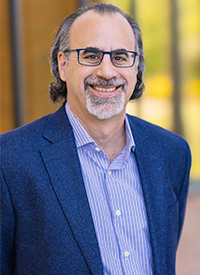
Stephan Ludwig is a Professor of Marketing at Monash University specializing in marketing communications, digital marketing, and marketing analytics. He holds editorial roles at top journals including the Journal of the Academy of Marketing Science (Co-Editor), Journal of Retailing (Area Editor), and Journal of Marketing (Editorial Review Board). He chairs the Marketing Theory Track at EMAC and previously led the Digital Marketing Track at ANZMAC. His research focuses on communication design, text mining, and consumer behavior, with work published in leading marketing and information systems journals. He collaborates with Fortune 500 companies and startups, and has led programs such as the Digital Marketing Master at University of Melbourne and the Unilever Business Academy. Ludwig’s current research project (2023–2026) explores 'Harnessing Business Insights from Unstructured Customer Data.' His contributions span academic leadership, industry partnerships, and methodological innovation in analyzing unstructured data.
Dominic Fareri is an Associate Professor in the Department of Psychology at the Gordon F. Derner School of Psychology, Adelphi University. He serves as the Director of the Neuroscience Program and Co-Chair of Undergraduate Psychology, demonstrating leadership in both research and academic administration. His research is centered on understanding how social environments shape decision-making and the neural processing of incentives. His research interests include: Cognitive and Social Neuroscience Decision-Making and Risk Assessment Neural Mechanisms of Trust and Reciprocity Development of Reward Circuitry Functional Connectivity in Social Contexts Impact of Early Life Stress on Brain Development Analysis of his recent publications reveals a strong focus on social value computation, trust dynamics, and the role of relationships in modulating brain activity, particularly in the default mode network and ventral striatum. His work integrates behavioral, physiological, and multimodal neuroimaging approaches, drawing from social, cognitive, affective neuroscience, and neuroeconomics. A recurring theme is how social context—such as relationship closeness or group membership—influences reward processing and decision-making across development. His scientific contributions have been recognized with awards including the 2018 APS Rising Star and participation in the Summer School in Social Neuroscience and Neuroeconomics. He has also received competitive fellowships and honors for his scholarly work. Dominic Fareri has secured significant research funding as Principal Investigator (PI) and Co-Investigator (Co-I) from the National Institute on Mental Health (NIMH), National Institute on Drug Abuse (NIDA), and Adelphi University. His active grant from NIMH (R15) investigates how social support influences neural value computations. He also contributes as a consultant on substance use research and collaborates on developmental studies of close relationships. He mentors students through doctoral thesis supervision and research practica, and is actively engaged in the scientific community through editorial and peer-review roles for journals such as Social Cognitive and Affective Neuroscience and The Journal of Neuroscience . He leads the Fareri Lab, where interdisciplinary research on social and affective neuroscience is conducted, integrating theory and methods from psychology, neuroscience, and economics to explore the neural underpinnings of human social behavior.
Dr Stuart Middleton is an Associate Professor at the University of Southampton, affiliated with the School of Electronics and Computer Science within the Faculty of Engineering and Physical Sciences. He is a member of the Agents, Interaction and Complexity research group, the Centre for Machine Intelligence, and the Centre for Democratic Futures. His research focuses on Natural Language Processing (NLP), particularly information extraction and human-in-the-loop NLP, with applications in law enforcement, defence, mental health, and environmental science. His research interests include Natural Language Processing , Information Extraction , Human-in-the-loop NLP , Active Learning , Adversarial Training , Rationale-based Learning , and Argument Mining . He specializes in scenarios with limited or fragmented data, developing methods for few/zero-shot learning, graph-based models, and multimodal analysis. His work spans domains such as mental health, digital ethics (e.g., sharenting), defence, and climate science. The recent publications highlight a strong trend in applying NLP to societal challenges, including mental health monitoring through social media, ethical AI, multimodal argumentation in political debates, and climate data analysis. His work combines technical innovation in prompt engineering, summarization, and graph-based modeling with real-world impact. AI for defence: readiness, resilience and mental health (2024) Extraction and summarization of suicidal ideation evidence (2024) Sharenting and social media properties (2024) Implementing responsible innovation (2024) ConversationMoC: mood change detection (2024) Dr Middleton is actively involved in PhD supervision and academic leadership as Deputy Director of the UKRI MINDS Centre for Doctoral Training. He supervises multiple PhD students working on NLP and AI projects. He has secured research funding from ESRC and EPSRC for projects such as ProTecThem2.0 , SafeSpacesNLP , and GloSAT . He leads the Natural Language Processing modules COMP3225 (UG) and COMP6253 (PG) and mentors students in NLP research. He is a Fellow of The Alan Turing Institute and a member of the EPSRC peer review college, contributing to national research strategy and evaluation. His research is conducted within interdisciplinary teams, including collaborations with criminologists, social scientists, and environmental researchers. He is part of the Agents, Interaction and Complexity group and contributes to the Centre for Machine Intelligence and Centre for Democratic Futures , focusing on AI systems that interact meaningfully with humans and society.
David Lamas is a faculty member at Universidade Lusófona, Portugal, with a Doctor of Philosophy in Computer Science. His research focuses on Human-Computer Interaction, Trust in Technology, Affective Computing, and Digital Libraries. He has contributed extensively to academic literature through journal articles, conference papers, and book chapters. Doctor of Philosophy in Computing Mestrado in Informática (Ciências da Computação) Licenciatura in Informática (Matemáticas Aplicadas) Postgraduate Certificate in Strategic University Management Postgraduate Certificate in Strategic Direction and Community Engagement His research interests lie at the intersection of human behavior and technology, particularly in modeling trust using psychophysiological signals, emotion recognition in dyadic interactions, and designing wearable systems for emotional support. He explores how users perceive and interact with AI systems, especially in high-risk and cross-cultural contexts. His work integrates HCI principles into software development practices, particularly in developing countries. The recent publications reflect a strong trend in affective computing, trust modeling, and wearable technologies. His work spans facial emotion databases, vibrotactile feedback systems, and psychophysiological signal analysis. These contributions highlight a focus on user-centered design, ethical AI, and the application of technology in mental health and public services. David Lamas has not been mentioned with any scientific awards in the provided text. He has advised or collaborated with several researchers, including S. Sousa, V. Tomberg, A. Ogunyemi, I. B. Da Rosa, and others, particularly in studies related to trust, e-learning, and software industry practices. While specific grants are not listed, his extensive publication record suggests active research funding and project leadership. His work often involves international collaboration, especially with researchers in Estonia, Nigeria, and Afghanistan. David Lamas is involved in research projects related to body-centric computing, brain-computer interfaces (e.g., BrainHack project), and digital library infrastructure. His work on vibrotactile displays (e.g., Be Me Vest, Vibmory) indicates active development in wearable technology for emotional and cognitive augmentation. He also contributes to the design of e-government architectures and digital inclusion initiatives in developing regions.
PerMagnus Lindborg is a composer, sound artist, and researcher in sound perception with over 150 scholarly publications, compositions, and media artworks. Currently serving as Associate Professor at City University of Hong Kong's School of Creative Media, he teaches sound, music, research skills, and perception while coordinating research degrees. PhD: KTH Stockholm (2015) DEA: Paris (2003) IRCAM: Paris (1999) BMus: Oslo His research focuses on sound perception , sonification , spatial audio , multi-sensory environments , and data-driven art . He pioneered low-cost spatial audio solutions through the Open Ambisonics Toolkit and explores sensory heritage documentation via soundscapes and smellscape analysis in Hong Kong. Recent publications demonstrate trends in climate data sonification , neural audio processing , and immersive sound design . His work intersects computer music , psychoacoustics , and environmental art . Scientific Awards : Best New Director (World Film Carnival, Cannes Short Film Festival, ISA Awards - 2020) First Prize (Stavanger Symphony Orchestra Prize - 2002) Fellowships: The Arctic Circle (2023), SCM Team Research (2020-25), TBA The Current (2016) As principal investigator for Multi-Modal Hong Kong (GRF 2023-25) and Data Art for Climate Action (2020-23), he supervises PhD students in areas like multi-sensory cultural heritage , deep learning audio processing , and virtual reality sound design . He co-founded the SoundLab and DACA Conference .
Professor Hubert H Lim is a leading researcher in the Department of Otolaryngology at the University of Minnesota , where he also serves as Director of the Earl E. Bakken Medical Device Center within the Institute for Engineering in Medicine . His work bridges auditory neuroscience and bioelectronic medicine with a focus on neuromodulation , ultrasound technology , and machine learning applications. Research interests include: Tinnitus treatment via multimodal sensory stimulation Autonomic neuromodulation for cardiovascular control Development of auditory nerve implants Ultrasound-triggered drug delivery systems Deep learning in clinical decision-making Preclinical models for medical device testing Recent publications highlight innovations in gold-shell hydrogels , closed-loop vagus nerve stimulation , and feline models for auditory implants. His work extensively involves clinical trials for tinnitus therapy and in vitro platforms for cellular neuromodulation. Collaborative grants include projects funded by the National Institutes of Health , American Heart Association , and 3M , focusing on neural recording , regulatory approval for implants, and non-invasive neuromodulation . Media coverage (2020) highlights his novel tinnitus treatment featured in 27 news outlets.
Dr. Michelle Dunn is a Senior Lecturer in the School of Engineering at Swinburne University of Technology, where she leads research in robotics and signal processing. She serves as the academic lead for the Swinburne Rover Team and the lead of Space Robotics within the Swinburne Space Technology and Industry Institute. Her interdisciplinary work bridges engineering, space technology, industrial monitoring, and cultural heritage conservation. School: School of Engineering University: Swinburne University of Technology Academic Rank: Senior Lecturer Dr. Dunn's research is centered on robotics and signal processing, with key interests in Space Robotics, Collaborative Robotics, Lunar Dust Mitigation, and Assistive Technologies. She applies signal analysis techniques to diverse fields including steelmaking, where she uses acoustic and vibration signals to monitor processes, and art conservation, where she integrates spectroscopy and imaging to analyze paintings. Her work combines experimental modeling, sensor development, and data analytics to solve real-world engineering challenges. Her recent publications span robotics in agriculture, lunar dust mitigation, additive manufacturing defect detection, and acoustic monitoring in steelmaking. These works reflect a strong trend toward applying robotics and advanced signal processing to practical, interdisciplinary problems. She frequently collaborates with industry and government agencies, securing funding from the ARC and Department of Industry, Science and Resources. Scientific awards include: Vice-Chancellor's Teaching Excellence (Higher Education) Award (2018) Vice-Chancellor's Teaching Excellence (Higher Education) Award (2013) Dr. Dunn actively supervises PhD and Master’s students across diverse projects, including heat flow monitoring, assistive mobility devices, UAV-based parking systems, and EEG-based voice detection. She has been principal investigator on multiple ARC-funded grants, such as the ARC Training Centre for Collaborative Robotics in Advanced Manufacturing and projects focused on sound and vibration monitoring in steelmaking. Her research contracts include development of portable parasite detection systems and cuffless blood pressure monitoring. She leads and contributes to laboratory-based research in the Swinburne Space Technology and Industry Institute, focusing on space robotics and lunar dust mitigation. Her team also operates experimental setups for acoustic and vibration monitoring in industrial models, supporting innovation in steelmaking and manufacturing.
Francesca Barbero is an Associate Professor in the Department of Life Sciences and Systems Biology at the University of Turin. She is affiliated with the "Ferdinando Rossi" School of Advanced Studies (SSST) and teaches courses in Natural Sciences and Natural Systems Sciences, focusing on Evolution of Animal and Human Behavior and General Zoology. She serves on the Orientation Committee, Departmental Council for Natural Sciences, and Thesis Coordination Committee. Her research centers on insect behavioral ecology with emphases on chemical and acoustic communication systems, social parasitism mechanisms in butterfly-ant interactions, and conservation biology. She investigates multimodal deception strategies where parasites mimic host signals, plant-insect defense dynamics, and biodiversity responses to anthropogenic pressures. Her work integrates field ecology, chemical analysis, and acoustic monitoring to dissect complex interspecies relationships. Analysis of her 15 most recent publications reveals dominant themes in butterfly-ant coevolution (particularly Maculinea-Myrmica systems), with recurring investigations into chemical mimicry, vibroacoustic signaling, and conservation applications. She has pioneered methods for butterfly red-listing in Italy and examined cross-kingdom interactions including plant responses to extracellular DNA and forest-vineyard microbial connectivity. Her research bridges fundamental behavioral ecology with applied conservation frameworks. Dr. Barbero co-leads the "Evolution of Communication" and "Plant-Arthropod Interactions" research groups at the University of Turin, where her teams explore signal evolution in symbiotic systems and tritrophic interactions between plants, herbivores, and their natural enemies through integrated molecular and ecological approaches.
Jonatan R. Ruiz is a Full Professor at the Department of Physical Education and Sports within the Faculty of Sports Sciences at the University of Granada, Spain. He holds dual PhDs in Exercise Physiology (University of Granada) and Medical Sciences (Karolinska Institutet), and serves as Co-director of the PROFITH CTS-977 Research Group, Scientific Director of CIBEROBN's exercise and obesity group, and Director of the Unit of Excellence in Exercise, Nutrition and Health (UCEENS). He is also co-investigator of the M-20 Group at ibs.Granada. His research focuses on exercise physiology and metabolic health, with eight core areas: 1) Brown adipose tissue and energy metabolism; 2) Exercise/nutrition in ectopic fat accumulation; 3) Multimodal interventions for sleep apnea; 4) Intermittent fasting in obesity; 5) Gut microbiota regulation through exercise; 6) Physical activity assessment methodology; 7) Indirect calorimetry applications; 8) Bioactive compounds in health. His work demonstrates that physical activity improves cardiovascular health from early life stages. Analysis of his 15 most recent publications reveals dominant trends in brown adipose tissue metabolism (6 articles), obesity interventions (5 articles), and methodological innovations in exercise assessment (4 articles). Key recurring themes include sex-specific exercise responses, ectopic fat depots, and microbiome-exercise interactions, with strong emphasis on randomized controlled trials like ACTIBATE and INTERAPNEA. Trained over 35 pre-doctoral students securing prestigious fellowships (Marie Curie, Ramón y Cajal, etc.) Recipient of 35+ research awards Author of 550+ scientific articles Principal investigator in major projects including ACTIBATE and INTERAPNEA Ruiz leads multiple research units including PROFITH CTS-977 and UCEENS, focusing on translational exercise science. His teams conduct large-scale human trials investigating metabolic adaptations to exercise, with strong partnerships across European institutions. Current projects explore time-restricted eating, sleep apnea interventions, and brown adipose tissue modulation through exercise.
Diva R. Salomao, M.D. is a faculty member at Mayo Clinic College of Medicine and Science, holding the academic rank of Professor of Laboratory Medicine and Pathology . She maintains dual appointments as a Consultant in Anatomic Pathology and Ophthalmology . Her work integrates ophthalmic pathology and cytopathology to improve diagnostic accuracy and treatment decisions. Medical School: Universidade Federal de Juiz de Fora (1985) Residency: Mayo Clinic (Anatomic & Clinical Pathology), National Cancer Institute (Anatomic Pathology), Hennepin County Medical Center Fellowship: University of Iowa (Cytopathology), National Cancer Institute (Surgical Pathology) Research interests focus on: Uveal melanoma : Immune response analysis, immunohistochemistry as prognostic markers Vitreoretinal lymphoma : Molecular testing (MYD88 mutations) for diagnosis Pancreatic adenocarcinoma : mKRAS mutational analysis with peritoneal cytology Scientific contributions include 118+ publications spanning immunopathology , molecular diagnostics , and rare ocular diseases . Her work combines histopathological, immunohistochemical, and molecular findings to predict disease behavior and clinical outcomes. Recognitions : Office of Diversity and Inclusion Physician Award (2019) Innovation and Leadership in Education (2015) Teacher of the Year in Laboratory Medicine and Pathology (2003) Director of Cytopathology Fellowship Program (2018-present) She leads the Ophthalmic Pathology Working Group and contributes to international tumor classification projects while maintaining active roles in graduate medical education.
Stephen M. Fiore is a full-time Professor at the University of Central Florida , affiliated with the Department of Philosophy and the Institute for Simulation and Training . As Director of the Cognitive Sciences Laboratory , he leads multidisciplinary research integrating cognitive, social, organizational, and computational sciences. Research Focus: Complex collaborative cognition, human-AI teaming, simulation-based training, team science, and 21st-century skills assessment. Federal Engagement: DARPA ISAT Study Group, National Academies of Sciences consensus studies. International Roles: Visiting scholar at École Normale Supérieure de Lyon (2010), OECD PISA expert panel (2015). Awards: Pegasus Professor (2023), Scroll & Quill Society (2020), Luminary Award (2019), Reach for the Stars Award (2014), multiple Research Incentive Awards. Funding: $35M+ secured as PI/Co-PI, including NSF and Minerva Research Initiative grants. Scientific Contributions: Co-author of 250+ publications across human-human and human-AI team cognition, with key works on accelerating expertise, shared cognition, and adaptive training systems. His lab explores immersive VR, robotic perception scales, and ICE environment team dynamics. Leadership Roles: Co-founder and former President of the International Network for the Science of Team Science Co-founder and former President of the Interdisciplinary Network for Group Research Co-founder of the Global Alliance for Inter- and Transdisciplinary Research Key Collaborations: Santa Fe Institute (2013), Army's Robotics CTA, NSF-funded team science initiatives, and European research networks.
Dr. Andrew Roxburgh is a Lecturer at the University of Liverpool , Department of Computer Science. His expertise spans software development, machine learning, and interdisciplinary applications in education and healthcare. Education: BEng & MEng in Electronic Engineering (University of Warwick) PhD in Computer Science (University of Liverpool) Dr. Roxburgh's research focuses on Graph Neural Networks (GNNs) for language acquisition modeling, with recent work on spatio-temporal frameworks for infant and toddler vocabulary prediction. He also explores applications in cybersecurity, embedded systems, and audio signal processing. His publications reveal a consistent application of machine learning techniques to early childhood development challenges. Notable trends include GNNs for multimodal data analysis and computational models of language growth. Teaching: He supervises 18 COMP390/10 COMP702 primary projects, coordinates modules in Big Data Analytics and C++ programming, and mentors industrial placement students. Professional Roles: Member of the International Neural Network Society; serves as Undergraduate Admissions Officer and Link Tutor for international college partnerships.
Pascal Pas is a Researcher at the Helmholtz Institute , affiliated with the Faculty of Social and Behavioural Sciences at Utrecht University . His work focuses on neuroscience , experimental psychology , and data management , with a particular interest in self-regulation , response inhibition , and neuroimaging techniques like fMRI . PhD in Experimental Neuroscience (research on behavioral control in the brain) His research spans developmental cognitive neuroscience , HIV-related neurocognitive effects , and PTSD symptom development . He has contributed to longitudinal studies like the YOUth cohort , exploring self-regulation and social competence in preadolescents. Pascal also serves as an ICT Data Steward and Privacy Officer for the faculty, and is a member of the Faculty Integrity Policy Committee and Faculty Ethics Review Board .
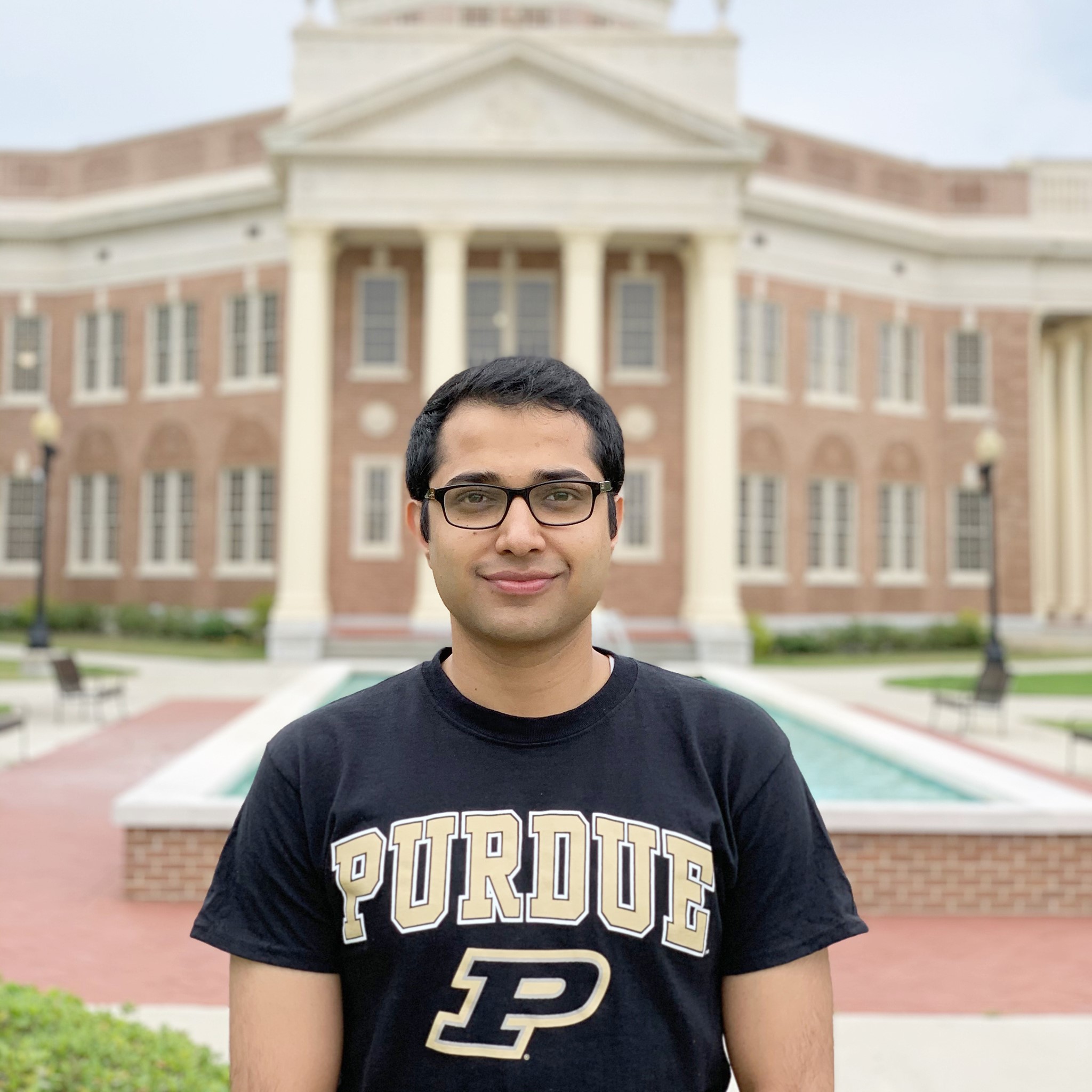
Aaditya Kharel is a Lecturer in the Department of Computer Science at Purdue University, located in Indianapolis. He joined the department in Fall 2020. His education includes an M.S. in Computer Science from Purdue University (2024) and a B.S. in Computer Science and Mathematics from the University of Southern Mississippi (2020). His research focuses on deepfake detection using multimodal analysis, mathematical modeling of ecological systems, and image processing techniques. Education: M.S., Purdue University, Computer Science (2024) B.S., University of Southern Mississippi, Computer Science and Mathematics (2020) Research interests span computer vision, machine learning, and applied mathematics. His recent work emphasizes developing robust deepfake detection models through cross-modal attention mechanisms and optimizing image restoration techniques. Earlier research explored predator-prey interaction dynamics using mathematical models, incorporating cooperative behavior and Allee effects. No scientific awards or grants are explicitly listed in the provided information. No advising roles or student mentoring details are available. His professional presence includes a homepage and LinkedIn profile.
Professor David Alais is an academic affiliated with the School of Psychology at the University of Sydney, within the Faculty of Science. His research focuses on multisensory processing, visual perception, and cognitive neuroscience, with a particular emphasis on binocular rivalry, tactile adaptation, and the interplay between sensory systems and motor actions. He has contributed to understanding how self-motion signals (e.g., walking, head rotation) modulate perception and cognition, including studies on visual working memory, audiovisual synchrony, and serial dependence effects in aesthetic judgments. His educational background is not explicitly stated in the provided texts, but his extensive publication history and grants suggest advanced training in neuroscience and psychology. Recent grants include investigations into 'Seeing the world step by step: Perceptual sensitivity rises and falls in time with the gait cycle' (2024) and 'Flexibility to multisensory contextual information in people with sensory disabilities' (2023), both highlighting his commitment to studying adaptive sensory mechanisms in real-world contexts. Research interests involve exploring how the brain integrates sensory inputs (e.g., vision, audition, touch) and how motor activities influence perceptual experiences. For instance, his work on 'battle of the Mondrians' and 'CFS-crafter' tools demonstrates an interest in interocular suppression and experimental methodologies. Articles frequently address serial dependence across domains (face attractiveness, food images, auditory stimuli), suggesting a focus on perceptual history and decision-making processes. Professor Alais has not explicitly listed scientific awards in the provided texts. He is involved in developing open-source research tools like the CFS-crafter for continuous flash suppression experiments. His advising and grants reflect a dedication to collaborative and interdisciplinary research, though current student names are not provided here. His lab work centers on multisensory integration, particularly how locomotion and vestibular signals affect perception, with implications for neuropsychology, sports science, and clinical applications.