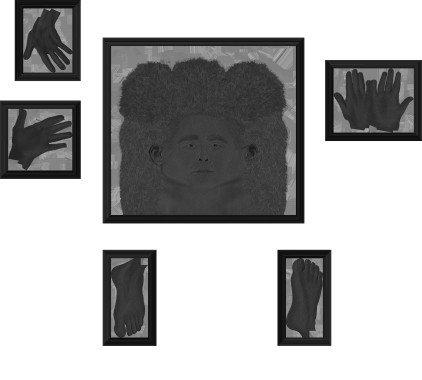
Dr. Edyta Chlebowska is an Assistant Professor at the Cyprian Norwid Research Center, John Paul II Catholic University of Lublin. Specializing in the visual art and literary legacy of Cyprian Norwid, she explores intersections between Polish Romanticism, art history, and cultural studies. Her work extends to album art analysis and interdisciplinary connections with music (e.g., Pink Floyd, Czesław Niemen). Her research focuses on Norwid's self-portraits, eschatological themes in his drawings, and comparative studies with 19th-century Warsaw painting. She reconstructs lost artworks, documents private collections (e.g., Konstancja Górska, Victor Gomulicki), and examines Norwid's reception in Florence and Odessa. Key projects include translating Studia Norwidiana and critical editing of Norwid's complete works. As editor-in-chief of multiple On Cyprian Norwid. Studies and Essays volumes and organizer of conferences like Niemen Non Stop and Colloquia Norwidiana , she bridges academic rigor with public engagement. Her publications span peer-reviewed books, journal articles, and popular science pieces, emphasizing Norwid's unpublished works and symbolic programs.
Prof. Mariusz Deja serves as the Dean of the Faculty of Mechanical Engineering and Ship Technology at Gdańsk University of Technology. He holds a PhD (2001) and habilitation (2014) in Mechanical Engineering. His academic roles include Head of the Department of Manufacturing and Production Engineering (since 2019), and former Vice-Dean for Education (2016–2020) and Vice-Dean for Cooperation (2020–2024). Education: Master's in Mechanical Engineering (1993), Pedagogical Studies (1993), and postgraduate courses in TQM and ECO-Integrated Mechanical Engineering (1997). Professional experience includes roles as an assistant (1993–2001), assistant professor (2002–2017), associate professor (2017–2019), and full professor (since 2019). Research focuses on abrasive machining, additive manufacturing, and CAPP algorithms. Key interests include material removal processes, precision engineering, and tool fabrication using AM. Collaborations include visiting professorships at China's Dezhou University (2018), Germany's Technical University of Berlin (2021–present), and Sweden's KTH Stockholm (2023–2024). Awards include the Silver Cross of Merit (2016) and multiple Rector Awards for scientific, didactic, and organizational achievements. His work spans over 98 publications, with recent studies on 3D printing applications, container terminal logistics, and AI-driven defect analysis. Labs/Teams: Involved in research infrastructure related to additive manufacturing tools and precision machining systems. Active in projects like the NEPTUN initiative (Horizon Europe-funded) and Industry 4.0 collaborations.
Włodzimierz Kasprzak is a Professor at the Institute of Control and Computation Engineering, Faculty of Electronics and Information Technology, Warsaw University of Technology. His research focuses on computer vision, robotics, human-computer interaction, and machine learning. He has contributed to advancements in human action classification, skeleton-based feature analysis, and multimodal interface design. Research Highlights: Development of lightweight classification models for human actions in video using skeleton-based features. Advances in multi-stream fusion techniques for image and video analysis. Design of embodied agent systems for cybersecurity event visualization and control. Awards and Recognition: 2024: Individual First Class Rector's Award for Scientific Achievements (2022-2023) 2021: Medal of the Commission of National Education 2011: Golden Cross of Merit His work integrates theoretical contributions with practical applications in robotics, surveillance systems, and human-centered technologies.
Mirosław Rekowski is a Lecturer and Research Assistant at the Department of Fundamentals and Design Methodology, Faculty of Architecture and Design at the Academy of Fine Arts in Gdańsk. He also collaborates with WSB University and the University of Gdańsk in teaching roles. His work focuses on visual communication systems, typography effectiveness, and the role of design in cultural identity preservation. Education: Graduate of the former PWSSP (now ASP Gdańsk) Faculty of Interior Architecture and Industrial Design. Co-founder of the START Design Group (1993–1997). Research Interests: The interplay between simple objects and group identity construction, archetypal visual communication patterns, typography's role in message efficacy, and design as problem-solving methodology. He emphasizes harmony in design elements and user-centric communication strategies. Professional Achievements: Over 100 implemented visual identity systems, Design of the Year 2007, Vidical and Idea Awards. Notable projects include the European Solidarity Centre exhibition design, Sony Music CD packaging, and Eldro Group's critical infrastructure UI systems. Grants & Collaborations: Extensive client work across cultural institutions, corporations (Eldro, Izipak), and academic publishing. Maintains his own design studio focusing on strategic visual communication solutions. Labs/Teams: Active in multidisciplinary design collaborations, particularly with architectural and industrial design teams. Core contributor to the START Design Group's legacy projects.
Dr. Bogumiła Hnatkowska serves as Assistant Professor at the Institute of Informatics within the Faculty of Computer Science and Management at Wrocław University of Science and Technology. Her academic career spans software engineering research and education with emphasis on model-driven approaches and quality assurance methodologies. Her research interests include: Software Engineering Analysis and Design of Information Systems Software Development Methodologies Model-Based Software Development Domain-Specific Languages Software Quality Recent publications (2021-2025) reveal concentrated research in model-driven engineering, business rules processing, and ontology integration. Key trends involve textual specification languages for use-cases, automated test generation mechanisms, and formal transformations for ontologies – demonstrating consistent application of theoretical rigor to practical software development challenges across agile and model-based contexts. Scientific Awards: No scientific awards were mentioned in the provided text Dr. Hnatkowska has served as principal investigator for multiple State Committee for Scientific Research grants including UML extensions for multimedia systems (2000), real-time systems analysis (2005), and model-driven database design (2008). Her teaching portfolio includes Software Engineering, Software System Development, and Advanced Programming Techniques courses where she supervises team projects providing students with hands-on development experience. She actively participates in partner programs including Visual Paradigm's Academic Training Partner Program (providing UML/BPMN/agile tools) and IBM Academic Initiative, supporting her research in software engineering methodologies and educational tool development.
Dr. Viktor Melnyk serves as an Assistant Professor in the Department of Applied Computer Science at the Institute of Mathematics, Informatics and Landscape Architecture within the Faculty of Natural Sciences and Technology at John Paul II Catholic University of Lublin. His academic activities span teaching, research, and extensive student supervision across multiple years. His research interests focus on cybersecurity, cryptography, and FPGA-based systems, with particular expertise in wireless network security (especially IEEE 802.15.4), hardware acceleration, and machine learning applications in electronic design. His work bridges theoretical computer science with practical security implementations, evident in his numerous publications and student thesis topics. Analysis of Dr. Melnyk's recent publications reveals a consistent focus on hardware security implementations, particularly for low-rate wireless networks and reconfigurable computing systems. His research trajectory shows increasing integration of machine learning techniques with traditional security protocols, reflecting broader trends in the field. The publications demonstrate both theoretical depth and practical implementation focus, with many papers addressing specific hardware implementations. Dr. Melnyk has served as an Independent External Expert for evaluating grant proposals in the European COST Open Call competition, indicating professional recognition of his expertise. His contributions to the academic community extend to reviewing numerous scientific articles across various domains including biomedical data processing, cyber-physical systems, and cloud computing. His academic advising is exceptionally active, with documentation of supervising over 100 diploma theses from 2015 through 2025 across both Bachelor's and Master's levels. The thesis topics consistently align with his research interests, covering cybersecurity, cryptography, network security, and hardware implementations. He teaches courses including 'Operating Systems,' 'Network Data Protection Technologies,' and 'Multimedia Systems,' with teaching materials adapted for remote delivery during the pandemic period.
Paulina Tarara is a multidisciplinary academic and visual artist affiliated with the Akademia Sztuk Pięknych im. Jana Matejki w Krakowie , where she explores the intersection of Art & Science . Her research spans neuroscience, digital communication, and interspecies language , using data and visual symbols to create universal communication frameworks. Doctoral thesis: "Multimodal Exploration of the Interspecies Structure and Evolution of Language in Digital Communication" Key fields: Cognitive Science, Digital Aesthetics, Neurotechnology Her recent publications and exhibitions (2024-2020) include: Academic articles in Neuroinformatics Springer and inAW Journal Chapters in "Myth and Mythologies" publications 2024 installations: "Particles of Sound I & II" holographic concerts Selected Awards: 2017 A’Design Award in Graphics and Visual Identification 2024-2023 exhibitions: Sinzig Biennale, Spiš Artists Gallery, Silesian Philharmonic
Dr. Mohamed E. ElAraby is a faculty member at Beni-Suef University's Faculty of Computer and Information, Egypt, with prior affiliation at Mansoura University. His academic work centers on cutting-edge technologies in computer science, particularly machine learning, cloud computing, and IoT, applied to healthcare and information systems. His research focuses on developing intelligent systems for real-world challenges, especially in pandemic prediction and data retrieval. Using advanced machine learning models and cloud-based architectures, he has pioneered innovative solutions such as IoT-driven COVID-19 prediction frameworks and elastic web crawlers for multimedia and facial data retrieval. The recent publications demonstrate a strong trend in leveraging internet-sourced data and cloud infrastructure to build robust, scalable health informatics and intelligent systems. His work bridges theoretical AI advancements with practical applications in public health and information access. Scientific Sponsorships: GlaxoSmithKline M.J. Murdock Charitable Trust Dr. ElAraby has secured research funding from prominent organizations, indicating strong industry-academia collaboration. While no formal students are listed, his publication record suggests active mentorship and research leadership. He contributes significantly to journals like Biomedical Signal Processing and Control and Multimedia Tools and Applications , reflecting high academic engagement. His work is supported by advanced computing labs focused on AI, IoT, and cloud systems, though specific lab names are not mentioned. These teams likely focus on developing next-generation intelligent systems for healthcare and data science applications.
Katarzyna Sobańska is an accomplished Assistant Professor (Adiunkt) of Scenography at the Academy of Fine Arts in Katowice, where she co-runs the Set Design Studio with Marcel Sławiński. She also holds a position at the Academy of Fine Arts in Warsaw in the Faculty of Scenography, Department of Film and Television Scenography. With over two decades of professional experience, she has established herself as one of Poland's leading set designers for film, theater, and television productions. Her educational background includes graduation from the Graphic Arts Department of the Academy of Fine Arts in Kraków (1992), Katowice branch. She has exhibited her work in galleries across Katowice, Warsaw, Gliwice, Munich, and London, demonstrating her versatility as a visual artist beyond scenography. Sobańska's research and professional interests focus on visual storytelling through set design, with particular expertise in creating historically accurate environments, psychological spaces that reflect character states, and minimalist aesthetics that enhance narrative without overwhelming it. Her work demonstrates a deep understanding of how physical spaces influence audience perception and emotional engagement with stories. Analysis of her recent projects shows a consistent focus on Polish historical narratives, psychological depth in character environments, and a distinctive visual style that balances authenticity with artistic interpretation. Her work on 'Ida' exemplifies her ability to create powerful visual narratives through minimalistic yet profoundly symbolic set designs. Golden Mask for set design for 'Oliver!' (2010) Main Prize for set design at Polish Feature Film Festival in Gdynia for 'The Mill and the Cross' (2011) Polish Film Award 'Eagle' for set design (2011) Main Prize for set design at Polish Feature Film Festival in Gdynia for 'In Darkness' (2012) Polish Film Award nomination 'Polish Eagles' for set design for 'Ida' (2014) Individual Award for Set Design at Gijon Feature Film Festival for 'Ida' (2014) Award at Ostend Film Festival for 'United States of Love' (2016) Throughout her career, Sobańska has collaborated with prominent Polish directors including Paweł Pawlikowski, Agnieszka Holland, and Magdalena Piekorz. Her teaching at the Academy of Fine Arts in Katowice focuses on practical set design techniques, historical research methods for visual storytelling, and the integration of traditional and digital design tools. She has participated in numerous workshops and masterclasses, including events at the Off Film Festival in Kraków and the New Opening Festival in Katowice, sharing her expertise with emerging designers. Sobańska works closely with Marcel Sławiński through their collaborative studio, which has become a significant center for scenographic innovation in Poland. Their joint projects often explore the intersection of historical authenticity and contemporary visual language, creating sets that serve as active participants in storytelling rather than mere backdrops.
Dr. Małgorzata Chojak is an Assistant Professor at the Institute of Pedagogy within the Faculty of Pedagogy and Psychology at Maria Curie-Skłodowska University (UMCS) in Poland. Since 2021, she has served as the Head of the Neuroeducation Research Laboratory and led interdisciplinary teams like the NeuroEDuLab (2019-2023). Her career at UMCS spans roles in academic organization, including coordinating community engagement initiatives (2017-2023) and supervising student research groups (2013-2020). 2024 Minister of Science and Higher Education award for organizational achievements 2022 international co-author award for 'Entrepreneurial Kids' project UMCS Rector's awards (2017, 2019, 2021, 2022, 2023) Her research integrates neuroscience and pedagogy, focusing on neuroeducation, developmental disorders (ADHD, ASD, dyslexia), and technology's impact on cognition. She has secured over 4.3 million zł in grants for neuroimaging studies using fNIRS and EEG, including projects to identify neural markers for developmental disorders and improve educational systems. She actively collaborates with institutions like the Brain Mind & Memory Institute and the Society for functional Near Infrared Spectroscopy. Recent publications highlight her work on entrepreneurial education for children, neuromyth debunking in Polish and Israeli schools, and EEG/NIRS applications for screening developmental conditions. Her expertise includes neurodiagnostics, educational technology, and evidence-based teaching methods.
Dr. Magdalena Starska is an Assistant Professor at the Studio of Shaping and Transforming Space within the Faculty of Multimedia at the University of Arts in Poznań . Since 2016, she has led workshops on spatial transformation and mentored students in interdisciplinary art practices. Her office hours reflect her active engagement with students. Education : Graduated from Poznań Academy of Fine Arts (2005), currently pursuing Interdisciplinary Doctoral Studies. Magdalena Starska's research focuses on creating communal artistic experiences , emphasizing how personal expression gains social value. Her projects explore interpersonal connections in diverse spaces, including animistic spirituality in Indonesia (2017) and trauma reparation through symbolic art. Current work investigates experiential crises and their artistic interpretations. Her publications and projects demonstrate a commitment to spatial innovation and cross-cultural dialogue , with recent work addressing art's role in social living and environmental transformation . Scientific Awards : Young Poland Scholarship (2014) Minister of Culture Scholarship (2010) Young Art Medal 2013 (Głos Wielkopolski) TVP Kultura 'Guarantee of Culture' Award (2011) Starska actively collaborates with organizations like Pasir Putih (Lombok) and Penerstwo Group , integrating field research into her academic practice. She prepares interdisciplinary conference presentations in Belgrade, showcasing her unique fusion of artistic experimentation and social science .
Piotr Napieralski serves as Associate Professor and Head of the Computer Graphics and Multimedia Department at Lodz University of Technology's Institute of Computer Science, where he has maintained continuous academic employment since 2000. His institutional leadership and research activities position him as a key figure in Poland's computer graphics research community. His research program centers on computer graphics, virtual reality, and game development with significant extensions into mobile systems and human-computer interaction. Core specialties include 3D graphics programming, computer animation, simulation/visualization techniques, and user interface design. Recent work increasingly integrates artificial intelligence methodologies while maintaining strong foundations in geometric algorithms and real-time rendering systems. Analysis of his 2021-2025 publications reveals a dual trajectory: continued innovation in graphics fundamentals (stereo vision consistency, 3D point cloud segmentation, procedural content generation) alongside strategic expansion into interdisciplinary applications including power electronics (solid-state transformers), transportation optimization (AI-driven ecodriving), and behavioral science (eating behaviors, mineral policy). This reflects deliberate diversification while preserving computer graphics as the unifying thread. Dr. Napieralski actively secures research funding through participation in numerous EU-funded projects and serves as a long-term expert for Poland's National Centre for Research and Development (NCBR). His teaching responsibilities include computer graphics instruction for both Polish and international students, though specific student mentorship details are not documented in available sources. As department head, he oversees research directions and educational programs in graphics, games, and multimedia technologies. His leadership fosters collaboration between theoretical computer science and practical industrial applications, particularly in virtual reality systems and mobile gaming platforms where his publications demonstrate consistent output.
Dr. hab. Jakub Wróblewski, Professor at the Academy of Fine Arts in Warsaw, is an interdisciplinary artist, director, and cinematographer specializing in immersive technologies. Affiliated with the Faculty of Media Arts, he leads the 3D and Virtual Events Workshop II, driving innovation at the intersection of art and science through cutting-edge research in virtual environments. He studied at the Faculty of Graphic Arts of the Academy of Fine Arts in Warsaw and holds a postdoctoral degree (dr hab.). His academic journey reflects deep integration with the institution where he now shapes emerging talent. Wróblewski's research explores embodiment, perception, and narrative structures through VR/AR/MR systems, gaming engines, and 3D technologies. He investigates scientific-artistic synergies in machine learning, image processing, and data science, focusing on human experiences like proprioception, agency, and immersion. His work consistently pushes medium boundaries through interdisciplinary experimentation. His significant achievements include: Grand Prix at Szajna Multimedia Festival Young Poland Scholarship (National Centre for Culture) Award from Museum of Modern Art and Polish Film Institute for Symphony of the Ursus Factory As a Gaude Polonia program tutor, he mentors international artists while securing grants like the Young Poland scholarship. His global lecturing across Europe and Asia demonstrates extensive knowledge transfer. The 3D and Virtual Events Workshop II operates as a dynamic hub for collaborative exploration, supported by his XR Inexsistens collective and Horizons of Virtual Events portal.
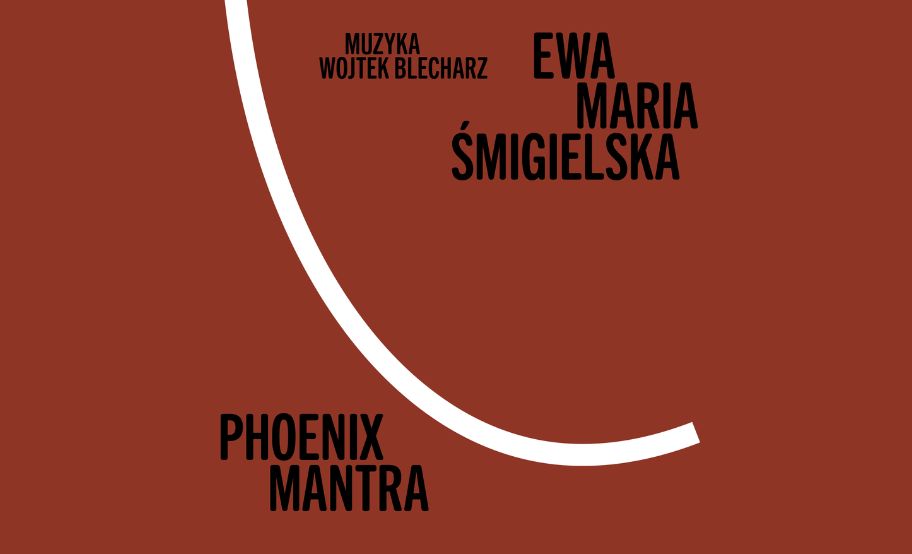
Dr. Ewa Maria Śmigielska is a contemporary sculptor and installation artist working at the Faculty of Design at the Academy of Fine Arts in Warsaw. Born in Warsaw in 1987, she completed her studies with distinction at the Faculty of Sculpture, specializing in Audiovisual Space Studio under Professor Grzegorz Kowalski. In 2019, she earned her PhD in visual arts and conservation of works of art from the same institution. Her artistic practice spans drawing, sculpture, video, installation, and scenography, with a focus on cross-cultural dialogues between Eastern and Western artistic traditions. Her research interests revolve around cultural and formal syncretism , often emerging from postcolonial critique. Śmigielska's work integrates elements referencing various cultures, temporal orders, and sensory experiences, juxtaposing emblems of Far Eastern culture with raw materials associated with contemporary urban aesthetics. Her installations create performative spaces that invite viewer participation, emotional engagement, and transformative experiences. She explores themes of spiritual transformation, urban identity, and the intersection of traditional symbolism with modern materials like mirrors, neon signs, and sheet metal. Śmigielska's recent artistic output demonstrates consistent exploration of sound installations and participatory art, with her 2024 exhibition 'Phoenix Mantra' representing the culmination of these interests. This sound installation, featuring music by Wojtek Blecharz, transforms space into a ritual journey toward spiritual renewal, connecting viewers with historical contexts of Warsaw's Wawelberg Colony. Her work shows a clear trajectory from earlier explorations of Chinese mythology in 'Follow the Dragon' (2021) toward more complex multisensory environments that bridge cultural divides. Scholarship from ZAiKS (Fundusz Popierania Twórczości Stowarzyszenia Autorów ZAiKS) As an educator and cultural ambassador, Śmigielska has served as a lecturer at the Sichuan Fine Arts Institute in China, fostering Polish-Chinese artistic understanding. She has curated numerous exhibitions both in Poland and internationally, demonstrating strong organizational skills and cross-cultural communication abilities. Her collaborative work with composer Wojtek Blecharz on projects like 'Transkryptum' and 'Phoenix Mantra' highlights her interdisciplinary approach and ability to secure artistic partnerships. Śmigielska actively participates in artistic collectives like Inne Towarzystwo in Warsaw, which provides alternative exhibition spaces for experimental work. Her current projects at the Open Colony in Wola demonstrate engagement with community-based art practices and historical memory, transforming urban spaces into sites of collective healing and cultural dialogue. Her work with the Polish Sculpture Center in Orońsko shows institutional collaboration that supports large-scale artistic production.
Magdalena Czupryńska is a teaching staff member with the academic rank of Assistant Professor at the Faculty of Design, Academy of Fine Arts in Gdańsk. Her work bridges visual communication, user experience design, and spatial interaction, emphasizing intuitive design solutions that enhance user-product relationships. Education: Bachelor’s in Design from the Academy of Fine Arts in Katowice Master’s in Design from the Academy of Fine Arts in Gdańsk Her research focuses on integrating visual communication into physical and digital environments, particularly through store layouts, mobile applications, and cross-platform consistency. She is known for her holistic approach to user-centered design across diverse media. Recent projects include rebranding initiatives, urban wayfinding systems, and digital interface design, reflecting her expertise in creating cohesive visual ecosystems that align with functional and aesthetic needs. Awards: 2022 President of Gdynia’s award for best diploma project on the city’s wayfinding system She actively collaborates with brands like Sinsay and works in team-based design studios, contributing to both commercial and public-sector design challenges.