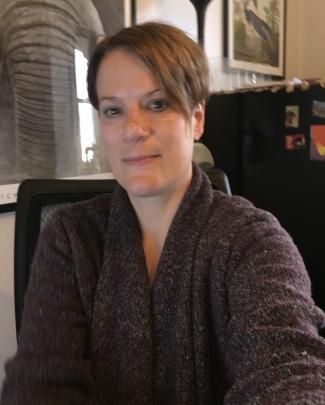
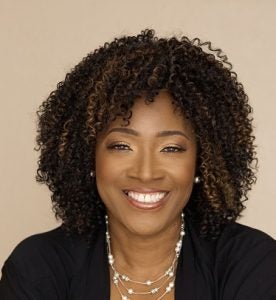
Lars Wallner is a Senior Lecturer and Associate Professor at Linköping University , affiliated with the Department of Behavioral Sciences and Learning . His research focuses on the pedagogical use of comics, graphic novels, and multimodal texts in educational settings ranging from primary schools to teacher training programs. Active in norm-critical pedagogy and gender discourse analysis Collaborates with researchers like Robert Aman and Katarina Eriksson Barajas Develops interdisciplinary projects connecting popular culture with curriculum goals His 2017 dissertation Framing Education: Doing Comics Literacy in the Classroom established frameworks for analyzing comic literacy through discourse analysis, contrasting it with traditional visual literacy . Current projects explore evolutionary biology pedagogy for grades 4-6 and Mello in after-school care , with a 2024 symposium on norm-critical comics . Recent grants include 3.9 million SEK from Norrköping Research Fund. Scientific Awards & Grants : 3.9 million SEK grant (2022) for after-school research projects Collaborates on empirical studies like Teaching with Comics (2022) and Using Comics in K-9 Education (2020). Supervises theses in teacher training across preschool to master's levels.
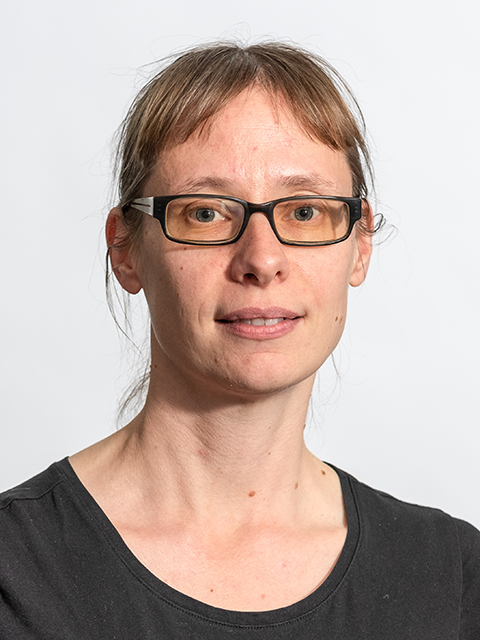
Céline Dujardin is a doctoral researcher at the University of Helsinki's Faculty of Law , specializing in legal and ethical issues surrounding the human genome and species status. Her funded project, Engineering the Human Species, Legal, Ethical and Anthropological Perspectives , merges biolaw with visual anthropology to address biolegal challenges globally. Education: Master I in Criminal Sciences, Master of Laws in Public Healthcare Teaching: European Medical and Healthcare Law (2014–2020) Her research intersects Medical Law , Biojurisprudence , and Genomics , focusing on: Human embryo legal protections Human germline gene editing regulation Pharmacological state analysis Artistic interpretation of legal norms Precision medicine governance Her publications reflect interdisciplinary approaches to biolaw, often integrating ethical, anthropological, and comparative legal frameworks. She has presented at international events like Harvard University's Annual Conference on Aging and IP Morning seminars. Awards: Wihuri Grant (2016) for documentary work
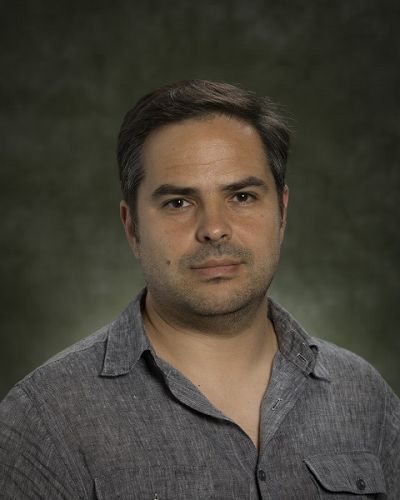
Dr. Fanny Hontoir is an Assistant Professor in Animal Anatomy at the University of Namur's Faculty of Sciences, specializing in musculoskeletal system research and functional imaging of articular cartilage. With a Doctorate in Veterinary Sciences (2018) and extensive experience in ovine osteoarthritis models, she contributes to biomedical research through innovative imaging techniques and proteomic biomarker discovery. Veterinary Medicine - University of Liège (2007) X-Ray Radiation Safety Accreditation (2007) FELASA Accreditation (Category C) - Laboratory Animal Sciences (2011) PhD in Veterinary Sciences - University of Namur (2018) Her research focuses on developing ovine models for osteoarthritis detection, combining MRI and CT imaging with cartilage biology studies. Recent projects explore small nucleolar RNA in aging, surgical induction of osteoarthritis, and proteomic biomarker discovery in synovial fluid. She actively contributes to veterinary education through digital tools like annotated radiographs and palpation videos, and participates in conferences (OARSI 2024, EULAR Congress 2025). Key research trends involve cross-disciplinary applications of imaging technologies, sustainable animal husbandry practices (solar grazing), and translational medicine bridging veterinary and human osteoarthritis research. Her work aligns with UN SDGs for sustainability and educational innovation. Dr. Hontoir collaborates with institutions across Europe, supervises research projects, and serves on the board of the Belgian Center for Pharmacotherapeutic Information. She has contributed to 68 research outputs, 3 datasets, and 90 academic activities including peer-review and invited lectures.
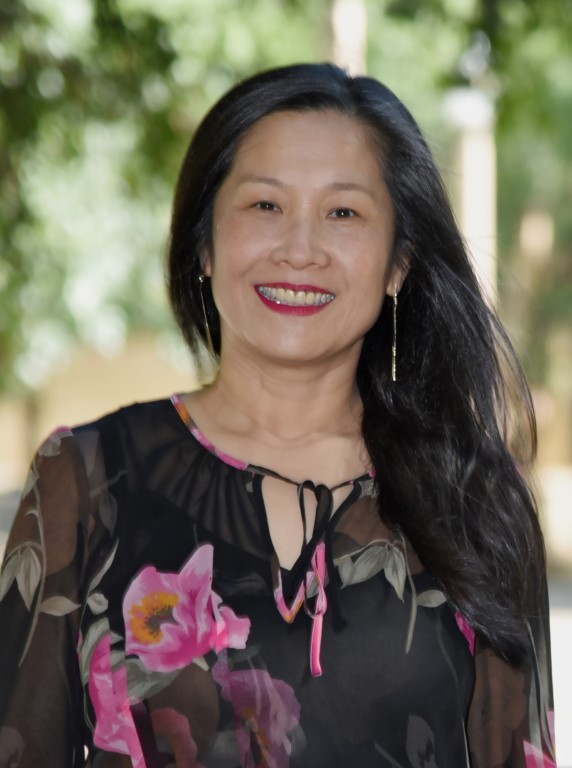
Seeta Chaganti is a Professor of English at the University of California, Davis, where she has been a faculty member since 2001. Her scholarly work uniquely bridges medieval literary studies with contemporary social justice movements, focusing on the intersections of Old and Middle English poetry, material culture, and dance. As an active public intellectual, she contributes to critical conversations on race, abolition, and institutional power through both academic and public-facing platforms. Her educational foundation includes: Ph.D. in English from Yale University (2001) M.A. in English from Georgetown University (1995) A.B. in English from Harvard University (1989) Chaganti's research fundamentally reimagines how we understand medieval poetic form through the lens of embodied experience, particularly dance. Her groundbreaking monograph Strange Footing revolutionized the field by demonstrating how medieval audiences experienced poetry as a multimedia phenomenon shaped by dance practices, proposing innovative methods for reenacting medieval dance through contemporary performance frameworks. Her current project, Carceral Angels: An Abolitionist History of the Sheriff , traces the historical triangulation of violence, whiteness, and property from pre-Conquest England to modern America, positioning medieval studies as vital to contemporary abolitionist movements. Her scholarship consistently engages with critical race theory, demonstrating how medieval literary traditions inform and complicate modern racial formations. Analysis of her recent publications reveals a decisive turn toward interdisciplinary work connecting medieval textual analysis with urgent contemporary issues. Her post-2018 output increasingly centers abolitionist frameworks, critical race theory, and institutional critique, moving beyond traditional literary analysis to examine how medieval cultural forms underpin systemic violence in Anglophone modernity. This trajectory reflects her commitment to making medieval studies relevant to current social justice struggles, particularly through collaborations with Race before Race and Medievalists of Color. Her exceptional contributions have been recognized with prestigious awards including: Modern Language Association Aldo and Jeanne Scaglione Prize for Comparative Literary Studies (for Strange Footing ) Phi Beta Kappa Northern California Association Excellence in Teaching Award (2023) UC Davis Academic Senate Distinguished Teaching Award (2014) Outstanding Mentor Award from the UC Davis Consortium for Women and Research (2012) Chaganti has demonstrated significant leadership through service as Trustee of the New Chaucer Society and Councillor of the Medieval Academy of America, while her current roles on the Executive Board of Race before Race and as a member of Medievalists of Color reflect her commitment to transforming the field through anti-racist scholarship and institutional change. Her mentorship extends beyond the classroom to shaping professional discourse through these organizations, where she actively supports underrepresented scholars and promotes inclusive approaches to medieval studies. These collaborative networks function as her primary scholarly 'labs,' fostering interdisciplinary dialogue that challenges traditional period boundaries and disciplinary silos.
Mareike Schumacher is a Junior Professor for Digital Humanities at the University of Regensburg since April 2023, affiliated with the Faculty of Languages, Literature and Cultural Studies and the Institute for Information and Media, Language and Culture. Previously, she served as a research assistant at the Technical University of Darmstadt, where she coordinated the forTEXT project – Digital Literature Research. Education: Doctorate in Modern German Literature (specializing in Digital Humanities) from University of Hamburg (2021), awarded summa cum laude MA in German-language literature from University of Hamburg (2010-2013) BA in Cultural Studies and Business Psychology from Leuphana University Lüneburg (2007-2010) Her research spans literary and cultural studies, narrative theory, and computational literary studies, with particular emphasis on gender representation in literature and digital methodology development. She actively works to strengthen the image of female scientists and digital humanities in public discourse through science communication. Her current projects include analyzing gender-specific representations of literary figures, developing a diversity corpus (Disco), and exploring sustainability discourses. Analysis of her recent publications reveals a clear trajectory toward increasingly sophisticated computational approaches to traditional literary questions, particularly in gender analysis and spatial representation in texts. Her work consistently bridges theoretical literary scholarship with practical digital tool development, demonstrating a commitment to both theoretical advancement and community-oriented application of digital methods. As a co-founder and co-host of the RaDiHum20 podcast, she actively contributes to building the digital humanities community. She has coordinated projects focused on digital literature research and received funding from the German National Library for her work on the Disco diversity corpus. Through her involvement with forTEXT, she has developed numerous educational materials and workshops introducing digital methods to humanities scholars. Mareike Schumacher maintains active research teams focused on gender analysis in literature (m*w project), digital tool development, and science communication. Her work with the RaDiHum20 podcast creates a platform for dialogue across the digital humanities community, from students to established professors, fostering connections and knowledge exchange within the field.
Michelle Comstock is an Associate Professor in the Department of English at the University of Colorado Denver's College of Liberal Arts and Sciences. Her teaching focuses on writing pedagogy, multimodal composition, and public rhetoric. Rhetoric and Composition Rhetorical Theory Multimodal Composing Digital Media Literacy Dr. Comstock's research explores sonic rhetoric, particularly how sound influences climate change discourse and the role of aurality in writing processes. She also investigates intersections of gender and technology, digital community networks, and the privatization of education. Her scholarly work spans 20+ years, covering sonic literacy, virtual communities, and public writing pedagogy. Notable publications examine climate change communication through soundscapes, DIY zine culture, and networked approaches to digital literacy. Dr. Comstock teaches undergraduate and graduate courses including: Composition I & II (ENGL 1020/2030) Argumentation & Logic (ENGL 4180) Writing New Media (ENGL 4190/5190) Rhetorical Theory (ENGL 6002) Digital Media Literacy and mentoring
Catherine Armstrong is an Associate Professor in Modern History at Loughborough University, serving as School Director of People & Culture. She holds a PhD from the University of Warwick, specializing in New World travel literature. Her academic journey includes roles at Manchester Metropolitan University and temporary positions at Warwick and Oxford Brookes. A Fellow of the Royal Historical Society (2013), she also completed the Aurora women’s leadership training (2021) and an executive MBA at Loughborough Business School (2024). She serves as co-treasurer and trustee of the British Association of American Studies. Her research focuses on early American colonial history, with particular emphasis on travel literature, material culture, and the intersection of print media with colonial experiences. Key areas include transatlantic exchanges, colonial identity formation, and the representation of America in early modern England. Teaching methodologies, especially the use of visual and material culture in historical education, are also central to her work. Her publications span from scholarly editions of historical texts to pedagogical guides, reflecting her dual commitment to research and educational innovation. Notable works include analyses of the 1622 Virginia Massacre’s print response and studies on tobacco’s role in colonial economies. Her work on cannibalism narratives and New World exploration underscores her interdisciplinary approach to historical inquiry. Awards include her prestigious Royal Historical Society Fellowship, recognizing her contributions to historical scholarship. Her professional development in leadership and business strategy complements her academic roles, enhancing her institutional impact.
Gerardo Pignatiello is an Assistant Professor in the Department of Romance Languages and Literatures at Binghamton University. His research centers on crime and detective fiction in the Southern Cone of Latin America, examining literary works by authors like Jorge Luis Borges, Rodolfo Walsh, and Gabriela Cabezón Cámara, alongside filmmakers such as Lucrecia Martel. He co-edited two seminal volumes: Crimen y pesquisa. El género policial en la Argentina (1870-2015) and El género policial en el período clásico (1930-1960) entre Sur y el peronismo , and is currently completing a monograph titled El policial campero argentino . His academic interests span: Crime fiction tropes in Argentine rural/urban settings Cultural legitimacy debates in Latin American literature Intersections of film, gender, and political history Neoliberal critiques in contemporary River Plate narratives Pignatiello's publications (2013–2023) demonstrate a consistent focus on dissecting socio-political tensions through crime genres. His works trace the evolution of police procedurals from 19th-century origins to postmodern reinterpretations, frequently employing comparative media analysis and feminist frameworks. Regional specificity—particularly Argentine, Paraguayan, and Caribbean contexts—anchors his exploration of identity, power, and narrative form.
Patricio Herbst is a Professor of Education and Mathematics at the University of Michigan, affiliated with the Department of Mathematics within the College of Literature, Science, and the Arts. His research focuses on mathematics education, particularly in geometry education, teacher professional development, and the use of technology-enhanced pedagogy. He explores instructional decision-making, the design of practice-based teacher education programs, and the infrastructure supporting mathematics education research. Herbst’s work bridges theory and practice, addressing how teachers navigate instructional challenges in geometry courses for secondary teachers. He investigates tensions in professional development contexts and the role of simulations in fostering pedagogical expertise. His recent publications emphasize curriculum design, multimodal representations of practice, and the analysis of educational journals as field-building resources. He contributes to policy and equity-focused research, advocating for systemic improvements in instructional capacity. Herbst collaborates across institutions to advance doctoral education and infrastructure for mathematics education research. His research highlights the interplay between practical rationality and theoretical frameworks in shaping teaching practices.
Fanni Liu Coward serves as Associate Professor and Department Chair of the Teacher Education Department at Texas Tech University's College of Education, where she has held faculty positions since 2009 following the college's reorganization. She previously served as Department Chair from 2016-2019 and resumed this leadership role in 2019 after returning to full-time faculty duties. Her educational background includes: Ph.D. in Educational Psychology from the University of Texas, Austin (1997-2002) M.A. in Educational Studies from The Ohio State University (1994-1996) B.A. in English from Tamkang University, Taipei, Taiwan (1990-1994) Dr. Coward's research centers on Teacher Identity Development , Teacher Recruitment Challenges , and Educational Access Barriers , with particular focus on how teacher candidates form professional identities and navigate systemic inequities. Her community-engaged scholarship emphasizes practical partnerships with local school districts to address real-world educational challenges. Analysis of her 13 publications (2010-2023) reveals consistent exploration of teacher identity formation across multiple contexts, with growing emphasis on STEM education partnerships and rural schooling challenges in recent work. Her scholarship bridges theoretical frameworks with practical applications through university-school collaborations. Her scientific recognition includes: Established Investigator Award, Division I-American Educational Research Association (2011) President’s Excellence in Teaching Award (2021) Phi Beta Kappa Honored Faculty (2020) College of Education Excellence in Undergraduate Teaching Award (2014) TTU Alumni Association’s New Faculty Award (2013) UAH Foundation Distinguished Teaching Award (2007) As an educator, Dr. Coward has mentored graduate students through research writing teams and developed a sustained service-learning initiative since 2014 connecting university students with local public schools. Her grant activity focuses on community-engaged scholarship implementation and STEM career awareness programs. She leads departmental efforts in school partnership development and community engagement, particularly through her service-learning course that creates direct connections between teacher candidates and K-12 students in Lubbock-area schools.
Celestine Davis is a Teaching Professor in the Department of English at East Carolina University (ECU), where she has served since 2017. She holds a B.A. and M.A. in English from ECU, with a graduate certificate in Multicultural and Transnational Literatures. Her teaching career began as a graduate teaching assistant, instructing courses like Introduction to Film and Appreciating Literature. Her research focuses on pedagogical strategies to enhance critical thinking, cultural literacy, and student engagement, particularly addressing literacy disparities in rural and disenfranchised communities. She is a co-founder and festival director of the Down East Flick Fest, a regional film festival promoting community arts. Her academic interests include Indigenous American literature, expat literature before 1970, and the 'Blaxploitation' film genre. She has presented widely on topics such as inclusive writing practices, bias mitigation in education, and digital text applications in composition courses. Despite no listed scientific awards, her work emphasizes community-driven scholarship and accessible education. She teaches core writing courses including ENGL 1100 and ENGL 2201, focusing on universal design principles and culturally responsive pedagogy.
Jill E. Kelly is an Associate Professor and Altshuler Distinguished Teaching Professor in the Department of History at Southern Methodist University (SMU) . She specializes in South African history, focusing on gender, violence, and colonial/apartheid legacies. Dr. Kelly is a recipient of SMU’s highest honor, the M Award, and has held prestigious fellowships including the Fulbright U.S. Scholar Grant. Education: Ph.D., Michigan State University, 2012 B.A., Saint Vincent College, 2004 Research Interests: Her work examines gendered dynamics in anti-apartheid resistance, oral history documentation, and the intersection of traditional authority with colonial policies. Current projects include analyzing the role of gender in 1950s South African rebellions and leading the Voices of SMU Oral History Project to document marginalized student experiences. Awards: M Award (2020) Altshuler Distinguished Teaching Professor (2020) Fulbright U.S. Scholar Grant (2018–2019) Tom Tunks Distinguished University Citizen Award (2023–2024) Teaching and Mentoring: She teaches courses in early and modern African history, oral history methodologies, and research methods. Her mentorship includes guiding undergraduate and graduate researchers in the Voices of SMU project. Grants and Fellowships: Over 15 grants/fellowships from institutions like the New York Public Library, Johannesburg Institute for Advanced Study, and SMU Research Council. Labs/Teams: Leads the Voices of SMU Oral History Project, collaborating with students to document underrepresented alumni narratives.
Geir Haugsbakk is a Professor at the University of Inland Norway , affiliated with the Faculty of Teacher Education and Pedagogy and the Department of Pedagogy – Lillehammer . His research focuses on educational technology, media pedagogy, and the intersection of policy and digital learning. He explores topics such as ICT integration in schools, teacher roles in technological adoption, and the societal impact of digital media in education. Haugsbakk's work critically examines issues like corporate influence on educational policy, historical trends in technology and learning, and challenges posed by digital tools in classrooms. His recent publications include studies on tablet usage in schools, policy analysis of technology giants, and the cultural dimensions of visual storytelling in higher education. His research emphasizes reflexivity in media production, particularly among youth, and the ethical implications of digital disturbances in education. Despite his prolific output, no specific awards or student advisees are listed in the provided records.
Lidiјa Palurović is a Lecturer in English Language and Literature at the Department of Social and Humanistic Sciences, Faculty of Technical Sciences Čačak, University of Kragujevac. She has been employed at the faculty since 2005 and holds a BA (1997) and MA (2009) from the Faculty of Philology at the University of Belgrade, with ongoing doctoral studies in English Studies. Her roles include teaching English for Information Technology programs and serving as a translator/editor for scientific publications. Her research focuses on Technical English pedagogy, translation of scientific texts, and the impact of digital media on language learning. She has edited the Serbian Journal of Electrical Engineering since 2008 and contributed to numerous international projects like the Serbia Enterprise Development Project (USAID, 2006). Key publications include works on postmodern literary analysis, technical communication methodologies, and the role of social media in language acquisition. Her work spans over 50 publications, including translated monographs, peer-reviewed articles, and textbooks such as English Terminology in IT (2018) and English for Technical Students (2014). Her research emphasizes bridging technical disciplines with effective communication strategies, particularly in engineering and agricultural contexts.
Prof. Nicole Rosenberger Staub is a Professor for Organizational Communication and Management at the ZHAW School of Applied Linguistics, Zurich University of Applied Sciences. She also serves as Deputy Director of the Institute of Applied Media Studies. Her academic career spans over two decades, beginning with roles at the University of Zurich (PhD, M.A.) and professional experience as a Chief Communication Officer and Communication Manager in corporate and healthcare sectors. Her research focuses on digital transformation's impact on communication strategies, strategic communication management, reputation management, and organizational identity. Notable projects include leading studies on school communication during the digital transformation, energy discourse analysis, and corporate communication in crisis scenarios. She has authored/co-authored books on topics like 'Energiediskurs' and 'Strategisches Kommunikationsmanagement.' Rosenberger Staub teaches at both bachelor's and master's levels, including programs like 'Strategic Communication Management' and 'Digital Transformation and Communication.' She also leads professional development courses in leadership and communication. Her recent work emphasizes generative AI applications in communication and Swiss communication trends during digital transformation. Her professional service includes leadership in projects like 'Energy Mentors' and 'Communication with Foreign-Language Parents.' She frequently presents at international conferences (SGKM, EUKO, ECHC) and collaborates with institutions like Migros and the Swiss Federal Office of Energy.