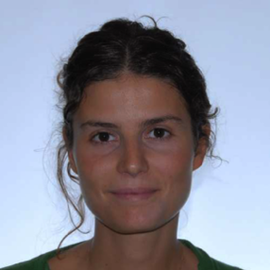
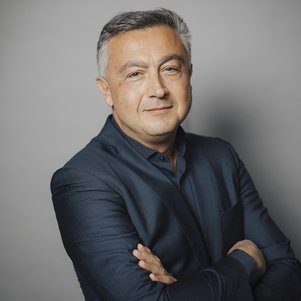
Dr. Stevan Rudinac is a Researcher at the University of Amsterdam's Faculty of Economics and Business , Section Business Analytics . His work focuses on interactive learning systems and multimodal data analysis, particularly in urban contexts and multimedia modeling. Education: PhD in Multimedia and Information Retrieval from Delft University of Technology (2013). Research Interests: Stevan specializes in multimedia modeling , hypergraph learning , and interactive video search . He develops frameworks for scalable analysis of social networks, urban imagery, and large multimodal datasets, bridging machine learning with practical applications in city planning and financial social media. Recent Trends: His 2024-2025 publications highlight large language model optimization , diffusion model evaluation , and dynamic graph embedding for meme stocks. Collaborative projects include the CASTLE 2024 dataset and Exquisitor , a system for 100 million image exploration. Labs & Teams: He contributes to the Business Analytics group at UvA, collaborating with Prof. Marcel Worring and Dr. Björn Þór Jónsson. He co-organized the UrbanMM'21 workshop and participates in ACM Multimedia and MMM conferences.
Peter H.N. de With is a Full Professor at the Video Coding & Architectures group within the Department of Electrical Engineering at Eindhoven University of Technology (TU/e). He is an international expert in video compression and image analysis for health, surveillance, and automotive applications, with over 35 years of R&D experience. He leads the Video Coding & Architectures Group (SPS-VCA) and contributes to initiatives like the Center for Care & Cure Technology Eindhoven and Eindhoven MedTech Innovation Center. De With's research focuses on video/image signal processing, machine learning, and their applications in healthcare (e.g., esophageal cancer detection), security, and automotive systems. His work includes collaborations with hospitals, EU projects, and industry leaders like Bosch Security Systems and ASML. His recent publications emphasize real-time 3D processing, assembly state recognition, driver action analysis, and medical imaging advancements, reflecting his expertise in computer vision and AI. Notable scientific awards include IEEE Fellowship and multiple paper awards (CE Chester Sall, SPIE, Elsevier). Scientific Awards IEEE Fellow CE Chester Sall Award SPIE Paper Award Elsevier Journal Award Best Paper Award (2017) Second Place in CAMELYON17 Challenge De With has supervised numerous research projects and contributed to datasets in noise reduction, augmented reality, and medical imaging. He actively collaborates on AI-driven innovations for healthcare and industrial applications.
Laura Toni is an Associate Professor in the Department of Electronic & Electrical Engineering at University College London (UCL). She serves as Director of the MSc in Telecommunications and Internet Engineering and the MRes in Telecommunications. Additionally, she is a Turing Fellow at the Alan Turing Institute and a member of ELLIS (European Lab for Learning and Intelligent Systems). Her research focuses on coding, streaming technologies, machine learning for immersive communications, decision-making under uncertainty, and large-scale signal processing. She leads the LASP (Learning And Signal Processing) group at UCL. Education: MSc (2005) and PhD (2009) from the University of Bologna, followed by postdoctoral research at UC San Diego and EPFL under Professors L. Milstein, P. Cosman, and P. Frossard. Key roles include Technical Program Chair at ACM MM 2022, Keynote Co-Chair at ACM MMSys 2022, and leadership in organizing workshops on graph-based machine learning and emerging technologies in performing arts. She is a Senior IEEE Member and holds editorial roles in IEEE Multimedia Magazine and EURASIP Journal on Signal Processing. Her work bridges communication systems and machine learning, with contributions to adaptive streaming, network optimization, and graph signal processing. She actively promotes diversity and inclusion in technical conferences, including roles as Diversity Chair at MMSys 2021 and PIMRC 2020.
Syed Muhammad Anwar serves as an Associate Professor in Software Engineering at the University of Engineering and Technology (UET) Taxila, Pakistan. He maintains a significant dual affiliation with the Sheikh Zayed Institute at Children's National Hospital in Washington, DC, USA. Additionally, he holds leadership roles as Co-founder and CTO of Sense Digital PVT. Ltd. and Director of both the Virtual Reality and Machine Learning Lab and the Signal Image Multimedia Processing and Learning (SIMPLE) Group at UET Taxila. Dr. Anwar's research spans multiple cutting-edge domains at the intersection of signal processing, machine learning, and medical applications. His primary research interests include: Multimedia Communication and Signal Processing Image and Video Coding and Quality Assessment Biomedical Signal Processing and Brain-Computer Interfaces Medical Imaging including Segmentation, Detection, and Diagnosis Deep Learning applications in healthcare diagnostics Emotion Classification and Human Behavior Modeling His recent scholarly output demonstrates a strong emphasis on applying deep learning techniques to medical image analysis challenges, particularly in brain tumor segmentation, liver tumor detection, and Alzheimer's disease classification. There's also significant work in EEG-based applications including emotion recognition, stress quantification, and game expertise classification. His research effectively bridges theoretical machine learning advances with practical healthcare applications, showing particular strength in adapting deep learning architectures to medical imaging challenges across multiple organ systems. Dr. Anwar actively mentors the next generation of researchers through his leadership of the SIMPLE research group. His current advisees include: PhD Students: Sanay Muhammad Umar Saeed (Quantification of human stress), Romana Farhan (Security in body area networks), Nosheen Sohail (Medical Image Analysis), Amin Ullah (Knowledge extraction), and Saqib Mehboob (Structural health monitoring) MS Students: Haseeb Iftikhar (Doctor recommender system), Faizah Malik (Sentiment analysis), Samreena Aslam (Fashion image retrieval), Huma Shabbir (Fashion image tagging), Khola Rafiq (Ischemic stroke detection), and Saba Naseem (Blood vessel segmentation) As Director of the Virtual Reality and Machine Learning Lab and the SIMPLE research group, Dr. Anwar oversees a dynamic research environment focused on advancing signal processing, multimedia analysis, and machine learning applications, particularly in healthcare contexts. His lab maintains strong collaborations between UET Taxila and international institutions, including Children's National Hospital in Washington DC, facilitating technology transfer between academic research and clinical practice.
Huijuan Wang serves as Associate Professor in the Multimedia Computing Group within the Department of Intelligent Systems at Delft University of Technology's Faculty of Electrical Engineering, Mathematics and Computer Science. With over 20 years of affiliation at TU Delft, she completed both her Master's degree and PhD at this institution before rising to her current faculty position. Her research focuses on temporal network analysis, higher-order network modeling, and information diffusion dynamics. Professor Wang investigates epidemic spreading models, network prediction algorithms, and complex system behaviors through both theoretical frameworks and practical applications. Her work bridges computer science, mathematics, and real-world network phenomena including urban systems and social dynamics. Analysis of her recent publications reveals a strong emphasis on temporal network properties, higher-order dependencies, and predictive modeling. Her research demonstrates consistent innovation in extracting diffusion backbones, measuring network dissimilarity, and developing memory-based prediction techniques for evolving networks. Co-founded Dutch Network Science Society (2018) Established Young Talent Prize recognizing emerging researchers Developed free community events fostering industry-academia collaboration Professor Wang actively mentors PhD candidates, emphasizing genuine interest in students' development as she experienced during her own doctoral studies. She champions initiatives promoting social safety, trust-building, and work-life balance within academic environments while leading efforts to establish processes addressing social safety concerns through cultural transformation.
Yeni Plasencia Calaña is an Assistant Professor at the Faculty of Science and Engineering , Maastricht University, and affiliated with the Institute for Digital Smart Society and Brightlands Institute for Smart Society (BISS) . Her research focuses on sound recognition, deep learning, ontology development, and biometric identification systems. University: Maastricht University School: Faculty of Science and Engineering Rank: Assistant Professor Her research integrates semantic modeling with deep neural networks , particularly in auditory perception and face recognition. Recent work includes ontologies for everyday sounds and human-aware AI in educational assessment. Key publication areas include: 2023-2025: Automated essay scoring and sound recognition via semantic deep learning 2022: Taxonomies of everyday sound semantics 2018: Persistent homology for gait recognition and metric learning 2016-2017: Dissimilarity space methods for face recognition and chemical data Scientific recognition includes the 2024 NWO-SGW Open Competition grant for the project "Am AI right?", emphasizing ethical and legal AI integration. She actively contributes to academic events, co-organizing the 2021 Women in Data Science Maastricht Conference . Her work spans applied machine learning, from low-resolution imaging to semantic modeling.
Irene Viola is a senior tenured researcher at Centrum Wiskunde & Informatica (CWI) in the Distributed and Interactive Systems (DIS) group. Her work focuses on Quality of Experience (QoE) metrics, immersive multimedia systems , and point cloud streaming . Current projects: AMPLIFY (Horizon Europe), OPEN-DASH-PC (SPIRIT Open Call), INDUX-R (Horizon Europe), TransMIXR (Horizon Europe), VOXReality (Horizon Europe) Education: PhD in Electrical and Electronic Engineering (EPFL), MSc in Computer Engineering (Polytechnic University of Turin/EPFL), BSc in Cinema and Media Engineering (Polytechnic University of Turin) Her research bridges multimedia compression , human-centric XR systems , and adaptive streaming protocols . Recent publications analyze visual saliency in 3D, PCA-based quality metrics, and social interaction latency thresholds. Awards include the 2023 IEEE Multimedia Best Paper, 2019 APSIPA Sadaoki Furui Prize, and 2022 IEEE Best Demo. Projects highlight her expertise in AI/XR integration , open-source VR platforms (VR2Gather), and 5G/XR architectures . She collaborates across Europe (Horizon Europe) and with institutions like EPFL and Nagoya University.
Stefano Cirillo serves as an Assistant Professor at the Department of Computer Science, University of Salerno, Italy. His academic career spans roles including Research Fellow (2022-2023) and Adjunct Professor for Databases courses. He maintains significant editorial responsibilities as Associate Editor for Journal of Visual Language and Computing and Multimedia Tools and Applications , while serving on program committees for major conferences including EDBT/ICDT 2024. His research focuses on data-intensive domains with emphasis on Data Profiling, Mining, and Privacy . Core interests include Social Network analysis, AI-driven database optimization, and anomaly detection in data streams. His work bridges theoretical algorithms with practical applications in e-procurement, cybersecurity, and healthcare systems, particularly through projects like Profiling Data Streams for Anomaly Detection and Security and Rights in the CyberSpace (SERICS) . Analysis of his recent publications reveals strong trends in applied AI for societal challenges – including pandemic mental health detection, perinatal depression prediction, and smart city security. His work consistently integrates novel neural architectures (YOLO variants, LSTM hybrids, Transformer networks) with domain-specific constraints, demonstrating expertise in both algorithmic innovation and real-world implementation across transportation, healthcare, and public administration sectors. Professional service highlights include Program Co-Chair for International DMS Conferences (2021-2022), Local Arrangements Chair for EDBT/ICDT 2024, and editorial board membership for journals including Data Science and Management . His research has been supported through PON-funded PhD studies and the SERICS project, with active collaborations spanning Hasso Plattner Institute (Germany) and Italian research centers like CeRICT.
Rogier Bos is an Assistant Professor in Mathematics Education at the Freudenthal Institute for Didactics of Mathematics and Science , part of Utrecht University's Faculty of Science. His work focuses on mathematics education , with expertise in IT integration , mathematical thinking , and teacher professional development . PhD in mathematical physics (University of Amsterdam/Radboud University Nijmegen) Master’s in Mathematics Education (Utrecht University) Experience as a secondary school teacher and curriculum developer His research explores dynamical visualization for mathematics learning, embodied cognition , and abstraction mechanisms in problem-solving. Projects include Mathematics D Online , FunThink (digital-embodied functional thinking), and TIME (inquiry-based education). Publications emphasize technology-enhanced learning , heuristic trees for knowledge compression, and augmented reality tools for embodied exploration. Recent publications (2023–2025) highlight embodied design for functional thinking, origami-based pedagogy , and dynamic visualization in animated videos. He co-organizes national seminars and serves on advisory boards for mathematics curriculum reform.
Patrick Le Callet is a full professor at Polytech Nantes (University of Nantes), leading the Image & Video Communication (IVC) group at the CNRS IRCCyN lab. His academic journey includes roles as an assistant professor (1997–1999) and lecturer (1999–2003) at the University of Nantes. He earned credentials in electronics from École Normale Supérieure de Cachan. His research focuses on human vision modeling applied to image/video processing, including 3D quality assessment, visual attention modeling, watermarking, and medical imaging. He coordinates major projects (e.g., EU Marie Curie ITN PROVISION, UHD4U) totaling over $5M in grants. He co-chairs VQEG’s HDR and 3DTV initiatives and serves on editorial boards for IEEE Transactions and EURASIP journals. Key contributions include databases like IRCCyN/IVC-Toyama and Eyetracker SD 2009, advancing standards in 3DTV and QoE. Over 20 students have been advised, with notable alumni working on topics like medical imaging and 3DTV discomfort metrics. Projects involve collaborations with Orange Labs, Thomson, and cultural heritage institutions. Labs/teams: IVC group at IRCCyN, managing a 3D visualization platform and eyetracking facilities. Research emphasizes interdisciplinary applications in consumer electronics, healthcare, and cultural preservation.
Peter de With is a Part-time Full Professor in the Department of Electrical Engineering at Eindhoven University of Technology (TU/e), leading the Video Coding & Architectures Group. His expertise spans video compression, image analysis in healthcare, surveillance, and multimedia. He holds a PhD from Delft University of Technology (1992) and has held roles at Philips Research, the University of Mannheim, and Cyclomedia Technology. His research focuses on video/image signal processing, machine learning, and healthcare applications such as esophageal cancer detection. He is an IEEE Fellow and has authored over 400 papers, receiving multiple awards for his work. Research interests include video coding, medical imaging, and system innovations in health, surveillance, and automotive sectors. Key publications address challenges in medical instrument detection, 3D ultrasound, and multiview rendering. He collaborates with industry partners like Bosch Security and hospitals for oncology research. His work bridges academic innovation with real-world applications, emphasizing practical solutions in healthcare technology and multimedia systems. Awards include IEEE Fellow status and paper awards from CE Chester Sall, SPIE, and Elsevier. He chairs program committees for IEEE conferences and holds 30 patents. His contributions to video analysis and system design have driven advancements in safety, security, and healthcare technologies.
Alan Hanjalic is Professor of Computer Science at Delft University of Technology, holding the Antoni van Leeuwenhoek Chair and serving as Head of the Multimedia Computing Group and Head of the Department of Intelligent Systems within the Faculty of Electrical Engineering, Mathematics and Computer Science (EEMCS). Recognized as an IEEE Fellow and AAIA Fellow, he has been a driving force in multimedia information retrieval for over two decades. Education: 1995: Dipl.-Ing. in Electrical Engineering, Friedrich-Alexander University Erlangen-Nuremberg, Germany (specialization in motion estimation for video compression) 1999: PhD in Computer Science, Delft University of Technology (specialization in video indexing and search) Research Interests: Prof. Hanjalic’s research spans the broad domain of multimedia information retrieval , with pioneering contributions to affective video content analysis . By modeling videos as trajectories in the arousal-valence emotional space, he enabled indexing and retrieval based on emotional impact, laying the groundwork for an entire subfield. His group further advances socially-responsible recommender systems , cross-modal retrieval and generation , graph learning , and network influence prediction . Recent work also delves into fairness in recommendation and deep-learning-based side-channel security . Publication Trends: His latest publications (2024–2025) showcase a diversification into fairness and reproducibility in recommender systems, security-oriented deep learning for side-channel analysis, and advanced metrics for influence prediction in complex networks. These papers reflect both foundational algorithmic contributions and critical validation studies that strengthen the reliability of machine-learning approaches across multimedia and security domains. Scientific Recognition: IEEE Fellow (2016) – for pioneering contributions to multimedia information retrieval AAIA Fellow – acknowledging outstanding impact in artificial intelligence and multimedia Named Antoni van Leeuwenhoek Professor – university-wide recognition of research excellence Education, Mentorship & Leadership: Over 25 years at TU Delft, Prof. Hanjalic has served as lecturer, course coordinator, and chair of the Computer Science Board of Studies. He has promoted more than 30 PhD students and held leadership roles such as: Head, Intelligent Systems Department (2018–present) Member, EEMCS Career Development Committee Chair, TU Delft central appointment advisory committee for full professors Management team member, 4TU.NIRICT (Netherlands Institute for Research on ICT) TU Delft representative, ICT Research Platform Netherlands (IPN) Laboratory & Research Environment: He founded the Delft Multimedia Information Retrieval (DMIR) Lab , which evolved into the current Multimedia Computing (MMC) section . Under his guidance, the group has led national (FES, BSIK) and European Union projects—including a Network of Excellence—advancing responsible and human-centered multimedia technologies.