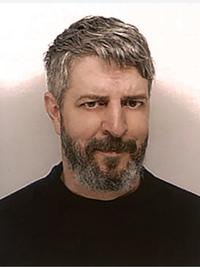
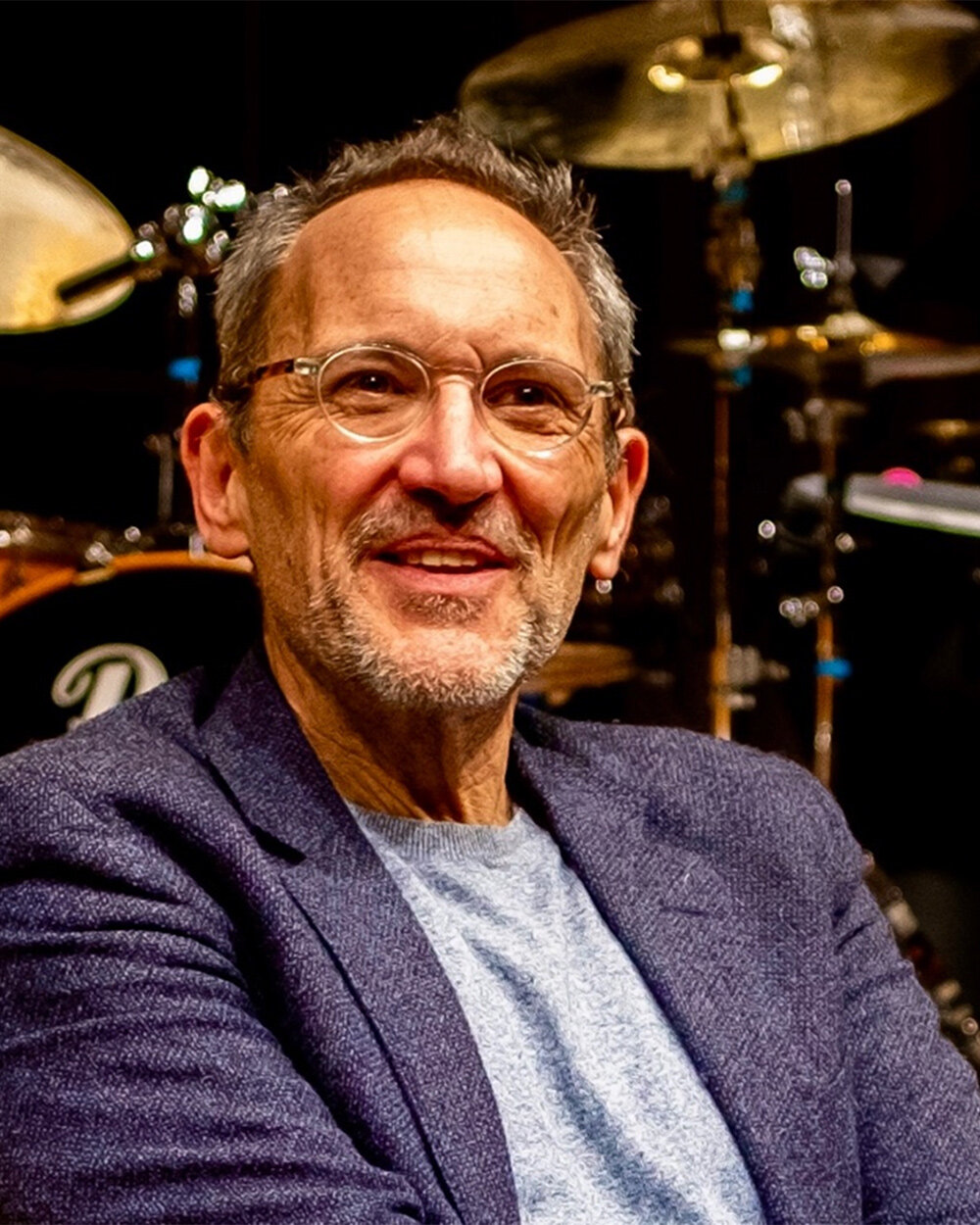
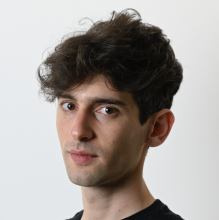
Rupociński Marcin is an Associate Professor at the Faculty of Graphics and Media Art within the Academy of Media Arts Wrocław. He holds a PhD and specializes in the Media Art Department , leading the Narration and Interaction in New Media Studio . His research intersects music composition, multimedia installations, and electro-acoustic experimentation. Education: Composition at Wrocław Academy of Music (Prof. Grażyna Pstrokońska-Nawratil and Prof. Stanisław Krupowicz) Photography at Pho-Bos Studio and European Academy of Photography Research Focus: Explores cross-media art, programming for multimedia, and computational tools for composition. Notable collaborations include the Morphai audiovisual group and Tonus Finalis laptop ensemble. His works blend live electronics, video art, and chamber ensembles. Awards: 2020 Ministry of Culture Scholarship ZAIKS Society of Authors (2010) IRCAM (2001) and Acanthes (2000) fellowships Advising & Grants: Co-founder of Tonus Finalis. Projects funded by Ministry of Culture include Random Check (2020), Sensitivity (2019), and Hesychia (2016). Active in festivals like WRO Media Art Biennale and Warsaw Autumn. Labs/Teams: Leads the Narration and Interaction Studio, collaborates with Morphai and Sacrum Profanum.
Maria Bitka is a researcher at the Art Mediation Department of the Faculty of Sculpture and Art Mediation at Wrocław Academy of Fine Arts, and serves as an Erasmus+ coordinator. Her work bridges performance art, body art, and multimedia installations, focusing on themes of corporeality, gender symbolism, and the intersection of organic processes with artistic expression. Fields of Interest: Performance Art, Body Art, Feminist Art, Multimedia Installations, Gender Studies, Organic Materials in Art, Art Mediation Her research explores the symbolic and aesthetic dimensions of bodily fluids, particularly menstrual blood, and interrogates cultural taboos through projects like Bloody Mary (2020) and Sacrifice (2019). She often employs formal visual compositions to create tension between beauty and bodily reality. Recent works such as Flash (2023) and Body Art Bodyart (2024) analyze carnival aesthetics, pandemic isolation, and the deconstruction of identity via costume and movement. She has received recognition for projects like Plata , which resulted from winning the ANESKS competition. Collaborations include partnerships with Nati Krawtz, Ariadna Pastorini, and Ilona Barszcz. Her performances, such as The Birth of Venus (2023), investigate the interplay between culturally imposed imagery and physiological reality, using materials like semi-transparent fabric and sweat to dissolve boundaries. Scientific Awards: Winner of ANESKS competition Contact: m.bitka@asp.wroc.pl , maria.bitka@gmail.com , +48 604 235 450
C.W. Winter is a William Golding Junior Research Fellow in the Arts & Humanities at Brasenose College, University of Oxford, and holds a postdoctoral research position in the Faculty of Asian and Middle Eastern Studies. He holds a BA from the University of Southern California (USC), an MFA from the California Institute of the Arts (CalArts), and a DPhil from the University of Oxford (Oxon). His research focuses on intersections between contemporary art, experimental music, and international cinema, with a particular emphasis on narrative theory and practice-based research. Current projects include Underdetermined: The Art of Welcomed Misregard , a book examining tactical uses of disregarded techniques across art forms, and Åra , a fiction film set in the Stockholm Archipelago. Recent publications span film criticism, collaborative art projects, and experimental music recordings. Winter has held visiting roles at institutions like The Royal College of Art and has contributed to interdisciplinary projects such as the vinyl recording The Black Sections . His work often bridges theory and practice, engaging with Deleuzian concepts and post-avant-garde methodologies. Winter's research interests include the terrane-image (a Deleuze-inspired concept), geographic storytelling, and the relationship between art and ideology. He actively collaborates with artists and scholars across disciplines, as seen in his co-authored works with Anders Edström and contributions to journals like Balthazar—tidsskrift for filmkritik . His projects frequently interrogate historical undercurrents in art, music, and film, emphasizing overlooked techniques and their cultural implications. Professional affiliations include Brasenose College and the Faculty of Asian and Middle Eastern Studies. His work can be explored via his website theworksanddays.com and academic portal AMES Oxford .
Osvaldo Golijov is the Composer-in-Residence at the College of the Holy Cross. His work bridges classical traditions with contemporary multicultural influences, spanning operas, film scores, and chamber pieces. Notable collaborations include Francis Ford Coppola’s film soundtracks and operas like Ainadamar . Recent works include LAIꓘA (2025), The Given Note (2023), and Megalopolis Suite (2024). His compositions often explore themes of grief, cultural fusion, and interdisciplinary artistry. Education: Born in La Plata, Argentina (1960), he studied in Jerusalem before immigrating to the U.S. in 1986. Research Interests: Golijov’s work merges Baroque structures with African, Latin American, and Jewish musical traditions. His operas and orchestral pieces emphasize narrative depth and emotional resonance. Grants & Collaborations: Collaborations include the Boston Symphony Orchestra, Metropolitan Opera, and Chicago Symphony Orchestra. His residency at Holy Cross supports creative projects and educational outreach.
Ruihua Wang is a researcher with a focus on Control Theory , Switched Systems , and H∞ Control , as evidenced by her extensive publication record in journals like Information Sciences and Trans. Inst. Meas. Control . Her work spans applications in engineering systems, biomedical devices, and educational technology. Ruihua Wang’s research interests include: Control Theory and Lyapunov Function approaches Switched and Markovian Jump Systems Machine Learning for predictive maintenance and signal processing Biomedical engineering for wearable health monitoring Educational technology in multimedia learning Her recent publications highlight trends in finite-time control strategies, resilient control under cyberattacks , and adaptive algorithms for systems like bearings and rotating machinery. She also explores interdisciplinary applications, such as instructor voice enthusiasm in educational tools.
Suk-Jun Kim is a full professor and Personal Chair of Electroacoustic Music and Sound Art at the University of Aberdeen's School of Language, Literature, Music and Visual Culture. He also serves as Director of Postgraduate Research and Enterprise and Innovation Lead within the same school. His work bridges composition, sound art, and academic research, focusing on immersive sound, spatial aesthetics, and phenomenological approaches to electroacoustic music. Education: PhD in Composition MMus (HONS) in Music Technology Graduate Diploma in Art & Technology BA in Theology Research Interests: Kim explores sound as a medium for storytelling and memory, particularly through projects like the Humming series (focusing on displaced Syrian communities) and Hasla (an imaginary sonic geography). His work often integrates field recordings, electronic manipulation, and interdisciplinary collaborations. Recognition: His compositions have won prestigious awards including the Métamorphoses Biennale (2000 & 2008), ICMC Regional Prize (2008), and residencies at Bourges, MacDowell Colony, and DAAD Berlin. His publications include Humming (Bloomsbury) and Hasla (Kehrer Verlag). Projects: Notable works include the Syrian Humming Project (documenting refugee experiences through sound), Four Landscapes , and VR+Immersive Sound installations. He has collaborated with institutions like sound festival and dance live festival.
Antria Theodorou Souroulla is a Lecturer in Audio Production at the University of Central Lancashire, Cyprus (UCLan Cyprus), within the School of Arts, Media & Communication. She holds a Ph.D. in Music (Electroacoustic Composition) from the University of Huddersfield (2019), an MSc in Sonic Arts from the University of Sheffield (2011), and a Bachelor of Music from the same institution (2010). Her academic role includes teaching and module leadership in Audio Production. She also serves on UCLan’s Senate as a representative for Associate Lecturers. Research Interests: Dr. Souroulla focuses on Electroacoustic Composition, Sound Design, and experimental approaches to sound recording/editing. She explores sound’s natural characteristics beyond traditional musical frameworks, emphasizing compositional practices rooted in sonic manipulation and multimedia integration. Her work has been showcased in events such as the Days of Electroacoustic Music (Crete, Kefalonia), MediSouP’s ‘Healing, Listening to a Brave New World,’ and Avaton Distorted Concerts. Professional Experience: Alongside academia, she is a freelance composer and sound designer for film, theatre, and advertising. Notable projects include soundtracks for short films like Oneiroi (2022) and theatrical productions such as Mi kai Mi (2021). Her work often merges artistic creativity with technical expertise in audio engineering. Awards & Scholarships: 50% Ph.D. Fee-Waiver, University of Huddersfield Cyprus State Scholarship Foundation (Bachelor’s Degree) Additional Roles: Member of the Hellenic Electroacoustic Music Composers Association. Active in curriculum development and academic governance through her Senate role.
Agnieszka Fujak is a Lecturer at the Academy of Fine Arts in Katowice, specializing in Visual Communication, Typography, and Design Research. She has led impactful projects such as the award-winning Visual Information System for the Polish National Radio Symphony Orchestra and contributed to international research on diacritic design through The Insects Project. Her work integrates cultural heritage preservation, ergonomics, and multimedia innovation. She has authored/co-authored publications including books on typography and presented at global conferences like Typo Berlin and the International Colour Association meetings. Fujak’s research spans wayfinding systems, digital publishing standards, and medical design optimization, reflecting her commitment to bridging theory and practice in design education and industry collaboration. Affiliations: Academy of Fine Arts in Katowice, Multimedia Activities Studio (Katowice as UNESCO City of Music program) Education: Doctor of Arts (university unspecified) Her research interests emphasize user-centered design, cultural identity through visual systems, and the application of traditional heritage in modern contexts. Projects like the NEBULA experiment in volumetric filmmaking highlight her exploration of multimedia art intersections with music and technology. Awards include the ED-Awards 2014 bronze medal and recognition at international animation festivals. Grants and collaborations include the “100 Silesian Colours and Patterns” project funded by Poland’s Ministry of Culture and partnerships with institutions like Beijing University of Technology. She has supervised student projects in ceramic design, typography, and wayfinding systems, fostering industry connections through initiatives like design cooperation with BGH Network.
Joanna Napieralska is an Associate Professor at the Chair of Sound Engineering, Fryderyk Chopin University of Music (FCUM), specializing in film sound design and multimedia education. She co-manages the Inter-University Multimedia Program and represents FCUM in the Inter-University Studio of Multimedia Artistic Creation. Her career includes sound engineering roles at the Warsaw School of Journalism and Łódź Film School, with notable work in over 40 film and TV productions. Her research focuses on sound dramaturgy, multichannel audio systems, and documentary soundscapes. She authored two seminal books: *Weiser* (2006) analyzing sound's narrative role and *Sound Design* (2012) exploring cinematic audio innovation. Napieralska has received prestigious awards including the BBC Scholarship (1989) and Nipkow Programme Fellowship (2002/2003). Her interdisciplinary education work includes pioneering problem-oriented multimedia curricula, exemplified in her 2015-2016 studies on syllabus design and Norwegian educational models. She actively contributes to professional organizations like the Polish Film Academy and European Film Academy.
Evan Tobias is an Associate Professor of Music Education at Arizona State University (ASU), where he leads the Consortium for Innovation and Transformation in Music Education (CITME) and directs ArtsWork: The Kax Herberger Center for Children and the Arts. Previously, he taught at DePaul University and in New York's public schools. His research focuses on innovative uses of digital media, equity in education, and integrating popular culture into music curricula. He co-founded the J Dilla Music Tech Grant initiative and publishes a free newsletter, #ImaginingPossibilities, exploring contemporary issues in music education. Educational Background: Ph.D. and M.M. in Music Education from Northwestern University, B.M. from Crane School of Music, SUNY-Potsdam. Research Interests: Impact of music education on communities, curriculum design, futures thinking in education, and leveraging technology for equitable music access. Active in editorial roles for journals like College Music Symposium and Music Educators Journal. Affiliations: Senior Global Futures Scholar at ASU, member of the Music, Learning, and Society research group, and director of the Sound and Music Technologies Group. Engages with the public via YouTube, Bluesky, and a dedicated research website.
Kiley Gaffney is a Senior Lecturer in the School of Creative Arts at Queensland University of Technology, where she serves as Academic Lead (Learning & Teaching) and Course Coordinator for the Bachelor of Fine Arts and Bachelor of Creative Industries degrees. With a PhD from the University of Queensland, her academic career bridges theoretical research with creative practice in music, cultural studies, and performance. Her educational background includes a Doctor of Philosophy and Bachelor of Arts with Honours, both from the University of Queensland. Gaffney is an active member of the Cultural Studies Association of Australia and the International Association for the Study of Popular Music, and previously served on the 4ZZZ board (2010-2012). Gaffney's research interests span cultural studies, performing arts, communication and media studies, with particular focus on cosmopolitanism, affect theory, and relational art practices. Her doctoral thesis, "Cosmopolitan Tendencies in Intersubjective Art," examined the complex relations between advanced capitalism and cosmopolitanism through the lens of relational art practices. Her work integrates critical theory, gender studies, and her own creative experiences as a musician. Her publications from 2007-2019 demonstrate consistent scholarly output across cultural studies, music, and creative practice. The articles reveal a trajectory from more traditional academic writing toward increasingly interdisciplinary work that blends theoretical analysis with creative practice, particularly in music and performance. Her research shows strong connections between cultural theory, affect studies, and practical creative applications. Vice Chancellor's Performance Award (2013) Multiple competitive grants including Arts Queensland Development and Presentation Grant and Australia Council for the Arts grants (2012) Commissioned to create GOMA's fifth birthday song (2011) Valedictorian - Bachelor of Arts with First Class Honours (2004) Gaffney has supervised numerous doctoral students through completion, with research topics spanning music city theory, creative practice, opera creation, and Brisbane's musical identity. Her teaching spans undergraduate to doctoral levels, with course development in music concepts, music scenes and subcultures, and creative performance. She has also been actively involved with IMP Labs, QUT's research center, and maintains connections with the broader music community through performance and industry engagement.
Dr. Christos Karpasitis is an Assistant Professor and Acting Head of the School of Arts, Media and Communication at UCLan Cyprus. He holds a PhD in Digital Media and Online Advertising (2017) from UCLan, alongside advanced qualifications in E-Business, Multimedia, and Higher Education Pedagogy. His research focuses on cultural preservation through creative practices, digital advertising strategies, and social media user behavior. Education includes a BSc in Multimedia and Digital Entertainment (Northumbria University, 2010) and an MSc in E-Business and Information Systems (Newcastle University, 2011). He is an Associate Fellow of the Higher Education Academy (AFHEA) and certified in Adobe Creative Education and HR Training. Research interests span digital design, viral marketing, social media analytics, and audiovisual content. He leads courses in Web Design & Development and Media Production, teaching modules like Video Production, Digital Marketing, and UX Design. Notable projects include the Explore Cyprus: Beyond the City public installations and co-authoring Play and Learn with Linos & Flora for migrant children. He has secured over €4.7M in research grants, including the Horizon Europe-funded PREPARED project (€4.2M). Professional roles include advisory board memberships for the ILOVEGRAPHIC Festival and leadership in research centers like ICMAC and CPCP. Awards include the Best Poster Award at ECSM 2015 and recognition for innovative research visuals.
Ignacio Baltazar Perez Messina is a PreDoc Researcher and Ph.D. candidate at Vienna University of Technology's Centre for Visual Analytics Science and Technology (CVAST) within the Faculty of Informatics. His work focuses on guidance mechanisms in mixed-initiative visual analytics systems, with emphasis on progressive analysis and user interaction design. His research interests span Visual Analytics , Data Visualization , and Human-Computer Interaction , with specific expertise in task-driven guidance methodologies, persistent user-generated artifacts, and spatio-temporal data analysis. Current projects include DoRIAH (2020–2024), GuidedVA (2020–2025), and KnoVA (2018–2022), with recent expansion into typographical forensics through a 2025 research internship at Japan's National Institute of Informatics. Analysis of his publication record reveals a consistent trajectory in advancing guidance frameworks for visual analytics, evolving from foundational typologies (2022) to task-driven methodologies (2023-2024) and persistent interaction models (2024-2025). His work bridges theoretical frameworks with practical applications in urban mobility, remote sensing, and creative data representation. Honourable Mention at EuroVA 2023 His research is supported through multiple EU-funded projects including DoRIAH (Domain-adaptive Remote Sensing Image Analysis with Human-in-the-loop) and GuidedVA. Perez Messina actively participates in interdisciplinary collaborations, having completed artistic residencies at Bibliothek Andreas Züst (Switzerland) and Creartathon (Paris), where he integrates visualization research with media art practice through exhibitions at VISAP and IEEE VIS events. He maintains active laboratory work at CVAST, where his research on progressive guidance systems continues to evolve through collaborations with international partners including UCLab at FH Potsdam and the National Institute of Informatics in Tokyo.
Laura Pappa is a Visiting Associate Professor of Graphic Design at the Estonian Academy of Arts’ Faculty of Design, with academic ties to institutions like the Royal Academy of Art in The Hague and the Sandberg Institute. She holds a master’s degree from Werkplaats Typografie in Arnhem, Netherlands, after studies at the Estonian Academy of Arts and Gerrit Rietveld Academie. Pappa’s work spans exhibition design, book publishing, and visual identity systems for cultural institutions such as Het Nieuwe Instituut, the Estonian Museum of Architecture, and Kunstverein Toronto. She co-founded the Asterisk Summer School (2013–2016) and curated the ‘Signals from the Periphery’ exhibition at Tallinn Art Hall (2017). Her teaching emphasizes interdisciplinary approaches, with recent roles at Estonian Academy of Arts (2020–present) and ArtEZ Institute of the Arts (2021). Key projects include the Estonian Pavilion’s ‘Orchidelirium’ at Venice Biennale (2022) and identity designs for the Matter of Art biennale (2019–2020). She collaborates frequently with institutions like Valiz publishing and Casco Art Institute. Education: Estonian Academy of Arts (BA), Gerrit Rietveld Academie (Diploma), Werkplaats Typografie (MA). Research interests focus on graphic design as a socio-cultural tool, with projects blending typography, exhibition curation, and critical art practices. Her work addresses themes like cultural peripheries, institutional critique, and cross-disciplinary collaboration. Recent projects highlight eco-critical design (Orchidelirium), biennale identities (Matter of Art), and architectural histories (To the New World!). Teaching roles include Royal Academy of Art, The Hague (2018–2020) and workshops at Camberwell College of Art and Sandberg Institute. Labs/Teams: Collaborations with Ranno Ait, Elisabeth Klement, and Robert Milne on typography and exhibition systems. Part of the design team for the Estonian Pavilion at Venice Biennale 2022.
Shelley Rodrigo is a Professor in the Rhetoric, Composition, and the Teaching of English (RCTE) program at the University of Arizona, serving as Senior Director of the Writing Program and a Writing Scholar (Continuing Status). She is also Affiliate Faculty with the School of Information. Her research focuses on how newer technologies enhance teaching and learning, particularly in writing program administration and online education. Notable roles include Vice President of the National Council of Teachers of English (2021–present), Research Associate with The Readability Consortium (2022), and Distinguished Fellow in the Center for University Education Scholarship (CUES). She has received awards such as the Adobe Education Leader (2018) and Google Certified Innovator (2010). Her scholarship spans journals like Composition Forum , Computers and Composition , and Technical Communication Quarterly . Key publications include co-authored books Teaching Literacy Online , The Cengage Guide to Research (3rd ed.), and edited volumes like Rhetorically Rethinking Usability . Her work emphasizes interdisciplinary approaches to educational technology, usability, and pedagogical innovation. Awards reflect her contributions to technology integration in education, including the Ruth Catalano Friend of Technology Innovation Award (2021) and Old Dominion University’s Teaching with Technology Award (2014). She actively collaborates with institutions like the Readability Consortium and CUES, advancing research on digital literacy and educational practices.