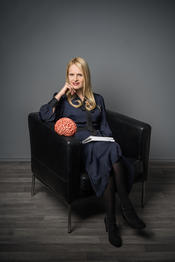
Jocelyn Saidenberg is a Lecturer specializing in comparative literature, ancient poetry, and interdisciplinary studies. She holds a doctoral degree in Comparative Literature from the University of California, Berkeley. Her research integrates linguistics, social anthropology, and psychoanalysis to analyze didactic poetry’s transformative potential, as seen in her dissertation Echo Otherwise on Lucretius’s atomic poetics. Her creative work includes multiple poetry collections and essays exploring themes like displacement, existential inquiry, and interdisciplinary art. Key publications span academic interviews and poetry anthologies, with notable works such as kith & kin (2018), Dead Letter (2015), and Shipwreck (2013). Dr. Saidenberg has received prestigious awards including the Frances Jaffer Award and the American Academy of Poets Greenwald Prize (2001). Her creative and critical outputs reflect a sustained engagement with language’s capacity to interrogate human experience across historical and cultural contexts.
Andrew Ollett is an Associate Professor and Director of Graduate Studies in the Department of South Asian Languages and Civilizations at the University of Chicago , where he has taught since 2019. His research focuses on the literary and intellectual traditions of South and Southeast Asia, particularly through works in Sanskrit, Prakrit, Apabhramsha, and Kannada from the first millennium CE. Co-founder and editor of NESAR (New Explorations in South Asia Research) Director of NEH-funded edition/translation of the Kavirājamārga (earliest Kannada literary manual) Expert in Prakrit and Kannada literary traditions His work explores the 'question of language'—examining how language choice shaped cultural production and change in premodern India. Current projects include a monograph on context-sensitivity in Indian language theories and a study of manuscript technology's impact on early South Asian knowledge communities. He has authored The Mirror of Ornaments (Naples: Unior Press, 2025) and Language of the Snakes (UC Press, 2017), and co-authored Lilavai (Harvard, 2021). Recent publications include interdisciplinary studies on: Sanskrit-Prakrit campū genre reevaluation Pragmatics in Mīmāṁsā interpretive concepts Manuscript literacy's influence on literary forms Historical linguistics of Middle Indic syllable reduction Philosophy of language in Śālikanātha and Kumārila Bhaṭṭa Awarded the NEH 'Scholarly Editions and Translations' grant , he teaches classical South Asian literature courses covering Sanskrit, Prakrit, and Tamil traditions. He maintains digital resources including a Prakrit Digital Texts Project and Mīmāṁsādigdarśinī digital text repository, and actively contributes to open-access scholarship.
Dr. Hannah Zdansky is an Assistant Professor of English at Belmont Abbey College, specializing in medieval languages, literatures, and manuscript studies. Her research focuses on cross-cultural connections in medieval Britain and Ireland, particularly exploring multilingualism, religion in literature, and medieval reading practices. She holds a B.A. from Baylor University, an M.A. from the National University of Ireland, Galway, and a Ph.D. from the University of Notre Dame. Her expertise spans Old and Middle English, French, Irish, Welsh, and Latin, with a methodological focus on digital humanities and the history of the book. Dr. Zdansky’s work examines how medieval literary and material cultures were shaped by multicultural interactions, including studies on medieval manuscripts, the role of women in literary production, and the intersection of religion with secular narratives. Her recent scholarly engagements include presentations on topics like the transnational dimensions of medieval texts, the interplay between sacred and secular themes in works such as Gui o Bharbhuic , and comparative analyses of Welsh and English manuscript traditions. Her publications span peer-reviewed articles, encyclopedia entries, and book reviews, reflecting her commitment to interdisciplinary medieval studies. Dr. Zdansky teaches a wide range of courses, from Old English Language and Literature to Irish History, emphasizing close textual analysis and historical context. She has advised numerous students through independent studies and thesis work, fostering academic rigor and intellectual curiosity in her classroom.
Pascale Trevisiol Okamura is an Associate Professor in Language Sciences and Language Teaching at Sorbonne Nouvelle University, affiliated with the DILTEC research team (EA 2288). Her primary role includes teaching language acquisition and foreign language didactics within the UFR of Literature, Linguistics, and Didactics (LLD). She co-heads the Master 2 program in Language Teaching (FLE/FLS) and holds administrative roles in departmental councils and educational committees. Education Background: Lecturer at Sorbonne Nouvelle University since 2015 Previously taught at Université de Poitiers (2010–2015) and Université Paris 8 (2007–2010) French teaching assistant at Hokkaido University, Japan Research Focus: Specializes in third language acquisition (L3), crosslinguistic influence, and the interface between language acquisition and didactics. Key themes include: Discourse construction in L3 French Input processing and initial language exposure Development of teaching materials for FLE Plurilingual practices among language teachers Current projects involve multilingualism in primary education, Tamil-speaking learners' L3 French acquisition, and reflexive training in research. Teaching & Supervision: Co-supervises doctoral research on topics such as L3 French acquisition in Chinese contexts, translinguistic discourse influences, and plurilingual teacher practices. Teaches advanced courses on language acquisition theories and FLE methodology. Labs/Teams: Member of the Second Language Acquisition Network (ReAL2) and part of the DILTEC team, focusing on language didactics and multilingualism research.
Dr. Caoimhe Nic Lochlainn holds the rank of Professor at Dublin City University's Fiontar & Scoil na Gaeilge, the university's School of Irish and Celtic Studies. She earned her BA Joint Honours in Irish and French, MA in Irish, and PhD in Irish at Queen's University Belfast. Her research focuses on translation methodologies, children's literature, and cultural history with a particular emphasis on Irish-language texts. Her academic contributions include co-editing major volumes such as Laethanta Gréine & Oícheanta Sí (2013) and Thar an Tairseach (2014), as well as publishing extensively on children's literary culture and folklore adaptation. She has also authored children's books like Scéalta le hInsint don Ghealach (2018). Recent publications explore representation in Irish-language YA fiction (2025), Scottish cultural depictions in Irish prose (2023), and Gaelic translation challenges (2022). Awards include the 2025 Research Ally designation and 2019 IBBY Honour List recognition. Current supervision includes three PhD candidates: Dara De Poire, Eilis Neary, and Mohamed Yazjeen. She actively participates in academic committees such as the Irish Association for the Study of Children's Literature (EASCL) and serves on Rádio na Life's board.
Bruno Echauri Galván serves as Associate Professor in the Department of Modern Philology at the University of Alcalá (UAH), Spain, teaching core translation courses including Introduction to Translation Theory and English-Spanish Translation across multiple degree programs in Alcalá de Henares and Guadalajara. His research centers on Translation Studies and Reception Theory, with significant contributions to intersemiotic translation (particularly in children's literature), healthcare interpreting, and film adaptation reception. As an active member of the Research Group on Interdisciplinary Reception Studies, he investigates cultural reception, literary reception, and translation through frameworks including cultural mediation, censorship studies, and myth reception. Recent publications (2021-2024) demonstrate consistent innovation in translation pedagogy, including color-based translation assessment tools, service-learning translation projects, and pandemic-era teaching adaptations. His work on collaborative writing projects, mental health communication, and Carver-Lish translation controversies reveals methodological diversity across literary, audiovisual, and healthcare domains. Dr. Echauri Galván has participated in multiple research initiatives including the JOB AND MOVE student network project (2018), Homopoly strategic partnership (2016), and InterMed healthcare mediation project (2011), where he contributed expertise in intercultural communication and translation standards. He maintains active research leadership through the Interdisciplinary Reception Studies group, examining reception phenomena across cultural, literary, musical, and translational contexts while addressing contemporary issues like censorship and myth criticism.
Thibaut d’Hubert is an Associate Professor at the University of Chicago in the Department of South Asian Languages & Civilizations . His research focuses on Middle Bengali poetry and Indo-Persian literature , with an emphasis on textual criticism, literary hermeneutics, and multilingualism in premodern South and Southeast Asia. Specializes in Bengali-Persianate literary interactions Co-organizer of Middle Bengali language/literature retreats Recipient of Zukunftsphilologie fellowship (2013-14) His monograph In the Shade of the Golden Palace (2018) examines Middle Bengali poet Ālāol’s translation practices, while Meaningful Rituals (2022) explores Persian-Arabic-Bengali multilingualism through the Nūrnāma tradition. Current projects include critical editions of Ālāol’s epic Saẏphulmuluk Badiujjāmāl (supported by NEH grant) and annotated translations of Persian ghazals. Supervises students in premodern South Asian literature Teaches courses on Bengali/Sanskrit/Persian literatures Works on musicology and text performance His research interests span: Perso-Arabic poetics in Bengal History of literary multilingualism Sufi and Gauḍīẏa Vaiṣṇava literature Cultural interactions between South/Southeast Asia Traditional philology and scribal practices Didactic/ritual uses of Persian texts in rural Bengal Key scientific awards : Zukunftsphilologie fellowship (2013-14) NEH Scholarly Editions and Translations grant
Eva Vetter is a full Professor at the University of Vienna , affiliated with both the Department for Teacher Education and the Department of Linguistics . She specializes in multilingualism, language teaching methodologies, and minority language education, with a focus on integrating climate justice themes into linguistic pedagogy. Email: eva.vetter@univie.ac.at Office: Porzellangasse 4, 1st floor, 1090 Vienna Her research interests include: Applied linguistics in educational contexts Minoritized language preservation Language policy and equity Interdisciplinary approaches to multilingualism Recent teaching activities focus on: Developing communication spaces for multilingual learners Empirical research methods in language education Climate justice integration in linguistic curricula Doctoral supervision in applied linguistics She actively mentors educators through professional development programs and leads research initiatives at the intersection of linguistics and teacher education.
Univ.-Prof. Dr. Michaela Sambanis is a Professor of English Didactics at the Institute of English Philology within the Department of Philosophy and Humanities at Freie Universität Berlin. She has held this position since 2011 and previously served as the managing director of the Institute from Winter semester 2017/2018 to October 2019. Her academic journey includes research work at the Transfer Center for Neuroscience and Learning at the University of Ulm (2008-2011), completion of her habilitation in 2006, and her promotion in 2001. Professor Sambanis's research centers on the innovative intersection of educational neuroscience and language teaching methodology. Her work pioneers the field of Positive Foreign Language Didactics, connecting positive psychology with language education. She investigates embodied cognition approaches, particularly movement-based learning, and explores theater methods and arts integration in language instruction. Her research also addresses teacher well-being and health, multilingualism in educational settings, and the application of neuroscience findings to practical classroom situations. The k2teach project represents her current focus on teaching-learning labs in English teacher education. Her scholarly output demonstrates a consistent trajectory toward integrating neuroscience with language pedagogy, with recent publications increasingly addressing mental health, digital transformation in education, and positive psychology applications. The evolution of her work shows a progression from practical teaching methods to increasingly sophisticated neurodidactic frameworks that bridge scientific evidence with classroom practice. Professor Sambanis serves on multiple scientific advisory boards including the Goethe Institut in Munich, the Transfer Center for Neuroscience and Learning at the University of Ulm, and the Schlözer Program for Teacher Education. She is also the founding chair of the cross-state E&M Berlin-Brandenburg section and a member of the German Society for Foreign Language Research (DGFF). Her editorial work includes the SELT book series on English Language Teaching. Her teaching responsibilities include supervising master's theses in English teaching, and she has developed numerous teaching-learning laboratories that connect theoretical knowledge with practical application in teacher education. Her work demonstrates a strong commitment to evidence-based foreign language didactics that incorporates insights from neuroscience, psychology, and educational research.
Dagmar Abendroth-Timmer is a Professor in Romance Studies - Didactics at the University of Siegen, Faculty I. She is a leading figure in foreign language didactics, with a strong focus on action-oriented teaching, multilingualism, teacher education, and digital learning environments. Her research is deeply international, involving collaborations across Europe through projects like LANGSCAPE, ENROPE, and ViMuLEnc. University: University of Siegen School: Faculty I Department: Romance Studies - Didactics Position: Professor Email: abendroth@romanistik.uni-siegen.de Her research interests include foreign language didactics, multilingual and intercultural education, teacher professionalization, empirical research methods, and digital learning. She has made significant contributions to the development of action-oriented language teaching models, particularly in digital and multilingual contexts. Her recent publications explore virtual multilingual encounters, translanguaging, and identity formation in language classrooms. The recent articles reflect a strong trend toward digitalization in language education, with a focus on virtual exchange, teacher training in digital environments, and the role of multilingualism in online learning. There is a consistent emphasis on reflective practice, identity, and critical pedagogy across her work. She is actively involved in academic leadership, serving as a network consultant for LANGSCAPE and coordinating international projects. She has contributed to numerous edited volumes and special journal issues, particularly on plurilingualism and teacher education. Dagmar Abendroth-Timmer supervises research assistants and contributes to curriculum development in teacher education. She is engaged in ongoing research projects such as ViMuLEnc, which explores virtual multilingual learning encounters, and drama pedagogy in language teaching. Her work bridges theory and practice, aiming to enhance both teacher training and classroom instruction in foreign languages.
Dalpat Rajpurohit is an Assistant Professor at the University of Texas at Austin's College of Liberal Arts, specializing in Hindi language and literature within the College's Asian Studies department. Holding a PhD from Presidency University, Kolkata, he teaches courses exploring South Asian history, religions, and literary traditions through Sanskrit and Hindi texts. Education: PhD in Hindi Literature, Presidency University Affiliations: University of Texas at Austin, Asian Studies, College of Liberal Arts Research: Focuses on pre-modern Hindi/Braj literary intersections with Bhakti, Vedanta, Riti, and colonial language shifts His work challenges simplistic binaries in Hindi literary historiography, demonstrating how early modern Indian poet-saints like Sundardas blended devotional and courtly traditions under Mughal-Rajput multiculturalism. He analyzes how Dādūpanthi saints navigated Jain merchant networks and Mughal imperial policies like sulḥ-i kull while advancing non-dualist Vedanta in Braj poetry. Rajpurohit's research has been recognized with the 30th Devishankar Awasthi Samman and Amar Ujala Best Book Award (2023) . He supervises graduate students in pre-modern Hindi archives, early modern literary networks, and topics like caste, gender, and multilingualism in South Asian literature.
Marina Schramm is a researcher and doctoral candidate specializing in foreign language didactics, with a focus on spelling education for German as a second language and implicit learning through classroom interactions. She is affiliated with a university's Department II (English Studies team) and teaches English and German at a Realschule plus, operating in multilingual and multicultural settings from early childhood to tertiary education. Educational Background: MA in European Bilingual Education (Karlsruhe) 1st and 2nd State Examinations for primary/secondary school teaching (Karlsruhe/Pforzheim) European teaching qualification for Content and Language Integrated Learning (CLIL) Research Focus: Her work explores tacit knowledge acquisition in teacher education, the role of lyrical/narrative texts in authentic classroom practices, and the integration of linguistic chunks in second language processing. Recent projects include action research on skills-oriented literary English lessons and didactic frameworks for future tense instruction. Publications: Three peer-reviewed works center on second language didactics, spanning nominal compounds in language teaching, future tense pedagogy, and the interplay between tense/mood in language acquisition.
Sophie Othman is a Lecturer at the University of Franche-Comté, affiliated with the Centre de Linguistique Appliquée (CLA) and the DEFLET department. She is actively engaged in research and teaching in language didactics, digital education, and innovative pedagogical practices. Her work spans multiple roles in research coordination, program leadership, and international academic collaboration. Research Interests: Her primary research areas include digital technology in language teaching and learning, design of online and distance learning environments, digital engineering in education, pedagogical innovation, comodal and hybrid training models, MOOCs, e-portfolios, and teacher training in ICT. She explores how digital tools transform language education, especially in multilingual and multicultural contexts. The recent scholarly output shows a consistent focus on post-pandemic educational transformation, AI integration in learning systems, and the design of flexible pedagogical scenarios. Her publications appear in journals such as ALSIC and in international conference proceedings, reflecting a strong engagement with digital pedagogy and language education innovation. Leadership and Service: Vice-President, Scientific and Pedagogical Commission, CLA – University of Franche-Comté (2021–present) Co-Responsible, TIPED Research Program, ELLIADD (2017–present) Scientific Coordinator, Innov'FLE Thematic Thursdays (2022–present) Former Coordinator, Master 2 FLE 'Political and Digital Environments' and FLE Track at CTU Besançon (2018–2020) Scientific Committee Member for international conferences (e.g., ADCUEFE, CEDIL, UBEST, EIAH) Expert reviewer for language didactics journals and collective works International trainer for the French Ministry and OIF in over 15 countries Projects and Grants: #ApproprIA: AI Appropriation in Education (2025–...) UNPEAA: Digital Use by Allophone Adults (2024–...) Innov'FLE: Innovation in FLE Teaching (2022–...) HUMANE: Digital Humanities for Education (2019–2022) ANR-IDEFI Innovalangues (2013–2016) Advising and Grants: While no formal students are listed, she has supervised research teams and mentored junior researchers through collaborative projects and editorial roles. She has secured national and international funding, notably through the ANR-IDEFI program, and contributes to large-scale educational initiatives supported by governmental and Francophone institutions. Labs and Teams: She is affiliated with the ELLIADD research laboratory (University of Franche-Comté) and was previously associated with LIDILEM (Université Grenoble Alpes). She leads and participates in interdisciplinary research groups focused on digital language education, teacher training, and innovation in didactics.
Michela Maschietto is a Full Professor at the Department of Education and Human Sciences, University of Modena and Reggio Emilia, with a focus on mathematics education methodology and historical mathematical artifacts. She previously held positions at the Mathematics campus and leads the Laboratory of Mathematical Machines. Research Interests: Her work bridges physical and digital tools in mathematics education, emphasizing semiotic mediation, argumentation development, and historical instrument reconstruction for pedagogical purposes. She explores geometric-mechanical artifacts for calculus concepts and investigates connections between spatial/geometrical knowledge. 2025 study on geometry education trends using didactic tetrahedron model 2024 research on physical-digital tool integration for argumentative skill development 2023 projects involving tactile calculus devices and conic section machines Teaching Activities: She designs mandatory laboratory components for primary education students, covering national guidelines, semiotic mediation theory, and historical artifacts like abacuses and programmable robots. Her courses emphasize problem-solving, geometric visualization, and standardized assessment analysis. Laboratory Involvement: As head of the Mathematical Machines Laboratory, she organizes exhibitions and workshops using reconstructed historical instruments for mathematics popularization. This includes collaborations with international researchers on topics like the Pythagorean theorem and conic sections.
Prof. Dr. Claudia Schlaak is Professor of Language Teaching and Learning Research: Didactics of French and Spanish at the University of Kassel, where she serves as Head of the Department of Foreign Language Teaching and Learning Research. She has held this position since September 2020, following an acting professorship at the same institution from October 2018 to December 2019. Her academic work bridges theoretical research and practical application in foreign language education, with particular focus on inclusive teaching methodologies and multilingual contexts. Dr. Schlaak's research centers on foreign language teaching and learning, with special emphasis on didactics of French and Spanish, inclusive education approaches, multilingualism in educational contexts, and the integration of digital technologies in language acquisition. Her work examines how diverse language backgrounds influence learning processes, with particular attention to bilingual learners (especially German-Turkish bilinguals) acquiring Romance languages. She investigates pronunciation acquisition, text complexity, intercultural competence development, and the implementation of inclusive teaching strategies that recognize learner diversity as a resource rather than a challenge. Analysis of her recent publications reveals a strong trend toward digital learning environments, with increasing focus on virtual reality applications, 360-degree learning environments, and digital tools for pronunciation training. Her research consistently addresses multilingual contexts and inclusive approaches, with growing attention to potential-oriented teaching methodologies that shift focus from deficits to learner strengths. The interdisciplinary nature of her work connects linguistics, educational psychology, and technology-enhanced learning. Dr. Schlaak serves as co-editor of the journal Romance Language and its Didactics (since January 2019) and the series French Didactics in Dialogue (since April 2020). She has contributed significantly to academic discourse through numerous edited volumes, special journal issues, and collaborative research projects that bridge theoretical insights with practical classroom applications. Her work demonstrates strong commitment to teacher education, with multiple publications addressing pre-service and in-service teacher training, particularly regarding inclusive practices, intercultural competence development, and the integration of digital tools in language teaching. She has developed practical teaching materials, including method cards for foreign language instruction and inclusive teaching resources for Spanish language classrooms.