Alessandro Luigini is an Associate Professor at the Department of Educational Sciences, Faculty of Educational Sciences, Free University of Bozen-Bolzano. His academic roles include serving as Principal Investigator for projects such as VAR.HEE (2018-21) and TTC (2023-2025), and chairing international conferences like IMG2017 and EARTH2018. He founded EARTH_LAB, focusing on digital environments for education, art, and heritage. His research interests span graphic and visual sciences, digital heritage, and immersive serious games for education. He has authored over 130 publications and serves on editorial boards and committees, including the ICCD Administrative Committee and UID board. Education: PhD in Representation and Surveying of Architecture and the Environment from University 'G. d'Annunzio.' Grants: Principal Investigator for projects funded by competitive calls (VAR.HEE, B_DIGITAL, Digital_FEED, TTC). Labs/Teams: EARTH_LAB, leading interdisciplinary research in digital heritage education.
Jennifer Juszkiewicz is a Lecturer and Professional Specialist at Saint Mary's College , where she serves as Director of the Writing & Tutoring Center and Writing Proficiency Program . Her work bridges digital rhetoric , compositional theory , and pedagogy , with a focus on spatial rhetorics and computational approaches to writing. Education: Ph.D., Indiana University - Bloomington MA, University of Notre Dame BA, Saint Mary's College Research Interests: Juszkiewicz explores the intersection of rhetoric and digital technologies , emphasizing how space and place influence writing pedagogy. Her scholarship addresses institutional histories , multilingual education , and the integration of computational methods into writing theory. Article Trends: Her recent publications, including contributions to Rhetorical Machines and the Sweetland Digital Rhetoric Collaborative , highlight a focus on algorithmic writing , graphic narratives , and digital composition tools . These works often analyze the relationship between technical communication and pedagogical innovation . Professional Memberships: National Council for Teachers of English Modern Language Association Council for Writing Program Administrators International Writing Centers Association Association of Teachers of Technical Writing Rhetoric Society of America
Elaine M. Fisher serves as Associate Professor in the Department of Religious Studies at Stanford University, specializing in South Asian religions with particular expertise in Śaiva traditions of peninsular India. Her scholarship reconstructs religious subjectivity and public sphere dynamics in early modern Hinduism through rigorous textual analysis across multiple languages. Her academic training includes foundational degrees from premier institutions: PhD in Religious Studies from Columbia University MA from University of Chicago Divinity School BA from University of Chicago Professor Fisher's research critically examines how religious identities formed through sectarian interactions in early modern South India. She pioneers interdisciplinary approaches combining religious studies, historical analysis, and translation theory to explore multilingual textual practices. Her work challenges conventional narratives about Hindu unification while documenting regional religious networks across South and Central India. Her publications reveal significant trends in reinterpreting Hindu sectarianism as foundational to public culture rather than peripheral to religious life. By analyzing unpublished Sanskrit, Telugu, Tamil, Kannada, and Marathi sources, she demonstrates how translation practices shaped religious communities beyond modern linguistic boundaries. Her scholarly excellence has been recognized through prestigious awards: USIEF Fulbright-Nehru Fellowship for research in India Professor Fisher's research initiatives receive substantial institutional support: Hellman Foundation for early-career research Andrew W. Mellon Foundation for humanities scholarship Social Sciences and Humanities Research Council for international collaboration
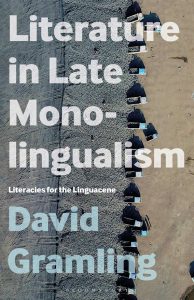
David Gramling is a Professor in the Department of Central, Eastern, and Northern European Studies at the University of British Columbia (UBC), Faculty of Arts. His research focuses on applied linguistics, decolonial approaches, gender and queer studies, intercultural communication, and translation studies. He holds a Ph.D. from UC Berkeley (2008) and has authored/co-authored eight books including The Invention of Monolingualism (2016, AAAL Book Award), The Invention of Multilingualism (2021), and forthcoming works such as Translating Transgender (2026) and Aloof (memoir, 2026). Education: Ph.D., University of California, Berkeley (2008) M.A., University of California, Berkeley (2002) B.A., Middlebury College (1999) Research Interests: Gramling’s work critiques monolingualism’s colonial legacies, explores multilingualism’s decolonial potential, and examines intersections of gender/queer theory with translation studies. Their recent keynote addresses include discussions on language justice in global contexts and the role of multilingualism in postcolonial critique. Awards: Recipient of the 2018 AAAL Annual Book Award for The Invention of Monolingualism . Editorial board member of Transgender Studies Quarterly and German Quarterly . Teaching & Outreach: Teaches courses in German studies, translation theory, and critical multilingualism. Active in advocating for disability inclusion and accessible language practices. Currently on administrative leave but accessible via phone/text at 604 8027409.
Patrick Shulist is an Assistant Professor at Aalto University's Department of Management Studies, focusing on entrepreneurship and management in developing contexts. His research explores imitation-driven innovation, social networks, and role theory in African business ecosystems, particularly in Ghana. He emphasizes methodologies for building robust management theories in the Global South, addressing challenges like linguistic diversity and resource-constrained environments. Research Interests: Shulist's work centers on microentrepreneurship in poverty contexts, exploring how entrepreneurs navigate social boundaries, leverage asymmetric relationships, and create ventures through effectuation and replication strategies. His recent work highlights the duality of social networks in providing both support and constraints for self-employed individuals in Ghana. Key Contributions: His 2023 Academy of Management Journal paper on anchor roles and boundaries demonstrates how entrepreneurs strategically manage multiple identities. Earlier work in 2016 analyzed Ghanaian entrepreneurs' social networks, revealing their dual role as enablers and barriers. He has also pioneered methodological frameworks for qualitative research in under-resourced regions. Advising & Grants: No formal advising records or grant details provided in available texts. His research is primarily self-directed with institutional support from Aalto University. Labs/Teams: Currently affiliated with Aalto's Sustainability in Business research group, focusing on poverty alleviation through market orchestration and ethical entrepreneurship practices.
Thomas Arnold is a Postdoctoral researcher at Technische Universität Darmstadt, specializing in Digital Responsibility, Natural Language Processing, and Machine Learning. His work focuses on developing automated tools for measuring corporate digital responsibility activities and detecting machine-generated text across multiple domains and languages. He actively participates in initiatives like Semeval tasks and has contributed to frameworks like M4 and M4gt-bench for evaluating black-box text generation systems. His research spans advanced motif analysis in text-induced networks, hierarchical data summarization, and privacy-preserving text rewriting (DP-rewrite). Notable projects include QUEST, an educational tool leveraging engaging storytelling for interactive quizzes, and EmpiriST, a robust tokenization and POS-tagging system for diverse text genres. Publications highlight trends in ethical AI, corporate strategy evaluation, and cross-domain NLP challenges. Recent work emphasizes transparency in AI systems and the intersection of digital ethics with corporate governance. He is affiliated with TU Darmstadt's Department of Computer Science (implied through research focus) and maintains professional profiles on LinkedIn. No specific awards or grants are listed in the provided data.
Aishik Mandal is an ELLIS PhD student at UKP Lab, Technical University of Darmstadt, supervised by Prof. Iryna Gurevych and co-supervised by Prof. Aurélien Bellet. He completed his Master's in Artificial Intelligence, Machine Learning and Applications and Bachelor's in Electronics and Electrical Communication Engineering at IIT Kharagpur, where he received the Silver Medal for best academic performance in his department. His research focuses on Dialogue Systems, Multimodality, and Privacy , with significant contributions to mental health AI applications, depression detection, and culturally diverse multilingual visual question answering. His work combines advanced machine learning techniques with practical applications for healthcare and human-computer interaction. Mandal's research output shows a clear progression from foundational work in dialogue understanding and representation learning to more specialized applications in mental health and privacy-aware AI systems. His recent publications demonstrate expertise in multimodal fusion techniques, ordinal classification for depression severity prediction, and developing culturally sensitive AI benchmarks. Silver Medal from Electronics and Electrical Communication Engineering department at IIT Kharagpur DAAD WISE scholarship for internship at TU Munich Charpak Lab scholarship for internship at INRIA Paris GKF International Internship scholarship for INRIA Paris Mandal has been actively involved in research collaborations across multiple institutions, including IIT Kharagpur's Centre of Excellence in AI, Complex Network Research Group, Technical University of Munich, and INRIA Paris. His academic journey shows a strong foundation in both theoretical computer science and practical AI applications, with increasing specialization in multimodal dialogue systems and privacy-conscious AI development.
Colby Hall serves as Associate Professor in the Department of Curriculum, Instruction & Special Education at the University of Virginia's School of Education and Human Development, where her research focuses on literacy development, assessment, and instruction for diverse learners. Education: Ph.D. in Education, University of Texas at Austin (2016) M.A. in Education, Teachers College, Columbia University (2007) A.B. in Education, Harvard University (2002) Her research program investigates evidence-based literacy instruction for elementary and middle-school students with or at risk for literacy-learning difficulties, with specialized expertise in inference instruction for reading comprehension, bilingual/multilingual literacy interventions, content-area text comprehension strategies, and technology-enhanced reading instruction. Hall employs rigorous methodological approaches to bridge research and practice in literacy education. Analysis of her 2021-2023 publications reveals consistent focus on meta-analytical approaches to reading interventions, teacher knowledge assessment tools, and culturally responsive adaptations for English learners and students with dyslexia. Her work demonstrates strong alignment with contemporary literacy research priorities emphasizing equity and evidence-based practice. Grant Leadership: Principal Investigator, "AERO ELs" project (Office of Special Education Programs) Principal Investigator, "Project LINK" (Institute of Education Sciences) Co-PI/Co-I on multiple U.S. Department of Education, NIH, and Virginia Department of Education projects Dr. Hall directs the Reading and Academic Development Research Group, which conducts intervention studies and professional development initiatives focused on improving literacy outcomes through teacher training and curriculum innovation.
Christian Pipal is a Senior Research and Teaching Associate and External Lecturer at the Department of Communication and Media Research, University of Zurich, Switzerland. He concurrently holds a Ph.D. researcher position at the Department of Political Science, University of Amsterdam (since 2019), and has served as a Visiting Researcher at the University of Vienna (2020-2021) and a Research Associate at NEOS Lab (2018-2019). His academic journey includes a B.A. in International Development Studies (University of Vienna, 2013) and an M.A. in European Union and Russia Studies (University of Tartu, 2015). Pipal’s research focuses on digital political communication, elite behavior, and computational methods, with particular emphasis on text analysis, sentiment modeling, and multimodal data integration. His Ph.D. thesis, funded by the Horizon 2020 POLEMIC project, examines “The Emotional Rhetoric of Political Elites” , supervised by Gijs Schumacher, Mariken van der Velden, and Bert Bakker. Pipal’s work bridges political psychology, computational social science, and digital media studies, with contributions to datasets like EUSpeech V2 and methodological frameworks such as the MEXCA emotion pipeline. Pipal’s articles address challenges in computational text analysis, political tone dynamics, and social media engagement. His research agenda emphasizes overcoming gaps in validation practices, cross-lingual analysis, and methodological transparency. He has also explored TikTok’s role in political communication, NATO framing in the Ukraine conflict, and multiverse approaches to news-sharing behavior. His grants include the Horizon 2020 POLEMIC funding and collaborative projects at the NEOS Lab. Pipal actively contributes to labs like the Computational Communication Lab (University of Vienna) and co-develops tools for emotion expression analysis. His work intersects with interdisciplinary teams in political science, computer science, and behavioral psychology.
Ann De Leon is an Associate Professor in the Department of Modern Languages and Cultural Studies at the University of Alberta's Faculty of Arts. She specializes in cultural studies with a focus on Latin America, translation studies, and colonial history. Her teaching includes courses such as Women in Latin America , Approaches to Cultural Studies , and Exercises in Translation: Spanish into English . Her research explores intersections between colonial discourses, indigenous knowledge systems, and gender representation. She has taught continuously since at least 2020, with recent terms including Winter 2026 and Fall 2025. De Leon’s work bridges historical and contemporary cultural practices, emphasizing the material and symbolic dimensions of cultural production. She has published widely on topics ranging from colonial Mesoamerican literature to modern translation practices in marginalized communities. Her interdisciplinary approach incorporates methodologies from anthropology, literary theory, and art history.
Sathya Rao, PhD, is a Professor in the Department of Modern Languages and Cultural Studies at the University of Alberta's Faculty of Arts. He specializes in translation studies, Francophone literatures, and minority media, with a focus on technology integration in language education and Franco-Albertan cultural history. His research includes developing the Francopass app for French language learners and studying historical Francophone newspapers in Western Canada. Education: PhD in relevant field (not explicitly stated but implied by title) Research Interests: Translation theory and policies, minority media ecosystems, Franco-Albertan cultural preservation, and the role of technology in language acquisition. Current projects include municipal translation policies and the legacy of female Francophone journalists in Alberta. Awards: Vinay & Darbelnet Prize (2005), Roger Motut Prize (2024), teaching awards (2015–2020). Supervised students in topics like self-translation, eco-translation, and multilingual text translation. Courses taught include translation theory, French literature, and cultural studies. Labs/Initiatives: Canadian Minority Media Database, Alternative Francophone journal, Francopass app, and historical archives on Francophone newspapers.
Merete Birkelund is an Associate Professor at the Department of Foreign Languages, University of Bergen. Her work focuses on Romance languages, translation studies, and comparative literature. She co-edited the 2024 anthology Nouvelles tendances de la romanistique scandinave , which explores topics such as translation theory, climate change discourse, and linguistic variation in Romance languages. Her research spans French, Spanish, and Catalan linguistic analysis, with a particular interest in interdisciplinary approaches to language and culture. Publications: The 2024 anthology highlights her contributions to translation studies and climate change communication, featuring collaborative chapters on language policy and multilingual education strategies. The work reflects her engagement with both theoretical and applied linguistic research. Grants/Advising: No specific grants or advising roles mentioned in the text.
Luca Grillo is the Department Chair and Professor of Classics at the University of Notre Dame, College of Arts and Letters. He holds a PhD from Princeton University (2008) and has held academic positions at Amherst College and the University of North Carolina at Chapel Hill. His research focuses on Latin prose historiography, Roman rhetoric, and numismatics, with key publications analyzing Caesar’s literary techniques and Cicero’s political speeches. Grillo has received prestigious awards including the Princeton Teaching Award and Woodrow Wilson Foundation recognition. He teaches courses on ancient literature, Roman history, and rhetoric, and has organized conferences on topics like 'Rhetoric and Historiography.' His current projects include studies on irony in Latin literature and ancient economic practices. Grillo actively engages in public outreach, including lectures at schools and collaborations with museums. He serves on editorial boards for journals like the American Journal of Philology and chairs committees for academic programs at Notre Dame. Education PhD in Classics, Princeton University (2008) MA in Classical and Near Eastern Studies, University of Minnesota (2003) B.A. in Literature and Philosophy, Università Cattolica, Milan (1995) Research Interests Grillo’s work bridges literary analysis and historical context, emphasizing narrative strategies in Roman historiography. He explores themes like political rhetoric, irony in classical texts, and the intersection of literature with social and economic history. His book How to Make Money examines ancient economic practices through a classical lens, while his commentary on Cicero’s De Provinciis Consularibus offers juridical and rhetorical insights. He collaborates internationally, co-editing the Cambridge Companion to the Writings of Julius Caesar and contributing to projects on Sallust and Apuleius. Recent Publications & Trends Recent works highlight interdisciplinary approaches, such as linking ancient medical terminology to modern science ( In Fimo ) and examining cognitive theories in classical rhetoric ( Rhetorica ad Herennium ). His articles frequently address narrative closure, political reconciliation, and intertextual connections in Caesar’s writings. Awards & Grants 2024: Religion, Power, Democracy Grant ($16,700) 2022: Rhetoric and Historiography Conference Grant ($15,000) 2018: ND Center for Social Concern Grant (Aequora Program) Teaching & Service Grillo teaches advanced Latin literature courses and directs the Moreau Seminar. He advises initiatives like Aequora, promoting Latin education in underserved schools. His service roles include editorial positions, tenure review committees, and leadership in professional associations like the APA. He also organizes conferences such as Rhetoric and Historiography: New Perspectives (2023). Labs/Teams He collaborates with interdisciplinary teams on projects like Roman Imperialism (Odense, Denmark) and co-leads the Paideia Institute Caesar in Gaul Summer School with Christopher Krebs.
Andreas Kaltenbrunner is a Part-Time Lecturer at the Universitat Pompeu Fabra (UPF) in Barcelona, specializing in Data Driven Social Analytics and Information Retrieval. He serves as Director of Research on AI and Data Science at IN3 - UOC R&I and is an Affiliate Researcher at ISI Turin, Italy. His research focuses on computational social science, user behavior analysis, and applications of AI/ML in social media and network dynamics. Key interests include large language models (LLMs), personality assessment simulations, and digital epidemiology. His work bridges theoretical frameworks with practical applications, such as predicting urban mobility patterns and evaluating AI systems’ performance in political contexts. He collaborates with institutions like UNICEF and the ISI Foundation, contributing to projects on data-driven decision-making and social impact. His interdisciplinary approach integrates network science, computational methods, and socio-cultural analysis. Recent publications highlight innovations in LLM validation, cross-lingual Wikipedia reliability modeling, and climate-related forecasting. While no explicit awards are listed, his prolific output reflects sustained contributions to computational social science and AI ethics.
Dr. Collette Snowden is a Senior Lecturer in Public Relations at UniSA Creative, part of the University of South Australia. Her research focuses on communication and media studies, with specialties in mobile communications, political communication, and the social impact of technology on human interaction. She has co-edited works like Languages and Literacies as Mobile and Placed Resources (2017) and authored chapters on topics ranging from workplace bullying in healthcare to digital transformation in legal systems. Her work often bridges theoretical communication studies with practical applications in education and public policy. Dr. Snowden is actively involved in research degree supervision and contributes to cross-disciplinary projects exploring media ethics, online dispute resolution, and the evolving role of technology in journalism. She holds affiliations with professional associations and has collaborated on national initiatives like the 2016 Australian federal election journalism project. Her teaching emphasizes contemporary issues in public communication and organizational dynamics. Education: Not explicitly stated in texts, but inferred from academic role Key Collaborations: Projects with Vicki Waye on online courts, Leanne Glenny on academic social media etiquette Media Expertise: Consultancy available for commentary on communication trends and media industry challenges Research trends highlight intersections between technology, communication practices, and societal structures. Recent outputs address digital transformation in legal systems, media industry disruption, and the ethical dimensions of mobile journalism. Her work consistently advocates for adaptive frameworks that leverage technological advancements while maintaining human-centric communication principles. As a supervisor, she guides students in topics related to media studies, public relations strategies, and communication technologies. Grants and external partnerships are implied through collaborative research projects but require explicit documentation not provided in texts.