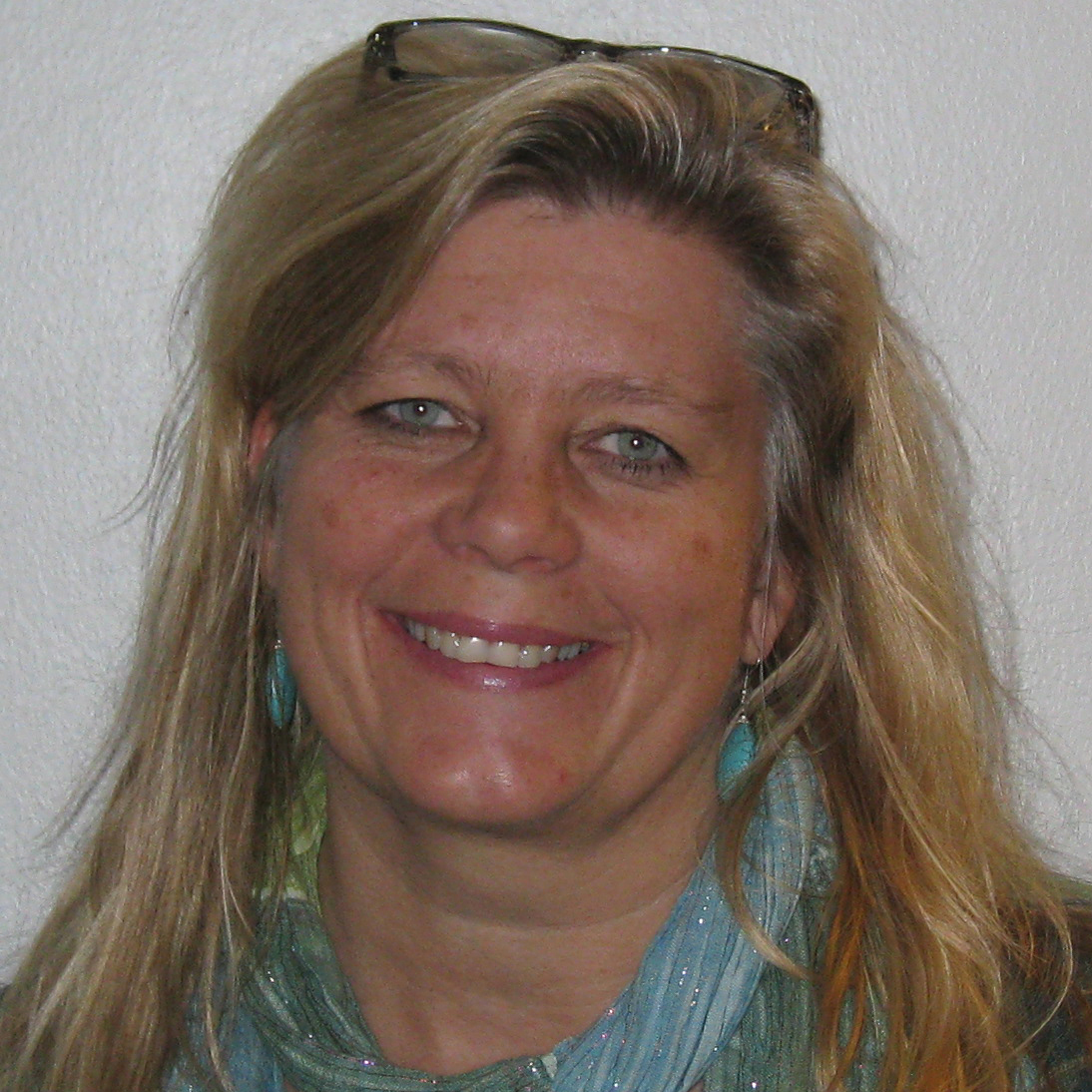
Damjan Popič serves as an Assistant Professor and Laboratory Member at the Laboratory for Machine Learning and Language Technologies, focusing on cutting-edge research in artificial intelligence and language systems. Research Expertise: His work centers on Machine Learning and Natural Language Processing , with specialized contributions to computational linguistics, language modeling, and AI-driven language technology development. Key methodologies involve deep learning frameworks for semantic analysis and multilingual processing. Laboratory Role: As an integral member of the Laboratory for Machine Learning and Language Technologies, he advances the lab's mission through collaborative projects in neural language generation, speech recognition systems, and ethical AI applications, driving innovation in computational language understanding.
Dr. Mahdi Shafiee Kamalabad is an Assistant Professor in the Department of Methodology and Statistics at Utrecht University's Faculty of Social and Behavioural Sciences. His research focuses on developing advanced statistical and machine learning methods for complex data analysis, particularly in social and behavioral sciences, life sciences, and bioinformatics. Applied Data Science Network Analysis Bayesian Statistics Longitudinal Data Analysis He specializes in Dynamic Bayesian Network Models, Relational Event Models, and Change Point Detection algorithms. His work spans interdisciplinary collaborations, combining educational psychology, applied linguistics, and data science to improve understanding of multilingual classroom interactions and epidemic prediction models. He has contributed to R software packages like remify, remstats, and remstimate for relational event history data analysis. Notable projects include "Better Together: A Social Network Analysis of Multilingual Interactions in the Classroom" (2022) and methodological developments for malaria dynamics analysis in Cameroon. His teaching includes Data Wrangling and Data Analysis courses. Funding sources include Utrecht University's Faculty of Social and Behavioural Sciences.
Lena Jaeger is an Associate Professor of Digital Linguistics at the University of Zurich, where she leads research at the intersection of linguistics, computational cognitive science, and machine learning. She joined the Chair of Computational Linguistics at UZH in July 2020 after establishing a Machine Learning Junior Research Group at the University of Potsdam, funded by the German Federal Ministry of Education and Research. Her educational background spans multiple disciplines: she earned an MA in Chinese Language and Culture (Sinology) from the University of Freiburg im Breisgau, Tongji University Shanghai, Beijing Language and Culture University, and Université Paris 7 Denis-Diderot; followed by an MSc in Experimental and Clinical Linguistics at the University of Potsdam; and completed her doctorate in cognitive science at the same institution. Notably, she also earned a bachelor's degree in computer science during or after her doctoral studies. Professor Jaeger's research focuses on investigating cognitive mechanisms underlying human language processing using experimental psycholinguistics, computational modeling, and machine learning methods. Her current work develops machine learning techniques for analyzing eye-tracking data to understand cognitive processes reflected in eye movement behavior. This interdisciplinary approach combines insights from linguistics, cognitive science, and artificial intelligence to create models that bridge human and machine language understanding. Her recent publications reveal a strong trend toward developing eye-tracking methodologies, creating multilingual corpora, and applying machine learning to understand reading behavior and language processing. Her work spans from fundamental research on cognitive mechanisms to practical applications in educational technology, medical diagnostics, and AI development. Best student late breaking work award for Reporting Eye-Tracking Data Quality: Towards a New Standard Best short paper award for Bridging the Gap: Gaze Events as Interpretable Concepts to Explain Deep Neural Sequence Models Professor Jaeger actively supervises multiple PhD students across computational linguistics, machine learning, and phonetics disciplines. Her research group collaborates extensively on large-scale projects like the MultiplEYE initiative, which establishes standards for multilingual eye-tracking data collection. She has secured significant research funding, including a Machine Learning Junior Research Group grant from the German Federal Ministry of Education and Research before moving to UZH. Her laboratory work centers on eye-tracking methodologies, developing tools like pymovements for eye movement data processing, and creating comprehensive corpora such as MECO (Multilingual Eye-Movement Corpus), MultiplEYE, and CoLAGaze. These resources support cross-linguistic research on reading behavior and language processing across diverse populations.
Christophe Premat is a Professor at Stockholm University's Department of Romance Studies and Classics, where he conducts research at the intersection of political theory, literary analysis, and postcolonial studies. He serves as Director of the Centre for Canadian Studies and Co-editor of The Nordic Journal of Francophone Studies, with additional affiliations as an affiliated researcher at the University of Rabat (Langues, Littératures, Arts et Culture). His work connects theoretical reflection with lived experience, focusing on mechanisms of exclusion and strategies for breaking these patterns. His research develops along four interconnected tracks: alternative forms of democratic participation examining popular initiatives and local referendums; contemporary French-language literature from Quebec's indigenous peoples as resistance against colonial structures; postcolonial and postmodern theories particularly within the French-speaking world; and institutional conditions of international French-language literature. These areas share a common goal of understanding and making visible exclusionary mechanisms while highlighting strategies for cultural agency and resistance. His work combines political theory, literary analysis, and postcolonial perspectives to contribute to a more inclusive understanding of power, culture, and resistance. Premat's scholarly output reveals consistent engagement with political philosophy, particularly Cornelius Castoriadis's work on autonomy, alongside deep analysis of francophone literature from marginalized communities. His publications demonstrate expertise in analyzing how writing functions as cultural resistance, particularly among indigenous and minority communities. The interdisciplinary nature of his work bridges political science, literary studies, and cultural anthropology, focusing on how invisible groups can regain agency within political and cultural systems. As an educator, Premat has taught courses including French culture, Postmodern French thinkers, Politics and business culture, Francophonie studies, and Intercultural communication. He has also contributed to pedagogical development as a pedagogical ambassador for CeUL (Centre for University Teacher Education) in 2018. His research groups include the Network Language and Power and Transcultural Literary Studies, reflecting his commitment to examining power dynamics in language and cross-cultural literary exchange.
Dr. Srikanth Madikeri is a Lecturer and Senior Researcher at the University of Zurich's Department of Computational Linguistics. He holds a Ph.D. in Computer Science from IIT Madras (2013) and a Bachelor of Engineering from Anna University (2008). Before joining UZH, he spent 11 years at Idiap Research Institute as a Postdoctoral Researcher and Research Associate. His research focuses on low-resource speech technologies, including Automatic Speech Recognition (ASR), Speaker Diarization, Language Recognition, and Spoken Dialog Systems. He specializes in adapting models for challenging domains like air traffic control and criminal investigations. Recent publications demonstrate strong trends in multimodal systems, domain adaptation for ASR, and efficient data selection techniques. His work frequently integrates speech processing with NLP tasks and criminal network analysis. Awards: Best Paper Award in Signal Processing Track (NCC 2011) International Create Challenge 2017 Winner He teaches Speech Technology and Machine Learning for Computational Linguistics at UZH. Professional activities include serving as Area Chair for Interspeech (2021-2022) and developing open-source toolkits like pkwrap for LF-MMI training.
Viktoria Eschbach-Szabo is a Professor of Japanese Studies at the University of Tübingen, where she has been faculty since 1992, and Project Professor at Tokyo College, University of Tokyo (2019). Previously, she served as Lecturer at ETH Zurich teaching Cultural and Scientific History of East Asia (2007-2017) and has co-directed the Tübingen University Center for Japanese Studies at Dōshisha University, Kyoto since 1994. Her academic career includes previous appointments as Professor for Modern Japanese Studies at Trier University (1990-92) and Research Assistant at University-Bochum (1983-90). Her educational background includes: Dr. Phil. from Ruhr University Bochum, Faculty of East Asian Studies (1981-84), completed summa cum laude under supervisors Professor Bruno Lewin and Professor Helmut Schnelle M.A. in German, Slavic, Chinese and Japanese Studies from Eötvös Loránd University Budapest (1975-81), with fellowships in Odessa (1976) and Berlin Humboldt University (1979) Eötvös József Gimnázium in Budapest with German minority class (1970-74) Professor Eschbach-Szabo's research spans semiotic and linguistic studies, particularly examining names in Japanese culture and Japanese language in various contextual frameworks including language policy, migration, aging society dynamics, and translation studies. Her three major research projects investigate language contact between East Asia and the West, speech transfer across language varieties, and transcultural perspectives on Japanese society, with specific focus on aging concepts. Her methodological approach combines rigorous linguistic analysis with deep cultural understanding, creating a unique bridge between European and Japanese academic traditions. She is linguistically exceptional, with proficiency in Hungarian, German, Japanese, and English, plus reading knowledge of Russian, French, Latin, Classical Chinese, Classical Japanese, and Ainu. Her scholarly output reveals consistent engagement with how Japanese language adapts to globalization while maintaining cultural specificity, particularly in areas like loanwords, personal names, and youth language. A significant trend in her work examines linguistic constructions of aging in Japanese society compared to German and European contexts. Her publications demonstrate strong interest in translation studies, especially challenges of conveying cultural concepts between Japanese and European languages. The interdisciplinary nature of her work connects linguistics with sociology, anthropology, and cultural studies. Her notable scientific achievements include: Best Essay award for 'Japanese in the European Language Space' from 日本語学論説資料 (2010) Best Ph.D. Dissertation of the year award from Ruhr University Bochum (1985) Professor Eschbach-Szabo has secured numerous research grants and participated in significant academic initiatives. She served as President of the European Association for Japanese Studies (2005-2008) and was instrumental in developing the Graduate School 'Global Challenges, Transcultural and Transnational Solutions' at Tübingen University. Her leadership extended to proposing the Excellence project 'High Tech and Hegel' to the German Science Foundation (2006). She has organized multiple international conferences, including the 12th International Conference of the European Association of Japanese Studies in Lecce, Italy (2008), and has been actively involved in promoting Japanese studies in Europe through various Japan Foundation initiatives. While specific laboratory information isn't detailed, Professor Eschbach-Szabo has been instrumental in developing collaborative research environments. She co-founded the Tübingen University Center for Japanese Studies at Dōshisha University in Kyoto and has participated in projects connecting Japanese and European academic institutions. Her work on car navigation systems for Japanese (2001-04) with Temic Mercedes/BMW demonstrates practical applications of her linguistic expertise. She has fostered academic networks through her leadership roles and organization of international workshops, creating platforms for transcultural dialogue between Japanese and European scholars.
Ludovic TANGUY is a Professor at the Department of Language Sciences, University of Toulouse 2, where he conducts research within the Cognition, Languages, Ergonomics (CLLE) research unit. His academic journey includes a Habilitation à diriger des recherches (HDR) from University Toulouse le Mirail - Toulouse II in 2012 and a PhD from University of Rennes 1 in 1997 with a thesis on Natural Language Processing and interpretation. Professor TANGUY's research spans multiple areas within computational linguistics, with particular focus on Natural Language Processing, corpus linguistics, and distributional semantics. His work demonstrates expertise in analyzing online discourse, particularly through Wikipedia talk pages, and applying computational methods to linguistic phenomena. He has developed innovative approaches for studying sociolinguistic variation using Twitter corpora and neural word embeddings, contributing significantly to understanding how language evolves in digital environments. His recent publications reveal a strong trend toward analyzing computer-mediated communication, with numerous studies examining Wikipedia interactions, conflict detection, and discourse patterns. TANGUY has also made substantial contributions to distributional semantics research, exploring how word embeddings can model semantic relationships in specialized domains like family vocabulary. His work bridges theoretical linguistics with practical applications in information retrieval and natural language processing. As an active researcher with publications spanning from 1997 to 2024, Professor TANGUY has established himself as a prominent figure in French computational linguistics. His collaborative work, particularly with researchers like Lydia-Mai Ho-Dac, Cécile Fabre, and Nabil Hathout, demonstrates a strong network within the academic community. His research has been published in reputable journals and presented at major conferences in computational linguistics and corpus linguistics.
Prof. Dr. Virginijus Marcinkevičius is a Professor at Vilnius University , serving as the head of the Smart Technologies Research Group and the Artificial Intelligence Laboratory within the Institute of Data Science and Digital Technologies . He is also a Senior Researcher , Project Lead Researcher , and Group Leader . Based in Vilnius, Lithuania, he has been instrumental in advancing research in machine learning , artificial intelligence , cybersecurity , and natural language processing . Research Interests: Machine Learning & AI Cybersecurity & Threat Detection Natural Language Processing Hyperspectral Imaging & Remote Sensing Autonomous Systems & Robotics Big Data & Cloud Computing His work spans both theoretical and applied aspects, including IoT security , visual analytics , and intelligent decision support systems . Recent projects include the development of propaganda detection systems , hyperspectral unmixing algorithms , and autonomous driving agents . Doctoral Supervision: He has supervised 19+ PhD students and 5+ consultants , covering topics from machine learning in cybersecurity to neural machine translation and autonomous UAV navigation . Projects & Grants: He has led or contributed to 15+ national and EU-funded projects , including: CognitiveSTATS – COVID-19 data literacy platform Propaganda and Disinformation Research – ML-based detection DAMIS – Data mining system for national research Raštija 2 – Lithuanian language resource integration Publications: He has authored or co-authored 60+ peer-reviewed publications in journals like IEEE Access , Informatica , Frontiers in Psychology , and Machine Vision and Applications . Professional Memberships: He is a member of the Lithuanian Computer Society , Lithuanian Mathematical Society , and Lithuanian Operations Research Society .
Gediminas Navickas is a Lecturer at Vilnius University's Institute of Data Science and Digital Technologies (DMSTI) within the Faculty of Mathematics and Informatics, specializing in the Image and Signal Analysis Group. His work bridges academic research with practical applications in Lithuanian language technologies. His primary research focuses on automatic Lithuanian speech recognition, speech signal processing, speech synthesis methods and algorithms, and speech synthesis quality assessment. Navickas has made significant contributions to developing speech technologies specifically for the Lithuanian language, addressing the challenges of resource scarcity compared to more widely spoken languages. His work demonstrates strong interdisciplinary connections between computer science, linguistics, and cognitive science. Navickas's publication record reveals a consistent trajectory of innovation in speech technology, with recent work emphasizing cognitive approaches to evaluating synthetic speech, particularly examining differences in perception between blind and sighted users. His research has evolved from foundational work on neural network architectures for speech synthesis to comprehensive studies on speech corpus development and accessibility applications. He has been instrumental in major EU-funded projects including the LIEPA series (2013-present), which have developed comprehensive speech recognition and synthesis systems for Lithuanian. These projects have produced practical applications ranging from educational robots to voice-controlled mobile services and assistive technologies for the visually impaired. Member of Lithuanian Computer Society (LIKS) Council Member of IEEE organization Active participant in COST actions including UniDive and Multi3Generation Navickas regularly engages with the public through media appearances on LRT radio and television, where he explains complex speech technology concepts to general audiences. His science communication efforts demonstrate a commitment to making technical research accessible and relevant to Lithuanian society.
Hari Sundaram is a Professor in the Computer Science Department at the University of Illinois at Urbana-Champaign with affiliate appointments in the Charles H. Sandage Department of Advertising, the Institute for Communication Research, and the Center for Social & Behavioral Science. His academic journey includes positions as Associate Professor at the University of Illinois (2014-2021) and Arizona State University (2002-2014), where he also served as Associate Director of the Arts, Media and Engineering program (2012-2009). Dr. Sundaram's educational background includes a Ph.D. in Electrical Engineering from Columbia University (2002), an M.S. in Electrical Engineering from Stony Brook University (1995), and a B.Tech in Electrical Engineering from the Indian Institute of Technology, Delhi (1993). His research, conducted through the Crowd Dynamics Lab, focuses on designing computational systems that empower individuals to make better decisions. His work spans Applied Machine Learning (particularly recommender systems), Network Science (studying how platform rules induce strategic behavior), Human-Computer Interaction (developing systems to elicit truthful preferences), and Mechanism Design (creating rules to incentivize pro-social behavior). His research has significant implications for understanding fairness and discrimination in online markets. Dr. Sundaram's work has been recognized with numerous awards including multiple Best Paper Awards from ACM CSCW (2023), Best Article Award from the Journal of Interactive Advertising (2020), ACM Distinguished Member (2019), IEEE Senior Member (2019), and several IBM Faculty Awards. He has also been consistently recognized for teaching excellence, receiving the "Teacher Ranked as Excellent" award multiple times. As leader of the Crowd Dynamics Lab, Dr. Sundaram oversees research that bridges computer science with social sciences, focusing on how computational systems can enhance human decision-making while addressing fairness concerns. His work has practical applications in online marketplaces, social media platforms, and educational technologies.
Marian Flanagan serves as Associate Professor in the Department of English, Germanic and Romance Studies at the University of Copenhagen's Faculty of Humanities. Her academic career bridges translation studies, linguistics, and digital technologies with particular emphasis on how artificial intelligence transforms translation practices and professional landscapes across multiple domains including healthcare, gaming, and academic communication. Her educational foundation includes: PhD in Translation Technology from Dublin City University (2005-2009) with dissertation 'Recycling Texts: Human evaluation of example-based machine translation subtitles for DVD' MA in Translation Studies from Dublin City University (2002-2003) focusing on 'Metaphors of mass destruction: A corpus-based study of the metaphorical language of war' BA in Computational Linguistics from Trinity College Dublin (1997-2001) examining 'Head-driven Phrase Structure Grammar in Subtitling' Professor Flanagan's research investigates the complex interplay between translation technologies, artificial intelligence, and societal implications. Her work examines psychological consequences of digital transformation on translation professionals, ethical frameworks for machine translation, and the evolving skill requirements in contemporary translation practice. She combines technical understanding of AI-driven translation systems with critical analysis of their cultural and professional impacts, maintaining strong connections with both academic discourse and industry practitioners. Her publication trajectory since 2018 demonstrates increasing focus on AI's role in translation, with recent work (2023-2025) exploring technostress among professionals, ethical considerations in machine translation, and practical applications across specialized domains. This research reveals her dual commitment to understanding both the technical capabilities of translation technologies and their broader human consequences. Her notable recognition includes: NCFF funded project 'Use of AI among university students' (2024) Professor Flanagan actively contributes to the academic community through extensive conference presentations and workshops on AI and translation technologies. Her collaborative research projects involve interdisciplinary teams examining the human dimensions of technological change in language-related professions, with funded initiatives focusing on translation technology adoption and its professional consequences. Her academic activities demonstrate sustained engagement with both theoretical frameworks and practical applications shaping the future of translation in the digital age.
Dr. Gregor Wiedemann serves as a Senior Researcher in Computational Social Science at the Leibniz Institute for Media Research (Hans Bredow Institute) since September 2020, co-heading the Media Research Methods Lab (MRML) with Sascha Hölig. His work bridges computer science and social sciences through methodological innovation in empirical media research. Wiedemann holds a doctorate in computer science from Leipzig University (2016), where his dissertation focused on automating discourse analysis using text mining and machine learning. His educational background combines political science and computer science studies at Leipzig University and the University of Miami, followed by postdoctoral work in Language Technology at the University of Hamburg under Prof. Chris Biemann. His research centers on natural language processing and text mining applications for social and media analysis, with significant contributions in hate speech detection, argument mining, and cross-platform misinformation tracking. Recent work demonstrates a strategic shift toward building research infrastructures for sensitive data handling, including the Community Data Trust model for extremism research and the Social Media Observatory open-science platform. His methodology development specifically targets unsupervised information extraction from large document corpora to support investigative journalism and social science inquiry. Wiedemann's publication trends reveal deepening specialization in computational infrastructure development, with 7 of his 11 most recent works (2024-2025) focusing on data trust frameworks, cross-platform methodologies, and AI-driven analysis systems. His projects consistently intersect computational linguistics with pressing social issues including election integrity, climate discourse, and child safety in digital spaces. He has secured major funding through the German Research Foundation (DFG) for the FAME project on argument mining and evaluation, and leads collaborative initiatives including NOTORIOUS (mis- and disinformation tracking) and ComAI (communicative AI impact studies). His work with state media authorities on family influencing content demonstrates applied policy relevance. As co-director of the Media Research Methods Lab, Wiedemann oversees a dynamic team developing cutting-edge computational approaches for media analysis. The lab functions as an interdisciplinary hub connecting computer scientists with social researchers, with current projects spanning TikTok political campaigning analysis, right-wing extremism data infrastructure, and ethical AI applications in public discourse monitoring.
Zuzana Nevěřílová serves as an Assistant Professor at Masaryk University's Department of Czech Language within the Faculty of Arts. She also maintains external cooperation with the Department of Machine Learning and Data Processing at the Faculty of Informatics, demonstrating interdisciplinary engagement between linguistic theory and computational approaches. Her research interests span computational linguistics with particular emphasis on Czech language processing, natural language processing methodologies, and development of language resources. Her work bridges theoretical linguistics with practical computational applications, focusing on areas such as named entity recognition, text analysis, word embeddings, and language resource development. Dr. Nevěřílová's recent publication trends (2021-2025) reveal strong focus on Czech language technologies, including named entity processing in parallel corpora, efficient language models, and educational applications of NLP. Her work demonstrates consistent contributions to Slavonic language processing communities through workshops like RASLAN and conferences like TSD. Her scientific contributions include extensive publications in proceedings of international conferences and workshops, software development for language resources, and educational materials for digital humanities. She has supervised various projects related to language technology and has contributed to significant resources like the New Encyclopedic Dictionary of Czech and VerbaLex lexical database. Her research has practical applications in language services, educational technology, and digital humanities. Dr. Nevěřílová works within the Institute of the Czech Language at Masaryk University, contributing to research teams focused on Czech language processing, corpus development, and computational lexicography.
Dr. Richard Lemoine-Rodríguez is a postdoctoral researcher at the Institute of Geography and Geology under the Chair of Remote Sensing , Faculty of Philosophy, University of Würzburg. He also collaborates with the German Aerospace Center (DLR) . His interdisciplinary research bridges urban ecology , geoinformatics , and digital humanities to advance understanding of cities as complex socio-ecological systems. Education: PhD in Geography (2017-2022, Ruhr-Universität Bochum) MSc in Geography (2013-2015, UNAM) BSc in Biology (2008-2012, Universidad Veracruz) His methodological expertise includes multimodal data analysis , social media analytics (Twitter/BlueSky), NLP , and remote sensing techniques for studying urban heat islands, green infrastructure, land use changes, and socio-spatial inequalities. Current work focuses on the Geolingual Studies project (since 2022), exploring language-urban morphology interactions. Key research partnerships include collaborations with: Jakob Schwalb-Willmann (Earth Observation Research Cluster) Hannes Taubenböck (DLR/Technical University Munich) John F. Mas (UNAM) Luis Inostroza (University of Hamburg) Recent publications examine: Urban heat patterns through social media and satellite data Global urban form homogenization Migrant mobility analysis via Twitter Geospatiality of text data Ecological integrity assessments
Marianne Ødegaard is a Professor at the Department of Teacher Education and School Research , University of Oslo. Her research focuses on science education , particularly inquiry-based teaching , drama integration , and sustainability education . She has led significant projects like the TEDS-instruct instrument validation and COSER (Challenges of Sustainability in Educational Research), working extensively in Norwegian primary/lower-secondary schools and international contexts including Tanzania. Key Research Areas : Science teacher education, inquiry pedagogy, drama-based instruction, literacy integration, educational equity Methodology : Video-based classroom studies, textbook analysis, cross-cultural comparative research Publications Trend : Recent work explores teaching quality instruments (2025), textbook constraints (2024), and drama for sustainability (2023). She frequently examines how inquiry practices and language policies affect science learning in diverse educational settings. Projects : Currently involved in the ETOS (Bilingual Education Evaluation) and LISE (Instruction-Student Experience Linking) initiatives, with completed work on REDE (Representation/Participation in Science) and PISA+ (Longitudinal Science Teaching Study).