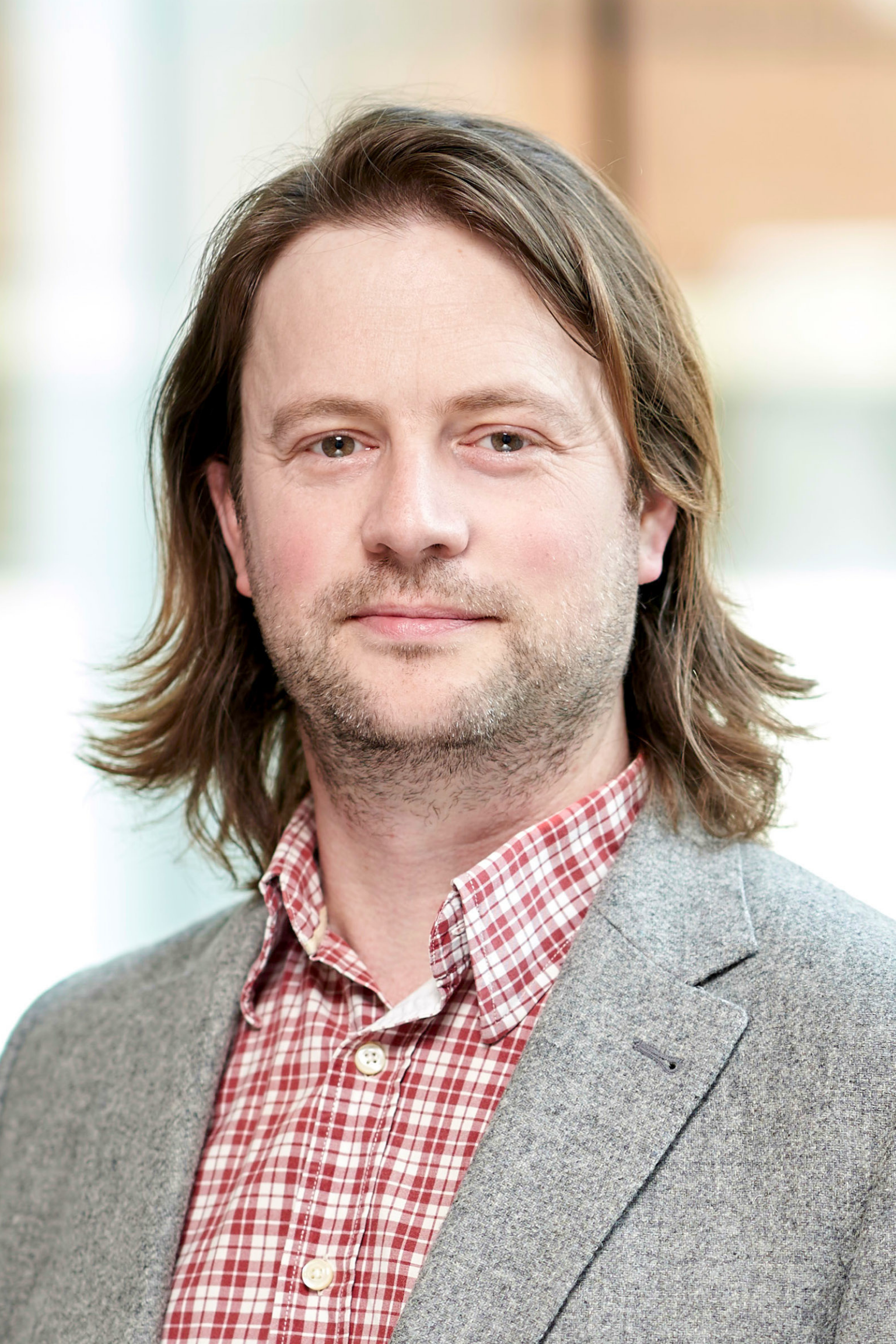
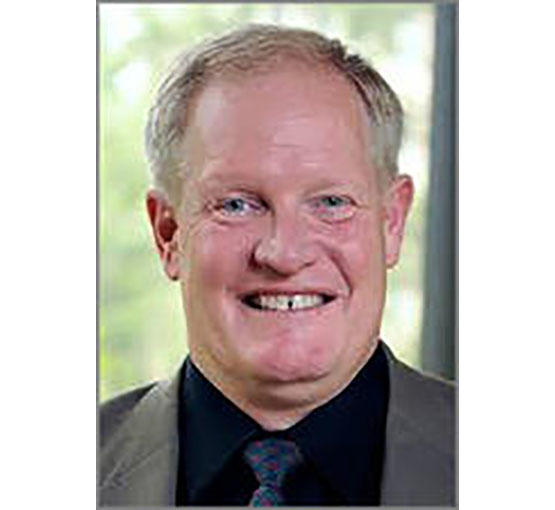
Golnoosh Farnadi is an Assistant Professor at McGill University's School of Computer Science , an Adjunct Professor at Université de Montréal , and a Visiting Faculty Researcher at Google Research . She holds the Canada CIFAR AI Chair and is a core academic member of Mila – Quebec AI Institute . Her research focuses on algorithmic fairness , responsible AI , and optimization . She founded the EQUAL Lab (EQuity & EQuality Using AI and Learning algorithms) to address bias and discrimination in AI systems. Key publications explore fairness in kidney exchange programs, generative model geometry, multilingual LLM de-biasing, and prototype-based recommender systems. Her work bridges causal inference, adversarial robustness, and ethical AI. Google Award for Inclusion Research (2023) Women in AI Awards North America Finalist (2023) Facebook Privacy Enhancing Technologies Award (2021) IVADO Postdoctoral Fellowship (2018–2021) She has supervised over 15 PhD and Master's students, including Prakhar Ganesh (McGill) and William St-Arnaud (Université de Montréal). Her teaching includes Responsible AI and Machine Learning courses at McGill and HEC Montréal.
Skyler Wang is an Assistant Professor of Sociology at McGill University, specializing in AI, technology, and human-computer interaction. He holds a Ph.D. from UC Berkeley and previously served as a Sociologist at Meta’s FAIR lab. His research critically examines sociotechnical systems' epistemic cultures and social impacts, focusing on AI-driven human-machine interactions in health, relational contexts, and digital platforms. His research interests include AI ethics, platform societies, digital intimacy, and multilingual systems. Notable works include the book project Sharing Bodies in the Sharing Economy , exploring Couchsurfing’s sociosexual dynamics, and applied AI projects like No Language Left Behind (doubling machine translation languages) and SeamlessM4T (awarded TIME’s 2023 Best Inventions). Teaching focuses on Technology & Society, Artificial Intelligence & Society, and Digital Intimacy. Advising roles include Major/Minor and Honours Sociology students. Active in interdisciplinary collaborations through McGill’s Quebec Inter-University Centre for Social Statistics and global AI ethics initiatives. Education: Ph.D. Sociology, UC Berkeley (2023) Key Affiliations: Meta FAIR Lab (prior), McGill Department of Sociology Publications in Nature , CSCW , Big Data & Society , and media features in WIRED, CNN, and NPR
Dr. Amal Zouaq is a Full Professor in the Department of Computer Engineering and Software Engineering at Polytechnique Montréal. She holds the FRQS (Dual) Chair in AI and Digital Health, serves as Director of the LAMA-WeST research laboratory, and is an Associate Member of MILA. Her work bridges artificial intelligence with applications in digital health, cultural heritage, and educational technologies, positioning her at the forefront of interdisciplinary AI research in Canada. Her research focuses on Artificial Intelligence , particularly Natural Language Processing and the Semantic Web . Specific interests include knowledge representation, ontology learning, SPARQL query generation, bias mitigation in language models, and clinical text processing. Her work spans multiple domains including healthcare, cultural heritage, and educational technology, with emphasis on developing practical AI solutions that address real-world challenges in knowledge management and information extraction. Analysis of her recent publications reveals a strong trajectory in advancing NLP techniques for knowledge-intensive applications. Her work increasingly focuses on domain-specific applications in healthcare and cultural heritage, with growing emphasis on ethical AI considerations like bias mitigation. The research demonstrates progression from foundational semantic web technologies toward more sophisticated neural approaches while maintaining strong theoretical grounding in knowledge representation. Scientific Recognition: Holder of the FRQS (Dual) Chair in AI and Digital Health Dr. Zouaq has supervised 23 graduate students to completion, including 1 PhD and 22 Master's theses, with research spanning ontology learning, knowledge representation, and NLP applications. Her supervision record demonstrates consistent mentorship in cutting-edge AI research with practical applications across multiple domains. She actively serves on program committees for major conferences in knowledge engineering, data mining, and semantic web technologies. She directs the LAMA-WeST (Web, Semantics and Text) laboratory , which specializes in natural language processing and artificial intelligence research. The lab focuses on knowledge representation, semantic technologies, and their applications in healthcare, cultural heritage, and educational contexts. As a member of IVADO and MILA, she collaborates with leading AI researchers across Montreal's vibrant AI ecosystem.
Amine Trabelsi serves as an Assistant Professor in the Department of Computer Science at the University of Sherbrooke, specializing in socially impactful AI research. His work bridges technical NLP innovations with real-world applications in public health, climate action, and social behavior analysis, with direct relevance to Canadian policy contexts. His educational background includes: M. Sc. in Computer Science from Université de Montréal Ph. D. in Computing Science from the University of Alberta Research focuses on unsupervised analysis of unstructured text, detection of dubious content in social media, antisocial behavior identification, and emotion recognition in conversational systems. Current projects address brain tumor data capture for cancer registries, corporate alignment with clean energy transitions, and climate empowerment through community network mapping in Canada. His methodology emphasizes explainable AI systems for social good applications, particularly in multilingual Canadian contexts. Dr. Trabelsi maintains active industry engagement through Twitter and LinkedIn, with primary contact via email Amine.Trabelsi@USherbrooke.ca (office D4-1022-1, phone 819-821-8000 ext. 62031). No formal advising or grant structures are detailed in current public profiles.
Ewan Dunbar is an Assistant Professor of Computational Linguistics at the University of Toronto (downtown campus), affiliated with St. Michael's College. He holds appointments in the Department of French, Department of Linguistics, and Department of Computer Science. His research explores human speech perception, technological advancements in speech processing, and related areas such as unsupervised learning and language acquisition. Educational Background: While specific degrees aren't listed, his research and appointments indicate advanced training in linguistics and computational sciences. Research Interests: Dunbar focuses on how humans perceive speech, developing computational models of speech perception, and advancing unsupervised learning techniques. He leads the Perceptimat Research Group and organizes the Zero Resource Speech Challenge, a machine learning competition promoting unsupervised approaches to speech processing. Awards: He has received notable grants including the 2028 NSERC Discovery Grant, 2028 NSERC Discovery Launch Supplement, and 2023 Connaught New Researcher Award, all supporting his work on computational psycholinguistics and speech perception models. Advising & Grants: While specific student names aren't listed, his grants indicate involvement in mentoring undergraduates (e.g., 2024 NSERC Undergrad Studentship Grant). His labs focus on creating speech perception tools and benchmarks like Perceptimatic. Labs/Teams: Director of the Perceptimat Research Group, organizer of the Zero Resource Speech Challenge.
Zhao Zhao is an Assistant Professor at the School of Computer Science, University of Guelph. Her work focuses on wearable systems, human-robot interaction, and gamification for health and education. She holds a PhD from Carleton University (2019) and completed a postdoctoral fellowship at the University of Toronto (2019–2023) before roles at McMaster University and her current position. Education includes a BSc in Computer Science from University of Electronic Science and Technology of China (2011), MSc from Carleton University (2014), and PhD in Electrical and Computer Engineering (2019). Research interests span physiological computing, AI-assisted creativity tools, and adaptive systems leveraging wearable sensors. Key research areas include: 1) Wearable-based gamification for health and education, 2) Emotion sensing via physiological signals, and 3) Human-robot interaction enhanced by wearable data. Her lab uses Empatica EmbracePlus wristbands and Emotiv EEG headsets to analyze real-time physiological responses in diverse interaction scenarios. Recent publications (2020–2025) emphasize personalized exergame systems, child-robot interaction studies, and AI linguistic competency analysis. She actively seeks graduate students and industry partnerships in wearable technology, education tech, and HRI.
Dr. Christopher Collins is a Professor of Computer Science at Ontario Tech University, leading the Visualization for Information Analysis Lab (vialab). He holds a PhD from the University of Toronto (2010) and focuses on interdisciplinary research in information visualization, human-computer interaction, and natural language processing. His work addresses challenges in information overload, text analytics, and novel interfaces such as touch, pen, VR/AR. Collins' research has been featured in top-tier venues like ACM CHI and IEEE Transactions on Visualization and Computer Graphics, earning honorable mentions and over $3M in funding as sole PI. He serves on the IEEE VIS Executive Committee and Board of Governors at Ontario Tech University. Education: PhD in Computer Science, University of Toronto (2010) MSc in Computer Science, University of Toronto (2004) BSc (Hons) in Computer Science, Memorial University (2001) Research Interests: Collins' work spans information visualization , pen+touch interfaces , visual analytics , and text-driven systems . He explores how interactive technologies can democratize complex data analysis, particularly in education, healthcare, and creative domains. Recent projects include gaze-driven learning tools, context-aware camera interfaces, and bias-mitigating product review analysis. Awards: ACM CHI Honorable Mention Award IEEE VIS Honorable Mention Award Grants & Impact: Secured $3M+ in research funding. Media coverage includes New York Times and CBS Sunday Morning for innovations in visualization and text analytics. Teaches courses in human-computer interaction, computer graphics, and information visualization. Labs & Collaborations: vialab develops tools like Lexichrome , ConToVi , and NeuroSight . Active in IEEE Visualization and ACM Interactive Media communities. Collaborates with academia and industry globally.
Rainier Grutman is a Full Professor of French and Translation Studies at the University of Ottawa, holding a cross-appointment in the Department of French and the School of Translation & Interpretation within the Faculty of Arts. Trained in Romance philology and Comparative Literature at Namur, Leuven, and Madrid universities, he completed his Ph.D. in French Studies at the University of Montreal in 1994. In 2022, he was elected to the prestigious Academy of Europe (Academia Europaea), class of 'Humanities,' section 'Literary and Theatrical Studies.' His educational background includes: Ph.D. in French Studies from Université de Montréal (1994) Romance and Hispanic philology from Universidad Complutense de Madrid (1989) M. Phil. in French and Romance Literatures from KU Leuven (1988) Teacher certification for upper-level high school from KU Leuven (1988) B. Phil. in French and Romance Literatures from Université de Namur (1986) Grutman's research primarily focuses on multilingualism in literature, self-translation, and translation studies, with particular attention to bilingual writers and multilingual texts. His work spans comparative literature, sociolinguistics, and postcolonial theory, examining how language functions within literary contexts across different cultural settings including Belgium, Canada, Spain, and Italy. He has made significant contributions to understanding how writers navigate multiple languages in their creative work and how these multilingual texts are translated and received by diverse audiences. His scholarly output reveals a consistent focus on self-translation as both a literary phenomenon and cultural practice. His research demonstrates how self-translation functions as a negotiation between languages and cultures, often revealing power dynamics between linguistic communities. Grutman's work frequently examines the intersection of language, identity, and power in literary contexts, with particular attention to how writers position themselves within multilingual frameworks. His most recent publications (2020-2024) continue this trajectory with studies on code-switching in literature, multilingual readership, and transatlantic self-translation practices. His major scholarly recognitions include: Gabrielle-Roy prize for Canadian literary criticism (for 'Des langues qui résonnent') Election to the Academy of Europe (Academia Europaea) in 2022 Grutman has supervised numerous graduate students and collaborated extensively with scholars internationally. His work has been supported by various research grants that have enabled him to explore multilingual writing across different cultural contexts. He has edited special journal issues and co-authored significant reference works in translation studies, including the French version of H. Van Gorp's 'Lexicon van literaire termen' and the comprehensive 'Histoire de la littérature belge.' His teaching at the University of Ottawa includes advanced courses on literary poetics, intertextuality, sociocriticism, and comparative literature with a focus on multilingual writing and self-translation. He maintains active research collaborations with institutions in Belgium, Spain, and Italy, reflecting his international scholarly network and the transnational nature of his research interests in multilingual literature and translation.
Virendra Bhavsar is an Honorary Research Professor and Professor Emeritus in the Department of Computer Science at the University of New Brunswick (UNB). He holds a PhD in Computer Science and is affiliated with UNB's Fredericton campus, located in Gillin Hall GE109A. His research focuses on natural language processing (especially for Hindi and other Indian languages), cognitive informatics, distributed systems, and bioinformatics. Bhavsar has also contributed to projects involving virtual reality in education, parallel computing, and machine translation systems. Education: PhD in Computer Science Research Interests: Development of NLP tools for free-word-order languages Optimization of in-memory data processing systems on NUMA architectures Cognitive learning environments using virtual reality Tree-based parsing algorithms for linguistic analysis High-performance spatial and spatio-temporal data systems Recent Work Trends: His articles from 2017–2022 highlight advancements in Hindi language processing, distributed computing optimizations, and cognitive informatics applications. Notable areas include improving data skew resilience in hash joins and developing visualization systems for language learning. Awards: No specific scientific awards listed in available materials. Advising & Grants: No formal advisee list or grant details provided in current data. His collaborations include work on grid computing frameworks like GARUDA and HPGC initiatives. Labs/Teams: Involved in projects related to distributed in-memory systems (e.g., DISTIL) and cognitive informatics research groups.
Monique Sénéchal is a Professor in the Department of Psychology at Carleton University, affiliated with the Faculty of Arts and Social Sciences. She holds a Ph.D. from the University of Alberta. Her research focuses on child language and literacy development, particularly how natural activities like shared book reading and home literacy practices influence learning. She investigates mechanisms underlying reading and writing acquisition in English and French, emphasizing the cognitive and linguistic foundations of literacy. Her work spans cross-cultural studies, bilingualism, and longitudinal analyses of developmental outcomes. Her research lab, the Child Language and Literacy Research Lab , explores topics such as invented spelling, morphological knowledge, and the impact of parental involvement. Recent studies highlight the role of home literacy environments, maternal mental health, and statistical learning in orthographic systems. Publications from 2016–2025 reflect a focus on cross-linguistic comparisons (e.g., French silent letters), longitudinal developmental trajectories, and interventions to improve literacy skills. Key themes include early vocabulary’s predictive role in later literacy, bilingual language processing, and the efficacy of shared reading practices.
Peter Lewis is an Associate Dean (Research and Graduate Studies) and Associate Professor at Ontario Tech University's Faculty of Business and Information Technology, holding a Canada Research Chair in Trustworthy Artificial Intelligence. He specializes in socio-technical systems, self-aware computing, and AI ethics. His work bridges foundational AI research with practical applications in industry, emphasizing trust, collective action, and socially intelligent systems. Education PhD in Computer Science, University of Birmingham, UK MSc in Natural Computation, University of Birmingham, UK BSc in Computer Science, University of Leicester, UK PGCert in Learning and Teaching Higher Education, Aston University, UK Research Interests His research focuses on trustworthy AI, self-aware systems, and the societal implications of AI. Key areas include explainable AI for accessibility, ethical AI governance, and modeling social institutions. He co-edited Self-Aware Computing Systems and serves on editorial boards for IEEE journals. Publications & Awards Over 75 peer-reviewed papers in journals/conferences Winner of the 2020 Aston Achievement Award for Business Engagement Best Paper Award at IEEE SASO 2018 Labs & Collaborations He leads research in the Business Analytics & AI group, collaborating on projects with industry partners. His work addresses real-world challenges in AI ethics, sustainability, and human-AI collaboration.
Ken Barker is a Professor and Director of ISPIA at the University of Calgary's Department of Computer Science within the Faculty of Science. He holds a Ph.D. from the University of Alberta (1990) and has extensive experience in industrial computer systems and database design. His research focuses on distributed systems, data privacy/security, bioinformatics, and heterogeneous systems. He has served as Dean of the Faculty of Science, Department Head of Computer Science, and Past President of the Canadian Association of Computer Science (CACS/AIC). His work emphasizes privacy-preserving technologies, blockchain applications, and event understanding systems. Barker has published over 200 peer-reviewed papers across domains like transaction systems, spatial databases, and astro-informatics. He advocates for balancing data utility with privacy through frameworks like the Privacy Policy Permission Model. His contributions include the CHRONOS event prediction system and blockchain-based platforms for secure data storage.
Wendi Adair is a Professor and Industrial/Organizational Research Area Head, specializing in cross-cultural communication, organizational behavior, and conflict management. Her work emphasizes the impact of cultural context on workplace outcomes, including trust, negotiation, and team performance. She holds a BS from Georgetown University and MS/PhD degrees from Northwestern University. Her research includes the Indigenous Workways project, collaborating with Indigenous communities and employers to foster culturally safe workplaces. She co-authored a 2024 Springer publication on culture and workplace communication and serves as a former Associate Editor of Negotiation and Conflict Management Research . Key research themes include low/high context communication, Indigenous workplace inclusion, multicultural team dynamics, and the role of nonverbal cues. She has secured grants from the Ontario Research Fund and Social Sciences and Humanities Research Council of Canada, focusing on reconciliation in workplaces and intercultural communication practices. Her articles analyze nonverbal communication, virtual negotiations, and cultural impacts on workplace incivility. Grants and projects highlight her commitment to bridging cultural divides through relational practices and employer-Indigenous partnerships.
Jean B. Ntakirutimana is an Associate Professor in the Department of Modern Languages, Literatures and Cultures at Brock University, Faculty of Humanities. His expertise spans linguistics, lexicography, and computational language processing, with a focus on African and French linguistic systems. He has taught courses such as Intermediate French, Phonetics & Phonology, and Linguistic Approach to Textual Analysis. Education: Ph.D. and M.A. in Linguistics, University of Montreal B.A. in African Linguistics and Literatures with specialization in First and Second Language Teaching, University of Bujumbura Research Interests: Ntakirutimana’s interdisciplinary research explores the multi-level structure of language, from phonetics to textual databases. He focuses on lexicography, terminography, corpus linguistics, machine translation, and ecolinguistics. His work often addresses the application of new technologies (NICT) to language analysis and education, particularly in Bantu languages like Kinyarwanda. Articles Trends: His publications emphasize computational linguistics, with contributions to ambiguity resolution in translation software, lexicography models, and sociolinguistic studies in African languages. Earlier work includes foundational research on French lexicography and language contact in Bantu systems. Awards: No scientific awards explicitly mentioned. Advising & Grants: While no formal advising or grants are listed, Ntakirutimana has actively contributed to academic development through teaching and presenting at conferences such as the African Day Symposium (2006), CAUCTF-APFUCC Congress (2008), and the Humanities Research Institute (HRI) Spring Symposium (2008). Labs & Teams: Engaged with interdisciplinary teams at Brock University, including collaborations with Profs. B. Allouche and P. Bessler during a 2009 colloquium. Active in the HRI and within his department’s research initiatives.
Dr. Shaon Bhatta Shuvo is an Assistant Professor at the University of Windsor's School of Computer Science. He holds a Ph.D. from the University of Windsor (2020–2024), an M.Sc. from South Asian University (2013–2015), and a B.Sc. from Noakhali Science and Technology University, Bangladesh. Research Interests: Deep Learning & Reinforcement Learning: Development and application of advanced algorithms for computer vision and natural language processing. AI-Based Decision Support Systems: Designing AI-driven systems for healthcare and social network analysis. Modelling and Simulation: Multi-agent simulations and mathematical modeling for complex systems, including pandemic preparedness and healthcare optimization. Research Trends in Publications: His work focuses on AI-driven solutions for healthcare (e.g., pandemic modeling, PPE demand prediction), social network analysis (link/node classification, knowledge graphs), and computational epidemiology. He emphasizes hybrid simulation models and data-driven approaches for real-world challenges. Awards: No scientific awards explicitly mentioned. Advising & Grants: No student advisees or grants listed. Labs/Teams: Not specified in available information.