Dr. Neda Karimi is a Research Fellow at The Australian National University's School of Literature, Languages & Linguistics. She holds a PhD, MA, and BSc (Econ). Her work focuses on functional linguistics applied to health communication, emphasizing clinician-patient alignment, health literacy, and chronic disease management. Current projects include health literacy in chronic heart failure, developmentally appropriate communication for adolescents with IBD, and global collaboration on 'normal life' perceptions in IBD patients. Past projects include randomized controlled trials for IBD decision aids, breast reconstruction counseling, and palliative oncology communication studies. Key research areas include health communication strategies, clinician-patient dialogue analysis, and improving healthcare outcomes through linguistic ethnography. Collaborations include Amsterdam University Medical Center and multi-country studies on IBD patient experiences. Her work bridges qualitative and quantitative methods to address healthcare communication challenges across diverse populations. Her publications span decision aid development, clinical communication analysis, and healthcare system efficiency. She has contributed to guidelines on pregnancy management in IBD and breast reconstruction counseling for multicultural patient groups. Awards and grants are not explicitly listed in the text.
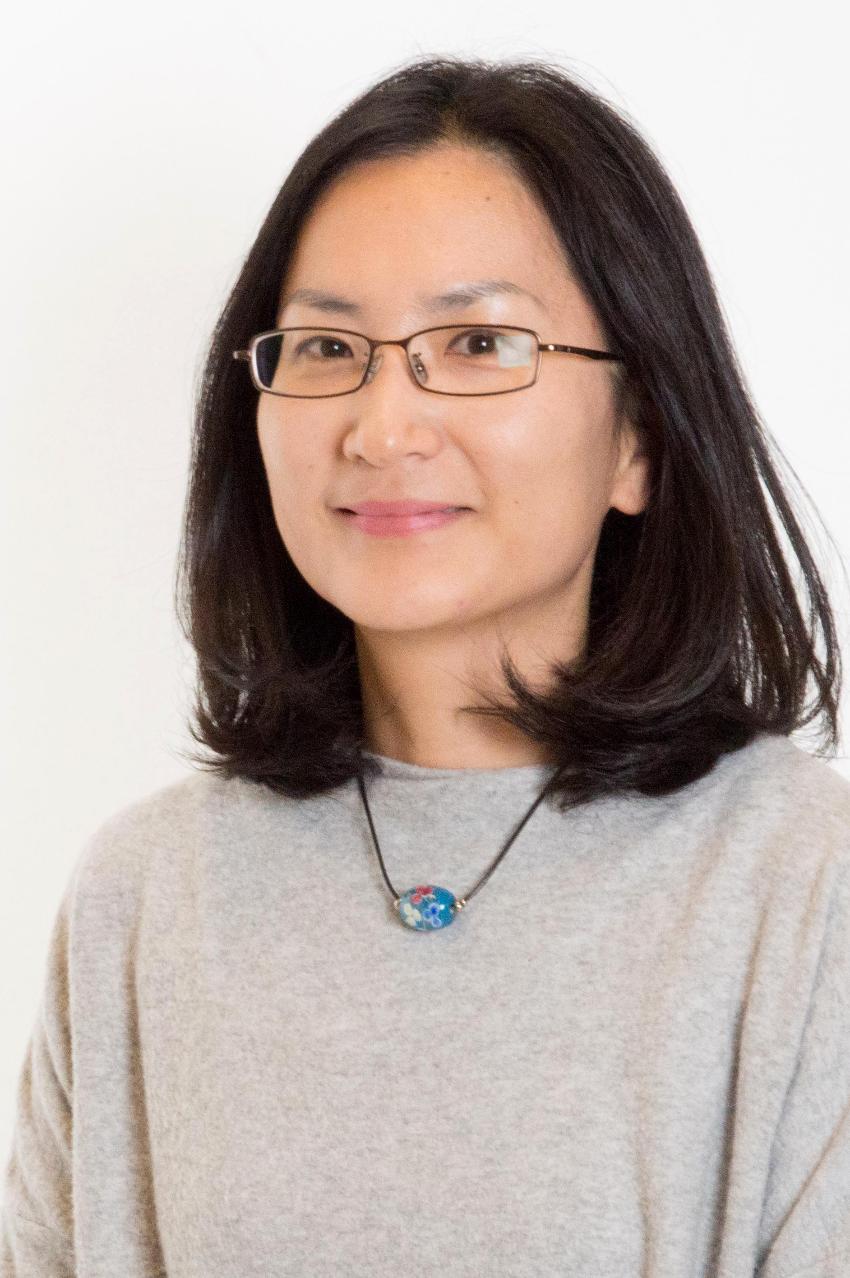
Diana Galvan Sosa is a Researcher at the University of Cambridge, affiliated with the ALTA Institute (Automated Language Teaching and Assessment) and the NLIP group. She holds a doctoral degree in Information Science from Tohoku University (Japan). Her research focuses on Natural Language Processing (NLP), particularly knowledge acquisition and applications of NLP in education, including feedback generation systems for second language (L2) learners. She also contributes to clinical text analysis and hate speech detection research. Education: PhD in Information Science from Tohoku University, Japan. Research Interests: Grammatical Error Correction Educational Technology Clinical NLP Explainability in AI Temporal Relation Extraction Multimodal Reasoning Recent Work Trends: Her most recent publications (2023-2025) emphasize advanced NLP applications like GPT-4 analysis for error correction, hate speech detection leveraging platform guidelines, and evaluation frameworks for AI explanations. Earlier work includes foundational studies on clinical text analysis and addiction treatment populations. Labs/Groups: Active member of the ALTA Institute and NLIP group at Cambridge. Also contributes to open-source projects like the GECToR framework for grammatical error correction, reflected in her GitHub repositories.
Associate Professor Sunny Boy Mahboob-Brumby is affiliated with the University of Sydney's Faculty of Arts and Social Sciences, Department of Linguistics. He holds a PhD in Linguistics from Indiana University (2003). His research focuses on language policies, World Englishes, and applied linguistics. Mahboob has served as Editor and Associate Editor of TESOL Quarterly and contributes to Linguistics and the Human Sciences . Education: BA (Karachi), MA (Karachi), MA (Indiana), MEd (Sydney), PhD (Indiana). Research Interests: Language variation in global contexts, non-native English speakers in TESOL, multilingual education policies. He critiques colonial legacies in language teaching and advocates for dynamic language proficiency models. Articles Overview: Recent work addresses English medium instruction in Pakistan, non-native teacher identities, and genre pedagogy. His 2021 article linked World Englishes to environmental issues, while 2018 work redefined TESOL pedagogy through dynamic language frameworks. Awards: 2012 National Talent Pool Fellow, 2006 University of Sydney Teaching Award, 2005 APRU Fellowship. Advising/Grants: Supervises research on Chinese language textbooks. Co-edited volumes on GCC education challenges (2017) and spirituality in ELT (2018). Led the SLATE project integrating genre pedagogy with e-learning. Labs/Teams: Involved in the Scaffolding Literacy in Adult and Tertiary Environments (SLATE) initiative, promoting feedback-driven writing development.
Jubin Abutalebi, MD, PhD, is an Associate Professor of Neuropsychology at the University Vita Salute San Raffaele's Faculty of Psychology in Milan, Italy. He holds dual appointments as Honorary Associate Professor at the University of Hong Kong's Faculty of Education and directs the Centre for Neurolinguistics and Psycholinguistics. His academic journey includes Summa cum Laude graduation from Brescia Medical School (1998) and specialization in Neurology at Vita Salute San Raffaele (2003), with postdoctoral training at Charité Hospital (Berlin), Université de Montréal, and University of Hong Kong. Graduated Summa cum Laude: University of Brescia Medical School (1998) Neurology specialization: Summa Cum Laude at Vita Salute San Raffaele (2003) His research focuses on the neurobiological basis of bilingualism, language control, and cognitive aging. He examines how multilingual experience affects brain structure/function, cognitive reserve, and neurodegenerative disease progression. His work spans neuroimaging, functional connectivity, and clinical applications in aphasia rehabilitation. Recent publications address: Language processing in multilingual speakers Cognitive aging and bilingualism Emotional processing in native/foreign languages Neuroplasticity mechanisms Impact of language distance on executive function Scientific recognition includes: Fellow, World Federation of Neurology (2006-present) Editor-in-Chief of Bilingualism: Language and Cognition (2014-present) He has held visiting appointments at: University of Montréal (2005) University of Tehran (2010-2011) Pontifícia Universidade Católica do Rio Grande do Sul (2011) University of Hong Kong (2015-2018) University of Utrecht Summer School (2013)
Oliver Eberle is a Researcher at the Machine Learning Group within the Technical University of Berlin (TU Berlin), affiliated with BIFOLD – Berlin Institute for the Foundations of Learning and Data. He holds a Joint M.Sc. in Computational Neuroscience (2017) and a Ph.D. in Machine Learning (2022) from TU Berlin and Humboldt-Universität zu Berlin. His research focuses on Explainable AI (XAI), Natural Language Processing (NLP), and their applications in Digital Humanities and Cognitive Science. Notable projects include XAI methods for transformer architectures, historical corpus analysis, and collaborations with the Max Planck Institute for the History of Science on the Sphaera Corpus. Key contributions include developing frameworks like BiLRP for similarity models, MambaLRP for sequence models, and xMIL for medical imaging. His work bridges technical advancements in AI with interdisciplinary applications in humanities and science.
Pierre Jourlin is a Professor at Avignon University, specializing in Computer Science and Artificial Intelligence. He actively contributes to academic events such as workshops on programming education and AI ethics. His research focuses on areas like natural language processing, machine learning, and the societal impact of AI. Jourlin has organized events like a programming workshop for high school students (2022) and authored numerous articles on topics ranging from rule-based event extraction to generative AI in creative writing. His academic contributions include work on semantic disambiguation, medical literature tools (SIMI), and foundational studies in speech recognition and multimedia retrieval. He critiques AI limitations, emphasizing the importance of human oversight in code generation and advocating for accessible education to counteract underfunding in public schools. Jourlin's recent publications (2024–2025) address AI's role in creative fields and the evolution of programming languages. His work often bridges technical innovation with ethical considerations, as seen in his analysis of code-producing AI tools like Copilot. He remains an active member of the academic community, blending research with pedagogical outreach.
Lisa Ganobcsik-Williams is a Senior Lecturer and Head of the Centre for Academic Writing at Coventry University. With over two decades of experience, she specializes in academic writing pedagogy, writing centers, and multilingual education. Her work focuses on enhancing writing support in higher education through innovative frameworks and digital environments. Role: Head of Centre for Academic Writing Institution: Coventry University Research Themes: Academic Writing, Multilingualism, Online Learning, Writing Centers Her research explores the intersection of writing pedagogy, student development, and technological integration. She has contributed to debates on academic literacy, writing program administration, and the adaptation of writing support in diverse contexts. Recent publications analyze the impact of generative AI on writing instruction, asynchronous tutoring models, and multiliteracy approaches. She advocates for structured support systems to address equity and engagement in student writing. As an active voice in writing center research, she has led projects like the Coventry Online Writing Lab and emphasized collaborative practices in writing development.
Prof. Alexander Onysko is a full-time Professor and Head of the Institute of English and American Studies at the University of Klagenfurt's Faculty of Cultural and Educational Sciences. His academic roles include membership in the Curricular Commission for English and American Studies and the Faculty Conference. His research focuses on cognitive linguistics, sociolinguistics, and world Englishes, with particular interest in language contact, multilingualism, and conceptual metaphors. Recent research projects explore interdisciplinary topics like media literacy, swarm intelligence in robotics, and sustainable business ecosystems. Notable publications in 2025 address online political avoidance, robotic exploration algorithms, and healthcare workforce retention during pandemics. He actively contributes to academic administration and has supervised multiple institutional innovation projects. His work bridges linguistic theory with practical applications in education and technology-driven solutions.
Minjeong Son is an Associate Professor at the University of Tromsø - The Arctic University of Norway. Her research focuses on teacher education reform, intercultural communicative competence, and plurilingual pedagogy. She actively collaborates with schools through reinforced school-university partnerships, emphasizing practical integration of theoretical concepts. Key research interests include: Third-space partnerships in teacher education Development of intercultural competence in English classrooms Plurilingual approaches for pre-service teachers Educational systems analysis using activity theory Recent work examines contradictions in creating innovative teacher education models, with notable contributions to Nordic educational journals. She co-leads the Research in Teacher Education Practices (RiTE) group and participates in AcqVA-Nor initiatives. Publications explore topics ranging from motion verb syntax in Austronesian languages (2008) to contemporary Norwegian educational challenges (2025). Her work bridges linguistic theory with practical pedagogical implementation.
Elena Simperl is a Professor at King's College London, UK, with former affiliations at the University of Southampton and Karlsruhe Institute of Technology. Her work focuses on knowledge graphs, semantic web technologies, and AI-driven data management. She leads research in collaborative knowledge engineering, dataset search, and AI ethics, contributing to projects like the TheyBuyForYou platform for public procurement transparency. Her research interests span knowledge representation, crowdsourcing, and human-AI collaboration. Notable contributions include advancing methods for knowledge graph construction, improving data quality via crowdsourced and automated approaches, and exploring the societal impact of AI systems. She has co-edited major conferences such as ISWC and ESWC, and her work bridges technical innovation with practical applications in public policy and information systems. Key projects include developing frameworks for dataset usability, AI-ready data infrastructure, and systems for fact-checking visual content. Her collaborations span academia and industry, addressing challenges in data governance, misinformation detection, and ethical AI deployment.
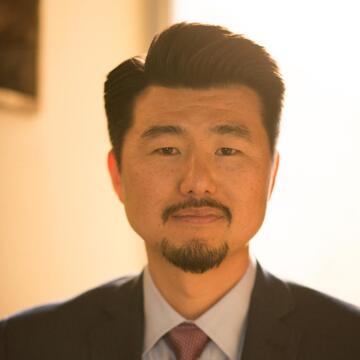
Kevin Oh serves as Professor and Department Chair at the University of San Francisco, where he maintains a full-time faculty position focused on innovative educational practices. His work bridges special education, teacher training, and emerging technologies to create inclusive learning environments that address diverse student needs through evidence-based methodologies. Dr. Oh earned his PhD in Special Education from the University of Virginia, Charlottesville, establishing the foundation for his research in disability-inclusive pedagogy and teacher preparation. His academic journey reflects a commitment to advancing educational equity through technological innovation and cross-cultural collaboration. His research program centers on collaborative teaching frameworks, assistive technology integration, and virtual reality applications in teacher training. Notably, he pioneers the use of three-dimensional immersive environments like Second Life to develop culturally responsive teaching practices and global classroom experiences, with particular emphasis on special education contexts and co-teaching models. Analysis of his publication trajectory reveals a sustained focus on virtual worlds in education since 2007, evolving from foundational technology adoption studies to sophisticated investigations of synchronous discussion facilitation and international collaboration. His work consistently addresses the intersection of teacher preparation, special education needs, and digital innovation. Dr. Oh's scientific recognition includes: Fulbright Specialist Project Award (2020) for Internationalization, Culturally Responsive, and Digitalization initiatives at the University of Applied Sciences Northwestern Switzerland USF Faculty Team Innovation Award (2013) for Creating a global classroom using virtual environments While specific details about his graduate student advising and research grants were not provided in available materials, his leadership as Department Chair and extensive publication record suggest active mentorship within his academic unit. His work with international institutions through the Fulbright program indicates significant collaborative research networks. No dedicated laboratories or specialized research teams were mentioned in the source materials, though his virtual environment research implies collaboration with educational technology specialists and international partner institutions.
Ken Hyland is an Honorary Professor at the University of East Anglia (School of Education & Lifelong Learning) and an Honorary Professor at Jilin University in China. With over 29 books and 280 papers, he is recognized as the world's leading scholar in language and linguistics by the Stanford/Elsevier Top 2% of World Scientists analysis. Former Director of the Centre for Applied English Studies at the University of Hong Kong Former Professor at UCL Institute of Education, London Foundation Fellow of the Hong Kong Academy of the Humanities His research spans academic discourse , writing pedagogy , language education , and metadiscourse analysis , with a focus on second language writing , feedback practices , and AI's role in writing . Recent projects explore ChatGPT's rhetorical strategies and digital literacy in writing evaluation. His publications demonstrate expertise in corpus linguistics , genre analysis , and cross-cultural communication . Articles show trends in analyzing AI-generated texts, medical discourse, and evolving academic writing conventions. 2022: Most Influential Scholar in Global Applied Linguistics Co-editor of Applied Linguistics and founding co-editor of Journal of English for Academic Purposes Ken has taught in Sudan, Saudi Arabia, Malaysia, Papua New Guinea, New Zealand, and Hong Kong. He contributes to projects like the LIT Educational Hub (2021–2023), enhancing digital university experiences in BRI countries.
Alamin Mazrui is a Professor of Sociolinguistics and Cultural Studies at Rutgers University’s School of Arts and Sciences. His research focuses on the political sociology of language in Africa, African literature in Swahili and English, and the impact of neoliberalism on linguistic landscapes. Mazrui holds a Ph.D. in Linguistics from Stanford University, an M.Ed. in Language Education, and a B.Sc. in Biology from Rutgers University. His current research, Language and the Neoliberal Order: East Africa in a Global Context , examines how World Bank and IMF policies have reshaped language use in countries like Kenya and Tanzania. He has also authored influential works on human rights, including policy reports on media censorship and ethnic violence in Kenya. Mazrui’s academic contributions span translation studies, postcolonial theory, and the intersection of Islam with African identity. Key publications include Cultural Politics of Translation (2016) and Swahili beyond the Boundaries (2007). His collaborative play Sudana won the Jomo Kenyatta Prize for Literature in 2008. Mazrui teaches courses on African literature, cultural politics, and the sociology of language. Research Highlights: Language policy and democracy in Africa Translation as a tool for cultural decolonization Neoliberalism’s influence on multilingualism Mazrui’s work bridges academic scholarship with policy advocacy, addressing issues such as ethnic conflict, human rights, and the legacy of colonial language systems. His interdisciplinary approach reflects a commitment to understanding Africa’s sociocultural dynamics in a globalized world.
Marc Orlando is a Professor and Director of the Translation and Interpreting Program in the Department of Linguistics at Macquarie University's Faculty of Medicine, Health and Human Sciences. His expertise spans translation and interpreting studies, with a focus on pedagogy, technology integration, and industry collaboration. He holds a PhD from Monash University (2014), a Master's in English Studies from Bordeaux Montaigne University (1996), and a postgraduate degree in multilingual education from the French Ministry of Education (1998). Research Interests : Orlando's work emphasizes training methodologies for translators/interpreters, the role of new technologies (e.g., digital pens, AI/MT), and synergies between practice, research, and education. He advocates for graduate employability and has built partnerships with organizations like AIIC, CIUTI, and Multicultural NSW. Key Contributions : His 2016 monograph Training 21st Century Translators and Interpreters is foundational in the field. Recent projects include studies on healthcare interpreting accessibility, AI literacy for professionals, and crisis management in language services. Awards : AUSIT National Award for Excellence in Translating (2007), multiple Dean's Awards for Teaching (Monash University), and the Gutenberg Teaching Council Grant (2013). Advising & Engagement : Supervised over 10 HDR students on topics like interpreter skill development, Auslan-English interpretation, and subtitling in education. Served on NAATI's Technical Reference Committee (2016–2021) and led AIIC's Research Committee (2017–2022). Leadership Roles : Vice-President of CIUTI, editorial board member of Interpreting and Society , and active conference interpreter (AIIC member). His work bridges academia and industry, fostering global T&I standards through policy and practice.
Dr. Antonio Andriella is a Postdoctoral Researcher at the Institut de Robòtica i Informàtica Industrial (IRII), a joint research center of the Spanish National Research Council (CSIC) and Technical University of Catalonia (UPC). He is an incoming Tenured Scientist at IRII expected to start by the beginning of 2026. Previously, he was a Research Scientist at Pal Robotics awarded with a Marie Skłodowska-Curie cofund fellowship in the H2020 project PRO-CARED (no.801342), and a Postdoctoral Researcher at the Artificial Intelligence Research Institute (IIIA) working on the Value-Aware Artificial Intelligence (VALAWAI) project. His educational background includes: PhD in Control, Robotics and Vision (2022) from Institut de Robotica i Informatica Industrial, CSIC-UPC MEng in Artificial Intelligence (2009) from Sapienza, University of Rome BSc in Computer Engineering (2006) from Sapienza, University of Rome Dr. Andriella's research focuses on creating proactive, personalized robots that can tailor their behavior to individual needs and preferences. His work spans Human-Centered Robotics , Socially Assistive Robotics , Robot Personalisation , Proactive Behaviour , and Explainable Robotics . He investigates how robots can explain their decisions to help users build clearer mental models of these systems, ultimately making robots more transparent and understandable. His research has significant applications in healthcare, particularly for elderly care and cognitive training. His recent publications demonstrate a strong focus on applying robotics to healthcare challenges, particularly in cognitive training for elderly patients with cognitive impairments. His work bridges theoretical AI approaches with practical applications in real-world environments, emphasizing user experience, personalization, and explainability across various contexts including frailty assessment, customer service interactions, and therapeutic applications. His scientific achievements have been recognized with prestigious awards: Georges Giralt award for the best European PhD thesis from euRobotics AIHUB.CSIC prize for the best AI PhD Thesis from the AI Hub of the Spanish National Research Council (CSIC) Dr. Andriella has been actively involved in multiple research projects including SWEET (Social aWareness for sErvicE roboTs), ROSPIA, FRAILWATCH, and DEMETER 5.0. He has organized workshops on trust, AI, ethics and personalization at major conferences including HRI, RO-MAN and ICSR, and has served as guest editor for journals such as International Journal of Social Robotics, Frontiers in Robotics and AI, and Paladyn Journal of Behaviour and Interaction Studies. His research group focuses on developing the CARESSER framework (aCtive leARning agEnt aSsiStive bEhaviouR) for in situ learning of robot social assistance, with applications in cognitive training therapy and elderly care. Current projects are exploring robot-assisted frailty assessment systems, dataset reliability for HRI research, and multilingual intent recognition on social robots, demonstrating his commitment to both theoretical advancements and practical implementations in the field.