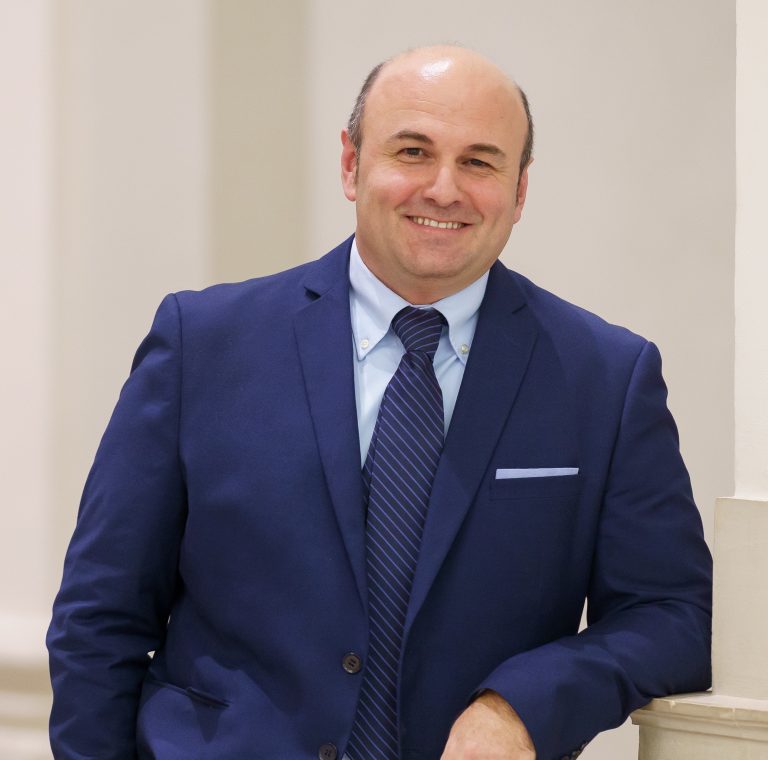
Jack Dempsey is a Lecturer in the Department of Educational Psychology at the University of Illinois at Urbana-Champaign's College of Education . He also serves as the Director of Research at Cascade Reading, where he works full-time. Dempsey earned his PhD in Educational Psychology and focuses on understanding text comprehension mechanisms to advance educational technologies globally. Expertise: Eye-tracking research, behavioral task analysis, machine learning in education Courses: EPSY 401 (Child Language and Education), EPSY 201 (Educational Psychology) His research investigates how humans comprehend grammatical structures and discourse through eye-tracking and behavioral tasks , employing advanced modeling techniques. Recent work explores: Grammatical comprehension in multilingual contexts Eye movement patterns during programming code reading Syntactic adaptation and discourse-sentence interactivity Contextual biases in language processing Dempsey emphasizes communicating scientific findings to broad audiences and has contributed to both educational technology development and psycholinguistic research.
Carlos Badenes-Olmedo is an Associate Professor in the Computer Systems Department at Universidad Politécnica de Madrid (UPM) . He is a member of the Ontology Engineering Group (OEG) , AI.nnovation Space , and co-founder of the spin-off company LibrAIry S.L. , which offers AI services for NLP and knowledge management. He also co-chairs the Knowledge Graph Summarization Workshop at ISWC. His research focuses on Natural Language Processing , Semantic Web Technologies , and Knowledge Graphs with applications in multilingual document similarity, topic modeling, and biomedical informatics. He has published extensively on cross-lingual search, scalable hashing algorithms, and AI in public health and procurement. Notable scientific awards include: DAAD Postdoc Funding (2021) Margarita Salas Mobility Grant (2021) ActuaUPM 3rd Prize for Best Startups (2020) Finalist for Margarita Salas Research Awards (2022) Finalist for Innovation Talent Recruitment Award (2021) He contributes to software engineering with tools like librAIry for distributed text mining, Corpus Viewer for NLP pipelines, and r4r for RESTful APIs over RDF data. His work bridges academia and industry through projects like TheyBuyForYou and TBFY Harvester for EU public procurement.
Dr. Alena Němcová Polická serves as an Associate Professor at the Department of Romance Languages and Literatures within the Faculty of Arts at Masaryk University in Brno, Czech Republic. Her academic profile demonstrates extensive expertise in French linguistics with particular specialization in contemporary language phenomena. Her research interests span multiple interconnected fields including sociolectology, neology, youth language, slang studies, and corpus linguistics with a distinctive focus on rap linguistics as a contemporary cultural and linguistic phenomenon. She has developed significant expertise in analyzing lexical innovations and their diffusion patterns across languages, particularly between French, Czech, and Polish. Professor Němcová Polická's publication record shows consistent scholarly output with 111 publications to date, demonstrating increasing focus on digital corpus methodologies and hip-hop linguistics in recent years. Her work reveals a methodological evolution from traditional linguistic analysis toward innovative corpus-based approaches that bridge qualitative and quantitative research paradigms. She actively supervises graduate students working on contemporary linguistic topics including Alzheimer's language manifestations, electronic corpus analysis of slang, and French-English language contact in Quebec. Her academic service includes membership on program boards for French Language and Literature bachelor's and master's degrees, as well as serving on the Industry Council for Romance languages. Her current research trajectory focuses on the intersection of digital humanities and contemporary language evolution, particularly through the lens of hip-hop culture and youth language innovation. Recent presentations and publications indicate growing international collaboration across European academic networks focused on hip-hop studies and linguistic innovation.
Eleonora Zucchini is an Assistant Professor in the Department of Romance Languages and Literatures at the Faculty of Arts, Masaryk University, Brno. Her research and teaching center on Italian linguistics with applications in language education and multilingual communication. Education Dottore di Ricerca (PhD equivalent) in Linguistics Research Focus Her work investigates neo-standard Italian usage in educational contexts, morphosyntactic development in second language acquisition, and intercomprehension dynamics in multilingual settings. She employs corpus-based methodologies to analyze language variation in youth writing, spoken interaction, and grammar pedagogy, with particular attention to Bolognese linguistic communities. Publication Analysis Recent publications (2018-2025) reveal three interconnected research strands: (1) grammatical analysis of subjunctive/indicative usage in school grammars, (2) corpus-driven studies of neo-standard Italian in foreign language materials, and (3) development of specialized resources for studying past tense morphology (Corpus KIPasti) and Bolognese spoken language (Corpus ParlaBO). Her collaborative work emphasizes practical applications for language teaching and intercultural communication. Academic Service Dr. Zucchini supervises bachelor's theses in Italian Linguistics and serves on the Program Board for the Italian Language and Literature Bachelor's Degree. Her teaching portfolio includes advanced courses in semantics, pragmatics, and academic writing for Romance language scholars. Research Infrastructure Co-developer of Corpus KIPasti for analyzing Italian past tense morphology Co-creator of Corpus ParlaBO documenting Bolognese spoken language variation Member of collaborative teams with Caterina Mauri, Silvia Ballare, and Nicola Grandi
Yves Lepage is a Professor at Waseda University's Faculty of Science and Engineering, specifically within the Graduate School of Information, Production, and Systems. He maintains an active research laboratory (lepage-lab.ips.waseda.ac.jp) and teaches courses including Example-based machine translation/NLP, Natural language processing, and Master's/Doctoral thesis supervision for the 2025 academic year. His research focuses on the application of analogical reasoning to natural language processing problems, particularly machine translation. Lepage's work spans formal analogy between strings, sentence-level analogies, morphological analysis, and multilingual systems. His research interests include machine translation, analogy, multilingual alignment, multilingual large language models, and foreign language aids. He has made significant contributions to understanding analogical density in corpora and developing methods to leverage analogies for translation, especially in low-resource scenarios. His publication record shows consistent output through 2024, with research evolving from foundational work on proportional analogy to sophisticated applications with neural networks. Recent work explores masked prompt learning for analogies, fuzzy analogies for translation, and organizing lexica into analogical grids for morphological generation across languages. Waseda University Teaching Award (Spring semester 2016) Lepage has successfully led multiple research projects funded by the Japan Society for the Promotion of Science, including "Theoretically founded algorithms for the automatic production of analogy tests in NLP" (2021-2024) and "Self-explainable and fast-to-train example-based machine translation using neural networks" (2018-2021). His work has involved international collaboration, including a 2023-2024 research period at the University of Montreal. He serves as Concurrent Researcher at the Waseda Research Institute for Science and Engineering (2024-2026) and has been active in professional organizations including the Information Processing Society of Japan and the Japanese Natural Language Processing Association.
Wolfgang Nejdl is a distinguished Professor at Leibniz University Hannover, working within the Faculty of Mathematics and Computer Science and affiliated with the Institute of Information Systems. With an extensive publication record spanning over two decades, he has established himself as a leading researcher in Natural Language Processing, Information Retrieval, and Web Personalization. His work bridges theoretical advances with practical applications, particularly in clinical NLP and semantic web technologies. Nejdl's research interests encompass a broad spectrum of topics including Natural Language Processing, Information Retrieval, Web Personalization, Semantic Web technologies, Machine Learning applications, Clinical NLP, and Recommender Systems. His recent work has focused on critical challenges such as clinical outcome prediction using MIMIC datasets, financial literacy evaluation of large language models, and developing resources for low-resource languages like Tigrinya. He has made significant contributions to understanding data drift in clinical applications and developing interpretable AI systems for healthcare. His publication record shows a consistent trajectory of impactful research, with recent articles demonstrating his ability to tackle emerging challenges in NLP and AI. From his foundational work on web personalization using ODP metadata to his current research on clinical NLP and low-resource language processing, Nejdl has consistently addressed important problems at the intersection of information systems and human needs. His work on stance detection incorporating toxicity and morality analysis represents innovative approaches to understanding social media discourse. Among his notable achievements are the development of the EDUTELLA P2P infrastructure based on RDF, significant contributions to boilerplate detection algorithms, and pioneering work on preventing shilling attacks in recommender systems. His research has been widely cited, reflecting its substantial impact on the fields of web science and natural language processing. Nejdl has supervised numerous students and collaborated extensively with researchers worldwide, particularly with Alexander Loeser, Jens-Michalis Papaioannou, and Paul Grundmann. His work demonstrates a consistent focus on practical applications of theoretical advances, particularly in healthcare and web technologies. He has also worked on important infrastructure projects like the L3S Research Center, contributing to the broader academic and technological ecosystem.
Anna Rogers is a leading researcher in Natural Language Processing (NLP), known for her foundational and critical work on language model interpretability, dataset quality, and the ethics of AI systems. She has published extensively at top-tier venues including ACL, EMNLP, and NAACL, often collaborating with prominent researchers like Anna Rumshisky and Isabelle Augenstein. Her research interests center on data curation , model generalization , responsible data use , and transparency in large language models . She has conducted influential surveys on community perspectives regarding intelligence in AI and has contributed to improving peer review practices in NLP conferences. Her work on BERTology, including papers like A Primer in BERTology and Revealing the Dark Secrets of BERT , has become key reading in the field. Recent publications highlight her focus on data transparency (e.g., the ROOTS Search Tool), synthetic content detection , and temporal annotation frameworks like NarrativeTime. She also investigates the robustness of models, probing techniques, and the limitations of current benchmarks. Her work consistently emphasizes methodological rigor and ethical considerations in NLP research. She has advocated for better data practices and more thoughtful evaluation paradigms across the community. Natural Language Processing Computational Linguistics Language Model Interpretability Dataset Curation and Quality Ethics in NLP Peer Review in Academic Conferences Anna Rogers has played a key role in shaping meta-discussions in the NLP field, including peer review reform and the societal impact of language technologies. She has co-organized workshops on negative results and contributed to tutorials on reviewing and data use. Her work bridges technical depth with critical reflection on the direction of the field. She has advised or collaborated with numerous researchers, though specific students are not listed in the available data. She has not received any explicitly mentioned scientific awards in the provided text. Anna Rogers leads or contributes to several open-source initiatives and shared resources, including the DECAF framework, the ROOTS Search Tool, and various datasets such as TimeBankNT and RuSentiment. Her work often includes released code and tools to promote reproducibility and further research.
Megumi Terada is a researcher at the Institut für deutsche Sprache und Linguistik within Humboldt-Universität zu Berlin , actively contributing to the Collaborative Research Center 1412 (CRC 1412) under project C06: Seemingly Free (Morpho)Phonetic Variation . She specializes in phonetics, phonology, and language register analysis, with a focus on German spontaneous speech patterns and digital communication impacts. Affiliation: CRC 1412, SFB Project C06 Key Research: Register variation in historical/modern contexts, Zoom-mediated speech effects, L2 German phonetics Her work integrates corpus linguistics with multimodal analysis, examining how situational factors like videoconferencing alter phonetic realizations (e.g., 11.9% reduced vowel space in Zoom contexts). She develops annotation frameworks for spoken corpora (BeDiaCo, CoNNAR), emphasizing inflectional endings, dialogue structure, and acoustic measures. Recent publications address schwa realization in German verbs, orthographic influence on L2 phonetics, and register trends across 2021-2024 datasets. While her awards and student mentoring details aren't explicitly stated, her collaborations with researchers like Christine Mooshammer and Anke Lüdeling demonstrate interdisciplinary engagement in phonetic modeling and register theory.
Geraint Palmer is a Welsh Medium Lecturer at Cardiff University's School of Mathematics, where he teaches mathematics courses primarily in Welsh. His academic journey includes a BSc in Mathematics from Aberystwyth University (2013), followed by an MSc in Operational Research and Applied Statistics (2014) and a PhD in Applied Stochastic Modelling (2018), both from Cardiff University. His educational background includes: BSc in Mathematics, Aberystwyth University (2013) MSc in Operational Research and Applied Statistics, Cardiff University (2014) PhD in Applied Stochastic Modelling, Cardiff University (2018) Dr. Palmer's research spans several interconnected areas within operational research and applied mathematics. His primary focus is on queueing theory and stochastic modeling , with applications in healthcare systems and emergency services. He has made significant contributions to discrete event simulation , notably through the development of the open-source Ciw library. Additionally, his work extends to Welsh language processing, where he has contributed to computational linguistics projects including Welsh word embeddings and stemmers. His interdisciplinary approach combines theoretical mathematical modeling with practical software implementation, often using Python and R. His recent publications demonstrate a strong trend toward applying operational research methods to healthcare challenges, particularly emergency services optimization. His work on ambulance fleet allocation, emergency care transformation, and orthopaedic care systems shows a consistent focus on improving healthcare delivery through mathematical modeling. Simultaneously, his research in Welsh language processing represents a unique interdisciplinary contribution at the intersection of mathematics, computer science, and linguistics. His publication record also highlights his commitment to open-source software development, with contributions to libraries like Ciw (for discrete event simulation) and GCol (for graph coloring). His scientific contributions include: Development of Ciw, an open-source discrete event simulation library Development of GCol, a high-performance Python library for graph coloring Contributions to Welsh language processing tools and resources Co-authorship of "Applied Mathematics with Open-Source Software: Operational Research Problems with Python and R" (2022) Dr. Palmer is actively involved in teaching mathematics at Cardiff University, delivering modules including Preliminary Mathematics II, Problem Solving, and Computational Methods. His bilingual capabilities enable him to provide Welsh-medium instruction, supporting linguistic diversity in higher education. His research projects often involve collaboration with healthcare professionals, operational research specialists, and language technologists, reflecting the interdisciplinary nature of his work. Notably, he has contributed to standardized Welsh language assessment tools, demonstrating his commitment to both academic research and practical community applications.
Professor Elton Prifti is Chair of Romance Philology at Saarland University since 2022, with a distinguished career in Romance linguistics, etymological lexicography, and language contact studies. He previously held positions as Full Professor of Romance Linguistics at the University of Vienna (2019-2022), Junior Professor at the University of Mannheim (2013-2019), and various research positions at Saarland University. His research focuses on historical word research, language history, multilingualism, variational linguistics, contact linguistics, migration linguistics, and digital language science. Prifti's work particularly emphasizes inter-Adriatic language contacts, Romance minority languages, and the digital transformation of etymological dictionaries. Prifti has made significant contributions to the field through his leadership of the Lessico Etimologico Italiano (LEI) project, which he has been responsible for digitizing since 2015. His recent publications reflect a strong trend toward digital humanities approaches to historical linguistics, with numerous articles on digital lexicography, knowledge networks in medieval Romance languages, and the development of digital tools for linguistic research. Premio Cesare Pavese 2020 (Saggistica section) Kurt-Ringger-Preis 2013 from the Academy of Sciences and Literature Mainz Elected as full external member of the Academy of Sciences of Albania (2021) Elected as foreign corresponding member of the Accademia della Crusca (2019) As co-editor of the Journal of Romance Philology and the LEI project, Prifti plays a significant role in guiding scholarly discourse in Romance linguistics. His leadership extends to directing the long-term ALMA project on knowledge networks in medieval Romance languages and serving on various academic boards including the Kurt Ringger Foundation and the scientific committee of the journal Ladinia. Prifti's work spans multiple institutional contexts across Europe, with particular expertise in the linguistic landscapes of the western Balkans, Romance minority communities, and the development of digital tools for historical linguistic research.
Dr. Ksenia Gnevsheva is a Senior Lecturer in Linguistics at the School of Literature, Languages & Linguistics, The Australian National University (ANU). She holds a PhD in Linguistics (University of Canterbury, 2016), an M.A. in English as a Second Language (University of Arizona), and a B.A. in Theoretical and Applied Linguistics (Saratov State University, Russia). Prior to ANU, she worked as a Linguistic Scientist at Fluent Scientific Ltd. Her research focuses on sociophonetics and second language acquisition, particularly sociolinguistic variation in bilingual speakers' production and perception. She is fluent in English, Russian, and has proficiency in French, Korean, Polish, and Spanish. Education: PhD in Linguistics, University of Canterbury (2016) M.A. in English as a Second Language, University of Arizona B.A. in Theoretical and Applied Linguistics, Saratov State University Her research interests include sociolinguistic variation, accent perception, and the intersection of sociophonetics with second language acquisition. She explores how non-native speakers negotiate linguistic identity through accent and dialect, with recent work addressing language-based discrimination in employment contexts. Key projects include analyzing sociolinguistic corpora using computational tools (e.g., ASR) and studying regional Australian English dialects. Dr. Gnevsheva’s articles examine topics like accentedness perception, second dialect acquisition, and the role of technology in sociolinguistic research. She collaborates on projects such as the 'Voices of Regional Australia' initiative, focusing on linguistic markers of local attachment. Her work bridges theoretical and applied linguistics, emphasizing real-world implications of language variation. Grants/Projects: Voices of Regional Australia (2023–2026): Investigates linguistic patterns tied to regional identity in Australia. Assessing Language-Based Discrimination (2023): Examines how speaker accents influence employability judgments. Accented Australian English for Acoustic Modelling (2019): Advances speech recognition systems for non-native accents. She is affiliated with The Migration Hub at ANU and actively supervises research students in sociolinguistics and second language studies.
Şaziye Betül Özateş is an Assistant Professor at Boğaziçi University's Institute for Data Science and Artificial Intelligence, specializing in NLP and machine learning. She develops resources and models for Turkish and low-resource languages, including the BOUN Treebank and dependency parsers. Research focuses on dependency parsing for agglutinative languages, computational linguistics, and deep learning applications, with emphasis on Turkish morphology, code-switching parsing, and historical language processing. Recent projects address Ottoman Turkish NLP and calligraphy analysis. Publications demonstrate strong focus on Turkish language resources (40%), parsing algorithms (30%), historical text processing (20%), and code-switching NLP (10%). Recent works show increasing attention to Ottoman Turkish and Arabic script processing, with methods leveraging multilingual BERT and semi-supervised learning. Developed key resources: BOUN Treebank (Turkish syntactic corpus), PUD Treebank (multilingual parallel corpus), BOUN-Pars (LSTM-based Turkish parser), and semi-supervised parsers for code-switched languages. Supervises projects on neural network applications in NLP.
Danielle Barth is an Associate Professor at the School of Culture, History and Language at Australian National University. She holds a BA in Linguistics from Rice University, MA in Linguistics from University of Oregon, and PhD in Linguistics from University of Oregon. Her research focuses on quantitative corpus linguistics, typology, and linguistic variation in minority and endangered languages, particularly languages of Papua New Guinea and the Pacific region. She directs the Barth Lab for Corpus Linguistics and leads projects including Matukar Panau Language Documentation and the Social Cognition Parallax Interview Corpus (SCOPIC). She currently supervises multiple PhD students working on corpus-based documentation and usage-based variation projects. Her textbook 'Understanding Corpus Linguistics' provides foundational knowledge in the field.
Milan Straka is a professor at the Institute of Formal and Applied Linguistics (ÚFAL) within the Faculty of Mathematics and Physics at Charles University, Prague. His research focuses on machine learning, artificial neural networks, deep learning, and structured prediction with applications to natural language processing (NLP) tasks including POS tagging, dependency parsing, named entity recognition, and optical music recognition. University: Charles University School: Faculty of Mathematics and Physics Department: Institute of Formal and Applied Linguistics Straka has developed several NLP tools like UDPipe and NameTag, contributing to multilingual coreference resolution, Czech grammar error correction, and historical language processing pipelines. His recent work involves contextualized embeddings, semantic parsing, and large-scale dataset creation for Czech NLP tasks. He collaborates on European Language Grid initiatives and has participated in multiple shared tasks (CRAC, MRP, W-NUT). His publications span topics from algorithm design (functional data structures) to modern transformer-based language models (RoBERTa) with emphasis on Czech language resources.
Daniel Bermuth is a Researcher at the Chair of Software Engineering within the Institute for Software & Systems Engineering at the University of Augsburg . His work focuses on the intersection of Machine Learning and Collaborative Robotics , with a particular emphasis on Software-driven Robotics and Automation . Education Master in Computer Science (2017-2020), University of Augsburg Bachelor in Computer Science (2014-2017), University of Augsburg Research Interests Development of AI-based safety mechanisms for human-robot collaboration Real-time human pose estimation using RGBD imaging and voxel fusion techniques Efficient spoken language understanding architectures via n-grams, tries, and finite state transducers Privacy-aware voice assistants operating in offline environments Fast speech-to-text models for multilingual applications Publications demonstrate expertise in Robotics , Artificial Intelligence , Computer Vision , and Natural Language Processing . Key subfields include Human-Robot Interaction , 3D Pose Estimation , Speech Recognition , Privacy-preserving AI , Efficient Parsing Algorithms , and Multilingual Language Models . Laboratory Works within the Institute for Software & Systems Engineering under Prof. Dr. Wolfgang Reif Active in developing software solutions for robotics and speech processing