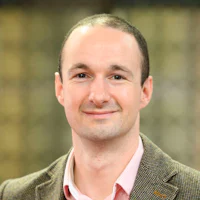
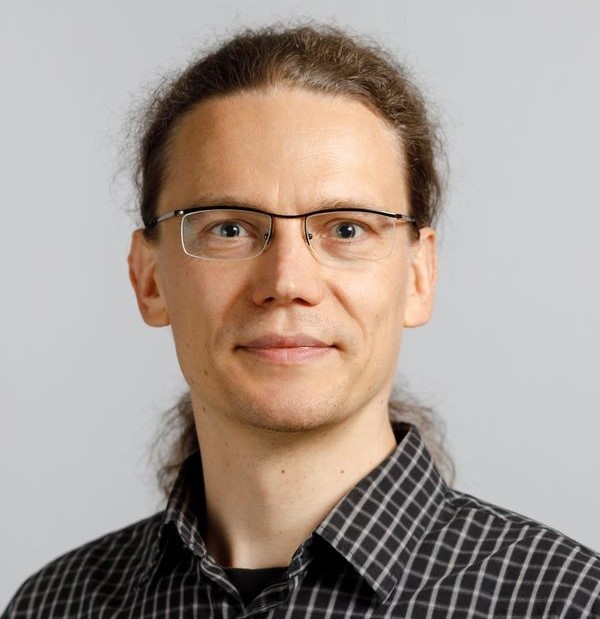
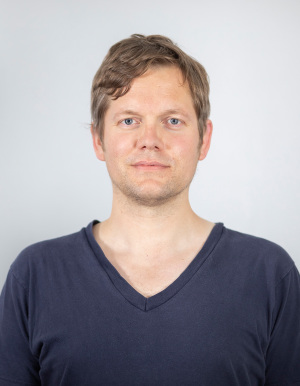
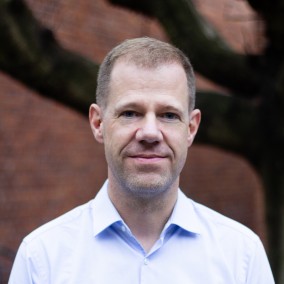
Adrian Sorin Barb is an Associate Professor affiliated with the Engineering Division (Great Valley). Their research focuses on Smart City , Internet of Things , and Semantic Modeling , often integrating formal ontologies and machine learning techniques. Key contributions include: NSF-funded project (2022-2025) on Open Educational Resources for Architectural Engineering as CoPI. Collaborations on policy evaluation frameworks using ontologies and IoT analytics. Their work aligns with UN Sustainable Development Goals (SDGs), particularly in urban sustainability. Research outputs emphasize visual pattern recognition , semantic fusion , and curricular coherence .
Professor Luke Sloan, based at Cardiff University's School of Social Sciences , serves as the Academic Partner for Student Voice and Engagement and Deputy Director of the Social Data Science Lab . With a career spanning 2010–present at Cardiff (Lecturer to Professor), he leads institutional programs like Module Enhancement and CardiffPulse while chairing the Student Voice and Partnership Committee . His work focuses on social media analytics , quantitative methods , and data linkage between surveys and Twitter. Education: PhD (Political Science, 2010) MSc (Social Research, 2007) BSc (Politics, 2006) Research Highlights: Internationally recognized for developing demographic proxies for Twitter , Sloan's research addresses representation in social media, data linkage methodologies , and ethics in big data social science . His ESRC-funded project (£906k) investigates survey-Twitter linkage, while prior work includes crime-sensing algorithms and election prediction models using social media. Scientific Contributions: Dillwyn Medal (Learned Society of Wales, 2019) Most Effective Teacher Award (Cardiff, 2013) Co-author of Bryman's Social Research Methods (6th ed, 2021) Teaching Innovation: As Co-Director of the Q-Step Centre , he developed the BSc Social Analytics program (UCAS code J3G5) in collaboration with the Office for National Statistics. His roles include Director of Learning and Teaching (2020–2022) during pandemic educational continuity. Labs & Collaborations: Leads the Social Data Science Lab and sits on the Social Media Analytics Review and Information Group (SMARIG) . Collaborates with the Office for National Statistics and Food Standards Agency.
Yue Zhang, PhD, is a faculty member at the University of Southern California's Keck School of Medicine in the Department of Internal Medicine. With expertise in statistical methods applied to epidemiology and clinical trials, Dr. Zhang's research focuses on clustered and longitudinal data analysis, Bayesian inference, survival analysis, and stochastic processes. Dr. Zhang's recent publications highlight trends in cardiovascular device longevity, social determinants in infectious disease modeling, and environmental health impacts on pediatric and adult populations. Research spans biostatistical modeling, healthcare cost analysis, and predictive frameworks for chronic disease management. Key research collaborations include studies on antimicrobial resistance, diabetes screening interventions, and environmental toxin effects on patient outcomes. Dr. Zhang contributes methodological innovations in quantile regression and multilevel modeling across multiple medical disciplines.
Douglas M King is a Teaching Assistant Professor in the Department of Industrial and Enterprise Systems Engineering at the University of Illinois at Urbana-Champaign's Grainger College of Engineering. He has been with the department since 2012, progressing from Visiting Lecturer to his current position as Teaching Assistant Professor. His work focuses on applying operations research and data analytics to practical problems including political redistricting, transportation systems, and public health applications. Dr. King earned his educational degrees entirely from the University of Illinois at Urbana-Champaign: Ph.D. in Industrial Engineering (May 2012) M.S. in Systems and Entrepreneurial Engineering (May 2006) B.S. in General Engineering (May 2002) Dr. King's primary research interests lie at the intersection of operations research, data analytics, and real-world applications. His most significant contributions have been in developing optimization frameworks for political redistricting, where he has pioneered algorithms that create geographically compact and politically competitive districts. His work integrates geographic information systems with mathematical optimization to address the complex constraints of redistricting. Beyond redistricting, Dr. King has made notable contributions to understanding the relationship between transportation systems and public health outcomes, particularly examining how public transit usage relates to obesity rates. His methodological expertise spans stochastic modeling, graph partitioning, and multi-objective optimization. Dr. King's publication record demonstrates a clear progression toward increasingly complex optimization problems in political redistricting. Starting with foundational work on geo-graph modeling for congressional district creation, he has advanced to developing sophisticated multi-stage optimization frameworks that address multiple constitutional criteria simultaneously. His recent work employs local search algorithms with recombination methods that significantly outperform traditional approaches. Beyond redistricting, his publications show interdisciplinary reach into sports analytics (NCAA tournament modeling) and public health research examining connections between transportation patterns and obesity. Dr. King's research has been recognized with several prestigious awards: 2019 INFORMS Service Science Best Paper Award (First Place) 2018 INFORMS Public Sector Operations Research Best Paper Award (Finalist) 2013 IISE Pritsker Doctoral Dissertation Award (Second Place) 2012 INFORMS Innovation in Analytics Award (Semifinalist) 2012 INFORMS Section on Public Programs, Services and Needs Best Paper Competition (Finalist) Dr. King serves as a faculty advisor for student organizations, having received the IISE Outstanding Faculty Advisor award for the North Central Region in 2013 and 2016. He was also honored with the Engineering Council Outstanding Advising Award in 2016 and 2017. His teaching portfolio includes core industrial engineering courses such as Analysis of Data (IE 300), Industrial Quality Control (IE 330), Design & Analysis of Experiments (IE 400), and OR Models for Manufacturing Systems (IE 412). He has developed innovative teaching methods, including using case studies to enhance critical thinking skills of industrial engineering students. Dr. King collaborates extensively with Professor Sheldon H. Jacobson and other researchers including Kiera W. Dobbs, Ian G. Ludden, and Rahul Swamy. Together, they have developed the "Geo-Graph" framework and other computational approaches for redistricting that have been published in top journals. Their work has been covered in university news for developing new algorithms for congressional redistricting. They maintain an active research program that bridges theoretical optimization with practical applications in political science, transportation, and public health.
Mårten Schultzberg is a Researcher at the Department of Statistics at Uppsala University , Sweden. His work spans causal inference, experimental design, and applied statistics, with a focus on methodological advancements and interdisciplinary applications in energy economics and behavioral science. Research Interests : Causal inference in observational and experimental studies Optimal experimental design and rerandomization strategies Statistical methods for energy demand analysis and behavioral modeling Recent Publications highlight his contributions to balancing covariates in randomized experiments, causal mediation analysis, and energy policy evaluation. His work appears in journals such as Journal of Causal Inference , Statistical Papers , and Energy Research & Social Science . Contact: marten.schultzberg@statistik.uu.se
Tatsuto Asakawa is a Professor at Waseda University's Faculty of Human Sciences , specializing in Urban Sociology with a Ph.D. from Tokyo Metropolitan University (2021). His career spans institutions like Meiji Gakuin University (1996-2020), where he held roles from Associate Professor to Professor. Education: Ph.D. in Sociology (Tokyo Metropolitan University, 2021) Key Projects: Food Desert Analysis, Post-Disaster Urban Reconstruction, Socio-Spatial Inequality Studies Asakawa's research fuses spatial analysis with social theory , focusing on: Food Deserts : Quantifying urban food insecurity using GIS and multilevel modeling Disaster Recovery : Examining social capital and housing dynamics post-Great East Japan Earthquake Urban Polarization : Tracking spatial reorganization of social classes in Tokyo and other metropolises His 8 Scopus-indexed publications (h-index:4) include studies on: Elderly nutrition accessibility (2024) Children's health hazards in multicultural environments (2023) Commercial restructuring after disasters (2021) Awarded by Japan's Minister of Education (2025) and twice by the Japanese Association of Urban Sociology (2021, 2005), he leads projects like: 2024-2029 : Foreign-rooted children's health environments 2024-2028 : Disparity expansion in aging populations 2019-2024 : Regional optimal solutions for disaster recovery As Director of Waseda's Institute for Sustainable Communities, he integrates quantitative GIS with qualitative community studies , emphasizing policy applications for carbon-neutral urban planning and socially vulnerable groups .
Vera Lomazzi is an Associate Professor of Sociology at the Department of Management, University of Bergamo. She holds leadership roles in the Center on Economic, Social and Cooperative Dynamics (CESC) and Center for Teaching Quality, Innovation and Learning (CQIIA). President of the European Survey Research Association Secretary of the Executive Committee of the European Values Study Member of OECD Global Technical Advisory Group on masculinities Her research focuses on: Comparative analysis of European values Evolution of gender role attitudes Workplace transformation and labor values Survey methodology and cross-national data harmonization Current projects include: PoweR - Promoting inclusive companies (Coordinator) MEN4DEM - Masculinity and European democracy (Work Package Leader) Missione Bergamo - Sociological investigation (Co-coordinator) European Values Study Wave 6 (Co-coordinator) Her recent publications address immigration attitudes, gender inequality measurement, work values transformation, and survey methodological challenges across European countries. Key scientific contributions: Measurement invariance testing in cross-national surveys Gender role attitude polarization analysis Pandemic impact on work-life balance Conceptualization of solidarity in European contexts
Robert Strzodka is a full professor at Heidelberg University, holding the chair on Application Specific Computing since 2015. He is renowned for pioneering work in GPU-based scientific computing, focusing on optimizing interactions between mathematics, algorithms, and parallel hardware architectures. Current affiliation: Institute of Computer Engineering (ZITI), Heidelberg University Prior roles: NVIDIA (AmgX group), Max Planck Institute (Integrative Scientific Computing), Stanford University (visiting assistant professor) PhD: Numerical mathematics from University of Duisburg-Essen (2004) His research spans parallel algorithms (GPUs, FPGAs), numerical methods (AMG, Krylov, preconditioners), and graph algorithms (partitioning, MST). Publications emphasize GPU acceleration , cache optimization , and mixed precision computing across domains like astrophysics, fluid dynamics, and finite element methods. The 15 most recent articles (2024-2008) demonstrate consistent innovation in parallel computing , GPU algorithms , and numerical methods . Key subfields include stochastic modeling , tridiagonal solvers , level set visualization , and cache-aware algorithms .
Dr. Eng. Bartosz Piotr Woszczyna is a Lecturer at the Department of Electrical Engineering within the Faculty of Electrical and Computer Engineering at Cracow University of Technology. His research focuses on optimizing electrical traction systems and power electronics, with emphasis on real-world applications in urban transportation infrastructure. Research Interests: His work spans power quality, semiconductor technologies, and electromagnetic compatibility in traction systems. Primary areas include: Switching loss reduction in multilevel inverters Harmonics analysis in tramway power grids SiC transistor applications for high-efficiency converters Load variability modeling in traction substations EMC solutions for power electronics Voltage stability in on-board vehicle networks Publication Trends: His 14 recent publications demonstrate consistent focus on empirical solutions for tram traction systems. Dominant themes include experimental validation of SiC-based converters, measurement of harmonic distortions in traction networks, and optimization of substation load distribution. Collaborative works frequently address practical engineering challenges in urban rail transport.
Jing Wang is a Research Associate Professor in the Department of Psychiatry at the Uniformed Services University of the Health Sciences (USUHS) and a Research Psychologist at the Center for the Study of Traumatic Stress (CSTS), with secondary appointment in the Department of Medical and Clinical Psychology. Education: Postdoctoral Fellowship, Eunice Kennedy Shriver National Institute of Child Health and Human Development, NIH PhD in Quantitative Psychology, Bowling Green State University MA and MS, Morehead State University BS, Ocean University of China Research Focus: Dr. Wang specializes in applying advanced statistical methodologies to military mental health research. Her core expertise includes structural equation modeling, latent class analysis, and longitudinal data analysis to investigate suicidal behavior , PTSD symptom variability , and ecological momentary assessment in military populations, with emphasis on risk/protective factors for mental health disorders. Publication Trends: Recent work (2020-2023) consistently examines suicide risk trajectories among National Guard/Reserve personnel during military transitions, attachment theory applications in new soldiers, and PTSD-sleep interrelationships using intensive longitudinal data. All studies employ sophisticated statistical approaches to address military-specific mental health challenges. Current Projects: Actively leads research initiatives at CSTS including the Daily Dairy Study, Army STARRS, Family Violence Study, and Mental Health Service Utilization among Reserve/National Guard forces.
Marco Giesselmann serves as a DIW Fellow at the German Institute for Economic Research (DIW Berlin), focusing on the Socio-Economic Panel (SOEP) study, while maintaining an affiliation with the Sociological Institute at the University of Zurich. His research centers on migration and refugee integration in Germany, labor market dynamics, and socio-economic inequality using longitudinal panel data methodology. Giesselmann's research interests span migration studies, refugee integration, labor market analysis, poverty and inequality research, and longitudinal data methodology. His work particularly examines how refugee influxes impact German society, including labor market consequences, social cohesion, political attitudes, and exclusionary behaviors. He has made significant contributions to SOEP data infrastructure, developing specialized modules for youth, residential history, and socialization processes that enhance the panel's research capabilities. His recent publications demonstrate a strong focus on the social and economic consequences of refugee movements to Germany, with particular attention to labor market integration, political consequences, and social dynamics. Giesselmann employs sophisticated panel data analysis techniques, including fixed effects models and multilevel modeling, to extract causal insights from complex longitudinal datasets. As a key contributor to the Socio-Economic Panel infrastructure, Giesselmann has developed specialized SOEP-Core modules that have expanded the study's capacity to investigate life course transitions, residential mobility, and youth development. His methodological expertise in panel data analysis has advanced the field's understanding of how to properly model cross-level interactions and fixed effects in longitudinal research designs.
Michael Auslen serves as an Assistant Professor in the Department of Government at the University of Texas at Austin's College of Liberal Arts, where he teaches Media and American Democracy and Honors Tutorial courses. His research examines democratic representation mechanisms with emphasis on state/local politics, media influences, and public opinion's policy role. His educational background includes: Ph.D. in Political Science from Columbia University Master in Public Policy from Harvard Kennedy School B.A. in Journalism and Political Science from Indiana University Auslen's research spans state/local governance, media-representation dynamics, and political methodology. He investigates how local news organizations and political parties mediate public-official connections while developing advanced techniques for subnational opinion estimation. His work bridges empirical political science and journalistic practice, leveraging prior experience covering Florida state politics. Recent publications reveal three interconnected research strands: methodological innovations for subnational polling (particularly cluster-sampled data), historical analysis of partisan polarization through state party platforms, and media's watchdog role in state legislatures. His 2024-2025 work increasingly integrates multivariate modeling with granular policy analysis. His scientific recognition includes: Best Graduate Student Poster at 2022 State Politics and Policy Conference Christopher Z. Mooney Best Dissertation Prize from APSA State Politics and Policy Section Auslen advises honors theses while maintaining active research collaborations. His prior journalism career at the Tampa Bay Times and Miami Herald directly informs his academic focus on state political institutions. Although specific grant details aren't public, his methodological papers suggest support for computational social science infrastructure. No dedicated labs or research teams are documented, though his work involves large-scale text analysis of newspaper archives and state legislative data.
Jørgen Carling is a Research Professor in Migration and Transnationalism Studies at the Peace Research Institute Oslo (PRIO), where he serves as Project Lead for MIGNEX and leads Work Packages 2 and 6. He is also the Co-Director of the PRIO Migration Centre and leads the European Research Council-funded Future Migration as Present Fact (FUMI) project. His educational background includes a PhD in Human Geography from the University of Oslo (2007), a Cand. polit. in Human Geography (2001), and a Cand. mag. in Human Geography, demography and economics (1998). He previously completed an International Baccalaureate at United World College of the Atlantic (1993). Carling's research spans migration theory, transnationalism, migration aspirations, involuntary immobility, migrant smuggling, remittances, and the migration-development nexus. His work combines Human Geography with interdisciplinary perspectives using both ethnographic and statistical methods. He has made significant contributions to understanding how migration arises and affects societies, families, and individuals through innovative mixed-methods approaches. His publication record reveals a strong focus on migration aspirations, policy effectiveness, and the complex relationship between development and migration. Recent work analyzes the impact of economic inequalities on migration aspirations, evaluates migration information campaigns, and challenges conventional wisdom about addressing the 'root causes' of migration. ERC Consolidator Grant for Future Migration as Present Fact (FUMI) project Carling has secured major funding including an ERC Consolidator Grant for FUMI and leadership of the MIGNEX project funded by the European Commission. He has served as a Visiting Fellow at prestigious institutions including the University of Oxford, National University of Singapore, and University of Maastricht. His methodological expertise spans semi-structured interviews, participant observation, purpose-made surveys, and statistical analysis of existing data. He serves on editorial boards for International Migration, International Migration Review, and Journal of Ethnic and Migration Studies, and has extensive language skills including Norwegian (mother tongue), English, Cape Verdean Kriol, and reading proficiency in several European languages.
Peter Miksza is an Associate Professor of Music Education at the Indiana University Jacobs School of Music and an affiliate member of the Indiana University Cognitive Science Program. He teaches courses in instrumental music education, the psychology of music, learning processes in music, measurement and assessment in music, and research methods. His research interests focus on: Self-regulated music learning Musical skill acquisition Music teacher preparation Music education policy Dr. Miksza co-authored the influential text 'Design and Analysis for Quantitative Research in Music Education' (2018) with Kenneth Elpus, which has been praised as 'a model of research thinking' and 'unique in its thoroughness' by reviewers. The book provides music education researchers with sophisticated quantitative methods previously uncommon in the field, covering everything from basic descriptive statistics to advanced techniques like structural equation modeling and multilevel analysis. His scholarly contributions help bridge the gap between rigorous research methodology and practical music education applications, enabling evidence-based decision making in music teaching and learning.
Professor Hanny Calache is a faculty member in the School of Dentistry at La Trobe University, Australia, specializing in dental public health research. Her work addresses critical gaps in oral healthcare access and equity, particularly for vulnerable populations including children, refugees, and people with intellectual disabilities. Her research interests focus on Oral Epidemiology , Public Health Dentistry , and Health Services Research , with specific expertise in child oral health disparities , refugee healthcare access , and economic evaluations of preventive interventions . She employs innovative methodologies including social practice theory and geospatial analysis to examine systemic barriers to care. Analysis of her 15 most recent publications (2023-2025) reveals consistent emphasis on policy-relevant research across three core domains: 1) Refugee and migrant oral health access (6 articles), 2) Child oral health interventions and epidemiology (5 articles), and 3) Health economic modeling of preventive strategies (4 articles). Her work demonstrates strong translational potential for Australian healthcare policy. Professor Calache maintains active collaborations with researchers across Australian institutions, evidenced by multi-institutional co-authorship on all recent publications. Her ORCID identifier (0000-0002-1613-0585) reflects ongoing scholarly engagement with 133 research outputs to date.