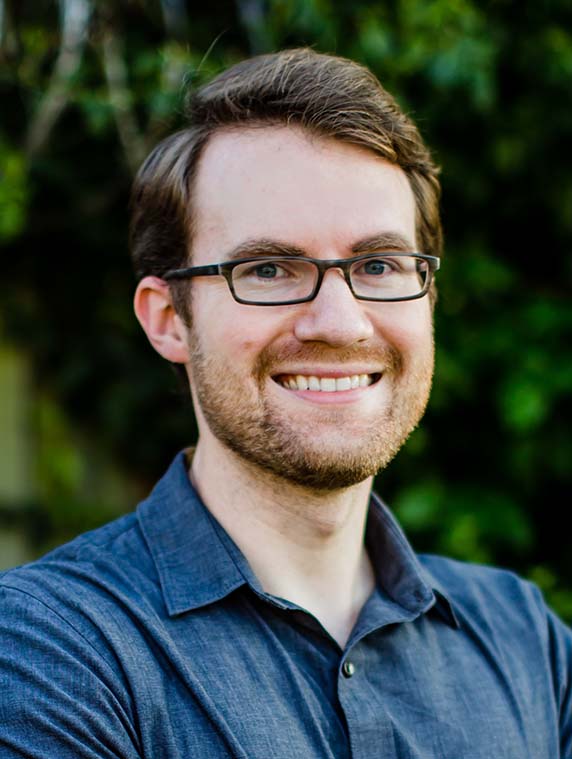
Dr. Prasanth Venugopal is an Associate Professor specializing in Power Electronics with a focus on advanced energy transfer systems and battery technology. His research spans wireless power transfer, electric vehicle charging, and electrochemical impedance spectroscopy for battery diagnostics. Primary research areas: Wireless Power Transfer (100%), Harmonics (88%), Inductive Power Transfer (87%), Battery Engineering (48%) Recent publications demonstrate expertise in transformerless converter designs, multi-level architectures, and AI-driven battery capacity estimation. He has pioneered meander coil topologies for harmonic mitigation and developed computation-light models for battery aging analysis. His work includes collaborations on Li-ion battery degradation, onboard chargers for electric vehicles, and hybrid power systems for electric aircraft. Despite significant output in IEEE Transactions, no explicit awards or student mentoring data appears in the provided texts.
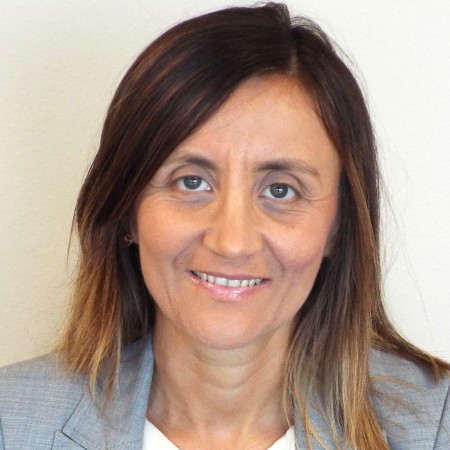
Thiago Batista Soeiro serves as a Full Professor with exceptional scholarly impact, evidenced by over 200 research publications and an h-index of 27. His work fundamentally advances power electronics applications in transportation and energy systems, particularly through innovations in electric vehicle infrastructure and sustainable power conversion technologies. Despite the absence of explicit institutional affiliation in source materials, his research permeates critical IEEE journals and conferences. Professor Soeiro's research portfolio centers on: Power converter design for electric vehicle charging systems AI-driven battery health estimation using electrochemical impedance spectroscopy Wireless power transfer optimization for automotive applications High-efficiency topologies for more electric aircraft Hydrogen energy system integration Advanced semiconductor utilization in grid-connected systems Analysis of his 2023-2025 publications reveals accelerating innovation in wide-voltage-range converters, predictive battery management, and fault-tolerant power systems. His work increasingly bridges machine learning with power electronics, notably through computation-light AI models for battery diagnostics, while maintaining strong focus on practical implementation challenges in EV charging and aircraft electrification. No scientific awards or honors were documented in the available materials. Similarly, information regarding student supervision, research grants, laboratory facilities, or collaborative teams was not provided in the source texts.
Katherine Klein is a Professor of Management at the Wharton School of the University of Pennsylvania and an organizational psychologist. Her research focuses on leadership succession, organizational change, diversity and inclusion, and impact investing. She has served as Vice Dean for Social Impact (2012–2022) and currently directs Wharton’s Impact Investing Research Lab. Her work explores: Leadership emergence and social networks Impact investing strategies and performance Multilevel theory in organizational dynamics Diversity’s effects on team conflict and innovation Rwanda’s post-genocide recovery Recent research trends highlight her expertise in team psychological safety, values diversity, and crisis leadership. Awards include multiple Wharton Teaching Excellence Awards and Fellowships from the Academy of Management and Association for Psychological Science. She teaches courses on leadership, social impact, and research methods, including a global module in Rwanda.
Dirk Praetorius is a Professor of Numerics of Partial Differential Equations (PDEs) at the Technische Universität Wien (TU Wien) , affiliated with the Institute for Analysis and Scientific Computing (ASC) within the Faculty of Mathematics and Geoinformation . He leads the research group on Numerics of PDEs and has held various leadership roles, including Institute Director (since 2020) and head of the Numerics research area. His work focuses on numerical methods for PDEs, including Finite Element Methods (FEM), Boundary Element Methods (BEM), adaptive algorithms, and computational micromagnetics. Education and Career: Praetorius earned his Diplom in Mathematics (2000) and PhD in Applied Mathematics (2003) from TU Wien, followed by a Habilitation in Numerical Analysis (2005). He has been a faculty member at TU Wien since 2005, progressing from Assistant Professor to full Professor in 2017. He has also held visiting positions at institutions such as the University of Jyväskylä and RICAM (Linz). Research Interests: His research spans numerical analysis, adaptive FEM/BEM, a-posteriori error estimation, matrix compression, and computational micromagnetics. He has contributed to modeling spin dynamics, magnetic skyrmions, and multiscale systems. His work emphasizes efficient algorithms for large-scale problems and optimal computational complexity. Awards and Editorial Roles: Praetorius received the TU Best Teacher Award (2021) and TU Best Lecture Award (2019). He serves as Senior Editor for Computational Methods in Applied Mathematics (CMAM) and on the editorial board of Applied Numerical Mathematics (APNUM) . He co-founded the outreach initiative TUForMath to promote mathematics education. Grants and Projects: He leads or co-leads several research projects funded by the Austrian Science Fund (FWF), including the collaborative SFB "Taming Complexity in Partial Differential Systems" (2017–2025) and international collaborations with Germany. His work addresses topics like functional error estimates, nonlinear PDEs, and computational design of magnetic devices. Labs and Teams: He contributes to the ASC Institute and coordinates interdisciplinary projects involving computational physics and engineering. His team develops software tools like MooAFEM and Commics for micromagnetic simulations.
Dr. Jason Rights is an Associate Professor in the Department of Psychology within the Faculty of Arts at the University of British Columbia. His office is located in Kenny Room 2017 at 2136 West Mall, Vancouver, BC. He leads The Rights Lab, a quantitative methods research group dedicated to improving statistical practice in scientific research. His educational background includes: B.S. in Psychology and Mathematics from the University of North Carolina at Chapel Hill (2011) M.S. in Psychology (Quantitative Methods) from Vanderbilt University (2015) Ph.D. in Psychology (Quantitative Methods) from Vanderbilt University (2019) Dr. Rights' research focuses on addressing methodological complexities in multilevel/hierarchical data contexts where observations are nested (e.g., patients within clinicians, students within schools). His work spans several interconnected programs including developing R-squared measures for multilevel models, addressing issues with level-specific effects, exploring connections between multilevel and mixture models, and advancing latent variable model selection techniques. Analysis of his publication record reveals a consistent focus on methodological innovations in quantitative psychology, with particular emphasis on improving statistical techniques for hierarchical data structures. His work bridges theoretical statistical development with practical applications across psychology and related fields. Dr. Rights actively develops open-source software in R to implement his methodological contributions, making advanced statistical techniques accessible to researchers. The Rights Lab serves as the hub for his ongoing research program in quantitative methods development.
Li Cai is a Professor and Director at the National Center for Research on Evaluation, Standards, and Student Testing (CRESST) within the Graduate School of Education and Information Studies at the University of California, Los Angeles (UCLA). His work focuses on quantitative methods in education, particularly psychometrics and statistical modeling. Ph.D. in Quantitative Psychology from the University of North Carolina – Chapel Hill Research and teaching interests center on psychometrics, latent variable models, item response theory, nonlinear mixed models, and statistical computation. His methodological work addresses advanced techniques for educational assessment and model evaluation. His representative publications include studies on covariance structure models, item response theory, bifactor analysis, and goodness-of-fit testing. These works often emphasize computational algorithms and practical applications in educational measurement. Li Cai is affiliated with CRESST at UCLA, a leading center dedicated to rigorous research, assessment design, and evaluation methodology across diverse educational contexts.
Nico Trocmé is the Philip Fisher Chair in Social Work and Director of the School of Social Work at McGill University. He holds a PhD and MSW from the University of Toronto and has over 30 years of leadership in child welfare research, policy, and practice. His work focuses on child abuse/neglect, First Nations service collaboration, and systemic inequities in child protection systems. Education: PhD, University of Toronto (1992) MSW, University of Toronto (1983) Bachelor of Arts (Philosophy), University of Toronto (1981) Affiliations: Director, School of Social Work (2014–2023) Adjunct Professor, Factor-Inwentash Faculty of Social Work, University of Toronto (2005–2020) Scientific Director, Centre of Excellence for Child Welfare (2000–2008) His research spans national child maltreatment studies (e.g., Canadian Incidence Studies), First Nations partnership initiatives, and policy development. Key areas include socioeconomic disparities in child protection, trauma-informed care, and culturally responsive services for Indigenous communities. He has authored over 230 peer-reviewed publications and led grants totaling $14.3 million. Recent work emphasizes reducing overrepresentation of Indigenous children in systems and addressing mental health inequities. Awards include Fellow of the Royal Society of Canada (2017) and the SSHRC Impact Award (2014). Grants & Projects: Co-developing evaluation mechanisms for Indigenous child welfare (2024–2030) Pan-Canadian Child Welfare Administrative Data Project (2020–2025) Ontario Incidence Study of Child Abuse (2023–2025) Labs/Teams: Canadian Child Welfare Research Portal (cwrp.ca) Centre for Research on Children and Families (McGill) International Society for the Prevention of Child Abuse and Neglect (ISPCAN)
Peter F. Halpin is an Associate Professor in the Department of Learning Sciences and Psychological Studies at the University of North Carolina at Chapel Hill School of Education. He holds a PhD in Psychology (Theory and Methods) from Simon Fraser University and completed postdoctoral research at the University of Amsterdam. His research focuses on psychometric methodology, educational measurement, and statistical approaches to analyzing collaborative learning and teacher practices. Halpin has been recognized with awards including the National Academy of Education/Spencer Fellowship and NYU's High Merit Distinction in Research. Key research areas include developing statistical models for small group collaborations, analyzing educational technology data, and improving measurement tools for early childhood development (e.g., IDELA assessments). His work bridges theoretical psychometrics with applied educational research, addressing challenges in global education measurement and program evaluation. Halpin has authored over 20 peer-reviewed articles and contributed to open-source software projects like the scirt and hawkes R packages. He has advised numerous graduate students and led grants totaling over $2 million, including IES-funded studies on collaboration assessment and UNESCO-linked projects measuring educational outcomes in low-resource settings. Halpin also serves on editorial boards for journals like Psychometrika and Journal of Educational Measurement , and has presented globally at venues including the Psychometric Society and NCME conferences.
Remus Teodorescu is a Professor at AAU Energy , Aalborg University , specializing in Power Electronics System Integration and Materials . His work bridges Lithium-Ion Batteries , Modular Multilevel Converters , and Smart Battery Systems . Education : Not explicitly mentioned in the text. Research Interests focus on Battery Management Systems , AI-Driven Energy Optimization , and Power Electronics for renewable energy integration. Key projects include Digital Twin for Lithium-Ion Batteries and BMS-DC for Data Centers . Recent Publications (2025) emphasize Finite Set MPC , Gradient Descent Optimization , and AI in Battery Parameter Estimation . His 2024 work explores Physics-Informed Neural Networks and Fault-Tolerant Converters . Scientific Awards : Villum Foundation Grant (313 million kroner, 2021) Named world's best in electrical engineering (2023) Advising includes supervising PhD projects on AI-Accelerated Battery Twins and Data-Driven SOH Estimation . Collaborations span Energy Cluster Denmark and Villum Fonden .
Paul-Christian Burkner is a researcher in the Department of Computer Science at Aalto University. His work focuses on Bayesian statistical methods, computational modeling, and probabilistic programming. He collaborates with Professor Aki Vehtari's research group and has published extensively on topics like model sensitivity, spatiotemporal analysis, and variable selection techniques. His research interests include: Bayesian inference and model comparison Computational statistics Probabilistic programming Machine learning algorithms Statistical modeling in social sciences Neuroimaging data analysis Recent publications demonstrate expertise in simulation-based calibration, spatiotemporal modeling, and Gaussian process approximations. Collaborations span psychology, neuroscience, and machine learning domains. Contact: ext-paul-christian.burkner@aalto.fi
Professor Dragan Jovcic is the Chair in Engineering at the University of Aberdeen's School of Engineering , where he has been a faculty member since 2004 and a full professor since 2012. Concurrently he serves as Director of the Aberdeen HVDC Research Centre , a role he has held since 2015. Education: PhD in Electrical Engineering, University of Auckland, 1999 Diploma Engineer in Control Systems, University of Belgrade, 1993 Postgraduate Certificate in University Teaching, University of Ulster, 2003 Research Interests: Professor Jovcic’s research centres on high-power electronics and HVDC transmission systems , with particular emphasis on the development of DC transmission grids that will enable large-scale integration of offshore wind energy . His work spans DC/DC converters , DC circuit breakers , modular multilevel converters (MMC) , flexible AC transmission systems (FACTS) , and advanced power system modelling and control . The overarching goal is to underpin the transition from fossil-fuel generation to renewable-dominated power systems, especially in the North Sea and European contexts. Publication Trends: Recent publications (2020-2023) reveal a strong focus on DC protection technologies —notably circuit breakers and energy absorbers—and on modelling methodologies for HVDC grids and offshore wind integration. The works address both theoretical advances (phasor and state-space models) and experimental validation (kV-level prototypes), reflecting a balanced portfolio of fundamental research and practical demonstration. Scientific Awards & Recognition: IEEE Fellow (2021) IEEE PES Distinguished Lecturer (since 2015) IET Fellow (2019) and Chartered Engineer (2018) Research Funding & Supervision: With over £5.5 million in external research income, Professor Jovcic is principal investigator or work-package leader on numerous EU Horizon Europe and EPSRC projects. He has supervised 9 PhDs to completion and is currently mentoring 2 PhD students and 2 post-doctoral fellows . Major grants include the €35 million PROMOTioN project on multiterminal DC networks and the €4 million MoWiLife project on wide-bandgap power electronics. Laboratory & Facilities: The Aberdeen HVDC Research Centre hosts a 0.9 kV DC grid demonstrator , 30 kW thyristor- and IGBT-based DC/DC converters , and 5 kV, 2 kA DC circuit breaker test benches , providing a world-class platform for experimental research and student training.
Ruth Kanfer is a Professor of Psychology at the Georgia Institute of Technology's School of Psychology, specializing in adult learning, motivation, and career development. Her research addresses the impacts of technological advancements, demographic shifts, and global economic changes on work and career trajectories. She co-directs the PARK Lab, focusing on topics such as self-regulation in job search, motivational dynamics, and the psychology of workplace environments. Dr. Kanfer holds a Ph.D. in Psychology from Arizona State University and has contributed to seminal works on aging and workforce diversity. She is a Fellow of prominent organizations including the Academy of Management and the American Psychological Association, and has received prestigious awards such as the SIOP's William R. Owens Scholarly Achievement Award. Her research employs mixed-methods approaches, including experimental studies and large-scale field research. Key themes include adult learning efficacy, team-based motivation, and the design of workspaces to enhance employee well-being. Dr. Kanfer has led projects funded by the Sloan Foundation and the National Academy of Sciences, emphasizing interdisciplinary collaboration. Notable contributions include studies on the future of work, the role of future time perspective in career decisions, and the application of a 'whole-person' framework to adult learning. Her work has been published in journals like Journal of Applied Psychology and American Psychologist . She actively participates in professional committees, including the Sloan Research Network on Aging and Work and the National Academy of Sciences' How People Learn II initiative.
Ebru Cankaya is a Senior Lecturer II in the Department of Computer Science at the University of Texas at Dallas (UTD), part of the Erik Jonsson School of Engineering and Computer Science. She holds a Ph.D. in Computer Science from Ege University (Turkey) and has extensive academic experience across multiple institutions, including adjunct roles at Southern Methodist University and visiting professorships at Izmir University of Economics and Earlham College. Her research focuses on cybersecurity, risk modeling in databases, lossless text compression, and cloud computing. She has received numerous teaching awards, including the 2019 Outstanding Faculty of the Year award at UTD. Educational Background: Ph.D. in Computer Science, Ege University (2004) M.S. in Computer Science and IT & Management, Ege University (2004/2009) MBA in Economics and Administrative Sciences, Ege University (2000) B.Sc. in Computer Engineering, Ege University (1994) Research Interests: Computer and Network Security: Including access control models (e.g., Bell-LaPadula, Chinese Wall) and cryptographic techniques. Risk Modeling in Databases: Focusing on privacy-preserving data storage and obfuscation strategies. Text Compression: Innovations in encoding methods like Star Encoding and hybrid techniques. Cloud Computing: Security and dependability in distributed systems. Awards and Recognition: 2022: Teaching Award, Jonsson School 2019: Outstanding Faculty of the Year 2013: Faculty of the Month (NACURH) Multiple nominations for University and System-Wide Teaching Awards TUBITAK/EBILTEM Research Awards (2003–2004) Her professional activities include organizing doctoral symposiums (e.g., COMPSAC 2012/2013), participating in faculty development programs (e.g., Working Connections IT Institute), and mentoring undergraduate researchers. She has held academic roles across Turkey and the U.S. since 1997, including research assistantships at Ege University and a decade-long tenure at Ege University as a lecturer and assistant professor.
Danielle Butler is a Visiting Fellow at the National Centre for Epidemiology and Population Health, Australian National University, and a part-time General Practitioner/Researcher at the Institute of Urban Indigenous Health. With 20+ years clinical experience and a PhD (2018), her work focuses on healthcare access equity for underserved populations through linked data analysis, mixed-methods research, and telehealth evaluation. Current projects: Enhancing Safe Telehealth , Patient-Centered Medical Homes , Primary Care Data Linkage Key collaborations: ANU, IUIH, Australian Institute of Health and Welfare Her research combines multilevel modeling of administrative data with participatory action research to evaluate primary care innovations. Recent work examines telehealth impacts , out-of-pocket costs , and Aboriginal health service models . Publications span BMJ Open , BMC Health Services Research , and Health Policy , with emphasis on systematic reviews , linked data methodology , and health equity metrics . Research fingerprint shows dominant themes: Primary Health Care (100%), Aboriginal and Torres Strait Islander Health (66%), Health Services Research (49%), and Telehealth (100%).
Santiago Barreda is an Associate Professor in the Department of Linguistics at the University of California, Davis, specializing in speech perception and phonetic analysis. His research examines how acoustic properties of speech convey speaker characteristics including age, gender, and physical attributes. Education: Ph.D. in Linguistics (Phonetics), University of Alberta, 2013 M.A. in Hispanic Studies (Language and Linguistics), University of Western Ontario, 2008 B.A. in Linguistics and Spanish Language and Literature, University of Western Ontario, 2006 Research Focus: Dr. Barreda employs behavioral experiments and statistical modeling to investigate perceptual mechanisms in speech recognition. His work bridges theoretical phonetics with practical applications, particularly in vowel normalization techniques and formant tracking algorithms. Key questions address how listeners extract speaker identity from acoustic cues and interpret social characteristics through vocal signals. Publication Trends: Recent publications (2020-2025) reveal three dominant themes: computational phonetic tools (FastTrack, phonTools), perception of social/physical speaker characteristics from children's voices, and interdisciplinary public health research on speech-related aerosol transmission. His work demonstrates strong methodological consistency in combining acoustic analysis with perceptual validation. Scientific Awards: No scientific awards were mentioned in the source material. Advising and Grants: The provided documentation does not specify graduate student advising roles or external grant funding. Technical Contributions: Dr. Barreda develops open-source phonetic analysis software including FastTrack (Praat-based formant tracking) and the phonTools R package, which have become standard resources in acoustic phonetic research.