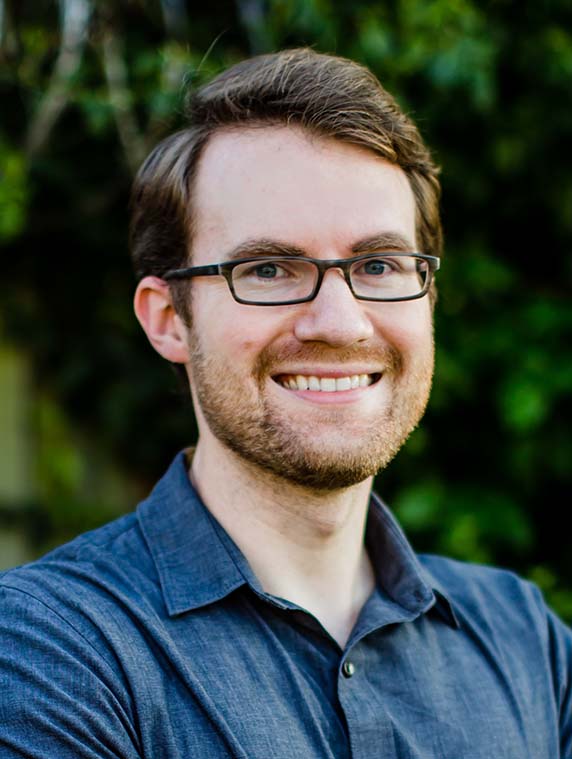
Daniel Cooney is an Assistant Professor in the Department of Mathematics at the University of Illinois Urbana-Champaign. He holds additional affiliations as an Affiliate at the Carl R. Woese Institute for Genomic Biology. His research focuses on applying partial differential equations (PDEs), dynamical systems, and stochastic processes to study evolutionary dynamics, particularly in biological and social systems. Key themes include multilevel selection, evolutionary game theory, and the emergence of cooperative behavior. Cooney earned his PhD in Applied and Computational Mathematics from Princeton University, advised by Simon Levin, and completed a postdoc as a Simons Fellow in Mathematical Biology at the University of Pennsylvania. His work bridges theoretical mathematics with applications in ecology, epidemiology, and social sciences. Recent publications explore topics like altruistic punishment in cultural systems, classroom-turnover dynamics, and protocell evolution. He actively participates in academic outreach, co-organizing conferences such as the AMS Special Session on Mathematics of Infectious Disease and the SIAM Minisymposium on Social-Ecological Systems. His research has been published in high-impact journals including *Proceedings of the National Academy of Sciences* and *Bulletin of Mathematical Biology*.
Dr. Katerina Marcoulides is an Associate Professor in the Quantitative and Psychometric Methods Program at the University of Minnesota's Department of Psychology. She is affiliated with the Minnesota Population Center and serves as Co-Chair of the Structural Equation Modeling Special Interest Group (SEM SIG) for the American Educational Research Association. Her research focuses on advanced data mining and modeling techniques for complex longitudinal data, particularly applied to developmental processes in economically disadvantaged immigrant children. She holds a PhD in Quantitative Psychology from Arizona State University, an MA from UC Davis, and a BA from UC Santa Barbara. Education: PhD: Quantitative Psychology, Arizona State University MA: Quantitative Psychology, University of California, Davis BA: Psychology (minor in Education), University of California, Santa Barbara Research Interests: Dr. Marcoulides develops and applies statistical methods such as structural equation modeling (SEM), Bayesian synthesis, and data fusion to study developmental and educational processes. Her work emphasizes longitudinal data analysis, item response theory, and multilevel modeling. Recent projects include NIH-funded research on parenting, marginalization, and well-being during the pandemic. Awards: APS Rising Star Award (2021) NIH Grant Award Teaching & Collaboration: She teaches courses on SEM, multilevel modeling, and data analysis at the University of Minnesota. Previously at the University of Florida, she contributed to workshops on educational data mining and served as an APA Advanced Training Institute presenter. Her interdisciplinary collaborations span population studies, health inequities, and workforce research. Labs & Groups: She leads the Data Analytics and Visualization Lab and actively participates in the Minnesota Population Center, integrating computational and statistical innovations with real-world applications.
Professor Roberta Fida is the Head of the Leadership and Management Department at Aston Business School, part of Aston University in the UK. She holds a Professorship in Organisational Behaviour and Organisational Psychology, with prior roles including Professor of Work Psychology at the University of East Anglia and Chair of the Ethics Committee there. A Chartered Occupational Psychologist with the British Psychological Society, her research focuses on unethical workplace behaviors, moral disengagement, and workplace stress, particularly in healthcare contexts. She specializes in advanced data analytics like structural equation modeling and has led major grants including EDI initiatives and studies on workplace aggression policy mapping. Her work bridges academic research with practical applications to foster ethical and inclusive organizational cultures. Education: Laurea (5-year degree in Work and Organizational Psychology) from Sapienza University of Rome (2002) MA in Organizational Training (2004–2005) PhD in Psychology from Sapienza University (2006) Postgraduate Certificate in Higher Education Practice (UEA, 2017) Italian National Qualifications as Full Professor (2017) and Associate Professor (2013) Research Interests: Her core areas include moral disengagement, counterproductive workplace behaviors, stress resilience, healthcare leadership, and EDI. She has published over 60 articles and is listed in Stanford's Top 2% Scientists globally. Awards & Grants: NIHR Work & Health Development Award (2023–2024) for EDI Smart-Dash (£95,855) INAIL grants totaling over €1.1 million for psychosocial risk studies and work-related stress analyses ESRC funding for workplace wellbeing research (£659,540) Research Council of Canada grant for nurse leadership studies ($202,852) Teaching & Supervision: She has taught across undergraduate to postgraduate levels, including modules on organizational psychology, multivariate analysis, and conflict management. She supervises PhD students and has led course design for programs focusing on organizational wellbeing and research methods.
Dr. Zara Ersozlu is a Senior Lecturer in Mathematics Education within the School of Education at the University of Newcastle, Australia. With a distinguished international career spanning multiple continents, she has held academic positions at prestigious institutions including North Carolina State University (USA), Gazi and Gaziosmanpasa Universities (Turkey), National Taiwan Normal University (Taiwan), The University of Western Australia, Murdoch University, and Deakin University. Her academic journey includes tenured positions as an Associate Professor and leadership roles as Department Head and Chair in teacher education disciplines. Currently, she teaches undergraduate and postgraduate courses in mathematics education, including Effective Pedagogies in Primary Mathematics, K-6 Mathematics, K-6 Numeracy, and Digitally Supported Learning. Dr. Ersozlu earned her Doctor of Philosophy from Firat University in Turkey and her Master of Art from Sakarya University. Her extensive academic preparation is complemented by five years of practical teaching experience in public schools prior to entering academia. This blend of theoretical knowledge and practical classroom experience informs her approach to teacher education and educational research. At the broadest level, Dr. Ersozlu's research investigates solutions to real-life problems impacting people's well-being, success, and capacity to achieve. Her scholarly work spans primary and secondary mathematics education, the psychology of mathematics (including metacognition, self-regulation, and anxiety), cross-cultural educational studies, teacher education, virtual simulated learning environments, and educational assessment. She has increasingly focused on the transformative potential of AI and machine learning in education, exploring how these technologies alter teaching, learning, and research processes. Her methodological expertise encompasses both quantitative and qualitative approaches, allowing her to effectively analyze both small and large educational datasets. Analysis of Dr. Ersozlu's recent publications reveals a strong emphasis on mathematics anxiety, teacher education, and the integration of technology in learning environments. Her work demonstrates a consistent focus on practical applications of educational research to address real-world challenges in mathematics education. The interdisciplinary nature of her research connects educational psychology, technology integration, and cross-cultural perspectives, with particular attention to how these elements intersect in teacher preparation and student learning outcomes. 2023 ATEA Research Recognition Award from the Australian Teacher Education Association 2021 Fellow of the Higher Education Academy (Advance HE, UK) 2010 Fellowship Program for Postdoctoral Researchers from the Council of Higher Education of Turkey Dr. Ersozlu is deeply committed to mentoring the next generation of scholars, currently supervising four PhD students and having successfully guided ten students to completion. Her grant portfolio includes significant funding for projects such as Best Practice Guidelines for RPL in Initial Teacher Education Programs ($60,000), Exploring the Reciprocal Relationship Between Mathematics Anxiety and Mathematical Resilience ($2,599), and multiple conference travel awards. She serves as an Associate Editor for several prominent journals including the International Electronic Journal of Mathematics Education and as Editor for Interdisciplinary STEM Education. Her editorial work reflects her standing as a respected voice in mathematics education research. Dr. Ersozlu's academic leadership extends to her role in developing innovative teaching approaches that integrate virtual simulation technology and learning analytics. Her work with TeachLivE™, a mixed-reality classroom simulation platform, demonstrates her commitment to creating authentic learning experiences for teacher education students. Through these initiatives, she bridges the gap between educational theory and classroom practice, preparing future educators to effectively implement evidence-based teaching strategies in diverse learning environments.
Dr. Daniel J. Bauer is a Professor and Director of the Quantitative Psychology Program and L.L. Thurstone Psychometric Laboratory at the University of North Carolina at Chapel Hill. His research focuses on advancing quantitative modeling techniques for studying negative social behaviors, health outcomes, and psychopathology, with expertise in generalized and nonlinear latent variable models, including multilevel models, structural equation models, and mixture models. His work emphasizes methodological innovations such as Bayesian regularization, measurement invariance evaluation, and the integration of deep learning with psychometrics. Bauer advises doctoral students in quantitative psychology and collaborates with developmental psychology programs. He leads the Thurstone Laboratory, one of the oldest quantitative psychology training programs in the U.S., emphasizing rigorous methodological training and applications in behavioral sciences. Bauer’s research trends span computational advancements in latent variable analysis, regularization for bias detection, and dynamic modeling of developmental processes. His advising includes over a dozen doctoral students now in academia and industry roles. He contributes to labs and initiatives like the Center for Developmental Science, advancing interdisciplinary research in psychological measurement and intervention evaluation.
Vladimir Kazeev is an Assistant Professor at the Faculty of Mathematics, University of Vienna , where he has held a faculty position since 2019. He also held previous academic appointments as a Szegő Assistant Professor at Stanford University (2017–2019), a postdoctoral researcher at the University of Geneva (2015–2017), and research positions at ETH Zurich (2011–2015), Russian Academy of Sciences (2008–2011), and Moscow Institute of Physics and Technology (2009). His research focuses on adaptive, data-driven numerical methods for differential equations, nonlinear low-parametric approximation, and numerical linear algebra. His work intersects computational mathematics, tensor methods, and high-dimensional problem-solving, particularly in the context of partial differential equations (PDEs) and stochastic modeling. The 15 most recent publications reveal a strong emphasis on quantized tensor-structured methods for PDEs, low-rank approximations, and high-dimensional numerical analysis. His research spans theoretical advancements in tensor decomposition, practical applications in chemical reaction networks, and novel discretization techniques for multiscale and degenerate diffusion problems. Scientific awards include the prestigious ETH Medal for outstanding doctoral theses (2016) Russian Academy of Sciences Medal for outstanding student works in mathematics (2011) Advising and teaching activities include supervising Jason Zhu (Stanford, 2019) and Simon Etter (ETH Zurich, 2014), as well as teaching advanced courses in tensor methods, numerical analysis, and PDEs at the University of Vienna, Stanford University, and the University of Geneva. His service to the community includes peer review for 15+ journals and co-organizing minisymposia at SIAM meetings.
Guang Tian, Ph.D. , is an Assistant Professor of City and Metropolitan Planning at the University of Utah and a faculty member at the Scientific Computing and Imaging Institute . His research bridges land use-transportation planning , travel behavior , and urban data science , with a focus on sustainability , climate adaptation , and equitable transit-oriented development . He previously founded the Center for Equitable Transit-Oriented Communities at the University of New Orleans as an Associate Professor. Education : Ph.D. in City & Metropolitan Planning (University of Utah, 2016) Professional Affiliations : Faculty, Scientific Computing and Imaging Institute (2025–present) His research leverages machine learning and GIS to analyze VMT reduction , active transportation , and the built environment’s impact on mobility . Key findings include the superior performance of random forest models over traditional methods in predicting mode choice and the role of polycentric urban structures in reducing auto dependency. Scientific Awards : Rising Scholar Award (2024, Association of Collegiate Schools of Planning) Grants include funding from the US Department of Transportation for equitable transit communities and multiple Louisiana Transportation Research Center projects on VMT modeling, rail infrastructure, and truck parking efficiency. His teaching centers on GIS applications in urban planning and transportation analysis.
Prof. Dr. Markus Bachmayr is a full professor at the Institute for Geometry and Practical Mathematics, RWTH Aachen University, holding the chair for Applied Mathematics. His research focuses on nonlinear approximation, high-dimensional partial differential equations (PDEs), uncertainty quantification, and numerical methods in quantum chemistry. He leads the ERC Consolidator Grant project Computational Complexity of Highly Nonlinear Approximations (COCOA) and contributes to CRC 1481 Sparsity and Singular Structures, and RTG 2326 Energy, Entropy, and Dissipative Dynamics. His recent work emphasizes adaptive low-rank and sparse approximation techniques for parametric and stochastic PDEs, including applications in radiative transfer and poroviscoelastic flow modeling. He serves as Editor-in-Chief of Foundations of Computational Mathematics and Associate Editor for multiple journals. Scientific Awards: John Todd Award 2013 Borchers Plakette 2014 Erwin Wenzl Preis 2007 He has taught courses such as Numerische Analysis I/II, Numerische Mathematik für Elektrotechniker, and seminars on numerical methods and approximation theory.
Abhijit Sarkar is a Professor in the Department of Civil and Environmental Engineering at Carleton University, Ottawa. His work centers on computational dynamics and probabilistic modeling, with office MC 3076 in the Minto Centre for Advanced Studies in Engineering and contact details including phone (613) 520-2600 x6320 and email abhijit_sarkar@carleton.ca . Education: D.Phil. from University of Oxford M.Sc. from Indian Institute of Science (IISc) B.E. from Calcutta University Professional Engineer (P.Eng.) designation His research drives innovation in uncertainty quantification for complex engineering systems. Core interests include dynamics of nonlinear structures, probabilistic mechanics for stochastic finite element methods, and Bayesian inference frameworks for parameter estimation. He pioneers scalable high-performance computing solvers for large-scale systems and sparse learning algorithms to address overfitting in statistical modeling. Recent publications (2022-2024) reveal three dominant trends: (1) Bayesian model calibration for stochastic compartmental systems applied to epidemiology and aerospace, (2) domain decomposition techniques for scalable uncertainty quantification in stochastic PDEs, and (3) sparse learning methods for nonlinear aerodynamic encoding. Key applications span wind turbine vibration analysis, flutter margin prediction, MEMS resonator optimization, and geospatial pandemic modeling. Scientific awards: No awards, fellowships, or medals listed in the source material Graduate supervision includes 6 current students (Ajay Kumar, John Clarabut, Nastaran Dabiran, Sakhi Mittal, Michael Pantano, Brandon Robinson) and 18 graduated students across 17 years (2006-2023). His research leverages high-performance computing for projects in structural dynamics, aeroelasticity, and computational epidemiology, frequently co-supervised with Dominique Poirel and Chris Pettit. Notable grants focus on wind tunnel validation for nonlinear systems and pandemic spread modeling. Based in the Minto Centre for Advanced Studies in Engineering, his computational mechanics group develops algorithms for stochastic dynamics using Carleton University's high-performance computing infrastructure. Collaborations span aerospace engineering (flutter analysis), civil infrastructure (seismic wave propagation), and public health (Covid-19 modeling).
Dr. Jason Rights is an Associate Professor in the Department of Psychology within the Faculty of Arts at the University of British Columbia. His office is located in Kenny Room 2017 at 2136 West Mall, Vancouver, BC. He leads The Rights Lab, a quantitative methods research group dedicated to improving statistical practice in scientific research. His educational background includes: B.S. in Psychology and Mathematics from the University of North Carolina at Chapel Hill (2011) M.S. in Psychology (Quantitative Methods) from Vanderbilt University (2015) Ph.D. in Psychology (Quantitative Methods) from Vanderbilt University (2019) Dr. Rights' research focuses on addressing methodological complexities in multilevel/hierarchical data contexts where observations are nested (e.g., patients within clinicians, students within schools). His work spans several interconnected programs including developing R-squared measures for multilevel models, addressing issues with level-specific effects, exploring connections between multilevel and mixture models, and advancing latent variable model selection techniques. Analysis of his publication record reveals a consistent focus on methodological innovations in quantitative psychology, with particular emphasis on improving statistical techniques for hierarchical data structures. His work bridges theoretical statistical development with practical applications across psychology and related fields. Dr. Rights actively develops open-source software in R to implement his methodological contributions, making advanced statistical techniques accessible to researchers. The Rights Lab serves as the hub for his ongoing research program in quantitative methods development.
Li Cai is a Professor and Director at the National Center for Research on Evaluation, Standards, and Student Testing (CRESST) within the Graduate School of Education and Information Studies at the University of California, Los Angeles (UCLA). His work focuses on quantitative methods in education, particularly psychometrics and statistical modeling. Ph.D. in Quantitative Psychology from the University of North Carolina – Chapel Hill Research and teaching interests center on psychometrics, latent variable models, item response theory, nonlinear mixed models, and statistical computation. His methodological work addresses advanced techniques for educational assessment and model evaluation. His representative publications include studies on covariance structure models, item response theory, bifactor analysis, and goodness-of-fit testing. These works often emphasize computational algorithms and practical applications in educational measurement. Li Cai is affiliated with CRESST at UCLA, a leading center dedicated to rigorous research, assessment design, and evaluation methodology across diverse educational contexts.
Peter F. Halpin is an Associate Professor in the Department of Learning Sciences and Psychological Studies at the University of North Carolina at Chapel Hill School of Education. He holds a PhD in Psychology (Theory and Methods) from Simon Fraser University and completed postdoctoral research at the University of Amsterdam. His research focuses on psychometric methodology, educational measurement, and statistical approaches to analyzing collaborative learning and teacher practices. Halpin has been recognized with awards including the National Academy of Education/Spencer Fellowship and NYU's High Merit Distinction in Research. Key research areas include developing statistical models for small group collaborations, analyzing educational technology data, and improving measurement tools for early childhood development (e.g., IDELA assessments). His work bridges theoretical psychometrics with applied educational research, addressing challenges in global education measurement and program evaluation. Halpin has authored over 20 peer-reviewed articles and contributed to open-source software projects like the scirt and hawkes R packages. He has advised numerous graduate students and led grants totaling over $2 million, including IES-funded studies on collaboration assessment and UNESCO-linked projects measuring educational outcomes in low-resource settings. Halpin also serves on editorial boards for journals like Psychometrika and Journal of Educational Measurement , and has presented globally at venues including the Psychometric Society and NCME conferences.
Arthur Bousquet is an Associate Professor of Mathematics at Lake Forest College, affiliated with the Math and Computer Science department. He holds a PhD in Applied Mathematics from Indiana University (Bloomington, IN) and a MS in Engineering in applied mathematics and scientific computing from SuP Galilee Engineering School (Paris, France). His research focuses on numerical methods for partial differential equations, including finite volume and finite element techniques, with applications to geophysical fluid dynamics, climate modeling, and biomedical problems like viral shell mechanics. Notable areas include shallow water equations, phase field modeling, and computational methods for atmospheric dynamics. Bousquet has published extensively on topics such as numerical weather prediction, electrokinetic equations, and virus nanoindentation modeling. His work often combines theoretical analysis with computational simulations to address complex systems in fluid dynamics and materials science. He has received the Rothrock Award for teaching excellence (2014) and held research fellowships including an NSF Graduate Fellowship (2009-2013). His teaching includes courses like Computational Mathematics, Multivariable Calculus, and Real Analysis.
Ronny Scherer is Center Director and Professor at CEMO (Center for Educational Measurement) and Deputy Director at CREATE (Center for Research on Equality in Education) at the University of Oslo's Faculty of Educational Sciences. His work bridges educational measurement, assessment, and evaluation with a focus on research syntheses and complex sampling surveys. Dr. Scherer's research spans two interconnected domains: substantive areas including digital divides, equity and equality in education, and measurement of complex cognitive skills (such as complex problem solving, adaptability, computational thinking, and executive functioning); and methodological areas focusing on advanced meta-analytic techniques, multilevel structural equation modeling, and spatial analysis of complex survey data. His work frequently utilizes international large-scale assessment data from PISA, ICILS, TIMSS, PIRLS, PIAAC, and TALIS. His publication record demonstrates a clear trajectory toward increasingly sophisticated meta-analytic approaches, with recent work focusing on second-order meta-analyses, AI-assisted screening methods, and advanced techniques for handling complex survey data. His research consistently addresses critical educational challenges related to equity, digital literacy, and measurement of 21st century skills. Dr. Scherer has secured significant research funding for projects including ARISE (Academic resilience in mathematics and science among vulnerable students), DiDiRes (Digital inequalities in education), and ADAPT21 (Educational assessments of the 21st century: Measuring and understanding students' adaptability in complex problem solving situations). Co-director of CREATE (Centre for Research on Equality in Education) since 2023 Professor of Educational Assessment and Measurement at CEMO since 2019 Extensive experience with international large-scale assessments including ICILS, TALIS, and PIAAC As an educator, Dr. Scherer teaches advanced courses in measurement models, multilevel models, meta-analysis, and equity in education. He actively supervises graduate students interested in his research areas and has developed numerous workshops on structural equation modeling and meta-analytic methods for international audiences.
Patrick J. Curran is a Professor in the Department of Psychology at the University of North Carolina, affiliated with the L.L. Thurstone Psychometric Laboratory and the Quantitude initiative. His research focuses on quantitative methodologies, particularly longitudinal data analysis and structural equation modeling, applied to developmental psychopathology and adolescent substance use. He collaborates on statistical education through YouTube tutorials, a blog (Help Desk), and workshops, alongside a podcast with Greg Hancock. His work bridges methodological innovation with substantive research in psychology and public health. Key contributions include advancing latent curve models with structured residuals, integrative data analysis techniques, and the dissemination of statistical tools. His research spans disciplines such as developmental psychology, clinical psychology, and epidemiology, addressing topics like alcohol use trajectories, chronic depression mechanisms, and pandemic-related disparities in healthcare workers’ mental health. Lab Affiliations: L.L. Thurstone Psychometric Lab, Quantitude Collaborations: Dan Bauer (statistical education), Greg Hancock (podcast), and interdisciplinary teams in public health and clinical research His publications emphasize methodological rigor and practical application, often addressing gaps in longitudinal data analysis and measurement equivalence. Notable work includes the latent curve model with structured residuals (LCM-SR) and integrative data harmonization strategies for prevention science.