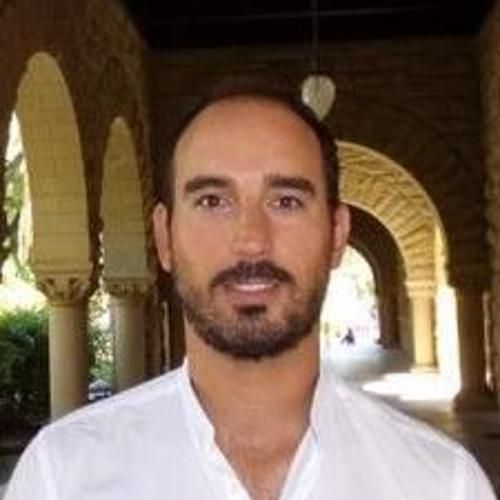
Andrea Carinci is a Professor at the Department of Legal Sciences, University of Bologna. His work focuses on tax law, constitutional challenges in taxation, and legal procedures for tax collection and dispute resolution. Research spans taxpayer rights, burden of proof in fraud cases, and systemic reforms in tax judicial processes Contributions include critical analyses of notification defects in tax bills and multilevel protection models for taxpayers Co-author of studies on joint liability in tax obligations and the impact of predictive justice on traditional legal frameworks His recent publications examine tax collection mechanisms, statute of limitations in credit enforcement, and the interplay between administrative and judicial systems in fiscal matters. Key article trends include: 2025: Tax claim forfeiture and constitutional tax judgments 2024: Burden of proof in fraudulent transactions and tax collection challenges 2023: Preclusion of appeals due to notification defects and revision of taxpayer statutes 2022: Multilevel taxpayer rights and AI-driven legal processes
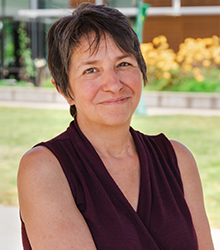
Giovanna Zanolla is a Senior Lecturer and researcher at the Department of Education and Learning (University of Teacher Education) within the University of Applied Sciences and Arts of Southern Switzerland (SUPSI) . She also serves as a researcher at the Competence Centre for Innovation and Research on Educational Systems (CIRSE) and holds affiliations with institutions like the European Academy of Bolzano and the University of Trento. PhD in Sociology and Social Research (University of Trento, 2003) BSc in Sociology (University of Trento, 1999) CAS in Teaching (SUPSI) Her research focuses on educational inequalities , gender disparities in academic performance , and social policy impacts on youth education , particularly in the context of Ticino. She has led studies on private tutoring ('shadow education'), standardized testing validity , and long-term effects of social assistance on educational trajectories. Her work often employs multilevel statistical models to analyze teacher grading biases and social stratification mechanisms. Recent publications examine gender-based evaluation disparities in mathematics and language assessments (2024), private lessons' role in inequality (2012), and longitudinal impacts of social aid (2020). She has also developed educational system indicators for Ticino (2015) and conducted comparative analyses of standardized testing vs. teacher grades (2013).
Prof. Dr.-Ing. habil. Volker Kühn serves as Professor and Head of the Institute of Communications Engineering at the University of Rostock within the Faculty of Computer Science and Electrical Engineering. He concurrently holds the position of Vice Dean of the Faculty while directing academic operations as Chairman of both the Electrical Engineering and Medical Information Technology Examination Boards. His research integrates wireless communications theory with biomedical applications, specializing in spatial modulation techniques, information bottleneck optimization, and electrical impedance tomography signal processing. Current work focuses on machine learning-enhanced physiological monitoring systems and distributed compression algorithms for sensor networks, with significant contributions to bias-free spectral estimation from irregularly sampled data. Analysis of his 2021-2025 publications reveals three dominant research thrusts: (1) neural network applications for medical signal processing, (2) information-theoretic optimization of communication protocols, and (3) advanced spectral estimation methods for biomedical and sensor data. This interdisciplinary approach bridges communications engineering with healthcare technology development. Prof. Kühn actively mentors students as Study Advisor for Electrical Engineering and Academic Advisor for Medical Information Technology. His leadership extends to the ITG Technical Committee 5.1 on Information and Systems Theory and IEEE societies. The Institute of Communications Engineering under his direction maintains specialized laboratories for wireless communications testing, medical signal acquisition, and MIMO system prototyping, supporting both fundamental research and industry collaboration projects in 5G/6G technologies and healthcare IoT.
Karen A. Roberto is a University Distinguished Professor at Virginia Tech, affiliated with the Department of Human Development and Family Science under the College of Liberal Arts and Human Sciences. She serves as Executive Director of the Institute for Society, Culture and Environment and as a Senior Fellow at the Virginia Tech Center for Gerontology. Research Focus: Gerontology, dementia caregiving, elder abuse, rural health disparities, and the intersection of opioid epidemic with elder care. Key Contributions: Sociocultural models of dementia care, policy analysis on elder abuse prevention, and community-based interventions in rural Appalachia. Scientific Awards: University Distinguished Professor Senior Fellow at the Virginia Tech Center for Gerontology Advising & Grants: Accepts graduate students for research teams. Her work emphasizes transdisciplinary research funding, NIH peer review processes, and biopsychosocial interventions for caregivers.
Angel Ramon Zapata Moya is a Professor at Pablo de Olavide University, affiliated with the Department of Social Anthropology, Basic Psychology and Public Health. His research focuses on preventive medicine, public health, and political sociology, particularly examining health inequalities shaped by socioeconomic status and urban policies. Doctoral Programs: Education, Social Change and Cohesion, Democracy and Public Policy PAIDI Areas: Social and Legal Sciences Research interests include: Health inequalities in socioeconomic contexts Urban regeneration policy impacts Preventive innovation diffusion mechanisms Spatial analysis of recession effects Associationism in regenerated areas Public health education and competencies Article trends show expertise in: Andalusian health policy evaluation Economic crisis epidemiology Community nutrition education Contextual factors in pandemic preparedness Longitudinal and multilevel modeling Current academic activity includes: Supervising doctoral theses Participating in research projects Collaborating across social and health sciences
Gina Biancarosa holds the Ann Swindells Chair in Education as a Professor in the Department of Special Education and Clinical Sciences within the University of Oregon's College of Education, where she also maintains a courtesy appointment in the Quantitative Research Methods in Education PhD program. Her research at the Center on Teaching and Learning focuses on refining reading comprehension measurement and modeling longitudinal reading growth, leading to significant tools like MOCCA for Grades 3-5 and DIBELS 8th Edition spanning kindergarten through eighth grade. Her educational foundation includes: EdD in Language and Literacy (2006) from Harvard University EdM in Language and Literacy (1999) from Harvard University BA in English Literature (1992, summa cum laude) from Boston College Biancarosa's research centers on reading assessment, comprehension, adolescent literacy, and longitudinal analysis, employing advanced methodologies including hierarchical linear modeling and IRT. She has pioneered diagnostic measures that provide teachers with actionable data, shifting assessment paradigms toward cognitive process evaluation rather than isolated skill metrics. Her work bridges psychometric rigor with classroom applicability, particularly in identifying at-risk readers through subscore analysis and adaptive testing. Recent publications reveal a trajectory toward innovative measurement techniques, including computer-adaptive assessments and pandemic impact studies on reading fluency. Her scholarship consistently addresses the intersection of cognitive theory, measurement science, and practical literacy instruction, with growing emphasis on bilingual contexts and technology-enhanced assessment. Her scientific recognition includes: 2024 Significant Contribution to Educational Measurement Award (AERA) 2023 Outstanding Service Award (UO College of Education) 2021 Distinguished Excellence in Research/Outreach Award 2016 Ann Swindells Chair in Education Spencer Foundation Midcareer Training Grant (2016) Biancarosa has secured over $8 million in external funding from IES, Spencer Foundation, Alaska Department of Education, and Carnegie Corporation, plus $100,000+ in internal grants. She actively mentors doctoral students (seeking new candidates for 2025-2026) and teaches measurement, assessment, and applied statistics courses while serving on editorial boards for top journals including Reading Research Quarterly. Her current lab work at the Center on Teaching and Learning includes validating computer-adaptive MOCCA and developing Alaska Native language literacy screeners, supported by a student research seminar examining national reading trends and DIBELS 8th Edition validation.
Daniel J. Fiorino is a Professor at the School of Public Affairs , American University , where he has served as founding Director of the Center for Environmental Policy since 2010. His work bridges environmental policy, climate change governance, and public administration, with a focus on regulatory innovation, sustainability, and multilevel governance. Education: PhD, Political Science, Johns Hopkins University MA, Political Science, Johns Hopkins University BA, Political Science & Minor in Economics, Youngstown State University His research explores the intersection of government, business, and sustainability, emphasizing policy stability, green growth, and adaptive regulatory frameworks. Recent work addresses polarized environmental policymaking, performance-based regulation, and urban sustainability governance. Scientific Awards: Levine Prize (International Political Science Association, 2019) Louis Brownlow Award (NAPA, 2007; ASPA, 2006) Theodore Lowi Award (Policy Studies Organization, 1997) EPA Silver Medal (2002) Lee M. Thomas Award (EPA, 1993) Best Article/Paper Awards (Public Administration Review, Policy Studies Journal, Academy of Management) A former U.S. Environmental Protection Agency leader, Fiorino has advised on regulatory reform, created the Performance Track program (recognized as a top 50 U.S. government innovation in 2006), and influenced national and international environmental governance frameworks. He has also been widely cited (over 5,300 Google Scholar citations) and engaged with media outlets like the Washington Post , BBC, and CCTV.
Dr. Erica Breuer is a Honorary Lecturer at the University of Newcastle in the School of Medicine and Public Health . With a PhD in Psychiatry from the University of Cape Town (2018) and a Master of Public Health (Epidemiology) from the same institution (2009), she specializes in global mental health , implementation science , and theory of change methodology . Her work focuses on mental health service development in low- and middle-income countries, women in the justice system, and cross-country collaborations. Her research has been published in journals like Journal of Long Term Care , J Appl Gerontol , and PLoS One , covering topics such as social innovation adaptation , prisoner health , and community-based mental health programs . She has contributed to major initiatives including the PRIME consortium and the STRiDE project, and currently participates in the InCARE European Union-funded long-term care study. Key collaborations span institutions in Austria, Australia, Brazil, and 18 countries, with methodological expertise in qualitative comparative analysis and participatory workshop facilitation . Current Role: Honorary Lecturer, University of Newcastle Past Roles: Post-doctoral Research Fellow (2020-2021), Conjoint Lecturer (2018-2020), Consulting Researcher (2016-2021) Education: PhD in Psychiatry (University of Cape Town, 2018) Master of Public Health (Epidemiology, University of Cape Town, 2009) Bachelor of Applied Science (Physiotherapy) (University of Sydney) Research Focus: Dr. Breuer works on mental health service delivery in resource-limited settings, theory of change frameworks , and gender-specific health interventions . Her articles highlight implementation pathways for community mental health , prisoner reintegration , and dementia care , with methodologies spanning Delphi consensus studies , qualitative comparative analysis , and program theory validation . Key Collaborations: She has partnered with institutions across Ethiopia, India, Nepal, the United Kingdom, Spain, and the United States, contributing to projects like the Keeping Us Together parenting program and EMPOWER . Her work addresses health equity , stigma reduction , and policy translation through participatory research .
Odile Sauzet is an Adjunct Professor at Universität Bielefeld , affiliated with the Faculty of Health Sciences and the Working Group 3 Epidemiology & International Public Health . She also holds positions in the Faculty of Economics (Chair of Statistics and Data Analysis) and the Faculty of Business Administration and Economics (Department of Empirical Methods).
Dr. Jonathan Singer is an Assistant Professor in the Department of Psychological Sciences at Texas Tech University. He leads the GRILL (Grief and Responses to Illness into Late Life) Lab, which investigates psychological health in aging and illness, with a focus on the biopsychosocial processes within individuals with life-limiting illnesses (such as cancer and dementia) and their caregivers. His work spans multiple methodologies including Ecological Momentary Assessment, fMRI, wearable technology, and clinical interviewing. Dr. Singer's educational background includes: B.A. from Adelphi University M.A. from Teacher's College, Columbia University Ph.D. from the University of Nevada, Reno His primary research interests focus on grief psychology , particularly pre-death grief and prolonged grief disorder in caregivers of individuals with dementia and other life-limiting illnesses. His work also examines neurocognitive assessments in aging populations, with particular attention to ethnic and rural disparities. Using advanced quantitative techniques such as Multilevel Modeling and Growth Mixture Modeling, Dr. Singer aims to translate research findings into scalable, technology-based interventions for caregivers and patients. Dr. Singer has secured multiple significant grants, including: National Institute on Aging (2023-2026; R15AG080446) as Co-PI on "Reducing suicide risk among older adult caregivers" National Cancer Institute (2023-2024; R35) as Site PI on "Behavioral and Psychosocial Effects on Study Outcomes in End-Stage Cancer Treatment" Sabinsa Corporation (2023-2024) as Co-I on "Curcumin and Retinal Amyloid-beta Pilot Study" Garrison Foundation as PI on "Improving mental health in care partners of persons with Alzheimer's Disease" His research portfolio demonstrates a clear trajectory toward understanding grief processes across various contexts (bereavement, non-bereavement losses like incarceration, and pre-death grief) and developing evidence-based interventions. Recent work has increasingly focused on the impact of the COVID-19 pandemic on grief experiences and the application of technology to deliver mental health support to rural populations. Dr. Singer has received the President's Engaged Scholarship Award and mentors numerous graduate and undergraduate students in the GRILL Lab. His students have gone on to nursing school, medical school, Ph.D. programs, and social work programs. His lab, the GRILL Lab, is actively involved in community outreach through events like the Walk to End Alzheimer's, Alzheimer's Disease Awareness Symposium, and rural caregiver support groups in West Texas. They also participate in educational events such as TTU Family STEM Night to teach about dementia and aging.
Dionissios T. Hristopulos is a Professor and Head of the Geostatistics Laboratory at the School of Mineral Resources Engineering, Technical University of Crete, Greece. His research spans geostatistics, spatial random fields, environmental modeling, stochastic hydrology, and porous media mechanics. He has developed innovative Spartan Spatial Random Field (SSRF) models rooted in statistical physics, enabling efficient spatial interpolation and simulation. PhD in Physics, Princeton University (1991) MA in Physics, Princeton University (1988) Diploma in Electrical Engineering, National Technical University of Athens (1985) Hristopulos' research interests focus on the development and application of geostatistical methods in mineral resources, environmental monitoring, petroleum reservoirs, and GIS. He investigates spatial anisotropy, groundwater dynamics, earthquake return times, and the mechanical properties of heterogeneous materials. His work bridges statistical physics and geostatistics, particularly through SSRF models and renormalization group methods for upscaling transport properties in porous media. The most recent publications highlight his focus on geometric anisotropy detection in environmental data, non-parametric estimation methods, and applications of Spartan random fields in environmental time series and spatial data interpolation. His work increasingly integrates machine learning concepts with geostatistical modeling, especially for automatic mapping and ecological monitoring using remote sensing. Marie Curie success story (European Commission, 2010) for SPATSTAT project Hristopulos has secured research funding from national and EU programs, including the Marie Curie Transfer of Knowledge (SPATSTAT) and the INTAMAP STREP project. He has mentored several Master’s and PhD students, including Manos Varouchakis (PhD candidate on groundwater monitoring) and Manolis Petrakis (Master’s on anisotropy characterization). He collaborates with researchers in the US, France, Slovakia, and the UK. He serves on the editorial board of Stochastic Environmental Research and Risk Assessment and has contributed software tools for anisotropy detection in MATLAB and R. His research group, the Geostatistics Laboratory at TUC, focuses on machine learning and geostatistics, developing computational tools for environmental data analysis, spatial interpolation, and simulation. The lab emphasizes practical applications in hydrology, ecology, and mineral resources, supported by strong theoretical foundations in statistical physics and stochastic modeling.
Dr. Julia Penning de Vries is an Assistant Professor at the Faculty of Law, Economics and Governance of Utrecht University, specializing in Strategic Human Resource Management and Public Service Performance with a focus on the education sector. She obtained her PhD in 2021 with the dissertation "Are we on the same page? Understanding shared perceptions of people management: a multilevel multimethod study in schools" . Her work bridges academic research with practice-oriented studies in collaboration with field partners. Academic roles: PhD Dean, coordinator for Bachelor's courses "Organizations in Transitions" and "Leadership in the Political and Public Domain" Upcoming role (2025): Co-coordinator of Master's program in Strategic HRM Her research explores shared perceptions of people management , supervisor credibility , and professional behavior in public service . Key themes include Future of Work , Professional Performance , and Educational Leadership . Recent publications examine nonlinear relationships in HRM effects and how manager backgrounds influence leadership credibility. Scientific contributions include: Lecturer of the Year award (2023) Over 20 peer-reviewed publications Co-leader of multiple practice-oriented research projects
Dr. Carla Santos is an Assistant Professor at the Faculty of Physical Education and Sport, Lusófona University, where she conducts research through CIDEFES and CIFI2D research centers. She holds a PhD in Sports Sciences specializing in Sport, Genetics and Motor Behavior from the University of Porto, complemented by a Master's in Teaching Physical Education and a Bachelor's in Sports Sciences. Her research program focuses on: Motor learning and developmental patterns in children Epidemiological studies of physical activity Statistical applications in sports science Methodological approaches to movement analysis She frequently examines altitude effects on physical development in Peruvian populations and leads school-based interventions like the REACT project. Recent publications (2023-2024) demonstrate strong emphasis on multivariate analyses of children's motor performance, physical fitness trends, and obesity determinants, with 73% focusing on pediatric populations and 67% utilizing multilevel modeling techniques. Her work frequently appears in journals like American Journal of Human Biology and Revista Portuguesa de Ciências do Desporto .
Holger Wrede is a Professor in Electrical Power Engineering at the Düsseldorf University of Applied Sciences since 2014. He leads the Research Group on Power Electronic Energy Systems , focusing on control strategies, system management, and dynamic behavior of power electronics-dominated electrical networks. His work connects with energy transition ( Energiewende ), renewable energy integration, and grid stability. He also serves as Prodekan für Finanzen (Deputy Dean for Finance) and is a member of the In-LUST institute for sustainable urban development. Key research areas: Power electronics, grid control, renewable energy systems Notable projects: 413 MW traction current converter system (Datteln), Waldeck II pumped storage plant expansion Memberships: VDI, VDE, IEEE Contact: Office: 05.1.037, Laboratory: 05.1.045
Rachel Cassidy is a researcher at the University of Bern , affiliated with the Multidisciplinary Center for Infectious Diseases (MCID). Her work integrates systems thinking and mathematical modeling to address complex health system challenges in low- and middle-income countries . Her research interests span maternal and child health , payment for performance (P4P) , health economics , and noncommunicable disease (NCD) management . She employs agent-based modeling and system dynamics to evaluate healthcare interventions, particularly in sub-Saharan Africa . The 15 most recent articles highlight her focus on health system optimization in resource-limited contexts. These include studies on family planning , financial incentives for maternal health , and integrated HIV/NCD care , with methodologies ranging from causal loop diagrams to multilevel analysis . University: University of Bern Email: rachel.cassidy@unibe.ch