
Professor Stephen Chan is a faculty member at SOAS University of London in the Department of Politics and International Studies (POL) . With a focus on African political thought and international relations, his work critically examines postcolonialism, decoloniality, and global governance. Key research themes include: Decolonizing international relations theory Sino-African political dynamics Election observation and democratic processes Non-Western cosmopolitanism Comparative diplomatic practices His recent publications analyze the ideological ambiguity of decoloniality (2023), pluralist visions for global security (2017), and the legacy of African liberation movements (2021). He has advised multiple theses on topics ranging from parliamentary governance in Kenya/Zimbabwe to China-Africa media interactions. Notably: Critiqued the misuse of 'decoloniality' as ideological rhetoric (2023) Authored a poetic autobiography of political engagement (2022) Traced Africa's intellectual history of freedom (2021) Examined Zimbabwean elections (2017) Explored non-Western modernity (2018)
جستجوی استاد راهنمای دانشگاهی
برای مسیر پژوهشیتان، استاد راهنما، استاد دانشگاه و پژوهشگر مناسب را پیدا کنید و با آنها ارتباط بگیرید.
نمایش ۱۶-۳۰ از ۲٬۶۶۹ استاد راهنما
اطلاعات پروفایلها از صفحات عمومی دانشگاهها گرفته شده و ممکن است بهروز نباشد.
Kati Kulovesi is Professor of Law at the University of Eastern Finland , specializing in International Environmental Law , EU Climate Law, and the intersection of climate change law with international economic law. She works closely with the 3E Center at the Brussels School of Governance, Vrije Universiteit Brussels , and Earth Negotiations Bulletin , with multidisciplinary collaborations in the Atmospheric and Climate Competence Center . Education: LL.M. from University of Helsinki and London School of Economics; PhD from LSE Research Focus: EU Climate Policy, Legitimacy in Climate Governance, Arctic Environmental Regulation, Carbon Market Mechanisms Professional Experience: Legal adviser for Finnish Government, World Bank, UN FAO, European Commission, Nordic Council of Ministers, IUCN, and World Resources Institute Publications span EU Climate Law, WTO-Environmental Disputes, Arctic Governance, and Short-Lived Climate Pollutants, with recent work on the European Green Deal and Fit for 55 Package . Her scholarship integrates legal theory with empirical analysis of climate policy implementation.

David Ashmore is a Lecturer in Engineering Economics at the University of Southampton, specializing in transport sector reform, infrastructure procurement, service contract franchising, and public policy. He has over 30 years of international experience working with engineers, policymakers, regulators, and multilateral donors across the UK, Europe, India, the Americas, Africa, and Asia-Pacific regions. Transport Economics Infrastructure Procurement Public-Private Partnerships Policy Analysis His recent research explores sustainable mobility transitions, including ride-hailing dynamics in Indian cities, hydrogen truck adoption in Australia, and equitable infrastructure systems amid rapid urbanization. He emphasizes multistakeholder collaboration and policy innovation in transport reforms. Key publication trends focus on zero-emissions transportation, PPP challenges, automated planning tools, and formal-informal sector integration in developing countries. Articles span conference proceedings, journal articles, and policy-oriented outputs. David serves as a Visiting Research Fellow at the Technical University of Dresden and holds memberships in the Chartered Institute of Logistics and Transport and the Institution of Transportation Engineers. He actively supervises PhD students and leads global transport policy research initiatives.
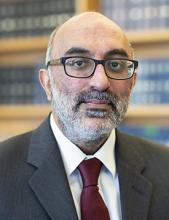
Professor Sandesh Sivakumaran is a Professor of International Law at the University of Cambridge, serving as Director of the Lauterpacht Centre for International Law and Fellow of St Edmund's College. He holds affiliations with the Lieber Institute for Law and Warfare, the University of Nottingham Human Rights Law Centre, and the Centre on Armed Groups. His expertise spans public international law, humanitarian law, human rights, and the law of armed conflict. Prof. Sivakumaran's research focuses on non-international armed conflict, armed groups' obligations, and the development of international law. He authored The Law of Non-International Armed Conflict , which has earned multiple prestigious awards, and co-authored Oppenheim's International Law: United Nations . His work has been cited by international courts and tribunals, including the International Court of Justice and the International Criminal Court. Prof. Sivakumaran advises governments, international organizations, and NGOs, and contributes to legal reform initiatives. He is a member of the ICRC's Commentaries Reading Committee and the advisory board of Geneva Call. His training programs target diplomats, military personnel, and UN staff, emphasizing practical applications of international law. His academic career includes roles at the International Criminal Tribunals for the former Yugoslavia and Rwanda, the International Court of Justice, and Realizing Rights: the Ethical Globalization Initiative. He holds advanced degrees from the University of Cambridge (MA, PhD) and New York University School of Law (LLM). Prof. Sivakumaran's honors include the Francis Lieber Prize and European Society of International Law Book Prize. His scholarship bridges theoretical and applied dimensions, addressing contemporary challenges such as humanitarian access, gender-based violence, and the evolving role of non-state actors.

Wendy W Wolford is the Robert A. and Ruth E. Polson Professor of Global Development at Cornell University, affiliated with the College of Agriculture and Life Sciences. She also serves as Vice Provost for International Affairs, overseeing global partnerships including the Global Hubs and Grand Challenges initiatives. Her research focuses on land governance, social movements, and agrarian societies, with extensive fieldwork in Brazil, Ecuador, and Mozambique. Key projects include analyses of the Brazilian MST landless movement and colonial legacies in Mozambican agriculture. Wolford earned her PhD from UC Berkeley (2001) and has authored/co-edited seminal works like This Land is Ours Now (2010) and The Social Lives of Land (2024). She has held prestigious fellowships, including a Fulbright (2016–17), and her work addresses critical issues like global land grabbing, participatory democracy, and environmental justice. Teaching spans undergraduate and graduate levels, emphasizing critical analysis in development theory and political ecology. Recognition includes awards for internationalizing curricula and advancing global development research. Her outreach includes curricula development on Brazilian rural development and multimedia case studies on sustainable food systems. Current research explores the Plantationocene framework and Mozambique’s agrarian histories.
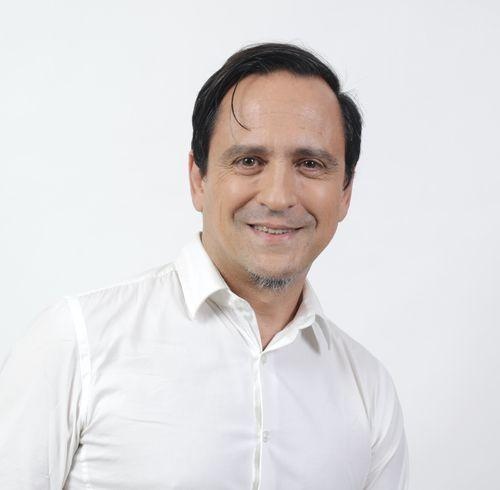
Ezequiel Reficco is an Associate Professor at ESCP Business School's Madrid campus, specializing in Management. Previously, he served as Associate Professor at EGADE Business School (Tecnológico de Monterrey) and Chair of the Strategy Department at Universidad de Los Andes School of Management (Bogotá, Colombia). His academic journey includes a post-doctoral fellowship and Senior Researcher role at Harvard Business School (2001–2008). He co-authored books with Harvard University Press and published extensively in journals like the Journal of Business Ethics and Harvard Business Review . He is recognized globally for his research output, ranking among the top 10% of SSRN authors and #108 in Colombia's most cited researchers (2015). His research focuses on responsible management education, corporate social responsibility (CSR), inclusive business models, and strategic cross-sector partnerships. Key areas include leveraging business strategies to address poverty (BoP markets), fostering sustainability through innovation, and redesigning educational curricula for ethical leadership. His work bridges theory and practice, with consulting engagements for multilateral organizations and corporations like Inditex (owner of Zara). Notable achievements include awards from Universidad de Los Andes and Tecnológico de Monterrey for research excellence. He actively contributes to policy debates on social entrepreneurship and global development, emphasizing Latin American contexts. His recent articles highlight trends toward integrating CSR into core business operations and rethinking educational frameworks to address global challenges. Professional roles beyond academia include membership in Inditex's Social Council, advising on ethical practices and sustainability initiatives. His career reflects a commitment to aligning business strategies with societal impact, particularly in underserved markets and developing regions.
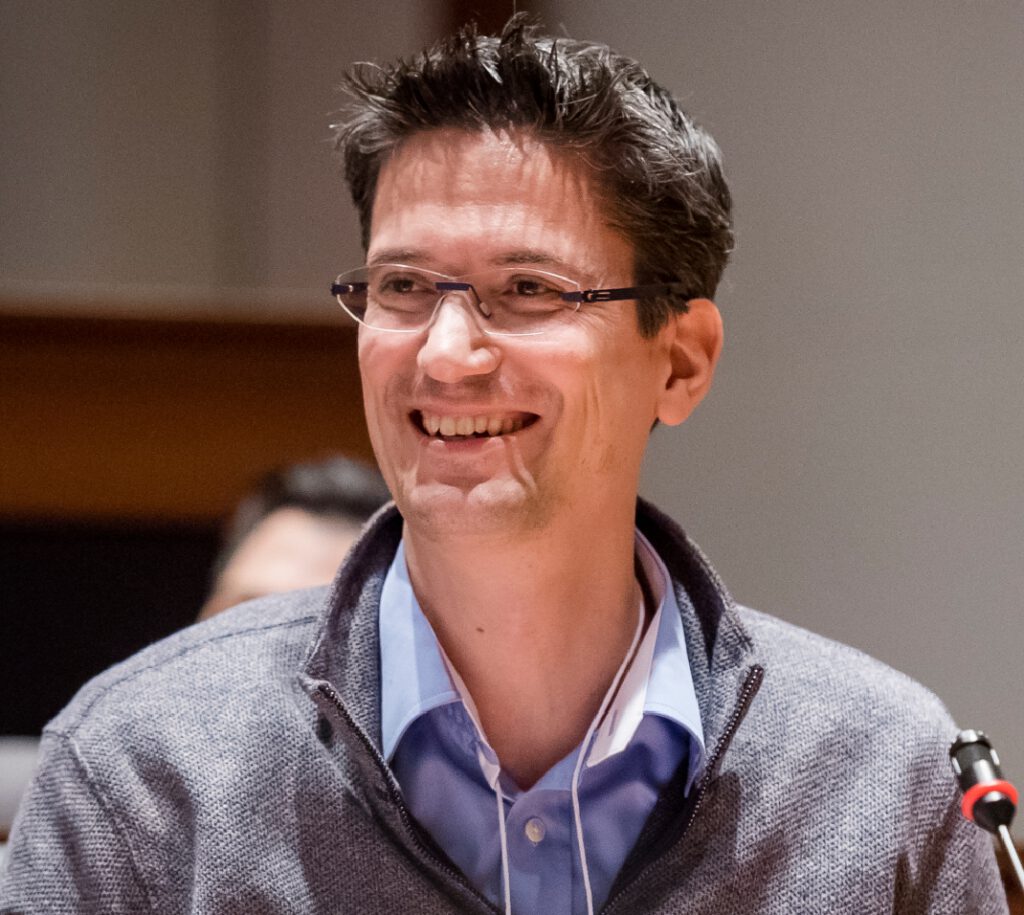
Axel Dreher is Professor of International and Development Politics at Heidelberg University’s Alfred-Weber-Institute for Economics. He is a leading scholar in political economy and development economics, with extensive affiliations including the German National Academy of Sciences Leopoldina, CEPR, CESifo, KOF, AidData, and EUDN. He serves as Editor of the Review of International Organizations and Co-Director of the Center for European Studies (CefES) at the University of Milan-Bicocca. Ruprecht-Karls-University Heidelberg (2011–Present) Georg-August University Göttingen (2008–2011) ETH Zurich (2005–2008) University of Konstanz (2004–2005) University of Exeter (2003–2004) University of Mannheim (2000–2003) His research centers on political economy , economic development , foreign aid , and globalization . He investigates how political institutions, leadership incentives, and geopolitical interests shape development outcomes and international financial flows. His work often employs empirical and geospatial methods to analyze aid allocation, corruption, migration, and the rise of emerging donors like China. The 15 most recent publications reflect a strong focus on China’s overseas development finance , regional favoritism , and the political determinants of aid . Keywords span political economy, development economics, and international relations, with subfields including Chinese foreign aid, geospatial analysis, governance, institutional quality, and South-South cooperation. His recent book Banking on Beijing and award-winning paper Wedded to Prosperity exemplify his cutting-edge contributions to understanding the political economy of development. Scientific awards include: 2023 Best Paper Award, Political Economy of Aid Society (PEAS) 2023 Best New Dataset Award, International Political Economy Society International Geneva (IG) Award 2020 Excellence in Refereeing Award, World Bank Economic Review (2019) 2010 KfW Excellence Award for policy-relevant research Multiple DFG and Swiss research grants Dreher has advised over 30 PhD students on topics ranging from aid effectiveness to political violence and migration. He has received major research grants from the German Research Foundation (DFG), Swiss Network for International Studies (SNIS), European Commission, and VolkswagenStiftung. His leadership roles include organizing the annual Political Economy of International Organizations conference series and serving on editorial boards of top journals such as World Development and Defence and Peace Economics . He is actively involved in academic labs and research networks including the Courant Research Center on Poverty and Equity at Göttingen, AidData at William & Mary, and the Center for European Studies (CefES). His current work continues to explore the intersection of politics, development, and globalization, particularly through georeferenced data and natural experiments.
- Political Economy
- Economic Development
- Foreign Aid
- +۷ مورد دیگر

Stephen Brown is a Full Professor at the School of Political Studies , part of the Faculty of Social Sciences at the University of Ottawa . His research focuses on democracy, democratization, conflict, foreign aid, and LGBT rights, particularly in Sub-Saharan Africa and Mongolia. He also analyzes Canadian foreign aid policies under recent governments. Email: brown@uottawa.ca Office: 613-562-5800 (1896) Languages: English, French, Spanish, Portuguese His work bridges international development, political science, and human rights, examining how foreign aid intersects with democratic ownership, gender equality, and conflict resolution. Recent publications highlight tensions between donor priorities and local contexts, as well as Canada's evolving role in global development. Key trends in his 15 most recent articles (2025–2020) include: Canadian foreign aid policy under Harper and Trudeau governments LGBTQI+ rights advocacy in Africa and Asia Impact of global crises (e.g., COVID-19) on development cooperation Political economy of extractive industries in developing economies Debates on aid effectiveness, policy coherence, and donor alignment Transitional justice and electoral conflict management in post-crisis states
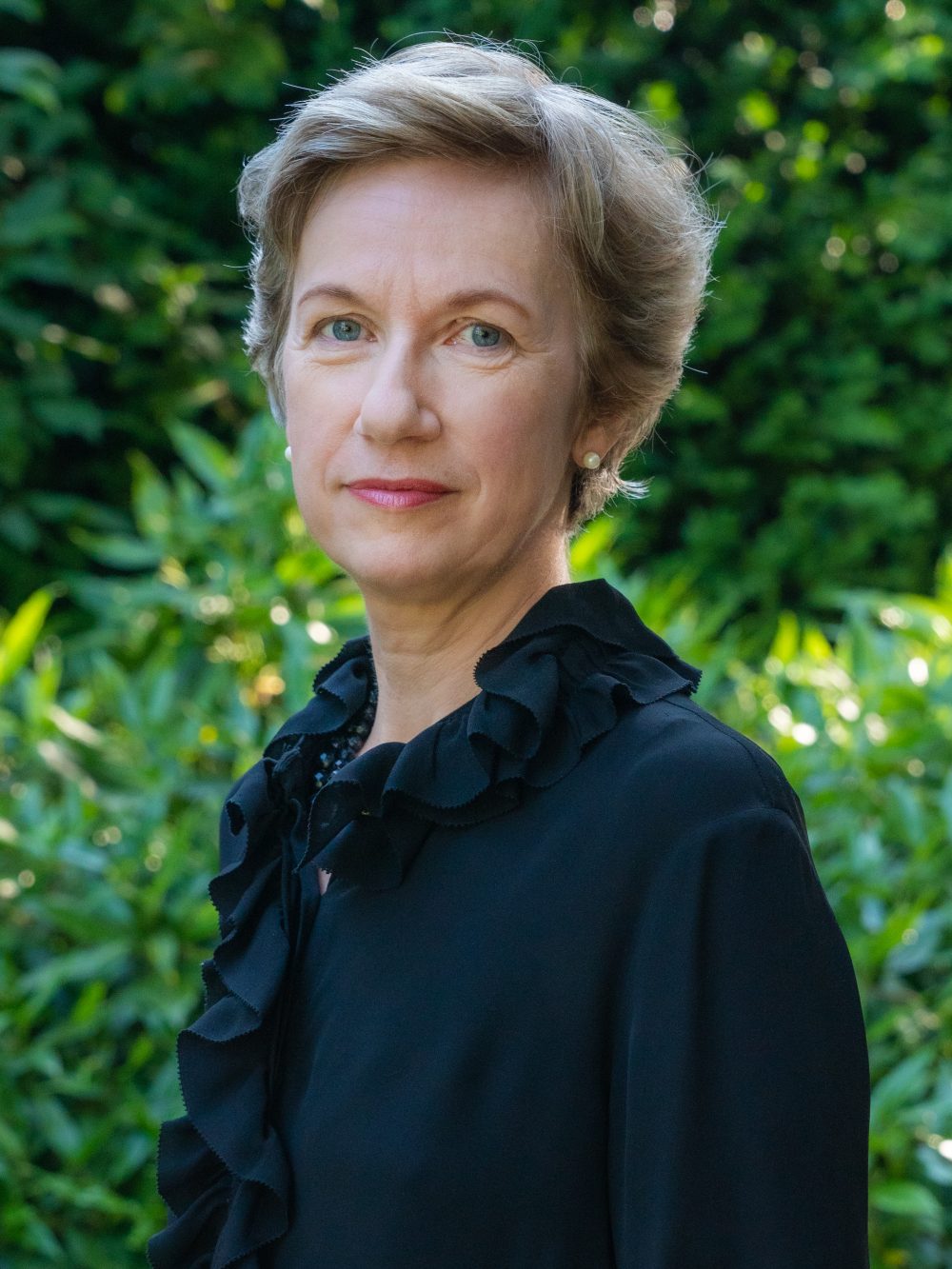
Professor Merje Kuus is a distinguished political geographer at the Department of Geography , Faculty of Arts , University of British Columbia . Her work bridges political geography , international relations , and sociology to examine knowledge production in policy-making contexts. PhD from Syracuse University (1999) WSET Level 3 Award in Wine holder Active in Arctic Circle's Mission Council on the GlobalArctic Research focuses on expertise in diplomatic practices , with empirical specializations in European Union and Arctic governance . She also explores geographical imaginaries in wine production , connecting policy analysis to cultural geography. Key publications include: Geopolitics and Expertise: Knowledge and Authority in European Diplomacy (Wiley Blackwell, 2014) Geopolitics Reframed: Security and Identity in Europe’s Eastern Enlargement (Palgrave Macmillan, 2007) Ashgate Research Companion to Critical Geopolitics (co-edited, 2013) Recent scientific awards include: Fulbright Fellowship Killam Fellowship SSHRC Canada grants Her supervision portfolio spans climate governance, disaster response expertise, and transnational policy networks, with completed PhD theses on topics ranging from Vancouver's climate governance to Arctic resource governance .
- Political Geography
- Arctic Governance
- Geopolitics
- +۵ مورد دیگر

Lisa Soderمشاهده پروفایل
پژوهشگر ارشد
Lisa Soder serves as Senior Policy Researcher and Acting Head of Technical AI Governance at Interface, a leading European tech policy think tank, and is an incoming Visiting Research Fellow at Stanford University's Intelligent Systems Laboratory within the School of Engineering. She holds a Master's degree from the London School of Economics focusing on comparative transatlantic approaches to technology regulation and competition law, and brings prior experience from the Centre for the Governance of AI, Boston Consulting Group, and global health NGO work in Ethiopia. Her research centers on establishing AI accountability infrastructures with particular emphasis on developing third-party auditing ecosystems and bridging technical and regulatory aspects of AI governance. She has developed a taxonomy for Technical AI Governance organized along technical targets (Data, Compute, Algorithms and Models, Deployment) and governance capacities (Assessment, Access, Verification, Security, Operationalization, Ecosystem Monitoring). Her work examines open problems across these dimensions, highlighting the critical need for technical tools to support effective AI governance. Analysis of her publications reveals a strong focus on practical implementation challenges in AI regulation, particularly regarding the EU AI Act's provisions for general-purpose AI systems. Her research consistently addresses the gap between policy aspirations and technical capabilities, with particular attention to verification mechanisms, risk assessment frameworks, and the development of technical infrastructure necessary for oversight. She advocates for closer collaboration between technical experts and policymakers to ensure governance mechanisms are both feasible and effective. Lisa has been actively engaged in high-level policy discussions, participating in events such as the AI Action Summit in Paris, Sino-German Track 2 Dialogues on AI governance, and expert briefings on frontier AI systems. Her upcoming visiting research fellowship at Stanford University represents a formal academic affiliation that complements her policy-focused work at Interface.
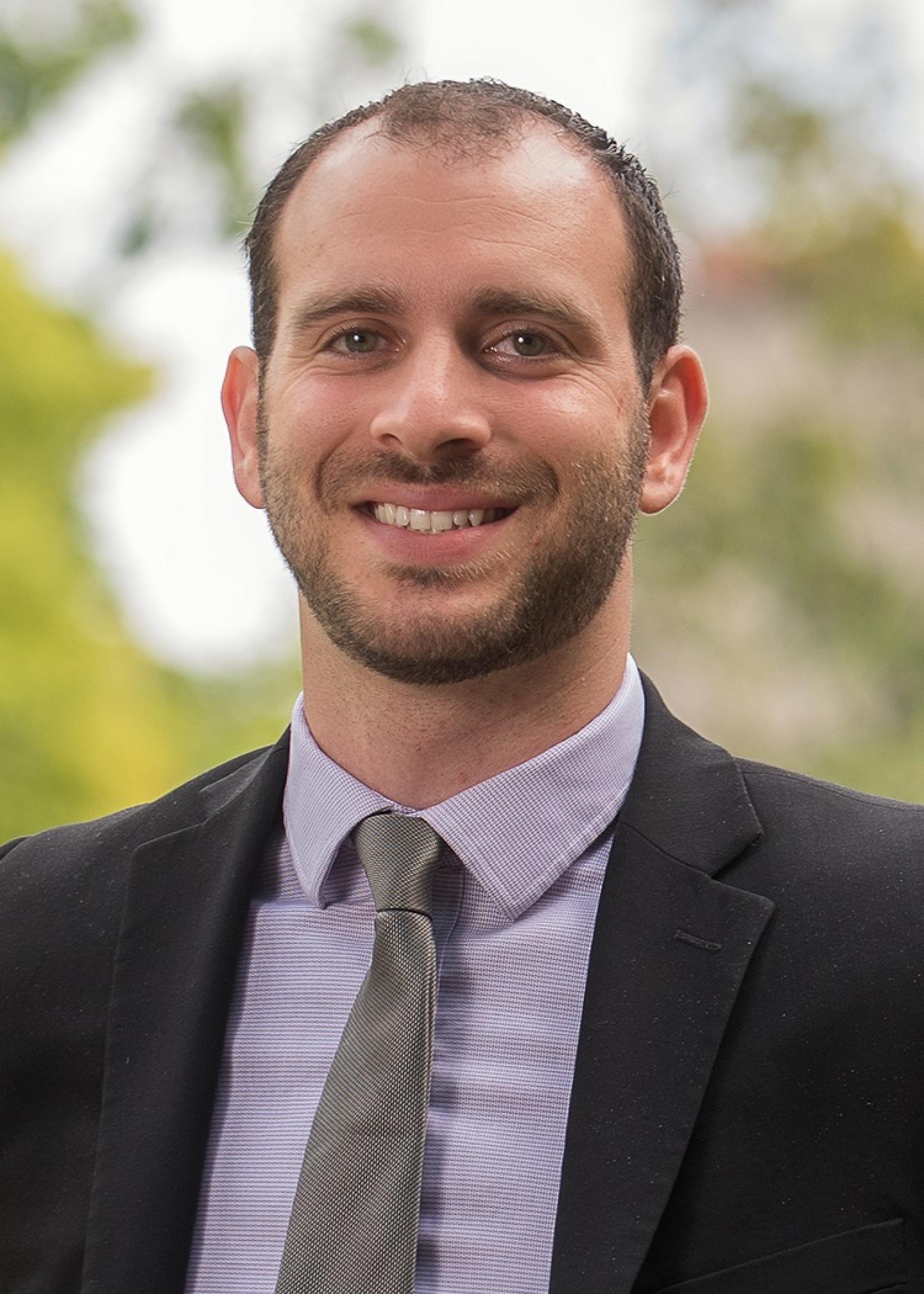
Asaf Bernsteinمشاهده پروفایل
دانشیار
Asaf Bernstein is an Associate Professor of Finance at the University of Colorado Boulder’s Leeds School of Business, a Faculty Scholar, Co-Director of the Center for Research on Consumer Financial Decision Making, and a Research Associate at the National Bureau of Economic Research. He earned his Ph.D. in Financial Economics from MIT in 2016 and served as Senior Academic Advisor on Climate Issues to the U.S. Securities and Exchange Commission during 2021-22. Education: Ph.D. Financial Economics, Massachusetts Institute of Technology, 2016 B.S. Economics & Mathematics, Harvey Mudd College Research Focus: Bernstein’s work lies at the intersection of policy and finance, using plausibly identified empirical designs to study financial regulation, climate risk, household balance-sheet dynamics, and the real effects of credit markets. His current agenda spans macro-prudential policy, public-pension wealth transmission, historical introduction of credit ratings, and partisan sorting under climate change. Publication Trends: Across more than a dozen forthcoming or published papers, Bernstein consistently exploits natural experiments—regulatory shocks, historical clearinghouses, Dutch amortization reform, Great-Depression bank distress, SLR exposure—to quantify how financial frictions affect prices, allocations, and innovation. The corpus maps broadly onto household finance, corporate finance, and climate-finance fields, with frequent overlap in real-estate and financial-history contexts. Honors & Awards: 2019 AQR Insight Distinguished Paper Award 2016 AQR Top Finance Graduate Award (global top-six PhD honor) 2022 Brattle Group Distinguished Paper Prize, Journal of Finance 2018 Northern Finance Association Best Paper in Risk Management Kahle Family Research Award Grants & Advising: While specific grant amounts are not disclosed, his projects have been supported by data access from Dutch administrative panels, U.S. credit-bureau micro-data, and historical securities archives. He advises PhD students in empirical finance and climate-economics and collaborates extensively across Leeds, NBER, MIT, and Stanford networks. Centers & Labs: Bernstein co-leads the Center for Research on Consumer Financial Decision Making at Leeds, an interdisciplinary lab linking finance, real-estate, and public-policy scholars to external regulatory partners including the SEC, Federal Reserve, and FINRA.

Professor Amnon Aran is a leading academic in the School of Policy and Global Affairs at City St George's, University of London . His career spans roles at the London School of Economics and Political Science and extensive contributions to Middle East policy forums including the European Union's Middle East Peace Task Force and Oxford Analytica . He provides media commentary for BBC, Bloomberg, and CCTV . Research Focus: International relations of the Middle East, Arab-Israeli conflict, foreign policy analysis, feminist foreign policy, and regional power dynamics. Key Publications: Authored Israeli Foreign Policy since the End of the Cold War (Cambridge University Press, 2021) and co-authored works on foreign policy analysis with Oxford University Press. PhD Supervision: Guided 8 doctoral candidates in topics spanning Israeli peace activism, intercultural dialogue, and Middle Eastern foreign policy shifts. Professional Contributions: Participated in high-level policy discussions with institutions like the European Union and RUSI , and advised on Middle East peace processes. His 15 most recent articles (2011–2025) examine evolving Israeli foreign policy paradigms, including feminist approaches, energy diplomacy, and shifts from adverse asymmetry to equivalence in Turkey relations. He challenges conventional narratives about regional power dynamics and foreign policy frameworks.
Alessandra Arcuri is Full Professor of International Economic Law at the Department of Law and Markets, Erasmus School of Law, Erasmus University Rotterdam, and a member of the Erasmus Initiative on Inclusive Prosperity. Her academic leadership spans critical intersections of law, sustainability, and democratic governance within global economic frameworks. Her research interrogates the tensions between international economic law and planetary boundaries, focusing on how investment treaties constrain climate action through cases like Rockhopper v. Italy . She exposes how fossil fuel interests exploit legal mechanisms like the Energy Charter Treaty while analyzing glyphosate regulation failures and corporate influence on EU Green Deal implementation. Her work consistently challenges technocratic governance models that marginalize democratic participation in environmental decision-making. Recent scholarship reveals an intensified focus on supply-side climate policies, where investment law clashes with state efforts to phase out fossil fuels. She documents how tribunals prioritize investor protections over ecological imperatives, using Dutch river pollution cases to demonstrate states' international obligations to prevent toxic emissions. Her analysis of boundary-work in investment law reveals systemic exclusions of public interest perspectives. Scientific Awards: Jean Monnet Fellow (2011-12) Fernand Braudel Fellow (2021-22) Hauser Global Research Fellow (2003-04) Marie Curie Fellow (2001) Professor Arcuri supervises PhD candidates including Abdurrahman Erol, with whom she co-authored pivotal research on Dutch river degassing that directly influenced national policy banning toxic emissions from inland vessels. Her policy impact extends through commissioned reports for the Dutch Parliament, Ministry of Foreign Affairs, European Commission, and NGOs, translating academic rigor into tangible regulatory change. She actively bridges scholarly critique with public advocacy, as seen in open letters correcting ministerial misinterpretations of environmental law. As a core contributor to the Erasmus Initiative on Inclusive Prosperity, she collaborates across disciplines to reconfigure economic governance toward ecological sustainability and democratic accountability, challenging the fossil fuel economy through legal innovation and grassroots empowerment.

Stuart Croft is Vice-Chancellor & President of the University of Warwick and Professor of International Security in the Department of Politics and International Studies (PAIS). Since joining Warwick in 2007 he has served as Pro-Vice-Chancellor for Research (Arts & Social Sciences), Provost, and since February 2016 as the University’s chief executive, leading 5,500 staff across all disciplines. Education & Career: 18 years at the University of Birmingham, latterly Professor of International Relations and Head of the School of Social Sciences. Appointed Professor of International Security, University of Warwick, January 2007. Pro-Vice-Chancellor for Research (Arts & Social Sciences) 2011-2013. Provost 2013-2016. Vice-Chancellor & President from February 2016. Research Interests: Professor Croft’s scholarship lies at the intersection of security studies and political culture, using constructivist and narrative approaches to analyse how identities and discourses shape security policy. He has published extensively on the War on Terror, NATO transformation, European security governance, and the securitisation of Islam in Britain. His work combines large-scale funded empirical projects with theoretical innovation in International Relations. Publications & Grants Trend: Over the past two decades his output has clustered around three themes—cultural narratives of terrorism and counter-radicalisation, institutional governance of Euro-Atlantic security (NATO/EU), and arms-control regimes—moving from traditional strategic studies toward critical security approaches that foreground identity, discourse and governance. Scientific Awards & Fellowships: Academician, Academy of Social Sciences (2006) Fellow, Royal Society of Arts (2006) International Studies Association – International Security Section Book Award short-list 2007 Doctoral Supervision & Mentoring: He has successfully supervised 21 PhD students at Birmingham and Warwick, examined 25 UK PhDs as external examiner, and currently supervises 6 doctoral researchers. He has mentored 9 ESRC, EU and British Academy post-doctoral fellows. Editorial & Professional Leadership: Editor of the Palgrave ‘New Security Challenges’ book series since 2005; co-editor of Contemporary Security Policy 1989-2004; editorial board member of Critical Studies on Terrorism and Dynamics of Asymmetric Conflict . Chair (2009-2011) and President (2011-2013) of the British International Studies Association.
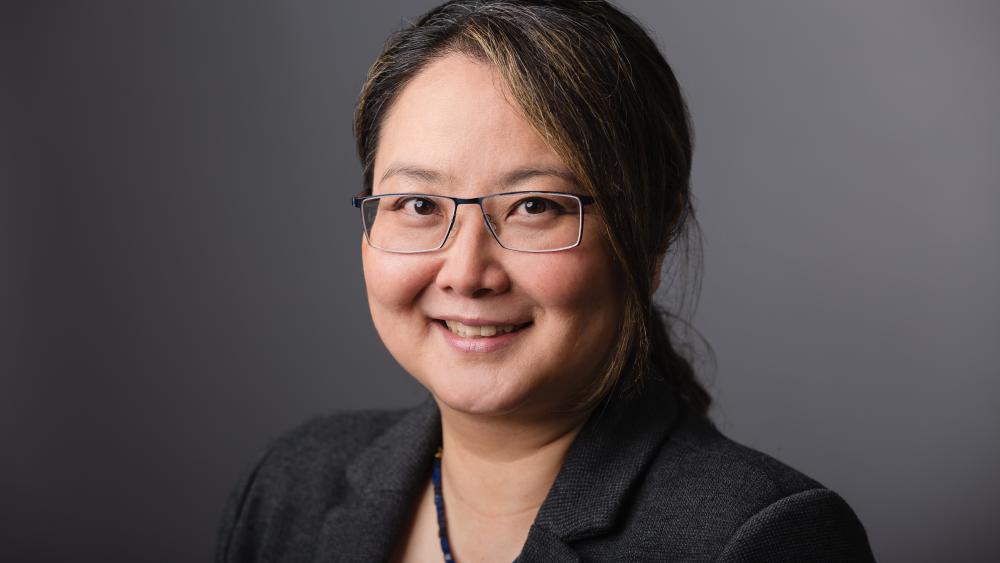
Yuka Kobayashiمشاهده پروفایل
مدرس ارشد
Yuka Kobayashi is a Senior Lecturer (Associate Professor) in China and International Politics at SOAS University of London. Currently on leave as a British Academy Global Innovation Fellow at the German Council on Foreign Relations (DGAP), she specializes in China's global governance strategies, economic diplomacy, and international law. Her research integrates fieldwork-based analysis of trade (Belt and Road Initiative/WTO), climate change, human rights, and technology. Education: LLB (Kyoto University, Public International Law specialization), MPhil & DPhil (Oxford University, International Relations). Research focuses on China's economic activities in Central Asia, Europe, Southeast Asia, and Pacific Islands, alongside UK-Japan collaborative projects on geopolitical partnerships. Key advisory roles include specialist advisor to the UK government (2021) and advisory board member for Stiftung Asienhaus (2019-2021). Publications span over two decades, addressing China's compliance with international trade norms, climate diplomacy, and evolving global governance frameworks. Supervises PhD students examining China's Pacific Island strategies and EU-China tech competition dynamics.
نمایش نتایج تا ۷۵۰ مورد اول. برای یافتن نتایج دقیقتر، جستجوی خود را با فیلترها محدود کنید.