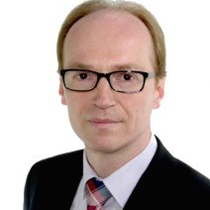
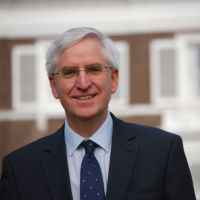
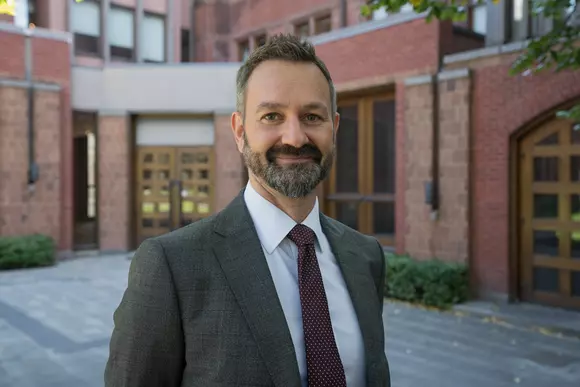
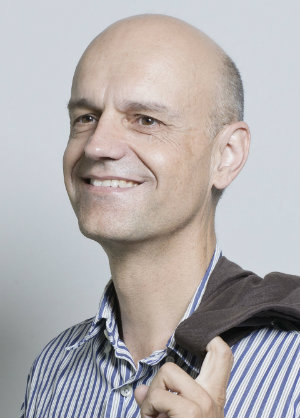
Thierry TARDY is a Visiting Professor at the College of Europe's EU International Relations and Diplomacy Studies Department (Natolin campus). He concurrently holds visiting roles at University Paris-Saclay, the French Military Academy (Saint-Cyr), and INALCO. With a PhD in Political Science, he has held senior positions at NATO Defense College (Research Director), EUISS, GCSP, and FRS in Paris. His expertise spans EU CSDP, NATO adaptation, European security, and crisis management. Recent publications focus on NATO's strategic future, European defense integration, and French-African security dynamics. He has authored 8 books and over 200 articles. His research emphasizes multilateralism, alliance cohesion, and strategic risks in modern conflicts. Advising and grants details are not specified in the text, but his extensive institutional affiliations suggest active engagement in academic and policy networks.
Ron S. Ton is a Visiting Professor in the EU International Relations and Diplomacy Studies Department at the College of Europe and serves as Director of the Clingendael Academy (part of the Netherlands Institute of International Relations). He specializes in international relations, diplomacy, and strategic policy planning, managing diplomatic training programs for over 500 diplomats annually from global regions. His expertise includes scenario planning, capacity building for foreign services, and curriculum development in international negotiations. Education: Master’s in Contemporary History and International Relations from Utrecht University Key roles: Advisor to diplomatic academies worldwide, visiting lecturer at institutions like the Bulgarian Diplomatic Institute and University of Pretoria Recognized with the Golden Laurel Bough (2012) from Bulgaria’s Ministry of Foreign Affairs His work focuses on institutional development, European integration training, and conflict management programs. He designs simulation games for EU/UN contexts and advises governments, NGOs, and private sectors. Previously, he managed education at InterCollege Business Schools and led Terre des Hommes, a Dutch children’s aid NGO. Publications span Syrian peace negotiations analysis, diplomatic training methodologies, and evolving trends in global diplomacy.
Prof. Ramazan ERDAĞ is the Head of the Department of International Politics at the Faculty of Economics and Administrative Sciences, Eskisehir Osmangazi University. His research focuses on Turkish foreign policy, international politics, and regional security dynamics. He has published extensively on topics such as Turkey’s Africa policy, Eastern Mediterranean strategy, and counterterrorism. His work bridges theoretical frameworks like strategic culture with practical issues like energy politics and post-conflict development. Education details are not explicitly stated, but his academic career includes leadership roles and contributions to international relations research. Key publications emphasize Turkey’s diplomatic engagements, including its activism in international organizations like the UN and EU. Research interests span Turkish foreign policy evolution, regional security complexities, and global governance challenges. His recent articles analyze post-Arab Spring security environments, NATO’s future post-pandemic, and the impact of energy projects like TurkStream. Despite prolific output, no academic awards are listed. His advisory and grant activities remain unspecified, though his CV references 69 projects and 3 thesis advisories. He oversees the department’s administrative operations and maintains a professional web presence through institutional platforms.
Dr. Kabilan Krishnasamy is an Honorary Research Fellow at The University of Western Australia's School of Social Sciences (Political Science and International Relations department). His roles include serving as Academic Secretary in the Office of Deputy Vice-Chancellor Operations. His research focuses on UN peacekeeping operations, South Asian foreign policy dynamics, and conflict resolution strategies. He has contributed to understanding the roles of India, Bangladesh, and Pakistan in international peacekeeping through multidisciplinary analyses. His work addresses themes like experiential learning in peacekeeping, small state diplomatic engagement, and the paradoxes of major regional powers' involvement in peace operations. Research topics include post-Cold War conflict management, military-civilian coordination, and the strategic implications of UN missions. His publications span 20 years, with recent work examining contemporary peacekeeping training methodologies. Though no formal student advisement records or grants are listed, his research has been cited in 27 articles across multiple disciplines, reflecting significant scholarly impact. His affiliations at UWA include offices in buildings M460A and M257 on the Crawley campus.
Mark Manger is a Professor at the University of Toronto's Munk School of Global Affairs and Public Policy and Department of Political Science, with an affiliation to the Centre for European and Eurasian Studies. He directs the Global Economic Policy Lab and focuses on the political economy of sovereign debt, exchange rate policy, and trade agreements. His work bridges theoretical insights with policy relevance, advising governments on trade agreements like the EU-Japan Economic Partnership Agreement. Key contributions include Investing in Protection (Cambridge UP, 2009) and influential articles in World Politics and Comparative Political Studies . Research emphasizes North-South trade dynamics, PTA formation, and the political dimensions of economic policy. Awards include recognition from the Canadian Political Science Association and LASA. Media engagements address contemporary issues such as sanctions efficacy and Russia-Ukraine economic relations. Grants and advisory roles reflect his dual focus on academia and policy impact. Labs/Teams: Director of the Global Economic Policy Lab, collaborating on projects related to sovereign debt, trade policy, and global financial governance.
Manjari Chatterjee Miller is a Professor and the inaugural Munk Chair in Global India at the University of Toronto's Munk School of Global Affairs & Public Policy. She holds concurrent roles as a Senior Fellow at the Council on Foreign Relations (New York/Washington DC) and an associate at Harvard University's Asia Center. Her expertise focuses on India, China, and rising powers, with notable publications including Why Nations Rise (2021, Hedley Bull Prize shortlisted), Wronged by Empire (2013), and the Routledge Handbook of China-India Relations (2020). She has held tenured roles at Boston University’s Pardee School and visiting positions at institutions like the Lee Kuan Yew School (Singapore) and Chinese Academy of Social Sciences. Miller’s research explores post-imperial foreign policy narratives, great power trajectories, and Sino-Indian dynamics. Her work has been supported by prestigious fellowships and grants, and she contributes to media platforms including Hindustan Times (2020-2024). Education: BA (University of Delhi), MSc (University of London), PhD (Harvard University), with postdoctoral training at Princeton University’s China and the World Program. Awards include recognition for her scholarly contributions to international relations theory and policy analysis.
Jakub Olchowski is an Assistant Professor at the Department of International Security within the Faculty of Political Science and Journalism at Maria Curie-Skłodowska University in Lublin. He has been employed at UMCS since 2000, initially at the Department of International Relations (2000-2019) before transitioning to his current department in 2019. As Director of the Centre of European Competences, he plays a significant role in the university's research infrastructure. His research focuses on International Security , Transnational Processes , International Relations in Central and Eastern Europe , The Civilizational Paradigm of International Relations , and Information/Disinformation as Political Instruments . His scholarly work demonstrates deep expertise in Russian-Ukrainian relations, NATO strategy, and information warfare tactics. Analysis of his recent publications (2020-2024) reveals a strong thematic concentration on the Russian invasion of Ukraine, disinformation as a security threat, Polish-Ukrainian strategic cooperation, and regional security frameworks in Central and Eastern Europe. His work increasingly addresses contemporary security challenges through the lens of information warfare and regional cooperation mechanisms like the Lublin Triangle. Prof. Olchowski actively participates in academic discourse through: Participation in over 200 national and international conferences Organization of major events including the Eastern Europe Initiatives Congress and Cross-Border Cooperation Congress Scientific collaboration with research centers in Ukraine and Lithuania Editorial role for the Eastern European countries section in the "IEŚW Yearbook" His teaching portfolio includes courses on International Organizations, Threats to International Security, Theory of International Security, Regional Security Institutions, and workshops on writing commentaries and expert analyses. He maintains active consultation hours for students, with resit session dates announced at the end of August.
Massimo Bucarelli is a Full Professor of History of International Relations (SPS/06) at the Faculty of Economics, Sapienza University of Rome, where he teaches "History of International Relations" for the Bachelor's Degree in International Cooperation and Development and "History of European Integration" for the Master's Degree in Tourism and Environmental Resource Management. His academic work focuses on 20th-century international relations with particular emphasis on Italian foreign policy. Professor Bucarelli earned his degree in Political Science with honors (110/110) from Sapienza University of Rome and completed his PhD in History of International Relations at the same institution. His doctoral thesis was awarded the first prize of the III edition of the "Premio Spadolini Nuova Antologia" for Contemporary History. Prior to his current position as Full Professor, he served as contract teacher, appointed professor, and associate professor in History of International Relations at various universities. His research centers on Italian foreign policy throughout the 20th century, with special attention to Italy's international actions in Mediterranean, Balkan, and Middle Eastern regions, as well as ENI's strategies in the Middle East during the 1950s-1970s. His scholarly approach involves extensive archival research across numerous Italian and international institutions, including the Historical-Diplomatic Archive of the Ministry of Foreign Affairs, Central State Archives in Rome, Andreotti Archive at the Luigi Sturzo Institute, ENI Historical Archives, and various foreign archives in London, Washington DC, Belgrade, and elsewhere. His extensive publication record demonstrates consistent scholarly engagement with themes of Italian diplomatic history, particularly examining Italy's relations with Yugoslavia, Libya under Gaddafi, and Middle Eastern countries. His work often analyzes the intersection of energy policy, security concerns, and diplomatic relations, with a special focus on how Italy navigated Cold War tensions and pursued its national interests in strategically important regions. Premio Spadolini Nuova Antologia Coordinator of PRIN 2022 Research Project Member of Scientific Committee of "Nuova Rivista Storica" Member of Editorial Committee of "Istorijski Zapisi" Member of Directing Committee of "Rivista italiana di Storia Internazionale" As an academic leader, Professor Bucarelli coordinates a National Relevance Research Project (PRIN 2022) on Italian energy policy, funded by the Ministry of University and Research. He serves as a referee for Italian and international scientific journals, was previously a valuator for ANVUR, and collaborates with the online journal "il Mulino." His current research project focuses on "Italy and the energy transition: public debate and government action in the face of the oil crises of the 1970s." Professor Bucarelli actively participates in the academic community as a member of the Italian Society of International History (SISI) and serves on the Committee for the publication of Italian diplomatic documents at the Ministry of Foreign Affairs and International Cooperation.
Francis Cheneval is a Full Professor of Political Philosophy at the University of Zurich's Department of Philosophy. His office is located at Zollikerstrasse 117, Room ZOA-2-215, in Zurich, Switzerland. He teaches various courses including Political Authority and Coercion, Political Philosophy, and Political Systems and Theories. Cheneval maintains consultation hours every Wednesday during lecture periods from 16:15-18:00 online by appointment. Cheneval's research focuses on fundamental questions in political philosophy, particularly examining the theoretical foundations of democracy, property rights, and the normative challenges of European and multilateral integration. His work explores justice frameworks and historical perspectives on political thought, with special emphasis on how democratic principles can be applied across multiple sovereign entities. His influential concept of 'demoicracy'—governance by multiple peoples rather than a single demos—provides a framework for understanding democratic legitimacy in transnational contexts like the European Union. His recent publications demonstrate consistent scholarly output across multiple formats including academic journals, book chapters, newspaper articles, and working papers. Cheneval's research spans theoretical political philosophy while maintaining strong connections to contemporary political challenges, particularly regarding European integration, sovereignty in the digital age, and intergenerational justice. His work shows a clear trajectory connecting historical political thought with current democratic challenges. Cheneval co-authors the 'Multilateral Democracy' blog at the London School of Economics and has edited works including 'Citizenship in Segmented Societies' with Mónica Ferrin. He has also published the book 'The Government of the Peoples: On the Idea and Principles of Multilateral Democracy' (Palgrave, 2011), which develops his theoretical framework for understanding governance across multiple democratic communities.
Associate Professor Srinjoy Bose is a scholar in the School of Social Sciences at The University of New South Wales (UNSW), specializing in Critical Peace and Security Studies . His research explores political order and violence , international intervention , rebel governance , and the political economy of statebuilding in fragile societies. He serves as Programme Convenor of the Master of International Relations program at UNSW. His academic journey includes a PhD from The Australian National University (2010-2015), an MSCI from the National University of Singapore (2007-2010), and a B.A. Hons from the University of Otago (2005-2007). He has held visiting fellowships at ANU, Hiroshima University, and will serve as Senior Fellow at Cornell University 's Brooks School Tech Policy Institute starting in 2025. Research interests center on hybrid governance in conflict zones, environmental sustainability and peace , and the racialization of drone warfare . Recent publications analyze rebel education systems , climate security in Afghanistan , and public attitudes toward remote warfare . Scientific contributions include: European Union COFUND (Marie Sklodowska-Curie) Fellowship Harry Frank Guggenheim Foundation Fellowship UNSW Global Ventures GRIP Grant As a supervisor, he mentors PhD candidates in projects related to Middle Power Diplomacy Australian National Security Communication Urban Segregation Environmental Peacebuilding His institutional service includes membership on UNSW's Human Research Ethics Advisory Panel , leadership in the ECAN Network , and editorial roles for journals like Global Policy and Environment & Security .
Leonie Murray is a Lecturer in International Politics at the School of Arts & Humanities , Ulster University, based at the Coleraine campus. She specializes in US foreign policy and humanitarian interventionism, with a focus on African conflict zones like Somalia. Research Interests: Humanitarian interventionism US military policy in post-Cold War Africa Multilateralism in international security Political impact of media and public opinion Her work contributes to global development goals related to peace, justice, and strong institutions . Key publications analyze Clinton-era interventionist policies and the Somalia case study. Contact: lg.murray@ulster.ac.uk | Office: Room I021, Coleraine Campus
Kim Dohyang Reimann is an Associate Professor of Political Science and Director of the Asian Studies Center at Georgia State University. Her research bridges international relations , NGO studies , and environmental policy in East Asia, with a focus on transnational networks and regional governance. Ph.D., Government, Harvard University (2001) A.M., Regional Studies-East Asia, Harvard University (1993) B.A., Oriental Studies, Barnard College, Columbia University (1986) Dr. Reimann’s work explores how global norms and international institutions shape domestic NGO activism, particularly in Japan and Southeast Asia . Her publications analyze topics like the Kyoto Climate Change Conference, NGO roles in human security, and institutional development in East Asian environmental governance. Her 2015 forthcoming chapter 2014 forthcoming chapter peer-reviewed journal articles (2008, 2006, 2001) book (2010) reflect a consistent focus on NGO-state dynamics , transnational environmentalism , and regional policy diffusion . Scientific recognitions include Social Science Research Council, Abe Fellowship (2008-2009) Phi Beta Kappa (1986) Focus Field Award, ARNOVA (2001) Research Initiation Grant, Georgia State (2006) Hauser Center Doctoral Fellow (1999-2001) Dr. Reimann advises graduate students in NGOs and World Politics and International Relations of East Asia . She has secured grants from the Georgia State International Strategic Initiative and Academy of Korean Studies , and serves on review panels for the National Science Foundation and World Politics journal. She leads Georgia State’s Asian Studies Center and collaborates with Keio University and Harvard University through research partnerships, with fieldwork spanning Kyoto , Honolulu , and Bangkok .
Serena Sileoni is an Associate Professor of Constitutional Law at the Suor Orsola Benincasa University of Naples . A qualified lawyer and journalist, she has held significant advisory roles including advisor to the Prime Minister in the Draghi government , research evaluation expert for ANVUR , and consultant for national/EU institutions. She served as deputy director of the Bruno Leoni Institute (2013-2021) and maintains a military role as a Captain Officer in the Army's Select Reserve . Her research focuses on constitutional guarantees , data privacy regulation , and public policy analysis . Current work explores judicial reform , EU governance , and state-market dynamics . She writes regularly for La Stampa , Il Mattino , and other outlets, covering topics like referendum mechanisms , digital policy , and constitutional modernization . Recent articles analyze EU institutional behavior , judicial adaptation to societal change , and technocratic decision-making . Her work emphasizes regulatory simplification , state accountability , and market freedom in areas ranging from pharmaceutical regulation to public procurement .
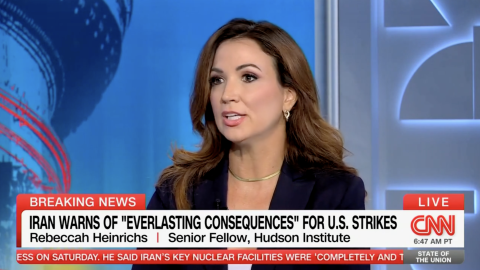
Rebeccah L. Heinrichs is a senior fellow at the Hudson Institute and director of its Keystone Defense Initiative, where she focuses on U.S. national defense policy and strategic deterrence. She is also an adjunct professor at the Institute of World Politics, teaching nuclear deterrence theory, and serves on several high-level advisory bodies including the Strategic Posture Commission and U.S. Strategic Command Advisory Group. Ph.D. in Defense and Strategic Studies, Missouri State University (with distinction) M.A. in National Security and Strategic Studies, U.S. Naval War College (highest distinction, Director’s Award) B.A. in History and Political Science, Ashland University (Ashbrook Scholar) Her research spans strategic deterrence, nuclear policy, missile defense, arms control, and U.S. foreign policy, with a particular emphasis on U.S.-Israel relations, Iran, Russia, and China. She frequently contributes to public discourse through media appearances and commentaries. Her recent publications and media appearances reveal a consistent focus on strengthening U.S. deterrence credibility, countering revisionist narratives in foreign policy, and advocating for robust alliances. Themes include the strategic use of military force, the dangers of isolationism, and the importance of maintaining a strong nuclear posture against peer adversaries. Director’s Award for academic excellence, U.S. Naval War College Dr. Heinrichs advises on national security policy and has contributed to congressional commissions and defense strategy panels. She is a contributing editor of Providence: A Journal of Christianity and American Foreign Policy and serves on the Board of Trustees at Ashland University, though she does not lead a formal academic lab or research team. Her work bridges academia, policy, and public engagement.
J. Luis Rodriguez is an Assistant Professor of International Security and Law at the Schar School of Policy and Government, George Mason University. He is also an affiliate scholar at Stanford University’s Center for International Security and Cooperation (CISAC), reflecting his active engagement in high-level research on global security and governance issues. Education: PhD in Political Science, Johns Hopkins University MA in Political Science, Johns Hopkins University BA in International Relations, El Colegio de México His research focuses on the role of the Global South in shaping international orders, particularly in the realms of international security, law, and global governance . He investigates how marginalized states navigate power asymmetries in nuclear diplomacy, humanitarian interventions, and emerging technology regulation. Using qualitative methodologies, he highlights strategies of resistance, norm entrepreneurship, and institutional reform led by Global South actors. The 15 most recent articles reflect a strong thematic consistency: the agency of developing nations in global institutions. Keywords include international security, law, and governance, while subfields span nuclear disarmament, cyber norms, humanitarian law, and equity in technology policy. His work appears in top journals such as International Affairs , Cambridge Review of International Affairs , and Third World Quarterly , as well as public-facing platforms like The Washington Post and Bulletin of the Atomic Scientists . Although no formal scientific awards are listed, his publications and affiliations with leading institutions underscore significant scholarly impact. Rodriguez brings practical policy experience from his prior role as a junior advisor to the Mexican Vice-Minister for Latin American Affairs. While no students or grants are explicitly mentioned, his research agenda suggests active mentorship and potential funding from security and governance-focused programs. He contributes to public discourse through commentary in War on the Rocks and NACLA , bridging academic and policy audiences. He is affiliated with research teams at both George Mason and Stanford, particularly in projects related to international security cooperation and emerging technologies governance . These affiliations position him at the intersection of academic rigor and real-world policy impact.