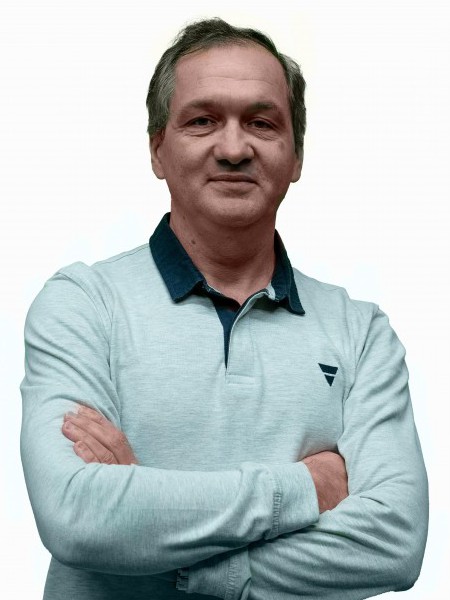
Chang-beom Eom is the Raymond R. Holton Chair and Theodore H. Geballe Professor in the Department of Materials Science & Engineering at the University of Wisconsin-Madison. His research group specializes in heteroepitaxy of complex oxide thin films, nanostructures, and device applications, focusing on atomic-scale control for electronic, magnetic, and optical innovations. Education: PhD, Stanford University (1991) MS, Korea Advanced Institute of Science and Technology (KAIST, 1983) MS, Hanyang University (1981) Research Interests: Prof. Eom explores nanostructure fabrication, heteroepitaxy of complex oxides (e.g., ferroelectrics, superconductors), and oxide nanoelectronics. His work targets piezoelectric MEMS/NEMS, magnetoelectric devices, and 2D electron gases at oxide interfaces, emphasizing atomic-layer precision for next-generation quantum materials. Publication Trends: Recent articles (2023–2025) highlight advances in oxide heterostructures, spin transport, and quantum phenomena. Key themes include symmetry-controlled magnetism, noncollinear antiferromagnets, oxide interface engineering, and flexoelectric effects, with applications in spintronics, energy-efficient computing, and terahertz technology. Awards: Honorary Doctorate (DTU, 2023) MRS David Turnbull Lectureship (2022) Vannevar Bush Fellowship (2020) Moore Foundation EPiQS Investigator (2019) Packard Fellowship (1995) Research Group: Leads a team developing oxide thin-film synthesis, characterization, and nano-fabrication techniques. Collaborates globally on projects involving superconducting nanowires, multiferroic heterostructures, and terahertz magnonics. Secured grants from NSF, Moore Foundation, and DARPA for quantum material innovation.
Yu U. Wang is a Professor in the Department of Materials Science and Engineering at the College of Engineering, Michigan Technological University. His research integrates experimental characterization and computational modeling to advance functional materials science, with a focus on phase transformations and microstructure-property relationships. Dr. Wang's educational background includes: PhD in Mechanical and Aerospace Engineering from Rutgers University BS in Mechanical Engineering from the University of Science and Technology of China His research spans phase transforming materials, in-situ synchrotron X-ray and neutron scattering techniques, diffuse scattering analysis, ferroelectric/magnetoelectric composites, colloidal self-assembly systems, and computational microstructure modeling. This work bridges fundamental materials physics with applications in energy harvesting, sensing, and advanced ceramics, emphasizing the interplay between nanoscale phenomena and macroscopic properties. Analysis of Dr. Wang's publications reveals a sustained focus on computational materials science, particularly phase field modeling applied to ferroelectric and shape-memory systems. His research consistently combines theoretical frameworks with experimental validation through diffraction techniques, targeting high-strain piezoelectrics, magnetoelectric composites, and nanodomain engineering for next-generation functional materials. Scientific awards received by Dr. Wang are not specified in the available documentation. Details regarding graduate student advising, research grants, and laboratory facilities are not provided in the source material, though his extensive publication record indicates active research supervision and project leadership.
Dr. Ali Gholinia is a Research Fellow in the Department of Materials at The University of Manchester. He holds a PhD in Materials Science from the University of Manchester (1994), an MSc from the same institution (1992), and a BSc from Middle East Technical University (1988). His expertise spans over 20 years in electron microscopy, Focused Ion Beam (FIB), and Electron Backscatter Diffraction (EBSD), with a focus on 3D microstructure characterization, in-situ mechanical testing, and correlative imaging techniques. His work bridges X-ray tomography and serial sectioning in SEM, emphasizing material microstructure-property linkages. Education: PhD, Materials Science, The University of Manchester (1994) MSc, Materials Science, The University of Manchester (1992) BSc, Middle East Technical University (1988) Research Interests: EBSD and FIB-based 3D microstructure analysis In-situ tensile deformation in SEM Correlative tomography (XCT and FIB-SEM) Advanced materials characterization for energy and aerospace applications Articles Trends: Recent work emphasizes 3D microstructure reconstruction in polycrystalline solar cells, additive manufacturing microstructure analysis, and hydride characterization in Zr alloys. His publications frequently integrate advanced imaging techniques like fs-laser ablation and tri-beam microscopy. Awards: None explicitly stated. Advising & Grants: Currently accepting PhD students. His lab, 'Imaging and Characterisation Group,' focuses on cutting-edge materials analysis tools and methodologies. Labs/Teams: Lead the Imaging and Characterisation Group within the Department of Materials, specializing in correlative microscopy and 3D microstructure analysis.
Kathryn A. Moler is a Research Fellow at Stanford University, leading the Moler Lab. Her work focuses on developing advanced magnetic imaging tools, particularly scanning SQUID (Superconducting Quantum Interference Device) microscopy, to investigate superconductivity and mesoscopic quantum mechanical effects at low temperatures. She is affiliated with the Department of Physics in the School of Humanities and Sciences. Research Interests: Dr. Moler’s research spans Superconductivity and superfluidity Magnetic field measurement at micro/nanoscale Quantum materials and phase transitions Strain effects on superconducting properties Spin-orbit coupling and topological superconductors Instrumentation for low-temperature studies Recent Articles highlight her work on vortex dynamics, superfluid density anomalies, and strain engineering in quantum materials like Sr 2 RuO 4 and nickelates. Her lab also develops tools such as nano-SQUID magnetometers and dry dilution refrigerators for advanced scanning probe microscopy. Scientific Awards: Packard Fellowship for Science and Engineering
Dr. Catalina Salazar Mejia is a Researcher at the Helmholtz Center Dresden-Rossendorf (HZDR) within the Dresden High Magnetic Field Laboratory . Her work focuses on Strongly Correlated Electron Systems , with a particular emphasis on magnetocaloric materials and quantum phase transitions. She specializes in experimental and theoretical studies of magnetic materials under extreme conditions, including high magnetic fields and pressure. Her research portfolio includes investigations into multiferroic manganites, Laves phase alloys, and Heusler materials. She employs advanced techniques such as pulsed magnetic fields, resonant ultrasound spectroscopy, and neutron scattering to characterize material properties. Key contributions include understanding magnetocaloric effects in functional materials and exploring quantum phenomena in frustrated magnetic systems. Dr. Salazar Mejia collaborates internationally on projects related to magnetic refrigeration, magnetic phase diagrams, and material design for energy applications. Her work bridges fundamental physics with applied materials science, aiming to develop next-generation magnetic materials for sustainable technologies. Her research has been published in over 25 peer-reviewed articles since 2008, with a focus on recent advancements in magnetocaloric materials (2021-2025). She maintains an active laboratory in Dresden, contributing to HZDR's mission in advancing energy and materials research.
Matthieu Verstraete is a Professor in the Department of Physics at the University of Liège, specializing in Condensed Matter Physics and Quantum Materials . He leads the European Theoretical Spectroscopy Facility and has held prestigious fellowships, including Marie Curie IEF and fellowships from the American Physical Society and Young Academy of Europe . His research focuses on electron-phonon coupling, thermoelectric materials, and transport phenomena in nanostructures. Education: EPFL (2000), PhD at UCLouvain , postdoc at York University and University of the Basque Country Appointments: Chargé de Cours (2009), Professor (2017), Visiting Professor at University of Cagliari (2011) His work spans 3D bulk materials (chalcogenides, oxides, III-V semiconductors), 1D nanowires , and 2D materials (graphene, transition metal dichalcogenides). Recent publications emphasize first-principles transport calculations , four-phonon scattering , and spin-dependent thermoelectric effects . Collaborations include European research networks and high-impact computational projects like TDEP (Temperature Dependent Effective Potentials). Scientific Awards : Fellow of the American Physical Society (APS) Fellow of the Young Academy of Europe Marie Curie Individual European Fellowship 40 million hours of computing time on MareNostrum4
Caroline A. Ross is the Ford Professor of Engineering at the Massachusetts Institute of Technology (MIT), affiliated with the Department of Materials Science and Engineering within the School of Engineering. Her research focuses on magnetic, ferroelectric, and multiferroic materials, particularly oxide thin films for device applications, magneto-optical films for integrated photonics, and nanocomposites for advanced lithography. She teaches courses on materials structure and magnetism. Education: PhD in Materials Science, University of Cambridge (1988) BA in Materials Science, University of Cambridge (1985) Professional Experience: Postdoctoral Fellowship at Harvard University (1988–1997) Engineer at Komag, Silicon Valley (developed hard disk storage technology) Joined MIT faculty in 1997 Research Interests: Her work bridges materials synthesis, characterization, and device applications. Key areas include: Oxide thin films for energy and information storage Magneto-optical materials for photonics integration Nanostructured materials via block copolymer self-assembly Advances in nanoscale fabrication techniques Awards & Honors: Irwin Sizer Award (MIT’s top teaching honor, 2004) Joseph Lane Award for Teaching Excellence (2000) IEEE Fellow (2013), MRS Fellow (2009), APS Fellow (2004) Grants & Labs: Leads The Ross Group at MIT, focusing on interdisciplinary materials research. Active in securing grants for nanotechnology and device innovation.
Yves Joly is a Research Director at the CNRS (French National Center for Scientific Research) and a member of the SIN team (Surfaces, Interfaces and Nanostructures) at the Institut Néel in Grenoble, France. His primary research focuses on the theory and development of X-ray spectroscopies as probes for studying materials, with particular emphasis on the development and dissemination of the FDMNES ab initio computation code. His work bridges theoretical physics and experimental materials science, enabling detailed analysis of electronic, magnetic, and structural properties across diverse material systems. Dr. Joly received his education at the Institut National Polytechnique in Grenoble, where he earned his Physicist Engineer degree in 1982. He continued his studies at the Laboratoire de Spectrométrie-Physique, Université Joseph Fourier (UJF), Grenoble, where he obtained his PhD in Physics of Matter and Radiation in 1984. His doctoral thesis focused on 'Study of alloy surfaces using Low Energy Electron Diffraction.' Dr. Joly's research interests center on X-ray absorption, emission, and scattering spectroscopies, particularly at energies close to absorption edges (XANES, valence to core X-ray emission spectroscopy, resonant X-ray diffraction). He has dedicated significant effort to developing the FDMNES ab initio computation code, which simulates these spectroscopies and allows comparison with experimental data typically recorded at synchrotrons. His work has applications across various material classes, with a special focus on oxides. Throughout his career, he has also contributed to surface science, studying carbides, nitrides, and semiconductors using techniques like Low Energy Electron Diffraction and Low Energy Positron Diffraction. Analysis of Dr. Joly's recent publications reveals a consistent focus on advancing X-ray spectroscopic techniques and their applications to increasingly complex materials systems. His work spans fundamental theoretical developments, computational methodology improvements, and practical applications to diverse materials including quantum materials, battery cathodes, catalysts, and magnetic systems. A significant portion of his recent work continues to center on the FDMNES code and its applications, demonstrating his ongoing commitment to making advanced X-ray analysis tools accessible to the broader scientific community. Dr. Joly has held various academic positions throughout his career. After completing his PhD in 1984, he conducted postdoctoral research at the CHU of Sherbrooke, Department of Nuclear Medicine, in Canada. He joined CNRS as a Junior Researcher in 1986, first at the Laboratoire de Spectrométrie-Physique and later at the Laboratoire de Cristallographie. In 2006, he became a Senior Researcher at the Laboratoire de Cristallographie, which became part of the Institut Néel in 2007. From 2011 to 2015, he served as Deputy Director of the MCMF department of the Institut Néel, demonstrating his leadership within the research institution. At the Institut Néel, Dr. Joly is a key member of the SIN team within the QUEST department (Électronique QUantique, Surfaces et spinTronique). His work is closely connected to synchrotron radiation facilities, where experimental data for comparison with his computational models is typically collected. The FDMNES code he developed has become an important tool in the X-ray spectroscopy community, facilitating the interpretation of complex spectral data across numerous research fields. His research has significant implications for understanding quantum materials, energy storage systems, and catalytic processes.
Robert Candler is a Professor of Electrical and Computer Engineering at the UCLA Samueli School of Engineering with joint appointments in Mechanical and Aerospace Engineering and Bioengineering. Since September 1, 2023, he has served as the Associate Dean for Research and Physical Resources, overseeing critical infrastructure and research initiatives. His academic foundation includes: Bachelor of Science in Electrical Engineering, Auburn University Master of Science in Electrical Engineering, Stanford University Doctor of Philosophy in Electrical Engineering, Stanford University (Department of Defense NDSEG Fellow) Candler's research pioneers Microelectromechanical Systems (MEMS) and nanoscale multiferroic technologies, demonstrated through decade-long leadership of the NSF Engineering Research Center TANMS. His work uniquely bridges electrical engineering with biomedical and aerospace applications, yielding translational innovations in nanoscale systems. Teaching excellence in electromagnetics and MEMS courses earned him dual industry teaching awards. His scientific recognition includes: Lockheed Martin Excellence in Teaching Award (2020) Northrop Grumman Excellence in Teaching Award (2012) Fellow of the American Institute of Medical and Biological Engineers Senior member of the National Academy of Inventors NSF CAREER Award Army Research Office Young Investigator Award Candler directs strategic academic programs including the Fast Track to Success initiative for undergraduate students and previously chaired the UCLA NanoLab Advisory Committee. His research leadership extends to multi-institutional collaborations like TANMS, supported by major federal grants that advance nanotechnology infrastructure and interdisciplinary engineering education.
Dr. Ilona Zamaraitė is a Researcher at the Institute of Applied Electrodynamics and Telecommunications (IAET) of Vilnius University. Her work focuses on dielectric spectroscopy, ferroelectricity, and quasi-2D materials, with expertise in phase transitions, crystal lattice dynamics, and computational electromagnetic analysis. She has contributed to studies on perovskite materials, layered double hydroxides, and ferrielectric crystals. Research Area : Dielectric spectroscopy, Ferroelectricity, Quasi-2D materials Key Collaborations : Involvement with research infrastructure including LASER RI, PTC LitGrid-HPC, and Spectroversum
Biplab Sanyal is a Senior Lecturer at the Department of Physics and Astronomy, Uppsala University, specializing in Materials Theory. His research focuses on ab initio simulations of 2D materials , multiferroics , clusters , and organometallic systems with applications in spintronics, nanoscience, and energy materials. His work integrates density functional theory and time-dependent electron dynamics to explore phenomena such as spin-phonon coupling , defect engineering , and molecule-substrate interactions . Current projects include structure prediction of 2D materials and oxide heterostructures . 2025 : Field-free spin-orbit torque in van der Waals magnets 2024 : Polar skyrmions in Janus CrInX3, enhanced ferromagnetism in Ni-doped Fe5GeTe2 Scientific awards include the FP7 Marie Curie IAPP project NU-MATHIMO (New Materials for High Moment Poles and Shields), a collaboration with University of Duisburg-Essen and Seagate Technology. His teaching includes courses on DFT and electronic structure calculations .
Dr. Bogdana Borca serves as a Scientific Researcher I at the National Institute of Materials Physics (NIMP) in Romania, where she has conducted research since 2015 in the Laboratory of Magnetism and Superconductivity. Her work focuses on the fundamental properties of nanoscale systems with applications in next-generation electronic and spintronic devices. She earned her PhD in Physics in 2007 through a binational program between Joseph Fourier University in Grenoble, France and Babeș-Bolyai University in Cluj-Napoca, Romania, with research conducted at the Institut Néel in France. Prior to joining NIMP, she held postdoctoral positions at Universidad Autónoma de Madrid, Spain (2007-2011) and Max Planck Institute for Solid State Research in Stuttgart, Germany (2011-2015). Dr. Borca's research spans nanomagnetism, surface science, 2D materials, molecular electronics, and spintronics. Her expertise includes ultra-high-vacuum techniques, cryogenics, physical and chemical vapor deposition, scanning probe microscopy, and magnetometry. She specializes in characterizing and controlling electronic and magnetic properties at the nanoscale, with particular focus on nanostructures, heterostructures, thin films, and organic-inorganic interfaces. Her recent publications demonstrate significant contributions across multiple subfields, with strong emphasis on organic multiferroic junctions, image potential states of 2D materials, molecular recognition techniques, and electric-field-driven chemical reactions. These works reflect her interdisciplinary approach combining physics, chemistry, and materials science to address fundamental questions with practical applications in electronics, spintronics, and biocompatible devices. Dr. Borca leads the 'Memristive multiferroic junctions' project (2022-2024) and maintains active international collaborations through visiting positions at Technische Universität Braunschweig (Germany), University of Twente (Netherlands), Forschungszentrum Jülich (Germany), and Max Planck Institute for Solid State Research (Germany). Her research methodology integrates advanced experimental techniques with theoretical understanding, particularly using scanning tunneling microscopy for atomic-scale manipulation and characterization. This approach has yielded insights into molecular conductance switching, chiral molecular adsorption, and the electronic properties of novel materials systems.
Sara A. Majetich is a Professor of Physics at Carnegie Mellon University's Mellon College of Science, with courtesy appointments in Electrical & Computer Engineering and Materials Science & Engineering. Her research centers on magnetic nanoparticles and their applications in data storage, permanent magnets, and biomedicine. Education: Ph.D. in Physics (University of Georgia, 1987), M.A. in Physics (Columbia University, 1980) Research Interests: She investigates the collective magnetic behavior of self-assembled nanoparticle arrays, phase transitions in nanoscale systems, and development of functional nanocomposites through surfactant replacement. Techniques include electron holography, Lorentz microscopy, and polarized small-angle neutron scattering. Recent Research Trends: Recent work focuses on voltage-controlled exchange coupling in magnetic tunnel junctions, spin-orbit torque switching, skyrmion detection, and biomedical applications like hyperthermia optimization. Her group explores probabilistic computing with superparamagnetic nanoparticles and angle-dependent switching dynamics. Scientific Awards: Carnegie Science Award (2010) NSF National Young Investigator Award (1992) Professional Affiliations: Fellow, IEEE Fellow, American Physical Society
Professor Nathaniel Stern is a faculty member in the Department of Physics and Astronomy at Northwestern University, specializing in quantum interactions of photons with nano-scale systems. He holds a PhD from the University of California, Santa Barbara (2008) and leads the Stern Research Group, focusing on hybrid photonic systems, quantum materials, and light-matter interactions. His research explores novel optical and spin properties in monolayer semiconductors, chiral photonics, and magneto-optical effects. Education: PhD in Physics, University of California, Santa Barbara (2008). Research Interests: Quantum photonics, nano-scale optoelectronics, valley-polarized exciton-polaritons, and applications in quantum information science. His work bridges experimental approaches like time-resolved spectroscopy and single-photon detection with theoretical models for understanding quantum phenomena in 2D materials. Awards: Alfred P. Sloan Research Fellowship (2013), DOE Early Career Award (2014), ONR Young Investigator Award (2016). Advising & Students: Advised PhD students Carin Gavin (2023 Rapid Fire winner) and Hongfei (defended 2023). Current group members focus on quantum emission in van der Waals heterostructures and chiral photonics. Labs/Teams: Stern Research Group explores quantum systems in integrated photonic platforms, collaborating with the Chicago Quantum Exchange as part of the region’s US Tech Hub designation for quantum technologies.
Oleksandr Tkach is a Principal Researcher at the University of Aveiro's Department of Materials and Ceramic Engineering, affiliated with CICECO - Aveiro Institute of Materials. His research focuses on advanced oxide electroceramics, including thermoelectric and piezoelectric materials for energy applications, giant permittivity dielectrics, and energy-efficient sintering techniques. He holds a Ph.D. in Materials Science & Engineering from the University of Aveiro (2005) and a Microelectronics degree from Kyiv Polytechnic Institute (1999). His career includes postdoctoral positions at the University of Barcelona, University of Porto, and Johannes Gutenberg University of Mainz, with extensive EU project involvement (e.g., IFOX, MASPIC, FAME). Dr. Tkach has authored over 100 articles, including high-impact publications in Advanced Functional Materials and Nature Physics . His awards include FCT grants, ERC project participation, and featured articles in prestigious journals. He supervises PhD and Master's students, coordinates research projects totaling €48M, and contributes to editorial boards for six journals. Current research emphasizes energy storage, multiferroic heterostructures, and sustainable ceramic processing. His work bridges fundamental material science with industrial applications in sensors, energy harvesting, and electronic devices.