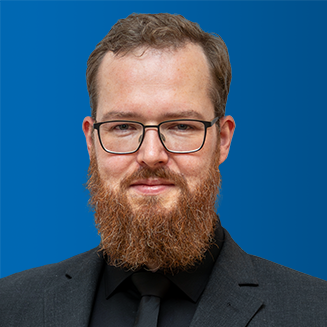
Prof. Diana Estévez Black is a Professor at Berlin University of Technology, affiliated with Department II (Mathematics, Physics, Chemistry). She specializes in Numerical Analysis and Differential-Algebraic Equations (DAEs), focusing on numerical methods, matrix factorization, and computational techniques for solving complex mathematical models. Teaching: She teaches courses in Applied Mathematics, Biotechnology Mathematics, Computational Engineering, and Mechanical Engineering programs, including Numerical Mathematics, Linear Algebra, and Numerics for graduate-level engineering disciplines. Research: Her work emphasizes DAE analysis, singular value decomposition, and eigenvalue problems. She has developed software like InitDAE for consistent initialization of DAEs and published extensively on topics such as robotic arm dynamics, multirate PDAEs, and tax policy modeling. Her research bridges theoretical mathematics with practical applications in engineering and economics. Labs/Tools: She contributes to software development (e.g., Python-based InitDAE ) and maintains visualization resources for numerics education, including Hinton diagrams for matrix factorization and animations for discrete mathematics concepts.
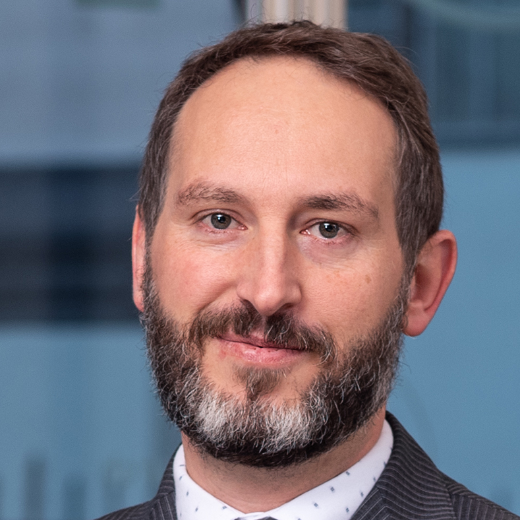
Pasi Peltoniemi is a Full Professor (tenured) in the Department of Electrical Engineering at Lappeenranta-Lahti University of Technology LUT. He is affiliated with the LUT School of Energy Systems, focusing on advanced research in Electrical and Electronic Engineering, Control Systems, and Power Electronics. His work emphasizes sustainable energy systems, particularly Low-Voltage Direct Current (LVDC) distribution networks and high-power converter technologies. His research spans power electronics, renewable energy integration, and grid-forming converter systems. Notable contributions include studies on multilevel inverters, SiC semiconductor applications, and energy management strategies for hybrid systems. He has pioneered LVDC distribution network designs, including fault protection, grounding schemes, and customer-end inverter optimization. Key research areas include: Advanced power electronics and converter topologies Grid stability and renewable energy integration Marine and industrial energy systems LVDC distribution infrastructure and standards His publications highlight trends in grid-forming voltage source converters, high-power charging systems, and microgrid control. Peltoniemi has contributed to international standards like LVDC rules and collaborated on projects such as the Congo Grand Inga hydroelectric evaluation. He leads research initiatives on energy storage systems, fault detection in power converters, and smart grid functionalities. His work integrates experimental validation (e.g., laboratory test setups) with theoretical models for system optimization. Labs/Teams: Active in LUT's LVDC research platform, focusing on utility network implementations and converter technology. Collaborates on projects like the On-Grid Hydrogen Production with Solar Energy in Nordic Conditions.
Prof. Dr.-Ing. Dietrich Paulus heads the Active Vision Group at the University of Koblenz's Institute of Computational Visualistics. His research spans computer vision, robotic perception, medical image analysis, and 3D reconstruction techniques. Current projects include automated spine modeling for medical applications, hyperspectral imaging for autonomous driving, agricultural robotics, and sensor calibration methods. Recent work demonstrates strong applications in medical imaging with projects on 3D vertebrae measurement, spinal ligament detection, and cochlear image segmentation. The group also develops educational robotics frameworks and participates in robotic challenges as pedagogical tools. Methodological advances include generative adversarial networks for synthetic data generation, point-cloud change detection, and online calibration of LIDAR systems.
Marek Wojtyra is an Associate Professor and Vice-Dean for General Affairs and Research at the Faculty of Power and Aeronautical Engineering, Warsaw University of Technology. He also heads the Scientific Council for Mechanical Engineering and serves as Editor-in-Chief of the Archive of Mechanical Engineering . His research focuses on multibody systems, robotics, and biomechanics, with a particular emphasis on dynamics, friction modeling, and control systems. Wojtyra holds a D.Sc. (Habilitation) and Ph.D. in engineering, specializing in mechanical systems and robotics. His academic roles include teaching courses like Dynamics of Multibody Systems and Robotics Basics . He leads the Robotics and Dynamic Systems Team , fostering interdisciplinary research in robotics, multibody dynamics, and biomechanical applications. His work bridges theoretical advancements and practical applications in robotics and mechanical engineering, with contributions to multibody system modeling, constraint analysis, and friction force modeling. Wojtyra’s publications span journals like Mechanism and Machine Theory and conference proceedings such as ROMANSY , addressing topics like inverse kinematics, redundant manipulators, and overconstrained systems. His research trends highlight innovative solutions for complex mechanical systems, emphasizing numerical methods and optimization techniques. He collaborates with international institutions and contributes to academic governance, reflecting his commitment to advancing mechanical engineering education and research.
Edyta Rola, an Assistant Professor at Warsaw University of Technology's Faculty of Power and Aeronautical Engineering, specializes in biomechanics and child safety systems. She holds a Ph.D. and is affiliated with the Department of Theory of Machines and Robots. Her research focuses on improving safety in automotive collisions, particularly for children, using methods like finite element analysis and multibody systems. She teaches courses in biomechanics and automation, and her work includes optimizing child restraint systems, analyzing injury mechanisms, and developing safety technologies. Key achievements include awards like the IRCOBI Travel Grant and recognition at international conferences. She has contributed to patents related to child transport devices and received accolades for her infant monitoring system, including a Gold Medal at Geneva Inventions 2023. Her research spans road safety, medical biomechanics, and ergonomics, with a strong emphasis on practical applications in vehicle safety and pediatric healthcare.
Prof. Dr. Ender CİĞEROĞLU is a Professor in the Department of Mechanical Engineering at Middle East Technical University (METU), Ankara, Turkey. He holds a Ph.D. and M.S. from The Ohio State University, and B.Sc./M.Sc. degrees from METU. His research focuses on nonlinear vibrations, friction modeling, gear dynamics, structural dynamics, and vibration control. He has authored over 40 journal articles and conference papers in leading journals like Nonlinear Dynamics and Mechanical Systems and Signal Processing. His work includes development of microslip friction models and advanced vibration analysis techniques for turbomachinery and mechanical systems. Awarded the 2011-2012 METU Educator of the Year Award, Prof. CİĞEROĞLU is an active member of ASME and has served as conference secretary for multiple Savunma Teknolojileri Kongresi events. He has supervised numerous undergraduate research projects on mechanical vibrations and numerical methods. Prof. CİĞEROĞLU teaches courses such as Nonlinear Vibrations, Numerical Methods, and Mechanical Design. His contributions include developing educational resources like Mathcad tutorials for engineering students and actively participating in academic service roles including editorial work for conferences and journals.
Ana Barjau Condomines is a faculty member in the Department of Mechanical Engineering at the Escola Tècnica Superior d'Enginyeria Industrial de Barcelona (ETSEIB), Universitat Politècnica de Catalunya (UPC). She is affiliated with the BIOMEC - Biomechanical Engineering Lab and the TecSalut - Research Group in Health Technologies. Her academic work spans mechanical system dynamics, acoustics, and biomedical applications. Her research interests include acoustics of musical instruments, rigid body and multibody dynamics, biomechanical modeling, vibration analysis, and wave energy conversion systems. She has developed computational models for wind instrument acoustics, impact dynamics in mechanical systems, and muscle force prediction in gait analysis, contributing to both fundamental mechanics and applied biomedical engineering. The recent publications highlight her work in nonlinear dynamics of mechanical systems, educational tools for engineering mechanics, and energy harvesting from ocean waves. Her research combines theoretical modeling, numerical simulation, and experimental validation, often in interdisciplinary teams. Scientific Awards: 3r Premi UPC al Compromís Social She has participated in multiple competitive R&D+i projects, including those focused on biomechanical engineering, assistive robotics, and health technologies. Her collaborations include researchers from UPC, CERN, and various biomedical and engineering groups. She has also contributed to teaching innovation, particularly in classical mechanics education. Laboratories and Research Groups: BIOMEC - Biomechanical Engineering Lab TecSalut - Research Group in Health Technologies Xarxa R+D+I en Tecnologies de la Salut (Xartec Salut)
Yan Sun is a Senior Lecturer in Engineering at the School of Engineering and Technology , Centre for Railway Engineering , Central Queensland University . With a PhD in Mechanical Engineering from CQU (2002) and prior academic experience at University of Science and Technology Beijing (1986-1998), he specializes in railway vehicle-track system dynamics, computational mechanics, and optimization of rail infrastructure. Research focus includes: Wheel-Rail Interaction Dynamics Railway Wear & Rolling Contact Fatigue Heavy Haul Train Simulation Track-Bridge Transition Zone Analysis Friction & Adhesion Control Systems Crashworthiness & Derailment Prevention His recent publication trends emphasize digital twin methodologies for rail surface damage prediction (2024-2025), energy-efficient hybrid locomotives (2023), and advanced co-simulation techniques for train dynamics (2018-2022). Key applications include rail corrugation modeling, guard rail effectiveness, and wagon instability analysis in long trains. Teaching roles include Unit Coordination for Dynamics (ENAM12004) and Mechanical Component Selection (ENAM12006), along with lecturing in Australian Engineering Practice (ENEG28001).
Mostafa Nasri serves as an Instructor in the Department of Mathematics and Statistics at the University of Winnipeg within the Mathematics and Statistics Faculty. Holding a Ph.D. from IMPA, he completed postdoctoral fellowships at Laval University, University of Montreal, and McGill University before joining his current institution. His academic credentials include: Ph.D. in Mathematics, IMPA- Instituto Nacional de Matemática Pura e Aplicada (2008) M.Sc. in Mathematics, Amirkabir University of Technology (2004) B.Sc. in Mathematics, Sharif University of Technology (2002) Dr. Nasri's research integrates Mathematical Analysis and Operations Research with specialized expertise in Functional Analysis, Optimization, and Applied Mathematics. His theoretical work examines Schauder bases, composition operators, and Dirichlet spaces, while his Optimization research develops augmented Lagrangian methods for equilibrium problems and variational inequalities. Applied contributions include contact dynamics modeling for multibody systems and HIV infection dynamics. Analysis of his 2023-2025 publications reveals intensified focus on Functional Analysis (particularly Dirichlet spaces and operator theory) alongside persistent development of optimization algorithms, with applied mechanics and mathematical biology research continuing at reduced frequency. No scientific awards are documented in available materials. Current information indicates no graduate student advising or active research grants at the University of Winnipeg. Prior industry collaboration with CM Labs Simulations Inc. and Canadian university departments demonstrates applied research experience, though no current laboratories or dedicated research teams are specified.
Ben Parslew is a Senior Lecturer in Aerospace Engineering at the University of Manchester's Mechanical and Aerospace Engineering department within the Faculty of Science and Engineering. He has been with the university since completing his PhD, progressing from Research Associate to Honorary Lecturer (2013), Lecturer (2015), and Senior Lecturer (2018). In 2020, he also served as an Adjunct Professor at Chulalongkorn University. His educational background includes an undergraduate degree in Aerospace Engineering from UMIST (2003), a Master's in Fluid Dynamics from the University of Manchester (2005), and a PhD in animal flight biomechanics from the University of Manchester. Dr. Parslew's research lies at the interface of engineering and biology, with particular interests in animal locomotion, unmanned aerial vehicles, robotics and computer animation. His work spans biomechanics, engineering design and optimization, flapping-wing flight, biomimetics, and physics-based animation. He has developed tools for analyzing flapping-wing flight that are publicly available. His recent publications (2022-2025) demonstrate expertise in computational fluid dynamics, bio-inspired robotics, and aerospace engineering, with a focus on applications ranging from urban wind flow simulation to jumping robots and wingless rotorcraft. The research shows a clear trend toward practical applications of biomechanical principles in robotics and aerospace design. EPSRC Doctoral Prize Fellowship (2012) Faculty of Science and Engineering Better World Award Winner (2018) Highly commended at University of Manchester Making a Difference Awards (2018) Dr. Parslew has supervised multiple research students and projects, with a focus on bio-inspired robotics and aerospace applications. He has been involved in significant research grants including the Aerospace Engineering project (2010-2035) and the Space Systems Research Group. His work contributes to UN Sustainable Development Goals through the Aerospace Research Institute, Digital Futures, and the Manchester Environmental Research Institute. He is actively involved in the Centre for Robotics and Artificial Intelligence and has contributed to projects related to bio-inspired robotic hopper locomotion for navigation in extreme space environments.
Ulrich Römer serves as Professor of Engineering Mechanics – Dynamics at the Institute of Mechanics and Fluid Dynamics, Freiberg University of Mining and Technology since 2024, following prominent academic roles at Karlsruhe Institute of Technology. 2024–present : Full Professor, Engineering Mechanics – Dynamics 2021–2024 : Academic Councillor, Dynamics/Mechatronics 2013–2021 : Research Associate, Dynamics/Mechatronics Römer's research establishes critical connections between multibody dynamics and biomechanical efficiency , with seminal work on bipedal locomotion mechanics. His doctoral dissertation on foot geometry's impact on walking energy consumption bridges theoretical dynamics with practical applications in rehabilitation robotics and humanoid engineering. Current investigations focus on nonlinear dynamic modeling for industrial machinery and energy recovery systems in mechatronic actuators, emphasizing computational validation through advanced simulation frameworks. Educational leadership defines Römer's academic profile through graduate-level dynamics instruction and doctoral mentorship at Freiberg University. His teaching methodology integrates theoretical principles with experimental validation techniques, preparing students for complex mechanical system analysis in industrial applications.
Erwin Rauch is a Full Professor for Smart and Sustainable Production at the Faculty of Engineering, Free University of Bozen-Bolzano, where he leads the Smart Mini Factory (SMF) Laboratory for Industry 4.0 and the Sustainable Manufacturing Laboratory (SML). His academic journey includes a B.Sc. in Logistics and Production Engineering from the Free University of Bozen-Bolzano, M.Sc. degrees in Mechanical Engineering and Industrial Engineering from the Technical University of Munich, and a Ph.D. in Mechanical Engineering from the University of Stuttgart with summa cum laude distinction. Professor Rauch's research spans sustainable manufacturing, Industry 4.0/5.0, digital twins, human-robot collaboration, and axiomatic design. His work addresses critical challenges in decarbonization, circular economy, and resilience in manufacturing systems. He has developed numerous educational demonstrators and learning factories to bridge theoretical concepts with practical applications in engineering education. His publications reveal a strong focus on practical implementations of digital technologies in manufacturing, with particular emphasis on SME adoption. The research shows consistent integration of sustainability metrics with digital transformation, highlighting how Industry 5.0 principles can be operationalized through cyber-physical systems, worker assistance technologies, and resilient production design. Scientific Recognition: Best Track Paper Award (Sustainable Supply Chain) at IEOM 2018 Best Track Paper Award (Engineering Education) at IEOM 2018 Best Track Paper Award at IEOM 2015 Overall Best Paper Award at ICAD 2013 Professor Rauch actively contributes to editorial boards of several renowned journals and serves as Editor-in-Chief of Production & Manufacturing Research (Taylor & Francis Publishing). He is an Associate Member of EuroScience, World Manufacturing Forum, AITEM, and serves on the IAAD Executive Board and EPIEM Steering Board. His teaching portfolio includes courses on digital production planning, innovation management, sustainable production, and production systems. His laboratories (Smart Mini Factory and Sustainable Manufacturing Lab) serve as critical hubs for developing and testing Industry 4.0/5.0 technologies, with a particular focus on creating practical implementations for SMEs. These labs facilitate research on human-centered production systems, digital twin applications, and sustainable manufacturing practices.
Professor Nigel Wilding holds a position in the School of Physics at the University of Bristol. His research focuses on computational and theoretical studies of complex fluids and soft matter systems, employing advanced simulation techniques to investigate phase transitions, colloidal systems, and liquid crystal behavior. He earned his BSc and PhD from the University of Edinburgh. His work bridges statistical mechanics, material science, and applied mathematics, with applications to both fundamental and applied problems in condensed matter physics. Key research themes include molecular dynamics of liquid crystals, critical phenomena in fluids, and the development of novel simulation methodologies (e.g., DL_MONTE library). His contributions address challenges in interfacial physics, active matter systems, and the thermodynamic behavior of polydisperse colloidal suspensions. Professor Wilding's laboratory is based at the HH Wills Physics Laboratory, Bristol. His interdisciplinary approach integrates computational modeling with theoretical analysis, addressing topics like hydrophobic solvation, phase coexistence in multi-component systems, and the role of many-body interactions in material properties. Publications from 2020 onward highlight advancements in simulating hard-sphere mixtures, active Brownian particles, and critical drying phenomena. His work frequently appears in top physics and chemistry journals, emphasizing rigorous computational methods and their validation against experimental observations.
Francisco J. González is an Associate Professor at the Mechanical Engineering Laboratory (LIM) of the University of A Coruña in Ferrol, Spain. His research focuses on multibody system dynamics, co-simulation methodologies, cyber-physical systems, and digital twins. He obtained his Ph.D. from University of A Coruña in 2010 and was a postdoctoral fellow at McGill University's Applied Dynamics Lab from 2010-2014. He has held research fellowships from Spain's Ministry of Economy including the Ramón y Cajal program.
Luca Carbonari is an Associate Professor at the Polytechnic University of Marche (UNIVPM), Department of Industrial Engineering and Mathematical Sciences. He holds a PhD in Engineering Sciences (Computer, Management, and Automation Engineering) from UNIVPM. His career includes roles such as Research Fellow, Post-Doctoral Researcher at the Italian Institute of Technology, and fixed-term researcher positions at Polytechnic Universities of Turin and Marche. He is a member of doctoral colleges in Industrial Engineering and Robotics and Intelligent Machines. Education: Bachelor's in Industrial Mechanical Engineering, Polytechnic University of Marche (2008) PhD in Engineering Sciences, Polytechnic University of Marche (2011) Research Focus: Machine Mechanics and Robotics, emphasizing reconfigurable parallel kinematic machines, collaborative robotics, robotic micro-assembly, and multibody dynamics. He contributed to a national PRIN project on miniaturized robotics and has authored over 90 papers and two patents. Teaching: Modeling and Simulation of Mechanical Systems (LM Mechanical Engineering) Vibration Mechanics (Energy Infrastructure and Port Logistics Engineering) Robots and Intelligent Machines for Industry 4.0 (LM Management Engineering) Labs/Projects: Collaborates with the Machine Mechanics group and ArmLAB (SUNY Buffalo). Active in designing reconfigurable robots and seismic simulation systems. His work bridges theoretical dynamics with practical robotics applications.