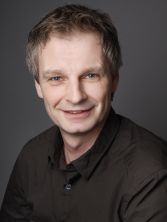
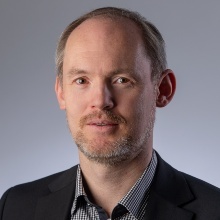
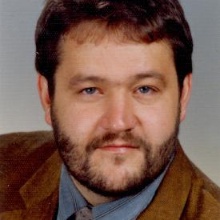
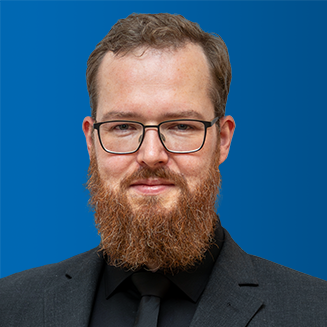
Prof. Kurt Frischmuth is a Professor at the University of Rostock, affiliated with the Numerical Mathematics Team. His research focuses on numerical methods for nonlinear problems in continuum physics, mechanical multibody systems simulation, and heat wave modeling. He teaches courses such as Numerics IV (Partial Differential Equations) and supervises internships in modeling and programming. Key projects include BMBF-funded wheel-rail contact studies, DFG-funded wear analysis, and 3D scan applications in ArguDent. He also leads seminars on analysis and numerical methods for mathematics students. Contact: Room 429, +49(0)381/498-6643, Email .
Prof. Dr. Andreas Stiegelmeyr is a Professor at the Faculty of Mechanical Engineering at Kempten University of Applied Sciences. He serves as Program Coordinator for Automotive Engineering (Bachelor) and heads the Laboratory for Control Engineering and Vehicle Systems. His research focuses on Measurement, control, and regulation technology Mechanics of vehicle drives Real-time simulation of multibody systems with friction and collisions Dynamics of vehicle systems He specializes in simulation methodologies for mechanical systems and has developed infrastructure for vehicle dynamics research at the university. Contact: Office A311, phone +49 (0) 831-2523-346
Prof. Dr. Daniel Rixen serves as Professor and Chair of Applied Mechanics at the Technical University of Munich (TUM), based at Boltzmannstr. 15 in Garching bei München. His leadership of the Chair of Applied Mechanics (TUMWLAM) encompasses research, teaching, and departmental administration within mechanical engineering. Research focuses on structural dynamics , vibrations , and multibody systems , with pioneering work in frequency-based substructuring , transfer path analysis , and model order reduction . His group develops critical open-source tools including pyFBS for substructuring workflows and OASIS for sensor data acquisition, bridging computational and experimental mechanics. Recent work integrates machine learning for dynamic simulations and real-time flexible body modeling using game engines. Analysis of 2024-2025 publications reveals three dominant trends: (1) Advanced joint identification techniques for bolted connections, (2) Real-time simulation frameworks combining Unity engine physics with ray-traced contact, and (3) Hybrid approaches merging machine learning with traditional dynamics. These efforts consistently emphasize open-source implementation and experimental validation. The Chair of Applied Mechanics functions as his primary research unit, driving innovation in dynamic substructuring methodologies and their industrial applications across automotive, robotics, and sports engineering domains.
Prof. Dr.-Ing. habil. Jörg Grabow is a Professor of Mechatronics at the Department of Mechanical Engineering, EAH Jena. He holds a diploma in Technical and Biomedical Cybernetics (1990) and a PhD in Parameter Identification (1995), both from TU Ilmenau, followed by habilitation in Radial Blowers (2004). His career spans roles at TU Ilmenau and EAH Jena since 2004. Research focuses on mechatronics, fluid mechanics, parameter identification, and biomedical engineering. Key contributions include books on generalized networks in mechatronics and collaborative work on nanopositioning systems, laser therapy, and acoustics. He holds patents on dynamic stiffness measurement and medical treatment systems. Publications span over three decades, emphasizing interdisciplinary applications in mechanical systems, laser Doppler velocimetry, and biomechanics. His work integrates theoretical models with practical engineering solutions, contributing to fields like HVAC systems, precision machinery, and medical devices.
Sebastian Peitz is Professor of Safe Autonomous Systems at TU Dortmund University's Department of Computer Science since October 2024. His educational background includes a PhD in Mathematics from Paderborn University (2017), an MSc in Mechanical Engineering from RWTH Aachen (2013), and a BSc in Mechanical Engineering from RWTH Aachen (2011). His research focuses on physics-informed machine learning, data-driven modeling and control of complex systems, and multi-criteria optimization. These areas integrate computational mathematics with engineering applications to develop robust autonomous systems. Prof. Peitz's recent publications demonstrate strong emphasis on Koopman operator theory, reinforcement learning for PDE control, multi-objective optimization, and surrogate modeling. The computational methods span fluid dynamics, quantum systems, and mechanical design, frequently utilizing equivariant architectures and kernel techniques.
Bernd Graf is a Professor at Technische Hochschule Ulm , specializing in structural mechanics and acoustics. He is affiliated with the Institute of Vehicle Systems Technology (Laboratory for Structural Mechanics and Acoustics) and the Institute of Design and CA Techniques . Research focuses on structural mechanics, acoustics, and NVH (Noise, Vibration, and Harshness) Teaching includes Engineering Mechanics I-III , Multibody Simulation , and Finite Element Method basics Expertise spans mechanical and automotive engineering disciplines Contact: Room B105, Prittwitzstraße 10, 89075 Ulm | Phone: +49 731 96537-423
Prof. Dr.-Ing. Claus Breuer serves as a Professor in the Department of Mechanical Engineering, Mechatronics and Materials Technology at the Technical University of Central Hesse (THM) in Friedberg. His office is located in Building A2, Room 0.18, and he teaches core courses including Combustion Engines 1 (VMO1), Combustion Engines 2 (VMO2), Automotive Engineering (AMT), and Tribology. He leads the Laboratory for Combustion Engines (LfVm) and Laboratory for THM Motorsport, with consultation hours held both in-person and online. His research specializes in internal combustion engines and alternative fuels, particularly biodiesel and rapeseed methyl ester. Prof. Breuer has extensively investigated engine testing methodologies, combustion optimization, and tribological aspects of piston-ring-cylinder systems. His work bridges theoretical principles with industrial applications, as evidenced by his multiple contributions to the Handbook of Combustion Engines covering historical evolution, crankshaft dynamics, torsional vibrations, and component design. He has secured significant research funding including the HMWK Study Structure Program 215 for the "STEPinM" student transition project and a DFG project on vegetable oil fuels. Prof. Breuer actively enhances education through industry excursions such as the Goodyear Dunlop tire manufacturing tour, emphasizing real-world visualization of engineering principles to motivate students beyond traditional classroom settings.
Frank Bekes is a Technical Staff Member and Chair of Mechatronics at the University of Duisburg-Essen, College of Engineering. His work focuses on automotive mechatronics and robotics, integrating real-time simulation and embedded systems. Research Profile: Hardware-in-the-Loop Real-Time Simulation, Electrical Controls, Biometric Systems Teaching & Projects: Involved in Hexapod, Telescope, HPT SEGESTA Rug Warrior, Large Manipulator Model Contact: Room MD 223c, Phone +49 (0)203 379-2579, Email frank.bekes@uni-due.de Research Interests span automotive mechatronics, mobile robotics, sensor networks, and embedded computing. His work emphasizes real-time simulation, circuit design, and biometric system integration in vehicles. Publications highlight trends in mechatronic design, motion control, and distributed automotive systems. Key subfields include optimal tension distribution in robotic manipulators, sensor signal reuse, and multibody dynamics in vehicle systems. Additional Roles include IT Administration, Technology Working Safety, and contributions to large-scale robotics models.
Remco I. Leine is a Full Professor and Director of the Institute for Nonlinear Mechanics at the University of Stuttgart. He earned his M.Sc. from Delft University of Technology, Ph.D. from Eindhoven University of Technology, and Habilitation from ETH Zurich, where he later became a Titular Professor. His academic journey includes postdoctoral research at Technical University Munich, INRIA Rhône-Alpes, and ETH Zurich. Leine's research interests sit at the intersection of nonsmooth dynamics and nonlinear dynamics, focusing on stability theory for nonsmooth systems, friction-induced vibrations, bifurcations in nonsmooth dynamical systems, and multibody systems with impact and friction. Recent work explores Koopman–Hill stability analysis, nonsmooth integration algorithms, and model reduction techniques for complex mechanical systems. Key trends in his publications include advances in numerical methods (e.g., nonsmooth RATTLE algorithm, generalized-alpha method), stability analysis of periodic orbits, modeling of frictional and impact phenomena, and applications to systems like the tippedisk and vibro-impact energy sinks. His work bridges theoretical developments with practical simulations in fields such as rockfall dynamics and multibody contact problems. Scientific awards include a prestigious Fellowship from the Royal Dutch Academy of Sciences (2002) . Advising highlights numerous current and completed PhD students, such as Paul Haacker, Tianxiang Dai, and Jonas Breuling. He contributes to editorial work as a Topical Associate Editor for Nonlinear Dynamics and a scientific board member for JTCAM . The Institute for Nonlinear Mechanics , which he directs, is a hub for research on nonsmooth dynamical systems. He actively participates in workshops and conferences , including keynote lectures at ENOC 2024 and ECCOMAS 2021, and co-organizes European Network for Nonsmooth Dynamics symposia.
Peter Eberhard is a Full Professor (C4/W3) and Director of the Institute of Engineering and Computational Mechanics at the University of Stuttgart, previously known as Institute B of Mechanics until 2005. He leads a research team of ~35 members and has been active in technical dynamics for over 30 years. Born : March 15, 1966, Stuttgart Education : Dipl.-Ing. in Mechanical Engineering (1991), Dr.-Ing. (1996), Dr.-Ing. habil. (2000), all from University of Stuttgart Leadership : Dean of Studies 'Mechatronics' (2002-2006), Coordinator of DFG Priority Programme SPP1897 (2016-present) Research Interests span multiple domains: Multibody Systems: vibrations analysis, model order reduction, damage recognition via machine learning, flexible gear drives, brake systems, delay-differential equations Mechatronics: control systems for maglev trains, predictive driving safety, 6DOF driving simulators Optimization: distributed algorithms, robotics applications, particle swarm methods Robotics: serial/parallel robots, swarm localization, force-controlled manipulators Biomechanics: hearing mechanics, implants/prostheses Meshless Methods: discrete element modeling, fluid-structure interaction Scientific Contributions : Authored/Co-authored 57+ doctoral theses Co-edited Springer book series 'Lecture Notes Applied and Computational Mechanics' Founded SimTech Excellence Cluster (2007) Organized major conferences: IUTAM Symposium (2006), IMSD Conference (2012)
Ulrich Römer serves as Professor of Engineering Mechanics – Dynamics at the Institute of Mechanics and Fluid Dynamics, Freiberg University of Mining and Technology since 2024, following prominent academic roles at Karlsruhe Institute of Technology. 2024–present : Full Professor, Engineering Mechanics – Dynamics 2021–2024 : Academic Councillor, Dynamics/Mechatronics 2013–2021 : Research Associate, Dynamics/Mechatronics Römer's research establishes critical connections between multibody dynamics and biomechanical efficiency , with seminal work on bipedal locomotion mechanics. His doctoral dissertation on foot geometry's impact on walking energy consumption bridges theoretical dynamics with practical applications in rehabilitation robotics and humanoid engineering. Current investigations focus on nonlinear dynamic modeling for industrial machinery and energy recovery systems in mechatronic actuators, emphasizing computational validation through advanced simulation frameworks. Educational leadership defines Römer's academic profile through graduate-level dynamics instruction and doctoral mentorship at Freiberg University. His teaching methodology integrates theoretical principles with experimental validation techniques, preparing students for complex mechanical system analysis in industrial applications.
Nick van de Berg, PhD, is an assistant professor at Erasmus MC in the Department of Gynaecological Oncology , where he leads research in biomechanical engineering applied to personalized cancer care. His work integrates medical device design , 3D printing , medical imaging , and optical sensor data to develop innovative solutions for gynaecological oncology. Education & Career: 2004–2011: B.Sc. Mechanical Engineering & M.Sc. Biomedical Engineering, Delft University of Technology 2012–2016: PhD in Biomechanical Engineering, Delft University of Technology 2016–present: Post-doc researcher, Delft University of Technology 2018–2024: Post-doc researcher, Erasmus MC (Radiology & Nuclear Medicine & Gynaecological Oncology) 2024–present: Assistant Professor, Erasmus MC, Department of Gynaecological Oncology Research Focus: Van de Berg’s research spans hardware (medical devices) and software (image-guidance methods), with a strong translational focus from bench to bedside. His key projects include: HSI-GO: AI-based hyperspectral imaging for ovarian and vulvar tumor recognition Fietsproeftuin: Living Lab for cycling re-enablement in cancer patients Steerable needles for prostate and gynaecological brachytherapy ARCHITECT: 3D-printed personalized brachytherapy applicators Publications & Impact: He has authored over 50 peer-reviewed articles, with top-cited works in IEEE/ASME Transactions on Mechatronics , Medical Engineering & Physics , and Scientific Reports . His h-index is 18 (Google Scholar). Collaborations & Labs: He collaborates with Delft University of Technology, SINTEF (Norway), and ACMIT (Austria). His work bridges engineering and clinical oncology, with active roles in device development and clinical translation.
Prof. Dr.-Ing. Ramona Hoffmann is a faculty member at Saarland University of Applied Sciences (htw saar), specializing in construction technology and biomechanical modeling. Her research focuses on strength testing, design optimization for prostheses/implants, biomechanical modeling of human movements, and finite element method (FEM) applications in mechanical engineering. Research expertise: Biomechanical optimal control, soft tissue FEM modeling, and mechanical design optimization Key collaborations: University of Erlangen-Nuremberg, FAU Erlangen, Department of Mechanical and Process Engineering Professional memberships: GAMM (Society for Applied Mathematics and Mechanics), VDI (Association of German Engineers) Her recent publications emphasize structure-preserving simulations of muscle-actuated movements, computational modeling of arterial growth, and applications of variational integrators in biomechanics. She supervises technical theses and bachelor/masters projects related to mechanical design, 3D printing, and prosthesis optimization. Notable research contributions include: Development of cost-effective lower leg prostheses for children Parametric FEM modeling of the thumb 3D scanning of biometric data for mechanical modeling Investigation of muscle path dynamics in biomechanical simulations Implementation of material growth in finite element systems Optimization of patient-specific biomechanical simulations
Andreas Zwölfer is a Visiting Professor at Boeing and a principal scientist at the Chair of Applied Mechanics, Technical University of Munich. He holds a Ph.D. in Engineering Sciences from the University of Innsbruck, an M.Sc. in Advanced Mechanical Engineering from Imperial College London, and a B.Sc. in Automotive Engineering from Joanneum University of Applied Sciences Graz, all with distinction. His research focuses on hybrid simulation techniques in engineering dynamics, particularly combining classical and data-driven methods for analyzing complex systems. He also serves on the management team of his chair and teaches as an adjunct professor globally. Education: Ph.D. in Engineering Sciences, University of Innsbruck (distinction) M.Sc. in Advanced Mechanical Engineering, Imperial College London (distinction) B.Sc. in Automotive Engineering, Joanneum University of Applied Sciences Graz (distinction) Research interests include engineering dynamics, finite element methods, data-driven science, model order reduction, nonlinear dynamics, and simulation frameworks. His work aims to advance virtual prototyping through real-time digital twins. He has contributed to numerous projects such as High Precision Robotics, Technical Biomechanics, and Real-Time Hybrid Substructuring. His teaching spans adjunct roles worldwide, emphasizing practical engineering applications. Advising and grants: While specific student names and grant details are not listed, his involvement in student projects (e.g., snowboard design optimization) and lab initiatives like the Chair of Applied Mechanics highlights his mentorship and collaborative approach. Labs/Teams: He is affiliated with the Chair of Applied Mechanics at TUM, focusing on interdisciplinary projects blending theoretical and applied mechanics.
Bernd Simeon is a Professor of Mathematics at Technische Universität Kaiserslautern (TUK), leading the Differential-Algebraic Systems group within the Department of Mathematics. His research focuses on applied and numerical mathematics, with particular emphasis on coupled systems of differential-algebraic equations (DAEs) and partial differential equations (PDEs). Key areas of expertise include computational mechanics (especially multibody dynamics), interdisciplinary collaborations in materials science and fluid mechanics, isogeometric finite elements, and biomechanical applications such as hemodynamics and musculoskeletal systems. Before joining TUK in 2010, he held professorships at TU München (2002–2010) and the University of Karlsruhe (2000–2002). He obtained his habilitation in mathematics from Karlsruhe in 2000 and his PhD from TU München in 1994. His academic career includes acting professorships and research roles across multiple German universities. Research Interests: Applications of DAEs and PDEs in engineering and biology Isogeometric analysis for structural and fluid-structure interaction problems Model reduction techniques for dynamic systems Numerical methods for nonlinear dynamics and biomechanics Publications reflect his contributions to computational mechanics, including influential works on differential-algebraic systems (e.g., multibody dynamics) and isogeometric methods. Recent trends emphasize interdisciplinary applications in biomechanics and material science. His work bridges theoretical mathematics with practical engineering challenges, with a focus on advancing numerical simulation techniques. Current projects explore fiber-based muscle modeling and mean-field particle systems. Labs/Teams: Head of the AG Differential-Algebraic Systems research group at TUK.