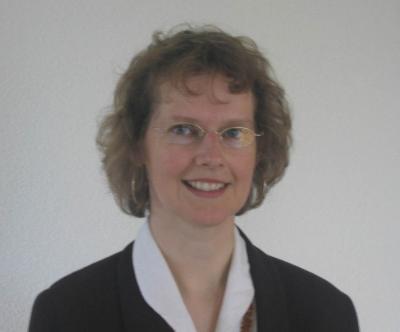
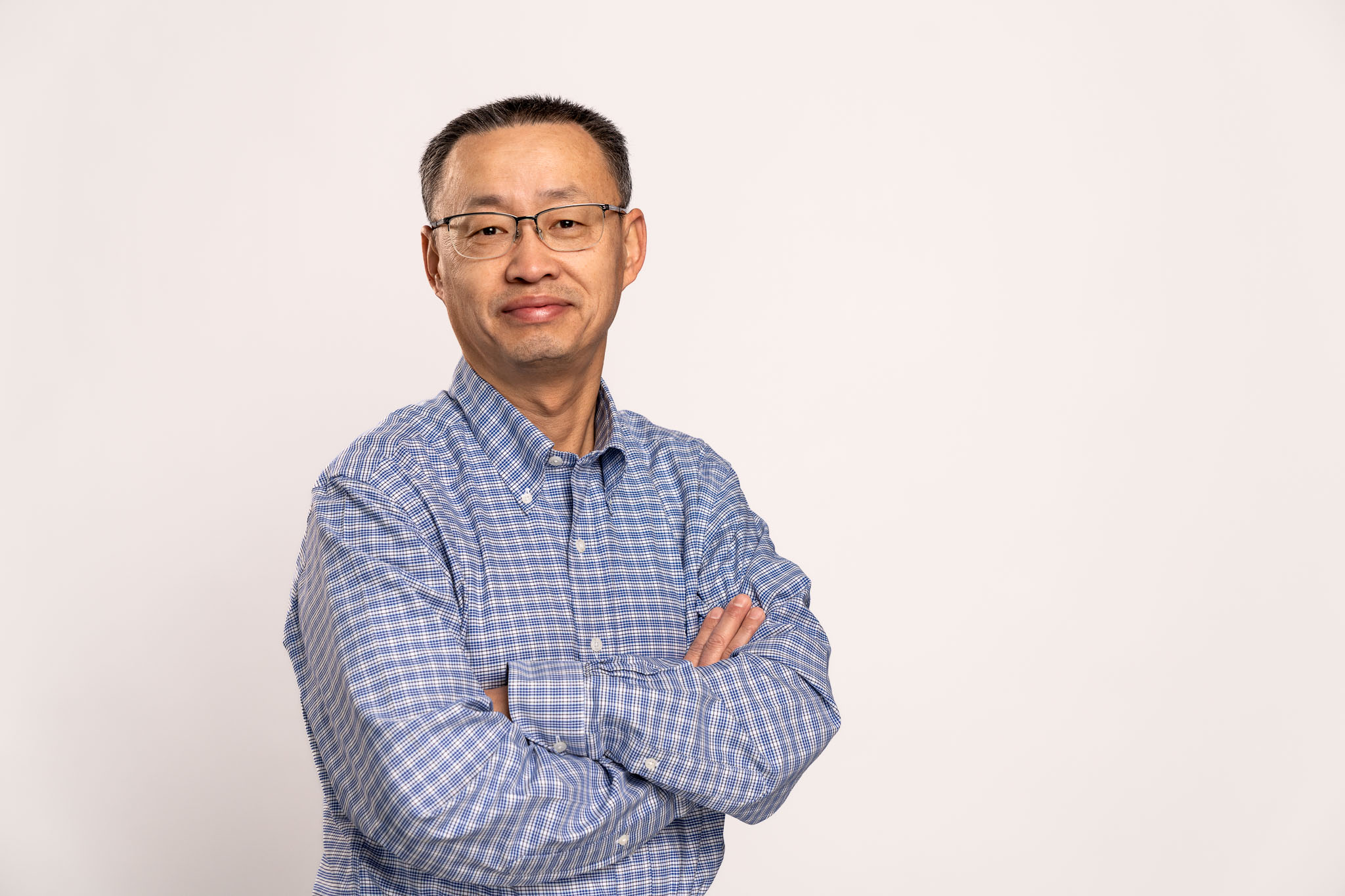
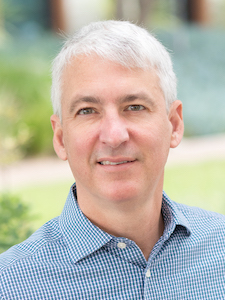
Dr Zhe Wang is a Senior Lecturer at the School of Information and Communication Technology, Griffith University, focusing on artificial intelligence, knowledge graphs, and semantic technologies. He earned his PhD in Computer Science from Griffith University (2011) and previously worked as a Research Fellow at the University of Oxford (2011-2013) on ontology-based systems. Research: Specializes in knowledge graph construction, rule mining for explainable AI, and integrating machine learning with logical reasoning. Led development of the scalable RLvLR rule-mining system and contributed to the HermiT ontology reasoner. Teaching: Instructs undergraduate and postgraduate courses including Introduction to Artificial Intelligence, Secure Development Operations, and Software Engineering Fundamentals. Grants: Funded by Australia's Economic Accelerator Ignite Grant (2025) for AI-driven marine life survey systems and Office of National Intelligence projects (2021-2022). Publications: Active in top venues like AAAI, ICASSP, and ISWC, with recent work on temporal knowledge graph reasoning, auction design algorithms, and neurosymbolic AI systems.
Claudio Ulises Cortes Garcia is a Professor at the Department of Computer Science , Technical University of Catalonia, and leads the IDEAI-UPC (Intelligent Data Science and Artificial Intelligence Research Group) and KEMLG (Knowledge Engineering and Machine Learning Group). He is affiliated with the Barcelona Supercomputing Center (BSC-CNS) and the Barcelona School of Informatics (FIB). With a Doctor en Informática (PhD in Computer Science) and Ingeniero Industrial y de Sistemas (Industrial and Systems Engineering) degrees, his work spans Artificial Intelligence , Intelligent Agents , and Assistive Technology . His research integrates European Programs and Internet with applications in Second Life and Software . His recent publications focus on Post-COVID cognitive effects , AI ethics , and agent-based modeling for urban water management. He received the Doctor Honoris Causa from Universitat de Girona in 2024 and has collaborated on projects like DIGITAfrica and HUB D'INNOVACIÓ PEDIÀTRICA . His work bridges Neuroscience , Environmental Modeling , and Digital Humanities , with over 650 activities recorded in his academic career. ORCID : 0000-0003-0192-3096 WoS Researcher ID : B-7284-2009 Scopus Author ID : 7004065770
Prof. Rineke Verbrugge is a Professor in Artificial Intelligence at the University of Groningen's Faculty of Science and Engineering, affiliated with the Bernoulli Institute. Her research focuses on computational theory of mind, multi-agent systems, hybrid intelligence, and logical frameworks applied to social networks and legal reasoning. She holds additional roles on the Institute Advisory Board of CWI (Dutch National Research Institute for Mathematics and Computer Science) and several ERC/NWO selection committees. Her work bridges cognitive science and AI, emphasizing human-agent collaboration, belief formation in groups, and ethical AI design. Recent projects include developing computational models for theory of mind in negotiations and scenario-based Bayesian networks for legal evidence analysis. She has authored over 220 publications and supervised multiple PhD candidates in AI and logic. Key research themes include higher-order theory of mind applications, zero-one laws in provability logic, and agent-based policy evaluation for sustainable technologies. Her contributions span conferences like AAMAS, ICAIL, and HHAI, addressing topics from lie detection mechanisms to privacy conflicts in multi-user systems.
Joel Dyer is a Senior Research Fellow at the Oxford Institute for New Economic Thinking and a Senior Research Associate at the University of Oxford's Department of Computer Science. He holds a DPhil in computational statistics and machine learning from the University of Oxford’s Mathematical Institute. His research focuses on agent-based simulation models, likelihood-free parameter inference, and simulation-based planning under uncertainty. Affiliations: University of Oxford (Department of Computer Science), Oxford Institute for New Economic Thinking Education: DPhil in Computational Statistics and Machine Learning, Mathematical Institute, University of Oxford Research Interests: Agent-based modelling Bayesian inference and likelihood-free methods Monte Carlo simulation Simulation-based optimization and planning Research Contributions: His work bridges computational statistics and economic modeling, emphasizing scalable inference techniques for complex systems. Recent efforts include surrogate modeling for simulation optimization and path signatures for time-series analysis. Labs/Teams: Part of the Complexity Economics Programme at Oxford INET and collaborates with institutions like the Alan Turing Institute and Improbable.
Dr. Nirav Ajmeri is a Senior Lecturer in Artificial Intelligence at the University of Bristol's School of Computer Science. He holds a PhD and MS from North Carolina State University and a BE from Sardar Vallabhbhai Patel Institute of Technology. His work focuses on socially intelligent multiagent systems, ethics in AI, privacy-preserving technologies, and socio-technical systems design. Education: PhD and MS in Computer Science, North Carolina State University B.E. in Computer Engineering, Sardar Vallabhbhai Patel Institute of Technology Research Interests: Dr. Ajmeri explores ethical AI frameworks, normative multiagent systems, privacy in socio-technical environments, and human-agent collaboration. His work bridges technical innovation with societal impacts, focusing on fairness, accountability, and transparency in autonomous systems. Recent Trends in Publications: Recent work emphasizes ethical governance in AI (Rawlsian fairness, macro ethics), graph-based social network modeling, and multiagent simulations of polarization. He also investigates practical applications like misuse audits in mobile apps and cybersecurity hygiene promotion through normative systems. Awards: Best Blue Sky Paper Award at AAMAS 2020 Most Influential Paper Award (2024) for 2013 JSS publication on agile requirements Advising & Grants: Supervises PhD students in AI ethics, interactive AI, and cybersecurity. Co-developed the UKRI AI for Collective Intelligence Hub and contributed to national AI strategy frameworks. Engaged in tool development (e.g., Coco ASP implementation for norm reasoning). Labs & Teams: Active in Bristol's Interactive AI research group, leading projects on ethical AI design and multiagent system dynamics. Collaborates with interdisciplinary teams across computer science, social sciences, and policy domains.
Alan Tsang is an Assistant Professor at Carleton University's School of Computer Science. He specializes in Multi-agent Systems and Computational Social Choice, focusing on strategic interactions in social networks. Previously, he was a Post-Doctoral Researcher at the National University of Singapore and earned his PhD from the Cheriton School of Computer Science at the University of Waterloo under Dr. Kate Larson. His research integrates game theory and agent-based simulations to address fairness, voting mechanisms, and social network dynamics. He is affiliated with Carleton's Institute for Data Science and the Department of Human-Computer Interaction (HCI), and serves as Information Officer of ACM SIGAI. His educational background includes a Master of Mathematics in Graph Theory and a Bachelor of Mathematics in Bioinformatics, both from the University of Waterloo. His work explores interdisciplinary applications, such as modeling pandemic impacts and ethical computing challenges. He teaches courses like Multiagent Systems and Computing, Society, and Ethics, and actively mentors students in graduate and undergraduate research programs. Key research areas include algorithmic fairness, social choice mechanisms, and agent-based modeling of societal systems. He leads the Games, Agents, and Incentives Workshop and collaborates on projects analyzing voting behavior in homophilic networks and fair allocation strategies.
Franco ZAMBONELLI is a Full Professor in the Department of Engineering Sciences and Methods at the University of Modena and Reggio Emilia. He holds positions in both the Reggio Emilia and Modena campuses, offering courses such as Software Engineering and Distributed Artificial Intelligence. His research focuses on IoT, pervasive computing, multiagent systems, and self-organization in distributed systems, with applications in smart cities, healthcare, and mobility. He leads projects like FLUIDWARE (PRIN 2017) and CONNECARE (H2020), exploring adaptive IoT systems and integrated healthcare solutions. ZAMBONELLI is an IEEE Fellow, ACM Distinguished Scientist, and member of the Academia Europaea. His work bridges theory and practice, emphasizing software engineering methodologies for IoT and agent-based systems. Education: Not explicitly detailed in provided texts. Research Grants: FLUIDWARE (2019-2022), CONNECARE (2016-2019). His research interests include causal discovery in pervasive environments, reinforcement learning for cybersecurity, and digital twin technologies. He contributes to editorial boards of journals like ACM Transactions on Autonomous and Adaptive Systems and IEEE Technology and Society Magazine. His teaching spans software engineering, distributed AI, and IoT-oriented methodologies. The Agents and Pervasive Computing Lab (agentgroup.unimore.it) is a focal point for his experimental work. Professional memberships include IEEE, ACM, and the Italian Association for Artificial Intelligence. Recent achievements include successful final reviews for CONNECARE and advancements in fluidware programming paradigms.
Associate Professor Julie Porteous is affiliated with the School of Computing Technologies at RMIT University. Her research focuses on Artificial Intelligence applications including narrative planning, medical image processing, and human-agent interaction. She supervises research projects in areas such as dynamic transportation networks, medical imaging frameworks, and explainable AI in planning systems. Her work combines AI techniques with storytelling, medical diagnostics, and collaborative decision-making. Notable contributions include SellaMorph-Net for medical image segmentation and advancements in automated narrative generation systems. She actively contributes to conferences like AAMAS and AAAI, publishing on topics ranging from story sifting algorithms to intention communication in multiagent environments. Dr. Porteous collaborates on projects involving interactive narrative platforms, virtual urban environments, and neurofeedback systems for adaptive storytelling. She maintains an ORCID profile (0000-0003-4618-2359) and is open to supervising PhD/Masters students in her research areas.
Aleksandr Zagarskikh is an Associate Professor at the Game Development School of ITMO University, specializing in virtual reality, scientific visualization, and high-performance computing. He has led projects in quantum chemistry visualization, flight simulators, and urban simulation technologies. Developed real-time graphics systems for ultra-realistic image synthesis Created high-performance network protocols for distributed visualization Current research focuses on big data decision-making in finance and multiscale urban modeling His work spans predictive modeling, GPU optimization, and cloud-based infrastructure visualization, with publications in Procedia Computer Science. He teaches courses in game technologies, VR, and scientific computer graphics.
Tim Finin is a Professor in the Computer Science and Electrical Engineering department at the University of Maryland, Baltimore County (UMBC), where he serves as Director of the UMBC Center for Artificial Intelligence and holds the Willard and Lillian Hackerman Chair in Engineering. With over 50 years of experience, his research focuses on knowledge graphs, natural language processing, machine learning, and applications to information systems security and social media. Education: Ph.D. in Computer Science from the University of Illinois (1980), M.S. in Computer Science (1977), and S.B. in Electrical Engineering (1971) from MIT Current Roles: Director, UMBC Center for AI; Hackerman Chair; Professor, UMBC Previous Roles: Adjunct Associate Professor at University of Pennsylvania; positions at Unisys, JHU HLT CoE, and MIT AI Lab Research Interests: Dr. Finin's work spans Knowledge graphs and semantic web technologies Natural language processing for cybersecurity Machine learning for data assimilation Privacy and security in distributed systems Social media analysis Quantum computing applications Recent Grant Trends: His funded research includes projects on knowledge graph optimization, AI cybersecurity, semantic manufacturing standards, and quantum machine learning. Grants from DoD, NSF, NIST, and industry partners like IBM and Google demonstrate his interdisciplinary impact. Scientific Honors: ACM Fellow (2018) AAAI Fellow (2013) IEEE Technical Achievement Award (2009) UMBC Presidential Research Professor (2012) Fellow, Foundation for Intelligent Physical Agents (1997) Academic Leadership: Dr. Finin has chaired UMBC's Computer Science department, served on the Computing Research Association board, and held editorial roles including Editor-in-Chief of the Journal of Web Semantics (2005-2016).
Kamil Hassan is a Doctoral student and Researcher at KTH Royal Institute of Technology, affiliated with the Division of Decision and Control Systems. His work focuses on securing cyber-physical infrastructure through advanced control methodologies. His research spans Control Systems , Cyber-Physical Security , and Power Systems Resilience , with emphasis on mitigating attacks in time-critical networks. Key contributions include finite-time control barrier functions for power inverters and randomized detector tuning for attack impact reduction. His methodologies integrate hardware-in-the-loop validation with theoretical guarantees. Recent publications (2021–2025) reveal a trajectory toward resilient control architectures for energy systems, blending multiagent consensus theory with security-aware design. Work on power inverter networks dominates his output, addressing grid stability under cyber threats through novel barrier function frameworks and simulation-validated approaches. Hassan serves as course assistant for Cyber-Physical Security in Time-Critical Systems (EL2850) and operates within KTH's Decision and Control Systems division, contributing to hardware-in-the-loop testing environments for critical infrastructure protection.
Professor Jinjun Shan is a Full Professor of Space Engineering and former Department Chair (2018-2023) in the Department of Earth and Space Science and Engineering at York University's Lassonde School of Engineering. An internationally recognized expert in dynamics, control and navigation, he joined York University as an Assistant Professor in 2006, was promoted to Associate Professor in 2011, and became a Full Professor in 2016. Dr. Shan received his B.Eng., M.Eng., and Ph.D. degrees from Harbin Institute of Technology, China, in 1997, 1999, and 2002, respectively. Before joining York, he was a Post-Doctoral Fellow at the University of Toronto Institute for Aerospace Studies (2003-2006) and a Research Assistant at City University of Hong Kong (2002-2003). His research focuses on dynamics, control and navigation, autonomous systems, multi-agent systems, smart materials and structures, space instrumentation, active vibration control, and orbit dynamics. Dr. Shan has made significant contributions to national and international space missions including NEOSSat and has attracted over $5 million in research funding from governmental agencies and industry partners. His laboratory, the Spacecraft Dynamics Control and Navigation Laboratory (SDCNLab), which he founded in 2006, conducts cutting-edge research in space engineering. Dr. Shan's extensive publication record includes over 200 peer-reviewed journal and conference papers, with his most recent work focusing on multi-agent formation control, autonomous vehicle decision-making, quadrotor control systems, and smart material applications. His research shows a clear progression from fundamental dynamics and control theory toward increasingly complex multi-agent systems and real-world applications in autonomous vehicles and space engineering. Fellow of Canadian Academy of Engineering (CAE) Fellow of Engineering Institute of Canada (EIC) Fellow of American Astronautical Society (AAS) Associate Fellow of AIAA Alexander von Humboldt Research Fellowship JSPS Fellowship Lassonde Educator of the Year Award (2022) Named in Stanford's list of world's top 2% researchers Dr. Shan has successfully mentored numerous graduate students and post-doctoral fellows, with current advisees working on cutting-edge projects in multi-agent systems, UAV control, and smart materials. His research is supported by substantial funding from NSERC, CSA, and industry partners. As the founding director of SDCNLab, he has built a comprehensive research facility for spacecraft dynamics, control, and navigation, recently expanding to include autonomous unmanned vehicle research through a CFI JELF award. His laboratory continues to make significant contributions to both theoretical advancements and practical applications in space engineering and autonomous systems.
Kostas Vlachos is an Assistant Professor in the Department of Computer Science and Engineering at the University of Ioannina, Greece. He has been in this position since 2014, following prior teaching roles at the University of Thessaly (2007–2013). He is a member of the Information Processing and Analysis (I.P.AN.) research group and actively supervises PhD, MSc, and diploma students in robotics and control systems. PhD, School of Mechanical Engineering, National Technical University of Athens, 2004 MSc, Interdepartmental Postgraduate Program in Automation Systems, National Technical University of Athens, 2000 Diploma in Electrical Engineering, Technical University of Dresden, Germany, 1993 His research focuses on robotics and control, with emphasis on microrobotics , haptic mechanisms , medical simulators , and autonomous navigation . He has made significant contributions to over-actuated marine platforms, reinforcement learning for navigation, and tactile robotic systems. His work bridges mechanical engineering and computer science, particularly in intelligent robotic control. The 15 most recent publications highlight a strong trend in autonomous marine robotics , multi-agent reinforcement learning , and intelligent control systems . Key themes include energy-efficient control, obstacle avoidance, sensor fusion, and learning-based navigation. The research spans from theoretical control design to real-world implementation in unmanned surface vehicles and microrobots. Best Student Paper Award, 9th Hellenic Conference on AI (SETN 2016) Vlachos has supervised over 30 students at various levels and has participated in multiple national and European research projects in robotics and automatic control. His teaching includes courses such as Computational Mathematics, Robotics, and Robotic Systems. He collaborates extensively with researchers like E. Papadopoulos and K. Blekas. He leads research within the Information Processing and Analysis (I.P.AN.) group, focusing on intelligent perception and control of robotic systems. His lab works on mobile manipulators, haptic devices, mini-robots, and marine platforms, integrating simulation (ROS/Gazebo) with real-world experimentation.
Andrew S. Gordon is a Research Associate Professor of Computer Science at the University of Southern California and Director of Interactive Narrative Research at the Institute for Creative Technologies. His work integrates artificial intelligence, cognitive science, and interactive storytelling to create systems that automatically interpret and generate narrative structures, with a special focus on commonsense reasoning and abductive inference. Education Ph.D. in Computer Science, Northwestern University, 1999 Research Interests Gordon’s research converges on computational narrative intelligence . He develops formal models of commonsense psychology that enable machines to reason about human intentions, beliefs, and emotions. His group designs interactive narrative systems for training and education, builds large-scale story corpora, and pioneers abductive reasoning techniques that combine symbolic logic and statistical learning to interpret temporal data. Recent work explores how large language models can be guided to co-create interactive fiction and how vision–language models can be benchmarked for causal understanding. Publication Trends Across more than two decades, his publications reveal consistent themes: (1) foundational theories of commonsense psychology and strategy representation, (2) narrative technologies that blend AI planning with human creativity, and (3) practical training simulations for defense and education. The 2024-2025 papers highlight a pivot toward evaluating and steering large language models for narrative tasks, while earlier work established abductive reasoning frameworks such as “Etcetera Abduction.” Awards & Honors Best Paper Award, System Lifecycle and Technologies Track, Simulation Interoperability Standards Organization (SIW 2021) Advising & Grants He has successfully mentored three PhD students—Reid Swanson (2010), Christopher Wienberg (2017), and Melissa Roemmele (2018)—whose dissertations span computational narrative, commonsense reasoning, and interactive fiction. His research has been continuously supported by agencies including the U.S. Army, DARPA, and NSF for projects on virtual training environments, narrative-centered learning, and large-scale commonsense knowledge acquisition. Labs & Teams Gordon directs the Interactive Narrative Research Group at USC’s Institute for Creative Technologies, where interdisciplinary teams of computer scientists, cognitive psychologists, and interactive media designers collaborate on systems such as the Rapid Integration & Development Environment (RIDE) for embodied conversational agents and story-driven training simulations.
Faruk Polat is a Professor of Computer Science at the Department of Computer Engineering, College of Engineering, Middle East Technical University (METU) in Ankara, Turkey. He has been serving at METU since 1994, progressing from Assistant Professor (1994-1996) to Associate Professor (1996-2002) and then to full Professor (2002-present). He received his B.S. in Computer Engineering from METU in 1987, followed by M.S. and Ph.D. degrees from Bilkent University in 1989 and 1994 respectively, with a visiting scholar period at the University of Minnesota (1992-1993). His primary research interests include Artificial Intelligence, Reinforcement Learning, Multiagent Systems, Markov Decision Processes, and Partially Observable Markov Decision Processes. His work significantly contributes to computational biology applications, particularly in gene regulatory network modeling, and to multiagent path finding in virtual simulations and computer games. He has published extensively in top-tier journals and conferences, with recent publications extending into 2025. Professor Polat has supervised numerous graduate students who have gone on to successful careers in academia and industry, including positions at Meta, Google, Apple, Microsoft, and various universities. His research group continues to be highly active, with current PhD students working on reinforcement learning, multiagent path planning, and gene regulatory networks. His scientific contributions span multiple domains, with a clear trajectory from foundational work in multiagent systems to increasingly sophisticated applications in computational biology and autonomous systems. His recent publications indicate continued innovation in reinforcement learning techniques, particularly in handling partial observability and complex path planning problems. NATO Science Scholar at University of Minnesota (1992-1993) Member and Team Leader/Deputy Team Leader of National Informatics Olympiad Group (1995-2011) Professor Polat has advised numerous PhD and Master's students who have secured positions at leading technology companies and academic institutions worldwide. His research has been supported by grants including Tubitak 1001 Project (Grant No. 115G086). His work bridges theoretical advances in artificial intelligence with practical applications in computational biology and autonomous systems.