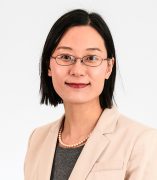
Olga Viedma is an Associate Professor at the University of Castilla-La Mancha in the School of Environmental Sciences . Her research focuses on fire ecology, remote sensing applications, and landscape dynamics in Mediterranean ecosystems. PhD in Environmental Sciences (Geography) from Universidad de Alcalá de Henares BSc in Geography and History from Universidad de Alicante Her work integrates LiDAR technology, satellite imagery (Sentinel, MODIS, Landsat), and statistical modeling to study: Fire severity prediction and mapping Landscape structural controls on fire behavior Ecosystem recovery post-fire Long-term fire regime trends Key article trends (2017–2025) show a consistent emphasis on: Fire severity analysis using multi-sensor data LiDAR-based fuel modeling Spatiotemporal fire pattern detection Human-climate-fire interactions Mediterranean ecosystem transitions She collaborates extensively with fire ecologists like José Manuel Moreno and develops open-source tools like LadderFuelsR for vegetation structure analysis.
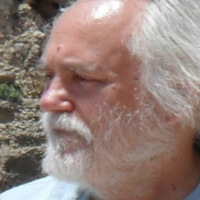
Janusz Gajda is a Professor at the Department of Metrology and Electronics , Faculty of Electrical Engineering, Automatics, Computer Science and Biomedical Engineering at AGH University of Science and Technology in Kraków. His primary research focuses on Weigh-in-Motion (WIM) systems , sensor technology, and metrology for vehicle mass enforcement. He has contributed extensively to the calibration, accuracy assessment, and data fusion of WIM systems. Key roles: Faculty Professor, Disciplinary Spokesman for Academic Teachers Research areas: Metrology, Sensor Design, Vehicle Measurement Systems Recent work: 2025 publications on WIM calibration and sensor durability His publications demonstrate a strong emphasis on dynamic vehicle weighing , load sensor properties , and sensor data fusion . He has also engaged in interdisciplinary projects like the CBM Collaboration at FAIR. No awards or students are explicitly documented in the provided texts.
Piotr Piwowar, PhD, Eng., serves as Assistant Professor in the Department of Metrology and Electronics at AGH University of Science and Technology's Faculty of Electrical Engineering, Automatics, Computer Science and Biomedical Engineering in Kraków, Poland. His office is located in room 208 of building B-1. His research spans two interconnected domains: Biomedical Engineering : Development of respiratory diagnostics using negative pressure impulse methods, correction of foot deformities through transverse arch restoration, and investigation of protein aggregation phenomena using Congo red as a supramolecular ligand. Traffic Engineering : Design and optimization of weigh-in-motion systems utilizing inductive loop technology, multi-sensor fusion, and real-time traffic parameter measurement. Analysis of his 2015-2024 publications reveals consistent dual-focus contributions: biomedical works include epidural catheter dynamics studies and fetal heart rate monitoring algorithms, while traffic engineering research emphasizes sensor calibration and vehicle load estimation. His methodology frequently integrates electrical engineering principles with biomechanical and transportation applications. Scientific Awards: No awards mentioned in source materials Student advising details and research grant information were not provided in available documentation. Dr. Piwowar participates in the College of the Faculty of Electrical Engineering, Automatics, Computer Science and Biomedical Engineering for collegial governance, but no dedicated laboratory or research team structure was specified.
Roberto Iglesias Rodríguez is an Associate Professor at the University of Santiago de Compostela, Spain, with a focus on robotics and machine learning. He holds a B.S. and Ph.D. in Physics from the same institution (1996, 2003). His work addresses lifelong robot learning, federated learning, and deployment of intelligent systems in heterogeneous environments. Current affiliation: University of Santiago de Compostela Academic rank: Associate Professor Education: B.S. and Ph.D. in Physics (1996, 2003) His research spans robotics, machine learning, and sensor fusion , emphasizing adaptive algorithms for non-IID data, concept drift, and real-time environmental interaction. Projects include service robots learning from humans, distributed control architectures, and federated learning strategies. Recent publications analyze continual learning , scene recognition , and human-robot collaboration . Key themes: robust navigation, multi-sensor systems, and explainable AI.
Jussi Ängeslevä is a Professor at Berlin University of the Arts and Creative Director at ART+COM Studios, specializing in media art, interaction design, and digital materiality. His career spans academic roles including Visiting Professor at Royal College of Art (2011-2018), Honorary Professor at UdK Berlin (2011-present), and Assistant Professor at UdK Berlin (2005-2007). He holds an MA in Audio-Visual Media Culture from the University of Lapland (2004) and an MA in Interaction Design from the Royal College of Art (2002). His research explores the intersection of computational design, physical interfaces, and spatial communication, with notable interests in kinetic sculptures, caustic light systems, and hybrid museum experiences. Projects like 'RGB|CMY Kinetic' and 'Pinnannousu' demonstrate his integration of mechatronics, computational optics, and environmental interaction. Ängeslevä has received over 20 international awards including a D&AD Black Pencil (2009), Cannes Lions Gold (2009), and Prix Ars Electronica (2003). His contributions to academic discourse include publications on prototyping methodologies, digital materiality, and embodied interaction in venues like Springer and Cambridge University Press. He actively participates in juries for Ars Electronica, D&AD, and Siggraph. Collaborations with institutions like EPFL and Museum für Naturkunde highlight his interdisciplinary approach. Current projects include 'NuForm' (hybrid museum experiences) and 'Place of Remembrance' (data-driven memorials using organic materials). He maintains affiliations with the Hybrid Plattform Berlin and contributes to design education globally.
Hu Chengzhi is a tenured Associate Professor at the Department of Mechanical and Energy Engineering , Southern University of Science and Technology (SUSTech), where he has worked since 2018. He leads the SUSTech-Zifu Medical Joint Laboratory (5 million RMB funding) and serves as Deputy Director of the Guangdong Provincial Key Laboratory of Human Augmentation and Rehabilitation Robots . A National Young Talent Program recipient and Shenzhen Peacock Plan B-category Talent , he earned his PhD in Micro-Nano Systems Engineering from Nagoya University (2014) under Professor Toshio Fukuda (Chinese Academy of Sciences foreign member) and conducted postdoctoral work at ETH Zurich with Professor Bradley Nelson. Education B.S. & M.S. in Mechanical Engineering, Huazhong University of Science and Technology (2008, 2010) Ph.D. in Micro-Nano Systems Engineering, Nagoya University (2014) Research Interests focus on micro-nano robotic technologies for single-cell analysis and tumor-targeted therapy , including magnetic manipulation, microfluidic chips, and swimming microrobots. His work also extends to medical microrobotics for diagnosing and treating gastrointestinal diseases. Over the past five years, he has led 14 competitive projects, including the National Key R&D Program and National Natural Science Foundation of China grants. Scientific Awards include the 2024 MINE Young Scientist Award , Best Paper Awards at IEEE MHS 2012, IEEE ICRA 2015, IEEE CBS 2023, and IEEE ICMA 2024. He has published 65 papers in top journals like Nature Communications , Advanced Science , and ACS Nano , and holds over 30 patents. Leadership and Service : Served as General Chair for IEEE ICMA 2025 (500+ participants), Director of SUSTech-Zifu Medical Joint Laboratory , and editorial board member of Cyborg and Bionic Systems . He mentors PhD and Master's students and actively recruits researchers for his lab.
Prof. Mickey Scheinowitz serves as Director of the Sylvan Adams Sports Institute at Tel Aviv University within the Iby and Aladar Fleischman Faculty of Engineering's Department of Biomedical Engineering. His research integrates Exercise Physiology , Sports Technology , and Biomechanics to enhance athletic performance and recovery. Current affiliations: Tel Aviv University (Faculty of Engineering, Biomedical Engineering Department) Research domains: Thermal physiology, Anaerobic power prediction, Cycling biomechanics, Fatigue monitoring, Mental-physiological performance interactions Email: mickeys@tauex.tau.ac.il Research Trends in his 2023-2025 publications show: Advancements in dynamic SPECT imaging for cardiovascular diagnostics Development of machine learning algorithms for exercise stress test interpretation Exploration of microbiome-exercise interactions in endurance athletes Innovations in non-invasive temperature monitoring during high-intensity activity Laboratory Operations focus on multi-disciplinary approaches to athletic performance optimization, located in the Multi-disciplinary Center (room 412) with integration of thermal imaging , EMG analysis , and SportsTech innovations .
Leah Strand is a Ph.D. candidate and research assistant at the Technical University of Munich (TUM) in the Department of Robotics, Artificial Intelligence and Real-time Systems under Prof. Knoll. She joined TUM in March 2020 and contributes to projects like Providentia++ , which focuses on creating real-time digital twins of traffic on the Autobahn A9. Education: M.Sc. in Mechatronics and Information Technology, B.Sc. in Engineering Science (both from TUM) Research interests include: Autonomous Driving Multi-Object Tracking Sensor Calibration and Fusion Her recent publications emphasize image enhancement , multi-camera calibration , and traffic surveillance datasets . She actively participates in teaching and project advising, with expertise in real-time systems and infrastructure-based perception for autonomous vehicles. Contact: leah.strand@tum.de
Adnane Jadid is a researcher affiliated with the Chair for Computer Aided Medical Procedures & Augmented Reality at the Faculty of Informatics, Technische Universität München. His work focuses on sensor fusion, augmented reality, and machine learning applications in technical and medical domains. Research Interests : Augmented Reality, Sensor Fusion, Machine Learning, Gamification Key Projects : Multi-IMU fusion for tracking optimization, AR-based educational games, and IMU sensor simulation frameworks Teaching Contributions : Python programming, Augmented Reality lab courses (SS 2020, WS 2019/2020), Serious Games development Technical Expertise : IMU data processing, Kalman filtering, 6DoF tracking, real-time systems Labs Affiliated : CAMP Chair, NARVIS Lab
Hui Chen is a Research Specialist in the Communication Systems group at the Department of Electrical Engineering, Chalmers University of Technology, Sweden. He leads research in 5G/6G localization and sensing, distributed ISAC, and machine learning, contributing to major EU and Swedish projects including 6G-DISAC, RISE-6G, HEXA-X, and 5GPOS/B5GPOS. His educational background includes a Ph.D. in Electrical and Computer Engineering from King Abdullah University of Science and Technology (KAUST) in August 2021, where he worked in the Information System Lab under Professor Tareq Al-Naffouri. Chen's research focuses on advancing wireless localization through integrated sensing and communication (ISAC) techniques, with emphasis on distributed systems and machine learning applications. His work spans channel modeling, algorithm design, and optimization for mmWave/THz communications, addressing challenges in privacy preservation, mutual coupling effects, and cooperative positioning in complex environments. He actively develops solutions for next-generation 6G networks including terrestrial and non-terrestrial integration. Recent publications demonstrate strong trends toward RIS-assisted localization, privacy-aware beamforming, and multi-vehicle control frameworks, reflecting a multidisciplinary approach bridging communications, aerospace systems, and signal processing. His work shows increasing focus on non-terrestrial networks and cooperative positioning architectures. Key scientific recognitions include: European Union Marie Skłodowska-Curie Postdoctoral Fellowship (MSCA-PF) Swedish Vinnova International Mobility Grant Chalmers Area-of-Advance Transport Seed Funding Ericsson Research Grant China National Scholarship (awarded three times) Chen has secured substantial research funding through competitive grants and leads technical contributions in multiple high-impact projects. As an Editor for IEEE Communications Letters since March 2025, he actively shapes scholarly discourse in wireless communications while mentoring junior researchers within the CROSSNET team. He is a core member of the CROSSNET research team at Chalmers, led by Professor Henk Wymeersch, which focuses on communication systems for future networks. The team maintains active GitHub repositories for radio localization algorithms and collaborates internationally on 6G standardization efforts, with recent work accepted at IEEE ICC 2025 and major IEEE transactions.
Heng Wang serves as an Adjunct Assistant Professor in the Department of Epidemiology and Biostatistics at the University of Illinois Chicago. His research focuses on Civil Engineering and Structural Health Monitoring , with specialized expertise in bridge diagnostics. Key areas include distributed crack detection, deflection monitoring, operational modal analysis, and environmental effect separation using advanced computational methods like LSTM networks and TVFEMD-PE-KLD signal processing. Recent publications (2022-2025) reveal a concentrated effort on multi-span bridge assessment through distributed sensing systems. Work emphasizes real-time damage quantification, reference-free deflection measurement, and temperature-induced response separation—demonstrating strong integration of machine learning with structural engineering principles. Contact: hengwang@uic.edu
Tadeusz Wibig is a faculty member in the Department of Experimental Physics at the Faculty of Physics, University of Lodz, Poland. His academic career focuses on particle physics and cosmic ray research, with particular emphasis on ultra-high energy cosmic rays and their interactions. Dr. Wibig's primary research interests include: Ultra-High Energy Cosmic Rays (UHECR) physics Cosmic ray ensembles and the Gerasimova-Zatsepin effect Particle interactions and shower development Cosmic Microwave Background foreground analysis Citizen science projects in physics education Instrumentation for cosmic ray detection Analysis of Dr. Wibig's publication record shows a consistent focus on cosmic ray physics spanning nearly two decades. His work demonstrates particular expertise in ultra-high energy cosmic ray phenomena, including the GZK cutoff, cosmic ray spectrum features, and cosmic ray ensembles. In recent years, he has increasingly focused on citizen science applications, developing educational projects like "Nuclear E-Cology" and CREDO-Maze that engage students in authentic research. His technical work spans theoretical modeling, simulation studies, and instrumentation development for cosmic ray detection. Dr. Wibig has been actively involved in several major collaborative projects: CREDO (Cosmic-Ray Extremely Distributed Observatory) - developing citizen science approaches to cosmic ray research JEM-EUSO (Extreme Universe Space Observatory on the Japanese Experiment Module) - space-based cosmic ray detection The Roland Maze Project - engaging high school students in cosmic ray detection Nuclear E-Cology project - integrating nuclear physics into high school curricula His educational initiatives have established networks with high schools in Łódź and international collaborations involving Polish, Thai, and Russian students. These projects combine authentic scientific research with educational goals, creating opportunities for students to participate in real physics investigations while developing scientific literacy.
Professor Bill Martin is a faculty member in the Department of Physics, Astronomy and Mathematics at the University of Hertfordshire's School of Physics, Engineering & Computer Science. Holding a PhD from UC San Diego (1974), he directs research in the Centre for Astrophysics Research and Centre for Atmospheric and Climate Physics Research. His research focuses on Applied Optics , Spectropolarimetry , and High-Resolution Spectrograph development for exoplanet detection. Key areas include fibre optic systems, laser physics interactions, and chlorophyll optical signatures. Recent work demonstrates expertise in atmospheric dust polarization analysis and optical instrumentation for space applications. Analysis of his 59 research outputs (1972-2025) reveals consistent contributions to astronomical instrumentation and atmospheric physics, with significant emphasis on optical engineering solutions for exoplanet characterization and Earth observation systems. His fingerprint analysis shows strong concentration in high-resolution spectrographs (83%), exoplanets (54%), and linear polarization (53%). Professor Martin leads or collaborates on major research projects including: Blinded by the Light (2023-2026): Exoplanet systems research EXOhSPEC (2018-2020): High-resolution spectrograph development OIC: Optical Insect Counting (2017): Rothamsted Insect Survey instrumentation Lens Optimisation (2017-2019): Rapid prototyping for optical systems His collaborative network spans atmospheric physics, astronomy, and optical engineering disciplines, with significant contributions to sensor development for environmental monitoring and space applications.
Alessandro Sabato is an Associate Professor in the Department of Mechanical and Industrial Engineering at the University of Massachusetts Lowell's Francis College of Engineering. He leads the Structural Dynamics & Acoustic Systems Laboratory (SDASL) and the Sports Collaborative for Open Research and Education (SCORE), focusing on innovative sensing and data analytics for structural evaluation. Ph.D. in Mechanical Engineering from University of Calabria, Italy (with joint appointment at Columbia University) M.S. in Civil and Environmental Engineering from University of Calabria B.S. in Civil and Environmental Engineering from University of Calabria Dr. Sabato's research spans structural health monitoring, non-destructive evaluation, and structural dynamics, with emphasis on computer vision techniques, unmanned aerial vehicles, and MEMS devices. His work addresses resilience, sustainability, and safety issues of engineering structures and infrastructure through advanced sensing technologies. He combines UAVs, MEMS-based systems, and wireless sensor networks with non-contact measurement techniques to solve real-world engineering problems. His 15 most recent publications demonstrate strong focus on structural health monitoring applications using digital image correlation, UAV-based inspection systems, and wireless sensor networks for bridges, wind turbine blades, and railroad infrastructure. The research shows consistent advancement in non-contact measurement techniques for structural assessment. Exceeding Excellence in Teaching award presented by the Student Government Association (SGA) Dr. Sabato has secured over $1.5 million in research funding from the National Science Foundation (NSF), Office of Naval Research (ONR), Federal Highway Administration and Department of Transportation (FHWA/DOT), and numerous private companies. He mentors multiple Ph.D. and M.S. students who work on various aspects of structural health monitoring, including railroad track assessment, bridge inspection using UAVs, and wind turbine blade monitoring. His research group has developed innovative systems like the wireless calibration system for 3D-DIC measurements and novel approaches for detecting subsurface voids in roadways. His laboratory, the Structural Dynamics & Acoustic Systems Laboratory, conducts research in acoustics, environmental and workplace noise, non-destructive evaluation, sensors development, structural dynamics, and structural health monitoring. Current projects include thermal loss detection using UAV and Structure from Motion approaches, wireless MEMS-based accelerometer development, and 3D-DIC system design for bridges inspection using UAVs.
Kam Chana is an Associate Professor of Engineering Science at the University of Oxford , where he serves as the Commercial and Technical Director of the Oxford Turbine Test Facility . He is a Fellow of St Anne’s College and leads interdisciplinary research bridging aerospace engineering and biomedical innovation. His career spans 22 years at the MoD and QinetiQ, where he held leadership roles including Head of Instrumentation & Experimental Programmes and QinetiQ Fellow. Current Roles: Associate Professor, Department of Engineering Science Commercial & Technical Director, Oxford Turbine Test Facility Fellow, St Anne’s College Research Overview: Specializes in turbine heat transfer, gas turbine instrumentation, and machine learning diagnostics Developed Thermal Product Sensor (TPS) for biomedical applications Focus on non-invasive diagnostics and cross-sector technology transfer Recent Publication Trends: 2025: Thermal biosensors for tissue analysis 2024: Machine learning in skin lesion classification 2023-2022: Gas turbine aerodynamics and biomedical sensor validation