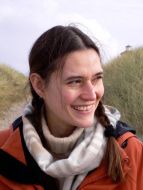
Dr. Svenja Papenmeier is a Researcher in the Marine Geophysics Working Group at the Leibniz Institute for Baltic Sea Research Warnemünde . She previously worked at the Alfred Wegener Institute (2012–2019) and the Christian-Albrechts-University of Kiel (2008–2012). She holds a PhD in Marine Geology from Kiel University, a Master’s in Marine Geosciences from the University of Bremen, and a Bachelor’s in Geosciences from the same institution. Research Focus: Hydroacoustic habitat mapping in the North Sea, Baltic Sea, and Siberian Arctic Development of seabed mapping standards (BSH No: 7201) Automated stone/boulder detection in acoustic datasets using neural networks Paleogeographic evolution of the Elbe River valley and Sylt Outer Reef Long-term analysis of dynamic bedforms and sediment distribution Scientific Contributions: Published 15+ peer-reviewed articles on marine sedimentology, AI applications in acoustic data, and coastal dynamics Key projects: OTC Stone (BMBF-funded), DAM CREATE , LABS , PaleoElbe , AMIN Regular presenter at international conferences (GeoHab, EGU, AGU) on topics like AI-based habitat mapping and sediment dynamics
Hagen Radtke is a Researcher at the Leibniz Institute for Baltic Sea Research (IOW) under the University of Rostock's Faculty of Mathematics and Natural Sciences . His work focuses on physical and biogeochemical modeling of the Baltic Sea , with emphasis on salinity dynamics , sediment-water interactions , and element cycling in marine ecosystems. Key Research Areas: Decadal variability in Baltic Sea salinity Mechanistic sediment process modeling Element tagging methods for nutrient pathways Numerical stability in ecosystem models Code generation tools for marine simulations Model validation through "Validator" software Publication Trends demonstrate expertise in Baltic Sea climate projections , microplastics transport , and coupled atmosphere-ocean modeling . His work intersects oceanography , biogeochemistry , and environmental informatics , with significant contributions to ERGOM SED (a benthic-pelagic coupled model) and BMIP (Baltic Model Intercomparison Project). Teaching includes "Fundamentals of Marine Biology - Oceanography" in the University of Rostock's Master's program, covering physical oceanography principles. He developed open-source model validation tools and pioneered mechanistic sediment modules for marine ecosystem projections.
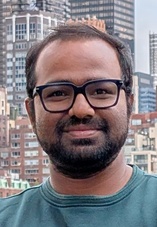
Dr. Abhik Ghosh Moulick is a Postdoctoral Fellow at the Institute of Nanotechnology (INT) , part of the Karlsruhe Institute of Technology (KIT) in Germany. He works under the supervision of Dr. Mariana Kozlowska and Prof. Wolfgang Wenzel . Previously, he held a postdoctoral position at the Department of Chemistry, College of Staten Island, CUNY , collaborating with Prof. Sharon Loverde . His PhD in Theoretical Soft Matter Physics was completed at the S. N. Bose National Centre for Basic Sciences under Prof. Jaydeb Chakrabarti . Research Focus: Development of computational methods to study nucleosome core particle structure/stability using multi-scale simulations. PhD work focused on protein relaxation phenomena through dihedral angle analysis. Current projects involve sequence-dependent nucleosome dynamics, DNA-protein interactions, and coarse-grained modeling. Recent Publications: Featured in J. Chem. Phys. and JPCB on nucleosome dynamics Awards: Recipient of CUNY Postdoctoral Travel Grant Conference Participation: Presented at SIMPLAIX 2025 , IMSI Workshop Chicago , and CECAM ENS Lyon
Joachim Elbeshausen Sestoft is a Postdoctoral Fellow at the University of Copenhagen ’s Niels Bohr Institute , specifically within the Solid State Physics department. His research focuses on quantum transport in hybrid nanostructures, semiconductor-superconductor junctions, and advanced nanowire fabrication techniques. Research Interests: Quantum electronics, nanowire heterostructures, topological protection, molecular beam epitaxy, and scalable quantum device platforms. Key Collaborators: Jens Nygård, Kristian Grove-Rasmussen, Peter Krogstrup, and other leading researchers in quantum and materials science. Technical Expertise: Specializes in nanowire-based quantum devices, shadow junction engineering, and epitaxial growth of hybrid materials. His recent work includes the development of aligned multi-nanowire circuits for on-chip prototyping and studies on Pb-InAs nanowire quantum devices. Publications span journals like Nano Letters , ACS Nano , and Nature Nanotechnology , with significant citations and patent impact. He is based at Universitetsparken 5, Building D, Copenhagen Ø, and can be contacted at Joachim.Sestoft@nbi.ku.dk or +4535326754.
Jens Wackerfuß is a Full Professor of Structural Analysis and Executive Director of the Institute of Structural Mechanics at the University of Kassel, Germany, positions he has held since 2014. He also leads an Emmy Noether Junior Research Group at the university, demonstrating his significant research leadership. His academic background includes a Dr.-Ing. (Civil Engineering) from Technical University Darmstadt in 2005 and a Dipl.-Ing. (Civil Engineering) from the same institution in 1997. His professional journey includes post-doctoral work at UC Berkeley (2007-2008) and leadership of an Emmy Noether Junior Research Group at Technical University Darmstadt (2010-2013). Professor Wackerfuß's research spans computational mechanics with particular expertise in nonlinear finite element methods, advanced beam formulations, multiscale methods, and molecular mechanics. His work bridges theoretical developments with practical engineering applications, and he has developed the research code dockSIM for computational structural analysis. His teaching portfolio includes Structural Analysis I and II for Bachelor's students and Finite Element Methods, Material Models, and Multiscale Methods for Master's students. His recent publications (2022-2024) reveal a strong focus on constraint handling in finite element analysis, graphene modeling, and innovative structural formulations. Key trends include efficient methods for nonlinear multi-point constraints, coupling different structural elements, and applying computational methods to nanoscale materials. His scientific achievements have been recognized with several prestigious awards: Emmy Noether Programme of the German Research Foundation (DFG) in 2010 Zienkiewicz Medal and Prize in 2009, London (UK) Research fellowship of the German Research Foundation (DFG) at TU Darmstadt in 2008 Research fellowship of the German Research Foundation (DFG) at UC Berkeley in 2007 Professor Wackerfuß supervises doctoral and master's students through his Research Colloquium for Thesis and Doctoral Students. His grant portfolio includes significant funding from the German Research Foundation (DFG), particularly through the Emmy Noether Programme which supports outstanding early-career researchers. He leads the Institute of Structural Mechanics at the University of Kassel and maintains the research code dockSIM. His team focuses on developing advanced computational methods for structural analysis, with particular expertise in nonlinear systems, constraint handling, and multiscale modeling approaches that bridge molecular and continuum mechanics.
Yu Bai is a Doctoral Researcher at the Department of Information and Communications Engineering, Aalto University, specializing in communication engineering and machine learning. Their work spans wireless networks and photonic systems, combining advanced AI techniques with physical layer innovations.
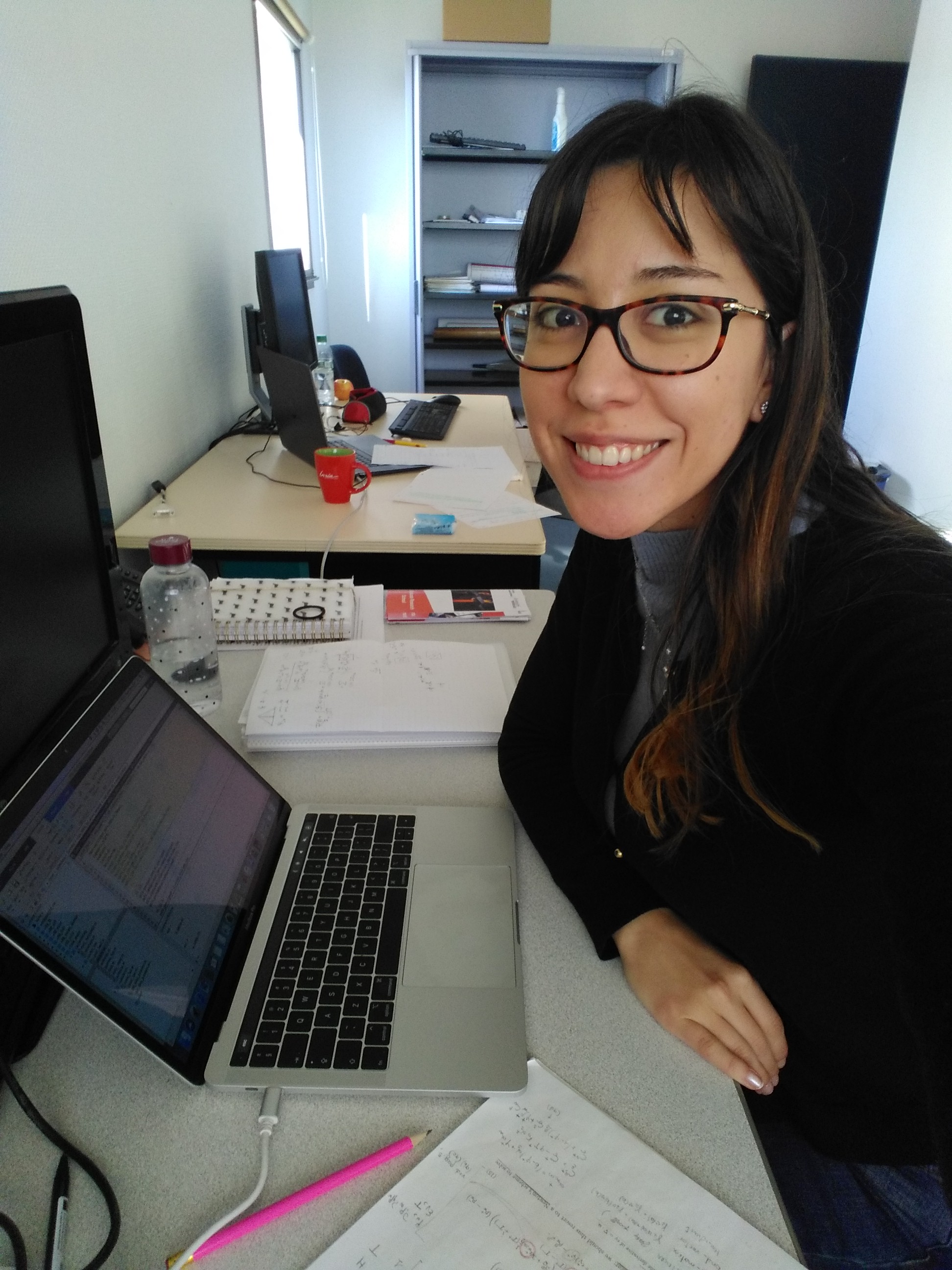
Giulia Sambataro is a Postdoctoral Researcher in Applied Mathematics at Friedrich-Alexander-Universität, Erlangen (Germany), collaborating with Prof. Enrique Zuazua. Previously, she worked as a postdoctoral researcher at École Nationale des Ponts et Chaussées (Marne La Vallée, France) with Prof. V. Ehrlacher. She holds a PhD in Applied Mathematics from the University of Bordeaux, France, where her doctoral thesis focused on component-based parametric model order reduction for thermo-hydro-mechanical systems in geological radioactive waste storage. Her research spans several interconnected areas: Computational mathematics : Developing numerical methods for nonlinear partial differential equations and variational inequalities Model reduction : Creating efficient component-based techniques for multi-physics systems Data-driven modeling : Integrating machine learning with traditional simulation methods for complex systems Key research applications include: Thermo-hydro-mechanical behavior modeling for geological radioactive waste repositories (collaboration with French National Agency for Radioactive Waste Management) Hybrid reduced-order models for crowd dynamics and contact mechanics Optimization-based solutions for particle systems with obstacles
Hadrien Bense is a CNRS Researcher affiliated with the Institute of Acoustics at Le Mans Université , focusing on the Materials department. His work bridges acoustics, mechanics, and material science. Research interests include: Instabilities in slender structures Mechanical metamaterials Elastic waves in complex media Fluid-structure interactions Soft matter physics Capillary and surface forces Recent publications highlight his expertise in: Nonlinear mechanical pathways Metamaterial wave propagation Dielectric elastomer mechanics Capillary-driven adhesion phenomena Geometrically frustrated structures Electro-mechanical coupling He contributes to the LAUM (Laboratoire d'Acoustique de l'Université du Mans) laboratory, with research intersecting with transversal axes on Metamaterials , Nonlinear Acoustics , and Fluid-Structure Interactions .
Marco Ernesto Vallone is a Fixed-term Assistant Professor at the Department of Electronics and Telecommunications (DET) at Politecnico di Torino (PoliTO), where he is also a member of the PhotoNext Interdepartmental Center for Applied Photonics. His academic appointments include membership in the College of Electronic, Telecommunications, and Physics Engineering. He holds national scientific qualifications for Associate Professor positions in Electronics (09/E3), Theoretical Physics of Matter (02/B2), and Experimental Physics of Matter (02/B1). Dr. Vallone's research spans multiple areas of optoelectronics and semiconductor physics, with a particular focus on infrared detectors, light-emitting diodes, silicon photonics, and photodetectors. His work combines theoretical modeling with practical applications, specializing in multiphysics CAD of vertical-cavity surface-emitting lasers (VCSELs), efficiency and reliability of visible and UV LEDs, multiscale physics-based modeling of optoelectronic devices, far-infrared image sensor design, and Si and III-V photonic integrated circuits. His research addresses critical challenges in high operating temperature (HOT) infrared detectors, germanium-on-silicon waveguide photodetectors, and plasmonic structures for enhanced optoelectronic performance. His extensive publication record from 2022-2025 demonstrates a consistent research trajectory focused on advancing infrared detection technology, photodetector design, and semiconductor device modeling. His work shows a progression from fundamental quantum mechanical investigations to practical engineering applications, particularly in collaboration with industry partners like Cisco, Huawei, and AIM Infrarot-Module. The research consistently bridges theoretical physics with practical device engineering, with increasing emphasis on plasmonic enhancement techniques and high-temperature operation of infrared detectors. Scientific Qualifications: National Scientific Qualification as Associate Professor in Electronics (09/E3), since November 2020 National Scientific Qualification as Associate Professor in Theoretical Physics of Matter (02/B2), since May 2021 National Scientific Qualification as Associate Professor in Experimental Physics of Matter (02/B1), since May 2021 Dr. Vallone serves as a PhD co-supervisor and Master's thesis co-supervisor, notably guiding Matteo Giovanni Carmelo Alasio's doctoral research on "Ge-on-Si photodetectors for silicon photonics: multiphysics modeling and design." His research funding includes multiple industrial contracts as Principal Investigator with AIM Infrarot-Module, Cisco Systems, and Huawei, focusing on infrared detector design, silicon photonics integration, and laser development. He has also participated in international research collaborations with Boston University, University of Cambridge, University of Padova, and University of Modena and Reggio Emilia, particularly studying GaN/InGaN multi-quantum well LEDs. As a member of the Microwave and Optoelectronics Group (MOG) at DET, Dr. Vallone contributes to the department's research infrastructure while maintaining active industry partnerships that translate academic research into practical applications for telecommunications, defense, and astronomical imaging systems.
Rune Grand Graversen is a Professor in Polar Meteorology and Climate Dynamics at the Department of Physics and Technology, UiT The Arctic University of Norway. His research focuses on Arctic warming, atmospheric energy transport, polar lows, climate sensitivity, and sea-ice predictions. He leads the Complex Systems Modeling research group and is involved in projects studying intermittent fluctuations in physical systems and ice-sheet modeling. PhD : Atmospheric Sciences and Oceanography, Department of Meteorology, Stockholm University (2008) MSc : Geophysics, Niels Bohr Institute, Copenhagen University (2002) Diploma : Flute, The Royal Danish Academy of Music (1995) Graversen’s research investigates the mechanisms linking atmospheric circulation, oceanic and cryospheric processes to Arctic and global climate change. Key themes include: Arctic amplification , atmospheric wave dynamics , energy transport mechanisms , and improving climate model predictions . His work integrates satellite data assimilation and numerical models to study sea ice variability and extreme weather events. His recent publications highlight trends in Arctic warming drivers , volcanic climate forcing , and multi-scale energy transport . Articles often employ wave decomposition techniques , climate feedback analysis , and high-resolution modeling to address questions about polar climate impacts on global systems. Academic Affiliations : Professor (2014–present), Department of Physics and Technology, UiT The Arctic University of Norway Assistant Professor (2011–2014), Department of Meteorology, Stockholm University Postdoctoral Fellow (2010–2011), Department of Meteorology, Stockholm University Postdoctoral Fellow (2008–2010), Royal Netherlands Meteorological Institute Research Groups and Projects : Group Leader, Complex Systems Modeling Member, Intermittent fluctuations in physical systems Member, nICE (sea ice modeling) project
Dr. N. Anand is an Assistant Professor at the School of Earth, Environmental and Sustainability Sciences, Indian Institute of Science Education and Research Thiruvananthapuram. His research focuses on atmospheric optics, aerosols, optical turbulence, and Free-Space Optical (FSO) communication systems. Ph.D. (2015–2020): Centre for Atmospheric and Oceanic Sciences, Indian Institute of Science, Bengaluru M.Tech (2012–2014): Optoelectronics and Optical Communication, University of Kerala B.Tech (2008–2012): Electronics and Communication Engineering, Government Engineering College, University of Kerala His research explores how atmospheric boundary layer dynamics and aerosol distribution affect optical communication systems, with a focus on: Aerosol-induced optical turbulence Radiative effects of black carbon Free-space optical communication impairment Climate change implications for atmospheric optics Stratospheric impacts of bushfire aerosols Multi-platform aerosol monitoring Publications highlight trends in aerosol-climate-communication interactions, with applications in: Radiative transfer modeling Black carbon assimilation Optical turbulence statistics Upper tropospheric aerosol measurements Polar stratospheric cloud enhancement Laser communication through the atmosphere Scientific awards include: DST INSPIRE Faculty Fellowship (2020) Best PhD Thesis Award from Optical Society of India (2021) Excellence in Teaching Award at IISER TVM (2023, 2024) SPIE Student Travel Grant (2019) Young Scientist Travel Grant (SERB, 2019) Teaching includes courses such as Introduction to Atmospheric Science , Atmospheric Radiation , and Climate Change Mitigation . Students include Devika (PhD), Ravikiran (PhD at Max Planck Institute), and others pursuing advanced studies in physics, data science, and earth systems.
Abdelali OUDRISS is an Associate Professor at the Department of Physics , La Rochelle University , France, and a member of the LaSIE UMR CNRS 7356 laboratory. He co-leads the Professional Bachelor for Optician program and serves as a teaching coordinator between La Rochelle University and EIGSI engineering school . Research Focus: Microstructure-electrochemistry coupling, hydrogen diffusion/trapping in metals, hydrogen embrittlement, and corrosion-fatigue interactions. Key Contributions: Mechanistic studies on hydrogen adsorption in nickel single crystals, modeling of hydrogen-assisted fracture, and characterization of archaeological iron alloys. Publications span Materials Characterization , Corrosion Science , and Acta Materialia , addressing hydrogen behavior in steels, nickel, and titanium alloys. His work emphasizes multi-scale analysis and experimental-numerical hybrid approaches. Administrative Roles: Secretary of SF2M West section, LaSIE council member, and teaching committee member. Techniques: EBSD, nanoindentation, thermal desorption spectroscopy, and finite element modeling.
Prof. Dr. Volker Abetz is a full professor (W3) of Physical Chemistry at the University of Hamburg since January 2013 and concurrently serves as Director of the Institute for Polymer Research at the Helmholtz-Zentrum Geesthacht. His career has included professorships at the University of Kiel (2004–2012) and the University of Potsdam, along with visiting roles at Stanford, UC Louvain, and Ben-Gurion University. Education: Habilitation, University of Bayreuth (2000) – “Complex Structures based on ABC Triblock Copolymers” PhD, Albert-Ludwigs-University Freiburg (1990) – “Spectroscopic Polarimetry on Multicomponent Polymer Systems” Diplom, Albert-Ludwigs-University Freiburg (1987) – “FTIR-Dichroism Spectroscopy on Polymer Multicomponent Systems” Research Interests: His group focuses on nanostructured polymers , stimuli-responsive block copolymers , isoporous membranes , vitrimer chemistry , hierarchical polymer composites , and anisotropic gels . A hallmark of his work is translating fundamental self-assembly principles into scalable membrane technologies for water treatment, gas separation, and bioprocessing. Publication Trends: Across >480 peer-reviewed papers, recent output centers on advanced block-copolymer membranes (isoporous, antifouling, ion-selective), reprocessable vitrimer nanocomposites (lignin-based, Au-doped, magnetic), and in-situ diagnostics (synchrotron SAXS, atomic-layer deposition). These studies couple rigorous polymer synthesis with sophisticated characterization and device-level validation. Scientific Awards & Honors: Cover-featured articles in Advanced Materials , ACS Macro Letters , Macromolecular Rapid Communications Keynote & plenary invitations at POLYCHAR, ACS, IUPAC MACRO conferences Patents on isoporous membrane manufacturing (WO, EP, DE filings) Research Funding & Collaborations: His teams secure funding from the German Research Foundation (DFG), Helmholtz Association, EU Horizon programs, and industry partners. The group operates state-of-the-art laboratories at both the University of Hamburg and Helmholtz-Zentrum Geesthacht, hosting a vibrant international cohort of PhD students and postdocs. Laboratories & Facilities: AG Abetz – University of Hamburg Institute of Physical Chemistry Institute for Polymer Research – Helmholtz-Zentrum Geesthacht Access to PETRA-III (DESY), BER II (HZB) & ILL (Grenoble) neutron/synchrotron beamlines
Dr. Anna Gannet Hallar is a Professor of Atmospheric Sciences at the University of Utah , where she leads the Hallar Aerosol Research Team (HART) and serves as a Courtesy Faculty member in the College of Earth, Ocean, and Atmospheric Sciences at Oregon State University. She is an Affiliate Scientist at the National Center for Atmospheric Research (NCAR) in Boulder, Colorado. Education: BA in Physics (Truman State University, 1999), MS (2001) and PhD (2003) in Atmospheric Sciences from the University of Colorado. Postdoctoral Training: National Research Council Postdoctoral Fellow at NASA AMES Research Center (2003), focusing on aerosol optical properties. Her research specializes in atmospheric aerosol science , employing data-driven approaches to understand aerosol-climate-air quality connections. Key areas include: Biosphere-atmosphere-climate interactions Anthropogenic emissions impact assessment New particle formation (NPF) in complex terrain Ice nucleation and mixed-phase cloud processes Halogen chemistry and mercury oxidation Mountain valley fog dynamics Recent publications emphasize NPF modeling , mercury oxidation studies , and complex terrain air quality challenges . Her work leverages advanced instrumentation and field campaigns like Storm Peak Laboratory operations. Scientific Awards Outstanding Undergraduate Research Mentor Award (University of Utah, 2023-2024) Outstanding Teaching Award (College of Mines and Earth Science, 2019) Regents' Rising Research Award (Nevada System of Higher Education, 2012) Dr. Hallar actively mentors graduate students and secures major NSF and DOE grants for projects including: REU SITE: Alpine Meteorology Training (2023-2028) CFACT: Cold Fog in Complex Terrain (2021-2025) Storm Peak Laboratory Facility Operations (2021-2026)
Jakob Doppler is a full-time Professor at the St. Pölten University of Applied Sciences , where he leads the Center for Digital Health and Social Innovation and the Department of Media and Digital Technologies . He spearheads master's programs in Citizen-Centered Digital Health and Social Care and Digital Healthcare , integrating technology with social care solutions. His research focuses on context computing , human activity recognition , and music information retrieval , with applications in elderly care, rehabilitation technology, and digital innovation. Projects like Smart Companion , EyeQTrack , and SONIGait demonstrate his work in AI-assisted living, XR training, and wearable sonification devices for Parkinson's patients. Publications span digital health frameworks , gait rehabilitation systems , and user-centered design for aging populations. His work bridges computer science and health sciences , emphasizing interdisciplinary collaboration and real-time feedback mechanisms . He actively contributes to ambient assisted living through multi-device platforms and smart home environments .