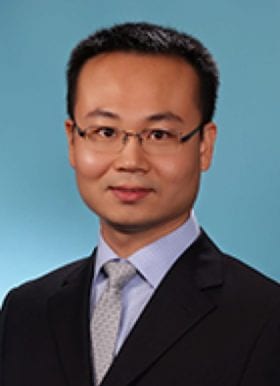
Dr. Jin Zhang is an Associate Professor of Radiation Oncology at Washington University School of Medicine, with affiliations to the Siteman Cancer Center, Institute of Clinical and Translational Sciences (ICTS), and multiple divisions within the Roy and Diana Vagelos Division of Biology & Biomedical Sciences (DBBS), including Biomedical Informatics and Data Science, Cancer Biology, and Computational and Systems Biology. PhD in Computer Science (University of Connecticut, 2012) MPHS in Population Health Sciences (Washington University, 2022) Prior postdoctoral work at McDonnell Genome Institute and Department of Medicine, Washington University His research develops deep learning/AI models and multi-omics approaches (genomics, proteomics, metabolomics, imaging) to advance translational cancer research at the intersection of genomics and radiation oncology. Recent work includes Nature studies on dietary fructose-induced tumor growth mechanisms, Patterns publications on GAN-based gene expression analysis, and Clinical Cancer Research papers on HPV+ cancer MRD detection. Scientific awards include NCI K22, ITCR R21, R37, and R01 grants totaling over $9.7 million in funding. His lab trains DBBS and MSTP rotation students, with alumni pursuing academic/research roles at institutions like University of Washington and Memorial Sloan Kettering Cancer Center.
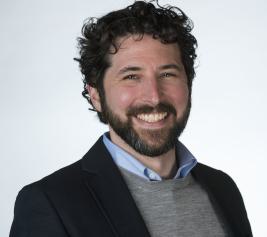
Daniel W. Belsky is an Associate Professor of Epidemiology at Columbia University's Mailman School of Public Health and a member of the Robert N. Butler Columbia Aging Center. He previously served as an Assistant Professor at Duke University School of Medicine. Education: BA, Swarthmore College (2002) PhD, UNC Gillings School of Public Health (2012) Dr. Belsky's interdisciplinary research integrates genomics , epidemiology , and social sciences to study mechanisms of biological aging and health inequality . His work develops DNA methylation biomarkers like DunedinPACE to quantify aging processes across the lifespan. Recent publications analyze Epigenetic impacts of caloric restriction (CALERIE™ Trial) Transgenerational effects of prenatal famine on aging Socioeconomic determinants of biological age acceleration His 2025 Nature Aging study on aging biomarker validation was cited in 162 papers. Scientific Recognition: ISI Highly Cited Researcher CIFAR Fellow Jacobs Foundation Awardee National Institute on Aging Scholar Current Research: Dr. Belsky leads NIH-funded R01 projects on cash transfers and policy interventions to slow aging. He collaborates with labs in psychology, genetics, and public policy on cross-disciplinary geroscience initiatives.
Thierry Artières is a University Professor at Aix-Marseille University, primarily affiliated with École Centrale Marseille (ECM), where he holds multiple leadership positions including Head of the Computer Science teaching unit, Head of the IAAA course of the Computer Science Master's degree, and Head of the IAM course of the 3rd year Computer Science option. He is a key member of the QARMA (Machine Learning) research team within the LIS (Laboratoire d'Informatique et Systèmes) and collaborates with several research institutes including the READ laboratory, Institut de Neurosciences de la Timone (INT), and the ILCB (Institute of Language, Communication and the Brain). His research interests span Machine Learning, Deep Learning, and Artificial Intelligence with applications to neuroscience, medical imaging, and computational biology. His work focuses on understanding brain representations of voice and sound, optimizing MRI acquisition through deep learning, and developing novel machine learning techniques for multi-label classification and generative modeling. He has supervised numerous PhD students including Loris Berthelot, Hamed Benazha, Malek Senoussi, Swetali Nimje, and Charly Lamothe. His recent publications reveal a strong focus on applying deep learning to neuroscience problems, particularly in understanding how the brain processes sound and voice. His work combines theoretical machine learning advances with practical applications in medical imaging and cognitive neuroscience, often through collaborations between computer science and neuroscience laboratories. His research demonstrates a consistent trend toward interdisciplinary work that bridges AI with biological and medical domains. Member of QARMA Machine Learning team at LIS Collaborator with Institut de Neurosciences de la Timone Involved with ILCB Institute (Institute of Language, Communication and the Brain) Supervisor of multiple PhD students and Master's interns Regularly posts about internship opportunities in Machine Learning and AI Professor Artières actively mentors students through PhD positions, Master's internships, and engineering student projects. He has secured funding for multiple research projects, including ANR-funded collaborations with neuroscience institutes. His lab regularly offers 5-6 month internships on cutting-edge topics in machine learning, and he has facilitated numerous research opportunities for students interested in AI and data science careers. He also contributes to understanding the French job market for AI and data science professionals.
Dr. Benjamin Brennan is a Senior Lecturer in Virology at the MRC-University of Glasgow Centre for Virus Research (CVR), where he leads the Brennan Lab as Principal Investigator. He holds a Wellcome Trust/Royal Society Sir Henry Dale Fellowship and serves as an Editor for the Journal of General Virology. His research focuses on understanding how bunyaviruses, particularly those in the Phenuiviridae family, are transmitted by vectors to mammals and how they overcome host immune defenses. Dr. Brennan's research interests center on tick-borne viruses, especially Banyangvirus and Phlebovirus genera. His lab employs virological methods such as reverse genetics technologies and acarology to investigate how clinically relevant pathogens are transmitted by arthropods. Key research areas include examining virus-vector interactions, studying molecular biology of arboviruses in different systems, analyzing innate immune factors in arthropods that control virus replication, developing tools to study tick-borne virus replication in vivo, and investigating viral protein functions during infection of both mammalian and arthropod cells. His work aims to understand why these viruses can infect arthropods without causing disease and to develop attenuated viruses for potential live-attenuated vaccines or vector control agents. Analysis of Dr. Brennan's 15 most recent publications (2019-2025) reveals a strong focus on tick-borne bunyaviruses, particularly SFTS virus, Rift Valley fever virus, and related pathogens. His research spans molecular virology, host-pathogen interactions, vector immunity, and vaccine development. A notable trend is the application of reverse genetics systems to study virus biology and develop vaccine candidates, along with increasing exploration of RNA interference pathways in vector immunity. 2017: Support Sir Henry Dale Fellowship (Lord Kelvin Adam Smith Leadership Fellow Funding) 2018: Wellcome Trust/Royal Society Sir Henry Dale Fellowship Dr. Brennan supervises multiple PhD students including Krittika Dummunee, Alexandra Wilson, and Andrew Clarke, and has previously mentored researchers such as Veronica Rezelj and Stephanie Cumberworth. His research is supported by significant grants including the Wellcome Trust-funded projects 'What makes viruses tick?' (2022-2024) and 'What makes phleboviruses tick?' (2018-2023), BBSRC funding for 'Vaccines and molecular tools for SFTSV control' (2018-2021), and current UKRI funding for 'TickTools: Development of tools to monitor and control tick-borne diseases' (2023-2026). The Brennan Lab operates within the MRC-University of Glasgow Centre for Virus Research, utilizing specialized containment facilities (CL2 and CL3) for working with tick-borne pathogens. The lab collaborates with multiple international research groups and is involved in public engagement projects including a citizen science initiative with The Conservation Volunteers Scotland to monitor ticks and tick-borne viruses across Scotland.
Smruthi Karthikeyan is the Gordon and Carol Treweek Assistant Professor of Environmental Science and Engineering and a William H. Hurt Scholar at the California Institute of Technology (Caltech). Her research integrates microbial ecology, computational biology, and engineering to develop multi-omic approaches for understanding microbial communities. She focuses on translating microbiome data into biomarkers for environmental and human health, particularly through wastewater surveillance and soil microbiome dynamics. Education: B.Tech, Anna University (Chennai), 2012 M.S., Columbia University, 2014 Ph.D., Georgia Institute of Technology, 2020 Research Interests: Dr. Karthikeyan's lab pioneers culture-independent techniques to study microbial dark matter , employing isotopic tracer-based mass spectrometry, meta-omics, and single-cell analysis. Key areas include: Linking microbial identity to function at cellular/spatial levels Soil carbon flux responses to drought Antibiotic resistance evolution in environmental contexts Rhizosphere microbiome interactions Gut microbiome dynamics under antibiotic exposure Scientific Awards: Gordon and Carol Treweek Assistant Professorship (2023-) William H. Hurt Scholar (2023-) Her work has established innovative wastewater surveillance frameworks for public health, including early detection of SARS-CoV-2 variants and campus-wide monitoring systems. She leads active projects on microbial community responses to environmental stressors and develops computational tools for microbiome analysis.
John Moran is a Professor in the Department of Human Genetics at the University of Michigan , focusing on genetic mutations , somatic mosaicism , and neurodevelopmental disorders . His work bridges molecular biology and neurogenetics , with key contributions to understanding schizophrenia origins in prenatal brain development. Key Collaborations : Icahn School of Medicine at Mount Sinai, Harvard Medical School, Boston Children's Hospital Research Themes : LINE-1 retrotransposons, Alu elements, somatic copy-number variants (sCNVs), and their role in disease etiology Research Focus : Dr. Moran’s research explores how non-inherited genetic mutations during embryonic development contribute to schizophrenia. He has pioneered methods like DeepMosaic for variant detection and analyzed single-cell genomic data to map mutation patterns in neurons. His work highlights NRXN1 and ABCB11 as disrupted genes in schizophrenia cases. Publication Trends : Recent articles emphasize somatic mosaicism in neuropsychiatric diseases , L1 retrotransposition in human cells, and genomic data resources for the Brain Somatic Mosaicism Network. Collaborations with institutions like Mass General Psychiatry and Physician's Weekly reflect interdisciplinary impact. Key Grants & Programs : Involved in the Allen Discovery Center and led projects like Comprehensive Genomic Datasets in BSMN . His team’s pandemic-era research on single-neuron genomes revealed non-random CNV patterns in neurotypical individuals. Labs & Teams : Leads a lab at the University of Michigan, collaborating with researchers such as Chris Walsh , Ryan Mills , and Edward Maury . His work intersects with the Brain Somatic Mosaicism Network , advancing tools for ultra-deep genome sequencing and mosaicism analysis .
Wei-Shou Hu is a Professor in the Department of Chemical Engineering and Materials Science at the University of Minnesota , affiliated with the Institute for Engineering in Medicine and the Cellular Mechanisms of Cancer initiative. His research bridges chemical engineering principles with biomedical applications, focusing on synthetic biology, biopharmaceutical manufacturing, and viral vector production. Develops synthetic cell lines for recombinant adeno-associated virus (rAAV) production Investigates metabolic robustness in fed-batch cell culture systems Applies multi-omics approaches (transcriptomics, proteomics) to bioprocess optimization Contributes to biomanufacturing standards through collaborations with NIIMBL and NIST Key research areas include: Synthetic Biology: Designing engineered mammalian cell systems and CHO lines for therapeutic applications Metabolic Engineering: Enhancing cellular metabolism for improved biopharmaceutical yields Viral Vector Production: Optimization of AAV production systems for gene therapy Genomic Analysis: Developing algorithms for sequencing data interpretation and integration Recent publications show expertise in: Comparative transcriptomic/proteomic analysis of viral production systems Systematic characterization of synthetic cell line productivity Elucidation of capsid assembly mechanisms in viral vectors Development of mechanistic-empirical models for bioprocess control Dr. Hu has received multiple research grants including: National Institute for Innovation in Manufacturing Biopharmaceuticals (NIIMBL) membership NIH/NIGMS funded projects on biotechnology development Collaborative grants with University of Massachusetts Lowell on biomanufacturing His work contributes to UN Sustainable Development Goals through advancements in biopharmaceutical manufacturing and disease treatment technologies.
Edgar Arriaga is a Professor in the Department of Chemistry at the University of Minnesota Twin Cities, serving as Associate Dean in the Graduate School. His research bridges chemistry, biology, and data science to advance aging research and biomedical technologies. Current projects focus on aging systems, mass cytometry, and dielectrophoretic organelle separation Collaborations include NIH NATIONAL INSTITUTE ON AGING and SPEER MEDICAL TECHNOLOGIES LLC Research Interests center on aging mechanisms, organelle dynamics, and analytical methodologies. His work integrates multi-omics approaches and mass cytometry for single-cell analysis, while developing dielectrophoretic devices for organelle separation. Key themes include cellular senescence , isoprenoid biochemistry , and nucleic acid aptamer engineering . Recent Publications (2022-2024) demonstrate expertise in: High-dimensional single-cell data analysis (CosTaL algorithm) Organelle separation using dielectrophoretic methods Aging systems characterization via mass cytometry Aptamer engineering for tumor targeting Metabolic pathway analysis in aging Grants from NIH and private industry (Speer Medical) highlight translational relevance in aging and diagnostic technologies.
Julia Debik is an Associate Professor at the Department of Public Health and Nursing, Faculty of Medicine and Health Sciences, Norwegian University of Science and Technology (NTNU), with a dual research role at the Musculoskeletal Research Group and CIMORe. She holds a PhD in Medical Technology and a Master of Science in Industrial Mathematics from NTNU, combining computational expertise with biomedical research. Academic Roles: Associate Professor (Onsager Fellow - AI and Health) Departments: Public Health and Nursing, Circulation and Medical Imaging Collaborations: National Network for Breast Cancer Research, Nordic Metabolomics Society, Metabolomics Society Research Focus: Integrating machine learning with metabolomics to uncover breast cancer risk factors, treatment response, and prognostic signatures. Her work emphasizes NMR-based metabolic profiling, biobank utilization (HUNT2, UK Biobank), and sample handling standardization (freeze-thaw cycles, delayed centrifugation). Publication Trends: Over 15 recent articles focus on metabolomic-biomarker discovery for breast cancer, circadian exercise effects, and technical validation of NMR platforms. Key subfields include lipoprotein associations, multi-omics integration, and AI-driven analysis of spatial -omics data. Scientific Contributions: Onsager Fellowship in AI and Health Key collaborator in HUNT biobank studies International presentations at Metabolomics Society conferences Developer of machine learning frameworks for multi-cancer profiling Outreach Activities: Regularly participates in public science events like Researchers' Night, delivers lectures on AI and molecular epidemiology, and contributes to popular science communication through initiatives like 'Tumorteltet'.
Pierre Dönnes serves as an Adjunct Senior Lecturer in Bioinformatics at the School of Bioscience, University of Skövde. His research bridges computational methods with biomedical applications, particularly in stem cell biology and cardiac research. His primary research interests include: Computational approaches to stem cell maturation and differentiation Multi-omics data integration for biomarker discovery AI-driven analysis of cardiac transcriptomics Development of in vitro models for disease research Translational applications of bioinformatics in precision medicine Analysis of his publication timeline reveals a clear progression from foundational computational methods to increasingly translational research. His work has evolved from theoretical immunoinformatics (2012) to sophisticated stem cell maturation techniques and wound healing applications (2024), demonstrating growing clinical relevance. The consistent focus on data integration across biological scales shows his commitment to solving complex biomedical problems through computational approaches. Dr. Dönnes has contributed to significant research initiatives: BIO-AID (Biomedical AI-driven data analytics, 2020-2024) AI-driven precision medicine initiative (2025-2033) His laboratory work centers on developing computational models that enhance the translatability of stem cell research to clinical applications, particularly in cardiac biology. Working within the Systems Biology framework at the University of Skövde, he maintains strong collaborations between computational scientists and experimental biologists, creating an interdisciplinary research environment focused on solving real-world medical challenges.
Riikka Kivelä is an Associate Professor at the Faculty of Sport and Health Sciences, University of Jyväskylä. Her research spans molecular biology, cardiovascular physiology, and exercise science, with a focus on cellular signaling mechanisms in muscle growth, cardiac development, and vascular protection. Project: MeRWi (Metabolic ReWiring of muscle cell glucose metabolism) - Investigates cancer-like glycolytic pathways in muscle cell size regulation. Project: TraDeRe (Resistance TRAining, DEtraining, and REtraining) - Studies individual variation in training response determinants. Project: EEVaS (Exercise, Extracellular Vesicles and Senescence) - Identifies molecular mediators of exercise-induced senolytic effects. Her recent publications (2024-2025) demonstrate expertise in: Angiogenesis and hypertrophy in skeletal muscle Endothelial cell signaling in organ regeneration Genetic mechanisms of congenital heart defects Exercise-related extracellular vesicle signaling Vascular barrier protection in metastasis Mitochondrial DNA replication in cardiac development These studies employ multi-omics approaches and translational models to bridge basic science with clinical applications.
Dubravka Švob Štrac is an Associate Professor and Head of the Laboratory of Molecular Neuropsychiatry at the Ruđer Bošković Institute in Zagreb, Croatia. She also serves as Deputy President of the Expert Scientific Council for Biomedicine and teaches Neuroimmunology at the Faculty of Science, University of Zagreb. Her academic journey includes a B.Sc. (1998), M.Sc. (2004), and Ph.D. (2007) in Molecular and Cell Biology from the University of Zagreb, followed by a Specialist degree in Project Management (2011). Dr. Švob Štrac's research spans Molecular Neuropsychiatry , Neuropharmacology , and Biomarker Discovery in psychiatric disorders. Her work investigates the molecular mechanisms of stress, GABA receptor function, benzodiazepines, addiction pathways, and neuropsychoactive drugs. She has led the Croatian Ministry-funded project 'Stress, GABA-A and mechanisms of neuropsychoactive drugs' since 2009. Her research has expanded into Alzheimer's disease, PTSD, cognitive impairment, and the role of neurosteroids and neurotrophic factors in neurodegenerative conditions. Analysis of her 15 most recent publications reveals a strong focus on biomarker discovery in psychiatric and neurodegenerative disorders, particularly examining genetic, epigenetic, and metabolic markers in PTSD, schizophrenia, and Alzheimer's disease. Her work increasingly integrates multi-omics approaches including metabolomics, lipidomics, and glycomics to understand the molecular underpinnings of neuropsychiatric conditions. A significant theme across her recent work is the investigation of neurosteroids (particularly DHEA and DHEAS) and neurotrophic factors (especially BDNF) as potential therapeutic targets and biomarkers.
Janna Hastings is Assistant Professor for Medical Knowledge and Decision Support at the Institute for Implementation Science in Health Care (Faculty of Medicine) at the University of Zurich since August 2022, while also serving as Vice-Director of the School of Medicine at the University of St. Gallen. Her research focuses on digitalization in clinical contexts, examining how AI-driven knowledge systems reshape clinical practice, professional identity, and doctor-patient relationships. Education: PhD in Computational Biology (University of Cambridge, 2019), part-time MSc in Computer Science (University of South Africa, 2011), MSc in Philosophy (Open University, 2012) Prior Roles: Group Coordinator at European Bioinformatics Institute (2006-2015), Postdoctoral Researcher at Otto-von-Guericke University Magdeburg (2019-2022), Co-Leader of Human Behaviour-Change Project at University College London (2017-2022) Her research spans ontology development for biomedical domains (ChEBI, Human Behaviour Ontology), AI applications in healthcare decision-making, and behavior change interventions. Key projects include: Building ChEBI molecular ontology Developing Human Behaviour-Change Project knowledge system Ontology-driven mental health frameworks LLM applications in radiation oncology Time-series modeling of metabolism in ageing She explores the capabilities and limitations of clinical AI systems, with publications in JMIR and Lancet Digital Health , covering topics like bias prevention in generative AI and proteomic biomarker discovery. Her work bridges biomedical research with implementation science and digital ethics.
Peter Kuhn is a University Professor at the University of Southern California with appointments spanning Biological Sciences, Medicine, Biomedical Engineering, Aerospace and Mechanical Engineering, and Urology. He serves as the Director of the Convergent Science Institute in Cancer (CSI-Cancer) at USC's Michelson Center for Convergent Biosciences, where he leads groundbreaking research in cancer diagnostics and treatment. His interdisciplinary approach bridges physics, engineering, and medicine to develop innovative cancer care solutions. Dr. Kuhn's research focuses on liquid biopsy technologies, mathematical oncology, and digital health applications for cancer care. His work centers on redesigning cancer care through convergent science, with particular emphasis on early detection, disease forecasting, and personalized treatment strategies. He has pioneered the use of aqueous humor as a liquid biopsy for retinoblastoma and developed the Digital Health Companion platform to objectively assess patient performance status. His team's mathematical models predict cancer metastasis patterns across various cancers including bladder, breast, and lung cancer, transforming how clinicians understand and manage cancer progression. Analysis of Dr. Kuhn's recent publications reveals a strong trajectory toward multi-analyte liquid biopsy approaches, integrating single-cell analysis with genomic and proteomic data across various cancer types. His work increasingly focuses on clinical translation, with numerous publications addressing standardization frameworks (through the BLOODPAC consortium), diagnostic validation, and implementation of liquid biopsy in routine clinical practice. The research spans from fundamental cancer biology to practical clinical applications, with growing emphasis on digital health integration and AI-driven cancer forecasting. Dean's Professor of Biological Sciences (2014-2017) University Professor designation across multiple disciplines National Academy of Inventors Senior Member (Class of 2024) Recipient of numerous research grants from NIH, DoD, and industry partners Dr. Kuhn mentors a large research team including multiple graduate students across engineering and biological sciences disciplines, as well as numerous undergraduate researchers. His CSI-Cancer institute has secured significant funding for projects including the ATOM-HP study on objective performance status measurement, INTERCEPT early detection of breast cancer, and the ATEZO trial for at-home cancer immunotherapy. The institute collaborates with major medical centers including Cedars-Sinai, Children's Hospital Los Angeles, and Stanford University. As Director of CSI-Cancer, Dr. Kuhn leads a multidisciplinary team developing innovative approaches to cancer care. The institute's work spans liquid biopsy development, mathematical oncology modeling, and digital health technologies. Key initiatives include the Digital Health Companion platform, disease forecasting models for various cancers, and the Convergent Science Cancer Consortium funded by the Department of Defense. The team operates state-of-the-art laboratories for single-cell analysis and collaborates closely with clinical partners to translate research findings into patient care improvements.
Jianguo (Jeff) Xia is a Full Professor at McGill University , specializing in molecular biology and systems biology. His research focuses on host-parasite-gut microbiota interactions, bioinformatics, metabolomics, metagenomics, and network biology. He actively develops next-generation bioinformatics tools to address big data challenges in life sciences, with an emphasis on applied statistics, machine learning algorithms, data visualization, and web-based technologies. His recent publications highlight advancements in metabolomics and multi-omics integration. He has contributed to web-based platforms like MicrobiomeNet and ImpLiMet for microbial association analysis and data imputation. His work spans environmental health (e-waste exposure), disease modeling (type 1 diabetes, Parkinson’s), and toxicogenomics (EcoToxChip). As a leader in computational biology, Xia’s research bridges gut health, microbiome dynamics, and exposome-scale investigations. He currently supervises graduate students and collaborates across disciplines to develop tools like OmicsNet and MetaboAnalyst for metabolomics and systems biology applications.