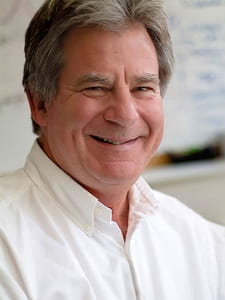
Christoph Bock is a Principal Investigator at CeMM Research Center for Molecular Medicine and Professor/Head of the Institute of Artificial Intelligence at Medical University of Vienna. He leads the Biomedical Sequencing Facility and contributes to the Human Cell Atlas and ELLIS initiatives. Key research areas: Single-cell biology , Epigenetics , CRISPR screening , Machine learning , Cell therapy , Multi-omics Major contributions: CellWhisperer (natural language single-cell analysis), JAK-STAT signaling in immune homeostasis, LIQUORICE for liquid biopsies, and RnBeads software Scientific Awards include: ERC Starting Grant (2016) ERC Consolidator Grant (2021) Overton Prize (2017) Erwin Schrödinger Prize (2022) Clarivate Highly Cited Researcher (2019-2024) His lab develops bioinformatics tools (e.g., RnBeads, LIQUORICE) and applies systems immunology to understand disease mechanisms. Startup leadership : Co-founder of Myllia Biotechnology. Collaborations include clinical translations and tech development with the Biomedical Sequencing Facility.
Lucile Couronné is an Associate Professor (MCU-PH) at the University of Paris Cité, where she leads a research team focused on the pathophysiology of rare lymphomas at the Imagine Institute (U1163). Her laboratory is part of the "Cellular and molecular mechanisms of hematological disorders and therapeutic implications" unit led by Professor Hermine, and she is affiliated with the doctoral school "Hematology - Oncogenesis - Biotherapies" (ED n°561). She also collaborates with SIRIC CARPEM, the LYSA cooperative group, and is a member of the Carnot Institute CALYM. Dr. Couronné's research focuses on understanding oncogenesis mechanisms in rare lymphomas, with particular emphasis on NK/T-cell lymphoma and low-grade digestive T-cell lymphoproliferations. Her work spans multiple areas including tumor microenvironment characterization, identification of therapeutic targets, development of preclinical models, and molecular characterization of lymphomas associated with immune deficiencies. She employs advanced techniques such as optical genome mapping, spatial transcriptomics, multiplex immunofluorescence, and multi-omics approaches to investigate these rare malignancies. Her research bridges basic science with clinical applications through national multidisciplinary meetings (RCP) dedicated to rare lymphomas. Her publication record demonstrates consistent contributions to lymphoma research since 2011, with recent work focusing on NK-cell lymphoma modeling, genetic profiling of driver genes, and novel therapeutic approaches. Her research often involves cross-species validation, including the development of feline models for human intestinal T-cell lymphoma, highlighting her innovative approach to studying rare diseases. Dr. Couronné leads a research team that includes PhD students, research engineers, and Master's students, working in close collaboration with multiple national and international partners across hematology, immunology, and veterinary medicine. Her laboratory maintains active partnerships with the LYSATOMIC network of LYSA, the Imagine Institute researchers, and international collaborators including Professor Keisuke Kataoka in Tokyo.
Dr. Atul Shahaji Deshmukh serves as an Associate Professor and Group Leader at the Novo Nordisk Foundation Center for Basic Metabolic Research (CBMR), University of Copenhagen, within the Faculty of Health and Medical Sciences. He holds a PhD from Karolinska Institute and completed postdoctoral training at Max Planck Institute of Biochemistry under proteomics pioneer Matthias Mann. Research Focus Dr. Deshmukh's laboratory employs cutting-edge proteomics to investigate how diet and physical activity remodel protein networks in metabolic health and disease. The group specializes in: Secreted protein dynamics and inter-organ communication Post-translational modification networks in metabolic signaling Single-fiber resolution proteomics of muscle plasticity Subcellular and spatial proteome mapping Exercise-induced adaptations in metabolic disorders Their work aims to identify novel therapeutic targets for obesity and type 2 diabetes through collaborations with clinical institutions and industry partners. Publication Analysis Recent research demonstrates a strong focus on muscle fiber-type-specific adaptations to exercise, diabetes-related proteome alterations, and multi-omics integration. Key themes include skeletal muscle plasticity, exercise-induced signaling, and metabolic dysregulation in type 2 diabetes, employing advanced mass spectrometry techniques. Honors and Leadership Recipient of the EFSD/NNF Future Leaders Award (2019) for work on exercise-induced proteins Leads an interdisciplinary research group at CBMR Collaborates globally with academic hospitals and research institutions Maintains active industry partnerships for therapeutic translation
Dr. Linghua Wang is a tenured Associate Professor in the Department of Genomic Medicine, Division of Cancer Medicine at The University of Texas MD Anderson Cancer Center. She also holds a dual appointment as a Regular Member at the MD Anderson UTHealth Houston Graduate School of Biomedical Sciences. Dr. Wang leads the Computational Biology Laboratory, which has grown to 17 members since its inception in 2017. Dr. Wang specializes in computational biology, cancer genomics, and immuno-informatics, with expertise in deep profiling of the tumor ecosystem at single-cell resolution. Her research focuses on three primary areas: the transition from premalignant lesions to invasive cancer, the evolution of metastasis, and the dynamic response to anti-cancer therapies and development of therapeutic resistance. She leverages cutting-edge single-cell and spatial multi-omics technologies combined with advanced bioinformatics tools for novel discovery. Dr. Wang's publication portfolio demonstrates significant impact in cancer research, with over 120 publications including high-profile papers in Nature, Nature Medicine, Cancer Cell, and Cancer Discovery. Her work spans computational biology, tumor microenvironment analysis, and translational applications for cancer detection and treatment. Emil Frei, III Award for Excellence in Translational Research David M. Livingston Collaboration Award Sabin Fellow Award Dr. Wang maintains an active research program with substantial funding from the National Cancer Institute (R01, U01), Cancer Prevention and Research Institute of Texas (CPRIT IIRA), Break Through Cancer Foundation, Andy Sabin Family Foundation, and MD Anderson Cancer Center Moon Shots Program. Her lab follows a collaborative, team-based strategy to tackle cancer research challenges, fostering a supportive environment for trainees and researchers. The Computational Biology Laboratory is actively seeking highly motivated graduate students interested in computational approaches to cancer research. Dr. Wang serves as a Scientific Editor for 'Cancer Discovery' and participates in NIH/NCI grant review panels, demonstrating her leadership and recognition in the field.
Prof. Dr. Ozgun Gokce is a Group Leader at the German Center for Neurodegenerative Diseases (DZNE) in Bonn. His research program integrates advanced genomic technologies to investigate neuroinflammatory processes and degeneration mechanisms. Primary focus areas include: Single-cell and spatial genomics of neural-immune interactions White matter aging and remyelination strategies Neurodegenerative disease mechanisms (Alzheimer's, ALS) Brain injury responses and repair pathways Recent work demonstrates strong emphasis on omics approaches, with 2022-2025 publications predominantly featuring transcriptomics, neuroimmunology, and computational integration of multi-modal datasets. Studies frequently examine microglia-T cell crosstalk, lipid metabolism in neurodegeneration, and innate immune training paradigms. Laboratory resources include access to DZNE's core facilities for genomics, imaging, and bioinformatics. Current work involves several collaborative projects investigating neuroimmune axis dysfunction across neurological conditions.
Marianne Bengtson Løvendorf serves as an Associate Professor in the Department of Immunology and Microbiology at the University of Copenhagen's Faculty of Health and Medical Sciences. She is affiliated with the Skin Immunology Research Center where she conducts cutting-edge research at the intersection of immunology and dermatology. Her research focuses on skin immunology with particular emphasis on proteomic analysis of skin conditions. Her work spans psoriasis mechanisms, T cell biology in skin layers, Merkel cell carcinoma virology, and melanoma proteomics. She employs advanced mass spectrometry techniques and spatial proteomic profiling to investigate skin disease pathogenesis. Løvendorf's publication record demonstrates consistent high-impact research output, with multiple 2024-2025 publications in journals like Journal of Investigative Dermatology and International Journal of Molecular Sciences. Her work shows strong interdisciplinary collaboration across immunology, dermatology, and proteomics fields. Active contributor to the BIOSKIN translational research biobank initiative Focus on translating basic immunological findings to clinical dermatology applications Expertise in skin sample proteomic analysis methodologies Her research has garnered attention across academic platforms with mentions on Bluesky, X, and Mendeley, reflecting the significance of her contributions to skin immunology research.
Caroline Helen Johnson, PhD, is a Tenured Associate Professor of Epidemiology in the Department of Environmental Health Sciences at Yale School of Public Health. She holds multiple joint appointments across Yale University, including at the Yale Cancer Center, Department of Microbiology, and Program in Translational Biomedicine. Her research integrates metabolomics with epidemiology to investigate sex-specific differences in colorectal cancer and environmental exposures. Dr. Johnson's primary research focuses on sex-specific differences in colorectal cancer metabolism. In 2020, her lab published the first sex-stratified metabolomics analysis of tumor tissues from colorectal cancer patients, revealing that aberrant asparagine metabolism is a hallmark of tumors from female patients only and associates with poorer clinical outcomes. Her lab also studies early-onset colorectal cancer (under age 50), discovering distinct metabolic profiles in younger patients including downregulated dopamine metabolism and increased phospholipid metabolism. Additionally, her team investigates environmental exposures and their biological impacts using metabolomics, with particular expertise in analyzing dried blood spots to measure early-life exposures that may contribute to later-life cancer development. Dr. Johnson's recent publications (2024-2025) demonstrate a strong focus on sex-specific cancer biology, with multiple papers examining asparagine metabolism in colorectal cancer, sex differences in tumor growth, and the development of comprehensive databases documenting sex-based differences in oncologic diseases. Her work spans multiple disciplines including cancer metabolism, microbiome research, environmental toxicology, and clinical oncology. YSPH Impact Prize (2025) YSPH Team Science Research Award (2024) International Metabolomics Society Career Medal (2023) Metabolomics Association of North America Women in Science (Womix) mentorship award (2023) K12 Calabresi Immuno-Oncology Training Program Award (2021) Dr. Johnson serves as Associate Editor for both Metabolomics and Toxicological Sciences journals and has advised numerous students, including PhD candidate Xinyi Shen. Her lab has developed specialized protocols for metabolite normalization in various clinical matrices and maintains active collaborations across Yale's medical and public health schools. Current research directions include validating findings on early-onset colorectal cancer metabolism, understanding the mechanisms behind sex-specific asparagine metabolism in cancer, and expanding the application of metabolomics to assess environmental exposures and their biological impacts.
Kurt Schalper, MD, PhD is an Associate Professor of Pathology at Yale School of Medicine with a secondary appointment in Medical Oncology and Hematology. He serves as Director of the Translational Immuno-Oncology Laboratory (T.I.L.) within the Yale Cancer Center and is affiliated with the Yale Center for Immuno-Oncology, the Pathology Research Program in Translational Biomedicine, and the Yale-UPR Integrated HIV Basic and Clinical Sciences Initiative. Dr. Schalper earned his MD from San Sebastian University in 2003 and his PhD from Universidad Catolica de Chile in 2008. His research focuses on understanding the immunobiology of human solid tumors and developing molecular biomarkers for prediction of response or resistance to therapies. His laboratory actively evaluates tumor antigens and immune evasion pathways in lung malignancies, including immune co-inhibitory/stimulatory ligands and receptors, tolerogenic enzymes, immune suppressive cells, antigen presenting/processing machinery, metabolic alterations in the tumor microenvironment, and oncogenic intracellular signaling. Analysis of Dr. Schalper's recent publications (2024-2025) reveals a strong focus on immuno-oncology, with particular emphasis on lung cancer biomarkers, mechanisms of immunotherapy resistance, tumor microenvironment analysis, and development of novel computational approaches for spatial multi-omic data. His work bridges basic science with clinical applications, as evidenced by numerous clinical trial-related publications and collaborations with leading oncologists at Yale. Dr. Schalper maintains an active research program with significant collaboration networks, particularly with David Rimm (57 common publications), Roy Herbst (35 common publications), and Scott Gettinger (14 common publications). His laboratory is involved in multiple clinical trials, including research on mechanisms of sensitivity and resistance to anti-cancer therapy for advanced lung cancer. The Translational Immuno-Oncology Laboratory aims to produce and support high quality translational research in immuno-oncology through standardized analyses of biomarkers and cross-integration with other Yale resources. The lab's work has direct implications for improving cancer immunotherapy approaches and understanding treatment resistance mechanisms.
Mary Tomayko, MD, PhD is an Associate Professor of Dermatology and Pathology at Yale University School of Medicine. She serves as Director of the Yale Immunobullous Clinic and Director of Dermatology Medical Student Education. Dr. Tomayko is actively involved in clinical care at Yale Medicine Dermatology, Yale Health, and Yale New Haven Hospital. Her research focuses on understanding immune dysregulation in bullous pemphigoid and mechanisms of long-lasting immunity. The Tomayko Lab has made significant contributions to understanding memory B cell biology, identifying novel pathways essential for immune memory. Her NIH-funded research bridges basic science with clinical applications for autoimmune skin diseases. Dr. Tomayko's clinical expertise encompasses complex autoimmune and inflammatory skin disorders including pemphigus, pemphigoid, epidermolysis bullosa acquisita, atopic dermatitis, vitiligo, alopecia areata, and psoriasis. She employs a comprehensive treatment approach using systemic immunomodulators, biologic agents, traditional immunosuppressants, and phototherapy. Her recent publications (2023-2025) demonstrate active research in autoimmune blistering diseases, with significant work on the psychosocial burden of these conditions, immune checkpoint inhibitor-related dermatological complications, and translational immunology research. Her collaborative work spans multiple disciplines including oncology, immunology, and medical education. Yale Medicine Top Doctor 2023 Yale Medicine Top Doctor 2024 Dr. Tomayko actively mentors students at all levels and contributes to dermatology education at Yale. Her dual MD/PhD training provides a unique foundation for translational research that directly informs her clinical practice in immunodermatology.
Dr. James Hicks serves as Professor of Research in the Department of Biological Sciences at the University of Southern California's Dornsife College of Letters, Arts and Sciences, and as Deputy Director of the Convergent Science Institute in Cancer (CSI-Cancer) at the USC Michelson Center. A pioneer in single cell genomics and translational cancer research, Dr. Hicks focuses on breast and prostate cancer through the development of high-content single cell assays to understand cancer's spatial and temporal evolution in the human body. Trained initially at the University of Oregon, Dr. Hicks built his career through research and faculty appointments at Cornell University and Cold Spring Harbor Laboratory before joining USC in 2014. His groundbreaking work at Cold Spring Harbor Laboratory enabled routine whole genome analysis of individual cells applied to solid tumor biopsies, establishing him as a leader in the field. At CSI-Cancer, his research expands to systemic diseases including cardiovascular disease, rheumatoid arthritis, and diabetes, addressing challenges of disease evolution under natural and therapeutic pressures. Dr. Hicks' research program represents a unique bridge between academic excellence and corporate entrepreneurship, with a proven track record of translating scientific discoveries into practical applications. His work on liquid biopsy technologies has positioned him at the forefront of cancer diagnostics, with over one hundred scientific papers and patents to his name, alongside multiple founded companies. The Convergent Science Institute under his deputy directorship integrates patient data, model systems, and high-content single cell analysis with advanced machine learning to translate clinical observations into mechanistic understanding of cancer dynamics across cellular, human, and population scales. Analysis of his recent publication record (2024-2025) reveals consistent innovation across multiple cancer types including breast, prostate, lung, pancreatic, and retinoblastoma. His research demonstrates sophisticated integration of single-cell analysis with liquid biopsy approaches, establishing new standards for cancer detection, monitoring treatment response, and understanding tumor heterogeneity. Notably, his work spans from fundamental genomic discoveries to clinical applications, with particular emphasis on developing more sensitive diagnostic methods and understanding the evolutionary dynamics that drive treatment resistance. As Deputy Director of CSI-Cancer, Dr. Hicks plays a critical role in advancing the institute's mission to enhance cancer patient care through convergent science that brings together researchers across disciplines. His leadership extends to the DoD-funded Convergent Science Cancer Consortium, which includes collaborations with Cedars-Sinai, Children's Hospital Los Angeles, and Stanford University, demonstrating his significant impact on the broader cancer research community.