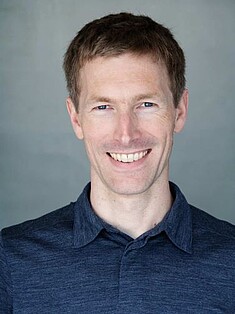
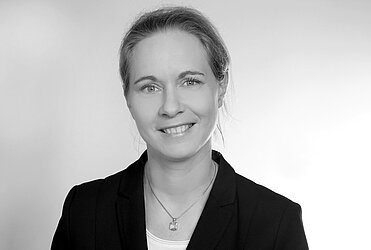
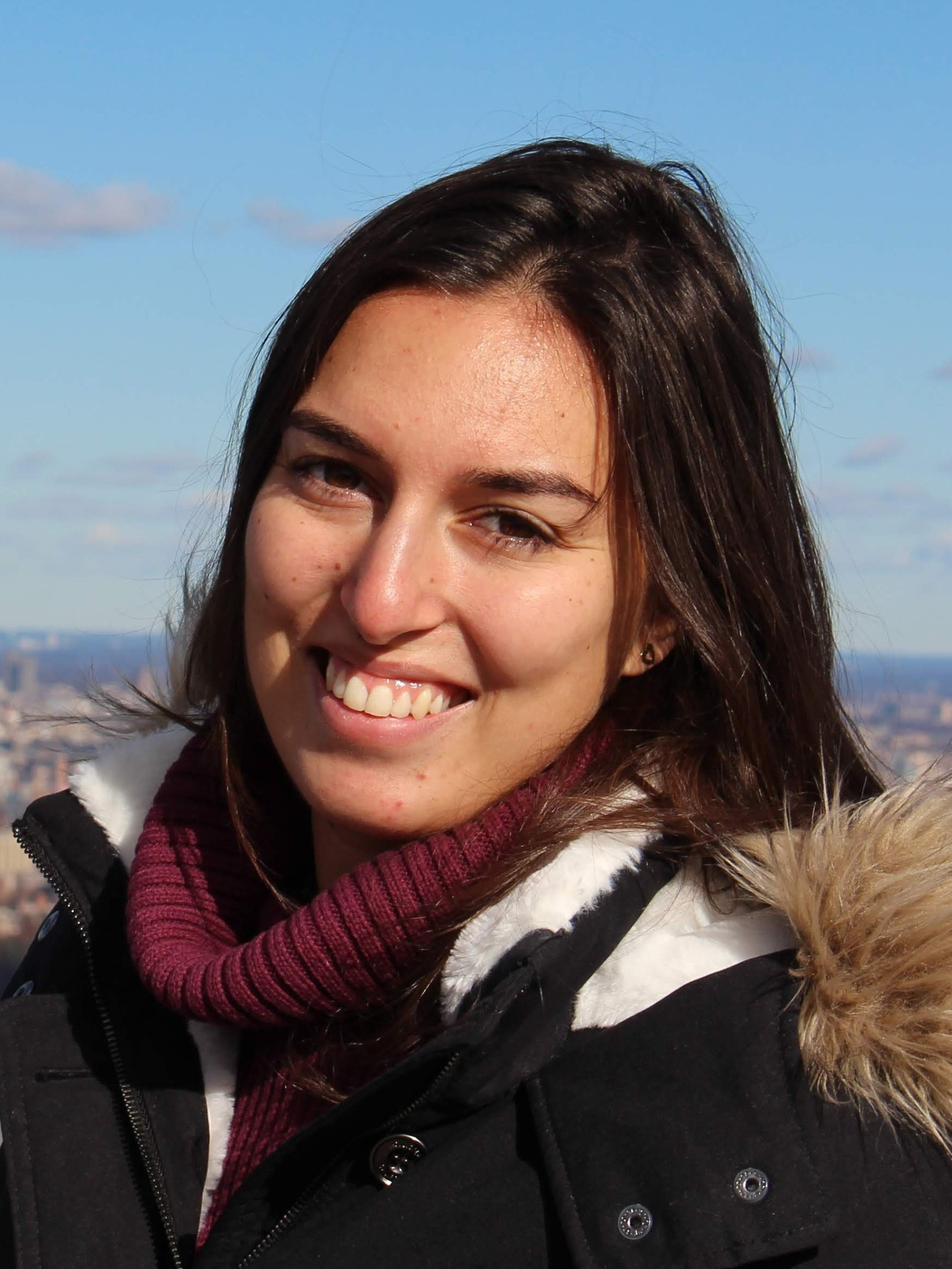
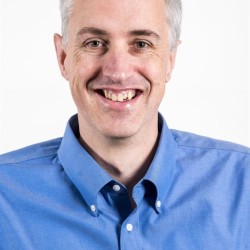
Marc Hanheide is a Professor of Intelligent Robotics and Interactive Systems at the University of Lincoln 's School of Computer Science. With a career spanning EU projects like VAMPIRE, COGNIRON, CogX, and STRANDS, his work focuses on long-term robotic behavior, human-robot spatial interaction, and cognitive system architectures. He has secured over 12 major grants from organizations including EPSRC, BBSRC, and the European Commission. Key Research Areas : Autonomous robotics, HRI, AI, cognitive systems, agricultural robotics Current Projects : STRANDS (long-term behavior), AgriFoRwArdS (robotics training), NCNR (nuclear robotics) Major Contributions : Human-aware navigation modules, topology optimization for robot fleets, causal analysis frameworks Scientific Awards: While no specific awards are listed, his numerous EPSRC grants and leadership in multi-institutional projects highlight his impact. He has over 172 publications and collaborates with institutions like CoR-Lab and CITEC.
Dr Andrew Starkey is a Reader in the School of Engineering at the University of Aberdeen, where he also completed his PhD in 2001. He holds an Honours degree in Applied Mathematics from the University of St Andrews. He is actively involved in research and currently accepting PhD students in Engineering. His work bridges academia and industry, with a focus on AI applications in engineering, bioinformatics, and geosciences. University: University of Aberdeen School: School of Engineering Academic Rank: Reader Email: a.starkey@abdn.ac.uk Phone: +44 (0)1224 272801 Dr Starkey's research centers on Explainable AI (XAI) , Green AI , and Autonomous AI , with applications in robotics, econometrics, bioinformatics, seismic data analysis, and virtual reality. He has developed novel methods for feature selection, autonomous learning, and knowledge abstraction from agent-environment interactions. His work emphasizes low computational cost and transparency in AI systems. The most recent publications reflect a strong trend in applying AI to complex real-world problems, including digital rock technology, robotic grasping, real-time event detection, and medical data analysis. His interdisciplinary research combines machine learning with domain-specific knowledge in engineering and life sciences, often resulting in practical, industry-ready solutions. Millennium Product Award John Logie Baird Award for Innovation Enterprise Fellowship from Royal Society of Edinburgh and Scottish Enterprise Dr Starkey has supervised multiple research projects and secured funding from major bodies including EPSRC, BBSRC, and industry partners. His past work on the GRANIT project led to the development of AI-based condition monitoring for ground anchorages, resulting in commercialization through BlueFlow Ltd. He has collaborated with researchers across disciplines, including Dr Alasdair MacKenzie (bioinformatics), Dr Anne Schwab (seismic analysis), and Dr David Hazlerigg (genomics). He leads research in AI-driven engineering solutions and is the CEO of BlueFlow Ltd, a spinout company commercializing AI technologies developed at the University of Aberdeen. His lab focuses on developing autonomous, explainable, and environmentally sustainable AI systems for real-world deployment.
Massimo Poncino is a Full Professor at the Department of Control and Computer Science (DAUIN) within the Faculty of Engineering at Politecnico di Torino. He serves as Scientific Advisor for the STMicroelectronics partnership and coordinates basic engineering subjects. A Senior Member of IEEE since 2012 and Fellow since 2012, he has served on editorial boards for IEEE Transactions on Computer-Aided Design, IEEE Design & Test of Computers, and ACM Transactions on Design Automation. Education: Laurea in Electronic Engineering (1989) and PhD in Computer and Systems Engineering (1993) from Politecnico di Torino Academic Career: Visiting Scientist University of Colorado (1993-1994), Researcher at Politecnico di Torino (1995-2001), Associate Professor at University of Verona (2001-2004), Full Professor at Politecnico di Torino (2006-present) His research focuses on energy-efficient digital systems , including design automation of SoCs, hardware-aware AI, battery management, cyber-physical systems, and embedded systems. Recent publications highlight advancements in digital twins for batteries , low-power neural network deployment , and IoT privacy . Scientific Awards: Recognition of Service Award - ACM (2013) Certificate of Appreciation - IEEE Circuits and Systems Society (2006, 2008, 2009) IEEE Fellow (2012-) Research Involvement: EU H2020, VI/VII Framework Programs evaluator Scientific Director for projects: Approxim@ction, EMBAI, DISLO-MAN, DAMASCO Member of EDA research group Teaching: Course director for Energy Management for IoT (2019-2025) Lecturer for Computer Science courses (2003-2025)
Igor Wojnicki is a Professor at AGH University of Science and Technology's Faculty of Electrical Engineering, Automatics, Computer Science and Biomedical Engineering, where he serves as Vice-Dean of the Faculty of Cooperation and Education. His primary affiliation is with the Department of Applied Informatics, where he maintains an active research laboratory focused on knowledge engineering and smart systems. His research spans multiple domains with evolving focus: Early career: Deductive databases and rule-based inference engines (PhD thesis on "A Rule-based Inference Engine Extending Knowledge Processing Capabilities of Relational Database Management Systems") Mid-career: Graph-based knowledge representation and Tabular Trees (XTT predecessor) Current focus: Smart city applications, particularly energy-efficient lighting control systems and graph-based urban data integration His recent publications demonstrate a clear trajectory toward applied urban computing, with over 15 significant papers in the last five years addressing smart city infrastructure optimization. Key themes include dynamic street lighting control, graph-based computational methods for urban environments, and energy conservation in public infrastructure. Wojnicki actively contributes to academic-practical collaboration through initiatives like the Green AGH Campus Project and IBM academic partnerships. His technical leadership includes development of the ReDaReS system for relational database knowledge processing and the Jelly View technology for advanced database queries. His laboratory maintains strong industry connections, particularly with IBM through student internship programs and technology transfer initiatives. The team produces both theoretical frameworks and practical implementations, with notable outputs including the Osiris GUI system and Magellan GPS software for Poland.
Michael Gadermayr serves as a Senior Lecturer and Head of the Research Group within the Department of Information Technologies and Digitalisation at Salzburg University of Applied Sciences. Based at Campus Urstein (Room 423), he can be contacted via michael.gadermayr@fh-salzburg.ac.at or +43-50-2211-1341. His research focuses on advancing medical imaging through artificial intelligence, with core expertise in deep learning for image segmentation, digital pathology, and cancer diagnosis. Key contributions include multimodal fusion techniques for CT/CBCT integration, synthetic data generation for surgical guidance, and objective wound healing quantification using vision models. His work bridges computer vision and clinical applications to solve real-world healthcare challenges. Analysis of his 15 most recent publications reveals a dominant trend toward leveraging synthetic data and multimodal fusion to enhance segmentation accuracy in oncology and surgical contexts. Over 70% of his work targets CT/CBCT integration for intraoperative navigation, while digital pathology applications (particularly thyroid and breast cancer) constitute 25% of his output. Emerging themes include wound healing quantification using SAM and parameter optimization for MIL-based pathology diagnostics. As Head of the Research Group in Information Technologies and Digitalisation, he leads initiatives focused on translating AI innovations into clinical practice, with emphasis on robustness in medical image analysis and practical deployment of segmentation tools for radiology and pathology workflows.
Daniel Hernández de la Iglesia is a researcher at the University of Salamanca , affiliated with the School of Informatics and the Department of Computer Science and Artificial Intelligence . He completed his PhD at the University of Salamanca in 2018 with the thesis titled "Embedding smart software agents in resource constrained internet of things devices." Research Focus: Specializes in integrating Multi-Agent Systems and IoT for sustainable applications, including electric vehicle optimization, battery reuse, and smart urban solutions. Academic Contributions: Published extensively on AI-driven energy management, smart mobility, and ethical implications of technology. Key Trends in Publications (2022-2025): His work spans IoT , Artificial Intelligence , and Sustainable Mobility , with a focus on electric vehicle battery health, strategic management in digitalization, and ethical considerations in technology. Collaboration: Supervised by Dr. Gabriel Villarrubia González and Dr. Juan Francisco de Paz Santana , his research bridges academic rigor with real-world applications in smart systems and renewable energy.
Professor Nick Birbilis serves as the Executive Dean of the Faculty of Science Engineering and Built Environment at Deakin University. With a distinguished career spanning materials science, corrosion engineering, and machine learning applications, he leads one of Australia's most innovative academic faculties. His research has significantly impacted the fields of materials engineering, particularly in corrosion science, alloy development, and advanced manufacturing techniques. Professor Birbilis's educational background includes a Doctor of Philosophy, Graduate Certificate of Higher Education, and Bachelor of Engineering (with Honours) in Materials Engineering, all from Monash University. His research interests span materials engineering, mechanical engineering, machine learning, metals and alloy materials, electrochemistry, and glass technology. His recent publications demonstrate a strong focus on the intersection of traditional materials science with cutting-edge computational approaches. The research trends show increasing integration of machine learning techniques for alloy design and property prediction, alongside continued fundamental work on corrosion mechanisms in advanced materials including multi-principal element alloys, magnesium alloys, and additively manufactured components. Fellow, ASM International (2022) Fellow, Engineers Australia (2021) Fellow, International Society of Electrochemistry (2020) H.H. Uhlig Award, The Electrochemical Society (2020) Batterham Medal, Academy of Technological Sciences and Engineering (2017) Lee Hsun Award, Chinese Academy of Science (2015) Professor Birbilis currently supervises multiple doctoral students working on cutting-edge projects including sustainable engineering models, 3D printed glass behavior, corrosion-resistant coatings, and biomolecular extraction techniques. His research is supported by significant grants from the Australian Research Council, Department of Education, Office of Naval Research USA, and industry partners including Advanced Alloy Holdings, InfraBuild, and Bluescope Steel. These projects focus on hydrogen economy applications, corrosion-resistant alloys, advanced protective coatings, and steel innovation.
Dr. M M Manjurul Islam is a Research Associate in Artificial Intelligence for Smart Manufacturing at Ulster University's School of Computing, Engineering and Intelligent Systems. His research focuses on applying advanced AI techniques to solve critical challenges in manufacturing systems, with particular expertise in fault diagnosis, predictive maintenance, and semiconductor production optimization. His research interests span Artificial Intelligence , Smart Manufacturing , Fault Diagnosis , Machine Learning , Deep Learning , Predictive Maintenance , and Semiconductor Manufacturing . He has made significant contributions to the application of convolutional neural networks, support vector machines, and generative adversarial networks in industrial settings, particularly for bearing fault diagnosis and wafer defect classification. Dr. Islam's recent publications (2023-2025) demonstrate a strong focus on practical AI applications in manufacturing, with multiple chapters in the Springer Series in Advanced Manufacturing. His work shows an evolving trajectory from traditional machine learning approaches to more sophisticated deep learning and explainable AI techniques, with increasing emphasis on semiconductor manufacturing challenges and trustworthy AI systems. His research contributes to UN Sustainable Development Goals, particularly in industrial innovation and infrastructure. He is an active member of professional organizations including IEEE and Advance HE, serving as Chair for both networks. According to Scopus data, Dr. Islam has accumulated 1,706 citations with an h-index of 16, reflecting the impact of his research in the field. His publication record shows consistent productivity, with research outputs spanning from 2015 to anticipated publications in 2025.
Andrés Bruhn is a Professor for Intelligent Systems and Dean of Computer Science Studies at the University of Stuttgart, where he leads research in the Institute for Visualization and Interactive Systems (VIS). His academic career spans over a decade with significant contributions to computer vision, particularly in optical flow, scene flow, and motion estimation. As Dean of Studies, he oversees academic programs while maintaining an active research agenda focused on cutting-edge computer vision problems. Bruhn's research interests center around computer vision with emphasis on optical flow estimation, scene flow, motion analysis, and adversarial machine learning. His work bridges theoretical foundations with practical applications, developing algorithms that address real-world challenges in motion estimation, image processing, and visual understanding. His research group has pioneered approaches that combine variational methods with deep learning, creating robust systems for motion analysis that can withstand adversarial attacks and challenging environmental conditions. The publication record demonstrates a strong focus on advancing the state-of-the-art in motion estimation, with recent work exploring adversarial attacks on optical flow systems, high-resolution datasets for benchmarking, and multi-frame fusion techniques. His research shows consistent innovation, moving from traditional variational methods to modern deep learning approaches while maintaining mathematical rigor. The work spans both theoretical contributions and practical implementations with real-world applicability. Bruhn has mentored numerous researchers who appear as first authors on publications, including Jenny Schmalfuss, Lukas Mehl, and Azin Jahedi, indicating his commitment to developing the next generation of computer vision researchers. His leadership role as Dean of Studies demonstrates institutional recognition of his expertise and administrative capabilities.
Claudia Künzer is a leading expert in Earth observation and remote sensing, currently serving as Head of the Department of Land Surface Dynamics at the Earth Observation Center (EOC) of the German Aerospace Center (DLR). She holds a professorship at the Institute of Geography and Geology within the Faculty of Philosophy at the University of Würzburg . Her work bridges natural and social sciences to address global environmental challenges. Education Diplom (2001), University of Trier, Applied Physical Geography Dr. rer. nat. (2005), Vienna University of Technology, Remote Sensing Habilitation (2016), University of Würzburg, Geography Research Focus : Global change quantification and land surface dynamics Anthropogenic impacts on terrestrial ecosystems and resources Climate/environmental change effects on human habitats Development of adaptation strategies and policy recommendations Methodological Expertise : Multi-sensor satellite data analysis Time series analysis (intra-annual to multi-decadal) Deep learning and object extraction Processing of large-scale remote sensing archives Integration of natural and social science approaches Regional Expertise : Asia/Southeast Asia Europe Africa Polar regions
Laxmidhar Behera is a Professor in the Department of Electrical Engineering at the Indian Institute of Technology Kanpur, specializing in Intelligent Systems and Control. With over two decades of academic experience at IIT Kanpur and international research experience at institutions including Fraunhofer Institute of Autonomous Intelligent Systems in Germany, ETH Zurich, and University of Ulster, he has established himself as a leading researcher in cognitive robotics and intelligent control systems. Dr. Behera's research spans multiple cutting-edge domains including Cognitive Robotics, Nano-robotics, Vision based Control, Soft Computing, Information Retrieval in music and language, Semantic Information Processing, Physics of Complex Systems, Cyber Physical Systems, Formation Control of UAVs, Brain-Computer Interface (BCI), and Sanskrit Computational Linguistics. His interdisciplinary approach bridges traditional control theory with modern computational intelligence techniques, creating innovative solutions for complex real-world problems. His extensive publication record in top-tier journals like IEEE Transactions demonstrates his leadership in areas such as brain-computer interfaces, visual servoing, multi-robot systems, and music information retrieval. Notably, his work on quantum neural networks for EEG filtering and multisatellite formation control has received significant attention in the research community. UKIERI Standard Research Award 2008 Best Paper at International Conf. on Intelligent Sensors and Information Processing (ICISIP-2004) Best Paper at WoSco,02, Int. Conf. High-Performance Computing (HiPC, 2002) AICTE career award for young teacher (1997) Senior Member IEEE Multiple IEEE top accessed articles (2009-2010) As an Associate Editor for Autosoft Journal and Technical Committee Member for Intelligent Control at IEEE Control System Society, Dr. Behera actively contributes to the academic community. His laboratory in the Western Lab - 212A of the Department of Electrical Engineering serves as a hub for research in intelligent systems, where he mentors students and collaborates with researchers worldwide on cutting-edge projects in robotics, control systems, and computational intelligence.
Lennart Svensson is a Professor at Chalmers University of Technology in the Signal Processing research group. His work focuses on nonlinear filtering, multi-object tracking, Bayesian statistics, and deep machine learning with applications in autonomous systems and sensor fusion. Research Interests Nonlinear Filtering and Bayesian Inference Multi-Object Tracking and Sensor Fusion Deep Learning for Autonomous Systems Performance Metrics (GOSPA, T-GOSPA) Lidar-Camera Fusion and Radiance Fields 5G SLAM and mmWave Sensing Publications Trends Recent work emphasizes uncertainty-aware multi-object tracking metrics, trajectory estimation using Poisson Multi-Bernoulli Mixtures, and sensor fusion techniques for autonomous driving. His research integrates Bayesian methods with deep learning for applications in automotive radar, lidar, and 5G positioning systems. Contact Email: lennart.svensson@chalmers.se
Or Patashnik is a Senior Lecturer at the School of Computer Science , Tel Aviv University . His research lies at the intersection of Computer Graphics , Computer Vision , and Machine Learning , focusing on Generative Models for Image/Video Generation , Semantic Editing , and Personalization with controllable user intent. PhD in Computer Science from Tel Aviv University under Daniel Cohen-Or His work addresses challenges in localizing shape variations in text-to-image diffusion models, developing prompt-mixing techniques and attention-based localization methods. Recent projects include Sharp-It for 3D synthesis, Stable Flow for training-free editing, and LCM-Lookahead for encoder-based personalization. Key publication trends span Diffusion Models , Generative Adversarial Networks (GANs) , Attention Mechanisms , and Text-to-Image Manipulation . Collaborations include researchers like Daniel Cohen-Or, Rinon Gal, and Dani Lischinski across institutions such as Stanford and Carnegie Mellon.
Norman Kerle is a Professor at the Faculty of Geo-Information Science and Earth Observation (ITC) of the University of Twente, holding the chair of Geoinformatics for Disaster Risk Management within the Earth Systems Analysis department. He earned Masters degrees in geography from the University of Hamburg and Ohio State University, and a PhD in volcano remote sensing from the University of Cambridge (2002). His research spans volcanology, landslide detection, and quantitative geomorphology, with a focus on object-oriented remote sensing methods for disaster risk management. He leads the ITC Object-Based Image Analysis research group and coordinates EU-funded projects like RECONASS and INACHUS , emphasizing UAV-based structural damage mapping. Recent work includes post-disaster recovery assessment using remote sensing and macro-economic modeling. His scientific contributions include over 221 research outputs (peer-reviewed articles, book chapters, conference papers) and datasets such as Evaluating Resilience-Centered Development Interventions with Remote Sensing (2020). He has received the 2011 Lloyd's Science of Risk Prize (Natural Hazards) and served as Associate Editor for journals like Remote Sensing and Natural Hazards and Earth Systems Sciences . Prof. Kerle’s professional affiliations include the European Geosciences Union (EGU), American Geophysical Union (AGU), International Society for Photogrammetry and Remote Sensing (ISPRS), and Remote Sensing and Photogrammetry Society (RSPS). He has examined PhD theses and reviewed proposals for Horizon 2020, STEREO, and UNESCO.
Nicholas Wright serves as the NERSC Chief Architect and Advanced Technologies Group Lead at Lawrence Berkeley National Laboratory's National Energy Research Scientific Computing Center (NERSC) since 2009. He holds a PhD in Chemistry from the University of Durham, United Kingdom. Role: Focuses on evaluating emerging technologies for scientific computing Key Contributions: Chief architect for NERSC-10 procurement (2026), optimized Perlmutter machine architecture His research explores performance analysis of HPC applications and architectural evaluation for future technologies. Recent publications address: GPU frequency optimization using DNN-based models FPGA acceleration for HPC workloads Quantum computing cost scaling Disaggregated memory system evaluation Scientific workflow characterization Scientific awards include: Co-investigator on SDCI HPC Improvement grant (2007-2012) His work bridges computer architecture and energy-efficient computing through rigorous performance modeling and technology evaluation for NERSC's diverse scientific users.