Chris Atkeson is a Professor at the Robotics Institute of Carnegie Mellon University. His research focuses on achieving human-level competence in machines through humanoid robotics and human-aware environments. He explores machine learning techniques such as reinforcement learning, nonparametric methods, and memory-based learning to develop robots capable of complex tasks like manipulation, locomotion, and perception. His work emphasizes bridging the gap between simulation and real-world applications (sim2real transfer), with contributions to tactile sensing (e.g., FingerVision), dynamic walking control, and human-robot collaboration. Notable projects include participation in the DARPA Robotics Challenge with Team WPI-CMU, where his team developed reliable humanoid behavior for disaster response scenarios. Atkeson’s research spans robotics, computer vision, and control systems, with a focus on enabling robots to perceive, learn, and act in unstructured environments. His recent work includes advancements in 3D scene capture, soft robotics, and energy-based planning for compositional tasks.
Xingang Pan is an Assistant Professor in the College of Computing and Data Science at Nanyang Technological University (NTU), leading the MMLab@NTU. His research focuses on generative AI and visual content creation, particularly in generative models, 3D vision, computer graphics, and computer vision. Prior to NTU, he was a postdoc at the Max Planck Institute for Informatics and earned his Ph.D. from the Chinese University of Hong Kong (2021) and B.Sc. from Tsinghua University (2016). His work emphasizes generative intelligence, exploring long-term world simulation, diffusion models, and multi-scale 3D generation. Notable contributions include WORLDMEM (2025), Alias-free Latent Diffusion (2025), and SAR3D (2025). His research has been published in top venues like CVPR, ICCV, and SIGGRAPH. Xingang Pan oversees the MMLab@NTU, which actively recruits students globally without nationality constraints. The lab’s projects include GAN2Shape (unsupervised 3D reconstruction from 2D GANs) and LN3Diff (scalable 3D generation).
Wojciech Matusik is a Professor of Electrical Engineering and Computer Science at MIT's Computer Science and Artificial Intelligence Laboratory (CSAIL). He leads the Computational Design and Fabrication Group and is a member of the Computer Graphics Group. His research spans computer graphics, robotics, and AI-driven manufacturing, with a focus on computational design, tactile sensing, and material science. Matusik holds a PhD in Computer Science from MIT (2003), an MS from MIT (2001), and a BS from UC Berkeley (1997). His work includes groundbreaking projects like differentiable cloth simulation (DiffCloth), AI-enhanced molecular design, and tactile sensing gloves. He has received prestigious awards such as the MIT TR35 (2004), DARPA Young Faculty Award (2012), and Ruth and Joel Spira Teaching Award (2014). Matusik teaches courses on computer graphics, machine learning, and computational fabrication at MIT. Key research themes include: Robotics: Robotic assembly, tactile interaction, and soft robotics Graphics: 3D holography, procedural material generation Manufacturing: Additive fabrication, topology optimization His recent articles explore AI-driven molecular synthesis, holographic displays, and tactile-enabled VR systems. Matusik collaborates on open-source tools like the WiReSens tactile platform and Simit language for sparse systems.
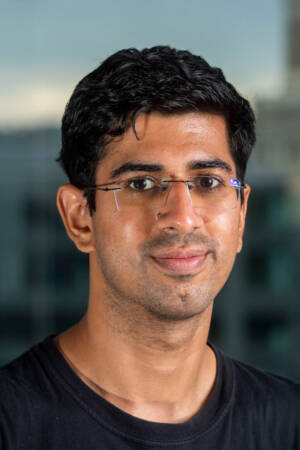
Subhransu Maji is an Associate Professor in the Manning College of Information and Computer Sciences at the University of Massachusetts Amherst, and the co-director of the Computer Vision Lab. He is also affiliated with the Center for Data Science and holds a part-time role as an Amazon Scholar. His research focuses on high-level visual recognition algorithms and interdisciplinary applications in ecology and astronomy. He has received prestigious awards including the NSF CAREER Award (2018), Best Paper at WACV 2015, and the Google Graduate Fellowship (2008). Education: PhD in Computer Science from UC Berkeley (2011), BTech from IIT Kanpur (2006). Prior roles include Research Assistant Professor at Toyota Technological Institute at Chicago (2012-2014). Research Interests: Computer Vision Machine Learning AI Applications in Ecology and Astronomy 3D Shape Understanding Climate Science Grants and Funding: Supported by NSF, NASA, Climate Change AI, and industry grants from Facebook, NVIDIA, Adobe, and Dolby. Current projects include satellite imagery analysis for ecology and material science applications using deep learning. Labs and Teams: Leads the Computer Vision Lab, collaborates with interdisciplinary teams on ecological monitoring (e.g., bird migration tracking via radar data) and material property prediction (e.g., zeolite adsorption modeling).
Zhun Deng is a tenure-track Assistant Professor at the Department of Computer Science, University of North Carolina at Chapel Hill. His research bridges machine learning, statistics, and theoretical computer science, focusing on rigorous frameworks for responsible AI systems. He previously held postdoctoral positions at Columbia University and completed his Ph.D. at Harvard's Theory of Computation group under Cynthia Dwork. Ph.D. in Computer Science, Harvard University (2022) B.Sc. in Mathematics, Chu Kochen Honors College, Zhejiang University His research spans theoretical foundations of machine learning, including: Quantile-based risk control and conformal prediction Fairness guarantees in algorithmic decision-making Uncertainty quantification for LLMs Copyright frameworks for generative AI Physics-informed hybrid models Multi-agent reinforcement learning with constraints Recent work analyzes LLM alignment through distribution-free methods (ICML 2025), explores performativity challenges (ICML 2025), and develops calibration techniques (ICLR 2024). Collaborations include research interns from Stanford, MIT, and NYU. Students in his group include: Ruomeng Ding (Ph.D., UNC) Xiaowei Yin (Ph.D., UNC) Kaicheng Zhang (Ph.D., UNC)
Andreas Vlachos is a Professor of Natural Language Processing and Machine Learning at the Department of Computer Science and Technology, University of Cambridge, and holds the Dinesh Dhamija Fellowship at Fitzwilliam College. His research spans dialogue modeling, automated fact-checking, imitation learning, semantic parsing, biomedical text mining, and trustworthiness in AI systems. PhD in Computer Science, University of Cambridge (supervised by Ted Briscoe and Zoubin Ghahramani) Lecturer at University of Sheffield Postdoctoral roles at UCL, University of Cambridge (NLIP group, Stephen Clark), and University of Wisconsin-Madison (Mark Craven) Current research focuses on evaluating and mitigating biases in language models, advancing fact-checking methodologies, and improving model robustness through interpolation, reinforcement learning, and causal reasoning. His work integrates natural logic, knowledge graphs, and multimodal evidence for verification tasks. Recent publications address uncertainty quantification, temporal planning benchmarks, and ethical framing of NLP artifacts. Grants from ERC, EPSRC, Facebook, Google, and the Alan Turing Institute fund his research team. Collaborations include Sebastian Riedel, Stephen Clark, and Mark Craven. Key projects explore disinformation detection, long-form generation, and confidence calibration in AI systems.
Deva Ramanan is a Professor at the Robotics Institute of Carnegie Melllon University, where he leads research in computer vision and machine learning. His work focuses on modeling human visual perception, leveraging large-scale visual data, and developing systems for 3D understanding, neural rendering, and autonomous systems. He advises a large group of PhD students and has mentored numerous postdoctoral researchers now in leading roles across industry and academia. His research interests include computer vision, machine learning, human perception modeling, 3D scene understanding, neural rendering, autonomous driving, video understanding, and multimodal foundation models. These areas reflect his focus on both foundational models and their application to real-world problems in robotics and AI. The recent publications highlight a strong trend toward multimodal and 3D-aware models, with increasing use of diffusion models, neural fields, and large vision-language systems. Key themes include scene flow, 3D reconstruction from monocular video, autonomous driving perception, and robust evaluation of vision-language models. There is a clear emphasis on both methodological innovation and practical deployment in dynamic environments. Marr Prize, Honorable Mention (ICCV 2021) Best Paper, Honorable Mention (ECCV 2020) Best Paper Finalist (WACV 2024) Best Paper Award (WACV 2016) Best Industrial Paper, Honorable Mention (BMVC 2017) Marr Prize winner (ICCV 2009) Deva Ramanan has advised numerous PhD and master’s students, many of whom are now at top institutions and companies including Apple, Meta, Google, Nvidia, OpenAI, and Princeton. He has received substantial funding from IARPA, DARPA, NSF, Intel, Google, and Facebook for projects in video analytics, dispersed computing, visual cloud systems, and multi-task recognition. His group has developed influential datasets and benchmarks used widely in the community. He leads a vibrant research lab focused on advancing computer vision through deep learning and multimodal integration. His team works on core challenges in perception, including 3D reconstruction, motion modeling, object detection, and scene understanding, with applications in robotics and autonomous systems.
Eytan Adar is a Professor of Information and Computer Science at the University of Michigan, holding dual appointments in the School of Information and the College of Engineering's Electrical Engineering and Computer Science department. His work sits at the intersection of human-computer interaction and artificial intelligence, focusing on large-scale systems analysis and novel interface design. Adar's research spans multiple domains including social media analysis (Twitter, Reddit), academic citation networks, meme propagation, information extraction, and political networks. His methodological expertise includes data mining, data visualization, and graph-based network analysis. His work often operates at internet scale, examining language, creativity, social network dynamics, and text production. His recent publications reveal a strong focus on AI-human collaboration, with particular attention to generative AI interfaces, visualization techniques for complex data, and ethical considerations in AI systems. His work shows a consistent pattern of bridging theoretical insights with practical system implementations. Best Paper Award at ProtoAI: Model-Informed Prototyping for AI-Powered Interfaces, IUI'21 Honorable Mention Award at CHI'24 for feminist interaction techniques research Best Paper Award at ICWSM'18 for Wikipedia language edition analysis Best Paper Award at ICML 2016 Workshop for neural language model visualization Best Student Paper at WSDM'09 for web dynamics research Best of CHI at CHI 2008 for web revisitation patterns analysis Adar has advised numerous PhD students who have gone on to prominent positions at organizations including Google, Apple, RAND, Northwestern University, and Stanford. His research is generously supported by the NSF, IARPA, NIH, the Education Department, and major technology companies including Adobe, Microsoft, Facebook, Google, and Yahoo. He is also a founder of the International Conference on Web and Social Media (ICWSM) and has served as Co-General Chair for WSDM and Co-Program Chair for UIST.
Felipe Csaszar is a Professor of Strategy and Chair of the Strategy Department at the University of Michigan's Ross School of Business. His research focuses on decision structures' impact on innovation, financial performance, and social outcomes, with particular attention to cognitive frameworks, organizational processes, and AI's role in decision-making. He holds a PhD and MA from the Wharton School, University of Pennsylvania. Education: PhD in Strategy, University of Pennsylvania (2009) MA in Strategy, University of Pennsylvania (2007) Research Interests: Strategic decision-making under AI integration Cognitive and structural drivers of innovation Organizational decision processes and design Formal modeling and empirical strategy research Editorial Roles: Senior Editor, Strategy Science and Management Science Former Editor, Organization Science Co-editor, Handbook of AI and Strategy Professional Experience: Prior role: Assistant Professor at INSEAD Previous career: CEO of an internet startup and Head of Research at an asset management firm Labs/Teams: Leading the Strategy Science division at INFORMS Co-chair of the SMS Behavioral Strategy division
Shubham Tulsiani is an Assistant Professor at Carnegie Mellon University's Robotics Institute, where he leads the Computer Vision group and the Physical Perception Lab. His research focuses on inferring physically and spatially grounded representations from perceptual inputs, with applications in 3D vision, robot manipulation, and neural scene reconstruction. He directs an active research group with multiple PhD and Master's students. Research interests center on 3D scene understanding , robot learning , and generative modeling , with specific emphasis on: self-supervised perception, neural rendering, multi-view geometry, manipulation from visual inputs, and physics-based reasoning. The lab develops methods that leverage physical world constraints as supervisory signals. Recent publications demonstrate strong focus on diffusion models for 3D tasks , sparse-view reconstruction , and robotic manipulation transfer . Key trends include neural inverse rendering, view synthesis from limited observations, and translating human interactions to robot actions. Awards include: Best Student Paper Award at CVPR 2015 Advising includes supervision of 5 PhD students, 4 MS students, and undergraduates. Lab alumni hold positions at Google, Stanford, Meta, and Princeton. The Physical Perception Lab collaborates with FAIR Pittsburgh and the CMU Computer Vision group.
Pieter Abbeel is a Professor in the Department of Electrical Engineering and Computer Sciences (EECS) at the University of California, Berkeley. He leads the Berkeley Robot Learning Lab and co-directs the Berkeley Artificial Intelligence Research (BAIR) Lab. His work focuses on advancing AI and robotics through deep reinforcement learning, imitation learning, and unsupervised learning, with applications in automation, healthcare, and education. Abbeel's research also explores the societal implications of AI and its potential to revolutionize other scientific and engineering fields. Education: Ph.D. in Computer Science, Stanford University (2008) M.S. in Electrical Engineering, KU Leuven, Belgium (2000) Research Interests: Robotics, AI, Machine Learning, Reinforcement Learning, Autonomous Systems, and Applications in Surgery, Manufacturing, and Education. Recent Article Trends: Focus on multimodal learning, robot manipulation, protein structure prediction, and scalable AI systems. Key areas include sim-to-real transfer, embodied AI, and foundation models for decision-making. Awards & Honors: IEEE Kiyo Tomiyasu Award (2022) ACM Prize in Computing (2021) IEEE Fellow (2018) MIT Tech Review TR35 (2011) Advising & Grants: Advises startups and has received grants from NSF, DARPA, and industry partnerships. Notable students include those advancing robotics, reinforcement learning, and bioAI. Labs & Initiatives: Berkeley Robot Learning Lab, BAIR Lab, and collaborations with the Center for Human-Compatible AI (CHAI). Founded companies include Gradescope, Covariant, and Berkeley Open Arms.
Professor Simon Godsill MA PhD FIET FIEEE is a University Professor of Statistical Signal Processing in the Department of Engineering at the University of Cambridge. He heads a research team specializing in statistical signal processing, digital audio restoration, and Bayesian inference. His work addresses the processing and analysis of digital speech, audio, tracking systems, and financial datasets, with a focus on probabilistic modeling and computational methods. Research interests include statistical signal processing , degraded signal restoration , and Bayesian computational methods . Recent publications emphasize Gaussian processes, variational inference, and multi-object tracking for applications in audio enhancement and financial data analysis. He co-founded the audio remastering company CEDAR Audio Ltd in 1988. Scientific awards: Fellow of the Institution of Engineering and Technology (FIET) Fellow of the Institute of Electrical and Electronics Engineers (FIEEE) Outside academia, he enjoys singing, cricket, piano/organ playing, and running. His team at Cambridge's Engineering department focuses on robust tracking algorithms and signal enhancement techniques.
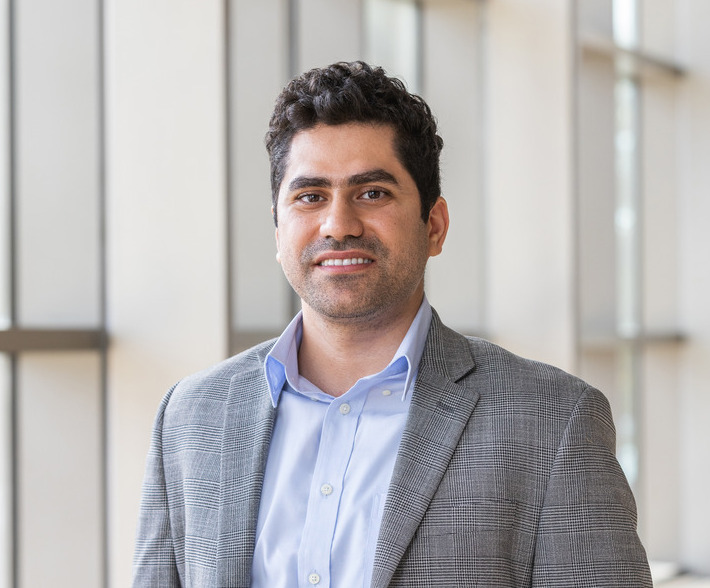
Mahdi Khodayar is an Assistant Professor of Computer Science at the University of Tulsa . He holds a Ph.D. in Electrical Engineering from Southern Methodist University (2020) and M.Sc./B.S. degrees in Artificial Intelligence and Software Engineering from K.N. Toosi University of Technology (2015, 2013). His research focuses on AI and machine learning applications in power systems, transportation systems, computer vision, and spatiotemporal pattern recognition. B.Sc. in Computer Engineering (2013), K.N. Toosi University of Technology M.Sc. in Artificial Intelligence (2015), K.N. Toosi University of Technology Ph.D. in Electrical Engineering (2020), Southern Methodist University Khodayar’s research bridges deep learning with energy systems , including fault detection in power grids, renewable energy forecasting, and traffic scene understanding. His work leverages graph neural networks , reinforcement learning , and generative models for robust spatiotemporal analysis. Recent publications highlight his focus on graph-based architectures for power systems, hybrid deep reinforcement learning in energy forecasting, and unsupervised domain adaptation in remote sensing. His work integrates physics-informed modeling with probabilistic frameworks . Scientific Awards : NSF ECCS Division Funding (2022) US DOT FHWA Grant (2023) Zelimir Schmidt Award for Early Career Research (2023) Honors Student Award (2015), K.N. Toosi University Khodayar has been funded by the NSF , US Department of Transportation , and the TU Cyber Fellows program . He serves as an associate editor for IEEE Transactions on Transportation Electrification and other journals.
Prof. Matthias Nießner is a Professor at the Technical University of Munich , where he leads the Visual Computing Lab . Prior to this, he held a Visiting Assistant Professor position at Stanford University . His work bridges computer vision , graphics , and machine learning , focusing on 3D reconstruction , semantic scene understanding , and AI-driven video synthesis . Prof. Nießner has published over 150 works in top venues like SIGGRAPH , CVPR , and ECCV , with several receiving best paper awards (SIGCHI’14, HPG’15, SPG’18, SIGGRAPH’16 Emerging Tech). His research has garnered international media attention, including features in the New York Times , Wall Street Journal , and MIT Technological Review , as well as TV demonstrations (e.g., Jimmy Kimmel Live for Face2Face technology). Awards : TUM-IAS Rudolph Moessbauer Fellowship (2017–ongoing) Google Faculty Award (2017) Nvidia Professor Partnership Award (2018) ERC Starting Grant (2018, €1.5M) Eurographics Young Researcher Award (2019) Research Trends : 3D Gaussian Splatting for real-time rendering Neural Radiance Fields (NeRF) with mesh supervision Audio-driven facial animation via diffusion models Latent space diffusion for 3D scenes Self-supervised and zero-shot methods for 3D and image analysis As a co-founder and director of Synthesia Inc. , he drives democratization of synthetic media. His YouTube channel has over 5 million views, reflecting his impact beyond academia.
Haibin Ling is the SUNY Empire Innovation Professor in the Department of Computer Science at Stony Brook University, part of the College of Engineering and Applied Sciences. His research focuses on computer vision, medical image analysis, augmented reality, and AI applications in science. He holds a Ph.D. from the University of Maryland (2006) and prior degrees from Peking University. Previously, he worked at Temple University (2008–2019) and held roles at Siemens Corporate Research, UCLA, and Microsoft Research Asia. Professor Ling's work spans biomedical imaging, AI for science, and human-computer interaction. He leads the CV Lab and collaborates with the AI Institute at Stony Brook. Awards include the NSF CAREER Award (2014), Best Student Paper (ACM UIST 2003), and IEEE Fellow (2020). He serves on editorial boards for IEEE Trans. PAMI, Pattern Recognition, and CVIU, and chairs major conferences like CVPR. His research group includes over 50 students and alumni, with active projects in tracking benchmarks (LaSOT), Leafsnap, and medical imaging tools. Notable publications address OCTA flow estimation, backdoor attacks on vision models, and topology-guided medical learning. Collaborations involve institutions like Temple University and Stony Brook's Department of Applied Mathematics and Statistics.