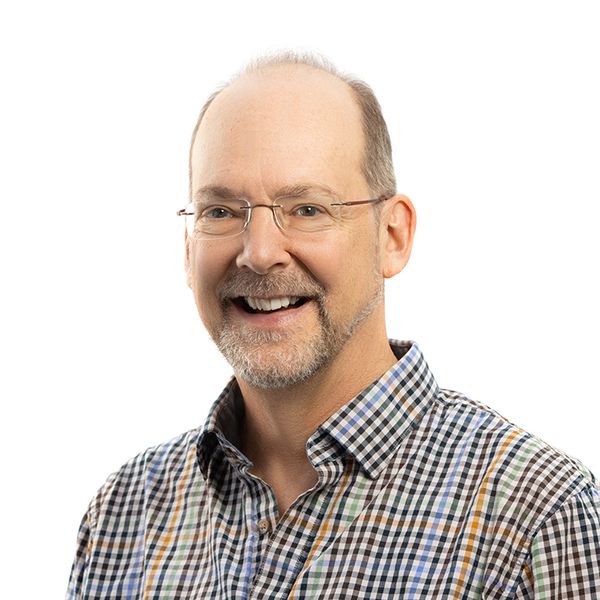
Michael J. Meurer is a Professor of Law at Boston University School of Law, holding the Abraham and Lillian Benton Scholar title. He holds an SB in Economics and Interdisciplinary Science from MIT, a JD cum laude from the University of Minnesota, and a PhD in Economics from the same institution. His research focuses on Intellectual Property & Economics , with emphasis on patent policy, antitrust, and high-tech industry regulation. He has received multiple Pew Charitable Trust Grant Ford Foundation Grant Olin Faculty Fellowship at Yale Law School AT&T Bell Labs Postdoctoral Fellowship His teaching includes core courses in Intellectual Property and Patent Law, alongside workshops for international scholars and policymakers. Meurer's recent publications analyze patent reform frameworks collusion dynamics in patent disputes economic models for nonobviousness costs of patent trolling copyright policy in digital markets innovation economics He actively contributes to antitrust symposiums and law & economics workshops, maintaining a dual focus on legal theory and empirical economic analysis.
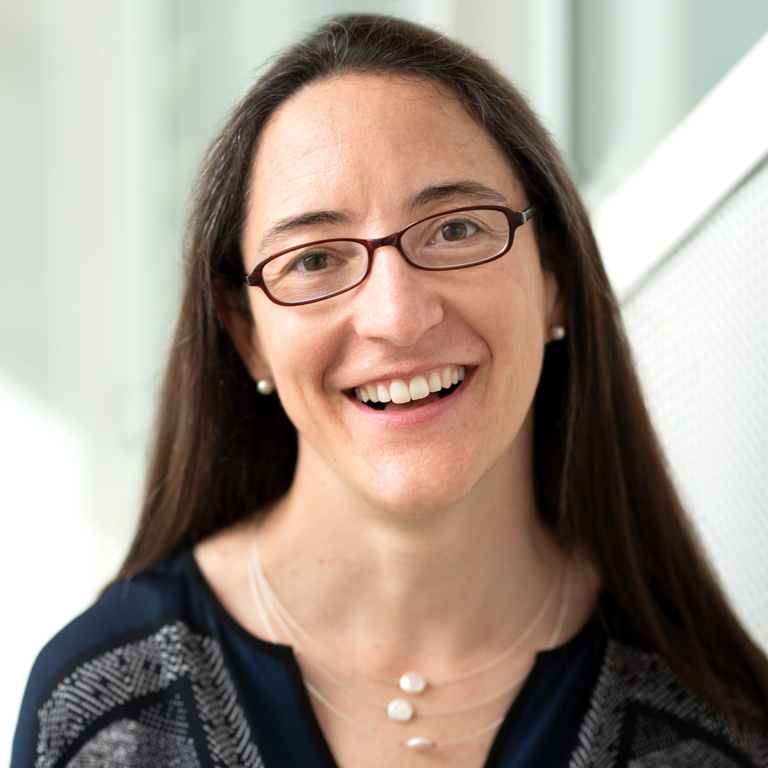
Cécile Mailler is a Reader in Probability at the University of Bath, where she is a member of the probability group Prob-L@B. She has held significant research positions including an EPSRC postdoctoral fellowship (2018-2021) titled "Random trees: analysis and applications" and previously worked as a postdoc at Prob-L@B (2013-2016) as part of Peter Mörters' EPSRC project "Emergence of Condensation in Stochastic Networks". She earned her PhD under the supervision of Brigitte Chauvin and Danièle Gardy at the Laboratoire de Mathématiques de Versailles. Her research focuses on probability theory with emphasis on branching processes, random trees, reinforcement mechanisms, Pólya urns, stochastic approximation, random networks, and statistical physics. She has made significant contributions to understanding preferential attachment models, zero-range processes, and random Boolean trees. Her work bridges theoretical probability with applications in statistical physics and combinatorics. Analysis of her recent publications shows a strong focus on random tree structures, branching processes, and reinforcement learning algorithms, with applications spanning from network theory to statistical mechanics. Her research demonstrates sophisticated mathematical techniques applied to complex stochastic systems, particularly those with reinforcement mechanisms and memory effects. Associate Editor of the Applied Probability Trust (since October 2020) Associate Editor of Stochastic Processes and Their Applications (since March 2022) Author of a general introduction to Pólya urns for the LMS Newsletter (November 2020) Co-organizer of the "Random Walks: Applications and Interactions" conference at CIRM (January 2026) She actively supervises PhD students working on topics including the multi-city ants process, Pólya urns with growing initial composition, large deviations for the Monkey walk, and competing growth processes. She has secured research funding through EPSRC fellowships and has been involved in multiple collaborative projects with prominent researchers in probability theory. Mailler regularly teaches mini-courses on advanced probability topics at international summer schools and workshops, demonstrating her commitment to knowledge dissemination in the field.
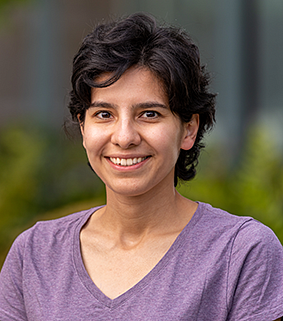
Parisa Hosseinzadeh is an Assistant Professor in the Department of Bioengineering at the University of Oregon. Her research focuses on computational protein design and structure-guided rational protein/peptide engineering, with applications in enzyme design, biosensors, and biomedical solutions. She holds a B.Sc. from the University of Tehran, a Ph.D. from the University of Illinois (advisor: Yi Lu), and a postdoc at the University of Washington in David Baker's lab. Her lab emphasizes interdisciplinary approaches at the intersection of computer science, chemistry, and biology, prioritizing diversity and inclusion in STEM. Key projects include designing cyclic peptides as enzyme inhibitors, developing methods for tuning redox potentials in metalloproteins, and creating tools to combat biomedical challenges. Lab members include postdocs, graduate students (e.g., Noora Azadvari, Andrew Powers), and undergraduates. Notable achievements include NSF grants, the Baxter Foundation Award, and the Hans Horse Meyer Award. The lab also emphasizes mentorship, collaborative culture, and outreach initiatives.
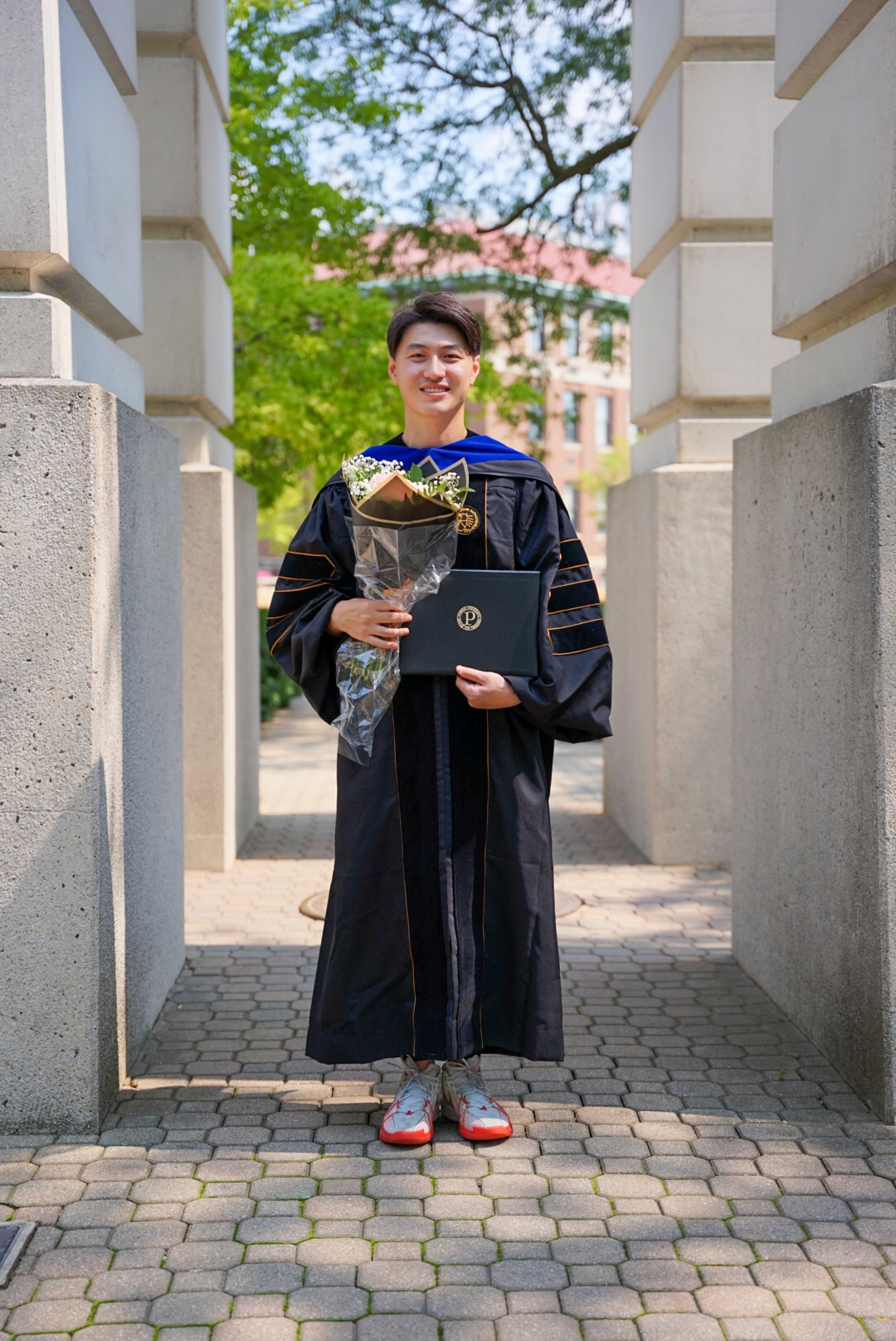
HaoYu Wang is an Assistant Professor of Computer Science at SUNY Albany. His research focuses on parameter-efficient and data-efficient deep learning, particularly in natural language processing and machine learning, aiming to democratize AI access. He holds a Ph.D. from Purdue University's School of Electrical and Computer Engineering, a B.Eng. from the University of Electronic Science and Technology of China, and an MS from SUNY Buffalo. His work includes innovations like RoseLoRA (sparse low-rank adaptation for knowledge editing), LightLT (lightweight quantization for long-tail data), and FedKC (federated knowledge composition for multilingual NLU). He has received awards such as the Future Leaders in Data Science (2024) and Bilsland Dissertation Fellowship. Key research areas include parameter efficiency, cross-lingual NLU, and model fairness. Recent publications span topics like federated learning optimization, robust retrieval-augmented generation, and mitigating token overfitting in LLMs. He advises students on Ph.D. and intern roles, emphasizing CVs and research interests in applications.
Rebecca Long is a Professor of Management at Mississippi State University's College of Business, Department of Management & Information Systems. Her academic career spans over three decades with expertise in family business dynamics, organizational theory, and complexity sciences. She earned a Ph.D. in Organization Theory from Louisiana State University (1992), an MBA in Human Resource Management from the University of Southern Mississippi (1987), and a BBA in Human Resource Management from the same institution (1986). Her research focuses on family firm succession, social exchange theory, and strategic management. She explores how familial relationships influence innovation, HR practices, and ethical cohesion in family enterprises. Notable works include studies on bifurcation bias in family firms and the role of absorptive capacity in innovation outcomes. Her work bridges complexity science methodologies with traditional management research, emphasizing dynamic capabilities. Recent presentations address entrepreneurial teams in funding dynamics, family CEO impact on innovation, and social capital in family business networks. While no formal awards are listed, her extensive publication record reflects sustained academic contribution. She has advised numerous graduate students (not explicitly listed here) and contributed to research productivity studies in academia. Her research spans quantitative and qualitative methods, with notable methodological contributions in OLS assumptions and logistic regression applications. Current work continues to explore family social capital, succession planning, and ethical frameworks in family enterprises.
Thomas C. M. Lee is a Distinguished Professor of Statistics and Associate Dean of the Faculty in Mathematical and Physical Sciences at the University of California, Davis, within the College of Letters and Science. He holds a prominent position in the Department of Statistics and serves as a key academic leader at UC Davis. Education: B.App.Sc. (Math) from University of Technology, Sydney, Australia (1992) B.Sc. (Hons) (Math) with University Medal from University of Technology, Sydney, Australia (1993) Ph.D. from Macquarie University and CSIRO Mathematical and Information Sciences, Sydney, Australia (1997) Professor Lee's research spans multiple areas of statistics with a focus on developing innovative methodologies. His work particularly emphasizes nonparametric and semiparametric modeling , statistical learning , and statistical image and signal processing . He has made significant contributions to applying statistical methods across various scientific disciplines, demonstrating the versatility and power of statistical approaches in solving complex real-world problems. His research often bridges theoretical developments with practical applications, creating methodologies that are both mathematically sound and practically useful. Scientific Awards and Honors: Elected Fellow of the American Association for the Advancement of Science (AAAS, 2019) Elected Fellow of the American Statistical Association (ASA) Elected Fellow of the Institute of Mathematical Statistics (IMS) Elected Senior Member of the IEEE Professor Lee has held significant editorial roles including serving as Editor-in-Chief for the Journal of Computational and Graphical Statistics (2013-2015) and currently as Review Editor for the Journal of the American Statistical Association. From 2015 to 2018, he chaired the Department of Statistics at UC Davis. He has taught numerous statistics courses including STA 13 (Elementary Statistics), STA 131C (Introduction to Mathematical Statistics), STA 243 (Computational Statistics), and STA 401 (Statistical Consulting). His leadership extends beyond research to academic administration, where he has shaped statistics education and departmental direction at UC Davis.
Charless Fowlkes is a Professor in the Department of Computer Science at the University of California, Irvine (UCI). His research focuses on computational vision, spanning human visual system understanding, machine vision systems, and applications in biomedical informatics and forensic science. He holds a Ph.D. from UC Berkeley (2005). His work integrates techniques from computer vision, AI, and applied mathematics to address challenges in automated biological data analysis, morphology, and spatial gene expression. Key research areas include forensic science (e.g., shoeprint matching via 3D reconstruction), biomedical applications (e.g., heart function mapping and pollen classification), and AI-driven systems for scene understanding. Recent projects include a $20M forensic science center funded by the National Institute of Justice. His publications emphasize geometric reasoning, 3D reconstruction, and adaptive learning algorithms. Notable contributions include developing algorithms for 3D human pose estimation with scene constraints, automated pollen identification via CNNs, and frameworks for cross-domain forensic analysis. His work bridges theoretical computer vision with real-world applications in forensics, healthcare, and environmental science.
Yang Kaidi is an Assistant Professor in the Department of Civil and Environmental Engineering at the National University of Singapore (NUS), affiliated with the Institute of Operations Research and Analytics (IORA) within NUS’s Smart Nation Research Cluster. Their research focuses on intelligent transportation systems, traffic control, shared mobility, and machine learning applications in mobility. Key interests include connected and automated vehicles, privacy-preserving data sharing, and reinforcement learning for traffic optimization. Research highlights include developing parameter privacy-preserving strategies for mixed-autonomy platoons, enhancing safety in autonomous driving via transformer-based trajectory prediction, and optimizing traffic signal timing using connected vehicle data. Their work bridges theoretical control systems with practical urban mobility challenges, addressing issues like ridesourcing-public transit integration, modular transit service operations, and weaving section management in mixed traffic environments. Recent publications emphasize real-time control frameworks, cooperative safety mechanisms, and data-driven solutions for urban and highway systems. Yang’s interdisciplinary approach integrates robotics, optimization, and cybersecurity to advance smart transportation infrastructure. Their contributions are particularly notable in privacy-preserving techniques for traffic state estimation and federated learning applications. While no specific awards or grants are listed, their research aligns with Singapore’s Smart Nation initiatives through IORA’s strategic focus areas. Yang’s work has implications for future traffic management systems, autonomous vehicle coordination, and sustainable urban mobility solutions.
Sandra Paterlini is a Full Professor in the Department of Economics and Management at the University of Trento, Italy. She holds academic roles including Co-Chair of the ERCIM Working Group on Optimization Heuristics and Vice-Chair of the IEEE Task Force on Portfolio Optimization. Her career includes visiting positions at institutions such as the University of Minnesota and Ludwig-Maximilians-Universität München. She earned a PhD in Computational Methods for Financial and Economic Decisions from the University of Bergamo, an MSc in Financial Mathematics from the University of Warwick, and a Laurea in Economics from the University of Modena and Reggio E. Her research focuses on quantitative finance, risk management, portfolio optimization, and network analysis, with applications to ESG, systemic risk, and financial stability. Key research contributions include methodologies for sparse graphical modeling, systemic risk analysis, and ESG scoring frameworks. She has received multiple awards for research excellence and serves on editorial boards of journals like Computational Statistics & Data Analysis and Frontiers in Applied Mathematics and Statistics . Her work bridges academia and policy, with contributions to the European Central Bank’s Financial Stability Directorate and involvement in global conferences on computational finance and econometrics.
Jian Tang is an Assistant Professor at HEC Montréal and a core member of the Montreal Institute for Learning Algorithms (MILA). His research focuses on graph representation learning, generative models, and their applications in drug discovery and material science. Prior to this, he was a postdoctoral researcher at the University of Michigan and Carnegie Mellon University, and a researcher at Microsoft Research Asia (2014-2016). He has received several prestigious recognitions, including the Canada CIFAR Artificial Intelligence Chairs (CCAI Chair) and best paper nominations at WWW’16. His work on LINE (WWW’15) was recognized as the most cited paper in its year. Tang’s research spans theoretical foundations and practical systems, such as GraphVite for scalable graph embedding and TorchDrug for drug discovery. Key research interests include geometric deep learning for molecular structures, generative models for protein design, and neural-symbolic reasoning for knowledge graphs. He actively collaborates with leading biological labs and leverages industry partnerships for GPU resources. Recent publications emphasize molecular property prediction, 3D conformation generation, and algorithmic reasoning frameworks. He has secured grants from IBM/MILA, Amazon, and the National Research Council Canada, supporting projects like molecular pretraining and geometric representation learning. Tang teaches courses on graph representation learning and deep learning, and mentors a vibrant team of PhD and master’s students. His lab has developed impactful software tools like LINE, PTE, and LargeVis, widely used in the research community.
Carolina Osorio is a Professor at HEC Montréal, holding the Scale AI Research Chair in Artificial Intelligence for Urban Mobility and Logistics. She is affiliated with the Department of Decision Sciences and is a member of the Group for Research in Decision Analysis (GERAD) and the Interuniversity Research Centre on Enterprise Networks, Logistics and Transportation (CIRRELT). Her research focuses on transportation optimization, urban mobility, and data-driven simulation-based methods. She has been recognized among the world’s most influential researchers in 2023 and 2024. Education: Ph.D. in Mathematics, École Polytechnique Fédérale de Lausanne (EPFL) M.Sc. in Statistics, University College London (UCL) Bachelor’s in Engineering, École nationale supérieure d'informatique et de mathématiques appliquées de Grenoble (ENSIMAG) Research Interests: Her work emphasizes scalable transportation modeling, simulation-based optimization, and AI applications for urban logistics. She develops methods for large-scale network analysis, traffic demand estimation, and sustainable urban mobility solutions. Key areas include traffic signal optimization, car-sharing service design, and high-dimensional stochastic systems. Publications: Recent articles highlight advancements in scalable traffic demand estimation, Bayesian optimization for transportation systems, and simulation-based toll optimization. Her work addresses challenges in global highway networks, urban congestion dynamics, and multi-city calibration. Awards: Scale AI Research Chair (Artificial Intelligence for Urban Mobility and Logistics) Recognition as a world-leading researcher in transportation science Advising & Grants: Osorio collaborates on projects funded by Scale AI and leads research initiatives through GERAD and CIRRELT. Her supervision activities include teaching courses such as Decision Analysis and Sample Efficient Optimization at HEC Montréal. Labs & Teams: She contributes to interdisciplinary teams at GERAD and CIRRELT, focusing on integrating advanced analytics into urban transportation systems.
Emiliya Lazarova is a Professor of Economics and Head of the School of Economics at the University of East Anglia (UEA). She chairs the Royal Economics Society’s Conference of Heads of Departments of Economics. Her research focuses on coalition formation, matching theory, and applied economics, with recent projects analyzing technological innovation via patent data, biodiversity market measurements, and international environmental agreements. She has held academic roles at the University of Birmingham and Queen’s University Belfast, teaching quantitative courses like Applied Econometrics and topics in applied microeconomics. Her research interests include coalition dynamics, social housing allocation, and the political economy of environmental policies. Current projects with Dr. Yuan Gao include developing an ex-ante novelty index for inventions and studying biodiversity valuation mechanisms. Lazarova has secured grants from the Royal Economic Society and British Academy, focusing on property rights and economic development in emerging economies. Her work bridges theoretical models and empirical applications, addressing issues like firm behavior under political pressure, patent innovation cycles, and disability discrimination impacts. Collaborations span institutions globally, reflecting her interdisciplinary approach to economic challenges. Advisory roles include supervising PhD students on topics such as status-seeking in matching markets and conflict resolution via coalition theory. Her teaching expertise complements her research, emphasizing quantitative methods and policy analysis.
Anders Karlström is a Professor at KTH Royal Institute of Technology, specializing in Transport Modelling and Economics. His research focuses on sustainable transportation systems, emissions reduction, and energy efficiency. Key interests include activity-based modelling, dynamic discrete choice frameworks, and policy analysis for urban mobility. He has contributed to studies on travel behavior, infrastructure planning, and environmental impacts of transport systems across multiple international cities. His work integrates advanced methodologies such as recursive logit models, spatial regression, and machine learning for predictive analytics. Notable research areas involve evaluating weather variability effects on travel patterns, optimizing traffic state estimation with sensor data, and developing scenario-based models for future employment growth. Karlström collaborates with industries to enhance the competitiveness of sustainable transport solutions globally.
Mustafa A. Mustafa is a Senior Lecturer (Associate Professor) in the Department of Computer Science at The University of Manchester, where he leads the Trusted Digital Systems Cluster as part of the university-wide Centre for Digital Trust and Society. His academic journey spans prestigious institutions including The University of Manchester, where he completed his PhD, and KU Leuven in Belgium, where he served as a post-doctoral research fellow. Dr. Mustafa earned his educational qualifications through an impressive academic path: a B.Sc. in communications from the Technical University of Varna, Bulgaria (2007), an M.Sc. in communications and signal processing from Newcastle University, UK (2010), and a Ph.D. in computer science from The University of Manchester, UK (2015). His doctoral research focused on "Smart Grid Security: Protecting Users' Privacy in Smart Grid Applications," laying the foundation for his subsequent research career. Dr. Mustafa's research expertise centers on information security, data privacy, and applied cryptography with particular focus on smart grid systems, smart city applications, e-health, and IoT. His work addresses critical challenges in securing peer-to-peer electricity trading markets, smart metering infrastructure, electric vehicle charging systems, and health data management. He has developed innovative solutions for keyless car sharing systems, frictionless authentication mechanisms, and privacy-preserving protocols for data collection and distribution. His scholarly contributions demonstrate a consistent trajectory toward increasingly sophisticated privacy-preserving techniques applied across multiple domains. Recent work shows a growing integration of artificial intelligence and machine learning approaches with traditional cryptographic methods, particularly in federated learning systems and large language model verification. His research bridges theoretical cryptography with practical implementations in energy systems and healthcare applications. Dr. Mustafa's scientific achievements have been recognized with several prestigious awards: Winner of the Student Video Competition at IEEE SmartGridComm 2017 for "Secure and Privacy-friendly Local Electricity Trading" Best Paper Award at SECURWARE 2017 Distinguished Achievement Award as Postgraduate Research Student of the Year nominee by the School of Computer Science of The University of Manchester (2015) Dame Kathleen Ollerenshaw Research Fellowship (2018-2023) As an academic supervisor, Dr. Mustafa has mentored numerous graduate students through their PhD and Master's research, with a particular focus on privacy and security challenges in emerging technologies. His current supervision portfolio includes research on privacy-friendly multi-agent systems for smart grids, security for IoT in e-health, vulnerability detection in IoT cryptography, and bot detection systems. He has secured significant research funding through multiple competitive grants including EnnCore: End-to-End Conceptual Guarding of Neural Architectures (EPSRC, 2020-2024), SCorCH: Secure Code for Capability Hardware (EPSRC, 2019-2023), and SNIPPET: Secure and Privacy-friendly Peer-to-peer Electricity Trading (FWO-SBO project, 2019-2023). Dr. Mustafa leads the Trusted Digital Systems Cluster within the Centre for Digital Trust and Society at The University of Manchester. His research group comprises PhD students, postdoctoral researchers, and collaborators working on cutting-edge security and privacy solutions. The team maintains strong international collaborations, particularly with KU Leuven in Belgium, and contributes to standards development as evidenced by Dr. Mustafa's role as an expert in the IEC/SYC/WG 3 "IEC Smart Energy Roadmap."
Dr. Olga Vysotska is a Researcher affiliated with the Professorship for Robotic Systems at ETH Zurich's Department of Mechanical and Process Engineering. Her work focuses on advancing robotic systems through research in sensor-based navigation, SLAM (Simultaneous Localization and Mapping), and autonomous systems. She holds a doctoral degree and is based in Zurich, Switzerland. Her email is olga.vysotska@inf.ethz.ch. Research Interests: Olga's research spans robotics, computer vision, and autonomous navigation. She specializes in LiDAR-based place recognition, SLAM algorithms, and cross-modal localization using 3D scene graphs. Her work addresses challenges such as environmental changes, sensor fusion, and data association in dynamic environments like agriculture and underground exploration. Key themes include robust localization, loop closure detection, and adaptive algorithms for real-world robotic applications. Publications Overview: Olga's recent work emphasizes diffusion-based LiDAR place recognition (2025), 4D spatial-temporal mapping for agricultural robots (2023), and SceneGraphLoc for cross-modal localization (2024). Her research trends highlight innovation in sensor integration, algorithmic robustness, and practical applications in challenging environments. Earlier contributions include exploration of catacombs with mobile robots (2013) and SLAM enhancements using public map data (2017). Grants & Advising: While specific grants or student advisement details are not listed, her active publication record suggests involvement in funded research projects. Her work often collaborates with industry and academic partners to advance robotic autonomy in complex scenarios. Labs/Teams: As part of the Robotic Systems Professorship, she likely contributes to ETH Zurich's robotics labs focused on SLAM, sensor systems, and autonomous navigation. Her projects may intersect with the Department's broader initiatives in mechanical and process engineering.