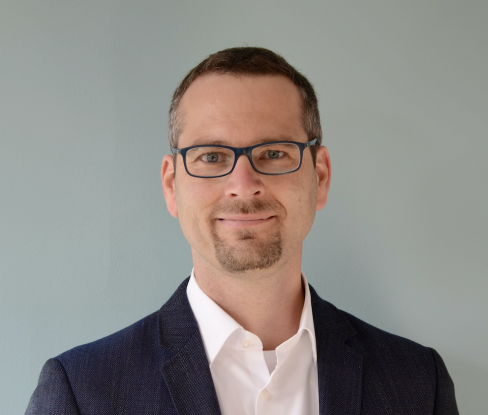
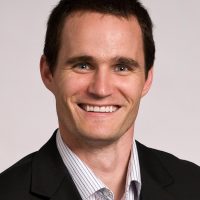
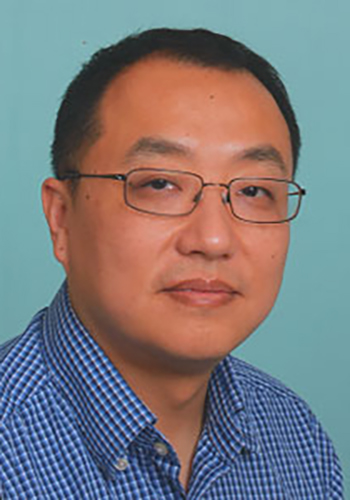
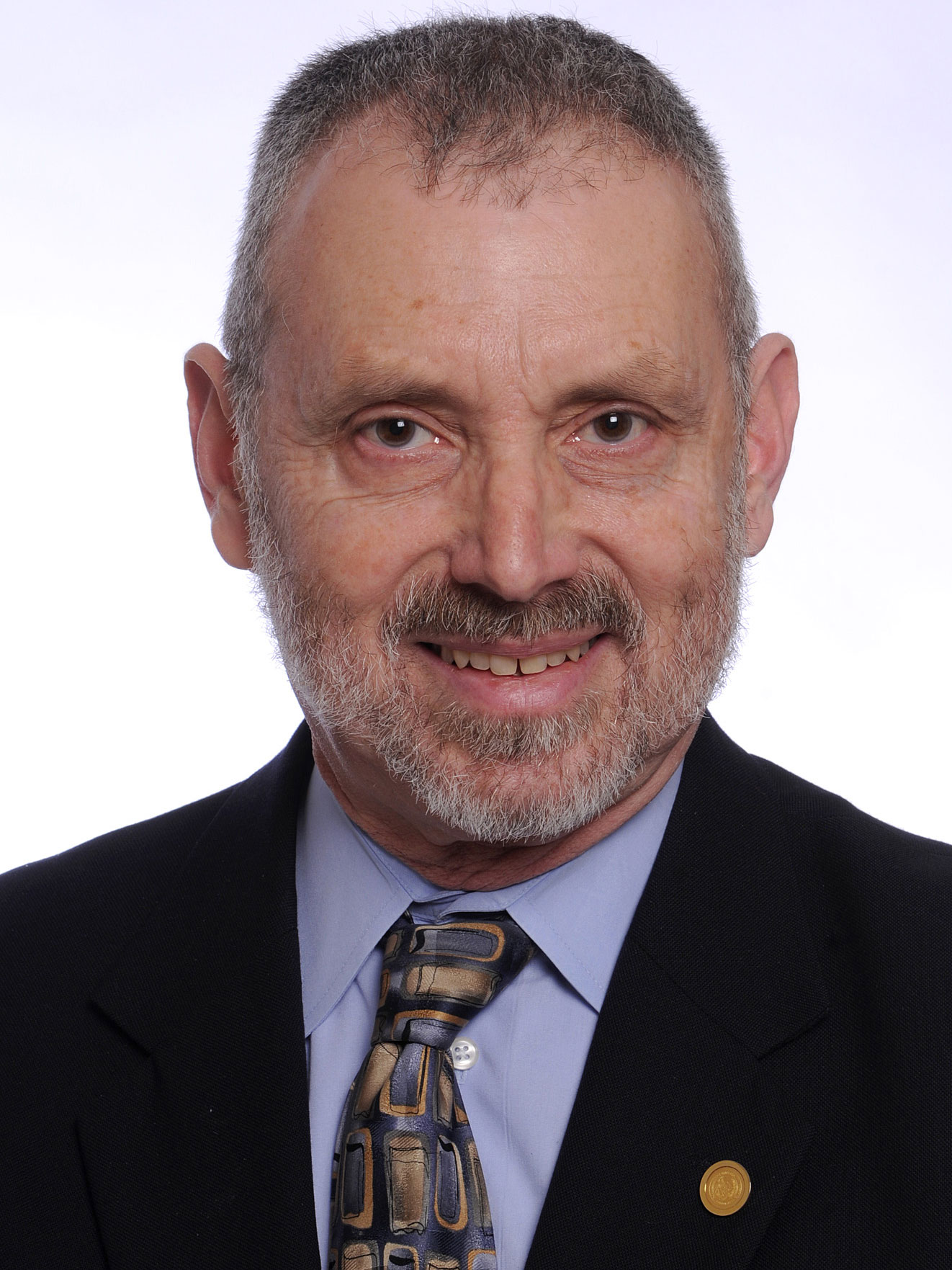
Prof. Dr. Florian Steinke is a Professor and Head of the Energy Information Networks and Systems Department at Technische Universität Darmstadt. His academic career spans roles at Siemens Corporate Technology (2009–2016) and a PhD in machine learning at the Max Planck Institute for Intelligent Systems (2006–2008). His research focuses on algorithmic energy management, distributed control systems, machine learning applications in energy grids, and resilient smart grid design. Education: PhD in Machine Learning (Max Planck Institute for Intelligent Systems, 2006–2008) Diplom in Computational Physics (University of Tübingen & University of Washington, 1999–2005) Research Interests: Development of cyber-physical systems for energy grids Optimization of thermal-electric systems using game theory and stochastic control Integration of social media data for demand forecasting Cybersecurity measures against adversarial attacks on grids Recent work emphasizes probabilistic grid modeling, resilient energy market design, and AI-driven control strategies for Fourth Generation district heating grids. His platform ecosystem research aims to support the energy transition through data-driven solutions. Labs/Teams: Leads the Energy Information Networks and Systems research group, focusing on interdisciplinary projects combining automation, data science, and energy systems engineering.
Marc St.-Hilaire is a Professor at the School of Information Technology and cross-appointed to the Department of Systems and Computer Engineering at Carleton University within the Faculty of Engineering and Design . He holds a Ph.D. from École Polytechnique de Montréal and serves as the NET Program Coordinator. He is a Senior Member of IEEE and has received multiple awards, including the Carleton Faculty Graduate Mentoring Award and the Teaching Achievement Award. Education: Ph.D., École Polytechnique de Montréal His research centers on telecommunication network planning, mobile computing, and network optimization , with strong emphasis on wireless and vehicular networks, fog/edge computing, blockchain integration, and AI-driven network protocols . His recent work applies reinforcement learning, genetic algorithms, and fuzzy logic to solve challenges in dynamic and distributed environments. The trend in his recent publications shows a strong focus on smart infrastructure , including Internet of Vehicles (IoV), smart grids, and cloud/edge resource management . He frequently collaborates with students and researchers on topics such as virtual network embedding, SLA-aware provisioning, and cooperative positioning , often leveraging emerging technologies like blockchain and deep learning. Scientific Awards and Honors: Senior Member, IEEE Best Industry Paper Award, WF-IoT 2024 Best Paper Award, ADHOCNETS 2019 Best Paper Award, iThings 2018 IEEE WIE Best Paper Award, CCECE 2018 Best Paper Award, ADHOCNETS 2017 Carleton Faculty Graduate Mentoring Award, 2014 Carleton Teaching Achievement Award, 2014–2015 Dr. St.-Hilaire actively supervises a large team of graduate students and has mentored over 40 Ph.D., Master’s, and postdoctoral researchers to completion. He has secured significant research funding through industry and government grants, enabling extensive experimental testbeds in SDN, fog computing, and vehicular networks. His work bridges theoretical optimization with practical implementation, often releasing tools and simulators (e.g., NetAnalyzer, DEVS fog simulator). He leads a vibrant research team focused on network intelligence, edge-based complex event processing, and sustainable computing . His lab collaborates with industry partners on projects involving 5G/6G integration, TSN in cloud environments, and smart city applications such as cloud-based waste management and smart grid simulation.
Fauzia Ahmad is an Associate Professor in the Department of Electrical and Computer Engineering at the College of Engineering, Temple University. She has previously held the position of Research Professor and Director of the Radar Imaging Lab at Villanova University. Her research is supported by major U.S. federal agencies, with over $7M in awarded research funding as Principal or Co-Principal Investigator. Ph.D. in Electrical Engineering, University of Pennsylvania, 1997 Dr. Ahmad's research focuses on statistical signal and array processing , computational imaging , and multi-modal sensing . Her work spans applications in through-the-wall radar , ground-penetrating radar , remote patient monitoring , and structural health monitoring . She employs advanced techniques in compressive sensing , sparse reconstruction , and machine learning to solve real-world sensing challenges. The recent publications highlight a strong trend in radar micro-Doppler signature analysis for human activity recognition, coprime array signal processing for super-resolution, and tensor decompositions in MIMO radar and communications. Her work increasingly integrates machine learning with traditional signal processing for robust detection and classification in noisy, real-world environments. Dr. Ahmad has received several prestigious honors: Fellow of the IEEE Fellow of the SPIE Chair of the IEEE Dennis J. Picard Medal Committee (2018-2020) She has served as an Associate Editor for multiple top-tier journals including IEEE Transactions on Signal Processing , IEEE Transactions on Aerospace and Electronic Systems , and IEEE Transactions on Computational Imaging , where she is currently a Senior Area Editor. She has led major conference series such as the SPIE Compressive Sensing and SPIE Big Data conferences. Her research is conducted through the Multi-modal Sensing and Imaging Lab , where she mentors students and collaborates on interdisciplinary projects involving radar, communications, and biomedical applications.
Xuqing Wu is an Associate Professor at the University of Houston , affiliated with the College of Technology and the Department of Information Science Technology . He leads research at the MODAL Lab , focusing on machine learning applications in geophysical inversion, electromagnetic modeling, and subsurface characterization. Office: 230E College of Technology Building, Sugar Land Office: BH2 315 Contact: Phone 713-743-0258 | Fax 713-743-4032 Teaching: Courses include CIS 3365 - Database Management and CIS 6397 - Selected Topics His research spans physics-informed deep learning , transformer architectures , and multi-physics joint inversion , with applications in CO2 monitoring , mineral exploration , and solid-state battery materials . Recent work emphasizes self-supervised seismic data enhancement and real-time geosteering processing through FPGA acceleration. Key publication trends show expertise in electromagnetic telemetry , hyperspectral imaging for methane emissions, and stochastic optimization for sensor placement. He frequently employs polynomial chaos expansion , Markov Chain Monte Carlo methods, and collaborative view synchronization .
Charles A. DiMarzio is an Associate Professor in the Department of Electrical and Computer Engineering at Northeastern University , with affiliations in Mechanical and Industrial Engineering and Bioengineering. His research spans advanced optical imaging techniques for biomedical applications. Education: PhD in Electrical and Computer Engineering, Northeastern University (1996) MS in Physics, WPI BS in Engineering Physics, University of Maine Research interests focus on optics , microscopy , coherent detection , hyperspectral imaging , and collagen studies . His group develops hardware and computational methods for multi-modal biomedical imaging , including the Keck 3-D Fusion Microscope . Recent publications highlight innovations in: Collagen monomer orientation measurement Super-resolution structured illumination Ultrasound-modulated light imaging Coded-illumination Fourier ptychography Awards include: SPIE Fellow (2022) SPIE Senior Member (2021) Optica Senior Member (2021) He supervises capstone design projects and teaches graduate courses in Optics for Engineers and undergraduate classes in Circuits and Signals , Electronics , and Subsurface Sensing . Collaborations include the Gordon Center for Subsurface Sensing , ALERT , and institutions like Memorial Sloan Kettering Cancer Center.
Kevin Dean is an Assistant Professor at the UT Southwestern Medical Center , affiliated with the Lyda Hill Department of Bioinformatics and the Cecil H. and Ida Green Center for Systems Biology . His research focuses on developing and applying advanced microscopy techniques to address complex biological challenges, particularly in cancer metastasis and cellular mechanobiology. Co-developer of autonomous 'self-driving' microscopes using computer vision Expert in spectral unmixing and cyclic immunofluorescence for molecular multiplexing Creator of high-throughput histopathology systems with 300 nm resolution Collaborator with leading scientists (Drs. Danuser, Fiolka, Morrison, Amatruda, Sorger) Principal Investigator for NIH/NCI-funded cancer imaging programs Research Themes: The Dean Lab specializes in cutting-edge imaging solutions that bridge technology development and biological discovery. Their work spans: Cancer Biology: Metastatic colonization mechanisms, tumor microenvironment imaging Biomedical Technology: Light-sheet microscopy, optical probes, time-series analysis software Cellular Mechanobiology: Force-driven morphogenesis, matrix deformation quantification Neuroscience: Stress-induced anhedonia, lateral habenula neuronal signaling Grant Leadership: Dean serves as Principal Investigator for the NCI-funded Imaging Mechanisms of Metastatic Tumor Formation and the NIGMS-supported UTSW-UNC Center for Cell Signaling Analysis , where his team develops open-source platforms like Navigate for smart light-sheet microscopy. Collaborative Networks: Active in multiple interdisciplinary programs including: Prune Belly Syndrome research with Filamin A mutations Drosophila germband extension mechanobiology with micro-cantilevers Lateral habenula functional mapping with multi-modal imaging
Jaideep Srivastava is a Professor affiliated with Qatar Foundation (Doha, Qatar), University of Minnesota (Minneapolis, USA), and holds a PhD from University of California Berkeley. His research spans data mining, social network analysis, time series modeling, and health informatics. Recent work focuses on clinical deterioration prediction, sleep research, and computational analysis of pandemic behaviors. Key contributions in clustering algorithms and graph neural networks Active in multimodal learning and misinformation detection His publications from 2024-2022 demonstrate expertise in hierarchical clustering , large language model applications , and health data analytics . Articles often integrate machine learning , social network dynamics , and clinical monitoring systems . Current projects involve Covid-19 in-hospital mortality prediction , virtual influencer analysis , and low-light imaging techniques . Collaborations span institutions in Qatar, USA, and India with applications in urban mobility and precision medicine.
Xiangyang Xue is a Professor at Fudan University in Shanghai, China, with an extensive research portfolio spanning computer vision, machine learning, and artificial intelligence. His work demonstrates significant contributions to object-centric representation learning, 3D reconstruction, person re-identification, and semantic segmentation. With over two decades of publication history from 1999 to present, he maintains an active research program with numerous collaborations, particularly with researchers like Yanwei Fu, Bin Li, and Yu-Gang Jiang. Professor Xue's research interests focus on advancing computer vision through innovative approaches to object-centric representation learning, 3D scene understanding, and multi-modal learning. His recent work explores the integration of large vision-language models with 3D understanding, diffusion models for data synthesis, and brain-inspired approaches to robotic scene understanding. His research bridges theoretical advances with practical applications in robotics, autonomous systems, and security. Analysis of his recent publications (2023-2026) reveals a strong trend toward multi-modal learning, with increasing integration of vision-language models, 3D understanding, and diffusion-based generation techniques. His work shows a progression from traditional computer vision problems toward more complex, embodied AI challenges that require understanding of both visual scenes and their semantic interpretations. Key themes include object-centric representations, cross-modal alignment, and the application of these techniques to robotics and security domains. Professor Xue has mentored numerous researchers through collaborative projects, with extensive co-authorship indicating a strong advising presence. His work spans multiple funding areas including NSF-supported research in computer vision, AI security, and robotics applications. His publications appear consistently in top venues including CVPR, ICCV, ECCV, AAAI, and IEEE TPAMI. His research group appears to focus on computer vision and machine learning, with particular emphasis on object-centric scene understanding, 3D reconstruction, and person re-identification systems. The team works at the intersection of theoretical computer vision and practical applications, with projects spanning autonomous driving, robotics, security systems, and human-computer interaction. Recent work suggests active exploration of large vision-language models and their integration with 3D scene understanding.
Lana Garmire, PhD is an Associate Professor with tenure in both the Department of Computational Medicine and Bioinformatics and the Department of Biostatistics at the University of Michigan School of Public Health. She leads the Garmire Group in Translational and Clinical Informatics, a multidisciplinary team focused on advancing bioinformatics methodologies for clinical applications. Dr. Garmire has established herself as a nationally and internationally recognized expert in translational bioinformatics, with particular expertise in single-cell sequencing technologies and integrative omics analysis. Dr. Garmire received her MA in Statistics (2005) and PhD in Computational Biology (2007) from UC Berkeley, followed by postdoctoral training at UC-San Diego (2008-2011). She began her academic career at the University of Hawaii Cancer Center in 2012, where she rapidly achieved tenure and was promoted to Associate Professor in 2017. In 2018, she moved to the University of Michigan to expand her research into multi-modal approaches combining genomics, electronic medical records, and pathological imaging analysis. Her research focuses on single-cell and spatial transcriptomics , integrative analysis of EMR/imaging/omics/clinic data , translational bioinformatics of cancers , prognosis and diagnosis prediction , actionable computational models , drug repositioning/repurposing , and women's and neonatal health research . Dr. Garmire's work bridges computational approaches with clinical applications, particularly in cancer and pregnancy-related conditions. An analysis of her recent publications reveals a strong emphasis on deep learning applications in single-cell data analysis , with multiple papers on imputation methods, survival prediction models, and tools for clinical translation. Her research has evolved from foundational bioinformatics methods to increasingly clinically focused applications, particularly in women's health and cancer therapeutics. The trend shows growing integration of multiple data types (multi-omics) and development of user-friendly tools for broader scientific adoption. Dr. Garmire has received numerous prestigious honors including the US Presidential Early Career Scientist and Engineer (PECASE) award in 2019 , the highest honor for early-career scientists in the United States, and election as a fellow of the American Institute of Medical and Biological Engineering (AIMBE) in 2022 . Her group has consistently produced high-impact publications in top journals including Nature, Cell, Genome Biology, and Nature Communications. As a dedicated mentor, Dr. Garmire has trained over 90 researchers including Assistant Professors, MD fellows, postdocs, graduate students, and undergraduates from diverse academic backgrounds. She has successfully secured substantial funding through multiple concurrent NIH R01 grants from NICHD, NLM, and other institutes, as well as a recent R03 grant from the NIH Office of the Director on personalized cancer drug repurposing (July 2025). Her group currently operates a 10x Genomics Chromium system for single-cell RNA and DNA sequencing, supporting both internal research and external collaborations. The Garmire Group maintains an active research program with lab members engaging in diverse projects spanning computational methodology development, cancer research, women's health, and tool building. The group culture emphasizes inclusivity and diversity, with active participation in university-wide initiatives supporting women in STEM and underrepresented groups in science.
Hu Cao is a postdoctoral research associate at the Chair of Robotics, Artificial Intelligence and Real-Time Systems (Prof. Alois Knoll) at the Technical University of Munich (TUM) . Holding a Ph.D. from TUM, his research bridges autonomous driving , robotic grasping , medical image analysis , and dense prediction (classification, detection, segmentation). Education : Ph.D. from TUM Hu's work explores: Autonomous Driving : Perception under adverse conditions, multi-sensor fusion, and risk-based safety models Robotic Grasping : Vision-language integration for 6D pose estimation Medical Imaging : Transformer-based segmentation techniques (e.g., Swin-Unet) His recent publications include 15+ works at top venues like CVPR , ICCV , IEEE TPAMI , and IEEE TIV , with 6052+ Google Scholar citations . Notably, Swin-Unet ranks among the top 3 most cited ECCV papers in 5 years, and his work on event-based autonomous driving perception was featured in IEEE Xplore Innovation Spotlight . Editorial roles include: Associate Editor for Visual Intelligence and Frontiers in Neurorobotics Editorial Board member of Artificial Intelligence and Autonomous Systems (AIAS) Topic Editor for Frontiers in Robotics and AI and Frontiers in Neuroscience He has reviewed for 20+ top journals (e.g., Nature Computational Science , IEEE TRO ) and served on program committees for NeurIPS , CVPR , ICCV , and MICCAI .
Nan Bai is an Assistant Professor in the Heritage & Architecture section at Delft University of Technology's Faculty of Architecture and the Built Environment. His research integrates computational social science, architecture, and artificial intelligence to analyze heritage values in urban contexts, focusing on social perceptions derived from social media data. PhD in Heritage and Values from TU Delft Marie Sklodowska-Curie Early Stage Researcher in the HERILAND Project Research Interests : Computational social science, cultural heritage analytics, spatiotemporal modeling, and social media-driven urban planning. His work bridges architecture, AI, and big data to address heritage preservation challenges. Scientific Awards : Best Paper Award from CIPA 2023 Young CAADRIA Award 2020 External Roles : Active in committees like ICOMOS Nederland, CIPA Emerging Professionals, and CIPA Heritage Documentation. He has presented at international conferences and workshops on heritage and AI topics.
Dr. Shuting Han leads a Junior Research Group at the University of Zurich under the Helmchen Lab, funded by the SNSF Ambizione Fellowship since 2024. She holds a Research Fellow position focusing on cortical dynamics underlying sensory processing and memory. Her research examines how distributed cortical areas interact during sensory processing and memory formation, utilizing multi-area two-photon calcium imaging, virtual reality behavior paradigms, electrophysiology, and advanced data analysis techniques. Key projects include investigating sensory representation in cortical areas, predictive processing in neural circuits, cortico-cortical interactions, memory consolidation across the neocortex, and developing high-throughput imaging methodologies. Her recent publications demonstrate expertise in cross-modal predictions, cortical microstates during consciousness alterations, and neural ensemble dynamics. She directs research on top-down predictive signals in neocortex and develops tools for volumetric neural imaging. SNSF Ambizione Fellowship Dr. Han mentors PhD students Maï Ly Leclair and Saidong Ma in the Helmchen Lab. Her group develops custom multi-area two-photon microscopes and applies machine learning for neural data analysis, bridging experimental neuroscience with computational approaches to decode cortical information processing.
Mansur R. Kabuka is a Professor in the Department of Electrical and Computer Engineering at the University of Miami College of Engineering . His research bridges computational methods with biomedical applications. University of Miami College of Engineering Electrical and Computer Engineering Department Research focuses on: Deep learning for network analysis Bioinformatics and protein classification Ontology-based data integration Biomedical data modeling His recent work involves: Motif-aware representation learning in multilayer networks Multi-modal approaches for protein interaction networks Metabolomics data integration frameworks Weather-traffic flow prediction models Distributed query processing over ontologies Publications demonstrate cross-disciplinary applications of machine learning in: Biological system modeling Cancer subtype prediction Protein family classification Intelligent transportation systems
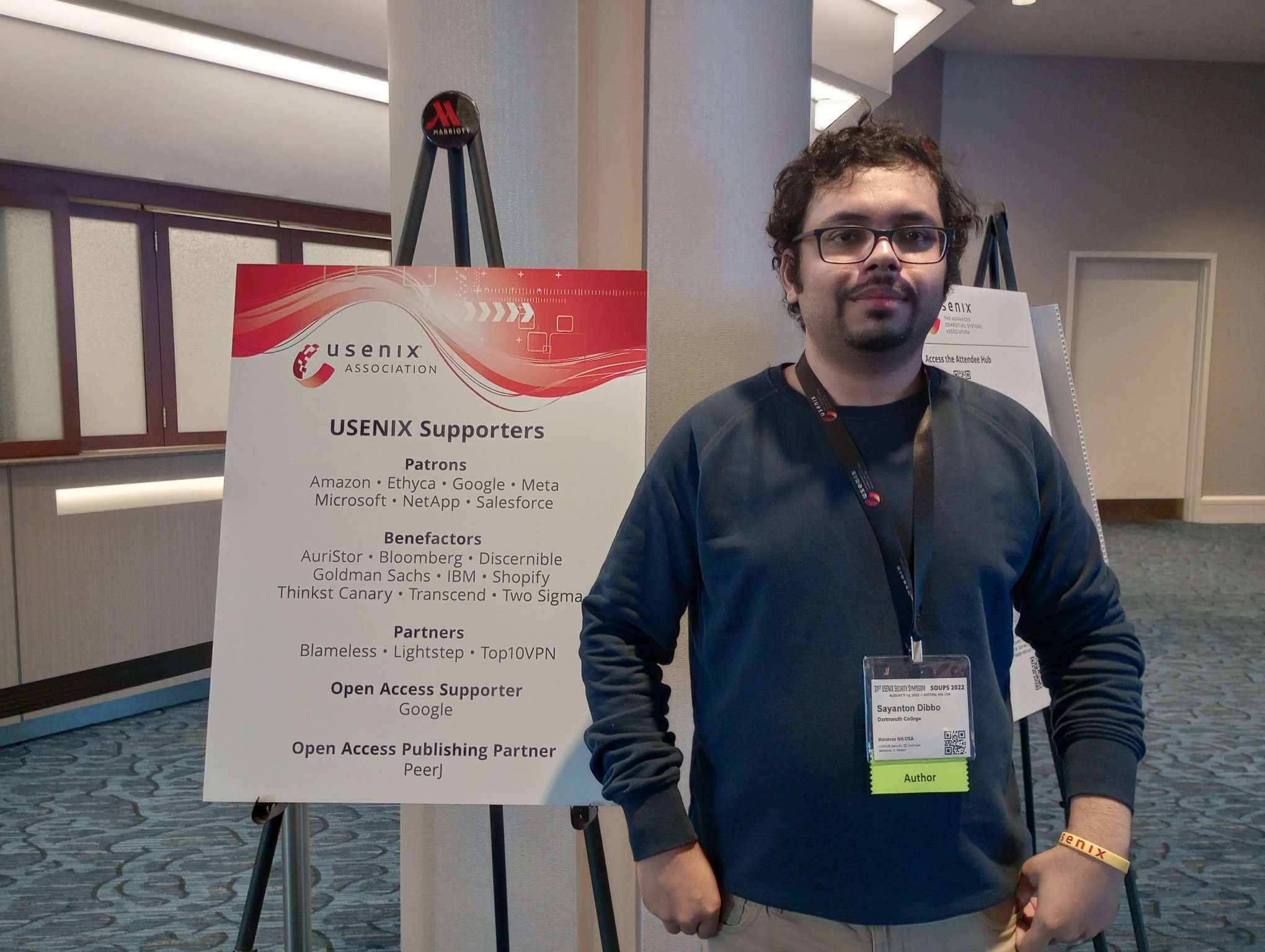
Dr. Sayanton Dibbo is an Assistant Professor in the Department of Computer Science at the University of Alabama, where he leads the Trustworthy AI Lab. He is also a faculty affiliate of the Alabama Center for the Advancement of AI (ALA-AI) and Alabama Cyber Institution & HPC. His academic journey includes a PhD in Computer Science from Dartmouth College (2020-2025) and an MS in Computer Science from the University of California, Riverside (2017-2019). Dr. Dibbo's research spans several critical areas in modern computing: Deep Learning and Computer Vision Secure & Trustworthy AI/ML modeling Analysis of foundation models (LLMs and Multimodal systems) Security and privacy aspects of machine learning systems Biometric-based user authentication for IoT devices His recent work focuses on developing defenses against model inversion attacks using sparse coding architectures, improving robustness in audio classification, and creating secure authentication systems for wearable devices. Dr. Dibbo's research spans multiple data modalities including images, tabular data, audio, and text, addressing critical security and privacy challenges in AI systems. Dr. Dibbo has received recognition for his work including the Dartmouth Graduate Student Council Travel Grant for ICASSP 2024 and the Cybersecurity Cluster Research Fellowship. His service to the academic community includes reviewing for Women in Computer Vision (WiCV) at ECCV 2024, Computers and Security Journal, and Neural Networks Journal. As an educator and mentor, Dr. Dibbo is actively seeking highly motivated undergraduate and graduate students to join his research team at the University of Alabama. His lab focuses on cutting-edge problems at the intersection of AI security, privacy, and robustness, offering students opportunities to work on impactful research with real-world applications.
Gizem Gümüşçekiçci is a Research Assistant at Işık University , affiliated with the Faculty of Engineering and Natural Sciences in the Department of Computer Engineering . Her work focuses on Artificial Intelligence , Software Engineering , and Computer Networks . Education : Master's in Computer Engineering (Full Scholarship, ongoing since 2021), Bachelor's in Computer Engineering (75% Scholarship, 2016-2021) Her research integrates Natural Language Processing and Deep Learning , covering areas like Turkish Embedding Models , Sarcasm Detection , and Sign Language Accessibility . Recent publications highlight applications in sentiment analysis, diffusion models, and social network security. No scientific awards are explicitly mentioned in the provided texts.