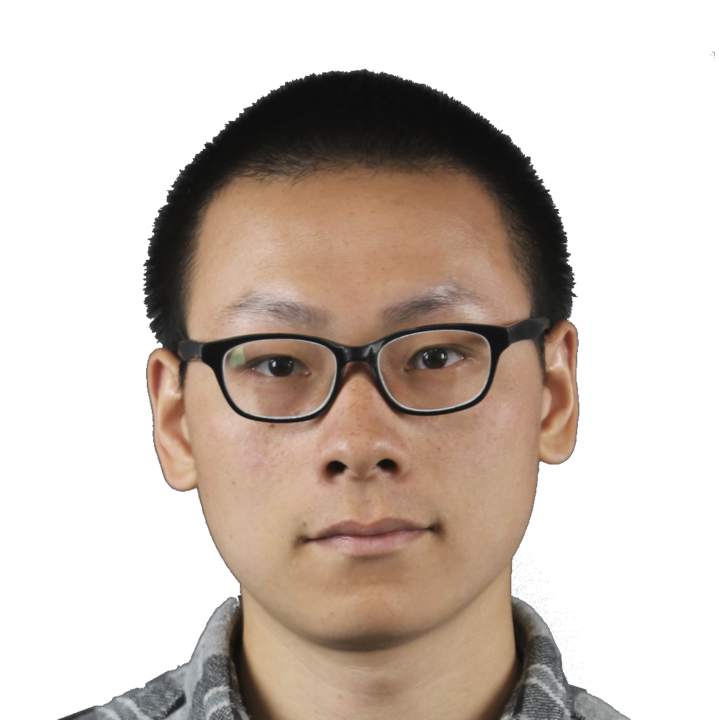
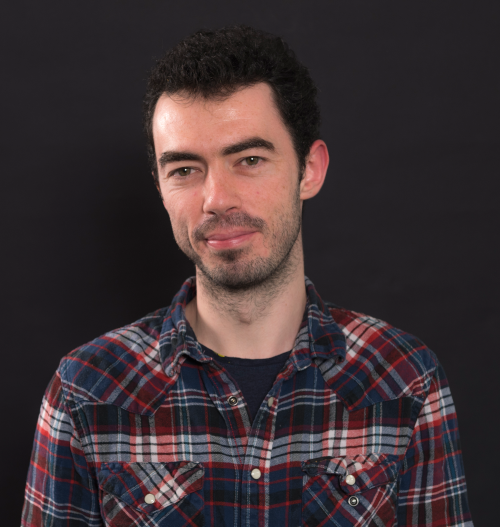
Zhenzhang Ye is a researcher affiliated with the Computer Vision Group at the Technical University of Munich (TUM) , part of the TUM School of Computation, Information and Technology. His work focuses on Photometry-Based Reconstruction , Optimization , and Geometry Processing , with additional interests in Visual SLAM , Deep Learning , and Biomedicine . Research Interests : Optimization techniques, Photometry-Based Reconstruction, and geometric processing for computer vision tasks. Publications : Active contributor to conferences like CVPR, AISTATS, AAAI, and ICCV, with recent works on 3D human motion prediction, hypergradient estimation, and photometric stereo. Contact: yez@in.tum.de
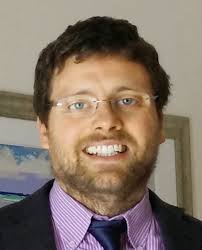
Dr. Manuel Schmidt-Kraepelin is a postdoctoral researcher at the Information Infrastructures group (Technical University of Munich), focusing on gamification for health behavior change and distributed ledger technology applications in healthcare. With dual master's (2016) and bachelor's (2013) degrees in Information Systems from the University of Cologne, he brings extensive experience from KIT, University of Kassel, and University of Cologne research roles. His work combines behavioral science with technical systems design. As a reviewer for major IS journals and conferences (CAIS, ECRA, HICSS, ICIS), he contributes to academic quality assurance. Recipient of multiple best reviewer awards and the prestigious Dean's Award at Cologne, he was honored with the 2014-2016 Deutschlandstipendium and a 2020 DAAD travel grant. Key research areas: gamification mechanics, health behavior change, blockchain in healthcare, narrative transportation theory Recent publications examine gamified procrastination mitigation, expert intuition in medical annotation, and privacy calculus in genetic data sharing Developed taxonomy for gamification concepts in health apps and identified gamification user archetypes Active in design science research and literature synthesis methodologies Awarded best paper recognitions at ICIS and HICSS, with 15+ recent publications across top venues including JMIR, CHI, and IEEE Transactions. Currently teaches Master's seminars on gamified information systems at TUM's Heilbronn campus.
Michelangelo Ceci is a full professor at the Department of Computer Science, University of Bari, Italy. His academic career spans over two decades with significant contributions to data mining and machine learning research. He has established himself as a leading figure in the European data mining community through his extensive publication record and leadership roles in major conferences. Dr. Ceci's primary research interests focus on data mining and machine learning, with particular emphasis on multi-relational data mining, text mining, spatial data mining, spatio-temporal data mining, and semi-supervised/transductive learning. His work bridges theoretical foundations with practical applications across diverse domains including social network analysis, financial technology, healthcare informatics, and environmental monitoring. His research demonstrates a consistent trajectory toward increasingly complex data structures and more sophisticated modeling techniques. The most recent publications reveal several key trends: a growing focus on explainable AI systems, increased application of graph-based methods for spatio-temporal data, expansion into biomedical applications particularly in microbiome analysis, and development of robust methods for anomaly detection in cryptocurrency and social networks. His work increasingly integrates multiple data sources and perspectives through multi-view learning approaches. Dr. Ceci has served on the program committees of major international conferences including IEEE ICDM, IJCAI, ECMLPKDD, SIAM SDM, ECAI, ISMIS, PAKDD, DEXA, and ACM SAC. He has held editorial positions with journals such as IJSNM, IJDATS, and Journal on Advances in Intelligent Systems, and has been actively involved in organizing conference tracks and workshops. His research has been supported through significant projects including serving as national coordinator of FP7612944 MAESTRA and coordinator of a research unit in the PONREC project Vi-POC. He has participated in numerous national (PRIN-COFIN 2001, 2009) and international research projects (IST-1999-20882: COLLATE). Dr. Ceci has also contributed to the academic community through mentoring PhD students and early-career researchers, though specific names of advisees are not documented in the available information.
Sašo Džeroski is a Professor at the Department of Knowledge Technologies, Jožef Stefan International Postgraduate School, and a Scientific Councillor at the Jožef Stefan Institute in Slovenia. He leads a research group of ~17 members, focusing on constraint-based data mining, structured output prediction, and automated modeling of dynamic systems, with applications in systems biology, ecology, and environmental sciences. His research interests span data mining, machine learning, computational scientific discovery, and their applications in life sciences and medicine. He has coordinated major projects like MAESTRA (FP7) and LANDMARK (H2020), and contributed to EU initiatives in systems biology ( E.E.T. Pipeline , PHAGOSYS ). He developed methodologies for predictive clustering trees and hierarchical multi-label classification, with software tools ProBMoT and CLUS . The 15 most recent articles highlight his work on ensemble learning for multi-output systems, structured output prediction in medical imaging, ecological modeling using machine learning, and ontologies for data mining. These publications reflect interdisciplinary trends combining computational methods with applications in fungal biology, endocytosis, and agricultural drainage. Scientific Awards: Foreign Member, Macedonian Academy of Sciences and Arts Advising includes mentoring PhD students (e.g., Nikola Simidjievski, Jovan Tanevski) and MSc students. Grants and projects emphasize EU funding (H2020, FP7) and national initiatives in knowledge technologies. He has served on editorial boards of journals like Machine Learning and Ecological Informatics , and organized key conferences (e.g., ECML PKDD-2015 ).
Sandor Szedmak serves as a Research Fellow in the Department of Computer Science at Aalto University, Finland, and is affiliated with the Helsinki Institute for Information Technology (HIIT). He operates within Professor Juho Rousu's research group, focusing on interdisciplinary machine learning applications with strong ties to computational biology and bioinformatics. His institutional presence is active, as evidenced by current contact details and ongoing publication output. Dr. Szedmak's research specializes in developing advanced machine learning frameworks for complex biological and educational challenges. His primary interests include drug combination effect prediction, protein function annotation through multi-view learning, strain design optimization using reinforcement learning, and personalized educational systems for computer science students. He pioneers methods in latent tensor reconstruction, scalable variable selection, and kernel generalization, targeting high-dimensional data problems in pharmacology and computational biology. His publication trajectory from 2020-2025 reveals a concentrated effort in bioinformatics applications, with landmark papers in Nature Communications and Bioinformatics on drug combination prediction. The work consistently leverages tensor factorization and multi-view learning to model biological systems, while recent expansions include educational data mining for programming behavior analysis. This demonstrates both methodological consistency in machine learning innovation and strategic domain diversification. No scientific awards or fellowships are documented in the provided materials. While no student advisees or grant details are explicitly listed, Dr. Szedmak's collaborative publication pattern—particularly within the Rousu research group and HIIT—suggests active participation in team-based research initiatives. His work appears funded through institutional channels given the consistent output in computational biology. He operates within the Helsinki Institute for Information Technology (HIIT), a joint research institute of Aalto University and the University of Helsinki, and is embedded in Professor Juho Rousu's research group. This environment facilitates cross-disciplinary collaboration between computer science and life sciences, with infrastructure supporting high-performance computing for large-scale biological data analysis.
Robert Ebo Armah-Sekum is a Doctoral Researcher at Aalto University's Department of Computer Science, specializing in bioinformatics and machine learning. His research focuses on applying tensor-based multi-view multi-label learning techniques to computational biology problems. His work bridges data science methodologies with biological applications, particularly in protein function prediction. Current collaborations include Sandor Szedmak and Juho Rousu in the development of latent tensor reconstruction approaches for biomolecular analysis.
Jinbin Zhang is a Doctoral Researcher at the Department of Computer Science, Aalto University. Their work intersects machine learning and computational linguistics, focusing on extreme multi-label classification and text analysis. Research Interests : Large Language Models and Zero-shot Learning Extreme Multi-label Classification Historical Text Analysis and Genre Detection Publications : 2025: LLM-based zero-shot tagging 2024: Calibration in extreme multi-label classification 2022: Sequential genre change detection in historical texts
Rohit Babbar serves as an Assistant Professor in the Department of Computer Science at Aalto University, Finland, leading a research group dedicated to advancing large-scale machine learning methodologies. His team specializes in tackling computational challenges inherent in extreme classification problems with massive output spaces while ensuring model robustness. His primary research domains encompass large-scale learning systems, extreme multi-label classification architectures, deep learning integration, sequential data processing, and robustness engineering. This work directly addresses industry pain points like computational inefficiency in massive label spaces and model vulnerability to distribution shifts, with applications spanning natural language processing, information retrieval, and recommendation systems. Publication trends reveal a strategic focus on algorithmic innovation for extreme classification, featuring breakthroughs in dynamic sparsity techniques, large language model integration for zero-shot scenarios, and calibration of extreme classifiers. Recent work demonstrates consistent emphasis on computational efficiency through optimized negative sampling, lightweight frameworks like InceptionXML, and specialized metrics for long-tail performance evaluation. Scientific recognition includes: Outstanding Reviewer Award at ACL 2021 Conference (July 2021) for exceptional contributions to computer science peer review As research group leader, Babbar directs collaborative efforts on next-generation classification systems while mentoring emerging scholars in machine learning. His team maintains active partnerships with industry leaders in search and recommendation technologies. The research group operates at the intersection of theoretical machine learning and practical deployment, developing frameworks that balance computational feasibility with predictive accuracy in extreme-scale environments. Current initiatives focus on integrating foundation models with specialized classification architectures while addressing real-world challenges like data sparsity and concept drift.
Théo Mariotte is an Assistant Professor at Le Mans University, affiliated with the LST team within the LIUM laboratory. His research focuses on lightweight and explainable audio processing systems, particularly for speaker localization and segmentation in multi-microphone environments. His primary research interests include Audio Signal Processing , Explainable AI , Speaker Localization , and Machine Learning for audio applications. Mariotte develops efficient algorithms for speaker segmentation, speech separation, and overlapped speech detection using multimicrophone arrays, with emphasis on interpretability and real-world applicability in meeting scenarios. Mariotte's publication record shows a strong focus on multimicrophone audio processing, with recent work spanning speaker segmentation (2025), multiple choice learning for speech separation (2025), explainable audio segmentation (2024), and beamformer selection for speaker diarization (2024). His research demonstrates consistent innovation in handling overlapped speech and developing lightweight, interpretable models for real-world audio applications. No scientific awards were mentioned in the source material. Mariotte actively contributes to open-source audio processing tools, including repositories for spherical acoustic holography, speaker localization algorithms, and MATLAB audio processing tools. His work bridges theoretical machine learning with practical audio engineering applications. He operates within the LIUM laboratory's LST (likely Speech and Text) team, focusing on developing robust audio processing solutions for meeting environments using distributed microphone systems.
Vanya Valindria is an Assistant Professor at Monash University specializing in Artificial Intelligence applications for medical diagnostics, with active supervision of PhD students in machine learning for medical image analysis. Her academic foundation includes a Doctoral degree in Artificial Intelligence from Imperial College London (2015–2019), where her thesis investigated machine learning approaches for whole-body scan analysis. Her research centers on AI-driven medical image interpretation , particularly tuberculosis detection from chest radiographs using advanced neural architectures. She extends this work into generative AI for marketing applications and critically examines ethical frameworks for global healthcare AI , with strong emphasis on feminist perspectives and data politics in algorithmic systems. Publication trends reveal a strategic shift from pure technical innovation toward socio-technical integration, combining hybrid deep learning models (Vision Transformers with CNNs) with ethical implementation studies in resource-limited settings like Indonesia. She actively mentors PhD candidates while contributing extensively to academic service through peer review for Medical Image Computing conferences and leadership in the 'Advancing AI Capacity in Indonesian Universities' initiative, which trains faculty across 15+ institutions in AI curriculum development.
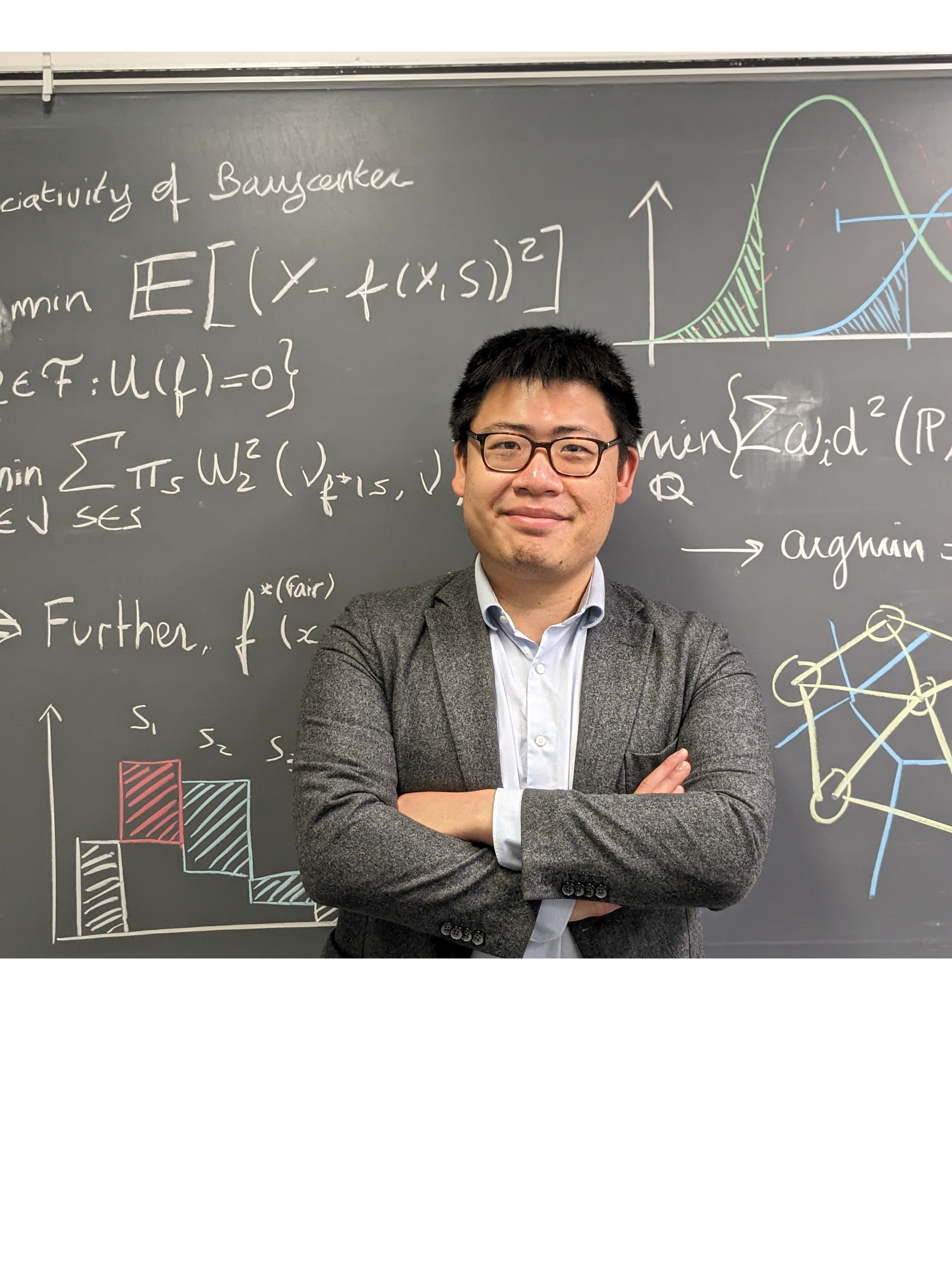
François HU is a Lead AI Researcher and Lecturer in Machine Learning and Computational Statistics at institutions including Conservatoire national des arts et métiers (Cnam), Institut Polytechnique de Paris (ENSAE), EPITA, and Institut des Actuaires. Since 2024, he has led the R&D AI Lab at Milliman France, focusing on Generative AI and Trustworthy AI for insurance and finance applications. PhD in Machine Learning and Insurance (2019-2022), Institut Polytechnique de Paris (CREST-ENSAE) Postdoctoral Researcher (2022-2024), Université de Montréal (Department of Mathematics and Statistics), affiliated with MILA and Algora Lab His research spans algorithmic fairness, semi-supervised learning, NLP, and GenAI, with applications in insurance, biostatistics, and finance. He developed an Early Warning System for Infectious Diseases under the Mathematics for Public Health initiative and contributed to ESG concept identification in Canadian companies via Algora Lab. Recent publications focus on fairness in multi-class classification, Wasserstein barycenters for bias mitigation, and trustworthy AI frameworks. Scientific awards include the 2022 French best actuarial science thesis award. He has taught Python programming, numerical algorithms, Bayesian machine learning, and optimization at EPITA and Institut Polytechnique de Paris, and developed educational materials including notebooks and datasets for practical workshops.
Prateek Kumar serves as an Associate Research Scientist in the Department of Neurology at Yale School of Medicine, where he is a core member of the Rangaraju Lab. His work bridges advanced proteomic methodologies with neurological disease mechanisms, focusing on translational applications for neurodegenerative disorders and stroke. Dr. Kumar's research centers on cell-type specific proteomics in neurodegenerative contexts, particularly leveraging TurboID proximity labeling to map molecular alterations in Alzheimer's disease and stroke models. His investigations target parvalbumin interneurons , astrocytes , and microglia , revealing metabolic vulnerabilities and neuroinflammatory pathways. Current projects emphasize multi-omics integration and machine learning for biomarker discovery, with direct implications for diagnostic tools and therapeutic targeting. Analysis of his recent publication trajectory (2024-2025) shows concentrated innovation in plasma proteomics for stroke diagnostics , cellular subcompartment proteomics , and neuroimmune interactions . Key themes include distinguishing stroke mimics from transient ischemic attacks, identifying atrial fibrillation biomarkers in stroke patients, and characterizing Kv1.3 channel roles in neuroinflammation—demonstrating methodological rigor across in vivo models and clinical datasets. Within the Rangaraju Lab, Dr. Kumar contributes to Yale's collaborative neuroscience ecosystem through the Yale Center for Experimental Neuroimaging and Clinical Neurosciences Imaging Center , focusing on proteomic signatures of early Alzheimer's pathology and ischemic injury. His work directly supports the department's mission in neurodegenerative disease research and clinical translation.
Professor Katrien Beuls is a leading researcher at the Namur Digital Institute within the Faculty of Computer Science at the University of Namur. With over 69 research outputs and an h-index of 30, her work bridges artificial intelligence, computational linguistics, and cognitive science. She actively contributes to the United Nations Sustainable Development Goals through her research in human-inspired AI systems. Her research focuses on developing human-like language processing systems through computational construction grammar, neuro-symbolic approaches, and grounded language learning. Professor Beuls investigates how machines can learn language through situated interactions similar to human language acquisition, with particular emphasis on explainable AI systems that combine neural and symbolic approaches for better interpretability. Her work spans theoretical linguistics, cognitive modeling, and practical AI applications. Analysis of her recent publications reveals a strong trend toward integrating symbolic and neural approaches in language processing, with increasing focus on explainability, grounded language understanding, and construction grammar formalisms. Her research demonstrates consistent progression from theoretical computational linguistics toward practical applications in visual dialogue systems, recipe understanding, and language acquisition modeling. Professor Beuls leads significant research projects including CxG-LEARN (Syntactic-Semantic Operators for Machine Learning of Usage-Based Construction Grammars, 2024-2027), ARIAC by DigitalWallonia4.AI (Applications and Research for Trusted Artificial Intelligence, 2021-2027), and Meaning and Understanding in Human-Centric AI (2020-2024). These projects demonstrate her leadership in advancing construction grammar implementations and neuro-symbolic AI approaches. She has been actively involved in academic dissemination with 12 recorded activities including invited talks, conference organization (10th European Starting AI Researchers' Symposium), and workshop participation. Her media presence includes 11 contributions where she discusses topics like human-inspired language models, kindergarten-inspired AI, and the future of intelligent systems.
Jens Behley is a Lecturer (Privatdozent) at the Institute of Geodesy and Geoinformation, University of Bonn, where he actively teaches graduate courses in robotics and computer vision while leading cutting-edge research in 3D perception. His work bridges theoretical advances with real-world agricultural and automotive applications, focusing on robust algorithms for unstructured environments. Behley's research centers on 3D point cloud processing, semantic segmentation, and SLAM systems, with specialized expertise in agricultural robotics for crop phenotyping and autonomous vehicle navigation. He develops novel techniques for plant organ-level analysis, fruit shape completion, and radar-based localization, emphasizing solutions that function under real-field conditions with sensor noise and dynamic changes. His methodologies frequently integrate deep learning with geometric computer vision to achieve precision in challenging outdoor settings. Analysis of his recent publications reveals a dominant trend toward neural implicit representations (e.g., Gaussian Splatting) and diffusion models for 3D scene understanding, alongside continued innovation in LiDAR processing for agricultural robotics. Key thematic clusters include plant phenotyping (18% of recent work), neural mapping techniques (24%), and robust sensor fusion for autonomous systems (31%), with growing emphasis on generative models for data synthesis. Scientific Awards Outstanding Reviewer at IEEE Robotics and Automation Letters (RA-L), 2024 Outstanding Reviewer at European Conference on Computer Vision (ECCV), 2024 Best Agri-Robotics Paper Award for “BonnBeetClouds3D...” at IROS, 2024 Best Paper Award in Workshop “Agricultural Robotics for Sustainable Futures” at IROS, 2024 Best Paper Award Second Place in Workshop “AI and Robotics For Future Farming” at IROS, 2024 Outstanding Reviewer at CVPR, 2024 Finalist Best Paper Award in Service Robotics at ICRA, 2024 Best Paper for “KISS-ICP...” by RA-L, 2023 Honorable Mention for “High Precision Leaf Instance Segmentation...” by RA-L, 2023 Outstanding Reviewer at CVPR, 2023 Outstanding Reviewer at ECCV, 2022 Finalist IROS Best Paper Award on Agri-Robotics, 2022 Outstanding Reviewer at RA-L, 2022 Outstanding Reviewer at ICRA, 2022 Outstanding Reviewer at ICCV, 2021 Faculty Award for Geodesy from Agricultural Faculty of University of Bonn, 2021 Outstanding Reviewer at CVPR, 2021 Finalist Best System Paper at RSS, 2020 Diplomarbeitspreis der Bonner Informatik Gesellschaft e.V., 2009 Behley actively mentors students through advanced coursework including “Machine Learning for Robotics and Computer Vision” and “Techniques for Self-Driving Cars,” though specific advisees aren't documented. His research is supported by extensive collaborations with Prof. Cyrill Stachniss's robotics group at Bonn, with publications appearing in top venues like RA-L, ICRA, and CVPR. Current projects focus on neural scene representations for agricultural robotics and robust localization in changing environments, with datasets like BonnBeetClouds3D establishing new benchmarks in plant phenotyping.
Raoul de Charette is a Research Director in computer vision at Inria Paris, leading the Astra-Vision group within the ASTRA team. His academic journey includes a PhD from Mines Paris (2012) and Habilitation (HDR) in 2022, with research stints at Carnegie Mellon University (2011), Mines Paris (2013), and the University of Makedonia (2014). His educational background comprises: PhD from Mines Paris (2012) Habilitation (HDR) (2022) De Charette's research centers on robust and interpretable visual scene understanding , spanning 3D scene reconstruction, domain adaptation, material recognition, and physics-grounded vision foundation models. His work integrates physical principles and synthetic data to enhance model robustness in real-world scenarios like autonomous driving and urban environments. Key contributions include uncertainty-aware 3D scene completion (PaSCo), material extraction from single images (Material Palette), and prompt-driven domain adaptation (PODA). Recent publications reveal a strategic shift toward vision-language integration, material-centric scene understanding, and foundation models that minimize labeled data dependency. His group pioneers physics-informed approaches to improve interpretability and resilience against environmental challenges like adverse weather conditions. Key scientific recognition includes: Best Paper Honorable Mention at EGSR 2025 for MatSwap ELLIS Membership PR[AI]RIE-PSAI Fellowship De Charette actively mentors four PhD students—Fatima Balde, Mohammad Fahes, Ivan Lopes, and Tetiana Martyniuk—often in industry collaborations with Valeo.ai and Kyutai. He secures funding through fellowships and industry partnerships, regularly opening PhD positions (including a 2025 opening for Physics-Grounded Vision Foundation Models). As an area chair for CVPR, ECCV, WACV, and IROS, he shapes the field through conference leadership and co-organizing initiatives like the African Computer Vision Summer School. He directs the Astra-Vision group within Inria Paris' ASTRA team, driving interdisciplinary research at the intersection of computer vision, machine learning, and physics-based modeling for real-world deployment in robotics and intelligent transportation systems.