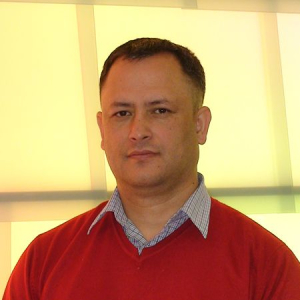
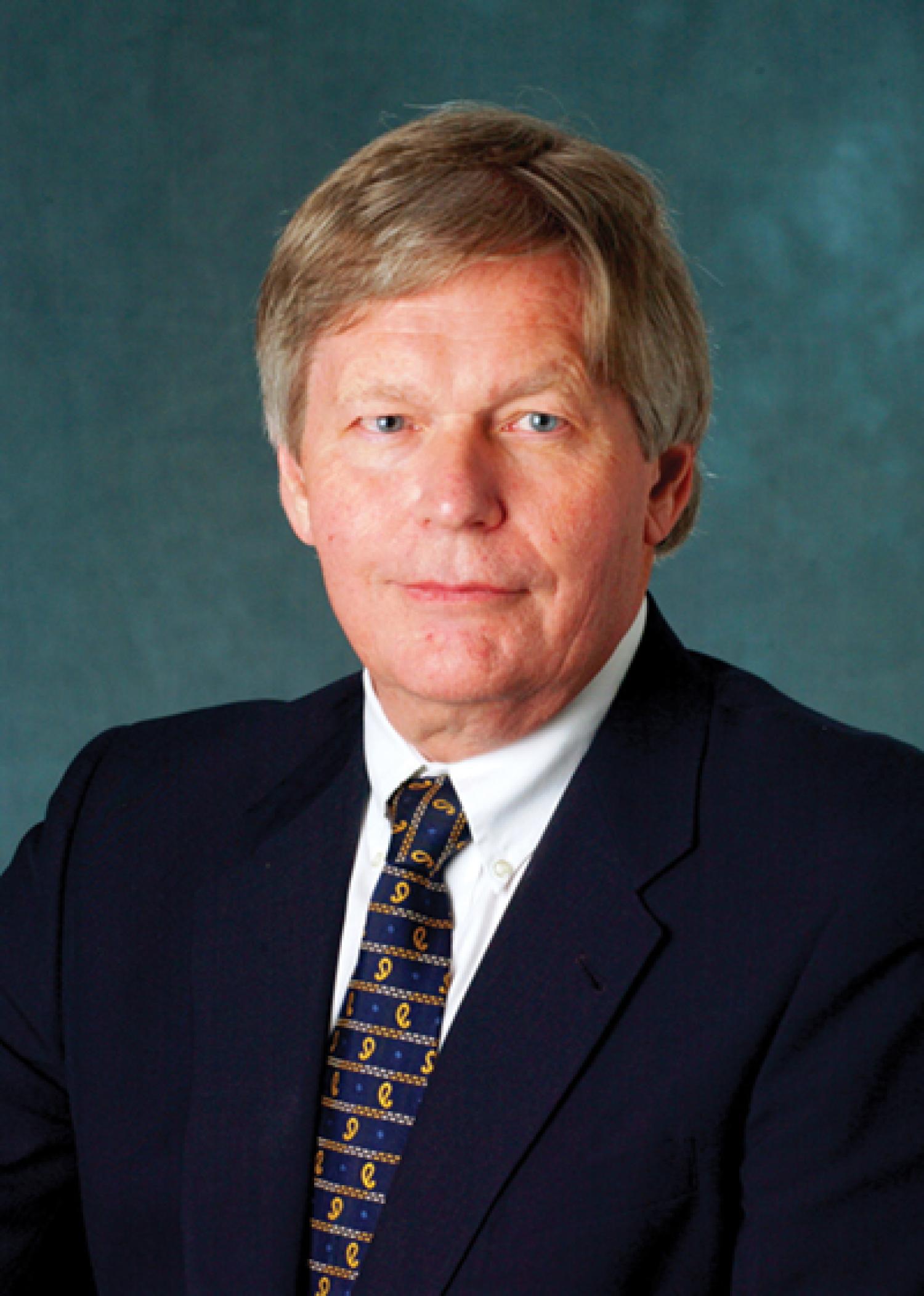
Syed Moin is an Adjunct Professor in the Department of Civil Engineering at McMaster University. His work focuses on water resources management, hydrology, and flood risk assessment, with a strong emphasis on computational methods in open channel flow and environmental modeling. Institution: McMaster University Department: Civil Engineering Academic Rank: Adjunct Professor Moin’s research spans interdisciplinary domains within civil engineering and hydrology, emphasizing numerical simulations and modeling for water management. His scholarly activity highlights a significant engagement in water resource engineering, particularly in regulating the Great Lakes system and modeling discontinuous flows in rivers and channels. His publications reflect a long-term commitment to understanding hydrodynamic behaviors and optimizing solutions for environmental and urban floodplain contexts. Notable works include studies on multi-reservoir optimization, baseflow analysis, and urbanizing watershed dynamics. The research integrates both theoretical and applied approaches to hydrology, addressing real-world challenges in river systems and flood management across bi-national settings.
Professor Konstantinos Salonitis is a Professor of Manufacturing Systems and Head of the Sustainable Manufacturing Systems Centre at Cranfield University. He holds multiple professional qualifications including Chartered Engineer, Fellow of IMechE, Fellow of IET, and Fellow of the Higher Education Academy. With extensive experience in sustainable manufacturing research and education, he has secured over £8 million in research funding and currently leads major projects including the MASTER ATI project with a budget of £15.9 million. Professor Salonitis earned his Diploma in Mechanical Engineering from the University of Patras in 2001, followed by a PhD in Manufacturing Processes in 2006. He further enhanced his qualifications with an MBA, a Master's in Education (Adult learning), and a PGCAP. He joined Cranfield University in 2012 as a Lecturer in Manufacturing Systems, progressing to Senior Lecturer in 2015, Reader in 2017, and Professor in 2019. His research focuses on sustainable manufacturing systems, with particular emphasis on energy efficiency, environmental impact assessment, and the integration of lean and green approaches. Professor Salonitis has developed innovative frameworks for sustainability assessment in manufacturing, including carbon accounting tools and life cycle assessment methodologies. His work bridges theoretical research with practical industrial applications, addressing critical challenges in foundation industries such as cement, steel, and aerospace manufacturing. Analysis of Professor Salonitis's recent publications reveals a strong focus on circular economy implementation, digital technologies for sustainability, and energy efficiency in manufacturing processes. His research increasingly integrates blockchain, AI, and digital twin technologies with traditional manufacturing systems to enable more sustainable production. There's a notable geographic dimension to his work, with significant collaborations focusing on sustainability practices in Saudi Arabia and other Middle Eastern countries. Chartered Engineer Fellow of the Institution of Mechanical Engineers (FIMechE) Fellow of the Institution of Engineering and Technology (FIET) Fellow of the Higher Education Academy (FHEA) Chair of the Manufacturing Industries Division at IMechE Professor Salonitis has supervised more than 120 PhD and MSc students to completion and currently mentors 8 PhD candidates. His research has been supported by significant funding from diverse sources including European Commission programs (FP5-FP7, Horizon 2020), EPSRC, Innovate UK, and industrial partners such as GKN, BAE Systems, Rolls-Royce, and Airbus. With over £8 million secured in research funding over the past decade, his work has substantial industrial impact, particularly in the aerospace and foundation industries sectors. As Head of the Sustainable Manufacturing Systems Centre, Professor Salonitis leads a multidisciplinary team focused on developing innovative solutions for sustainable manufacturing. The Centre works closely with industrial partners to translate research into practical applications, with particular expertise in energy efficiency assessment, carbon footprint reduction, and circular economy implementation. The Centre also plays a key role in Cranfield's international collaborations, especially with Chinese institutions through the UK-Jiangsu World Class University Consortium.
Ladd Keith is an Associate Professor in the School of Landscape Architecture and Planning at the University of Arizona , with affiliations including the Udall Center for Studies in Public Policy and the Southwest Center on Resilience for Climate Change and Health (SCORCH). His research focuses on urban heat resilience, climate governance, and integrating public health with urban planning to address extreme heat risks. Education: Ph.D. in Arid Lands Resource Sciences, M.S. in Planning (University of Arizona) Key Projects: Leads the Southwest Urban Corridor Integrated Field Laboratory (SW-IFL), co-leads the Center for Heat Resilient Communities, and contributes to the Global Heat Health Information Network (GHHIN). Recent research explores plan integration for heat resilience, heat stress management, and equity in cooling access. His work spans case studies in U.S. cities like Phoenix, Tucson, and Boston, as well as international contexts such as Vienna. Publications emphasize interdisciplinary approaches, policy innovation, and community engagement. As a Faculty Research Associate at the Udall Center and co-investigator for initiatives like BRACE and NIHHIS, he bridges academic research with practical climate adaptation strategies. He also develops tools like the Plan Integration for Resilience Scorecard (PIRS™) for Heat to support municipal planning efforts.
Dr. Mahsa Khorasani is a Postdoctoral Researcher at Aalto University's Department of Energy and Mechanical Engineering. She actively contributes to the Marine and Arctic Technology research group, focusing on advanced analytics in engineering systems and social media data. Current affiliation: Aalto University Department: Energy and Mechanical Engineering Research group: Marine and Arctic Technology Her research spans multiple domains including: Mechanical Engineering: Anomaly detection in machinery plants using Bi-LSTM-DVAE frameworks. Arctic Operations: Process modeling and qualitative analysis of icebreaker operations. AI & Social Media: Multi-view learning for autism detection and bipolar disorder identification on social media. Data Science: Concept drift detection in business processes via trace embedding techniques. Recent publications highlight her expertise in predictive maintenance, Arctic logistics, and mental health diagnostics through computational methods. Her laboratory affiliations include Aalto University's Marine and Arctic Technology group, where she applies cutting-edge machine learning techniques to complex engineering and social challenges.
Dr. Miriam E. Marlier is an interdisciplinary environmental scientist and Assistant Professor of Global Environmental Change in the Environmental Health Sciences Department at the University of California, Los Angeles (UCLA) Fielding School of Public Health . She also serves as faculty at the UCLA Institute of the Environment and Sustainability and holds an adjunct role at The RAND Corporation . Education: Ph.D. in Earth & Environmental Sciences, Columbia University (NSF Graduate Research Fellow) B.S. summa cum laude in Atmospheric, Oceanic & Environmental Sciences, UCLA Her research examines interactions between environmental change and public health using remote sensing and interdisciplinary modeling. Key projects include forecasting fire emissions and haze impacts in Indonesia, analyzing agricultural burning effects on Indian air quality, studying climate drivers of western U.S. wildfires, and improving disaster response via satellite data. She integrates environmental justice and climate adaptation frameworks into her work. Recent publications focus on wildfire smoke disparities, compound climate hazards (e.g., extreme heat + smoke), PM2.5 health impacts, and forest management trade-offs. Her 2025 studies analyze California wildfires and spatio-temporal smoke patterns, while 2024 works explore disease seasonality, heat-smoke synergies, and emission inventories. Scientific Awards: National Science Foundation (NSF) Graduate Research Fellowship Dr. Marlier collaborates with institutions like Columbia University, RAND Corporation, and UCLA's environmental health labs. Her outreach includes National Geographic features and community vulnerability indices for smoke exposure.
Tuuli Parviainen is a Postdoctoral Researcher at the University of Helsinki's Faculty of Biological and Environmental Sciences. She is affiliated with multiple research organizations including the Helsinki Institute of Sustainability Science (HELSUS) and the Helsinki Institute of Urban and Regional Studies (Urbaria). Her work spans marine risk governance, climate adaptation strategies, and science-policy interface challenges. Education: PhD in Environmental Sciences from University of Helsinki Key Projects: LONGRISK (urban multi-hazard risks), BALTIMARI (Baltic Sea oil spill governance), 30MILES (water tourism infrastructure) Research focuses on green transition governance , shipping industry sustainability , and urban climate resilience . Publications analyze renewable energy supply chains, extreme weather preparedness, and marine environmental management systems. Recent work examines battery cluster resource governance and stakeholder interpretations of marina sustainability. Scientific contributions include: 16 peer-reviewed publications Bayesian network applications for maritime risk assessment Scenario-based Arctic risk management frameworks Science-policy communication tools Awards: Best Student Presentation at UArctic Congress 2018 Media Impact: Contributed to 6 press/media appearances discussing shipping responsibility, oil spill risks, and green transition
Dr Richard Wilman is an Associate Professor at Durham University , affiliated with the Department of Physics . His research spans astrophysics, galaxy clusters, and active galactic nuclei (AGN) feedback. Key research themes include cosmic hazards, molecular gas dynamics, and Lyα blob studies. He has contributed to major surveys like the Square Kilometre Array simulations and XMM-LSS low-frequency radio counterparts. Dr Wilman’s publications focus on AGN feedback mechanisms, galaxy cluster core dynamics, and high-redshift galaxy studies. His work often integrates multi-wavelength observations (X-ray, infrared, radio) to explore gas kinematics, star formation, and AGN interactions. His scientific contributions include data catalogs (e.g., optical emission lines in galaxy clusters) and pivotal discoveries such as superwinds in high-redshift galaxies (Nature 2005). Notable projects include the SAURON Deep Field and VIMOS IFU surveys.
Federico Vagnon is an Associate Professor at the Department of Environment, Land and Infrastructure Engineering (DIATI) of Politecnico di Torino . His research focuses on applied geology , debris flow , rock mechanics , and geothermal energy , with a strong emphasis on geohazards and sustainable infrastructure . He leads and collaborates on courses such as Geothermal Energy , Environmental Engineering Geology , and Civil Protection , spanning Environmental and Land Management Engineering and Civil Engineering programs.
Dr. Fabio Giulio Tonolo is an Associate Professor at the Politecnico di Torino , Department of Architecture and Design (DAD), specializing in geomatics and remote sensing for urban and environmental applications. His work bridges emergency cartography , UAV photogrammetry , and climate change monitoring through advanced geospatial techniques. Academic Roles : Teaching Satellite Remote Sensing and GIS and Advanced Geospatial Data Management at various cycles of the PhD in Urban and Regional Development Research Leadership : Scientific Director for projects like MOHYCAM (hydrogeological hazards) and EMERITUS (environmental crimes), with collaborations on glacier monitoring and cultural heritage preservation Scientific Affiliations : Secretary of AIT - Italian Remote Sensing Association (2019-2026), former President of IWG-SEM, and active member of ISPRS working groups Key Research Themes : Multi-source geospatial data integration, 3D modeling for heritage conservation, satellite-based climate impact analysis, and emergency mapping protocols His 15 most recent publications focus on remote sensing , glacier monitoring , and cultural heritage digitization , with methodologies spanning from UAV LiDAR to AI-based image segmentation . Dr. Tonolo has received ASITA Federation Best Poster Awards and contributes to editorial boards like ISPRS International Journal . He supervises PhD students in Urban and Regional Development, leads commercial projects such as 3D metric surveys in Assisi, and participates in international conferences including GISTAM and Gi4DM. His work aligns with SDG 11 (Sustainable Cities) and ERC PE10_14 (Earth Observations).
Ali Zamani Noori is a researcher in the Department of Structural, Building and Geotechnical Engineering at the Polytechnic University of Turin. He completed his doctoral thesis titled 'Resilience Assessment of the Built Environment of a Virtual City' in May 2019 and has been actively publishing research through 2021. His work focuses on earthquake engineering, structural analysis, and community resilience frameworks, with particular emphasis on school buildings, historical artifacts, and urban environments. Dr. Zamani Noori's research interests center on seismic risk assessment and disaster resilience engineering. His work applies computational methods to evaluate building stock vulnerability, develops frameworks for community resilience measurement, and integrates Building Information Modeling (BIM) with structural assessment techniques. He has made significant contributions to the PEOPLES framework for measuring urban community resilience across seven dimensions: Population, Environment, Organized governmental services, Physical infrastructures, Lifestyle, Economic, and Social capital. His publication record demonstrates expertise in large-scale seismic simulations, post-earthquake emergency response systems, and multi-hazard analysis approaches. The research shows a strong trend toward developing practical tools for policymakers and emergency managers, with applications in both Italian and international contexts, including the San Francisco Bay Area. Dr. Zamani Noori has collaborated extensively with Professor Gian Paolo Cimellaro and other researchers at the intersection of structural engineering, urban planning, and disaster management. His work often addresses the Italian context, particularly the vulnerability of school buildings, with over 60% of Italy's 40,000 school buildings constructed before modern seismic standards.
Dr. Cristina Thomas serves as an Assistant Professor in the Department of Astronomy and Planetary Science at Northern Arizona University. Her research utilizes ground-based telescopes including NASA's IRTF and SOAR to investigate asteroid composition, space weathering effects, and rotational properties. She leads the DART (Double Asteroid Redirection Test) Observations Working Group and holds Guaranteed Time Observations on the James Webb Space Telescope for solar system studies. Her research centers on asteroid compositional analysis through infrared spectroscopy, with emphasis on space weathering processes and rotational dynamics of small solar system bodies. She employs multi-wavelength observational techniques to study near-Earth and main-belt asteroids, contributing to planetary defense initiatives and understanding solar system evolution through international collaborations. Analysis of her 2025 publications reveals dominant themes including JWST-based characterization of asteroid composition, post-DART impact dynamics of the Didymos system, and investigations of water ice in the asteroid belt. Key research threads involve rotational property analysis of binary asteroids, compositional mapping of Jupiter's irregular satellites, and planetary defense applications for objects like Apophis. No scientific awards are mentioned in the provided text. While no student names are listed, her leadership in the DART Observations Working Group and JWST Guaranteed Time Observations indicates significant research management responsibilities and grant-funded project coordination. Dr. Thomas leads the global DART Observations Working Group coordinating post-impact studies of Dimorphos, and is a key member of the JWST solar system science team focusing on asteroid and comet characterization through infrared spectroscopy and imaging capabilities.
Eric M. Hernandez is an Associate Professor of Structural Engineering at the University of Vermont , where he directs the Structural Monitoring, Diagnostics, and Prognostics Lab. His research focuses on extracting actionable insights from wave and vibration data in structures, with applications in structural health monitoring, earthquake engineering, and biomechanical systems. His work spans seismic risk assessment, damage detection, and model-data fusion, supported by grants from the National Science Foundation (including a CAREER award), NASA, and the Vermont Agency of Transportation. He has taught courses such as Structural Analysis , Earthquake Engineering , and Reliability of Engineering Systems over 20+ years at institutions including Instituto Tecnologico de Santo Domingo and Northeastern University. His recent publications highlight advancements in nonlinear model-data fusion for seismic monitoring Bayesian updating in structural diagnostics sensor optimization for state estimation His accolades include the NSF CAREER Award (2015) and the Gregory N. Sweeny Green and Gold Professor (2018).
Dr. Gustavo Coelho is an Assistant Professor of Water Resources at Furman University since 2022. He holds a Ph.D. from George Mason University and professional licenses in environmental engineering from Brazil and France. His research focuses on hydrology, flood forecasting, and climate adaptation, with a strong emphasis on integrating weather and climate science to enhance water resource management and disaster resilience. He has extensive industry experience in Brazil as a water resources engineer, specializing in watershed management and flood mitigation. Educational Background: Ph.D. in Civil, Environmental, and Infrastructure Engineering (George Mason University) M.S. in Civil, Hydraulic Engineering (University of São Paulo) B.S. in Sanitary and Environmental Engineering (Federal University of Santa Catarina) Professional License in Environmental Protection (ENGEES, France) Research Interests: Dr. Coelho’s work addresses water quantity/quality challenges and natural hazards, particularly leveraging climate science for resilient urban planning. Key areas include real-time flood forecasting, sea level rise impacts, and socio-economic vulnerability assessments. Key Awards: 2022 AGU Frontiers in Hydrology Travel Grant 2021 Summer Research Fellowship (George Mason University) 2021 Best Hackathon Project Award (DesignSafe Academy) Advising & Grants: His professional activities include roles as a volunteer scientist with AGU’s Thriving Earth Exchange (2018–2022) and participation in CUAHSI’s National Water Center program. His teaching philosophy emphasizes experiential learning through real-world case studies in courses like Global Water Issues and Hydrogeology . Labs/Teams: Collaborates with interdisciplinary teams on projects funded by federal and institutional grants, focusing on flood resilience, climate adaptation, and urban water systems.
Komal Aryal is a Research Fellow in Disaster Risk Governance at the University of Salford's THINKlab. With over 17 years of experience, his work focuses on participatory disaster risk management, humanitarian response coordination, and community resilience. Aryal investigates the integration of Earth Observation, AI, and social intelligence for improving local disaster governance. His research portfolio includes projects in Sri Lanka, Pakistan, and Malaysia funded by GCRF/EPSRC. Aryal has field experience in major crises including the 2014 Ebola outbreak and 2015 Nepal earthquakes. He collaborates with Tyne and Wear Fire and Rescue Service on community safety knowledge exchange. He holds a PhD from Northumbria University on disaster vulnerability in Nepal and an MSc in Disaster Management. Aryal's publications analyze governance challenges and vulnerability assessment methodologies in disaster contexts.
Daniel Baker is a Distinguished Professor of Planetary & Space Physics at the University of Colorado Boulder, holding joint appointments in the Departments of Astrophysical and Planetary Sciences, Physics, and Aerospace Engineering Sciences. He directs the Laboratory for Atmospheric and Space Physics (LASP) and is an investigator on NASA missions such as the Geospace Dynamics Constellation and Van Allen Probes. His research focuses on space weather, magnetospheric dynamics, and plasma physics, with over 900 peer-reviewed publications. Affiliations: LASP Director, NASA Mission Investigator Research Interests: Radiation belts, magnetospheric modeling, energetic particles, spacecraft anomalies His work bridges theoretical and observational studies, emphasizing space weather impacts on satellites and ground systems. He collaborates globally on missions like COSPAR Constellation and leads initiatives like the SWORD Center for operational readiness. Awards: Fellowships from AGU, AIAA, AAAS; Membership in the National Academy of Engineering and International Academy of Astronautics. Advising & Grants: Leads LASP’s research teams and NASA-funded projects, though specific student/advisor data is not listed here. Labs/Teams: Directs LASP, contributing to multi-institutional efforts in space instrumentation and mission design.