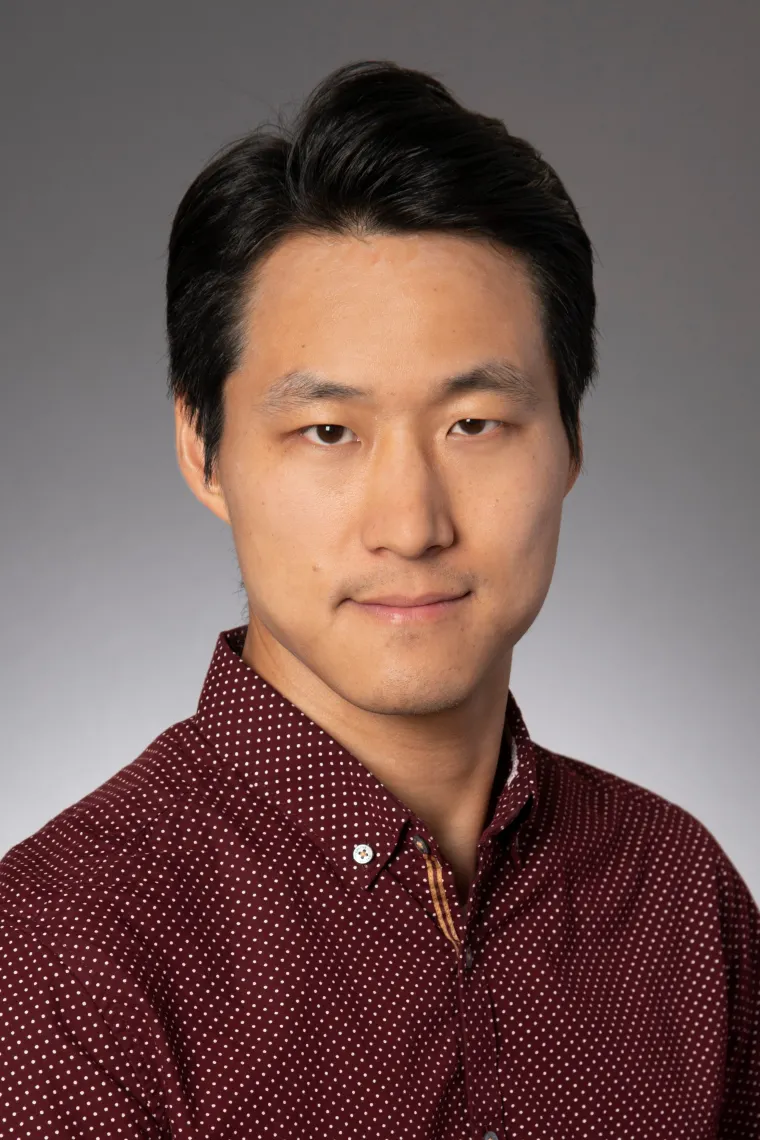
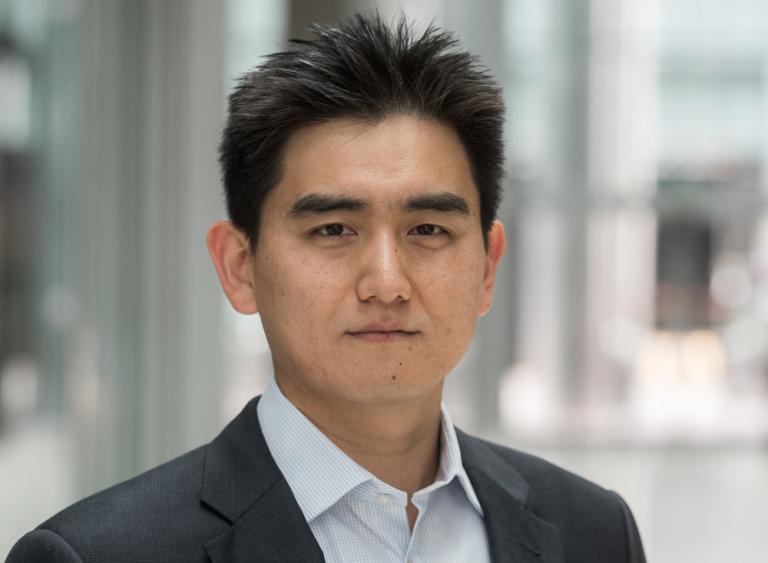
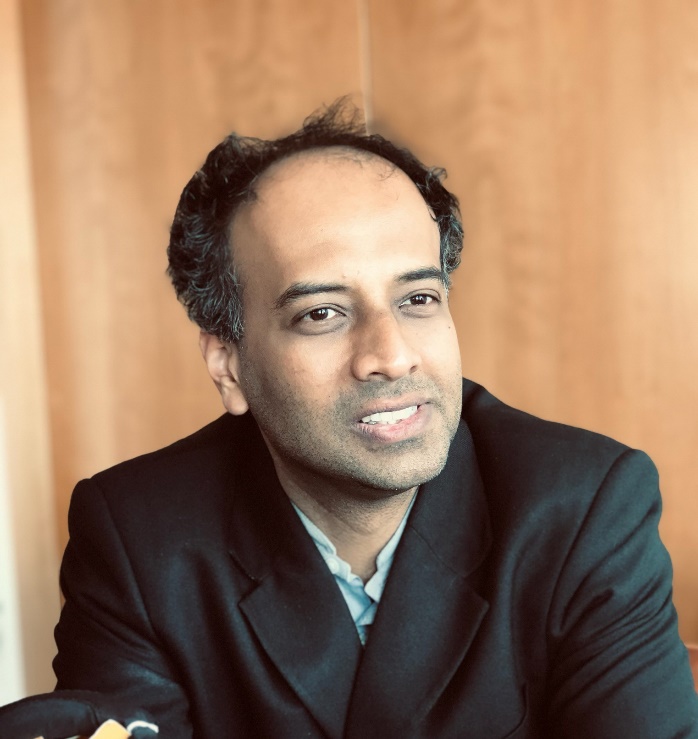
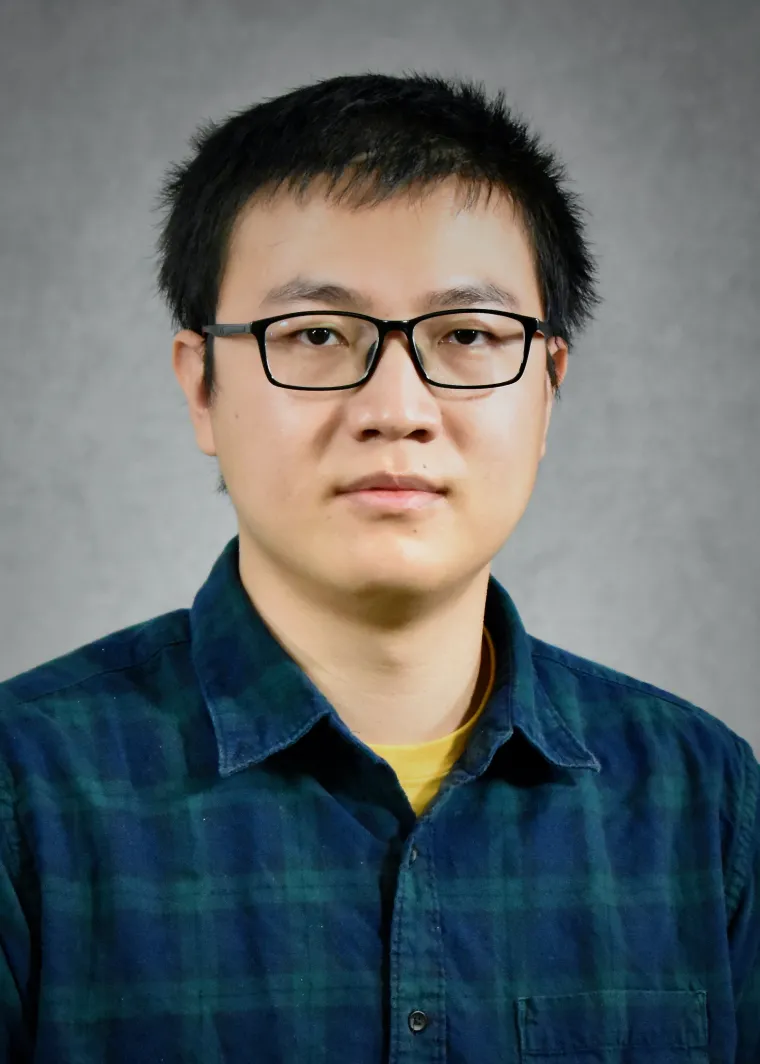
Kwang-Sung Jun is an Assistant Professor at the University of Arizona, Department of Computer Science. His research spans interactive machine learning, reinforcement learning, and learning theory, with a focus on multi-armed bandits, Bayesian optimization, and generalized linear models. Education : Ph.D. in Computer Science from the University of Wisconsin-Madison (2015). Research Trends : Kwang-Sung's recent work (2023-2025) emphasizes bandit algorithms with second-order bounds, adaptive experimentation, and PAC-Bayes frameworks. He explores low-rank structures in regression, explainable reward shaping, and environmental risk modeling via probabilistic assessments of postfire debris-flows. His publications often bridge theoretical guarantees (e.g., regret bounds) with practical applications in machine learning and environmental hazards. Expertise : Interactive machine learning Multi-armed bandits Confidence sequences Reinforcement learning Human-machine hybrid systems
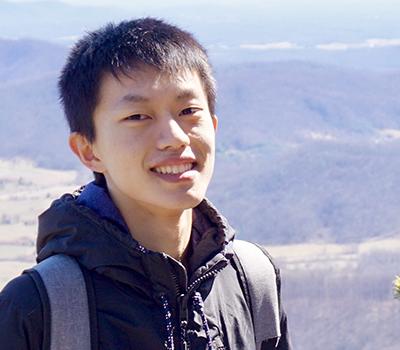
Huazheng Wang is an Assistant Professor in the School of Electrical Engineering and Computer Science at Oregon State University. His research focuses on reinforcement learning, information retrieval, and trustworthy AI. He received his Ph.D. from the University of Virginia (2021) and B.E. from the University of Science and Technology of China (2015). He holds awards including the 2025 EECS Fabulous Teacher Recognition and SIGIR 2019 Best Paper Award. His work addresses challenges in robust reinforcement learning, adversarial attacks on bandit systems, and applications in scientific discovery. Education: Ph.D., Computer Science, University of Virginia (2021) B.E., Computer Science and Technology, University of Science and Technology of China (2015) Research interests emphasize developing efficient algorithms for reinforcement learning, multi-armed bandits, and their applications in recommendation systems, protein optimization, and security. Notable contributions include provably efficient risk-aware reinforcement learning frameworks and adversarial attack analysis on bandit systems. Recent work includes NSF-funded research on neural bandits (IIS-2403401) and publications in top venues like ICML, NeurIPS, and AAAI. His lab explores embodied LLM agents for team cooperation and federated collaborative online monitoring frameworks.
Hamsa Bastani is an Associate Professor of Operations, Information and Decisions at the Wharton School, University of Pennsylvania, with a secondary appointment in Statistics and Data Science. She co-directs the Wharton Healthcare Analytics Lab and serves as an Associate Editor for Operations Research, M&SOM and OR Letters. Her academic journey began with summa cum laude graduation from Harvard in 2012 with an A.M. in physics and A.B. in physics and mathematics. She completed her PhD in Stanford's Electrical Engineering department under Mohsen Bayati, followed by a Herman Goldstine postdoctoral fellowship at IBM Research. Professor Bastani's research focuses on developing novel machine learning algorithms for data-driven decision-making, with applications spanning healthcare operations, social good, and revenue management. Her work demonstrates particular expertise in sequential decision-making (bandits, reinforcement learning), learning from auxiliary data sources (transfer learning, meta-learning), and designing effective human-AI interfaces (interpretability, fairness). She has made significant contributions to understanding how AI systems affect and augment human behavior, with the goal of designing AI tools that help humans thrive. Her publications reveal a strong trend toward high-impact applications of machine learning in critical societal domains. A significant portion of her recent work focuses on healthcare applications, including optimizing health supply chains in low- and middle-income countries, designing clinical trial protocols, and creating targeted public health interventions. Another major theme examines the complex relationship between humans and AI systems, particularly how AI affects learning outcomes and decision-making processes. Her work frequently bridges theoretical advances with practical implementation, as evidenced by country-scale deployments in Greece and Sierra Leone. Wagner Prize for Excellence in Operations Research Practice (2021) Pierskalla Award for Best Paper in Healthcare (2021, 2019, 2016) Behavioral OM Best Paper Award (2021) Public Sector in OR Best Paper Award (2024) INFORMS Data Mining Best Paper Award (2022) Wharton Teaching Excellence Award (2019, 2020, 2021) Professor Bastani has advised numerous PhD students who have gone on to prominent positions, including Pia Ramchandani (Director of Responsible AI at PwC), Arielle Anderer (Assistant Professor at Cornell Johnson), and Kan Xu (Assistant Professor at ASU Carey). Her research has been supported by collaborations with national governments, including the Greek government where she co-designed Eva, the national-scale reinforcement learning system for targeted COVID-19 testing, and the Government of Sierra Leone where she improved patient access to essential medicines by nearly 20% via decision-aware learning. She has also conducted the first large field study deploying generative AI tutors in high school math classes. She leads the Wharton Healthcare Analytics Lab and serves on the Steering Committee for the Penn Center for Health Incentives and Behavioral Economics and on the statistics advisory committee for the AHA Food is Medicine Initiative. Outside academia, she serves on the Workday AI Advisory Board, demonstrating her commitment to translating academic research into practical applications.
Nicolò Cesa-Bianchi is a Professor of Computer Science at the University of Milan, where he serves as head of the Computer Science programs. He is also associated with the Department of Electronics, Information and Bioengineering (DEIB) at Politecnico di Milano. Cesa-Bianchi holds significant leadership roles including Board member, Fellow and co-director of the Milan unit of the European Laboratory for Learning and Intelligent Systems (ELLIS), and membership in the prestigious Accademia Nazionale dei Lincei. He is also involved with The European Lighthouse on Secure and Safe AI (ELSA), The European Lighthouse of AI for Sustainability (ELIAS), and The FAIR foundation. Professor Cesa-Bianchi's research focuses on the theoretical foundations of machine learning, with special emphasis on sequential decision making and online learning algorithms. His work spans multiple areas including multi-armed bandit problems, regret analysis, prediction with expert advice, and learning on graphs. He has made significant contributions to understanding the theoretical limits of learning algorithms and developing efficient methods for various learning scenarios. His research has important applications in online markets, social networks, and bioinformatics. His monographs 'Prediction, Learning, and Games' and 'Regret Analysis of Stochastic and Nonstochastic Multi-armed Bandit Problems' are considered seminal works in the field. His recent publications demonstrate continued leadership in advancing the theoretical understanding of machine learning, with 2024-2025 papers covering cooperative online learning, multitask learning, fair trade mechanisms, and refined analyses of bandit algorithms. The research shows increasing focus on practical economic applications while maintaining strong theoretical foundations. Google Research Award Xerox Foundation UAC Award Member of the Accademia Nazionale dei Lincei ELLIS Fellow Cesa-Bianchi has been deeply involved in academic service, having served as action editor for the Machine Learning Journal, IEEE Transactions on Information Theory, and the Journal of Machine Learning Research. He currently serves as associate editor for the Journal of Information and Inference and TheoretiCS. He has held leadership positions including President of the Association for Computational Learning and member of the steering committee for the EC-funded Network of Excellence PASCAL2. He was program chair of the 13th Annual Conference on Computational Learning Theory and the 13th International Conference on Algorithmic Learning Theory. He leads the Laboratory for AI and Learning Algorithms (ALGA) at the University of Milan, which focuses on theoretical and applied research in machine learning. His international collaborations are extensive, with visiting positions at UC Santa Cruz, Graz Technical University, Ecole Normale Supérieure in Paris, Google, and Microsoft Research. As an educator, he teaches advanced courses including Reinforcement Learning and Statistical Methods for Machine Learning, and has supervised numerous students through the years.
Don Towsley is a Distinguished University Professor in the Department of Computer Science at the University of Massachusetts Amherst, within the College of Information and Computer Sciences. He has held visiting positions at AT&T Labs, IBM Research, INRIA, Microsoft Research Cambridge, and the University of Paris 6. He earned a B.A. in Physics and a Ph.D. in Computer Science from the University of Texas. Prof. Towsley's research spans network science, measurement, modeling, and analysis, with recent emphasis on quantum networking and wireless security. His work addresses foundational challenges in network tomography, entanglement distribution, and quantum communication protocols, contributing to efficient and secure next-generation networks. Analysis of his 2022-2025 publications reveals a dominant focus on quantum networking—including quantum internet architecture, entanglement distribution, and tomography—alongside continued contributions in classical networking areas such as DDoS detection and edge computing. His exceptional contributions have been recognized with numerous prestigious awards: 2007 IEEE Koji Kobayashi Computer and Communications Award 2007 ACM SIGMETRICS Achievement Award 2008 ACM SIGCOMM Award 2011 INFOCOM Achievement Award 1999 IEEE Communications Society William Bennett Award 2008 ACM SIGCOMM Test of Time Paper Award 2012 ACM SIGMETRICS Test of Time Award 2018 ACM MOBICOM Test of Time Award UMass Award for Outstanding Accomplishments in Research and Creative Activity University of Massachusetts Chancellor's Medal UMass Amherst Distinguished Graduate Mentor Award Outstanding Research Award from the College of Natural Science and Mathematics IBM Faculty Fellowship Award (twice) Fellow of the IEEE Fellow of the ACM Corresponding member of the Brazilian Academy of Sciences Prof. Towsley has mentored numerous graduate students, as evidenced by his Distinguished Graduate Mentor Award, and his research has been funded by significant grants including an NSF NeTS grant for quantum network design. He leads the Gaia research group at UMass Amherst, which has evolved from traditional networking research to pioneering quantum networking initiatives.
Andrew Li is an Associate Professor of Operations Research at Carnegie Mellon University's Tepper School of Business since 2024, previously serving as Assistant Professor since 2018. His research bridges statistics, optimization, and machine learning with applications to healthcare operations and retail management. Current teaching: Optimization, Business Analytics Capstone, and Topics in Optimization and Statistics PhD from MIT's Operations Research Center (2018), BS in Operations Research/Applied Mathematics from Columbia University (2012) Research Focus: Dr. Li develops data-driven decision frameworks for complex systems. Key areas include: Experience-based learning models with fairness constraints (organ allocation) Anomaly detection in low-rank matrices (retail inventory accuracy) Nanoparticle-based diagnostic systems for CAD and Alzheimer's Nonstationary demand forecasting in supply chains Publication Trends: Recent work combines bandit algorithms with healthcare applications (split liver transplants, CAD detection) and retail operations (inventory accuracy). Theoretical contributions include regret-optimal policies and entrywise anomaly detection guarantees. Scientific Honors: INFORMS Nicholson Award (2018) INFORMS Pierskalla Award (2021) NSF CAREER Award (2023) Professional Leadership: Active in INFORMS and CMU committees including MBA Analytics Curriculum, Thompson Award, and ENAiBLE AI-driven retail collaborative co-founder since 2021.
Mohammadtaghi Hajiaghayi is the Jack and Rita G. Minker Professor of Computer Science at the University of Maryland, College Park. He is affiliated with the Robert H. Smith School of Business and holds Research Affiliate positions at MIT CSAIL and the Center for Discrete Mathematics and Theoretical Computer Science (DIMACS). His research focuses on algorithms, game theory, and network design, supported by NSF, ONR, and industry grants. He has received prestigious awards including ACM Fellow (2018) and EATCS Nerode Prize (2015) for his work on bidimensionality theory. Education: PhD from MIT (2005), postdocs at CMU and MIT, MSc from University of Waterloo, and BSc from Sharif University. He teaches courses like Data Science and Algorithms at UMD. Industry experience includes roles at Amazon, Google, and AT&T Labs. Over 20 students have graduated under his advisement, many in academia and industry. His work spans approximation algorithms, game theory, and big data. Projects include BigDND with Erik Demaine. He serves on editorial boards of Algorithmica, SODA, and others. Awards also include IEEE Fellow (2020) and Blavatnik Honoree (2020).
Alan Montgomery is a Professor of Marketing at Carnegie Mellon University's Tepper School of Business, where he has held a tenured position since 2018 (previously as Associate Professor from 2005-2017). He also maintains an affiliation with the Machine Learning Department at CMU's School of Computer Science, demonstrating his interdisciplinary research approach at the intersection of marketing, economics, and computational methods. Dr. Montgomery earned his educational credentials from prestigious institutions: Ph.D. in Marketing/Economics, University of Chicago (1994) MBA, University of Chicago (1994) BS in Economics, University of Illinois at Chicago (1989) His research focuses on applying advanced quantitative methods to marketing problems, with particular expertise in consumer behavior modeling, clickstream data analysis, pricing strategies, and micro-marketing. Dr. Montgomery's work bridges traditional marketing theory with computational approaches, making significant contributions to both academic literature and practical business applications. His research often involves large-scale data analysis to uncover patterns in consumer decision-making processes, with recent work exploring mental accounting, bandit algorithms, and the impact of digital phenomena like movie piracy on traditional markets. Dr. Montgomery has received notable recognition including the 1999 Mitchell Prize from the American Statistical Association for his paper "Estimating Price Elasticities with Theory-based Priors." His work has been published in top-tier journals across marketing, economics, and computer science disciplines, demonstrating the interdisciplinary impact of his research. As an educator and mentor, Dr. Montgomery has advised numerous PhD students and collaborated extensively with researchers across multiple institutions. His interdisciplinary approach has led to collaborations with computer scientists studying web browsing behavior and economists examining consumer decision frameworks. His research has been supported by various grants throughout his career, enabling extensive data collection and analysis projects. Dr. Montgomery's work spans multiple research environments, including collaborations with the Machine Learning Department at CMU's School of Computer Science. His research group likely focuses on applying computational methods to marketing problems, particularly in the areas of consumer behavior modeling, clickstream analysis, and data-driven marketing strategies. His recent work shows increasing integration of machine learning techniques with traditional marketing research methodologies.
Roy Dong is an Assistant Professor at the University of Illinois at Urbana-Champaign, affiliated with the Coordinated Science Laboratory. His research bridges Control Theory Economics Statistics Optimization to address challenges in cyber-physical systems and the Internet of Things, focusing on data manipulation, privacy, and strategic behavior in interconnected systems. His academic journey includes a Ph.D. in Electrical Engineering and Computer Sciences from UC Berkeley (2017) and dual B.S. degrees in Economics and Computer Engineering from Michigan State University (2010). At Illinois, he teaches courses ranging from Control Systems to Convex Optimization , with multiple teaching excellence awards. Roy's research explores Closed-loop effects of machine learning Causality in decision systems Incentive design for strategic agents Privacy-utility tradeoff optimization Human behavior modeling with applications in smart grids, transportation networks, and semi-autonomous vehicles. His work formulates privacy-preserving mechanisms as optimization problems, balancing data utility against user privacy in dynamic systems. Article trends show expertise in Game theory for strategic data sources Energy disaggregation techniques Nonlinear basis pursuit algorithms Privacy-aware control systems with a focus on cyber-physical systems and human-in-the-loop applications. Scientific recognition includes 'Teacher Ranked as Excellent' awards (ECE 120, ECE 486, ECE 515) Contributions to smartSDH building control and CPRL compressive sensing Roy leads the Privacy-aware Control Systems research group, collaborating with institutions like UC Berkeley and Michigan State University , and directs projects funded by grants including the New USDA NIFA grant for agricultural robot autonomy .
Laura Toni is an Associate Professor in the Department of Electronic and Electrical Engineering at University College London's Faculty of Engineering Sciences. She serves as the leader of a research team focused on advanced signal processing and machine learning applications, documented at https://lasp-ucl.github.io . Additionally, she holds prestigious affiliations as an ELLIS (European Laboratory for Learning and Intelligent Systems) Member and Turing Fellow Alumni. PhD in Electrical Engineering, University of Bologna (2009) MS in Electrical Engineering, University of Bologna (2005) Professor Toni's research spans theoretical and applied aspects of machine learning with particular emphasis on graph-based approaches. Her work integrates signal processing techniques with modern AI methodologies to address complex problems in communication systems, multimedia processing, and scientific discovery. She has made significant contributions to reinforcement learning theory, graph signal processing, and their applications across diverse domains including drug discovery and immersive technologies. Analysis of her recent publications reveals a strong focus on graph-based machine learning approaches, with increasing emphasis on reinforcement learning applications. Her work demonstrates a progression from theoretical foundations to practical implementations, particularly in multimedia processing, network science, and drug discovery applications. Many of her recent papers combine graph neural networks with diffusion models and reinforcement learning for complex prediction and generation tasks. Professor Toni has received notable recognition through her ELLIS membership and Turing Fellow Alumni status, which represent significant achievements in the European AI research community. ELLIS (European Laboratory for Learning and Intelligent Systems) Member Turing Fellow Alumni As an academic leader, Professor Toni supervises postgraduate students and leads a research team at UCL, focusing on cutting-edge projects at the intersection of signal processing and machine learning. Her team has secured research funding through various channels including European initiatives and industry partnerships, enabling them to pursue ambitious projects in graph learning, reinforcement learning, and multimedia processing. The team actively collaborates with institutions worldwide, including previous connections with UCSD and EPFL. Professor Toni leads the LASP research group at UCL (https://lasp-ucl.github.io), which focuses on Large-scale Adaptive Signal Processing for intelligent systems. The team comprises researchers working on graph signal processing, reinforcement learning, and multimedia applications, with strong connections to both theoretical foundations and practical implementations across various domains including healthcare, communications, and immersive technologies.
Cameron Musco is an Assistant Professor in the Manning College of Information and Computer Sciences at the University of Massachusetts Amherst. He is affiliated with the Theory Group and conducts research at the intersection of theoretical computer science, numerical linear algebra, and machine learning. His work focuses on randomized algorithms, streaming, and distributed computation, with applications in data science. Education: PhD in Computer Science, MIT (2019) BS in Computer Science and Applied Mathematics, Yale University Research Interests: Musco's research emphasizes algorithm design for large-scale data analysis, including fast randomized methods for linear algebraic problems. He explores topics such as low-memory computation, matrix approximations, and graph algorithms, driven by applications in machine learning and distributed systems. Publications: His recent work spans advancements in hierarchical matrix approximation, graph-based nearest neighbor search, and fair resource allocation, reflecting expertise in both theoretical foundations and practical algorithmic innovation. Awards: He has received an NSF Career Award, Google Research Scholar Award, and recognition for anti-racism leadership. He actively reviews for top conferences in theoretical computer science and machine learning. Advising & Grants: Musco advises multiple PhD students and has grants from NSF and Google. His lab collaborates on projects like low-rank matrix approximation and causal discovery. Labs/Teams: He is part of the Theoretical Computer Science Group and the Center for Data Science at UMass.
Onesun Steve Yoo is a Professor of Operations and Marketing Analytics at the UCL School of Management, University College London, and Co-Director of the UCL Centre for Sustainable Business. He holds a PhD from UCLA Anderson School of Management, alongside advanced degrees in Electrical Engineering and Applied Mathematics from UC Berkeley and UCLA. His research focuses on innovation and entrepreneurship, examining operational and marketing strategies for firms launching innovative products/services. Key areas include consumer behavior analysis, pricing policies, sequential product launches, and the impact of technologies like surge pricing and AI-driven data analytics on business operations. Recent work integrates sustainability initiatives with AI to enhance operational transparency in supply chains and regulatory compliance. Yoo’s research has been published in top journals such as Marketing Science , Operations Research , and Manufacturing & Service Operations Management . His findings have been cited by US policymakers and featured in media outlets like the Wall Street Journal . He serves as a senior editor at Production and Operations Management and associate editor at Manufacturing & Service Operations Management . His academic service includes grants from Innovate-UK (UKRI) to collaborate with industry on sustainable business practices. Yoo’s work bridges theoretical research with practical applications, emphasizing data-driven decision-making and interdisciplinary collaboration between operations, marketing, and sustainability domains.
Yevgeny Seldin is a Professor in the Department of Computer Science at the University of Copenhagen, specializing in Machine Learning Theory . He leads the Machine Learning Section and is a member of the DeLTA Lab . Education : PhD in Computer Science at The Hebrew University of Jerusalem under supervision of Prof. Naftali Tishby His research focuses on Machine Learning , particularly Online Learning and PAC-Bayesian Analysis , with applications to Bandit Algorithms , Reinforcement Learning , and Information Theory . Recent work includes optimal algorithms for delayed feedback, stochastic-adversarial trade-offs, and feedback graphs. Positions Available : PhD and Postdoc positions in Theoretical Machine Learning or energy sector applications Labs & Collaborations : Head of Machine Learning Section Member of DeLTA Lab
Krishna Jagannathan is a full-time Professor in the Department of Electrical Engineering at the Indian Institute of Technology Madras (IIT Madras), India. He specializes in stochastic modeling, communication networks, information theory, and queuing theory. He obtained his B.Tech from IIT Madras in 2004, followed by S.M. and Ph.D. degrees from MIT in 2006 and 2010, respectively. After post-doctoral positions at Caltech and MIT, he joined IIT Madras in 2011. Education: B.Tech in Electrical Engineering, IIT Madras (2004) S.M. in Electrical Engineering and Computer Science, MIT (2006) Ph.D. in Electrical Engineering and Computer Science, MIT (2010) Research Interests: His research focuses on stochastic modeling and analysis of communication networks , information theory , and queuing theory . He has made significant contributions to understanding network performance, resource allocation, and risk-aware decision-making in complex systems. He leads the Networks and Stochastic Systems lab at IIT Madras, mentoring a large cohort of Ph.D. and M.S. students working on cutting-edge problems in networking, optimization, and stochastic systems. Scientific Awards: Best Paper Award at WiOpt 2013, Tsukuba, Japan Young Faculty Recognition Award for Excellence in Teaching and Research, IIT Madras (2014) Teaching & Mentorship: He has taught a wide range of courses including Probability Foundations , Stochastic Modeling and Queuing Theory , Convex Optimization , and Signals & Systems , consistently receiving high teaching evaluations. He has supervised over 15 Ph.D. and M.S. students to completion and continues to guide several active researchers.
Chicheng Zhang is an Assistant Professor in the Computer Science Department at the University of Arizona, where he conducts research in the theory and applications of interactive machine learning. He earned his Ph.D. in Computer Science from the University of California, San Diego (UCSD) in 2017 under the supervision of Professor Kamalika Chaudhuri, and was previously an undergraduate student at Peking University working with Professor Liwei Wang. From 2017 to 2019, he was a postdoctoral researcher at the Machine Learning Group at Microsoft Research NYC. His research lies at the intersection of learning theory and practical algorithm design, focusing on interactive machine learning paradigms such as reinforcement learning, contextual bandits, active learning, and imitation learning. He aims to develop algorithms that are data-efficient, computationally tractable, and robust, with applications in healthcare, wireless communication, and fair AI systems. His work emphasizes principled algorithm design with theoretical guarantees and empirical validation. The most recent publications reflect a strong trend in developing efficient, theoretically grounded methods for sequential decision-making and interactive learning. Key themes include sample efficiency, robustness to noise, fairness in algorithmic decisions, and application-driven research in domains like oral cancer detection and mmWave network optimization. His work frequently bridges theoretical analysis with real-world deployment considerations. While no scientific awards are mentioned in the provided text, Dr. Zhang actively mentors prospective PhD students and encourages collaboration. He has contributed to interdisciplinary projects involving fairness-aware bandit algorithms for network coexistence, interpretable classifiers for cancer detection, and LLM-based initialization for reinforcement learning. His lab focuses on developing intelligent agents that actively learn from environments and human experts. He can be reached at chichengz@arizona.edu .