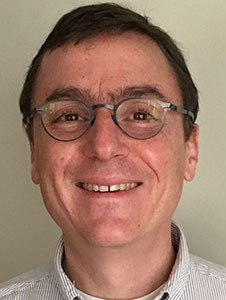
Hyun Soo Park is an Associate Professor at the University of Minnesota, Twin Cities in the Department of Computer Science & Engineering . As a McKnight Presidential Fellow , his research focuses on computational social intelligence and egocentric perception , developing algorithms to model human interaction through gaze, facial expressions, and body gestures. He leads the Gemini-Huntley Robotics Research Lab and has secured major grants including NSF CAREER , Toyota Research Institute , and multiple NSF awards. Education : Ph.D. in Computer Science Teaching : Courses on 3D Computer Vision, Computer Vision, and Computational Linear Algebra (2017-2021) Research : Pioneering egocentric video analysis , 3D social signal modeling , and behavioral imaging with applications to robotics and human-computer interaction Scientific Awards include: NSF CAREER Award McKnight Presidential Fellow Guillermo E. Borja Award CVPR Best Paper Honorable Mention Grants secured: TRI (2021-2024) NSF NRI (2020-2023) NSF NCS (2020-2023) NIH R34 (2020-2022) NSF CRII (2018-2021) Minnesota Futures (2018-2021) Team includes: Meng-Yu Jennifer Kuo (Postdoc) 5 Ph.D. students (Yasamin Jafarian, Zhixuan Yu, etc.) Co-advised students with Prof. Roumeliotis and Prof. Guy Past members now at 3M and Adobe Research
Pauline Barmby is a Professor in the Department of Physics & Astronomy at Western University's Faculty of Science. She is an observational astrophysicist specializing in stars and star formation in nearby galaxies. Barmby joined Western University in 2007 after serving as a staff scientist at the Smithsonian Astrophysical Observatory, where she worked on the Spitzer Space Telescope's IRAC camera. She is also a Western Space Investigator and has made significant contributions to Canadian astronomy through her role as co-chair of the panel that developed the Canadian Astronomical Society's 2020 Long Range Plan. Professor Barmby's research focuses on understanding how stars, gas, dust, dark matter, and black holes in galaxies fit together. Her work involves developing new tools and techniques to combine data from ground-and space-based telescopes. Her primary research domains include Planetary Science & Astronomy, with specific interests in Galactic and Stellar Processes and Big Data analytics. Barmby's approach integrates multi-wavelength observations with advanced data analysis methods to study galaxy formation and evolution. She has pioneered techniques for combining data from Gaia, NED, and SIMBAD to create comprehensive views of galactic structures. An analysis of Barmby's recent publications reveals a strong focus on nearby galaxy surveys, particularly using data from missions like Gaia, Spitzer, and upcoming facilities like the Rubin Observatory and SKA. Her work often involves combining multiple data sources to create comprehensive galactic maps. There's a clear trend toward using machine learning techniques for galactic component mapping and source classification, reflecting her interest in Big Data analytics. Her research spans observational astronomy, astrostatistics, and data-intensive science, with particular attention to low surface brightness galaxies and spiral structures like UGC 2885. Among her notable achievements, Professor Barmby served as co-chair of the panel that developed the Canadian Astronomical Society's 2020 Long Range Plan, a significant contribution to shaping the future of Canadian astronomy. Her work has also influenced policy, as evidenced by her contribution to the "Report on Mega-Constellations to the Government of Canada and the Canadian Space Agency" (2021). She has been instrumental in major projects like TONGS (Treasury of Nearby Galaxy Surveys) and JINGLE (JCMT Legacy Survey). While specific details about her advising activities aren't provided in the source material, Professor Barmby's leadership role in developing Canada's astronomy roadmap suggests substantial involvement in mentoring and research supervision. Her work with major telescopes and space missions indicates she likely leads significant research collaborations and grant-funded projects focused on galaxy evolution and observational techniques. Professor Barmby's research involves collaborative teams working on large-scale galaxy surveys. Her focus on data integration across multiple wavelengths suggests her team develops specialized software tools for astronomical data analysis, particularly for handling the "Big Data" challenges inherent in modern observational astronomy. She maintains active involvement with major observational facilities including the James Clerk Maxwell Telescope (JCMT), Spitzer Space Telescope legacy data, and future missions like the Roman Space Telescope and SKA.
Rémi Synave is an Associate Professor in the Department of Computer Science at the University of Strasbourg's Faculty of Science. His academic career spans over 15 years with continuous research output from 2006 to present, demonstrating sustained scholarly activity in computer graphics, 3D modeling, and interdisciplinary applications. Dr. Synave's research spans multiple domains with a strong focus on geometric algorithms, 3D reconstruction, and imaging applications. His work bridges computer science with anthropology, medicine, and cultural heritage preservation. Key research themes include geodesic path computation on triangular meshes, 3D surface reconstruction algorithms, medical imaging applications, and digital anthropology. His publications demonstrate consistent contributions to both theoretical computer graphics and practical applications across diverse fields. Analysis of his publication history reveals a strong trajectory from foundational geometric algorithms toward increasingly interdisciplinary applications. Early work focused on computational geometry and 3D reconstruction algorithms, while more recent publications demonstrate expansion into educational technology, image composition analysis, and digital humanities applications. His research consistently applies computer graphics techniques to solve domain-specific problems in anthropology, medicine, and cultural heritage. Rémi Synave maintains active collaborations with researchers across multiple institutions, particularly with Stefka Gueorguieva, Pascal Desbarats, and colleagues in anthropology and medical fields. His work on the Strasbourg Juvenile Collection represents a significant interdisciplinary contribution to digital anthropology. While specific teaching details aren't provided in the available materials, his publication on interdisciplinary arcade cabinet projects indicates innovative educational approaches. His laboratory work appears centered on 3D scanning, reconstruction, and visualization, with applications spanning from medical diagnostics to cultural heritage preservation. The consistent focus on algorithm development for geometric problems demonstrates a strong technical foundation applied across diverse practical contexts.
Andreas Hund is a Privatdozent (equivalent to Associate Professor) at ETH Zürich, working within the Department of Environmental Systems Science and specifically the Institute of Agricultural Sciences. He is based at the Crop Science Professorship (Professur für Kulturpflanzenwissenschaften) at Eschikon 33 in Lindau, Switzerland. His research focuses on the adaptation of crop varieties to low nitrogen input conditions and abiotic stress, with a particular emphasis on wheat development under field conditions. Hund's research trajectory shows he began with genome mapping of root development in maize before shifting focus to field-based crop development research. He leads work utilizing the Field Phenotyping Platform (FIP) and Phenofly infrastructure for continuous wheat phenotyping throughout its development cycle. His research integrates advanced phenotyping techniques, drone technology, and statistical modeling to address challenges in crop adaptation to changing environmental conditions. His publication record demonstrates a clear focus on high-throughput field phenotyping, particularly using drone-based technologies for wheat monitoring. His recent work addresses challenges in thermal imaging of crops, development of comprehensive phenotyping datasets, disease resistance monitoring, and analysis of crop responses to environmental stresses. The research shows an increasing integration of digital technologies with traditional plant breeding approaches, with applications for climate-adaptive agriculture. Hund is an active member of the European Association for Research on Plant Breeding and the Swiss Society of Agronomy (SSA). His ORCID identifier is 0000-0002-2309-1625, indicating his active participation in the scholarly community. He teaches courses including 'Current Challenges in Plant Breeding' and 'Experimental Design and Applied Statistics in Agroecosystem Science,' contributing to the education of the next generation of agricultural scientists. His work on the FIP platform and related phenotyping technologies represents a significant contribution to the field of precision agriculture and crop improvement.
Dr. Hamidreza Kasaei is an Associate Professor in the Department of Artificial Intelligence at the University of Groningen, Netherlands. He leads the Interactive Robot Learning Lab (IRL-Lab) , focusing on robotics, machine learning, and computer vision. Develops algorithms for lifelong interactive robot learning Specializes in 3D perception and multi-arm manipulation Actively involved in IEEE RAS as Associate Editor His research directions include: Perception systems for dynamic environments Dual-arm manipulation techniques Lifelong learning architectures Multimodal integration for object understanding Dynamic motion planning for reactive systems Recent work trends show emphasis on: Vision-language model integration for open-world grasping Dual-arm reinforcement learning frameworks Neural ODE applications for video generation Ensemble methods in continual learning Imitation learning for agricultural robotics Transformer-based view planning systems Scientific awards include: Google Research Scholar Award (2023) Outstanding Associate Editor - IEEE RAS (2023) His lab actively trains students through PhD and Master's projects in domains like 3D object perception, dual-arm coordination, and multimodal learning. The lab has successfully graduated multiple PhD candidates including Zhenxing Zhang and Hamed Ayoobi .
Milad Malekzadeh is a Postdoctoral Researcher at the University of Helsinki , affiliated with the Faculty of Science , Department of Geosciences and Geography , and research organizations Helsinki Institute of Sustainability Science and Helsinki Institute of Urban and Regional Studies (Urbaria) . His work bridges Geosciences , Environmental Sciences , and Computer Science , focusing on urban mobility, spatial analysis, and AI applications. Projects : WinWin4WorkLife (2024–2027), BORDERSPACE (2023–2025), MOBI-TWIN (2023–2026), GREENTRAVEL (2023–2027). Research Trends : His recent articles examine greenery assessment inconsistencies, mobility deviation metrics, AI-driven urban attractiveness analysis, and cross-border student mobility patterns. Methodologies include semantic segmentation, geospatial modeling, and big data analytics. Collaborations : Active in peer review for journals like Landscape and Urban Planning and International Journal of Geographical Information Science . Participates in conferences such as 33rd Annual GIS Research UK Conference and 19th International Conference on Location Based Services . Outreach : Maintains a personal website , Twitter @MiladMzdh , and LinkedIn profile .
Nguyen Thanh Kien is a prominent researcher affiliated with Queensland University of Technology , School of Electrical Engineering and Computer Science , focusing on Computer Vision , Deep Learning , and Biometrics . His work spans interdisciplinary domains, including Urban Climate Analysis , Cybersecurity , and Medical Image Analysis . Recent publications (2025) highlight his leadership in Physics-Informed Reinforcement Learning , Urban Microclimate Risk Monitoring , and Heat Vulnerability Mapping using Machine Learning and Remote Sensing . He has pioneered benchmarks like AG-VPReID for aerial-ground person re-identification, advancing Surveillance Systems and Environmental Modeling . His research trends (2020–2024) emphasize Iris Recognition , 3D Hand Pose Estimation , and Epileptic Seizure Analysis . Collaborations with experts like Clinton Fookes and Sridha Sridharan underscore his role in shaping large-scale studies in AI-enabled Urban Governance and Cybersecurity Frameworks .
Dr. Kevin Desai is an Assistant Professor in the Department of Computer Science at The University of Texas at San Antonio (UTSA), affiliated with the College of Sciences. He leads the Vision & Immersive Realities Lab (VIRLab), part of the School of Data Science. His research focuses on collaborative virtual environments, computer vision, and immersive technologies for healthcare and telehealth applications. Dr. Desai holds a Ph.D. and M.S. in Computer Science from the University of Texas at Dallas, and a B.Tech. in Computer Science and Engineering from Nirma University. His work bridges computer science with human-centered design, emphasizing real-world applications like tele-rehabilitation and autism support systems. His research interests include virtual/augmented/mixed reality systems, 3D pose estimation, and AI-driven health monitoring. Notable contributions include the HR-STAN framework (Best Paper Award, CVPR 2022), which predicts cybersickness using multimodal sensor fusion, and the Virtepex tele-physical exam system. Dr. Desai advises students such as Mushfiq Riaz, Ayda, and Omar Medjaouri in projects spanning VR/AR applications, neural radiance fields, and low-latency DNN frameworks. He actively collaborates with industry partners like Alienware and Lambda Labs, as evidenced by VIRLab's equipment and conference presentations at CVPR 2024. His lab explores cutting-edge technologies including 3D human modeling (TE-NeRF), energy-efficient AI (EncodeNet), and personalized cybersickness prediction algorithms. Recent work addresses exergames for post-stroke rehabilitation and multimodal healthcare streaming systems.
Michael Gleicher is a Professor at the University of Wisconsin-Madison, holding primary affiliation in the Department of Mechanical Engineering and additional affiliation in the Department of Computer Sciences. His research focuses on Computer Graphics, Robotics, Data Visualization, and Human-Robot Interaction. He has contributed to projects such as Re-Cinematography for video stabilization and advanced telemanipulation systems. His work spans domains including motion editing, visualization techniques, and robotic control systems. Key themes include improving camera dynamics in casual videos, developing shared autonomy frameworks for teleoperation, and enhancing visual analytics for data exploration. Gleicher’s research integrates concepts from computer graphics, robotics, and human-computer interaction to create intuitive and effective systems. Recent articles highlight advancements in motion planning algorithms, collaborative robotics, and visual validation methods. He has explored topics such as end-effector trajectory tracking, parameter space analysis, and multimodal data integration for geospatial visualization. His work often emphasizes practical applications, such as improving robot teleoperation interfaces and enhancing user perception in data-driven tasks. Gleicher’s contributions include systems like RelaxedIK for robot motion synthesis and Boxer for classifier result comparison. His research has been published in top-tier venues, addressing challenges in both theoretical and applied domains of computer science and engineering.
Prof. Dr.-Ing. Stefan Hinz is a Professor at the Karlsruhe Institute of Technology (KIT), serving as Spokesperson for the Topic Data Science in Climate and Environmental Research within the KIT Climate and Environment Center. He is based at the Institute for Photogrammetry and Remote Sensing (IPF) in Karlsruhe, Germany, where his work bridges advanced remote sensing methodologies with critical environmental and climate challenges. His research spans Remote Sensing , Photogrammetry , and Environmental Monitoring , with specialized expertise in InSAR, GNSS, and deep learning applications. Key focus areas include land subsidence analysis (particularly in the Mekong Delta), infrastructure safety monitoring for dams and bridges, atmospheric dust density estimation, and climate adaptation strategies through spatial planning. His interdisciplinary approach integrates geospatial data science with practical environmental solutions. Recent publications reveal a pronounced shift toward AI-driven remote sensing, with deep learning techniques enhancing traditional methods like SAR interferometry. His work emphasizes real-world applications in geohazard monitoring, environmental protection, and climate resilience, often targeting vulnerable regions like the Mekong Delta. This trend reflects a broader movement toward computational innovation in earth observation science. Prof. Hinz leads strategic initiatives within the KIT Climate and Environment Center, coordinating data science efforts for climate research and environmental protection. His role involves fostering cross-disciplinary collaboration to address sustainability challenges through advanced remote sensing technologies and spatial data analysis.
Igor Gilitschenski is an Assistant Professor in Computer Science at the University of Toronto, leading the Toronto Intelligent Systems Lab (TISL). He focuses on developing probabilistic and learning-based techniques for robotic perception and decision-making, aiming to enable robust interactive autonomy. Prior to this, he held roles at MIT CSAIL, ETH Zurich's Autonomous Systems Lab, and the Karlsruhe Institute of Technology (KIT). His research interests include autonomous systems, computer vision, and deep learning applied to robotics. He collaborates with institutions like the Vector Institute and is a Vector Research Scholar. His work spans robot learning, simulation-driven policy training, and safety-critical systems. Notable projects include pseudo-simulation for autonomous driving, vision-language-action models, and neural radiance fields for 3D scene representation. He actively recruits PhD students to work at the intersection of computer vision, deep learning, and robotics, emphasizing controllable simulation engines and safe learning frameworks. Recent research trends in his articles highlight advancements in generative models, reinforcement learning, and perception systems for dynamic environments. He emphasizes collaboration across disciplines, including event-based vision and language-guided reasoning for robotic tasks.
Dr. Catherine Hughes is a Senior Lecturer in Public Health Nutrition at Ulster University's School of Biomedical Sciences, within the Faculty of Life & Health Sciences. She holds a PhD in Human Nutrition (2010) and is a Registered Nutritionist (Public Health) with the Association for Nutrition. Her research focuses on nutrition and healthy aging, leading initiatives like the Centre for Excellence in Nutrition and Ageing (CENA) and coordinating the TUDA study involving 5,000 older adults. She has secured over £3.5M in research grants and published extensively in high-impact journals. Education: PhD in Human Nutrition, Ulster University (2010) PGCE in Science Education, Liverpool John Moores University (2003) Bachelor of Biomedical Science, Liverpool John Moores University (2002) Research Interests: Her work examines dietary interventions in Parkinson’s disease, B-vitamin metabolism, and the role of nutrition in mitigating age-related diseases. Key areas include one-carbon metabolism, bone health, cognitive decline, and vitamin deficiencies in aging populations. Awards & Grants: 2024 Distinguished Researcher Award, Ulster University Over £3.5M in research grants secured Editorial roles for Nutrition Research Reviews and Frontiers in Nutrition Labs & Teams: Leads CENA and collaborates with interdisciplinary teams on the TUDA study, exploring nutrition's impact on aging-related conditions. Active in the Dementia Research Network and NICHE initiatives.
Adrian Moore is a Professor of Geographic Information Science and Full Professor at the School of Geography and Environmental Sciences, Ulster University, within the Faculty of Life & Health Sciences. He holds the title of Distinguished Business Fellow of Ulster University. His research focuses on applying GIS technologies to study environmental and social factors influencing human health and healthcare delivery, particularly in aging populations. He teaches medical geography, GIS technologies, and quantitative analysis across undergraduate and postgraduate programs. Education: PhD in Geography, Ulster University (1993) MSc in Geography, Ulster University (1988) BSc in Geography, Ulster University (1984) Research Interests: Adrian's work explores spatial analysis of environmental risks related to aging, technology transfer, and GIS applications in public health. His recent studies include cluster analysis of mental health comorbidities in older adults and the impact of socioeconomic deprivation on health outcomes. He has contributed to projects like the VALID Project, linking dietary factors with cognitive health in aging populations. Articles Trends: His publications span GIS applications in healthcare planning, spatial epidemiology, and aging studies. Recent work emphasizes AI-driven analysis of mental health risks and dietary biomarkers for cognitive health. Earlier studies addressed obesity in schoolchildren and healthcare accessibility in Northern Ireland. Awards: Distinguished Business Fellow, Ulster University Advising & Grants: Supervised Sophie Haggerwood (PhD candidate). His grants include projects on spatiotemporal modeling of malaria in Zambia and cross-border health information systems in Ireland. Labs/Teams: Engaged in interdisciplinary teams addressing health disparities, environmental health, and technology-driven solutions in healthcare delivery.
Joohee Kim is an Associate Professor in the Department of Electrical and Computer Engineering at Illinois Institute of Technology, where she has been since 2009. She directs the Multimedia Communications Laboratory and focuses on research funded by U.S. Federal Agencies and the Korean Government. Education: Ph.D., Electrical and Computer Engineering, Georgia Institute of Technology (2003) M.S., Electrical Engineering, Yonsei University (1993) B.S., Electrical Engineering, Yonsei University (1991) Research interests include image/video signal processing, computer vision, machine learning, multimedia communication, and real-time 3D reconstruction . Her work spans applications in autonomous systems, robotics, and advanced driver assistance systems, emphasizing low-complexity algorithms and efficient coding techniques. Her recent articles highlight advancements in pedestrian detection via deep learning, 3D reconstruction fusion methods, and optimized depth map coding. These contributions address challenges in real-time systems, energy efficiency, and robust transmission over wireless networks. Awards: None explicitly listed. Grant Activity: Active in federal and international funding for projects like low-delay distributed video coding and error-resilient transmission. Advising: No students listed, though lab leadership implies mentorship roles. Labs/Teams: Director of the Multimedia Communications Lab, collaborating on 3D imaging, video coding, and intelligent systems integration.
Professor Sonya Coleman is a Professor of Vision Systems at Ulster University's School of Computing, Engineering and Intelligent Systems. She leads the Cognitive Robotics team within the Intelligent Systems Research Centre and has held roles including Head of the Research Graduate School since 2012. Her expertise spans image processing, robotics, computational intelligence, and financial engineering. She holds a BSc (First Class) and PhD in Mathematics from Ulster University (1999 and 2003, respectively). Research interests include advanced computer vision techniques, robotic systems, and industrial automation. Notable contributions include work on defect detection in additive manufacturing, neuromorphic computing frameworks, and energy consumption forecasting in smart manufacturing. Her research has been funded by EPSRC, the Nuffield Foundation, and the European Commission. Awards include the 2009 Distinguished Research Fellowship from Ulster University. She serves as Secretary of the Irish Pattern Recognition and Classification Society. Her work often integrates innovative solutions for industrial challenges, such as real-time monitoring systems and AI-driven quality control. Professor Coleman has authored numerous peer-reviewed articles, focusing on topics like spiking neural networks, PCB defect analysis, and glacier area change quantification using satellite remote sensing.