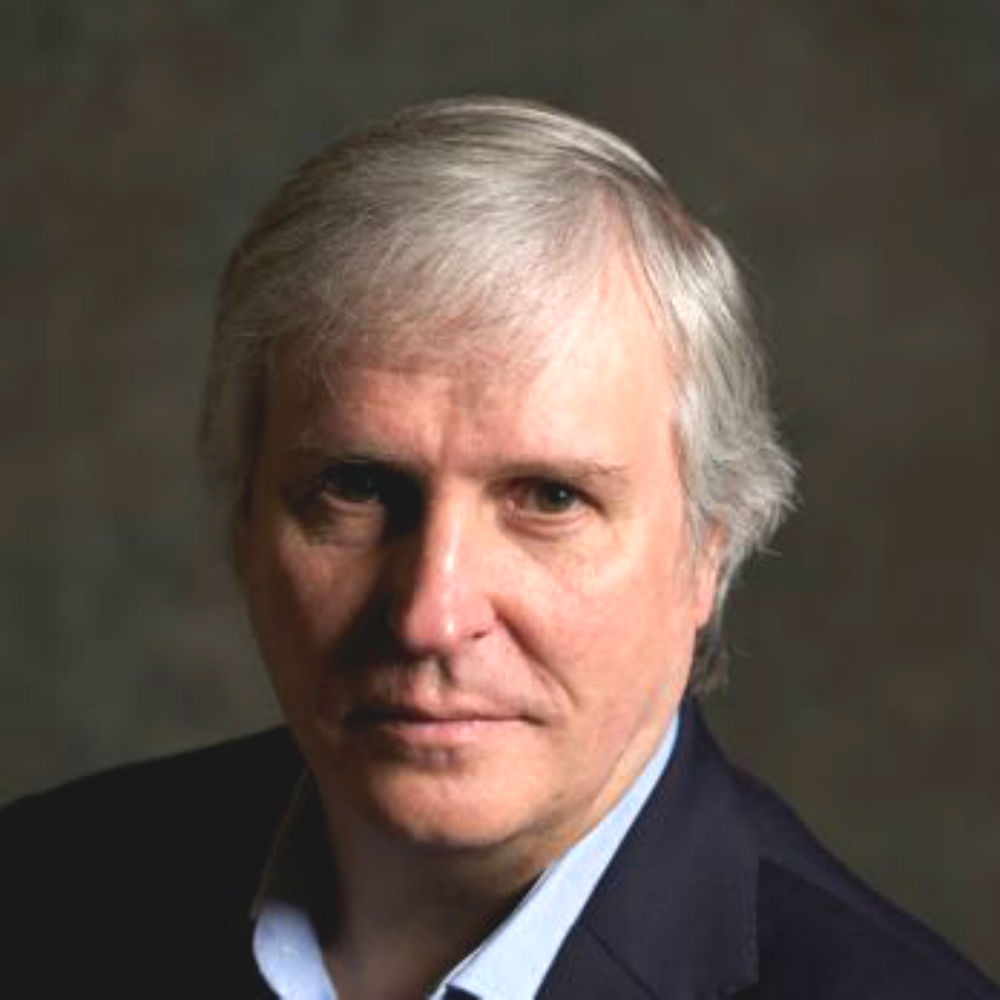
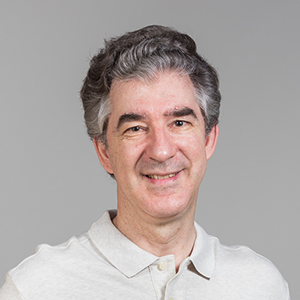
Richard Bartle is a Visiting Professor at the University of Essex's School of Computer Science and Electronic Engineering, renowned for co-creating the first virtual world (MUD) in 1978 and developing the influential Player Types model. His research examines virtual world design, player psychology, and game mechanics. Research explores fundamental principles of multiplayer interaction systems, player motivation frameworks, and ethical considerations in virtual environments. Current projects investigate natural language annotation through game mechanics and design patterns for games with purpose (GWAPs). Publications establish theoretical foundations for virtual world design and analyze player behavior patterns. His book Designing Virtual Worlds remains the standard reference in game design education worldwide. GDCOnline Game Legend Award (2010) Courses explore game design theory, virtual world architecture, and the sociotechnical aspects of multiplayer systems. He maintains influential writings on MMO design and development through his daily blog.
Dr. Patrick Holthaus is a Senior Research Fellow at the University of Hertfordshire's Robotics Research Group , affiliated with the School of Physics, Engineering and Computer Science . He specializes in assistive and social robotics, focusing on nonverbal communication, trust dynamics, and systems integration. His work integrates fundamental research with real-world applications like the Robot House and Kaspar robot for children with autism. Teaching: Module leader for Data Structures and Algorithms and co-leader of Advanced Research Topics in Computer Science . Supervises multiple PhD students and serves as external examiner for postgraduate programs. Research Leadership: Principal Investigator (PI) for projects such as the Robot House Immersive Showcase and Enhancing Research Cultures grants. Collaborates internationally on initiatives like the SWAG wearable assistive garments and Hospital@Home virtual care system. Key Projects: Co-Investigator (CoI) on Horizon Europe’s SWAG project and the Dinwoodie-funded Hospital@Home initiative. Previously led EPSRC’s EMERGENCE network and the Kaspar Explains study. Labs & Teams: Manages the Robot House facility, a unique environment for HRI studies. Active in the Assuring Autonomy International Programme (AAIP).
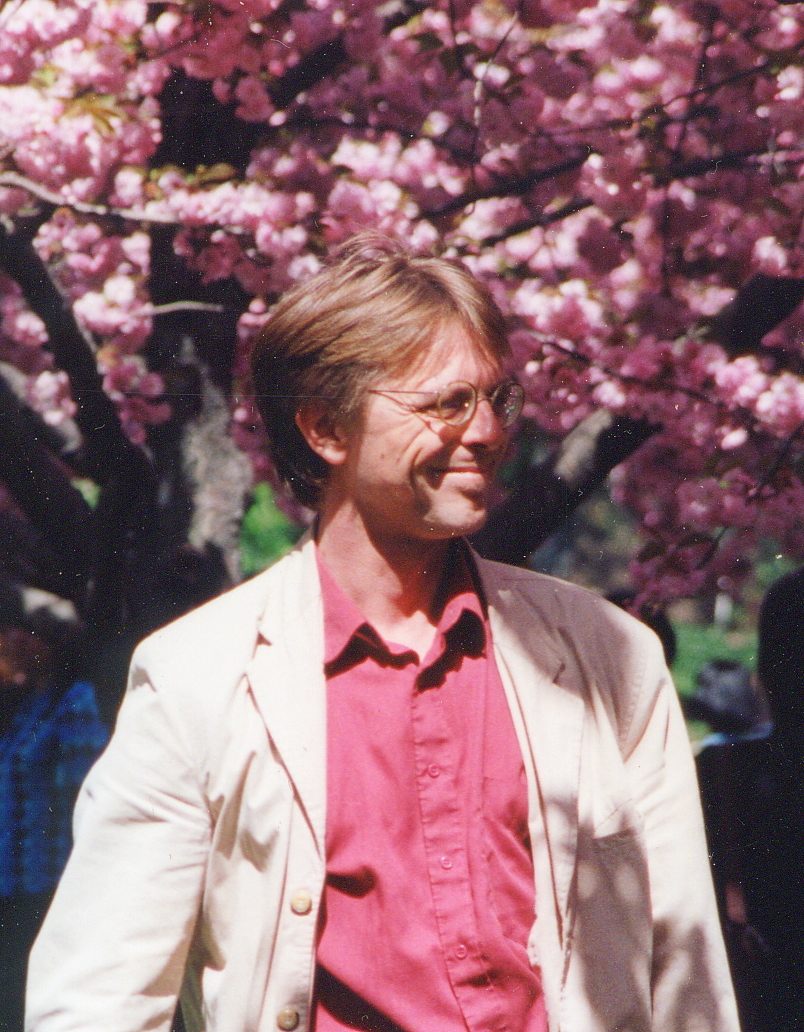
Rémi Ronfard is a Research Director at Inria and scientific leader of the ANIMA team. He holds a PhD (1991) and HDR (2009) from Grenoble University, specializing in Computer Graphics and Virtual Cinematography. His roles include heading the Geometry and Image Department at Laboratoire Jean Kuntzmann (2012–2016) and leading research initiatives like the IMAGINE team. Ronfard’s work bridges computer science with creative arts, focusing on narrative-driven animation, intelligent cinematography, and virtual reality storytelling. Education: MSc in Engineering, École des Mines de Paris (1986) PhD in Computer Science, École des Mines de Paris (1991) Habilitation à Diriger des Recherches (HDR), Grenoble University (2009) Research Interests: Computational narrative, 3D animation, virtual cinematography, and interdisciplinary collaborations with film schools, theaters, and companies like Dassault Systèmes and Thalès-Angénieux. His projects include 'Directing Virtual Worlds' and 'Narrative Design.' Key Achievements: Co-developed the 'magicam' system for user-generated animations at Xtranormal (2007) Co-organized international workshops on 3D cinematography and computational narratives Recipient of the Best Paper Award at Digital Heritage (2016) Lab & Teams: Leads the ANIMA team at Inria, part of the IMAGINE group. Collaborates with institutions like ENS Louis Lumière (film school) and Célestins Theatre (Lyon).
Synne Geirsdatter Frydenberg is an Associate Professor at the Department of Design, Oslo School of Architecture and Design (AHO). She earned her PhD in 2024 with the dissertation Cultivating Serendipity in Design Complexity , building on her 2011 Master’s in Industrial Design from AHO, foundational studies at The Royal Danish Academy, and exchange experience at Berlin University of the Arts. Her research focuses on fostering serendipity in complex design systems , particularly for safety-critical maritime workplaces . She contributes to major projects like the EU-funded SEDNA (Safe Maritime Operations under Extreme Conditions) and the Ocean Industries Concept Lab , with initiatives including OpenBridge , OpenAR , OpenZero , and OpenRemote . These projects aim to harmonize remote maritime workstation design and enhance AR navigation in Arctic conditions. Her recent publications highlight trends in augmented reality , virtual fieldwork , and serendipity-driven design for maritime environments. She actively explores how AR and VR technologies can improve contextual understanding in design education and real-world applications. Key collaborations include work with Kjetil Nordby, Jon Olav Husabø Eikenes, and Katie Aylward. Her expertise bridges interaction design , human-computer interaction , and design methodology in extreme operational contexts.
Dr. Philipp Mock serves as a Research Fellow at the Leibniz Institute for Knowledge Media (IWM) in Tübingen, Germany, where he has been a core member of the Media Development Group since 2014. His technical expertise centers on developing machine learning algorithms and AI systems for human-machine interaction, with current responsibilities including software development and methodological consulting for ML applications. Education: PhD in Computer Science, University of Tübingen (2017) Diploma in Computer Science, University of Tübingen (2004-2011) Mock's research integrates Human-Computer Interaction with machine learning to analyze behavioral patterns through interaction data. His work spans multimodal interfaces, educational technology, and cognitive assessment systems, with particular focus on translating touch interaction metrics into predictors of cognitive states (ADHD risk, workload) and developing novel collaborative interfaces for tabletop displays. This interdisciplinary approach bridges computer science, cognitive psychology, and educational design to create adaptive systems that respond to user behavior in real-time. His publication trajectory reveals a clear evolution from foundational work on interactive surface technologies (2012-2015) toward sophisticated ML applications for behavioral analysis (2016-2018). Current projects like the longitudinal human-AI interaction study (2024-2026) demonstrate continued innovation in understanding long-term dynamics between users and intelligent systems, with strong emphasis on real-world educational and clinical applications. Mock actively contributes to multiple IWM research labs including Multimodal Interaction, Everyday Media, Perception and Action, and Knowledge Construction. His collaborative projects such as the human-AI interaction study span these labs, reflecting an integrated approach to studying how people interact with increasingly sophisticated AI systems across diverse contexts from museums to educational settings.
Dr.-Ing. Philipp Sieberg serves as a Researcher at the Chair of Mechatronics within the Faculty of Engineering at the University of Duisburg-Essen, Germany. His research focuses on intelligent transportation systems, vehicle dynamics, and applied artificial intelligence, with particular emphasis on hybrid methodologies that integrate physical models with machine learning approaches. Based in Room MD-226, he actively contributes to both academic and industrial advancements in automotive engineering through his publications and research projects. His research interests span intelligent transportation systems, vehicle dynamics control, machine learning applications, and hybrid estimation methods. Sieberg specializes in developing reliable AI-based virtual sensors for vehicle state estimation, creating model-based predictive control systems for active roll stabilization, and applying neural networks to complex automotive challenges. His work consistently addresses the critical balance between AI innovation and system reliability in safety-critical automotive applications, with significant contributions to steering system dynamics, wear mechanism classification, and autonomous vehicle development. Sieberg's recent publications (2022-2025) demonstrate a clear trajectory toward increasingly sophisticated hybrid AI methodologies in vehicle dynamics. His research shows growing emphasis on reliability assurance of AI components, multi-fidelity simulation approaches, and practical implementation of machine learning in hardware-in-loop test environments. The work spans fundamental research in neural network-based state estimation to applied solutions for steering systems, wear analysis, and autonomous inland waterway vessels, reflecting both theoretical depth and real-world applicability. Award for Particularly Outstanding Graduation, Department of Engineering, University of Duisburg-Essen Award for Outstanding Completion of Master's Program in Mechanical Engineering, Faculty of Engineering, University of Duisburg-Essen First Prize for Outstanding Master's Thesis 2017, Alumni Chair of Mechatronics eV, University of Duisburg-Essen Active involvement in IEEE Germany Section and Chair of IEEE ITSS German Chapter Sieberg contributes significantly to research projects including AutoBin (Autonomous Inland Waterway Vessel), driving simulators for the Chair of Mechatronics, and machine learning algorithms for mobile state prediction applications. His leadership extends to committee activities as Student Activities Chair of the IEEE ITSS German Chapter, where he bridges academic research with professional society engagement. Current teaching responsibilities include courses on highly automated driving systems and technical fundamentals of future vehicle systems for the Master's program in Automotive Engineering & Management Executive. Working within the Chair of Mechatronics research group, Sieberg collaborates extensively with colleagues including Dieter Schramm, Christian Hürten, and Alexander Haas. His research leverages advanced driving simulators and hardware-in-loop test benches, with strong connections to the AutoBin project consortium developing autonomous inland vessel technology. The research environment emphasizes interdisciplinary collaboration between mechanical engineering, computer science, and control systems specialists to address complex mobility challenges.
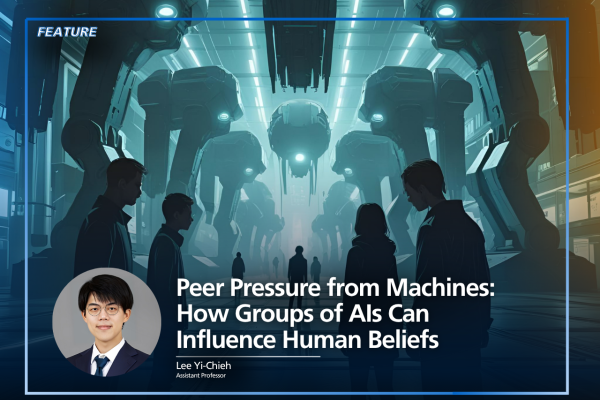
LEE Yi-Chieh is an Assistant Professor in the Department of Computer Science at NUS Computing, National University of Singapore. He holds a Ph.D. in Computer Science from the University of Illinois Urbana-Champaign (2021) and previously worked as a researcher at NTT, Japan. He leads the AI4SG (AI for Social Good) Lab, focusing on designing AI technologies to promote societal well-being. Ph.D., Computer Science, University of Illinois Urbana-Champaign, 2021 Researcher, NTT, Japan Assistant Professor, Department of Computer Science, NUS Computing His research lies at the intersection of human-computer interaction (HCI), computer-supported cooperative work (CSCW), and human-centered AI. He investigates how conversational agents can support mental health, reduce stigma, and encourage prosocial behaviors. His work emphasizes trust, ethics, and social impact in AI systems, particularly in healthcare and marginalized communities. He also explores multi-agent systems, AI literacy, and emotional reciprocity in human-AI relationships. The recent publications (2023–2025) reflect a strong trend toward AI for mental well-being, social influence in multi-agent environments, ethical challenges in AI companionship, and innovative applications of conversational agents in education, healthcare, and social services. The research combines qualitative and quantitative methods, often involving participatory design and cross-cultural studies. Notable scientific awards include: CSCW2022 Diversity & Inclusion Award Cornell-NUS Global Strategic Collaboration Award LEE Yi-Chieh is actively involved in advising and research grants through the AI4SG Lab. While specific students are not listed, his lab conducts impactful research in AI for social good, supported by institutional and international collaborations. He teaches courses such as CS3249 (User Interface Development) and CS5346 (Information Visualization), contributing to both undergraduate and graduate education. The AI4SG Lab is dedicated to creating socially responsible AI systems through interdisciplinary research, community engagement, and technology design that addresses real-world challenges in mental health, aging, inclusivity, and social justice.
Roger Zimmermann is a Full Professor at the School of Computing, National University of Singapore (NUS), where he is also a Co-PI at the Grab-NUS AI Lab and leads the Location AI project. He previously served as Deputy Director of the NUS Smart Systems Institute (SSI) and Co-Director of the Centre of Social Media Innovations for Communities (COSMIC), both funded by Singapore’s National Research Foundation (NRF). Before joining NUS, he was a Research Area Director and Research Assistant Professor at the University of Southern California (USC). Ph.D. in Computer Science, University of Southern California (1998) M.S. in Computer Science, University of Southern California (1994) His research focuses on multimedia systems , spatio-temporal data management , streaming media architectures (especially DASH), machine learning applications , AR/VR , and location-based services . He leads the Media Management Research Lab (MMRL) at NUS, which conducts cutting-edge work in distributed multimedia and intelligent systems. His work combines theoretical depth with real-world applications in urban computing, smart mobility, and immersive media. The recent publications reflect a strong trend toward multimodal learning , spatio-temporal AI , adaptive streaming , and urban intelligence . His team explores zero-shot learning, 3D scene understanding, traffic forecasting, and open-vocabulary audio-visual segmentation, often leveraging foundational models and deep neural architectures. There is a clear emphasis on real-time, scalable systems for smart cities and immersive experiences. Dr. Zimmermann has received numerous accolades, including: DASH-IF Excellence in DASH Award (multiple years) Best Paper Awards at ACM SIGSPATIAL, IEEE ICME, and ACM MMSys Silver Award at ACM MMSys 2020 Grand Challenge IEEE Communications Society Best Editor Award (2017) ACM Distinguished Member (2017) Top 1% Publons Reviewer in Computer Science (2018) He has advised numerous students and led major research initiatives funded by MOE, NRF, A*STAR, NSF, and industry partners like Seagate, Intel, and HP. He has served as General Chair for IEEE MIPR 2023, ACM Multimedia 2020, and IEEE ISM 2015, and as TPC Co-Chair for several top-tier conferences. His editorial roles include Associate Editor for IEEE Transactions on Multimedia (TMM), ACM TOMM, and IEEE OJ-COMS. He leads the Media Management Research Lab (MMRL) , which focuses on intelligent multimedia systems, spatiotemporal data mining, and immersive media technologies. The lab develops scalable solutions for real-world challenges in urban computing, smart transportation, and interactive media.
Yusuf Hüseyin Şahin is an Assistant Professor in the Department of Computer Engineering at Istanbul Technical University, Faculty of Computer and Informatics. He earned all his academic degrees—B.Sc., M.Sc., and Ph.D.—from the same institution in Computer Engineering. His research lies at the intersection of computer vision, deep learning, and 3D data processing, with applications in medical imaging, architectural heritage, and drone-based vision systems. B.Sc., M.Sc., Ph.D. in Computer Engineering, Istanbul Technical University His primary research interests include 3D point cloud processing, deep learning, image segmentation, adversarial attacks, and medical image analysis. He has published extensively on these topics, particularly focusing on point cloud registration, segmentation, and classification using neural networks. His recent work explores uncertainty modeling, active learning, and generative models for both synthetic data creation and real-world applications. The trend in his publications from 2017 to 2024 shows a clear progression from foundational work in CNN-based 3D classification and cerebral vessel analysis to advanced topics such as dynamic graph networks, conformal prediction, and heritage digitization. His work bridges theoretical machine learning with practical applications in healthcare and cultural preservation. He is currently leading a research project titled "Konformal Tahmin ile Sıcaklık Tahmin Modellerinde Doğruluğun Arttırılması" (Improving Temperature Prediction Accuracy Using Conformal Forecasting), funded under the SRP program from 2025 to 2026. This indicates an expanding interest in predictive modeling and uncertainty quantification. While no scientific awards are listed in the provided texts, his h-index of 5 and 293 citations on Scopus reflect an active and growing research profile. Dr. Şahin teaches undergraduate courses such as Data Structures (BLG 223E) and Object-Oriented Programming (BLG 252E). He has no listed advisees or thesis supervision records. He is part of a collaborative research network involving Gozde Unal and other researchers in medical and architectural computer vision. His lab activities appear to focus on deep learning for 3D data, with emphasis on robustness, efficiency, and real-world deployment.
Prof. Dr. Antonio Krüger is the CEO of the German Research Center for Artificial Intelligence (DFKI) and Director of the Ubiquitous Media Technology Lab (UMTL) at the Saarland Informatics Campus in Saarbrücken, Germany. He is a leading researcher in human-computer interaction, virtual and augmented reality, multimodal interfaces, and intelligent systems. His research interests span a broad range of topics including virtual reality (VR), augmented reality (AR), gesture interaction, haptic feedback, EEG and eye tracking, gamification, cognitive load estimation, brain-computer interfaces, and smart environments. His work emphasizes user-centered design, perceptual illusions, and real-world applications in domains such as automotive, healthcare, and education. His recent publications (2023–2024) demonstrate a strong focus on advancing VR interaction through techniques like hand redirection, synthetic gesture generation for vehicles, implicit intent recognition using multimodal sensing, and personalized object referencing. These works reflect trends toward seamless, natural, and adaptive interfaces that leverage AI, perception, and real-time feedback. Prof. Krüger supervises a large team of researchers and students, including Mansi Sharma, Amr Gomaa, André Zenner, and Martin Feick, indicating active mentorship and collaborative research leadership. His lab, UMTL, develops innovative technologies in immersive environments, wearable systems, and intelligent user assistance, contributing to both academic knowledge and practical applications.
ROI MENDEZ FERNANDEZ is a Professor at the University of Santiago de Compostela, affiliated with the Department of Communication Sciences within the Faculty of Communication Sciences. He is also part of the Institute of Studies and Development of Galicia (IDEGA) and the Audiovisual studies research group focused on audiovisual communication technologies. His academic career includes a doctoral thesis in 2017 titled Advanced visualization and interaction applied to virtual scenarios , supervised by Dr. Julian C. Flores González and Dr. Enrique Castelló Mayo. His research interests center on virtual TV set technologies , mixed reality applications in education , motion capture systems , and cloud-based educational platforms . Recent work explores the viability of tools like Cloudclass in primary education, telepresence in art education, and benchmarking human pose estimation solutions for virtual television. Notable contributions include developing distributed virtual TV architectures, cyclorama illumination calibration, and low-cost sensor integration for natural interaction systems. His projects often bridge academic research with practical applications in media production and educational technology. He actively collaborates with the COGRADE research group on computer graphics and data engineering.
Dr. Julian Dermoudy is an Associate Professor and Associate Head (Learning and Teaching) in the School of Information and Communication Technology at the University of Tasmania. With over 25 years of teaching experience, he has received national and institutional recognition for his pedagogical contributions. His roles have included Head of School, Associate Dean, and Course Coordinator, reflecting his leadership in academic administration. His teaching spans the Bachelor of ICT and Master of ITS programs. Research Interests: Learning and Teaching Innovations Computing Education and Curriculum Design Serious Games and Gamification for Behavior Change Multimodal Analysis and Verification Parallelism and Software Engineering Funded Projects: UTAS Internal Funding: Embedding Indigenous Knowledge in Curriculum (2021-2021) Advising: Supervised 11 doctoral candidates across domains like biometric authentication, ICT curriculum design, and mobile technology impact. Recent students include Simon Stanton (Cooperative Intent) and Shahan Chowdhury (Collaborative In-Store Shopping). Labs/Teams: Active in curriculum redesign initiatives and educational technology innovation, particularly in VR and gamification applications.
Josh Siegel is an Assistant Professor in the Computer Science and Engineering and Electrical and Computer Engineering departments within Michigan State University's College of Engineering. His work focuses on interdisciplinary research at the intersection of Internet of Things (IoT) , autonomous systems , and cybersecurity . Dr. Siegel holds a Ph.D. in Mechanical Engineering from MIT (2016). Research interests include pervasive sensing , connected and autonomous vehicles , AI ethics , and gamification in education . He has pioneered projects like Robofest and Virtual Art Viewing for Education (VAVEL) , demonstrating real-world impacts of technology in STEM education and disaster response. His autonomous vehicle research emphasizes real-vehicle testing , roadside unit infrastructure , and safety-critical decision-making . Notable contributions include frameworks for metaverse rights management , data-efficient decision systems , and byzantine-resilient federated learning . He leads the NSF-funded REU Site: Collaborative Research program, fostering undergraduate innovation in autonomous vehicle algorithms. Current projects explore AI ethics in urban mobility , smart infrastructure , and IoT-enabled manufacturing . Dr. Siegel's work bridges academia and industry through partnerships focused on cyber-physical systems , digital twins , and industrial IoT . He has published extensively on topics ranging from vehicle cybersecurity to AI-driven diagnostics , with a strong emphasis on practical deployment and societal impact.
Llorenç Cerdà-Alabern is an Associate Professor in the Department of Computer Architecture at the Universitat Politècnica de Catalunya (UPC), specifically affiliated with the School of Computer Science of Barcelona (FIB). He is a member of the CNDS - Computer Networks and Distributed Systems research group (TECNIO/CIT UPC network). His academic career spans over two decades since joining UPC in 1994, with a focus on network technologies and protocols. Dr. Cerdà-Alabern earned his Engineering degree in Telecommunications from UPC in 1993 and completed his PhD in Telecommunications Engineering in January 2000 with a thesis titled "Traffic Management of the ABR Service Category in ATM Networks". His academic journey reflects a deep commitment to network engineering and computer science. His research interests span multiple areas in networking, with particular expertise in Computer Networks , Wireless Networks , Mesh Networks , Community Networks , TCP/IP , Routing Algorithms , and MAC Protocols . Dr. Cerdà-Alabern's work emphasizes performance evaluation, analytical modeling, and the design of layer two and three network protocols. His current research primarily focuses on Wireless Community Networks, where he investigates network resilience, reliability, and innovative architectures for decentralized connectivity solutions. His work often intersects with sustainability, rural connectivity, and community-driven network models, particularly through his involvement with the Guifi.net community network. Analysis of Dr. Cerdà-Alabern's recent publications (2019-2024) reveals a strong emphasis on wireless community networks, with particular focus on anomaly detection, network reliability, and economic models. His research demonstrates a clear trajectory toward making community networks more robust, efficient, and accessible, with increasing attention to machine learning applications for network monitoring and optimization. The publications show consistent collaboration with international researchers and a practical approach to solving real-world networking challenges, especially in underserved areas. Dr. Cerdà-Alabern has successfully advised six PhD students to completion, including Gabriele Gemmi (2024), Javad Manzoor (2019), Axel Neumann (2017), Maryam Amiri Nezhad (2013), Amir Darehshoorzadeh (2012), and Rafael Paoliello-Guimarães (2008). His research has been supported by numerous competitive projects, including EU-funded initiatives like EXPERT, COST-257, MOEBIUS, WIDENS, COST-279, EuroNGI, and CONFINE, as well as collaborations with industry partners like Nokia. His work has resulted in over 200 academic activities. As a key member of the CNDS research group, Dr. Cerdà-Alabern contributes to several network-related initiatives, particularly those focused on community networks and wireless mesh technologies. His work with the Guifi.net community network represents a significant practical application of his research, where theoretical concepts are implemented in real-world settings to provide connectivity to underserved communities. He has also developed various software tools, including the Topology Generator of Guifi.net and Shapley value Monte Carlo simulation tools for network analysis.
Ian Lane is an Associate Professor in the Computer Science and Engineering Department at the University of California, Santa Cruz's Baskin Engineering school, serving as Program Director for the Natural Language Processing Professional Master's Degree Program. He joined UCSC in Fall 2022 after an extensive career spanning academia and industry. His research centers on computational systems that understand spoken human language, spanning speech recognition, transcription, meaning interpretation, and contextually appropriate responses. Key research areas include: Natural Language Processing for real-world applications Conversational AI systems development Speech-to-speech translation technologies Multimodal interaction (audio-visual integration) Language technologies that learn through real-world interaction His recent publications demonstrate strong focus on hallucination detection in LLMs, tabular data understanding, explainable AI, and robust speech recognition systems. Current work emphasizes "in the wild" language technologies that adapt through user interaction. Dr. Lane has received recognition through impactful industry applications including Jibbigo (the first mobile speech translation app) and military translation systems deployed in Iraq and Afghanistan. He actively mentors students and collaborates across UCSC's Silicon Valley Campus programs including Games and Playable Media and Human-Computer Interaction. His vision includes integrating NLP with virtual environments for language learning and skill acquisition.