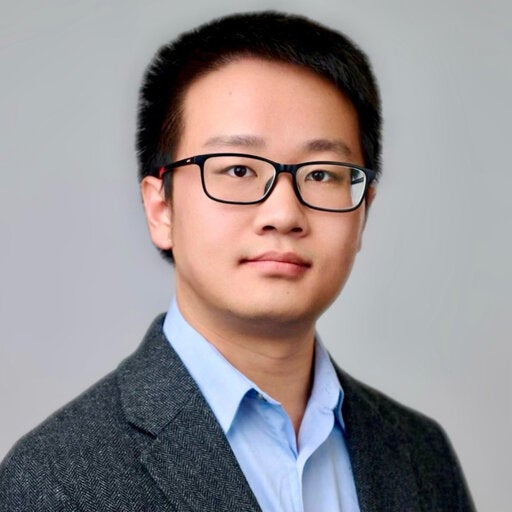
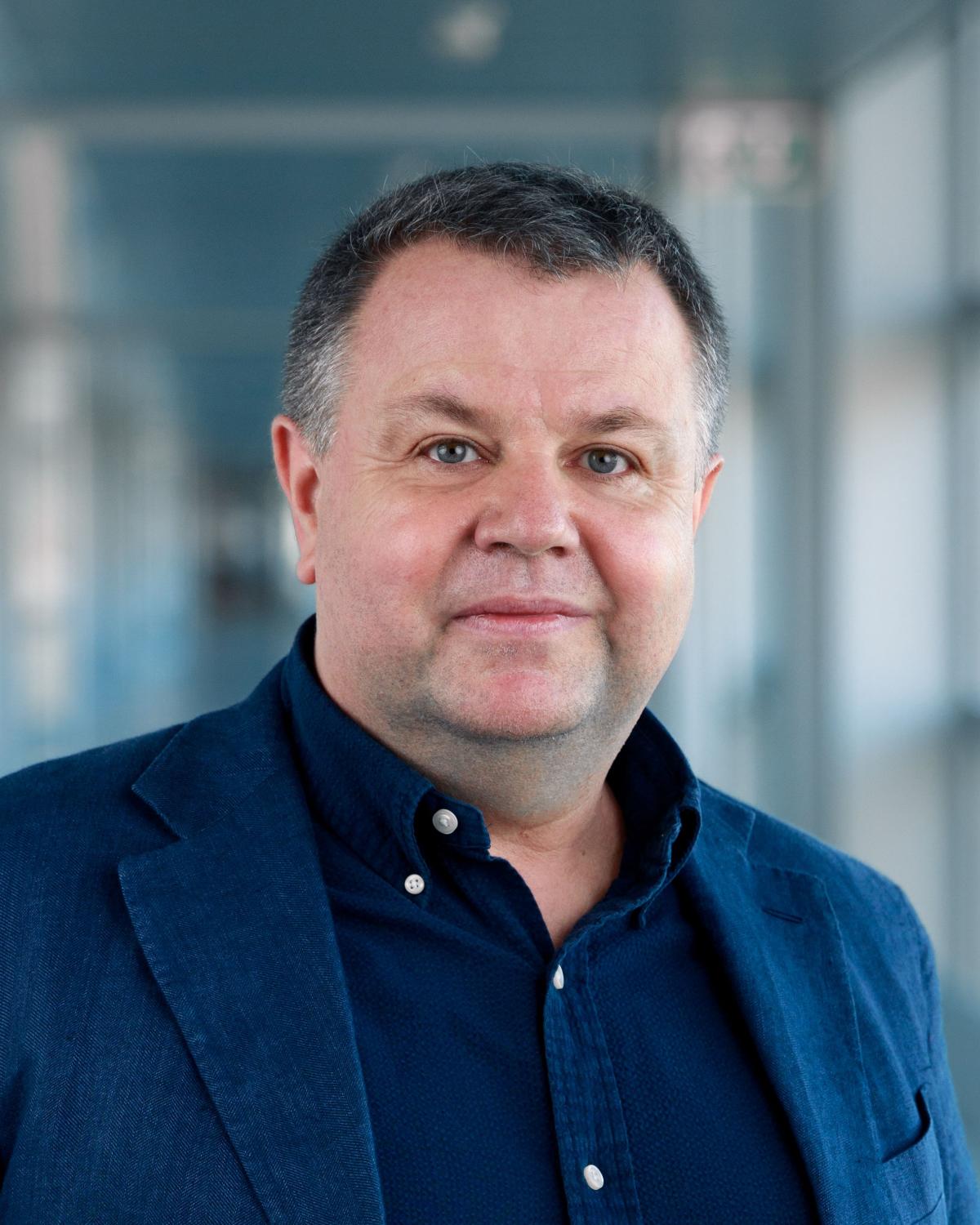
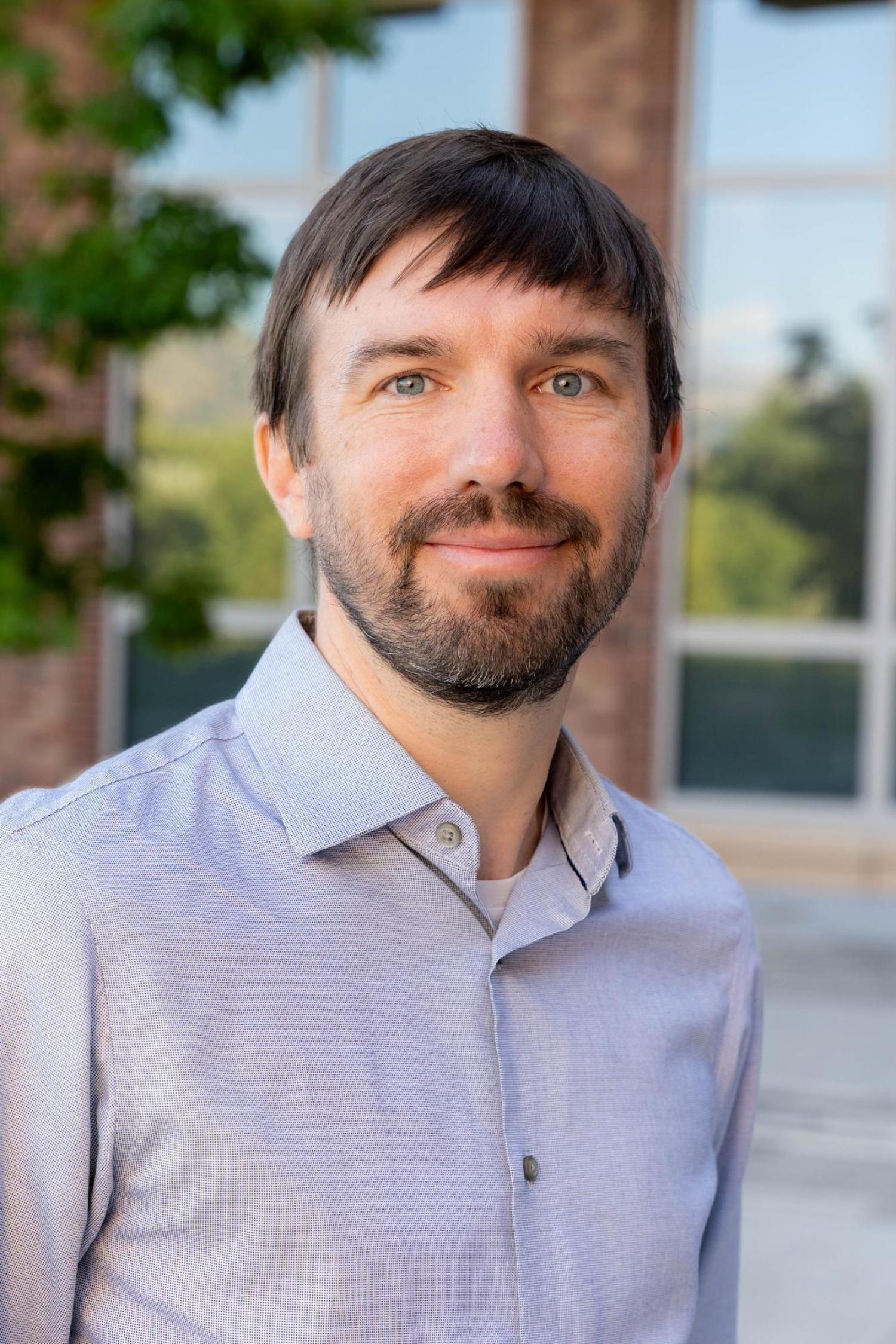
Dr. Peichen Zhong is an Assistant Professor in the Department of Materials Science and Engineering at the National University of Singapore (NUS). He leads the Applied Machine Learning and Materials Modeling (AM³) Group, focused on advancing computational methods for clean energy technologies. His research integrates machine learning with atomistic simulations to tackle challenges in battery materials, disordered materials, and sustainable energy systems. Education: B.S. in Physics from University of Science and Technology of China (2018); Ph.D. in Materials Science from UC Berkeley (2023, advised by Prof. Gerbrand Ceder); Postdoctoral training at Lawrence Berkeley National Lab and BIDMaP, co-advised by Persson, Cheng, and Krishnapriyan. Research Interests: Computational modeling of battery cathodes/electrolytes, AI-driven interatomic potentials, statistical mechanics in disordered materials, and generative models for scientific discovery. Key areas include Li/Na-ion batteries, solid-state reactions, and sustainable energy materials. Awards: BIDMaP Emerging Scholar Fellowship (UC Berkeley CDSS, 202?), 2023 Rising Stars in Materials Science (CMU/MIT/Stanford). Labs/Teams: The AM³ Group at NUS MSE focuses on interdisciplinary research combining theory, computation, and AI4Science. Current openings include PhD students and postdoctoral researchers.
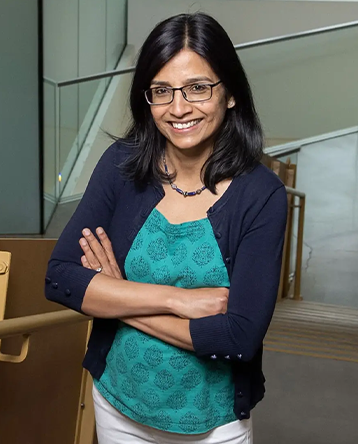
Aarti Singh is a Professor in the Machine Learning Department at Carnegie Mellon University and Director of the NSF AI Institute for Societal Decision Making. She leads research at the intersection of machine learning, statistics, and decision making, with applications to scientific and societal domains. Her work focuses on designing principled interactive algorithms for learning and decision making under uncertainty. Education: Ph.D. in Electrical Engineering, University of Wisconsin-Madison (2008) M.S. in Electrical Engineering, University of Wisconsin-Madison (2003) B.E. in Electronics and Communication Engineering, University of Delhi (2001) Research Interests: Professor Singh's research centers on developing interactive machine learning algorithms that go beyond finding input-output associations to make higher-level decisions about the most informative data and actions. Her work spans autonomous decision making, including active sampling, stochastic optimization, bandits, and reinforcement learning that are statistically optimal, computationally tractable, and robust. She also investigates human factors in decision making, designing algorithms that model and leverage human feedback while accounting for bias, memory effects, and calibration. Her research has applications in material science, cosmology, and peer review systems. Research Trends: Professor Singh's recent publications demonstrate a strong focus on reinforcement learning, particularly in developing more efficient and robust algorithms for decision making under uncertainty. Her work bridges theoretical foundations with practical applications, spanning from fundamental algorithm development to real-world implementation in scientific domains. There's a clear trajectory toward integrating human factors into decision-making algorithms, with significant contributions to peer review systems and preference learning. Scientific Awards: NSF Career Award United States Air Force Young Investigator Award A. Nico Habermann Faculty Chair Award Harold A. Peterson Best Dissertation Award Multiple paper awards Advising and Grants: Professor Singh has advised numerous PhD and master's students, many of whom have gone on to faculty positions or research roles at leading institutions. Her research is supported by prestigious grants from ONR, Simons Foundation, AFRL, ARL, and NSF. She serves as General Chair (2025) and Program Chair (2020) for the International Conference on Machine Learning (ICML) and has held leadership roles in multiple professional organizations. Research Team: Professor Singh leads a vibrant research group within the Machine Learning Department at CMU, with current PhD students working on topics including reinforcement learning, human-AI collaboration, and decision making under uncertainty. She also directs the NSF AI Institute for Societal Decision Making, which brings together researchers from multiple disciplines to develop AI systems that support human decision making in societal contexts.
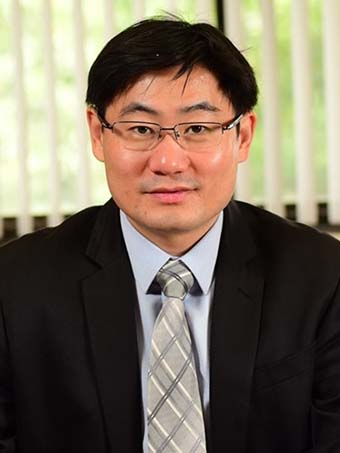
Professor CHEN Wei (National University of Singapore) holds the Provost's Chair Professorship (2023-2026) and serves as Vice-Dean (Research) with joint appointments in the Departments of Chemistry and Physics. His research focuses on molecular-scale interface engineering for 2D materials-based devices and interface-controlled nanocatalysis in energy/environmental applications. PhD in Material Science, NUS (2004) Lee Kuan Yew Research Fellow (2006-2008) Established Surface and Interface Lab (2009) Director, NUS Research Institute (Fuzhou) His work on 2D optoelectronic memory (Nat. Comm. 2018), Kagome lattice design (Nano Lett. 2020), and single-atom catalysis (Nat. Comm. 2021) has been recognized by multiple high-impact publications and the Clarivate Highly Cited Researcher status (2017-2021). Awards include the NRF Investigatorship (2023) , Mitsui Chemicals-SNIC Industry Award (2020) , and Singapore Young Scientist Award (2012) . Grants from NUS, Singapore MOE, CREATE/CRP programs, and A*STAR support his exploration of interface engineering for neuromorphic computing and energy-efficient nanocatalysts . Current projects include monolayer blue phosphorus synthesis and solid electrolyte interphase engineering for lithium batteries.
Prof. Dr. Günther Dissertori is a Full Professor and Rector of ETH Zurich, where he oversees teaching and academic affairs. His academic journey began at the University of Innsbruck, followed by a doctoral position at CERN, and he joined ETH Zurich as an Assistant Professor in 2001 before becoming a Full Professor in 2007. Academic Role: Full Professor of Particle Physics Institutional Leadership: Rector of ETH Zurich (since 2022) Contact: guenther.dissertori@sl.ethz.ch Research Interests: Dissertori's work spans Particle Physics and Experimental Physics , notably contributing to the CMS experiment at CERN, which was instrumental in the Higgs boson discovery. His group also developed cost-effective PET devices, leading to the spin-off Positrigo AG . Research keywords include Detector Development , Medical Imaging , and Quantum Physics . Teaching Excellence: Recognized with multiple Golden Owl awards (2005–2020) and the Credit Suisse Award for Best Teaching (2013), Dissertori is celebrated for his pedagogical impact in the Department of Particle Physics. Scientific Contributions: His publications include advancements in CMOS technology, quantum dynamics, and medical applications, reflecting interdisciplinary expertise in high-speed electronics, environmental science, and architectural history.
Dr. Sungjin Kim is an Assistant Professor in the Department of Chemical and Biological Engineering at The University of New Mexico (UNM). He earned his Ph.D. in Materials Science and Engineering from MIT (2020) as a Samsung Scholarship Fellow, with prior degrees from KAIST (M.S. 2011, B.S. 2009) and exchange experience at Georgia Tech (2008). His research focuses on bioinspired, energy-efficient materials design for sustainability and healthcare. Education: Ph.D., MIT (2020) M.S. and B.S., KAIST (2011, 2009) Exchange Student, Georgia Tech (2008) Research Interests: Dynamic crosslinking in polymers, bioinspired mineralization for CO2 utilization and hard-tissue engineering, vitrimers for recyclable composites, and sustainable additive manufacturing. His work bridges fundamental chemistry (e.g., metal-coordinate bonds) and applied engineering (e.g., 3D printing). Notable Publications (2025-2022): Explore polyisocyanurate foams, dynamic vitrimer composites, and bioinspired mineralization strategies. Common themes include sustainable materials, dynamic bonding, and hybrid organic-inorganic systems. Awards: Samsung Scholarship Fellow (2014-2019) Government Scholarship (Korea, 2009-2011) Research Report of the Year Award (2012, SKC Co., Ltd.) Outstanding New Researcher Award (2011, SKC Co., Ltd.) Students: Advisees include graduate students Leila Shahriari and Michael Nelwood, and undergraduates Tyrus Antonson and Jacqueline Buenviaje. Former members include Catherine Biju (M.S. candidate) and Lillian Elam (undergraduate).
Andrew Childs is a Professor at the University of Maryland, affiliated with the Department of Computer Science and the Institute for Advanced Computer Studies (UMIACS). He serves as Director of the NSF Quantum Leap Challenge Institute for Robust Quantum Simulation (RQS) and is a Fellow at the Joint Center for Quantum Information and Computer Science (QuICS). His research focuses on quantum algorithms for simulating physical systems, algebraic problems, and quantum walk protocols, with applications in quantum computing and computational complexity. University of Maryland Institute for Advanced Computer Studies (UMIACS) Joint Center for Quantum Information and Computer Science (QuICS) NSF Quantum Leap Challenge Institute for Robust Quantum Simulation Childs' research spans quantum simulation, quantum Fourier transform, phase estimation, and Hamiltonian dynamics. He has developed techniques to reduce quantum computational resources for simulating quantum systems and explored limitations of quantum computers through hidden subgroup problems and non-unitary dynamics. His publications cover diverse areas including quantum walk optimization, Hamiltonian simulation methods, and applications to cryptography and condensed matter physics. Recent works address spatial search algorithms, product formulas for commutators, and quantum routing protocols. As an educator, Childs has taught courses on quantum algorithms and information processing at both the University of Maryland and University of Waterloo, with lecture notes and materials spanning multiple years. Contact: amchilds@umd.edu | Office: ATL 3359 | Affiliated with University of Maryland's quantum research institutes.
Bradley D. Olsen is a full professor in the Department of Chemical Engineering at the Massachusetts Institute of Technology (MIT), where he leads research at the intersection of polymer science, soft matter physics, and bioengineering. His work focuses on designing materials for critical applications in biotechnology, hemostasis, and sustainable polymer development while advancing fundamental understanding of polymer network mechanics and self-assembly. Education: Ph.D. in Chemical Engineering, University of California Berkeley (2007) S.B. in Chemical Engineering, Massachusetts Institute of Technology (2003) Olsen's research spans protein-based materials, block copolymer phase behavior, and mechanochemical hydrogels. He has pioneered methods for quantifying polymer network topology, developing hemostatic nanoparticles, and creating bio-inspired materials for selective biomolecular transport and medical applications. His recent publications emphasize data-driven approaches to polymer characterization and educational outreach in materials science. Scientific Awards: American Physical Society (APS) Fellow (2023) Fulbright Amazonia Scholar (2023) Alexander and I. Michael Kasser Chair in Chemical Engineering (2021) ACS Macro Letters Young Investigator Award (2021) MIT Committed to Caring Honor (2019) AIChE Owens Corning Early Career Award (2019) APS Dillon Medal (2018) Kavli Emerging Leader in Chemistry (2017) ACS Polymer Division Fellow (2016) Camille Dreyfus-Teacher Scholar (2015) Alfred P. Sloan Research Fellow (2014) NSF Career Grant (2013) NIH Postdoctoral Fellowship (2008-2009) Hertz Fellow (2003-2007) Barry M. Goldwater Scholarship (2002) Olsen has received significant grant support including NSF Career (2013) and AFOSR (2012) awards. His teaching activities include innovative international outreach like the 2025 soccer-themed science camp in Brazil. The Olsen Group at MIT explores advanced materials with applications ranging from trauma care to sustainable polymers.
Jouni Partanen is a Professor at Aalto University's Department of Energy and Mechanical Engineering within the College of Engineering. His research focuses on advanced production technologies including Additive Manufacturing (3D-Printing), modern laser processing, and micromachining. Research Group: Materiaaleista tuotteiksi Specialization: Integration of AI in manufacturing processes Sustainability emphasis: Biochar-reinforced materials and carbon footprint reduction His work spans from fundamental material behavior analysis to industrial applications, particularly in metal additive manufacturing and composite fabrication. Recent research explores corrosion resistance in lattice structures and multiscale photopolymerization techniques. Publications highlight interdisciplinary approaches combining mechanical engineering with biomedical applications (e.g., patient-specific implants) and environmental health studies on industrial 3D printing emissions.
Muhannad S. Bakir is the Dan Fielder Professor in the School of Electrical and Computer Engineering at Georgia Institute of Technology and serves as the Director of the 3D Systems Packaging Research Center. His research focuses on heterogeneous integration of microsystems, including 2.5D and 3D ICs and packaging technologies, with significant contributions to advanced cooling systems, electrical and photonic interconnects, and biosensor integration with CMOS. Dr. Bakir's research interests span heterogeneous microsystem design and integration, advanced cooling and power delivery for emerging architectures, electrical and photonic interconnect technologies, biosensor technologies, and nanofabrication. His work addresses critical challenges in next-generation electronics, enabling polylithic integration that concatenates heterogeneous ICs of various functionalities while mimicking monolithic-like densities. His research particularly focuses on co-design of thermal technologies, power delivery networks, and signaling networks for silicon nanoelectronic systems. His recent publications demonstrate strong trends in fused-silica stitch-chip technology for heterogeneous integration, with particular emphasis on RF and mm-wave applications, power delivery for AI accelerators, and thermal management solutions. His work bridges electrical engineering, materials science, and thermal management to solve critical bottlenecks in computing performance and efficiency. 2013 Intel Early Career Faculty Honor Award 2012 DARPA Young Faculty Award 2011 IEEE CPMT Society Outstanding Young Engineer Award 2012 National Academy of Engineering Frontiers of Engineering Symposium Invited Participant 2015 IEEE CPMT Society Distinguished Lecturer 2014 Best Paper of the IEEE Transactions on Components Packaging and Manufacturing Technology More than 25 conference and student paper awards Twelve issued US Patents Dr. Bakir leads the Integrated 3D Systems Lab (I3DS) at Georgia Tech, which is actively researching advanced packaging, interconnects, electrical and thermal design, and system integration. His team has received significant recognition for their work, including multiple best paper awards from major conferences like ECTC, IITC, and CICC. The lab is currently seeking postdoctoral researchers and research faculty to advance next-generation electronics through collaborative research. His lab focuses on enabling the next phase of Moore's Law through polylithic integration, which concatenates heterogeneous ICs of various functionalities (digital, analog, photonic, and mm-wave) using advanced off-chip '2.5D' and '3D' heterogeneous interconnects and packaging. This work impacts applications in high-performance computing, machine learning, edge intelligence, autonomous vehicles, augmented/virtual reality, and healthcare.
Ron H.J. Peerlings is Associate Professor in the Department of Mechanical Engineering at Eindhoven University of Technology (TU/e) , where he leads the Mechanics of Materials research group. Promoted to Associate Professor in 2007 after joining as Assistant Professor in 2000, he has built an extensive portfolio in theoretical and computational mechanics of materials. Education: PhD (1999) – Eindhoven University of Technology, thesis: Enhanced damage modelling for fracture and fatigue Post-doctoral research (1999–2000) – University of Cambridge, Engineering Department Research interests revolve around micromechanics , micro-plasticity , multiscale modelling , homogenisation , damage and fracture , and enriched continuum theories . His work spans advanced high-strength steels, composites, paper and fibrous networks, with strong emphasis on coupling rigorous theoretical developments to industrially motivated problems. His recent publications (2023-2025) demonstrate a clear trajectory towards integrating advanced experimental techniques (e.g., digital image correlation, micro-mechanical testing) with high-fidelity computational frameworks such as crystal-plasticity finite-element modelling, FFT-based solvers and micromorphic homogenisation. Dominant themes include: Deformation and fracture in lath martensite and dual-phase steels Hygro-mechanics of paper and fibrous networks Pattern-transforming mechanical metamaterials Discrete-to-continuum scale bridging methods Scientific awards are not explicitly listed in the provided material; however, his prolific output (294 research items, >6500 citations) attests to significant peer recognition. Teaching & supervision: He delivers courses on Computational Mechanics – Numerical Methods for Fluids and Solids and Fracture Mechanics – Theory and Application , and has supervised >80 student works and numerous PhD candidates whose names appear on joint publications. Laboratory & teams: He heads the Group Peerlings within the Mechanics of Materials cluster, maintaining close collaboration with the Mechanics of Materials Group Geers and extensive national/international experimental and computational networks.
Carlos G. Levi is a Research Professor in the Department of Materials at the University of California, Santa Barbara (UCSB), part of the College of Engineering. He holds the additional title of Professor Emeritus. His research focuses on microstructure evolution in inorganic materials, particularly in the design of advanced coatings, composites, and alloys for extreme environments. He has contributed significantly to thermal barrier coatings, ceramic matrix composites, and high-temperature alloys for aerospace and energy applications. Education: Ph.D. in Metallurgical Engineering, University of Illinois at Urbana-Champaign (1981) M.Sc. in Metallurgical Engineering, University of Illinois at Urbana-Champaign (1977) Degree in Chemical Engineering, Universidad Autonoma de Nuevo Leon, Mexico (1972) Research Interests: Levi’s work addresses challenges in structural materials, including advanced thermal/environmental barrier coatings resistant to molten silicates, ceramic matrix composites, hypersonic materials, and high-temperature alloys such as multi-principal element alloys. His studies explore degradation mechanisms, phase stability under extreme conditions, and novel synthesis techniques like vapor-mediated melt infiltration. Awards and Honors: 2014 TMS Morris Cohen Award 2012 Fellow of the American Ceramic Society 2008 NIMS Award (shared) for breakthroughs in materials science for energy/environment 2004 DLR Wissenschaftspreis (collaborative paper) 2002 Alexander von Humboldt Research Prize Advising and Grants: No formal student advisees are listed, though his research group likely includes graduate students/postdocs. Grant details are not specified in the provided texts. Labs/Teams: Levi’s research is conducted within UCSB’s Materials Department, leveraging advanced characterization tools (e.g., TriBeam tomography) and computational modeling to study material behavior under extreme conditions.
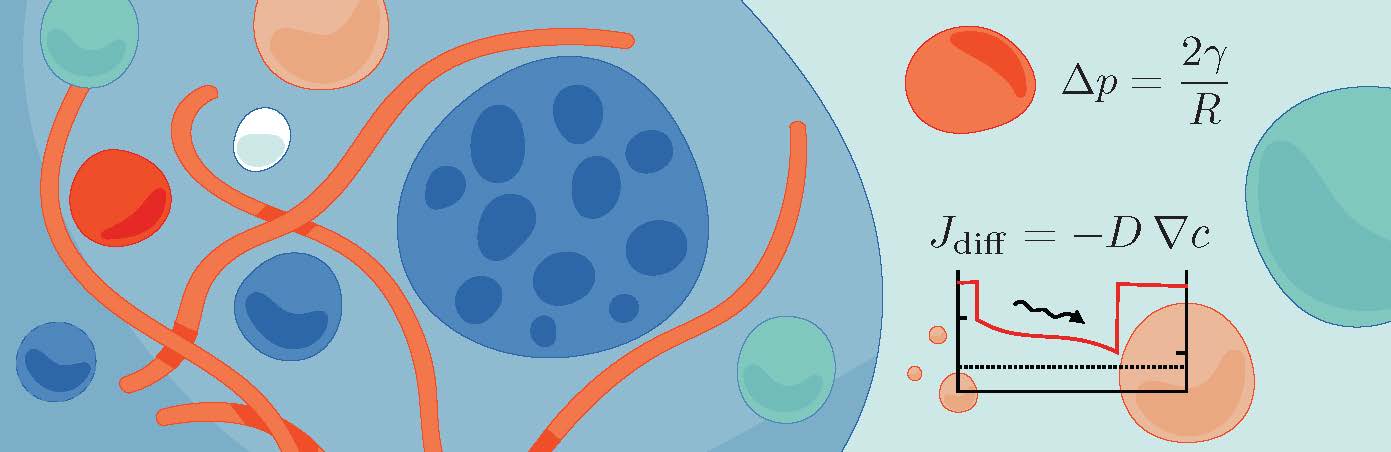
Thomas Michaels is an Assistant Professor at the Department of Biology, ETH Zürich, leading the Michaels Group . His research focuses on theoretical models of biomolecular condensates and protein aggregation in biological systems. Research Themes : Protein aggregation, liquid-liquid phase separation, membrane biophysics, and the role of condensates in neurodegenerative diseases like Alzheimer’s and Parkinson’s. Collaborative Approach : Integrates theoretical physics, control theory, and computational biology with experimental validation to design therapeutic strategies. Recent Publications highlight his work on amyloid formation mechanisms, lipid interactions, and phase-separated compartments as biochemical reactors. His group trains PhD students in systems biology and biocondensate physics.
Jonathan Klamkin is a Professor in the Department of Electrical and Computer Engineering at the University of California, Santa Barbara (UCSB). He also serves as the Director of the Nanofabrication Facility, overseeing advanced photonics fabrication resources. His research focuses on integrated photonics, silicon photonics, optical communications, and compound semiconductor integration. Klamkin holds a PhD in Materials from UCSB, an MS in Electrical and Computer Engineering from UCSB, and a BS in Electrical and Computer Engineering from Cornell University. His research interests span cutting-edge areas such as electronic-photonic integration, nanophotonics, and microwave photonics. He has pioneered techniques for heterogeneous integration of compound semiconductors on silicon, enabling scalable photonic systems for applications in LiDAR, high-speed communications, and quantum technologies. Notable awards include the DARPA Young Investigator Award, NASA Early Career Faculty Award, and the PIERS Young Scientist Award. His recent work emphasizes beam steering systems, high-power quantum dot lasers, and photonic integrated circuits for remote sensing and lidar. Klamkin’s lab develops both fundamental materials science and applied photonic devices, with a focus on bridging the gap between semiconductor growth and integrated system design. Key contributions include innovations in grating coupler design, antiphase boundary-free epitaxy for GaAs on silicon, and analog coherent detection for energy-efficient data centers. His research bridges photonics, electronics, and materials science to address challenges in high-performance integrated systems.
Jörg F. Löffler is a Full Professor of Metal Physics and Technology at the Department of Materials, ETH Zürich , where he has been since 2003. He previously served as Chairman of the Department (2010–2013) and holds Adjunct Professor positions at Tohoku University (Japan) and a Visiting Faculty role at Caltech. His research focuses on bulk metallic glasses , metallic biomaterials , and magnetic materials , combining synthesis, characterization, and applications in biomedical and structural contexts. Educations : Studied Physics and Materials Science at Saarland University (Germany), earned his doctorate at ETH Zurich and Paul Scherrer Institute on magnetism and neutron scattering (1997). Research Trends : Recent work explores additive manufacturing (e.g., laser powder bed fusion), biodegradable magnesium alloys for implants, and magneto-structural coupling in metallic glasses. Collaborative efforts integrate in situ analysis with computational modeling. Scientific Awards : International Magnesium Science and Technology Award (2023) MRS Fellow (2021) DGM 'Breakthrough' Prize (2016) Masing Memorial Prize (2005) ETH Zurich Medal (1998) Alexander von Humboldt Fellowship (1998-2001) Löffler advises the Department of Materials Science and Engineering at UC Davis and serves on editorial boards. His group at ETH Zürich investigates advanced metallic materials using synchrotron radiation and neutron scattering facilities.
John Evans is an Associate Professor and Jack Rominger Faculty Fellow in the Department of Aerospace Engineering Sciences at the University of Colorado Boulder, affiliated with the Applied Mathematics program. He serves as Associate Chair for Undergraduate Curriculum and is part of the Aerospace Mechanics Research Center (AMREC). His research focuses on computational mechanics, particularly fluid dynamics, fluid-structure interaction, and turbulence modeling using high-order and structure-preserving methods. Evans holds a PhD (2011) and MS (2008) in Computational and Applied Mathematics from the University of Texas at Austin, and dual BS/MS degrees in Mathematics and Applied Mathematics from Rensselaer Polytechnic Institute (2006). Before joining CU Boulder, he was a postdoctoral fellow at the Institute for Computational Engineering and Sciences (ICES). His research interests include isogeometric analysis, immersed methods, and data-driven turbulence modeling. Notable contributions include development of divergence-conforming discretizations for incompressible flows, stabilized collocation methods, and invariant subgrid stress models. He leads the AMREC lab and collaborates on plasma-fueled propulsion systems and geometrically sensitive simulations. Key Awards: 2021: Rocky Mountain AIAA Educator of the Year 2021: Gallagher Young Investigator Medal 2019-2021: Clarivate Highly Cited Researcher Professional Activities: Editor of Engineering Computations, Senior AIAA Member, Simons Visiting Professor (2019) Evans' work bridges advanced numerical methods with real-world engineering challenges. His lab develops open-source tools like XIGA for multi-material problems and focuses on immersive simulation environments. Current projects explore turbulence closure models, plasma propulsion, and topology optimization with B-spline-based approaches.