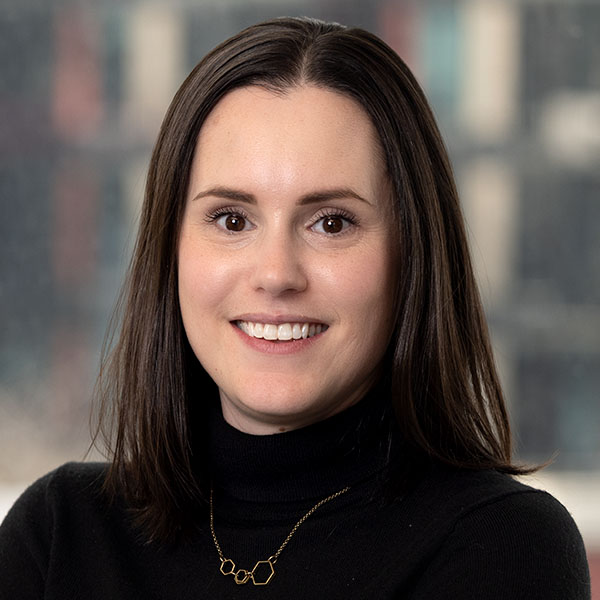
Dana Pe'er is Chair of the Computational and Systems Biology Program at the Sloan Kettering Institute (SKI) and an Investigator at the Howard Hughes Medical Institute (HHMI). She holds the Alan and Sandra Gerry Endowed Chair and leads an interdisciplinary lab combining single-cell genomics, machine learning, and computational modeling to study cancer biology, immunity, and development. Pe'er earned her PhD at the Hebrew University in Jerusalem and focuses on cellular plasticity, epigenetic regulation, and tumor-immune interactions. Her lab develops tools like CellRank , Wishbone , and SEACells to analyze single-cell data and uncover mechanisms in cancer progression and immunotherapy. Key research areas: Computational Biology, Single-Cell Genomics, Cancer Systems Biology, Epigenetics, Immunotherapy Recent trends: Articles from 2025-2024 emphasize spatial transcriptomics, tumor microenvironment mapping, and regulatory network inference using machine learning. Scientific honors include the NIH Director’s Pioneer Award , AACR Academy Induction , and Packard Fellowship . Her work has direct clinical implications for precision medicine and cancer immunotherapy. Labs & Teams: Leads the Dana Pe'er Lab at SKI, directs the Single Cell Research Initiative (SCRI), and collaborates with the SAIL program.
Keriann M. Backus is an Associate Professor at the David Geffen School of Medicine , University of California, Los Angeles (UCLA), with a joint appointment in the Department of Chemistry and Biochemistry . Her research focuses on chemical proteomics, cysteine and lysine profiling, and immunomodulatory agents for cancer, infectious, and autoimmune diseases. Education: B.S. in Chemistry and B.A. in Latin American Studies from Brown University (2007), Ph.D. from Oxford University and NIH (2012) Research Interests: She develops chemical tools to study immune system modulation, targeting proteins via small molecules and antibodies. Her work integrates chemical proteomics, activity-based protein profiling (ABPP), and redox biology to explore cell-surface proteomes and inflammation-responsive mitochondrial redoxomes. Article Trends: Recent publications emphasize cysteine chemoproteomics, SP3-FAIMS technology for high-throughput profiling, covalent drug discovery for proteoform-selective inhibitors, proximity labeling for lipid interactomes, and data integration via CysDB. These reflect her expertise in redox-sensitive cysteine mapping and covalent fragment-based screening. Scientific Awards: W.M. Keck Foundation Grant (2024) Ono Breakthrough Science Initiative Award (2023) NIH Director’s New Innovator Award (2021) Packard Fellowship (2020) DARPA Young Faculty Award (2019) Beckman Young Investigator (2019) Rhodes Scholar (2007) NIH Oxford Cambridge Scholar (2007) Advising & Grants: Dr. Backus has secured major grants including the NIH Director’s New Innovator Award and Packard Fellowship. She co-corresponded studies on multi-omic data integration and mentored students in covalent drug discovery and chemoproteomic method development.
Sandrine Dudoit is a Professor and Chair of the Department of Statistics at the University of California, Berkeley. She earned her PhD in Statistics from UC Berkeley in 1999 and joined the faculty in 2001. Her research focuses on statistical methodology and computing with applications to genomics, biomedical research, and precision health. She co-founded the Bioconductor Project , an open-source software initiative for biological data analysis, and leads interdisciplinary projects in single-cell transcriptomics and computational biology. Education: PhD in Statistics (UC Berkeley, 1999), M.Sc. in Mathematics (Carleton University, Canada). Research interests include high-dimensional statistical learning, single-cell RNA-Seq analysis, stem cell differentiation in the olfactory system, and statistical computing. She collaborates with biologists like John Ngai to study neuroepithelial regeneration using cutting-edge sequencing technologies. Recent work emphasizes trajectory inference, biomarker discovery, and methodological advances in handling high-dimensional genomic data. Her lab develops tools for normalization, clustering, and differential expression analysis in large-scale biological datasets. She teaches courses on statistical genomics and serves as a leader in UC Berkeley’s Division of Computing, Data Science, and Society (CDSS). Advising: Supervises PhD students in statistical methodology, computational biology, and bioinformatics. Grants: Active in securing funding for interdisciplinary research projects in genomics and data science. Labs/Teams: Core member of the Center for Computational Biology (CCB) and contributes to the Bioconductor community.
Samuel V. Scarpino is a Professor at Northeastern University , leading as Director of AI + Life Sciences in the Institute for Experiential AI . He holds appointments in the Khoury College of Computer Sciences , Bouvé College of Health Sciences , and the Network Science Institute . Scarpino’s career spans roles at The Rockefeller Foundation, Dharma Platform, and co-founding Global.health , a Google-backed pathogen tracking initiative. Education: PhD in Biology (2013) from The University of Texas at Austin; Omidyar Fellow at the Santa Fe Institute (2013–2016). His research focuses on integrating AI , network science , and epidemiology to address global health challenges. Key areas include disease modeling , wastewater surveillance , and health equity . Recent work explores AI applications for H5N1 pandemic preparedness , scRNA-seq analysis , and social determinants of health . Scarpino’s scientific contributions include over 100 publications in Nature , Science , and PNAS , alongside fellowships from the ISI Foundation (2017), Santa Fe Institute (2020), and Vermont Complex Systems Institute (2021). He mentors PhD students like Wan He and leads interdisciplinary teams at Northeastern’s Roux Institute and Network Science Institute . Grants from the McGovern Foundation and Microsoft Research support his work on AI for public health.
Tommy Löfstedt is an Associate Professor at Umeå University , affiliated with the Department of Computing Science and the Department of Mathematics and Mathematical Statistics. His research focuses on machine learning , computer vision , and medical image analysis , with applications in life sciences, radiation therapy, and biomedical imaging. He leads multiple research projects, including AI-driven delineation in radiation therapy, quantitative MRI for radiotherapy, and machine learning for plant nutrient uptake. Current research emphasizes structured regularization methods to improve model interpretability and robustness. Key applications include medical image segmentation , Alzheimer's classification , and uncertainty estimation in MRI . Recent publications highlight his work on morphological regularization , adversarial attack mitigation , and multi-task learning in medical imaging contexts. His projects span 2022–2026 with funding for pediatric oncology automation and gynecological cancer staging. Affiliated with both computing and mathematical departments, he bridges algorithm development with applied mathematical frameworks in medical and life science domains.
Prof. Dr. Marek Basler is an Associate Professor of Infection Biology at the Biozentrum, University of Basel , leading a research group focused on the Type VI Secretion System (T6SS) in bacterial pathogens. His work bridges structural biology, molecular microbiology, and computational analysis to unravel the mechanisms of this contractile nanomachine. PhD in Microbiology (2007, Institute of Microbiology, CAS, Prague) Postdoctoral Fellow (2007–2013, Harvard Medical School) Assistant Professor (2013–2018) and Associate Professor (since 2018) at Biozentrum His research explores the structure, assembly, and therapeutic potential of the T6SS, a critical virulence factor in pathogens like Pseudomonas aeruginosa . Key themes include bacterial defense strategies , intermicrobial competition , and host-pathogen interactions . Recent projects highlight T6SS roles in antibiotic resistance and horizontal gene transfer . The most recent publications (2025–2024) reveal novel insights into T6SS activation by environmental stress , toxin diversity , and host cell targeting . Trends span microbial ecology , nanomachine dynamics , and computational modeling of bacterial interactions. Scientific Awards : EMBO Membership (2023) ERC Consolidator Grant (2019) EMBO Gold Medal (2018) Friedrich Miescher Award (2018) EMBO Young Investigator (2015) His lab (Basler Lab) utilizes state-of-the-art microscopy , biochemical techniques , and live-cell simulations (e.g., BacFighT6 ). Collaborations span institutions like Harvard Medical School and NCCR-AntiResist , with future work targeting antibacterial therapies .
Kushal Dey, PhD, is an Assistant Professor in the Computational and Systems Biology Program at Memorial Sloan Kettering Cancer Center (MSKCC). His research develops machine learning models that integrate genetic, genomic, and epigenomic data (e.g., RNA-seq, ChIP-seq, Perturb-seq, spatial transcriptomics) to decode the causal functional architecture of heritable complex diseases, including immune-related disorders like Alzheimer’s and inflammatory bowel disease, as well as heritable cancers such as breast and prostate cancer.
Sara Magliacane is an Assistant Professor at the University of Amsterdam and a Research Scientist at the MIT-IBM Watson AI Lab . She leads research at the intersection of causality and machine learning , focusing on improving AI robustness, generalization, and safety through causal reasoning. Her work spans causal representation learning , causal discovery , and causality-inspired ML in domains like reinforcement learning and dynamical systems. PhD in Artificial Intelligence (2017), VU Amsterdam MSc in Computer Engineering (2011), Politecnico di Milano/Torino BSc in Computer Engineering (2008), Università degli Studi di Trieste Her research explores causal variable identification from high-dimensional data (e.g., images, sequences) and causal graph discovery for domain adaptation. Methods include CITRIS , FANS-RL , and SNAP , with applications in embodied AI and biomedical data. The group emphasizes theoretical guarantees and scalable algorithms for real-world systems. Recent work trends include temporal causal modeling , intervention-efficient learning , and nonstationary reinforcement learning . Publications cover topics like causal discovery in partially observed settings , causal graph pruning , and sample-efficient concept learning , often combining neurosymbolic approaches with deep learning. Scientific Awards : ELLIS Scholar Sara supervises PhD students across universities (UvA, University of Pisa) and collaborates with institutions like TU Delft , Harvard , and IBM Research . She co-organizes workshops at premier conferences (NeurIPS, ICML, AISTATS) and teaches causality courses at the University of Amsterdam and Harvard Data Science Initiative. Her lab, Amsterdam Machine Learning Lab (AMLab) , investigates causal structure in embodied agents , safe reinforcement learning , and hybrid dynamical system modeling . The group maintains active partnerships with institutions such as MIT-IBM Watson AI Lab , Qualcomm , and Adyen .
Bo Markussen is a Professor at the University of Copenhagen within the Department of Mathematical Sciences . He is also a member of the Data Science Laboratory , where he contributes to statistical methodology and interdisciplinary collaborations. His academic journey began with a Cand.Scient (MSc) and PhD in Statistics from the University of Copenhagen, awarded in 1998 and 2002 respectively. 2012–present: Professor, Department of Mathematical Sciences, University of Copenhagen 2009–2012: Associate Professor, Department of Basic Sciences and Environment, University of Copenhagen 2006–2009: Assistant Professor, Department of Basic Sciences and Environment, University of Copenhagen Bo Markussen's research focuses on applied statistics , particularly in functional data analysis and multiple testing corrections in genetics . His work spans diverse domains including environmental science, agriculture, and public health. Recent research output highlights applications in Arctic climate data analysis, fire risk modeling, plant stress phenotyping, and nutritional biomarker prediction. His recent publications demonstrate a strong trend toward machine learning integration with statistical modeling , addressing challenges in high-dimensional data analysis and environmental risk assessment. Collaborations span institutions in Denmark and internationally, reflecting his engagement in pan-Arctic climate studies and tropical agricultural research. 2018–present: Associate Editor, Scandinavian Journal of Statistics 2017–2019: Chair, Danish Society for Theoretical Statistics 2015–2017: Board Member, Danish Society for Theoretical Statistics As a central figure in the Data Science Laboratory , Markussen leads statistical consultancy initiatives and contributes to methodological advancements. His expertise bridges theoretical statistics with real-world applications, particularly in handling complex datasets across biological and environmental domains.
Prof. Dr. Andreas Beyer holds a faculty position at the University of Cologne, affiliated with the Cluster of Excellence Cellular Stress Responses in Aging-Associated Diseases (CECAD) and the Cologne Excellence Cluster for Cellular Mechanisms in Cancer (CMMC). His research focuses on systems-level analysis of aging processes in humans and model organisms, integrating genomic, proteomic, and computational approaches. Key interests include understanding how genetic variation influences protein networks, developing algorithms for big data analysis, and exploring epigenetic mechanisms related to longevity. Research projects include studying age-associated changes in transcriptional elongation, molecular networks in kidney disease, and the impact of dietary restriction on aging. His group develops tools for proteomics and systems biology, such as methods for analyzing limited proteolysis data and single-cell resolution imaging. Collaborative efforts emphasize translational research in aging-related diseases and drug discovery. Prof. Beyer’s work spans computational biology, molecular genetics, and translational medicine. Notable contributions include identifying epigenetic changes linked to longevity and developing predictive models for age-related disease progression. His lab’s projects often involve multi-omics integration and network-based analyses to uncover disease mechanisms. His research has implications for personalized medicine, cancer biology, and interventions to extend healthspan. Current efforts include optimizing drug combinations targeting aging processes and advancing proteomic technologies for clinical applications.
Abigail Johnson, PhD, RD is an Assistant Professor in the Division of Epidemiology & Community Health at the University of Minnesota. She also serves as the Associate Director of the Nutrition Coordinating Center (NCC) and is a Member of the Masonic Cancer Center (MCC). Dr. Johnson earned her PhD in Nutrition and completed her Registered Dietitian (RD) training at the University of Minnesota, where she also obtained her BS in Nutrition Science and Biology. Her research explores the relationships between diet and the human gut microbiome in health and disease using novel computational methods for dietary data. Her current focus areas include: analysis of diet and microbiome after dietary interventions, methods development for dietary data analysis and visualization, and understanding the interactions between foods, microbes, and fungi during different stages of development. She is particularly interested in how diet and the microbiome interact to influence chronic diseases including prediabetes, diabetes, and cancer. Dr. Johnson's research demonstrates significant trends in microbiome analysis, dietary assessment, and computational methods. Her work increasingly focuses on personalized nutrition approaches, longitudinal microbiome dynamics, and the integration of multi-omics data to understand diet-microbe-host interactions in disease contexts. Her scientific contributions include: Development of methods for dietary data analysis and visualization Research on diet-microbiome interactions in chronic diseases Studies on how immigration and dietary changes affect the gut microbiome Investigations into personalized diet-microbiome associations Dr. Johnson actively mentors students and researchers in the fields of nutritional science, microbiome research, and computational biology. Her work has been supported by various research grants focused on understanding the complex relationships between diet, the microbiome, and human health.
Dr. Summer Han serves as Associate Professor of Medicine, Neurosurgery, and Epidemiology at Stanford University School of Medicine. She leads research through the Quantitative Sciences Unit (QSU) in the Biomedical Informatics Research Division of the Department of Medicine and maintains joint appointments in the Department of Neurosurgery. Her work bridges statistical methodology development with clinical applications in cancer screening and neuroscience. Her research program focuses on statistical genetics, molecular epidemiology, and risk prediction modeling for complex diseases. Key areas include developing novel methods for analyzing high-dimensional genomic data, creating dynamic risk prediction models under competing risks, and establishing evidence-based cancer screening strategies. Her team integrates genetic, environmental, and clinical factors to improve early detection of lung cancer and second primary malignancies, with particular attention to reducing racial disparities in screening outcomes. Dr. Han's scientific contributions have been recognized through prestigious awards including the NCI R37 MERIT Award for Early-Stage Investigators and the Department of Medicine Teaching Award in Biomedical Informatics Research. Her team has developed impactful tools such as the SPLC-RAT for second primary lung cancer risk assessment and RAMBO for brain metastasis prediction in lung cancer patients. She actively mentors PhD students and postdoctoral fellows, with several former trainees securing faculty positions at institutions including Cornell University and IIT Roorkee. Current research initiatives include the Oncoshare-Lung database integrating EHRs from Stanford Health Care and 23+ Sutter Health sites across Northern California, and the Cancer Data Science Shared Resources Core which she co-directs at the Stanford Cancer Institute. NCI R37 MERIT Award (Early-Stage Investigator) 2022 Department of Medicine Teaching Award in Biomedical Informatics 2024 SCI Equity Impact Research Grant 2024 Neurosurgery Research Seed Grant Award Multiple NCI R01 grants (CA226081, CA282793) Her laboratory collaborates extensively across Stanford Medicine, working with thoracic oncologists, neurosurgeons, and epidemiologists to translate statistical innovations into clinical practice. Current projects address socioeconomic factors in cancer risk stratification, real-time physical activity monitoring in spine surgery recovery, and machine learning approaches for genomic data analysis.
George M. Church is a Professor of Genetics at Harvard Medical School and affiliated with MIT, where he directs PersonalGenomes.org, providing open-access genomic, environmental and trait data. His laboratory focuses on transformative technologies for reading and writing 3D/4D biological structures with attention to ethics, safety, and equitable access. Church has co-initiated major scientific initiatives including the BRAIN Initiative (2011) and multiple Genome Projects (GP-Read-1984, GP-Write-2016, PGP-2005). Church's research spans multiple cutting-edge domains including genome engineering, synthetic biology, aging reversal, and space genetics. His lab pioneered foundational methods for direct genome sequencing, molecular multiplexing and barcoding in 1984, leading to the first genome sequence in 1994. His innovations contributed to nearly all next-generation DNA sequencing methods and companies. Current research directions include machine learning for protein engineering, tissue reprogramming, organoids, gene therapy, and in situ 3D DNA/RNA/protein imaging. His work bridges fundamental biology with therapeutic applications across diverse fields from Alzheimer's disease to de-extinction biology. Church's recent publications reveal a remarkable breadth of scientific inquiry, spanning from fundamental genome editing techniques to applications in aging research, neuroscience, and space biology. His work increasingly integrates artificial intelligence with biological systems, as seen in papers on machine-guided cell-fate engineering and automation of systematic reviews with large language models. His research maintains a strong translational focus, with numerous papers addressing therapeutic applications in cancer immunotherapy, gene therapy, and diagnostics. The consistent theme across his diverse publications is the development and application of transformative technologies to address fundamental biological questions and medical challenges. National Academy of Sciences (NAS) membership National Academy of Engineering (NAE) membership Franklin Bower Laureate for Achievement in Science Co-initiator of the BRAIN Initiative (2011) Director of multiple NIH Centers for Excellence in Genomic Science (2004-2020) Church directs numerous research centers including the NIH-CEGS, Personal Genome Project (PGP), Lipper Center for Computational Genetics, and Wyss Institute Synthetic Biology center. His laboratory has trained PhD students across multiple Harvard and MIT programs including Biophysics, BBS, Biomedical Informatics, ChemBio, Chemistry, SSQB, MCO, Virology, HST, EE/CS, Physics and Applied Math. His commercial impact is extensive through companies spanning medical diagnostics (Knome/PierianDx, Alacris, Nebula, Veritas) and synthetic biology/therapeutics (AbVitro/Juno, Gen9/enEvolv/Zymergen/Warpdrive/Gingko, Editas, Egenesis). Church also pioneered new privacy, biosafety, ELSI, environmental and biosecurity policies. The Church Lab operates across multiple research domains including molecular multiplexing, next-generation sequencing, nanopore technology, and genome engineering. The lab maintains strong connections with the Personal Genome Project, Wyss Institute, and multiple commercial ventures. Current research directions include the Spatial Atlas of Human Anatomy (SAHA), human skin rejuvenation via mRNA, and space genetics research through the Consortium for Space Genetics and BioAstra. The lab's mission focuses on transformative technologies for reading and writing 3D/4D structures at any scale, inspired by but not limited by biology.
Arnoldo Frigessi is Professor of Statistics at the University of Oslo, where he leads the Oslo Center for Biostatistics and Epidemiology and serves as director of BigInsight—a Centre of Excellence for Research-Based Innovation. This consortium unites industry, business, public actors, and academia to develop model-based machine learning methodologies for big data, with strong emphasis on health applications. His research centers on statistical methodology driven by real-world scientific challenges, specializing in stochastic models for complex dependence structures and computationally intensive inference algorithms. Core application domains include: Genomics and personalized cancer therapy (particularly breast and lung cancer) Infectious disease modeling (including pandemic response) eHealth, sensor data analysis, and recommender systems Personalized marketing and viral diffusion dynamics Analysis of his 15 most recent publications (2024-2025) reveals dominant themes in cancer systems biology , where he integrates multi-omics, single-cell transcriptomics, and computational modeling to decode tumor evolution under therapy. Parallel work advances infectious disease epidemiology through time-varying reproduction number estimation and mobility-based transmission modeling, while methodological innovations span synthetic data generation (TVineSynth), causal inference via target trial emulation, and Bayesian ranking models for recommender systems. Scientific Awards: No specific awards mentioned in source materials Frigessi actively supervises graduate students, including a Department of Informatics project on "Utilizing covariate information in recommender systems." His leadership of BigInsight—funded as a Research-Based Innovation Centre by the Research Council of Norway—secures major grants supporting interdisciplinary collaborations with industrial partners (e.g., Telenor, DNB) and public health institutions. Current projects integrate real-world clinical data with mechanistic models for treatment optimization. He directs BigInsight's multidisciplinary team of statisticians, computer scientists, and domain experts, while leading the Oslo Center for Biostatistics and Epidemiology's efforts in developing statistical frameworks for complex health data. These initiatives drive Norway's national strategy for data-driven health innovation.
Boyu Zhang is an Assistant Professor in the Department of Computer Science at the University of Idaho, part of the College of Engineering. He holds a Ph.D. in Computer Science & Technology from Harbin Institute of Technology (2016), an M.S. from the same institution (2009), and a B.S. from Jilin University (2005). His research focuses on medical image analysis, deep learning, and AI applications in healthcare. Key areas include breast cancer detection via ultrasound imaging, explainable AI, graph neural networks for multi-omics data integration, and materials science predictions using machine learning. His work emphasizes interpretability in AI systems, such as the Bi-RADS-Net series for breast cancer diagnosis and the development of sharpness-aware optimizers for medical imaging tasks. He also explores multi-task learning frameworks and novel neural network architectures like SepNet for directional data analysis. His contributions span medical imaging benchmarks (e.g., BUSIS dataset) and computational methods for materials property prediction.