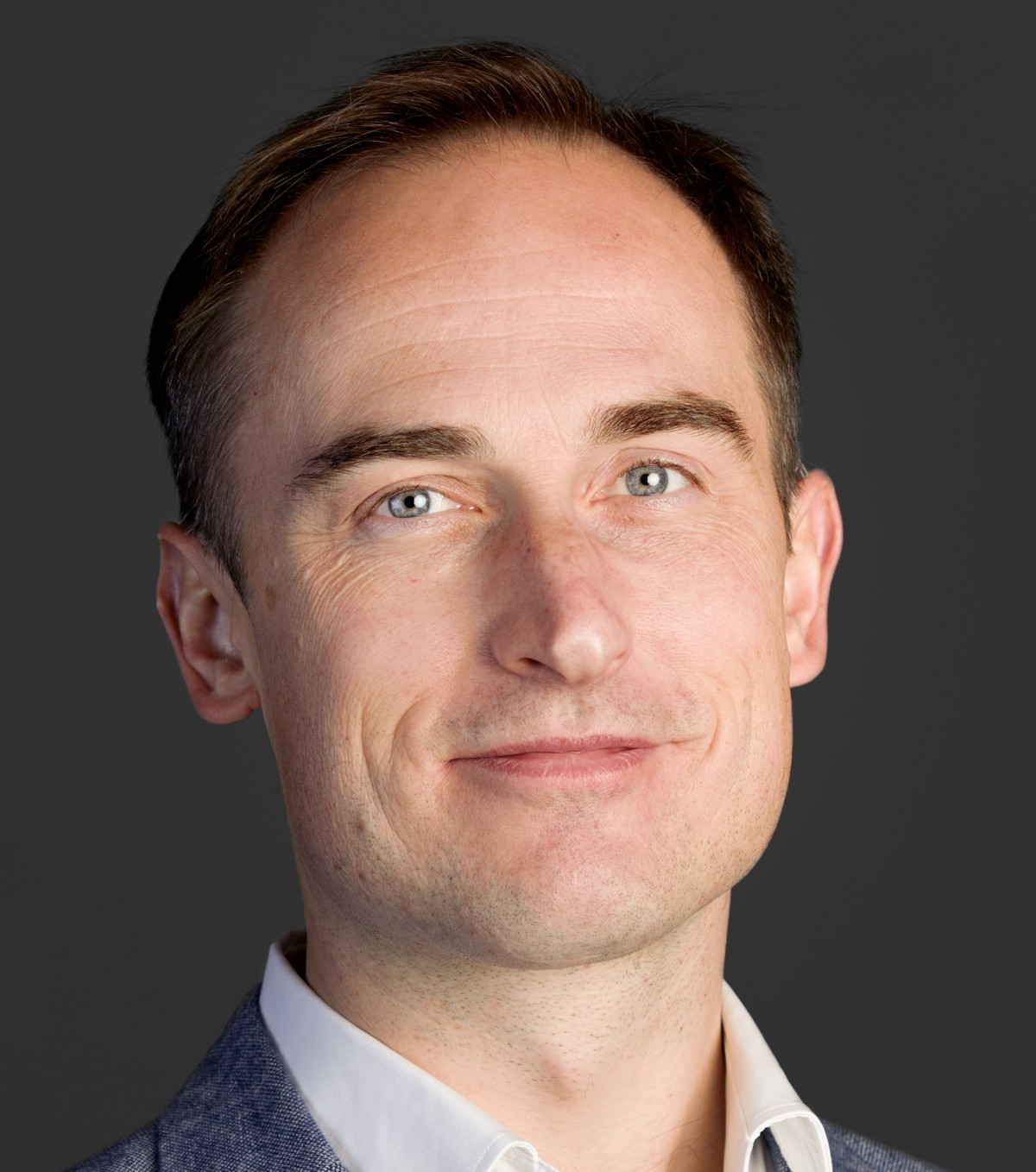
Prof. Dr. Russell McKenna is Full Professor of Energy Systems Analysis at ETH Zürich's Department of Mechanical and Process Engineering, and heads the Laboratory for Energy Systems Analysis at the Paul Scherrer Institute. He also holds an honorary professorship at the University of Aberdeen focused on energy transition. His research encompasses: Energy system modeling for decentralized applications Techno-economic assessments of renewable technologies Hydrogen infrastructure planning and policy Socio-technical aspects of energy transitions Multi-criteria decision support for sustainability Recent publications analyze low-carbon fuel integration, spatial aspects of energy infrastructure, and environmental trade-offs in net-zero pathways. Article themes consistently address system integration challenges, cost-security tradeoffs, and geographical determinants of energy transitions. He received the 2017 Interdisciplinary Prize from KIT for his habilitation work and serves in advisory roles for energy policy initiatives. His research informs European energy transition strategies through collaborative projects examining offshore integration, municipal energy autonomy, and material constraints.
Prof. Dr. Martin Volk is a Professor at the Institute for Geosciences and Geography of Martin-Luther-University Halle-Wittenberg , while also leading the Computational Landscape Ecology department at the Helmholtz Centre for Environmental Research - UFZ . His work focuses on climate change impacts on agricultural systems, ecosystem services valuation, and sustainable land management. Key research trends in his recent publications include climate-adaptive water retention strategies , multi-objective land use optimization , and emergy-based ecosystem service valuation . Notable projects like CLIMALERT and TALE demonstrate his emphasis on stakeholder-driven solutions for agricultural resilience. BiodivERsA Prize for Excellence and Impact (TALE project) His work bridges computational modeling (e.g., SWAT+, Bayesian networks) with field studies on soil moisture, glacier hydrology, and riparian zone restoration. He actively engages with policy frameworks through UFZ's Climate Office for Central Germany and contributes to the Helmholtz Climate Initiative .
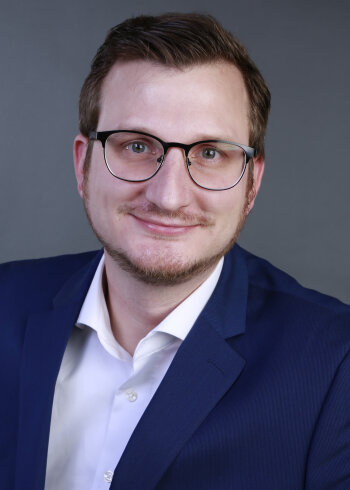
Andreas Rienow serves as Junior Professor for Interdisciplinary Geoinformation Sciences at Ruhr University Bochum, where he also holds the position of Designated Managing Director of the Institute of Geography since 2024 and Scientific Director of the Interdisciplinary Center for Geoinformation since 2020. His academic journey began with studies in Geography, Modern History and Modern German Literature at the University of Bonn, culminating in a Magister Artium degree, followed by a doctorate in 2014 on urban sprawl modeling. Dr. Rienow's research centers on spatio-temporal analysis of metropolitan transformation, interdisciplinary geodata integration, real-time geoinformation analysis, innovative earth observation education methods, and ISS-based remote sensing. His work bridges technical geospatial approaches with urban planning challenges, particularly in post-conflict settings, climate adaptation, and sustainable development contexts across diverse geographical regions including Europe, Africa, and the Middle East. His recent publication portfolio demonstrates a clear trajectory toward increasingly sophisticated integration of machine learning with geospatial analysis, focusing on urban heat islands, land use change, post-conflict urban recovery, and sustainable development monitoring. The research spans multiple continents with particular emphasis on applying advanced remote sensing techniques to pressing urban challenges in both developed and developing contexts. As an educator, Rienow has supervised over 40 master's theses, numerous bachelor's projects, and currently mentors 8 doctoral candidates working on topics ranging from urban climate adaptation to innovative geospatial education methods. His leadership extends to directing the Interdisciplinary Center for Geoinformation and participating in international collaborations such as the Transdisciplinary Center for Coupled Socio-Ecological Systems at Universidad del Azuay in Ecuador. His laboratory work focuses on the Geomatics Group within the Institute of Geography, where his team develops innovative approaches to urban remote sensing, spatial modeling, and citizen science applications for metropolitan analysis. The group actively engages in both theoretical methodological development and practical applications addressing contemporary urban challenges.
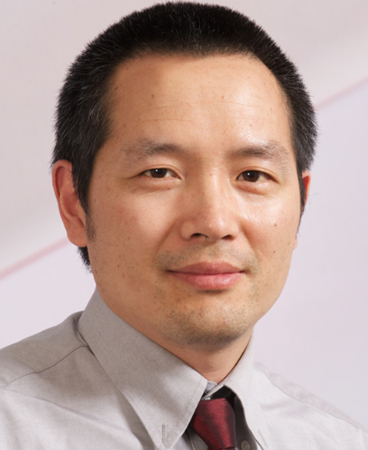
Jiangfeng Zhang is an Associate Professor in the Department of Automotive Engineering at Clemson University's College of Engineering, Computing and Applied Sciences. His research focuses on electric vehicle technologies, battery management, renewable energy integration, and smart grid solutions. Research Areas: His work spans battery optimization, grid resilience, autonomous vehicle control, and sustainable energy planning. Recent projects include solid-state battery advancements, V2G integration, and AI-driven energy management. Publication Trends: His articles predominantly address optimization challenges in electric mobility and grid stability, utilizing machine learning, game theory, and control systems. Key themes include decarbonization, cyber-physical security, and renewable integration under uncertainty.
Dr. Jason Quinn is a Professor in the Department of Mechanical Engineering at Colorado State University and Operating Director of the Energy Institute. His research focuses on techno-economic assessment, life cycle analysis, and optimization of emerging energy technologies including microalgae biofuels, nuclear systems, and electrified transportation. He holds a Ph.D. in Mechanical Engineering from Colorado State University and an M.S. in Nuclear Engineering from the University of Wisconsin-Madison. Research spans sustainability methodology, biofuel systems, and energy optimization, with emphasis on engineering models validated through experimentation to guide R&D priorities. Current projects address desert agriculture, waste valorization, and grid storage solutions. Honors include the Walter Scott, Jr. College of Engineering Rockwell-Anderson Professorship (2019) and Colorado State University's Mechanical Engineering Energizer Bunny Award (2019).
Juan Matute is a Lecturer in Urban Planning and Deputy Director of the UCLA Institute of Transportation Studies at the UCLA Luskin School of Public Affairs. His expertise spans transportation planning, environmental assessment, and urban sustainability. He leads strategic transit planning initiatives for California and advises on climate action plans for Southern California communities. Education: M.B.A. and M.A. in Urban Planning from UCLA, B.A. in International Relations from Pomona College. Research Focus: Public transit finance, new mobility technologies, parking infrastructure, and transportation governance. Recent work includes quantifying Los Angeles County’s parking supply, assessing environmental impacts of transit systems, and evaluating cost-effectiveness of California’s High-Speed Rail. Teaching and Leadership: Teaches graduate courses on transportation policy and environmental assessment. Oversees operations, research, and student programs at the Institute of Transportation Studies. Grants and Projects: Managed UCLA’s role in two state-level transit plans and multiple climate action plans. Collaborates with interdisciplinary teams on transportation-finance modeling and equity-focused urban planning.
Alan Murray is a **Professor and Vice Chair for Academic Personnel** in the Department of Geography at the University of California, Santa Barbara (UCSB), where he also holds the Yardi Chair in Geography. He previously held professorial roles at Ohio State University, Arizona State University, and Drexel University before returning to UCSB in 2015. Murray earned his BS in Mathematics, Master’s in Statistics and Applied Probability, and PhD in Geography, all from UCSB. His research focuses on **geographic information science (GIScience)**, **spatial optimization**, **emergency response**, **health informatics**, **urban development**, and **infrastructure systems**. He has pioneered methodologies for integrating multi-objective spatial optimization with GIS to address urban planning challenges, such as smart mobility and wildfire risk mitigation. His work emphasizes practical applications in disaster response, public health, and sustainable land use planning. Murray has advised numerous graduate students and contributed to cross-disciplinary initiatives in GIScience education and technology integration. His research has been disseminated through high-impact publications in journals like *Geographical Analysis* and *International Journal of Geographical Information Science*. He has also directed centers such as the Center for Urban and Regional Analysis. Key areas of current research include: GIScience education reform Spatial optimization for emergency response systems Wildfire risk assessment and community resilience Equitable urban planning frameworks His work bridges theoretical advancements with real-world applications, addressing pressing issues like climate adaptation, infrastructure resilience, and smart city design.
Chris Kucharik is a Professor of Agronomy and Environmental Studies at the University of Wisconsin–Madison College of Agricultural and Life Sciences. He holds affiliate appointments in Atmospheric and Oceanic Sciences, Agroecology, and Limnology and Marine Science. His interdisciplinary research bridges field studies and ecosystem modeling to analyze climate change impacts on agroecosystems, focusing on carbon-water-nutrient cycles, bioenergy sustainability, and climate regulation. Supported by NASA, NSF, USDA, and the Great Lakes Bioenergy Research Center, his work spans the Midwest U.S. and global regions. PhD in Atmospheric Sciences (minor in Soil Science), University of Wisconsin–Madison Key Expertise: Agroecosystems, Agroclimatology, Soil Carbon Sequestration, Ecological Modeling Courses: Environmental Biophysics (Agronomy/Soils/AOS 532), Agroecosystems and Global Change (Agronomy/Agroecology/Environmental Studies 724) His recent publications examine cover crop integration, nitrate dynamics, urban heat islands, and policy implications for agricultural sustainability. Current projects include modeling climate-vegetation interactions, evaluating bioenergy crops, and developing tools for groundwater quality management. Scientific awards include: Badger Bioneer, Sustain Dane (2013) Principal Investigator, NSF Water Sustainability and Climate Project Chris emphasizes systems thinking in teaching, highlighting cross-disciplinary impacts like meteorology-soil-water interactions in agriculture. He advocates case studies of human-nature resource conflicts and quantitative-qualitative synthesis for problem-solving.
Idriss Dagal serves as an Assistant Professor at Beykent University's Department of Electrical and Electronics Engineering. With a PhD and Master's in Electrical Engineering from Yildiz Technical University (2015 and 2023 respectively), and additional academic credentials from Ethiopian Airlines Aviation University and Mongo Polytechnics University, his career bridges academic research with industry experience as a Sales Engineer. PhD: Yildiz Technical University (2015) Master's: Yildiz Technical University (2023), Ethiopian Airlines Aviation University (2008) Bachelor's: Mongo Polytechnics University (2006) His research focuses on renewable energy systems , particularly photovoltaic power optimization using metaheuristic algorithms (Hybrid PSO-Salp Swarm, Gray Wolf Optimization). He also explores control systems for solar energy and aircraft dynamics, including PID and fuzzy logic controllers. Additional work spans machine learning applications in energy and medical diagnostics, along with power electronics for battery charging. Recent publications highlight 15 2025 articles on topics like hybrid energy systems , AI-driven MPPT , and aircraft control frameworks . His work appears in journals such as Scientific Reports , IEEE Access , and International Journal of Aeronautical and Space Sciences . Teaching experience includes courses in Electrical Machines and Information Technologies . Non-university roles at Elektra Electronic Company and Aktif Group Company involved sales engineering, complementing his academic profile with industry insights.
Vittal Hari is a Researcher at the Helmholtz Centre for Environmental Research (UFZ) in Leipzig, Germany. He contributes to the XEROS (eXtreme European Droughts) project, analyzing drought genesis and climate change impacts across Europe. His work bridges climate dynamics with hydrological modeling, focusing on Indian summer monsoon systems and their global teleconnections. Education : PhD in Environmental Engineering (IIT Bombay), M.Tech in Water Resources (NIT Karnataka), B.Tech in Civil Engineering (SJCE Mysore) Research Interests span: Drought characterization using long-term climate data Monsoon rainfall dynamics and large-scale atmospheric circulations Climate change impacts on hydro-meteorological extremes Computational hydrosystem modeling Compound environmental risks Publications (2022-2025) reveal a focus on: North Pacific influences on Indian heatwaves Atlantic Meridional Mode's role in monsoon prediction Multi-decadal drought trends in Europe Teleconnections between oceanic variability and precipitation extremes Climate change attribution in hydrological systems Urban heat island effect diagnostics Scientific Recognition : Fulbright-Kalam Fellowship (2018) for postdoctoral climate research at University of Iowa IITB Award for Excellence in Ph.D. Thesis (2015-2017) for monsoon-climate research Collaborative Work includes projects with international teams on: Operational drought forecasting systems Climate model evaluation (CMIP6) Hydrological ensemble modeling Global climate risk frameworks
Douglas Landis is a University Distinguished Professor in the Department of Entomology at Michigan State University (MSU), with affiliations in the Ecology, Evolutionary Biology, & Behavior Program. He holds a BA in Biology from Goshen College and MS/PhD in Entomology from North Carolina State University. His work focuses on insect ecology in agroecosystems, particularly landscape structure's role in pest control and biodiversity conservation. Landis' research integrates ecological principles with agricultural sustainability, examining how landscape design enhances ecosystem services like natural pest suppression and pollination. Major funding sources include the U.S. Department of Energy, National Science Foundation, USDA NIFA, and Project GREEEN. He also leads extension programs addressing invasive species management and monarch butterfly conservation. His awards include the ESA Recognition Award, MSU Distinguished Faculty Award, and AAAS Fellowship. Landis teaches advanced courses on scientific practice and mentors 5-10 graduate students annually. His lab collaborates with the Kellogg Biological Station Long-term Ecological Research program and the Great Lakes Bioenergy Research Center. Recent work highlights include quantifying biodiversity benefits in bioenergy landscapes, developing precision conservation frameworks, and identifying landscape-scale solutions for pest management and pollinator support. He emphasizes integrating ecological research with practical agricultural applications to achieve sustainable land use.
Amanda Martin is an Adjunct Research Professor in the Department of Biology at Carleton University, affiliated with the Faculty of Science. She holds a B.Sc.H. from Queen’s University, a B.Sc. from the University of British Columbia, and a Ph.D. from Carleton University. Her primary office is at the National Wildlife Research Centre in Ottawa, Ontario. Her research focuses on conservation planning in dynamic landscapes, addressing questions about spatial scales of land-use impacts, biodiversity-friendly agricultural practices, and boreal caribou recovery strategies. Key themes include optimizing conservation actions under resource constraints, predicting species responses to environmental changes, and enhancing connectivity in protected areas networks. Recent work emphasizes agricultural land management, climate change mitigation, and multi-objective conservation frameworks. Amanda's publications span topics like habitat fragmentation effects, species dispersal dynamics, and the ecological trade-offs of land-use policies. Her work often employs quantitative methods to balance biodiversity, climate, and socio-economic objectives. She collaborates extensively with government agencies like Environment and Climate Change Canada to translate research into actionable conservation strategies. Education: B.Sc.H., Queen’s University B.Sc., University of British Columbia Ph.D., Carleton University Current Research Priorities: Biodiversity-friendly agriculture Boreal caribou habitat recovery Protected area connectivity planning Multi-objective conservation optimization Labs/Teams: National Wildlife Research Centre (Environment and Climate Change Canada).
Professor Marcus White is a distinguished academic and practitioner in architecture and urban design at Swinburne University of Technology, where he serves as Professor in the School of Design and Architecture. He co-directs the architectural firm Harrison and White Pty Ltd and leads the Spatio-Temporal Research Urban Design and Architecture Lab (STRUDAL) at Swinburne. His work bridges academia and professional practice, focusing on sustainable urban development, digital design, and healthcare environments. Education: PhD in Spatial Information Architecture, RMIT University (2009) Professor White’s research centers on innovative urban design solutions using computational methods such as parametric modeling, agent-based systems, virtual and augmented reality, and machine learning. His work addresses critical urban challenges including walkability, noise pollution, aging populations, and equitable access to public space. He also pioneers patient-centered design in stroke rehabilitation, integrating clinical insights with architectural innovation through Living Lab frameworks and VR-based co-design. His recent publications span topics such as pedestrian safety in metro stations, traffic noise annoyance mapping, AI-based SDG classification, and age-friendly urban design. These works reflect a consistent trend toward interdisciplinary, human-centered, and data-driven approaches to shaping healthier, more sustainable cities. Scientific Awards: National Citation for Outstanding Contributions to Student Learning Venice Biennale selection (2010, 2025) Victorian Architecture Medal (2018) Australian Institute of Architects Urban Design and Jackson Educational Awards (2018) European Healthcare Design Award (2022) RAIA Haddon Travelling Scholarship (2002) AIA National Emerging Architect Award Professor White actively supervises PhD students and has secured major grants from the Australian Research Council (ARC), The Florey Institute, and iMOVE Australia. His leadership in projects like NOVELL (Neuroscience Optimised Virtual Environments Living Lab) demonstrates a strong commitment to translating research into real-world impact. He collaborates extensively with clinicians, urban planners, and technologists to advance evidence-based design across sectors. Labs and Teams: Spatio-Temporal Research Urban Design and Architecture Lab (STRUDAL) NOVELL (Neuroscience Optimised Virtual Environments Living Lab) Collaborations with The Florey Institute of Neuroscience and Mental Health ARC Training Centre for Next-Gen Architectural Manufacturing
John G. Tisdell is a Professor at the School of Economics and Finance within the University of Tasmania , Hobart, Australia. His work focuses on experimental economics, environmental economics, and policy analysis. PhD from the School of Economics, University of Queensland (1994). His research examines market mechanisms for environmental and resource management, including combinatorial auctions, water markets, carbon trading, and behavioral economics. Key themes include resource allocation , policy design , and moral incentives in public goods provision. Recent publications analyze spatial coordination in conservation auctions , fishery quota allocation , and trust dynamics in market institutions . His experimental studies often integrate biophysical models with economic frameworks to evaluate real-world policy instruments. While no scientific awards are explicitly listed, his work has been cited in journals like Ecological Economics , Marine Policy , and Social Science & Medicine . He collaborates with scholars on topics such as environmental water buybacks , land use restrictions , and fisheries management .
Dr. Sven Lautenbach is a Professor and Chief Scientist at the Institute of Geoinformatics, University of Heidelberg , affiliated with the HeiGIT research group. His work bridges geospatial analysis, environmental modeling, and public health, with a focus on urban systems and land-use decision-making. Current role: Chief Scientist at HeiGIT gGmbH Key affiliations: Department of Geoinformatics, University of Heidelberg Research Interests : Lautenbach's interdisciplinary research addresses: Trade-offs in land use decisions and ecosystem services Health geography and spatial epidemiology Application of machine learning and AI to urban geospatial data Open data quality assessment (OpenStreetMap, social media) Climate adaptation strategies for urban environments Vector-borne disease risk modeling Publication Trends : Recent work emphasizes: Geo-social media for pandemic early warning systems Deep learning for infrastructure mapping (e.g., road surfaces) Flood impact analysis on urban accessibility Heat stress mitigation in pedestrian routing Multi-modal urban human dynamics during crises Open data quality evaluation for humanitarian applications Project Leadership : Lautenbach directs initiatives including: myGreen: Urban green space analysis Climate Change and Spatial Epidemiology Summer School OPERAs/FP-7: Ecosystem science-policy integration CONNECT: Biodiversity-ecosystem service synergies