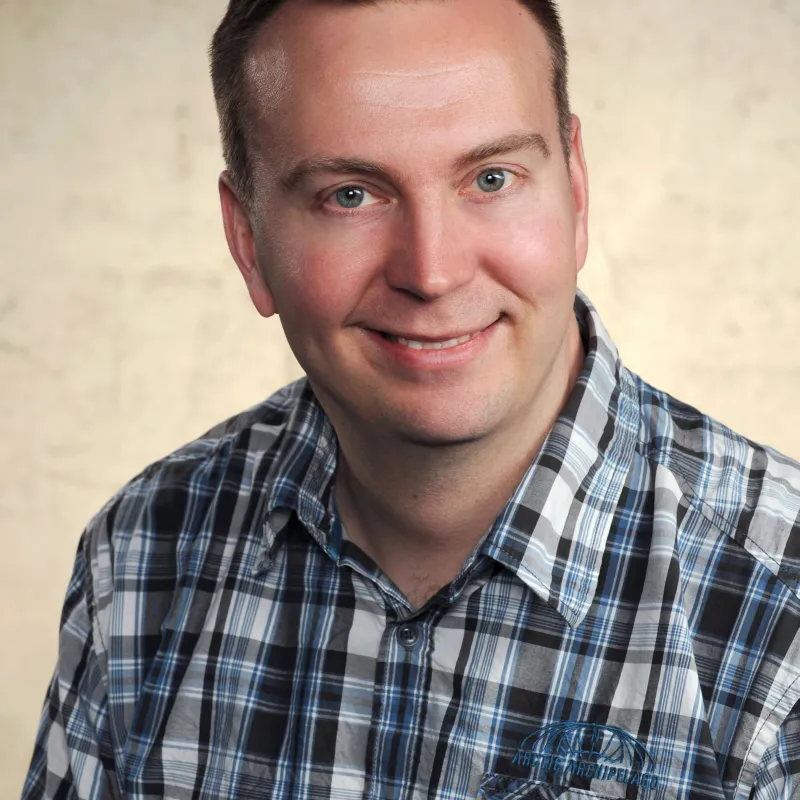
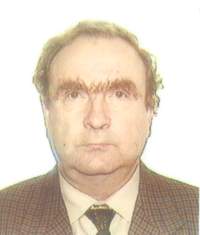
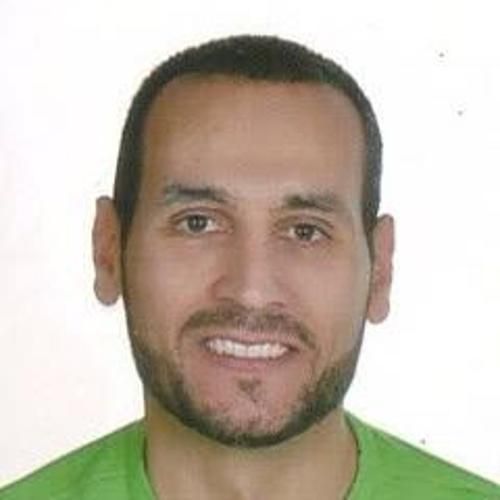
Eric Duviella is a Professor at IMT Nord Europe, specifically within the Department of Automatic Control and Computer Sciences. He has been a permanent faculty member since 2007 and was promoted to full Professor in 2015. His academic affiliations include strong ties with the University of Lille, Universitat Politècnica de Catalunya, and the University of Seville through collaborative research and joint Ph.D. supervision. Education: Diplôme d'Ingénieur, Ecole Nationale d'Ingénieurs de Tarbes (ENIT), 2001 M.S., Institut National Polytechnique de Toulouse (INPT), 2001 Ph.D. in Industrial Systems, Institut National Polytechnique de Toulouse, 2005 HDR (Habilitation à Diriger des Recherches), University of Lille 1, 2014 His research interests center on Reactive Control Strategies , Supervision and Prognosis , and the Modeling of Large-Scale and Environmental Systems , particularly Hydrographical and Water Systems . His work aims at predictive maintenance, adaptive management under climate change, and improving navigation and water quality through advanced control techniques. The 15 most recent publications reflect a strong trend toward Model Predictive Control (MPC) , distributed and decentralized control architectures , leak detection in water networks , and resilience of inland waterways under climate stress . Keywords across these works include control engineering, water systems, fault diagnosis, and data-driven modeling, indicating a multidisciplinary approach combining automation, environmental science, and computational intelligence. Scientific Awards: Best paper award at CODIT 2017 Eric Duviella has actively supervised numerous Ph.D. and Master’s students from institutions including IMT Lille Douai, Universitat Politècnica de Catalunya, and the University of Seville. He has led significant research grants such as GEPET-Eau, CHEEF2, and CASTR-Eau, focusing on sustainable water management, hydropower optimization, and robotic monitoring. His work often involves partnerships with agencies like VNF, EDF, and local water authorities. He is involved in key research labs and teams including the Laboratoire d'Automatique, Génie Informatique et Signal (LAGIS), and collaborates internationally through mobility programs with UPC and the University of Seville. His leadership in organizing special sessions at major conferences (e.g., IFAC, HIC) underscores his role in shaping discourse in water system control and supervision.