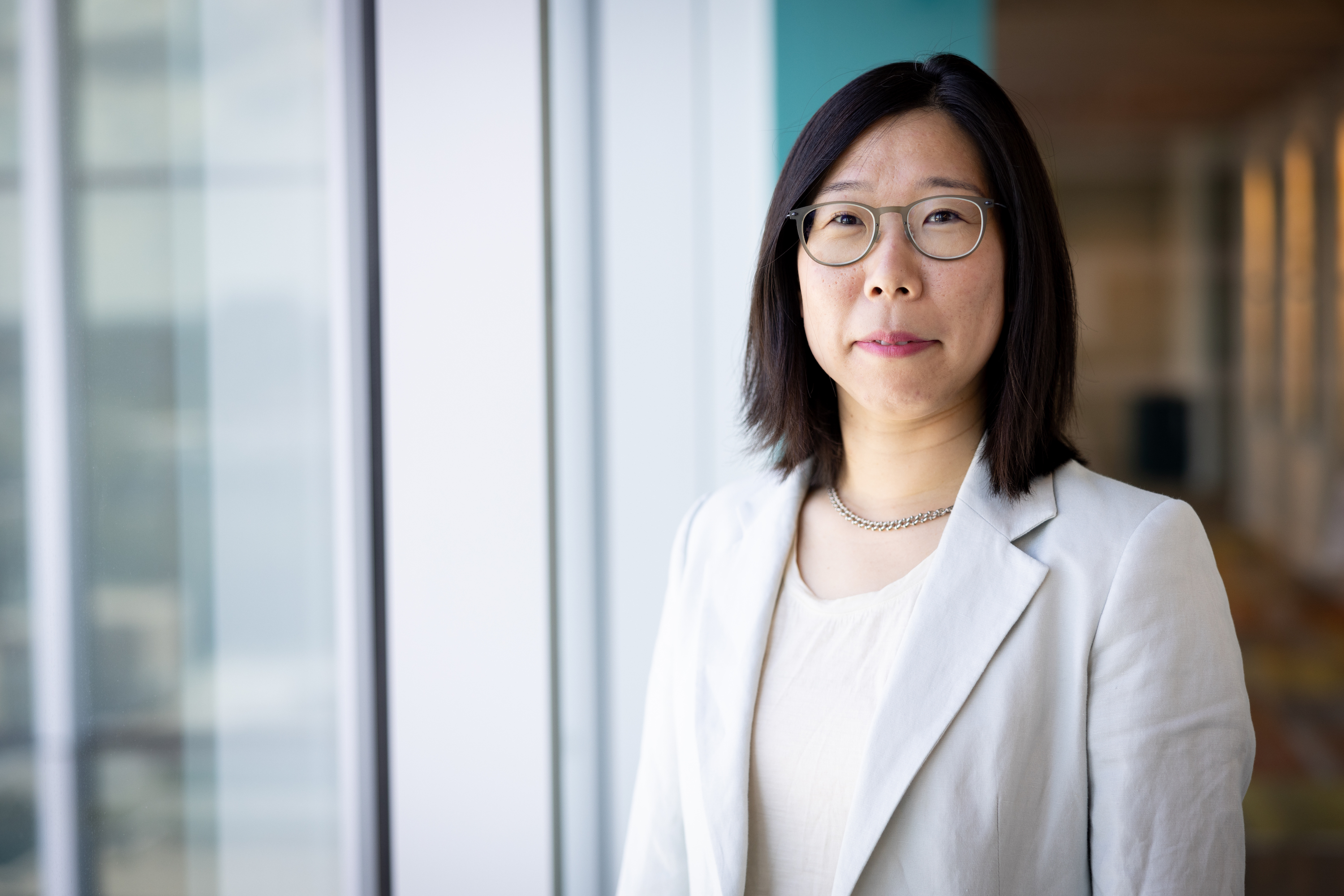
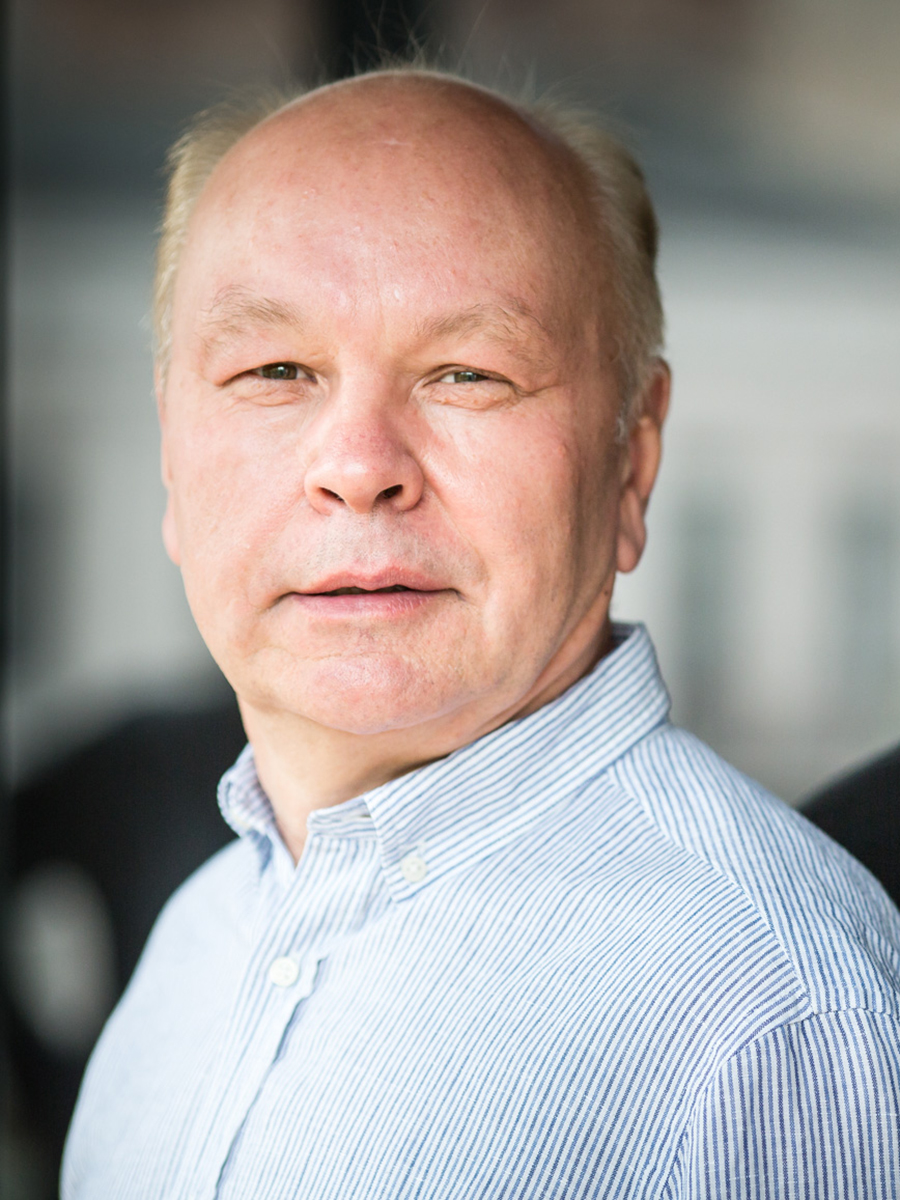
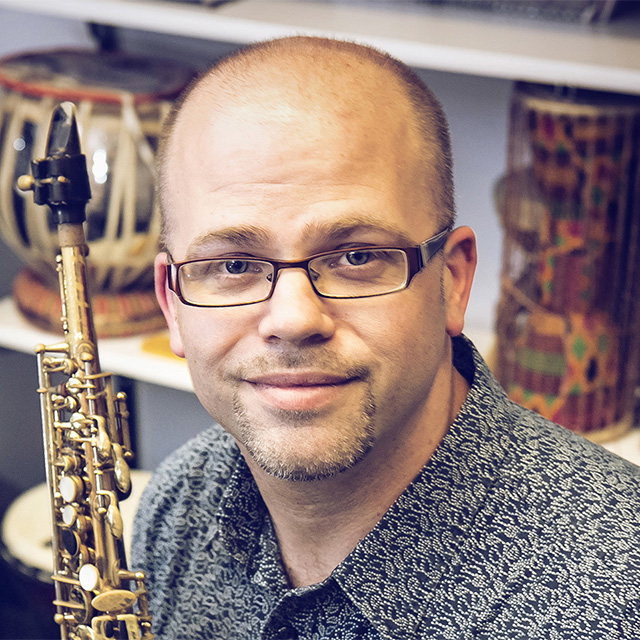
Wei Xu is an Associate Professor at Georgia Institute of Technology's College of Computing and School of Interactive Computing, with affiliations to the Machine Learning Center. Their research bridges machine learning, natural language processing, and social media with focus areas in large language models, cultural bias mitigation, multilingual capabilities, and human-AI collaboration in text evaluation. NSF CAREER and Google Academic Research Award recipient Director of NLP X Lab PhD from New York University, BSMS from Tsinghua University Research interests span: Multilingual Multicultural LLMs addressing representational gaps and cultural adaptation in language models (NAACL 2025, ACL 2024); Robustness and Reasoning through dynamic AGI evaluations (ACL 2024, EMNLP 2024); Interdisciplinary NLP applications in security, healthcare, and law (EMNLP 2024, ACL 2024). Recent publications focus on multilingual alignment (NAACL 2025), privacy risk estimation (arXiv 2025), cultural bias analysis (ACL 2024), and medical text simplification (EMNLP 2024). Key themes include bias mitigation, multimodal processing, and practical LLM evaluation. Scientific Awards : NSF CAREER, Google/Sony/Criteo research awards, ACL'24 Best Social Impact Award, COLING'18 Best Paper Advising 15 PhD/MS/BSMS students including Yao Dou (human-centered LLM evaluation), Tarek Naous (multilingual LLMs), and alumni like Chao Jiang (Apple AI/ML) and Yang Chen (NVIDIA research scientist). Teaches graduate courses on NLP and LLMs.
Carol Ann Allred is an Associate Professor (Lecturer) at the University of Utah's School of Music, specializing in Voice. She holds a DMA and MA from Eastman School of Music, and a BM in Vocal Pedagogy from Brigham Young University. Her career spans performance and education, with roles at SUNY Fredonia, Seton Hill College, and Hampden-Sydney Chamber Music Festival. Doctor of Musical Arts (DMA), Vocal Performance - Eastman School of Music (1989) Master of Music (MA), Vocal Performance - Eastman School of Music Bachelor of Music (BM), Vocal Pedagogy - Brigham Young University Allred's research and creative works focus on vocal performance across diverse genres, including choral masterpieces like Verdi Requiem and Brahms Requiem, contemporary works such as Golijov's La Pasion Según San Marcos, and historical repertoires from Mozart and Handel. Her recent projects include international tours and cultural outreach initiatives. Her scholarly performances highlight trends in sacred choral music, operatic excerpts, and community engagement through LDS church services and interfaith concerts. She has contributed to recordings including Christmas CDs and collaborations with Salt Lake Vocal Artists. Scientific Awards : Multiple first prizes in prestigious competitions and a Faculty Recognition Award nomination Teaching : Offers private voice lessons and masterclasses; advises the Michie Undergraduate Vocal Quartet Community Leadership : Conducts multi-congregational choirs and organizes veteran-focused concerts Allred's professional activities include collaborations with orchestras such as the Pittsburgh Symphony and Utah Symphony, with a strong emphasis on vocal pedagogy, interfaith musical outreach, and family ensemble performances. She maintains active roles in judging competitions and mentoring students at both University of Utah and UVU as a substitute instructor.
Dr. Chandranath Adak is an Assistant Professor at the Department of Computer Science and Engineering, Indian Institute of Technology Patna (IIT Patna), and concurrently serves as a Visiting Fellow at the School of Computer Science, University of Technology Sydney (UTS), Australia. He holds a Ph.D. in Analytics from UTS (2019) and previously served as an Assistant Professor at Indian Institute of Information Technology Lucknow (IIITL) and the Centre for Data Science at JIS Institute of Advanced Studies, Kolkata. Education: Ph.D. (Analytics), University of Technology Sydney (2019) M.Tech., Computer Science and Engineering, University of Kalyani (2014) B.Tech., Computer Science and Engineering, West Bengal University of Technology (2012) Research Interests: His work spans Computer Vision, Deep Learning, Reinforcement Learning, Document Image Analysis, and AI-driven solutions for healthcare, forensics, and industrial automation. He has pioneered methods in biomarker detection using electrochemical sensors combined with ML models, handwriting analysis for educational and forensic applications, and anomaly detection in industrial systems. His research bridges theoretical advances with real-world applications, such as medical diagnostics and quality control systems. Publications: His recent work includes innovations in biosensor-based medical diagnostics, handwriting evaluation systems, and transformer networks for historical document analysis. These contributions reflect a focus on interdisciplinary applications of AI across healthcare, cultural heritage preservation, and industrial automation. Awards: Start-up Research Grant, SERB, India (2022) Dr. Kalam Doctoral Scholarship, UTS (2018) IEEE CIS Graduate Student Research Grant (2017) Senior Member, IEEE (2024) Teaching & Supervision: Taught courses at UTS including 'Introduction to Data Analytics' and supervised research in machine learning and computer vision. His mentorship emphasizes hands-on experience with AI tools and real-world problem-solving. Labs & Teams: Engaged in collaborative projects at UTS's CIBCI Centre and Griffith University's IIIS, focusing on computational intelligence and sensor-driven AI systems.
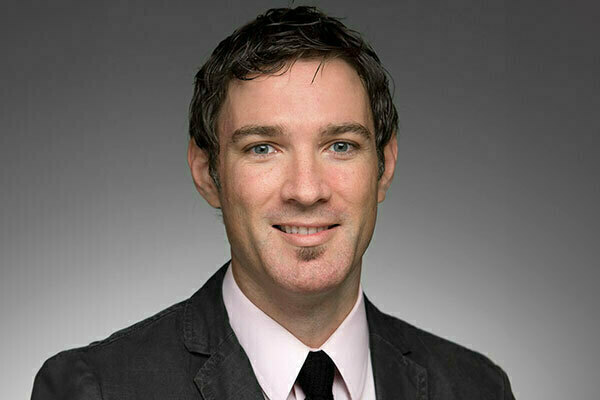
Matthew Payne is an Associate Professor in the Department of Film, Television, and Theatre at the University of Notre Dame. His affiliations include roles as Director of Graduate Studies and regional director for the Learning Games Initiative, a multi-institute research collective focused on game archiving and education. His research spans video game studies, media literacy, military entertainment, and the cultural history of video games. He explores play theory, media and war, and the intersection of media production with new technologies. The 15 most recent articles highlight his focus on video game studies, transmedia narratives, and the cultural implications of gaming. These works cover topics from Nintendo Amiibo to slow game time mechanics in Red Dead Redemption 2, with recurring themes of military representation and ludic storytelling. Matthew Payne has co-edited notable works including How to Play Video Games and Joystick Soldiers , emphasizing collaborative approaches to game studies and critical analysis of military gaming.
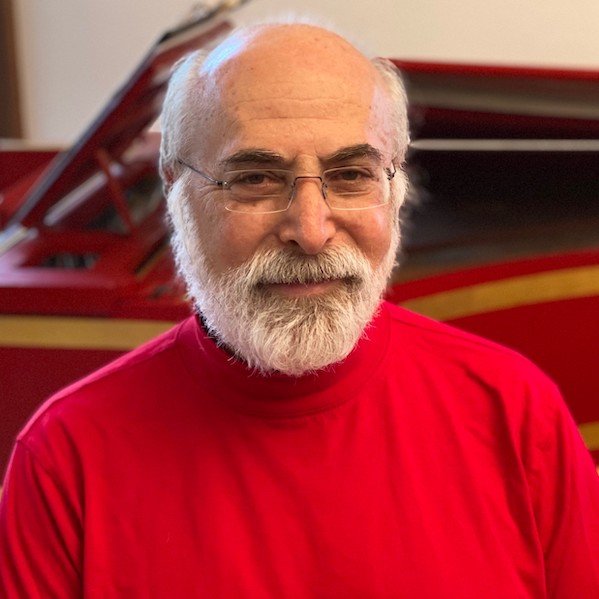
Richard M. Stern is a Professor of Electrical and Computer Engineering at Carnegie Mellon University (CMU), holding courtesy appointments in the Language Technologies Institute and Department of Computer Science, and serving as an Artist Lecturer in the School of Music since 2007. His interdisciplinary work bridges engineering and music technology through the School of Music's programs. Education: Ph.D. in Electrical Engineering from Massachusetts Institute of Technology (MIT), 1976 Professor Stern's research spans sound, speech, hearing, and music, with core emphases on robust speech processing in variable acoustic environments, music information retrieval, automated accompaniment, and foundational contributions to binaural perception theory. His work integrates psychoacoustic principles with machine learning to address challenges in speech recognition and human-robot interaction. Recent publications (2022-2025) reveal intensified focus on deep learning for speech enhancement in reverberant/noisy conditions, human-robot interaction scenarios, and music tagging—highlighting innovations in beamforming, source separation, and temporal modulation modeling. Awards and Honors: Fellow of the IEEE Fellow of the Acoustical Society of America Fellow of the International Speech Communication Association (ISCA) ISCA Distinguished Lecturer Allen Newell Award for Research Excellence (1992) Lutron Award for Teaching Excellence (2018) Professor Stern has advised numerous graduate students in speech and audio research, though specific names are unlisted in source materials. His grant portfolio includes significant National Science Foundation and industry-funded projects in speech technology, with leadership roles in initiatives like Interspeech 2006. He actively collaborates with CMU's Language Technologies Institute and Music and Technology program. He maintains strong ties to CMU's interdisciplinary ecosystem through the Language Technologies Institute and School of Music's Music and Technology program, contributing to research that merges acoustic engineering with musical applications.
Professor Sławomir Kaczorowski, Ph.D., has been a faculty member at the Grażyna and Kiejstut Bacewicz Academy of Music in Łódź since 1981, where he teaches composition and served as Head of the Department of Composition from 2011 to 2021. He previously held significant leadership roles including Vice-Rector for Artistic and Teaching Affairs (1999-2005) and Vice-Dean of the Faculty of Composition, Music Theory, Music Education and Rhythmics (1996-1999). His educational background includes diplomas in music theory (1981) and composition under Professor Bronisław Kazimierz Przybylski (1981) from the State Higher School of Music in Łódź. Awarded the title of professor by the President of Poland in 2002, he remains an active academic leader currently serving as chairman of the Art Section of the Polish Accreditation Commission. Kaczorowski specializes in contemporary composition with emphasis on instrumental works, chamber music, and choral compositions. His research interests manifest in diverse output featuring piano, accordion, and mixed ensembles, with notable focus on tango-inspired forms and liturgical reinterpretations. He pioneered the MUSICA MODERNA sessions promoting new music through biannual concerts and lectures. Analysis of his 15 most recent compositions reveals consistent exploration of Polish contemporary classical traditions with strong emphasis on instrumental timbre, cross-genre fusion (particularly tango elements), and innovative approaches to sacred music forms. His works demonstrate technical mastery across diverse ensembles from solo piano to full orchestral settings. Silver Medal for Merit to Culture – Gloria Artis (2021) Numerous national composition competition awards Jury membership at international competitions including the T. Baird Young Composers' Competition (Warsaw 2018) and National Association of Composers USA competitions (2017-2018) Professor Kaczorowski has mentored award-winning composers including Grzegorz Duchnowski and Tomasz Szczepanik. His institutional leadership includes directing the Grażyna Bacewicz International Composition Competition (2012, 2015, 2019) and serving as president of the Łódź Branch of the Polish Composers' Union until 2022. He maintains active artistic engagement through premieres across Europe, China, and the United States. His creative work is organized through departmental initiatives including the Department of Composition's performance series and collaboration with the Artur Rubinstein Łódź Philharmonic. Current activities focus on expanding Polish contemporary music's international presence through competitions and cross-border artistic exchanges.
Mikko Kurimo is a Full Professor at Aalto University's Department of Information and Communications Engineering, School of Electrical Engineering. He earned his M.Sc., Lic.Tech., and D.Sc.(Tech.) from Helsinki University of Technology (1992, 1994, 1997) and pioneered neural networks for automatic speech recognition (ASR) in his PhD thesis. After research roles at IDIAP (Swiss AI center) and visiting positions at University of Colorado, Edinburgh, SRI, ICSI, and Nitech, he leads Aalto's ASR group since 2000. His work focuses on unsupervised subword modeling for morphologically complex languages (Finnish, Estonian, Turkish, Arabic) and large speech foundation models. PhD in Neural ASR (Helsinki University of Technology, 1997) Research Scientist at IDIAP (Switzerland) Visiting Fellow at University of Colorado, Edinburgh, SRI, ICSI, Nitech Head of Aalto ASR Group (2000-present) His research spans deep learning for ASR, spoken language modeling , and low-resource language solutions . Recent work explores continued pre-training of self-supervised models, multimodal emotion recognition, and pronunciation assessment using LLMs. He led the winning team in the 2017 Multi-Genre Broadcast challenge and secured competitive funding in Tekes Challenge Finland and EC's H2020-ICT-2017. Key article trends include: Advancements in children's speech recognition and dysarthric speech processing Integration of generative AI for language learning feedback Specialization in low-resource Uralic languages (Finnish, Northern Sámi) Development of robust ASR systems for complex phonetic environments Scientific Awards ACM Multimedia 2023 Computational Paralinguistics Challenge Prize First place in MGB3 2017 Arabic ASR Challenge ISCA Best Student Paper Award (2011) Professeur Invité at Université de Saint-Etienne (2005-2006) Royal Society International Short Visit Fellowship (2004) Professor Kurimo leads the Speech Recognition Group at Aalto, collaborating with COIN (Centre of Excellence in Computational Inference) and AIRC (Adaptive Informatics Research Centre). His projects like CaptainA mobile app demonstrate practical applications of ASR in language education. He has supervised numerous publications with co-authors in domains spanning bandwidth extension, stuttering detection, and speech sound disorder assessment.
Dr. Sam Ferguson is a Senior Lecturer at the School of Computer Science, University of Technology Sydney (UTS), with a multidisciplinary background in music performance, cognitive science, and psycho-acoustics. His research explores the intersection of sound, music, and human experience through creative coding, machine learning, and interactive systems. Key Research Areas: Sound and Music Computing, Human-Computer Interaction, Creative Coding, Cognitive Science, Installation Art, and Acoustics. Current Projects: ARC Linkage project on creative coding and multiplicitous media; industry collaborations on IoT-based audiovisual systems. Recent Publications: Focus on spatial audio complexity, gestural interaction with networked sound, music emotion recognition frameworks, and robotic performance through genre-based cultural platforms. Leadership Roles: Director of Teaching & Learning Engagement; former Deputy Head of School (Teaching and Learning); active in ACM Creativity and Cognition Steering Committee. Teaching: Courses like Digital Media Studio , Prototyping Physical Interaction , and Data Processing using R within UTS's interdisciplinary Software Development Studio.
Stefania Degaetano-Ortlieb is an Associate Professor of English Linguistics and Corpus Linguistics at Saarland University's Department of Language Science and Technology. She serves as Principal Investigator for the Collaborative Research Center (SFB 1102) 'Information Density and Linguistic Encoding,' leading Project B1 on diachronic information density in English scientific writing (17th century-present). Her interdisciplinary work bridges computational methods with sociolinguistics, focusing on register variation, language change, and digital humanities. Research interests center on text mining, data analytics, and probabilistic modeling of language variation. Key areas include: Diachronic evolution of scientific registers and linguistic densification Information-theoretic approaches to language efficiency Computational sociolinguistics and register diversification AI applications in humanities education (e.g., ChatGPT integration) Her publications show a strong trend toward quantitative diachronic analysis, with recent work emphasizing: interpretable AI models for linguistic change detection; propagandistic narrative analysis in conflict zones; and multi-word expression dynamics in scientific discourse. Cross-disciplinary collaborations frequently intersect with history, psychology, and media studies. Awards include the Fellowship Excellence Program for Young Female Scientists (2015-2018). Current grants: EU Horizon MSCA Doctoral Network 'CASCADE' (€521K to UdS, 2024-2027) Data-Pin Project for AI in education (€50K, 2023-2024) SFB 1102 Project B1 (€595K, 2022-2026) Advises PhD candidates in the EU CASCADE project on computational semantic change. Leads a research team exploring Russian media narratives, personality modeling in LLMs, and multi-word expressions. Directs teaching modules integrating AI tools for humanities students.
Sara Tanderup Linkis serves as Senior Lecturer in Publishing Studies and Associate Professor in Digital Cultures at Lund University's Department of Arts and Cultural Sciences, Faculty of Humanities and Theology. Her academic work bridges literary scholarship with contemporary digital media analysis, focusing on how technological transformations reshape literary production, distribution, and consumption. Her research program centers on several interconnected domains: Audio literature and audiobook culture in the digital age Intermediality and transmedia storytelling practices Serial narrative forms across media platforms Social media literary communities, particularly BookTok Publishing economics in the streaming era Memory representation in contemporary literature Dr. Linkis's recent publications reveal a methodological commitment to interdisciplinary approaches, combining publishing studies, literary theory, sound studies, and digital culture analysis. Her work demonstrates how literary experiences are being fundamentally reshaped by audio formats and social media platforms, with particular attention to the material and economic dimensions of these transformations. Her scholarly contributions have been recognized through: Inga och John Hains Stiftelse för Vetenskaplig Humanistisk Forskning stipend (2024) International postdoctoral funding from the Independent Research Fund Denmark (2018-2020) As a research leader, Dr. Linkis currently directs the Swedish Research Council-funded project "Between Sound and Text: Production, Content and Experiences of Multimodal Audio Literature" (2024-2026) and contributes to the multi-year project "Lyssningsnjutningar: Sexuell hälsa och ljudfiktion i den digitala intimitetens tid" (2024-2028). She actively supervises doctoral research, including M. Uhlmann Lindberg's work on Swedish self-publishing history. Dr. Linkis maintains an active presence in both academic and public discourse, regularly contributing to media discussions about literary trends and participating in international research networks focused on digital literary cultures and publishing studies.
Prof. Dr. Patrick Vonderau is a Professor of Media and Communication Studies at Martin Luther University Halle-Wittenberg (2018–present) and previously held the same role at Stockholm University (2009–2018). His research focuses on media industries, digital distribution systems, cultural history, and the intersection of advertising with screen cultures . He has authored/co-authored seminal works like Spotify Teardown (MIT Press, 2019) and Advertising and the Transformation of Screen Cultures (Amsterdam University Press, 2021). Education : PhD from Humboldt-Universität zu Berlin (2005); studied at University of Copenhagen, Freie Universität Berlin, and Humboldt-Universität zu Berlin. Research Themes include media industries (e.g., Spotify’s algorithmic governance, sponsored films by oil companies), digital compensation models (e.g., music streaming equity studies funded by BKM), and historical media-advertising symbiosis (e.g., early 20th-century industrial films). His work spans algorithmic transparency , platform regulation , and media production cultures . Awards & Editorial Roles : Advisory Editor of the Springer Series in Media Industries ; co-founder of NECS (European Network for Cinema and Media Studies); editorial board member of Montage AV , Media Industries Journal , and Television & New Media . Projects & Leadership : Co-led Shadow Economies of the Internet (Swedish Research Council, 2018–2022); heads the Circuit Lab at Halle-Wittenberg; organized conferences like Connected Viewing (2011) and Urban Mediations (2010).
Peter Epstein is an Associate Professor of Jazz Saxophone and Director of Jazz Studies at the University of Nevada, Reno (UNR), within the School of Music under the College of Liberal Arts. He holds a Master of Music (MM) in Saxophone Performance from UNR (2004) and a Bachelor of Fine Arts (BFA) from California Institute of the Arts (1992). His research interests focus on jazz performance, improvisational music, and global musical traditions. Epstein has directed jazz studies programs, led ensembles like The Collective, and collaborated internationally with artists such as Brad Shepik and Medeski, Martin & Wood. He has released over 50 recordings and toured 20+ countries, emphasizing avant-garde jazz and cross-cultural fusion. Epstein’s recent works, such as Polarities (2014), explore experimental improvisation and saxophone techniques. His earlier albums, like Staring At The Sun (1999), highlight his technical mastery and avant-garde approach. Received the 2013 Nevada Regents’ Award for Creative Activities and 2014 Nevada Arts Council Fellowship. Founding member of the School for Improvisational Music in NYC. Teaches workshops globally, including Eastman School of Music, Nepal, and Sweden. He advises UNR’s jazz ensembles, including the Reno Jazz Orchestra, and contributes to interdisciplinary music initiatives. Epstein’s work bridges traditional jazz with contemporary improvisation, emphasizing collaborative creativity.
William Lucey is an Associate Professor in the Music Production and Engineering (MP&E) and Songwriting departments at Berklee College of Music, a leading institution in contemporary music education. His academic role is deeply informed by his extensive professional career as a performer, songwriter, and producer. His research and creative interests center on music production, songwriting craft, audio engineering, and the integration of analog and digital technologies in music. He emphasizes practical, real-world applications in his teaching, drawing from decades of experience in the music industry. The body of his recent work—including songs like Home , Haunt Me Again , and All I Want for Christmas is a Christmas No. 1 —demonstrates a broad range across genres such as Americana, pop, rock, electronic, and folk. His production style is hands-on, spanning songwriting, arrangement, performance, engineering, and mixing. He frequently collaborates with emerging and established artists, often playing multiple instruments and overseeing full production. Meteor Award Ireland for Best Hope for the Future Boston Music Awards for Best New Act and Best Vocalist World Peace Award for Best International Act As an educator and mentor, Lucey has taught songwriting and production at Berklee for over 25 years, guiding countless students in developing their artistic voices. He also engages in professional projects that serve as living case studies for his pedagogy. His studio practice blends analog warmth with digital precision, reflecting his philosophy of marrying the best of both worlds. While no formal lab or research team is mentioned, his production house functions as a creative hub for collaboration with session musicians and artists worldwide.
Kalina Bontcheva is a Senior Researcher in the Natural Language Processing Group within the Department of Computer Science at the University of Sheffield. She holds an EPSRC Career Acceleration Fellowship (working part-time since October 2015) focused on personalized summarization of social media content. Her research spans multiple EU-funded projects including PHEME (computing veracity of social media), TrendMiner, DecarboNet, and uComp, with significant contributions to the GATE (General Architecture for Text Engineering) open-source NLP infrastructure since 1999. Dr. Bontcheva's research interests focus on the intersection of natural language processing and social media analysis. Her work encompasses NLP for social media, semantic search, information extraction from social platforms, crowdsourcing of NLP corpora, collaborative text annotation, semantic technologies, and text mining and analytics. She has particular expertise in developing methods for personalized, abstractive multi-document summarization across different social media platforms, addressing the challenges of noisy, jargon-filled and dynamic content. Her interdisciplinary approach combines machine learning, semantic technologies, and social dimension analysis to create systems that adapt to individual users' information seeking goals. Analysis of her recent publications reveals a strong focus on social media processing challenges, with emphasis on Twitter analysis, temporal expression recognition, and handling noisy text. Her work consistently addresses the unique characteristics of social media content and develops specialized techniques for information extraction, sentiment analysis, and user geolocation within these platforms. The GATE framework serves as the foundation for much of her tool development, demonstrating her commitment to creating reusable, open-source NLP infrastructure. Her most significant award is the EPSRC Career Acceleration Fellowship, which supports her work on personalized social media summarization. This prestigious fellowship includes a substantial budget of £560k and involves collaborations with industry partners including The Press Association, British Telecom, and Fizzback. Dr. Bontcheva has led numerous major research projects throughout her career. She was Principal Investigator on three EU-funded projects (MUSING, TAO, and ServiceFinder) between 2006-2009, coordinating the TAO consortium with seven partner institutions. She currently leads the PHEME EU project and serves as PI for TrendMiner and DecarboNet European projects, while also contributing as Co-I on the uComp project. Her project portfolio demonstrates consistent success in securing competitive research funding across multiple domains within NLP and semantic technologies. She works within the Natural Language Processing Group at the University of Sheffield, which has been central to the development of the GATE infrastructure. Her work connects with various initiatives including the GATE Cloud platform and the TextVRE project for e-humanities textual studies. She has established collaborations with organizations including the Press Association, British Telecom, Oxford Internet Institute, and Sheffield's Department of Journalism to ensure her research addresses real-world needs across different user communities.
Mark Morris is an Adjunct Professor in the Department of English and Film Studies at the University of Alberta's Faculty of Arts, where he has taught since 2000. A multi-faceted academic, he is also an award-winning librettist, music critic, theatre director, broadcaster, curator, and photographer with international recognition for his creative and scholarly work. His educational background includes: BA from the University of Oxford MA from the University of Oxford PhD in Creative Writing (Canada's first) from the University of Calgary (1996) His research spans creative non-fiction, children's literature, Shakespeare studies (including authorship skepticism), and the social-political history of Western genre film/novel. He specializes in classical music's literary context, Victorian family history, Lawrence Durrell's interdisciplinary intersections, and Indian literature in English. His work bridges academic rigor with artistic practice through libretto composition and cultural criticism. Recent publications demonstrate his interdisciplinary fusion of musicology, literary analysis, and political biography, particularly examining opera's relationship to historical narratives and contemporary leadership. This reflects his consistent focus on cultural transmission across artistic mediums. His accolades include: Faculty of Arts Teaching Award (University of Alberta) Morris has mentored students across creative writing and literature disciplines while leading major collaborative projects including KidsOp (children's opera company), Vaughan String Quartet productions, and Durrell Society initiatives. His work has been supported through institutional affiliations, artistic commissions, and educational partnerships with Alberta schools and international festivals. He co-founded KidsOp for cross-generational opera productions, collaborated with the Vaughan String Quartet on immigrant narrative projects, and served on the Durrell School of Corfu's Advisory Board until 2014. His university roles include Visiting-Scholar-in-Residence for the 100th Anniversary project and ongoing cultural journalism through EdmontonScene.com.