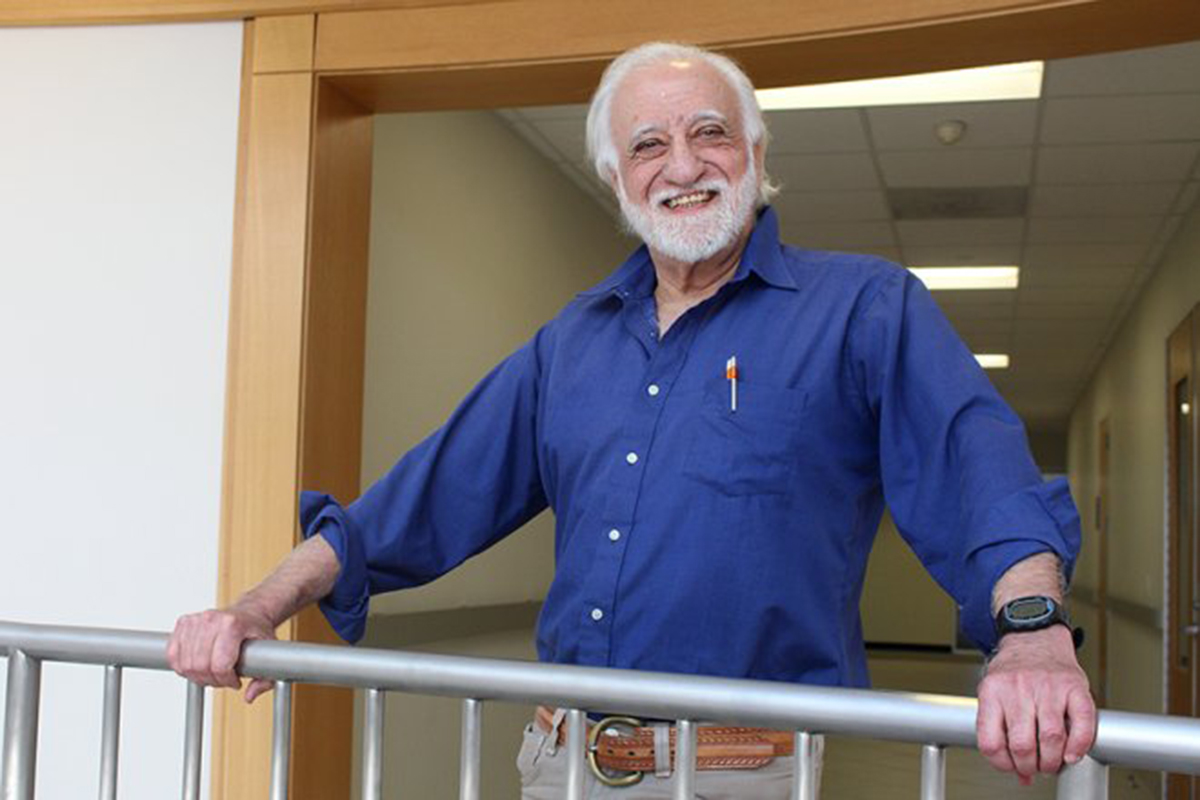
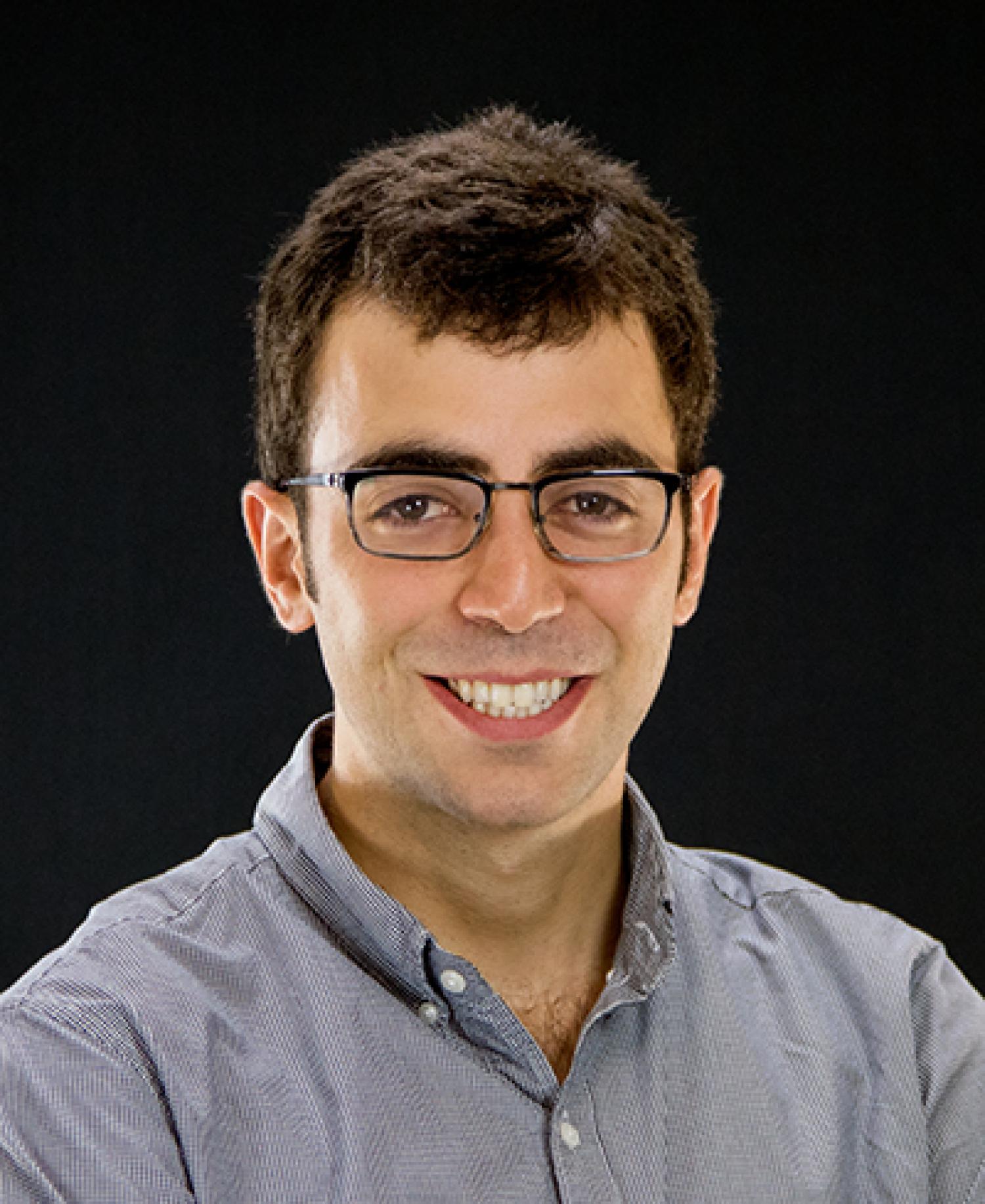
Dr Joshua Alcock is a Lecturer at the University of Liverpool, actively involved in teaching and research. He contributes to modules such as Cloud Computing for E-Commerce (COMP315), High Performance Computing (COMP328), and Multi-Core and Multi-Processor Programming (COMP528), where he serves as Module Co-ordinator. His research focuses on computational operations research and optimization, particularly in heuristic approaches for the Periodic Multiple Maintenance Person Problem (2023). This work addresses dynamic scheduling challenges in industrial maintenance, leveraging algorithmic design and stochastic optimization techniques.
Florian Brandner is an Associate Professor at Télécom Paris , Institut Polytechnique de Paris, and a member of the AuTonomous Critical Embedded Systems (ACES) team within the Information Processing and Communication Laboratory (LTCI) . His research focuses on compiler backend optimization for embedded processors , especially VLIW architectures , in the context of real-time systems . He specializes in worst-case execution time (WCET) optimization , code generation techniques, register allocation, and dynamic binary translation. His work addresses challenges in identifying code paths critical for WCET and ensuring predictable behavior in embedded environments. Academic Appointments: Associate Professor (HDR) at Télécom Paris (2025–present); previous roles at COMPSYS team, ENS Lyon; Microsoft Research; Technical University of Denmark. Research Grants: Involved in projects like Designing Formally Verified Predictable Architectures (CEA 2023–2026), Collaborative Action on Timing Interferences (ANR 2022–2026), and Time-Predictable Cache Management (CEA 2016–2019). Scientific Awards: Outstanding Paper at ECRTS'25, Best Paper at RTNS'22, RTNS'20, SoftCOM'17, and RTNS'15. Patents: Co-inventor of Time-Division Multiplexing Methods (US Patent US20210397488A1, French Patent FR3087982B1). Recent Publications highlight advancements in formal verification for memory controllers (Real-Time Systems 2023), causality modeling in timing anomalies (STTT 2022), and context-sensitive cache analysis (Real-Time Systems 2022). His work spans real-time systems theory, practical compiler design, and hardware-software co-verification.
Prof. Dr. rer. nat. Rainer Leupers is a faculty member at RWTH Aachen University, chairing the Department of Software for Systems on Silicon. His research focuses on embedded systems, hardware-software co-design, virtual prototyping, and security in computing-in-memory architectures. He has published extensively on RRAM accelerators, logic locking, and neuromorphic security. Chair of Software for Systems on Silicon Research in hardware security and deep learning accelerators Recent publications on cross-tool virtual frameworks and thermal side-channel attacks His work bridges system-level modeling with practical security implementations, emphasizing reliability and performance in heterogeneous computing environments. Key trends in his 2025-2023 articles include compute-in-memory optimization, neural network inference efficiency, and security vulnerabilities in emerging hardware. Awards and formal recognitions are not explicitly detailed in the provided materials. He has not directly mentioned advising students or research grants in the given text fragments. The chair's contact information includes an office at ICT Cube 1, Electrical Engineering, Aachen, with direct email and website links.
Cristiana Bolchini is a Professor at the Department of Electronics, Information and Bioengineering (DEIB) at Politecnico di Milano. She holds a PhD in Automation and Computer Science Engineering (1997) and a Laurea in Electronic Engineering (1993), both from Politecnico di Milano. Her research focuses on dependable systems, fault tolerance, and embedded systems design, with recent work on ICT solutions for smart buildings and energy efficiency. She coordinates projects such as the FP7 SAVE initiative and serves on technical committees for conferences like DATE and DAC. Education: PhD in Automation & Computer Science (1997), Laurea in Electronic Engineering (1993), both from Politecnico di Milano. Research interests span dependability (fault modeling, diagnosis), heterogeneous architectures, and sustainable smart environments. She collaborates with Prof. Giuliana Iannaccone on foresight for sustainable built environments and has led EU-funded projects like the SAVE initiative. Publications include over 150 refereed papers on dependability and context-awareness. She holds editorial roles for journals such as IEEE Transactions on Computer-Aided Design and ACM Transactions on Embedded Computing Systems. Awards include IEEE Senior Member status and two Cisco University Research Program Fund gifts (2012, 2014). Academic roles include Rector’s delegate for Southeast Asia relations and leadership of Technology Foresight workgroups. She teaches courses on computer science fundamentals and dependable systems, emphasizing problem-solving and programming in Python and C.
Dr. Jorge Barreto is an Associate Professor in Quantum Technologies at the University of Bristol, affiliated with both the School of Physics and the School of Electrical, Electronic and Mechanical Engineering. As Director of the Centre for Doctoral Training in Quantum Engineering, he leads research at the intersection of applied physics and semiconductor technologies. Senior Lecturer, Quantum Engineering Technology Labs (QET Labs) EPSRC Quantum Engineering Centre for Doctoral Training member Bristol Quantum Information Institute participant His research focuses on integrating photonic circuits with single photon detectors, modulators, and sources to develop optical quantum information processors. Key areas include cryogenic photonic calibration , quantum-referenced tomography , and silicon photonics applications. Recent projects explore photonic integrated circuits operating at low temperatures and scalable quantum communication systems. Notable contributions include 2023 work on spontaneous emission tomography and 2022 research on zero-power calibration . He has authored publications in Nature Materials , ACS Photonics , and Quantum Science and Technology , with over 140 citations. Dr. Barreto collaborates internationally and has participated in workshops like the NSF Workshop (2015). He supervises 8 research works and leads datasets on photon pair sources and quantum tomography. Current projects address cryogenic light-matter interaction and hybrid quantum platforms like silicon-BTO integration.
James R. Green is a Professor in the Department of Systems and Computer Engineering at Carleton University , where he has been a faculty member since 2005. He holds a PhD from Queen's University and is a licensed Professional Engineer (P.Eng.) and Senior Member of IEEE. His work integrates machine learning, biomedical informatics, and high-performance computing. His educational background includes: B.A.Sc. in Systems Design Engineering, University of Waterloo (1998) M.Sc.(Eng.), Queen's University (2000) PhD, Queen's University (2005) Dr. Green's research focuses on machine learning challenges in biomedical informatics , particularly class imbalance and rare event prediction. Key areas include protein structure, function, and interaction prediction; microRNA detection in unique species; non-contact neonatal monitoring; and accelerating scientific computing via parallel architectures like the Cell BE processor. His lab has developed several widely used bioinformatics tools such as PIPE, ProtDCal, and PCI-SUMO. His recent publications reflect a strong trend in computational biology and machine learning , with applications in proteomics, genomics, and medical diagnostics. He has published over 100 peer-reviewed papers and secured funding from NSERC, CIHR, CFI, ORF, OCE, MITACS, and IBM. Scientific and teaching recognitions include: Three teaching awards NSERC Best Project Award (twice: 2006-2007 and 2007-2008) Multiple student projects resulting in conference papers (e.g., CMBEC) He has supervised numerous undergraduate capstone projects in areas such as assistive technologies, robotic systems, and bioinformatics. His teaching portfolio includes courses in Pattern Classification, Machine Learning, Computer Architecture, and Biomedical Engineering. He leads an active research group that bridges computer engineering and life sciences, fostering interdisciplinary collaboration. Lab and research team initiatives include: Development of open-access web servers for protein analysis Collaborations with biologists and clinicians Integration of hardware and software for medical applications
Professor Dollas Apostolos serves as a Professor in the School of Electrical and Computer Engineering at the Technical University of Crete (TUC), where he has held leadership roles such as Department Chairman. He directs the Microprocessor and Hardware Laboratory, focusing on reconfigurable computing, embedded systems, and high-performance digital systems. His work emphasizes rapid prototyping and real-world implementation of computational solutions. Education: Ph.D., Computer Science, University of Illinois at Urbana-Champaign (1987) M.Sc., Computer Science, University of Illinois at Urbana-Champaign (1984) B.Sc., Computer Science, University of Illinois at Urbana-Champaign (1982) Research Interests: Reconfigurable computing architectures FPGA-based acceleration for bioinformatics and genomics Embedded systems and real-time processing Hardware-software co-design for high-performance computing His research bridges theoretical innovation with practical applications, such as FPGA implementations for genome assembly and aquaculture monitoring systems. Publications: Recent work highlights FPGA-based solutions for bioinformatics (e.g., genome assembly acceleration), real-time embedded systems (e.g., fish cage net monitoring), and scalable data processing frameworks. His articles often explore the intersection of FPGA technology with computational biology, embedded vision, and distributed systems. Awards and Affiliations: Senior Member, IEEE and IEEE Computer Society Recipient of IEEE Computer Society Golden Core and Meritorious Service Awards Twice honored with the University of Illinois Teaching Excellence Award He is a co-founder of IEEE conferences like FCCM and RSP, reflecting his leadership in the reconfigurable computing community. Teaching and Labs: Teaches courses on computer architecture, logic design, and VLSI design. The Microprocessor and Hardware Lab under his direction drives advancements in FPGA-based systems, with projects ranging from bioinformatics hardware accelerators to embedded vision systems.
Pejman Lotfi-Kamran is an Associate Professor at the School of Computer Science, Institute for Research in Fundamental Sciences (IPM), Tehran, where he also serves as the head of the school and director of Turin Cloud Services. His research focuses on computer architecture, systems, approximate computing, and cloud computing, with an emphasis on performance and energy efficiency for big-data applications. His educational background includes: Ph.D. in Computer Science, EPFL (2013) M.Sc. in Electrical and Computer Engineering, University of Tehran (2005) B.Sc. in Electrical and Computer Engineering, University of Tehran (2002) Lotfi-Kamran's research spans computer architecture innovations, including data and instruction prefetching, networks-on-chip, coherence protocols, and many-core processor design. He has pioneered work on scale-out processors, neural acceleration for GPUs, and approximate computing frameworks. His publications appear in top venues such as ISCA, HPCA, MICRO, and IEEE/ACM journals. His recent articles reflect a strong trend in improving system performance through intelligent prefetching, efficient NoC designs, and energy-aware architectures. Key themes include reducing frontend bottlenecks, optimizing cache behavior, and enhancing data delivery in large-scale systems. His work often combines cross-stack insights with hardware-software co-design for real-world impact. Scientific awards and recognitions include: 2017 CADS Best Paper Award 2016 Young Faculty Award from Iran's National Elites Foundation 2012-2013 Intel Ph.D. Fellowship 2012 and 2011 HiPEAC Paper Awards 2011 HPCA Best Student Paper Finalist Multiple academic honors from University of Tehran He has advised several graduate students including Paria Darbani, Ali Ansari, Mohammad Bakhshalipour, and Farid Samandi, many of whom have co-authored significant papers. His teaching spans institutions like Sharif University of Technology, Iran University of Science and Technology, and EPFL, covering advanced computer architecture and multiprocessor systems. He has led research projects such as AxBench and CloudSuite on Simics, and contributed to national initiatives like Iran’s National Grid. He is actively involved in tool development and continues to shape research in next-generation computing systems. He leads the Turin Cloud Services initiative at IPM and is deeply engaged in both theoretical and applied aspects of computer systems research, with ongoing work in neural acceleration, approximate computing, and scalable architectures.
Nele Mentens is a full professor at both KU Leuven and Leiden University, where she leads cutting-edge research in applied cryptography, hardware security, and secure embedded systems. At KU Leuven, she is affiliated with the Faculty of Engineering Technology and the Electrical Engineering Department (ESAT), leading the Emerging Technologies, Systems & Security (ES&S) research group at the Diepenbeek campus. Simultaneously, she holds a full professorship at Leiden University’s Leiden Institute of Advanced Computer Science (LIACS), focusing on applied cryptography and security. She has been instrumental in numerous national and international research initiatives, including Horizon Europe and NWO-funded projects. Full Professor, KU Leuven (since 2023) Full Professor, Leiden University (since 2020) Associate Professor, KU Leuven (2014–2023) Post-doctoral Researcher & Lecturer, KHLim / KU Leuven (2007–2014) Ph.D. in Engineering Science, KU Leuven (2007) M.Sc. in Electrical Engineering, KU Leuven (2003) Her research focuses on secure and efficient hardware design, particularly for cryptographic applications on FPGAs, reconfigurable architectures, IoT security, and neuromorphic computing. She explores physical attack resistance, side-channel analysis protection, and trusted computing architectures, with applications in healthcare, industrial monitoring, and endpoint AI. Her work bridges theoretical cryptography with practical hardware implementations, emphasizing energy efficiency and real-time performance. The 15 most recent publications reflect a strong trend toward secure, energy-efficient, and intelligent embedded systems. Topics include neuromorphic AI accelerators, trusted IoT architectures, dynamic reconfiguration for side-channel protection, and secure medical data processing. These works span disciplines such as computer architecture, cybersecurity, digital design, and embedded systems, with a focus on hardware-software co-design and real-world deployment. Nele Mentens has received recognition for her contributions, including: Best Paper Award, DATE'16 Best Paper Nomination, AsianHOST'17 Best Paper Award, CHES'19 She has supervised over 15 Ph.D. students and post-docs, both current and former, and has served as principal investigator in approximately 25 funded research projects. Her work has attracted significant grants from Horizon Europe, NWO, FWO, and national innovation programs. She actively contributes to the academic community through editorial roles in top journals and leadership in major conferences. Nele Mentens leads the ES&S research group at KU Leuven and collaborates closely with LIACS at Leiden University. Her team includes Ph.D. students, post-docs, and research experts working on projects like NimbleAI, NeuroSoC, and TrustedIoT. She has also established secure electronics labs through infrastructure grants and maintains strong international ties with institutions such as EPFL, Ruhr University Bochum, and ETH Zurich.
Yale N. Patt serves as Professor of Electrical and Computer Engineering, holding the Ernest Cockrell, Jr. Centennial Chair in Engineering and recognized as a University Distinguished Teaching Professor at The University of Texas at Austin's Cockrell School of Engineering. His academic career spans decades with continuous teaching activity through Fall 2024 and Spring 2025 semesters. Professor Patt's research focuses on computer architecture and high-performance computing systems, specifically targeting innovations five to ten years beyond current industry capabilities. His philosophy emphasizes producing foundational knowledge for future technology development while educating students who will design tomorrow's computing systems. His work spans computer architecture, systems and networking, with particular focus on high performance substrate and microarchitecture design. His research group HPS (High Performance Systems) has made significant contributions to memory systems, branch prediction, and parallel computing architectures. Professor Patt's publications reveal consistent focus on fundamental computer architecture challenges, particularly addressing memory systems, branch prediction mechanisms, and performance optimization techniques that enable future computing systems. His work bridges theoretical innovation with practical application requirements. His exceptional contributions have been recognized with numerous prestigious awards: 2014 - Member, National Academy of Engineering 1996 - IEEE/ACM Eckert-Mauchly Award 2016 - Benjamin Franklin Medal, Franklin Institute 2000 - ACM Karl V. Karlstrom Outstanding Educator Award 1995 - IEEE Emanuel R. Piore Award 2013 - IEEE Harry H. Goode Award 1999 - IEEE Wallace W. McDowell Award 2011 - IEEE B. Ramakrishna Rau Award 2005 - IEEE Charles Babbage Award 2017 - Friar Centennial Teaching Fellowship (the highest teaching award at UT Austin, with recognition as the only Engineering professor to win it in the last 25 years) Professor Patt has mentored numerous PhD students throughout his career and co-authored the influential textbook 'Introduction to Computing Systems: From Bits and Gates to C and Beyond' (3rd edition, 2019). His teaching philosophy emphasizes deep understanding of computing fundamentals, reflected in his 'Ten Commandments for good teaching.' He has developed foundational courses including EE460N (Computer Architecture), EE306, and EE382N.19 (Microarchitecture), with teaching records dating back to at least 2000. He leads the High Performance Systems research group, which continues to advance computer architecture research while training the next generation of computer engineers. Workshops celebrating his 75th birthday in 2014 ('Yale@75') and 80th birthday in 2019 ('Yale:80-in-2019') demonstrate the global respect he has earned in the computer architecture community.
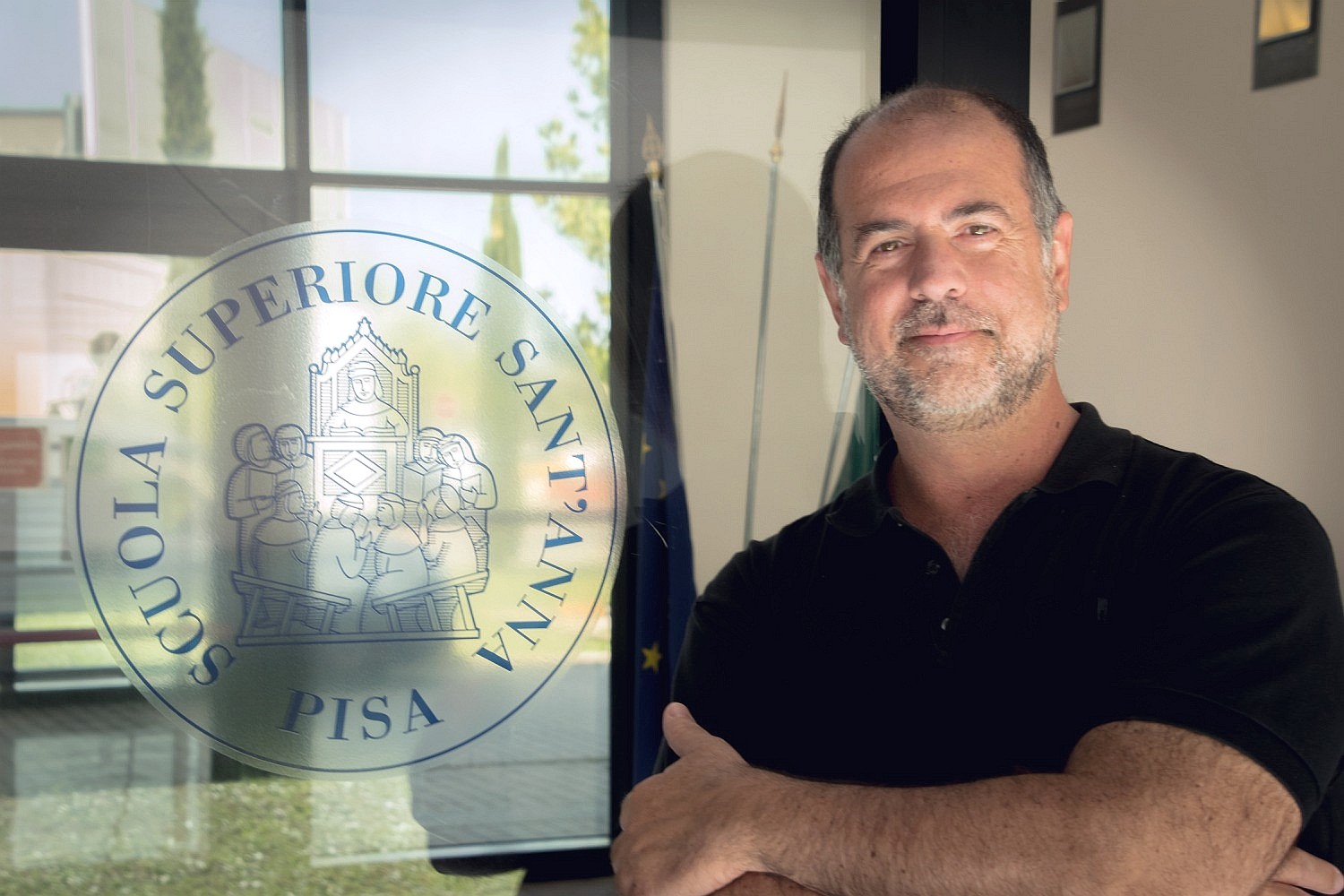
Giorgio C. Buttazzo is a Full Professor of Computer Engineering at the Scuola Superiore Sant'Anna in Pisa, Italy, and founder/director of the RETIS Lab. His career includes roles at the University of Pavia and co-founding Evidence s.r.l. (a real-time embedded systems company). He holds an IEEE Fellowship (2012) and the IEEE TC RTS Outstanding Technical Contributions Award (2013). Education: Electronic Engineering (University of Pisa, 1985), Master in Computer Science (University of Pennsylvania, 1987), PhD in Computer Engineering (Scuola Superiore Sant'Anna, 1991). Affiliations: TeCIP Institute, RETIS Lab, and leadership roles in IEEE Technical Committees. Research focuses on real-time systems, robotics, and AI integration. He has authored 10 books, over 300 papers, and pioneered frameworks like the ERIKA/SHARK kernels. Current projects include RETICULATE, OPERAND, and NANCY (5G networks). Teaching includes Real-Time Systems, Neural Networks, and Jazz Guitar Improvisation. Advised over 150 master and PhD students. Active in conferences like ECRTS, RTSS, and RTAS.
James Shackleford serves as Associate Professor and Interim Associate Dean for Enrollment Management and Graduate Education in the Department of Electrical and Computer Engineering at Drexel University. His research bridges medical image processing, high performance computing, and emerging neuromorphic architectures with significant contributions to radiation therapy applications. Education: PhD in Electrical Engineering, Drexel University, 2011 MS in Electrical Engineering, Drexel University BS in Electrical Engineering, Drexel University Research Focus: Professor Shackleford's work centers on GPU-accelerated medical image registration (forming the core of the open-source Plastimatch software), real-time tumor motion management for radiation therapy, and digital spiking neuromorphic systems . His research integrates computer vision, machine learning, and embedded systems to solve clinical imaging challenges. Publication Trends: Recent work (2020-2024) reveals dual research trajectories: (1) advancing deformable image registration through CycleGAN-based domain adaptation for CT auto-segmentation in radiation oncology, and (2) pioneering neuromorphic computing with configurable hardware architectures, dataflow-based compilers, and resource-aware neural network mapping. These streams converge on high-performance solutions for medical imaging and efficient neural processing.
Ehat Ercanli is an Associate Teaching Professor at Syracuse University, serving as the Associate Chair of Education and Operations. He holds a Ph.D. in Computer Engineering from Case Western Reserve University. His research focuses on optimizing embedded systems, computer architecture, system verification, and VLSI design automation. He has contributed to advancements in memory management, compiler optimization, and energy-efficient computing. Key research interests include embedded system design, task recomputation techniques for memory utilization, and database systems optimization. His work emphasizes practical applications in multi-core systems, low-power electronics, and compiler-driven performance improvements. His publications highlight trends in system-on-chip (SoC) optimization, shared private memory management, and energy consumption reduction strategies. Notably, his 2007 paper was ranked #3 in the ACM Digital Library’s Most Popular Papers. Dr. Ercanli’s contributions also extend to automated code generation for database applications and custom processor synthesis for image processing.
Professor Per Stenström is affiliated with the Department of Computer Science and Engineering at Chalmers University of Technology . His research focuses on computer architecture , memory systems optimization , and energy-efficient computing , with significant contributions to DNN accelerator design and cache management . Research Trends : His recent publications emphasize Memory compression techniques for energy efficiency Hardware-software co-design for DNN acceleration Security in microarchitectural optimizations Hybrid memory systems for near-memory computing These works span both theoretical and applied aspects of computer architecture, with a particular focus on data redundancy elimination , parallel processing , and quality-of-service constraints . His work has influenced the development of energy-aware resource management frameworks and resilient EU HPC systems , as evidenced by his long-standing contributions to the field since the early 2010s.
Adam Kaufman is an Associate Professor and Adjoint Fellow at JILA, a joint institute of the University of Colorado Boulder and NIST. He holds a faculty appointment in the Department of Physics at CU Boulder and collaborates closely with NIST researchers. His research focuses on quantum science, leveraging atomic, molecular, and optical physics to explore entanglement in complex systems, quantum coherence, and precision measurement. Key interests include quantum metrology with atomic clocks, quantum simulation using optical tweezers, and the development of qubit architectures with alkaline-earth atoms. Research Interests: - Investigating entanglement in quantum systems for both fundamental understanding and practical applications in condensed matter physics. - Pushing the limits of quantum coherence in optical tweezers to build scalable quantum states. - Developing tools like microscopy and precision spectroscopy to study ultra-cold atoms. Publications reflect advancements in optical clocks, quantum error correction, and boson sampling with atoms. Notable trends include innovations in multi-qubit gates for precision timing, Rydberg atom arrays for quantum magnetism, and cryogenic systems for extended coherence times. Scientific Awards: PECASE, Gordon and Betty Moore Foundation Grant, Friedrich Wilhelm Bessel Research Award. Advising includes mentoring students like Aaron Young (Deborah Jin Award recipient) and Matthew Norcia (IUPAP Prize). Grants include NSF Q-SEnSE funding and collaborations through CUbit Quantum Initiative. Lab activities focus on JILA’s optical tweezer arrays, cryogenic systems, and Ytterbium-based qubit development. Projects aim to realize scalable quantum processors and novel quantum sensors.