Alessio Meneghetti is a Professor at the Department of Mathematics, University of Trento. His research focuses on cryptography, coding theory, and information security, with applications to post-quantum cryptography, blockchain protocols, and secure distributed systems. He teaches courses such as Coding Theory and Applications, Cryptography, and Programming Lab, emphasizing practical implementations in Java and theoretical foundations. His work spans cryptographic primitives like threshold signatures, quantum-resistant algorithms, and consensus mechanisms. Key contributions include protocols like COB for Byzantine agreement and frameworks for group action-based multi-signatures. He has also explored quantum random number generation and linear codes' weight distributions. Publications highlight advancements in threshold cryptography, distributed key generation, and post-quantum signature schemes. His teaching integrates programming practices with mathematical rigor, preparing students for applied cryptography and computational mathematics.
Weiwei Zhan is an Assistant Professor in the Department of Civil, Environmental, and Construction Engineering at the University of Central Florida (UCF), College of Engineering. He holds a Ph.D. in Civil Engineering from Clemson University (2020) and a B.S. in Geological Engineering from Chengdu University of Technology, China (2014). He is the director of the Geosystems Engineering and Intelligence Laboratory (GEI), which focuses on intelligent and systematic solutions for geohazard mitigation and infrastructure resilience. Ph.D. in Civil Engineering, Clemson University, USA, 2020 M.Sc. in Civil Engineering (non-thesis), Clemson University, USA, 2019 B.Sc. in Geological Engineering, Chengdu University of Technology, China, 2014 Dr. Zhan's research lies at the intersection of geotechnical earthquake engineering, geohazards, and data science. His primary interests include landslide hazard assessment and mitigation , soil liquefaction triggering and consequence assessment , earthquake site response and ground motion modeling , explainable machine learning and deep learning , geospatial modeling and uncertainty quantification , and multi-hazard infrastructure resilient design . His lab leverages interdisciplinary techniques from geotechnics, geology, geophysics, geodesy, and data science to advance smart cities and resilient infrastructure initiatives. His recent publications reflect a strong trend in applying machine learning and signal processing to geohazard detection. Key themes include accelerogram-based liquefaction detection , remote-sensing-based landslide early warning using satellite and UAV imagery , probabilistic seismic analysis of earthen levees , and geospatial modeling of seismic hazards . His work emphasizes uncertainty quantification, real-time hazard assessment, and the development of open-source tools like the OpenLIQ geospatial liquefaction database. Scientific awards and honors include: National Scholarship, Ministry of Education of China (2016) Travel Grants from NHERI SimCenter and EERI (2022) Top 10 Bachelor’s Thesis at Chengdu University of Technology (2014) Honorable Mentions in International and National Mathematical Modeling Competitions Dr. Zhan has served as a reviewer for numerous journals and as a convener for major conferences such as SSA and IAEG. His lab, GEI, conducts research on full-cycle landslide hazard management, near-real-time liquefaction detection, earthquake ground-motion modeling, and geospatial analytics. He has secured research support through travel grants and symposium funding, and his ongoing work includes developing globally applicable models for lateral spreading and improving ground-motion models using geospatial proxies.
Eleni Tsougkou is a Senior Lecturer in Marketing and Director for PGT Programmes at the University of Strathclyde's Department of Marketing within the Strathclyde Business School. She holds a PhD in International Marketing from Loughborough University, an MSc in Advertising and Marketing from Leeds University Business School, and an undergraduate degree in Economic and Regional Development from Panteion University, Greece. Her research focuses on international marketing strategies, global branding, brand activism, digital marketing, and consumer behavior. Notable contributions include studies on global brand responses to geopolitical conflicts and the role of digital platforms in brand personality formation. She has been recognized with awards such as the AMS Sheth Foundation DoCCA (2023) and Fellowship of the Higher Education Academy (2021). Expertise: International Marketing, Brand Activism, Digital Marketing, Structural Equation Modeling Teaching: Export Marketing, Strategic Global Marketing, and International Business Management. Professional Activities: Principal Investigator for projects like 'Marketing for Peace' and serves as a peer reviewer for journals like International Marketing Review . Eleni actively supervises doctoral research in areas such as firm-level activism and social media innovation within international marketing contexts.
Sergey Andreev is a Professor at the Faculty of Information Technology and Communication Sciences, Tampere University, where he holds a position in the Department of Electrical Engineering. His research focuses on advanced wireless communication systems, particularly in 5G/6G networks, mmWave technologies, UAV-based networks, and machine learning-driven network optimization. He is actively involved in projects addressing energy efficiency, resource allocation in heterogeneous networks, and the integration of non-terrestrial networks (NTNs) with terrestrial infrastructure. His work emphasizes practical applications such as extended reality (XR) communication, industrial IoT, and reliable service continuity in challenging environments. Andreev's recent publications highlight breakthroughs in federated learning for edge computing, delay-aware scheduling in integrated access and backhaul (IAB) systems, and the deployment of UAVs for enhancing urban network coverage. His contributions span theoretical frameworks to experimental validations, leveraging tools like ray tracing, digital twins, and reinforcement learning. He has also explored the interplay between user behavior and network performance in immersive applications, emphasizing real-world scalability and sustainability. His research often combines interdisciplinary approaches, such as merging machine learning with traditional signal processing techniques to tackle complex network challenges. While no specific awards are listed, his prolific publication record underscores his influence in the field. He has advised numerous projects but no formal student names are provided in the texts. His labs and teams likely focus on cutting-edge 6G research, though specific lab names are not mentioned.
Oleg Aslanidi is a Professor of Biomedical Engineering whose research focuses on computational modeling of cardiac electrophysiology, particularly in the context of atrial fibrillation and digital twins for healthcare. His work integrates biophysical modeling, artificial intelligence, and medical imaging to develop personalized decision-support systems for clinical cardiology. Active in research with over 114 research outputs Primary Investigator on multiple BHF- and EPSRC-funded projects Editorial roles in journals such as Frontiers in Cardiac Electrophysiology Focus on translational modeling for ablation therapy and stroke risk prediction His research interests lie at the intersection of engineering and medicine, with a strong emphasis on using computational tools to understand and treat cardiac arrhythmias. Key areas include atrial fibrillation mechanisms , thrombogenesis risk modeling , image-based patient-specific simulations , and AI-driven clinical predictions . He employs multi-scale modeling techniques that span from ion channels to whole-organ dynamics, often integrating MRI data for anatomical accuracy. The recent trend in his publications shows a clear shift toward integrating artificial intelligence with biophysical models to enhance clinical decision-making. His work increasingly emphasizes interpretability in deep learning , non-Newtonian blood flow modeling , and personalized risk stratification for stroke and ablation outcomes. These articles span disciplines such as biomedical engineering, cardiology, computational fluid dynamics, and machine learning, reflecting a highly interdisciplinary approach. His scientific contributions are recognized through active editorial and peer-review roles: Associate Editor, Frontiers in Cardiac Electrophysiology (2021–present) Peer reviewer for IEEE Access , Philosophical Transactions of the Royal Society A , and other leading journals Invited speaker at international workshops and conferences As a research leader, Dr. Aslanidi has supervised several trainees and leads a research group focused on computational cardiology. He has secured significant grant funding, including from the British Heart Foundation and EPSRC, supporting projects such as: Computational decision support system for atrial fibrillation management (2024–2027) Image-based system for guiding ablation treatment (2018) Dissecting multifactorial mechanisms of atrial fibrillation (2015–2018) Evolution of arrhythmogenic substrate in canine atria (2012–2014) His work contributes to UN Sustainable Development Goals related to good health and well-being, particularly through improving cardiovascular disease outcomes.
Enrico Napoli is a Full Professor in the College of Engineering at the University of Palermo, where he has been since 2001 (promoted from Associate Professor). He conducts research in numerical modeling of incompressible fluid flows with applications across civil, environmental, and industrial engineering domains, particularly focusing on turbulence analysis. He developed the PANORMUS open-source software (with finite-volume and SPH modules) for 3D hydrodynamic simulations, fully parallelized via MPI libraries and distributed as free software. As a delegate for the Rector's Program and Strategic Plan implementation, he also serves on the University's Academic Senate since 2009. Graduated Magna Cum Laude in Civil Hydraulic Engineering (1993) at University of Palermo His research covers: (1) 3D hydrodynamic modeling using finite-volume and SPH methods for free-surface and confined flows; (2) Development of PANORMUS open-source software (including hybrid FVM-SPH capabilities); (3) Water distribution network modeling with characteristic method applications; (4) Turbulence analysis in environmental and engineering contexts; (5) Biomedical fluid dynamics applications including cardiovascular FSI and thrombus formation. His computational work addresses both fundamental fluid mechanics and applied problems like desalination technologies , water quality management , and pollutant dispersion . Scientific activities include: Computational Advancements : Developed PANORMUS software with multi-domain parallelization and deformable wall capabilities Environmental Applications : Studied Augusta Harbour hydrodynamics, Stagnone Lagoon circulation, and urban stormwater pollution Biomedical Research : Modeled thrombus formation in cardiovascular systems using SPH Engineering Solutions : Analyzed energy recovery systems with PAT technology and flow regulation via PRVs
Yinliang (Ricky) Tan is an Associate Professor in the Department of Supply Chain Management at the C.T. Bauer College of Business, University of Houston. He is also the Area Coordinator in Supply Chain Management, Associate Director of the Human-Centered Artificial Intelligence Institute at Bauer College, and a Bauer Senior Fellow. He is currently on leave during the 2024–2025 academic year but remains an active faculty member. Previously, he served as an Assistant Professor at Tulane University’s A.B. Freeman School of Business from 2015 to 2021, where he was promoted to Associate Professor with tenure in 2021. Education: Ph.D. in Operations Management and Information Systems, University of Florida M.S. in Industrial Engineering, University of Florida B.E. in Logistics Engineering, Tongji University Dr. Tan's research is interdisciplinary, bridging operations management and information systems, with a focus on the digital economy, blockchain technology, new business models, and supply chain innovation. His work explores how digital platforms, AI, and emerging technologies transform business operations and consumer behavior. He has published in premier journals including Management Science , MIS Quarterly , Information Systems Research , and Production and Operations Management . His recent publications reflect a strong trend in digital platform economics, pricing mechanisms, blockchain applications, and operational strategies in online markets. Themes include social pricing, gig economy dynamics, crowdfunding interactions, and the strategic use of information transparency. His work often employs analytical modeling and field experiments to uncover managerial insights. Scientific Awards: 40 Most Outstanding Business Professors Under 40 worldwide – Poets & Quants Carol J. Latta Emerging Leadership Award – Decision Science Institute (2019) ISS Sandra A. Slaughter Early Career Award (2022) Dr. Tan has extensive teaching experience across undergraduate, graduate, executive, and Ph.D. levels. He co-designed the Master of Business Analytics curriculum at Tulane University and developed experiential learning courses. He has received teaching awards, including the Dean's Excellence for Graduate Teaching Award. He currently serves as Senior Editor at Production and Operations Management , Department Editor at Decision Sciences Journal , and Associate Editor at Information & Management . He has also contributed to editorial boards of several top journals and special issues on blockchain and digital technologies. He is affiliated with the Human-Centered Artificial Intelligence Institute at Bauer College, where he contributes to advancing research on ethical and human-centric AI applications in business. His leadership roles include serving as Executive Director of the Goldring Institute of International Business at Tulane and participating in the Dean Search Committee. He is also an avid art lover and historical manuscript collector.
Dr. Mostafa Salah is an active researcher in wireless communication systems, with 12 publications indexed in dblp between 2010-2024. His work spans multiple cutting-edge domains including reconfigurable intelligent surfaces (RIS), mmWave 5G networks, and biomedical signal processing applications. Key Research Areas: Wireless Communication, Beamforming Optimization, IoT Protocols, Machine Learning in Signal Processing Recent Contributions: 2024 publications on aerial gateway systems, transfer deep-learning for blood pressure monitoring, and mmWave beam routing Collaborations: Frequent co-authorship with Osama A. Omer, Ahmed S. Mubarak, and Usama Sayed Mohamed across multiple journals
Xinyu Qin is a Professor at the Department of Electrical and Computer Engineering within the School of Information Engineering at Guangdong University of Technology. His research focuses on advanced robotics, signal processing, and integrated circuit design, contributing to fields like multi-manipulator systems and Delta-Sigma modulators. Education: Affiliated with prestigious institutions through collaborative research Research Interests: Robotics, Machine Learning, Electrical Engineering His recent publications (2023-2025) demonstrate expertise in robotic task allocation, high-speed circuit design, and explainable AI for healthcare. Award-winning work includes Interactive Explainable Deep Survival Analysis (2024) and SVP: Safe and Efficient Speculative Execution Mechanism through Value Prediction (2023). Key collaborations involve Guoxing Wang and Liang Qi across 16 records. Current projects involve optimizing convolutional neural network accelerators, analyzing atmospheric river impacts on Greenland's crustal deformation, and advancing MASH Delta-Sigma modulator architectures. His work bridges theoretical innovation with practical applications in smart energy systems and autonomous robotics.
Nigel Halpern is a Professor of Air Transport and Tourism Management and Head of the PhD Programme in Communication and Leadership at Kristiania University of Applied Sciences. His research focuses on accessibility, digital transformation, marketing strategy, and sustainability in air transport and tourism sectors. Research Interests: Accessibility in tourism and travel for disabled individuals Digital maturity and transformation in airports Interorganisational relations and strategic alliances in aviation Socio-economic impacts of airports in peripheral regions His work bridges academic theory with practical applications through projects funded by organizations like the EU Horizon 2020 and Research Council of Norway. Articles Trends: Recent publications (2021–2024) emphasize digital technologies in airports, pandemic impacts on vulnerable travelers, and sustainable marketing practices. Themes include passenger data privacy, crisis communication, and inclusive tourism policies. Grants & Consultancies: Funded projects: European COST Framework, EC ERASMUS+, Research Council of Norway (Transport 2025) Consulted for Avinor, Dubai Aerospace University, Norwegian Ministry of Transport Editorial Roles: Serves on editorial boards of six journals, including Annals of Tourism Research . Authored/edited books like The Handbook of Accessible Tourism and Airport Marketing .
Dick van Damme is a Full Professor at the Faculty of Technology (FT), Mainport Logistics City, specializing in logistics and distribution systems. His research focuses on distribution structures, spatial layout optimization, and supply chain management with particular emphasis on mainport logistics and urban distribution challenges. He has been actively involved in collaborative projects such as the Zero Emission Infrastructuur project and the Master Urban Tech educational initiative. His work bridges theoretical frameworks with practical applications, addressing industry-specific distribution challenges across sectors like retail and transportation. Key research areas include distribution network design, service level optimization, and the impact of spatial planning on logistics efficiency. His recent publications analyze distribution center typologies, sectoral distribution practices, and decision-making factors in logistics infrastructure. Van Damme has received notable recognitions including the Best Paper Award (2018) and the Nominatie KennisDC Parel 2023. His contributions extend to educational leadership, co-developing programs like the Master Urban Tech and supervising interdisciplinary projects.
Pedro F. Oliveira is an academic affiliated with the Polytechnic Institute of Bragança (IPB), Portugal, where he has served as a teacher at both the School of Public Management, Communication and Tourism (EsACT) and the Technology and Management School (ESTiG). He holds a Ph.D. in Computer Science from the Universities of Minho, Aveiro, and Porto, alongside degrees in Informatics Engineering and Business Information Systems. His academic roles include editorial board membership for journals like the International Journal of Network Security & Its Applications (IJNSA) and the Journal of Artificial Intelligence and Big Data (JAIBD). Dr. Oliveira's educational background includes a Ph.D. in Computer Science from the Universities of Minho, Aveiro, and Porto, a Master’s in Business Information and Systems from Instituto Superior Técnico, and a Bachelor’s in Informatics Engineering from IPB. His academic journey reflects a strong foundation in both technical and business-oriented information systems. His primary research interests span Artificial Intelligence , Multi-Agent Systems , Ambient Intelligence , Internet of Things (IoT) , and Learning Dashboards . Additionally, he explores broader fields such as Simulation and Advanced Data Analytics , Sensing and Connectivity , and Advanced Human-Machine Integration . These areas highlight his focus on intelligent systems, adaptive environments, and their practical applications. While no specific scientific awards are mentioned, his editorial and conference committee memberships underscore his contributions to academic and professional communities. Dr. Oliveira has not listed any supervisees, but his involvement in research projects and publications indicates active contributions to academic and industrial collaborations. Specific grants or funding details are not detailed in the provided information. He is a researcher at the Polytechnic Institute of Bragança, contributing to initiatives within the informatics and communications departments, aligning with research centers focusing on digitization and intelligent robotics.
Sylvie Foutrel is a Lecturer in Management Sciences at the Université Catholique de l'Ouest (UCO), affiliated with the Faculty of Law, Economics, Management and Political Science. She is an Associate Member of the LEGO EA 2652 laboratory and serves as the Educational Manager for the Professional Degree in International Trade Professions, specializing in digital techniques. Her research focuses on qualitative analyses of entrepreneurial decision-making, territorial branding, and CSR, particularly in the context of sustainable models like circular economy and regional networks. Her work includes studies on regional collective brands, reterritorialized food distribution systems, and cognitive mapping methodologies. Key projects like RETERALIM explore local food sectors and ecological transitions in the Pays de Lorient. Foutrel has also contributed to conferences and publications addressing responsible purchasing, social communication strategies, and agri-food enterprise sustainability. Teaching roles span institutions including UCO-BS, Rennes Institute of Management, and international schools like Haarlem Business School. She coordinates work-study programs and has held leadership roles such as Head of International Trade Professions (2005). Current research emphasizes territorial marketing, digital transformation in tourism, and leveraging social networks for innovation. Notable collaborations include the LEGO laboratory and projects funded by ADEME. Her work bridges academic research with practical applications in regional development, sustainability, and corporate responsibility.
Stanley Lim is an Assistant Professor of Supply Chain Management at Michigan State University (MSU), affiliated with the Eli Broad College of Business and the Evolution and Future of Work Research Initiative. He holds a PhD from the University of Cambridge and three master's degrees from the University of Illinois, Warwick Business School, and National University of Singapore. His research focuses on last-mile supply chains, integrating operations management, marketing, and economics with a particular emphasis on reducing food waste, optimizing delivery networks, and omnichannel retail strategies. Key affiliations include visiting roles at MIT, National University of Singapore, and Singapore Management University, and collaborations with companies like Meijer, Ninja Van, and Unilever. He has received awards such as the 2018 Emerald/EFMD Outstanding Doctoral Research Award, 2025 POMS Emerging Scholar Award, and recognition for USDA-funded research on food supply chain resilience. His work addresses challenges in urban logistics, subscription models, and inventory management. Notable grants include a $650k USDA grant for food supply chain disruption strategies. Lim serves on editorial boards for Manufacturing & Service Operations Management and Journal of Business Logistics , and frequently contributes to media discussions on retail and logistics trends in outlets like Harvard Business Review and Detroit Free Press .
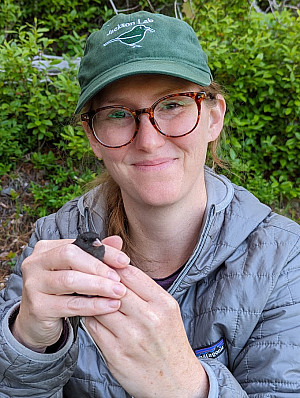
Allyson K. Jackson is an Associate Professor of Environmental Studies at Purchase College SUNY, within the School of Natural and Social Sciences. She teaches courses including General Ecology, Wildlife Ecology, Biostatistics, Conservation Biology, Wildlife Toxicology, Ornithology, and Environmental Studies Junior Seminar. Dr. Jackson also serves as the faculty organizer for the Purchase College Native Plant Garden. Dr. Jackson earned her PhD in Fisheries and Wildlife from Oregon State University in 2017, where she completed her dissertation titled "You are what, when, where, and how you eat: mercury in avian food webs across multiple spatial scales" under advisors Dr. Collin Eagles-Smith and Dr. Douglas Robinson. She also holds a Graduate Certificate in College and University Teaching from Oregon State University (2015), an MS in Biology from the College of William and Mary (2010), and a BS in Biology with a minor in Psychology from Juniata College (2007). Her research focuses on wildlife ecology, avian conservation, and contaminants in food webs, with particular expertise in mercury bioaccumulation in avian ecosystems. Dr. Jackson's work spans multiple spatial scales, examining how mercury moves through food webs and affects bird populations across different landscapes. Through her JacksonEcoLab, she investigates how environmental contaminants impact wildlife health and ecosystem function. Her extensive publication record demonstrates a consistent focus on mercury contamination in avian systems, with research spanning terrestrial and aquatic ecosystems across North America. Her work combines field ecology with toxicological analysis to understand the complex pathways of mercury exposure in wildlife. Dr. Jackson is actively engaged in environmental stewardship through her leadership of the Purchase College Native Plant Garden and maintains an active research presence through her lab's social media channels (JacksonEcoLab on Facebook and Instagram).