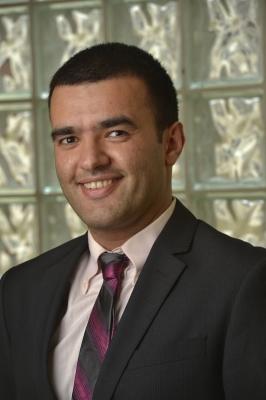
Professor Daniela Bortoletto is Professor and Head of the Particle Physics subdepartment at the University of Oxford, holding a Nicholas Kurti Senior Research Fellowship at Brasenose College. She leads the UK ATLAS collaboration and serves as Deputy Scientific Coordinator of the EU Network AIDA. Her academic journey includes distinguished professorships at Purdue University prior to joining Oxford in 2013. Her research focuses on experimental particle physics within the ATLAS experiment at CERN's Large Hadron Collider. Bortoletto was a key member of the team that discovered the Higgs boson in 2012 and continues to investigate Higgs boson properties, dark matter couplings, and higher-mass Higgs-like particles. Her expertise spans silicon detector development, particularly for the ATLAS inner tracking system upgrade, and she has made significant contributions to Higgs physics through precision measurements of production mechanisms and decay channels. Bortoletto's recent publications demonstrate leadership in cutting-edge detector technology (MALTA2 sensors), novel statistical methods (neural simulation-based inference), and comprehensive Higgs boson characterization. Her work addresses fundamental questions in particle physics through both experimental innovation and sophisticated data analysis techniques. Fellow of the Institute of Physics (2015) Fellow of the American Association for the Advancement of Science (2013) Fellow of the American Physical Society (2004) Alfred P. Sloan Fellow (1994-1996) Ruth and Joel Spira Award for Excellence in Undergraduate Education (2004) Bortoletto maintains extensive leadership in international collaborations, serving on numerous advisory committees including the UK STFC LBNF DUNE PIP-II Oversight Committee and the Scientific Advisory Panel for Belgium's be.h Excellence of Science program. Her editorial work for Nuclear Instruments and Methods reflects her commitment to advancing detector physics methodology. She actively participates in major detector upgrade projects for the High-Luminosity LHC, focusing on silicon pixel technology that will handle the increased collision rates from 2022 onward.