Dr. John Simmins serves as Director of Alfred University's GE Vernova Advanced Power Grid Lab within the Inamori School of Engineering. His expertise spans renewable energy systems, power grid operations, and innovative technologies like augmented reality (AR) in utility settings. Previously, he led the New York State College of Ceramics' Center for Advanced Ceramic Technology (CACT) and worked at the Electric Power Research Institute (EPRI) for a decade, focusing on AR-AI-GIS integration and grid modernization. His research emphasizes AR's impact on utility worker safety, smart grid interoperability via Common Information Models (CIM), and distributed energy resource management. Key projects include optimizing grid automation through data analytics and developing geolocation systems for utility infrastructure using photographic imagery. He promotes workforce mobility solutions and sustainable energy policies through academic-industry collaborations. Dr. Simmins has advised on over 20 EPRI smart grid demonstration projects and pioneered tools for DER integration. His work bridges advanced ceramics research with contemporary energy challenges, including high-temperature superconductors and magnetic materials for early career contributions.
Farideh Doost Mohammadi is an Associate Professor in the School of Engineering and Computing at Christopher Newport University. Her academic journey includes a Ph.D. in Electrical Engineering from West Virginia University (2017), an M.Sc. with First Honors from Amirkabir University of Technology (2012), and a B.Sc. from Iran University of Science and Technology (2010). Ph.D., Electrical Engineering - West Virginia University (2017) M.Sc., Electrical Engineering - Amirkabir University of Technology (2012) B.Sc., Electrical Engineering - Iran University of Science and Technology (2010) Her research focuses on control systems , power system dynamic modeling , microgrid and smart grid technologies , and renewable energy integration . Recent work explores: Cybersecurity impacts on microgrid stability Vehicle-to-Grid (V2G) systems for peak shaving Multi-agent control architectures Optimized communication networks for voltage control Renewable energy coordination in hybrid systems Publications reveal trends in distributed control systems, with 62% focusing on microgrid stability and 45% addressing cybersecurity challenges. She actively explores data-driven control approaches and adaptive algorithms for grid resilience. Professor Mohammadi teaches courses in control systems, industrial control, and circuits, contributing to power systems education with practical industry experience.
Francisco Javier Garcia Polo is a Professor at the University of Santiago de Compostela (USC) , affiliated with the Department of Electronics and Computing within the Higher Polytechnic School of Engineering . His research focuses on Reinforcement Learning (RL) , particularly in areas such as safe decision-making, adversarial attack detection, and policy transfer across tasks. He holds a PhD from Universidad Carlos III de Madrid (2013), where his thesis explored safe RL in continuous state-action spaces. Key research interests include enhancing RL robustness against adversarial attacks, federated learning applications in robotics, and applying RL to financial systems like automated market makers. He is part of the GSI Group (Intelligent Systems Group) , contributing to projects involving social assistive robotics and multi-modal transportation planning tools like TIMIPLAN. His work bridges theoretical advancements with practical domains such as healthcare robotics, cybersecurity, and economic modeling. Publications highlight innovations in policy defense mechanisms, similarity metrics between Markov Decision Processes, and frameworks for evaluating assistive robots. Despite his prolific output, he has not publicly shared research papers on Academia.edu. Collaborations span interdisciplinary topics, reflecting a commitment to both foundational AI research and real-world applications.
Henny Admoni is an Associate Professor in the Robotics Institute at Carnegie Mellon University (CMU), with a courtesy appointment in the Human-Computer Interaction Institute. She leads the Human And Robot Partners (HARP) Lab, focusing on assistive and collaborative robotics, particularly how robots can interpret human nonverbal cues like eye gaze to improve interactions. Her research spans healthcare, human-robot teamwork, and socially assistive robotics, supported by NSF, ONR, and industry partners. Admoni holds a PhD in Computer Science from Yale University and a BA/MA from Wesleyan University. Education PhD in Computer Science, Yale University BA/MA in Computer Science, Wesleyan University Research Interests Admoni’s work emphasizes human-centered robotics, including assistive systems for mobility-impaired users, driver situational awareness modeling, and fostering social support networks through AI. She investigates how robots can proactively learn from humans, adapt to team dynamics, and communicate transparently to build trust. Key themes include nonverbal communication, shared autonomy, and ethical design. Grants & Awards NSF CAREER Grant (2020) Okawa Research Grant (2021) A. Nico Habermann Career Development Professorship (CMU) Advising & Teaching Admoni advises graduate students on topics like robot learning, assistive systems, and human-robot teaming. She teaches courses on Human-Robot Interaction at both undergraduate and graduate levels, emphasizing interdisciplinary approaches that blend robotics, AI, and cognitive science. Labs & Projects The HARP Lab develops robots for meal preparation assistance, driving support, and socially assistive interventions. Current projects include the HARMONIC dataset for collaborative tasks and COHUMAIN for socio-cognitive architectures in human-machine teams. Admoni is on sabbatical at KTH University through 2025.
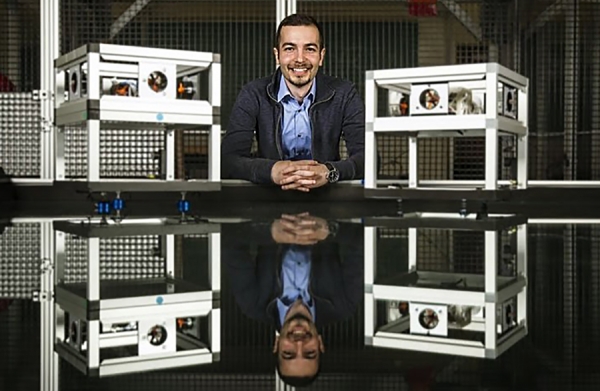
Dr. Afshin Rahimi is a Professor of Engineering at the University of Windsor's Faculty of Engineering, specializing in aerospace systems, machine learning applications, and fault diagnosis. His research focuses on enhancing reliability in satellite systems, renewable energy infrastructure, and smart manufacturing through advanced control systems and AI-driven solutions. He has won prestigious awards including gold medals at the Seoul International Invention Fair (2022) and the International Competition for Inventors (2021) for his work on helicopter engine diagnostics and satellite fault detection. Dr. Rahimi's research interests include: Machine learning for fault detection/prognosis in aerospace and energy systems Control systems design for satellites, UAVs, and offshore wind turbines Optimization of energy efficiency in cloud data centers and renewable systems Smart manufacturing applications using computer vision and object detection His recent work emphasizes applying AI to solve challenges in: Real-time satellite fault diagnosis using hybrid frameworks PV-integrated robotic systems for sustainable energy management Thermal regulation in smart buildings via LSTM networks Data scarcity mitigation in space systems using GANs Dr. Rahimi collaborates with industry partners and student teams like the WinSAT satellite design group. His research bridges theoretical advancements with practical implementation in critical infrastructure sectors.
Wilfried Elmenreich is a Professor at the Institute for Networked and Embedded Systems at Alpen-Adria-Universität Klagenfurt. He holds roles as Member of the Senate and Member of the Works Council for Academic University Staff. His research focuses on computational systems, energy engineering, and smart technologies, including swarm intelligence, cyber-physical systems, and sustainable energy solutions. Key interests include non-intrusive load monitoring (NILM), renewable energy integration, and decentralized learning paradigms. Research priorities encompass computer simulation, electrical power engineering, complex systems, and self-organization. Notable work includes frameworks like SwarmFabSim for production scheduling and CPSwarm for swarm robotics design. He also explores sustainability education and pandemic-related behavioral shifts in sustainability attitudes. Recent publications highlight advancements in federated learning for smart grids, energy disaggregation using NILM, and applications of biologically-inspired algorithms in critical infrastructure. His work integrates simulation reproducibility, open-source tools like Gradle/Docker, and educational games for renewable energy awareness (e.g., DAYSAM). Labs/Teams: Core member of the Institute for Networked and Embedded Systems, leading projects in CPS design, energy systems, and swarm robotics. Collaborates on EU initiatives like CPSwarm and educational outreach in sustainable development.
João Barroso serves as Associate Professor with Habilitation at the University of Trás-os-Montes and Alto Douro (UTAD) and Senior Researcher at INESC TEC's Human-Centered Computing and Information Science Centre, where he has been Research Coordinator since October 2012. Previously, he held the position of Pro-Rector for Innovation and Information Management at UTAD from July 2010 to July 2013. His academic credentials include: Doctorate in Electrical Engineering from UTAD (2002) Habilitation in Informatics/Accessibility (2008) Barroso's research centers on Digital Image Processing, Accessibility, and Human-Computer Interaction, with significant extensions into biosignal processing for healthcare applications, machine learning for gaming and autonomous systems, and context-aware architectures for Industry 4.0 environments. His work consistently emphasizes real-world implementation, as demonstrated by his leadership in developing the ElderMind mobile application for cognitive stimulation and portable ECG/EMG acquisition systems. He founded two major conference series: Software Development and Technologies for Enhancing Accessibility and Fighting Info-exclusion (DSAI, 2006) and Technology and Innovation in Sports, Health and Wellbeing (TISHW, 2016). Analysis of his 15 most recent publications (2024-2025) reveals three dominant research thrusts: (1) Machine learning validation for gaming and autonomous driving (PPO vs. SAC algorithms), (2) High-fidelity biosignal acquisition systems with visual electrode monitoring, and (3) Systematic vulnerability analyses in web/mobile security and context-aware Industry 4.0 architectures. His publications demonstrate a consistent pattern of translating theoretical computing advances into practical health and industrial applications, with 2025 outputs showing particular emphasis on hardware-software integration for telemedicine and production management. Barroso has supervised 40 postgraduate students including Dennis Lourenço Paulino (2024, UTAD) who developed crowdsourcing personalization models and Luís Filipe Jesus Correia (2022, UTAD) who researched Brain-Computer Interfaces. His project portfolio spans 35 research and development initiatives, with recent grants supporting his virtual assistant prototype for Industry 4.0 production environments and high-resolution Bluetooth biosignal modules. He leads the Human-Centered Computing and Information Science Centre at INESC TEC, where his laboratory focuses on prototyping accessible technologies through interdisciplinary teams. Current projects integrate computer vision for elderly care, ROS2 middleware for unmanned vehicle coordination, and semantic interoperability frameworks for digital twins, maintaining his dual focus on theoretical innovation and socially impactful applications.
Hamid Reza Karimi is a Professor of Applied Mechanics at the Department of Mechanical Engineering, Politecnico di Milano, Italy. He previously served as Full Professor at the University of Agder, Norway, and held research positions in Germany, USA, and other institutions. Current Affiliation: Politecnico di Milano, Italy Previous Affiliation: University of Agder, Norway Dr. Karimi is a leading expert in control systems, fault diagnosis, and mechatronics. His research focuses on modeling, control, and health monitoring of complex industrial systems, particularly wind turbines and automotive systems. He has published over 500 ISI-indexed journal papers and contributed to 9 edited books. Scientific Awards: Web of Science Highly Cited Researcher in Engineering (2016-2021) Fellow of The Asia-Pacific Artificial Intelligence Association (2022) Distinguished Fellow of The International Institute of Acoustics and Vibration (2021) August-Wilhelm-Scheer Visiting Professorship Award (2015) He serves as Chief Editor and Associate Editor for multiple international journals and has participated as keynote speaker in numerous conferences. His work emphasizes interdisciplinary collaboration between academia and industry in Europe.
Papamichail Ioannis is a Professor at the School of Production Engineering and Management, Technical University of Crete. His research focuses on advanced traffic control systems, automated vehicle navigation, and intelligent transportation systems. He specializes in macroscopic/microscopic traffic modeling, reinforcement learning applications, and optimization-based control strategies for lane-free and conventional traffic environments. Key research areas include automated vehicle trajectory planning, variable speed limit algorithms, cooperative adaptive cruise control, and intersection control for connected vehicles. His work integrates numerical methods, partial differential equations, and multiagent decision-making frameworks to address traffic congestion, safety, and efficiency challenges. Recent investigations emphasize lane-free traffic systems, exploring optimal path planning, vehicle nudging strategies, and boundary control mechanisms through microscopic simulations. He has also developed novel controllers for highway work zones and urban networks, leveraging data fusion and real-time state estimation techniques. Ioannis collaborates on EU-funded projects and actively contributes to SUMO-based simulation tools for automated vehicle testing. His research bridges theoretical control systems with practical traffic management solutions, aiming for zero congestion/accidents in future transportation networks.
Anuradha Ravi is a Research Assistant Professor in the Department of Information Systems at the University of Maryland, Baltimore County (UMBC). Previously, she served as a Research Scientist at the Living Analytics Research Center, Singapore Management University (2018-2023), and as an Assistant Professor at Shiv Nadar University (2016-2018). She holds a Ph.D. in Computer Science from the Indian Institute of Technology Roorkee, where her doctoral research focused on optimizing energy efficiency and latency reduction for mobile devices through intelligent offloading strategies in heterogeneous networks. Her research interests span multiple cutting-edge domains in computing and networking: Distributed machine intelligence at the edge Low-power AI systems for IoT devices Indoor localization and occupancy sensing Wireless networking protocols Mobile and ubiquitous computing Smart building management systems Analysis of her recent publications (2015-2025) reveals a consistent focus on efficiency optimization in constrained environments, with key themes including autonomous robotics, AI-driven compression techniques, multi-sensor localization, and energy-aware mobile systems. Her work increasingly emphasizes real-world applications in contested or resource-limited settings, leveraging machine learning for adaptive solutions. She actively mentors graduate students at UMBC in projects related to perception systems for unmanned vehicles, compression-aware federated learning, and network middleware development. During her tenure at Shiv Nadar University, she supervised undergraduate research on cooperative IoT strategies and 5G edge computing. She previously contributed to the Living Analytics Research Center's initiatives in smart building occupancy detection and collaborative machine intelligence frameworks for IoT devices.
Shengli Fu is a Professor and Chair of Electrical Engineering at the University of North Texas. His office is located at Discovery Park, B276 with contact available via phone (940-891-6942) and email. His research focuses on Unmanned Aerial Vehicles (UAVs) , Airborne Computing , Wireless Communications , and Networked Systems . Key innovations include developing platforms for UAV-based airborne computing, exploring millimeter wave communications for aerial networks, and creating educational tools for cyber-physical systems. Recent publications (2019-2024) demonstrate strong emphasis on: Advanced aerial communication systems using directional antennas and software-defined radio Networked airborne computing infrastructures and testbeds Distributed optimization algorithms for mobile networks UAV-enabled data collection and trajectory planning Coded computation methods for heterogeneous systems No scientific awards, students, or lab information were mentioned in the provided materials.
Wotao Yin is a Professor of Mathematics at the University of California, Los Angeles, with a distinguished research career spanning over two decades in optimization theory and its applications. His work bridges theoretical mathematics with practical applications in machine learning, image processing, and signal analysis. As a leading researcher in optimization algorithms, he has made significant contributions to the development of methods like ADMM (Alternating Direction Method of Multipliers), proximal algorithms, and decentralized optimization techniques. Department: Department of Mathematics School: College of Letters and Science University: University of California, Los Angeles Yin's research focuses on developing efficient algorithms for large-scale optimization problems, with particular expertise in convex and nonconvex optimization, distributed and decentralized optimization, and mathematical foundations of machine learning. His work has profound implications for image reconstruction, signal processing, and modern machine learning systems. He has pioneered methods for handling sparse data, non-smooth objectives, and constrained optimization problems that arise in real-world applications. An analysis of his recent publications reveals a strong trend toward addressing optimization challenges in machine learning, particularly in federated learning, attention mechanisms, and nonconvex problem structures. His work demonstrates a consistent pattern of bridging theoretical optimization with practical machine learning applications, developing algorithms that balance computational efficiency with theoretical guarantees. Recent papers show increasing focus on heterogeneous data settings, large language model optimization, and fundamental limitations of optimization methods in complex learning scenarios. Throughout his career, Professor Yin has mentored numerous PhD students and postdoctoral researchers who have gone on to successful careers in academia and industry. His collaborative network spans multiple institutions worldwide, with particularly strong connections to researchers in China and across the United States. His work has been supported by various funding agencies recognizing the fundamental importance of optimization theory for advancing computational science. Professor Yin leads a vibrant research group focused on mathematical optimization and its applications, where students and collaborators work on cutting-edge problems at the intersection of mathematics, computer science, and engineering. The group maintains strong connections with both theoretical and applied research communities, participating in major conferences across optimization, machine learning, and computational mathematics.
Jianwu Dang is a faculty member at Lanzhou Jiaotong University's School of Electronic and Information Engineering , with affiliations to the Gansu Provincial Engineering Research Center for Artificial Intelligence and Graphic and Image Processing . His academic career spans multiple institutions including a PhD from Southwest Jiaotong University in 1996. Research Interests : Focused on Medical Image Processing , Remote Sensing , and Wireless Sensor Networks , his work bridges Artificial Intelligence and Transportation Engineering , particularly in railway systems. Publications : Recent articles address Edge Computing coalition structures (2023), Extended Reality in education (2023), and Deep Learning for remote sensing (2022). Collaborations : Frequently co-authors with Yangping Wang and Zhanjun Hao , contributing to journals like IEEE Internet of Things Journal and conferences such as APSIPA .
Manuel Iori is a Full Professor at the Department of Engineering Sciences and Methods, University of Modena and Reggio Emilia (UNIMORE), Italy. His primary research focuses on operational research, optimization methods, and logistics systems. He specializes in vehicle routing problems, scheduling algorithms, and decision support systems with applications in industrial automation, healthcare, and service industries. Iori is actively involved in teaching advanced optimization courses for engineering students, emphasizing practical applications in data-driven decision-making and simulation. Research Interests: His work addresses complex optimization challenges such as multi-trip vehicle routing with time windows, scheduling under resource constraints, and tool switching in manufacturing systems. He integrates machine learning and metaheuristics to develop innovative solutions for logistics, production planning, and healthcare operations. Collaborations with industry partners (e.g., pharmaceutical distributors, printing companies) ensure practical relevance of his research. Teaching: Iori teaches courses like Optimization Methods for Data-Driven Engineering Processes , Models for Logistics and Production Optimization , and Methods and Algorithms for Optimization in Digital Industries . These courses combine theoretical foundations with hands-on labs using tools like Python, Xpress, and Anylogic. Key Contributions: He developed decision support systems for multi-trip routing in pharmaceutical distribution and supplier selection in facility management. His research on satellite scheduling and attended home delivery systems advances both theoretical and applied domains. As a member of CIRRELT (Canada), he collaborates on logistics optimization projects. Professional Activities: Iori’s work is reflected in over 80 peer-reviewed publications and contributions to conferences. He advises graduate students on optimization challenges and serves as a reviewer for top journals in operations research.
Ricardo del Olmo Martínez is a Professor at the Escuela Politécnica Superior of the University of Burgos. His research focuses on Modeling and Simulation of Complex Systems within the INSISOC Research Group, exploring applications in industrial organization, manufacturing systems, and archaeological contexts. Olmo's work employs multi-agent systems to model industrial processes, market dynamics, and social networks. His research interests include agent-based simulation of manufacturing control systems, evolutionary models of industrial innovation, and combinatorial auction mechanisms for resource allocation. Recent publications investigate networked industry dynamics, water conservation technology diffusion, and archaeological complexity modeling. He has directed several competitive research projects at national and regional levels, resulting in numerous scientific publications addressing organizational engineering, economic modeling, and complex system simulation across multiple domains.